
Reviewed · BIKE TOURS
Berlin: Guided Bike Tour to Explore the Highlights
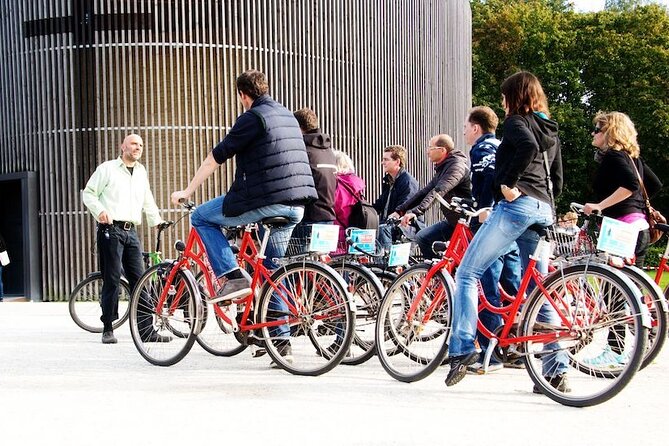
Berlin reveals itself quickly from a bike seat. In three hours, you can pedal from the medieval-feeling Nikolaiviertel to the Brandenburg Gate, Reichstag, Museum Island, Checkpoint Charlie, and the Holocaust Memorial without spending your day underground on public transport. The tour is especially useful when you have limited time and want to get your bearings fast.
I like two things in particular: the guides often add personal insight and practical suggestions, and the bikes let you cover more ground without making the outing feel like a race. Past guides including Jake, Simone, Marius, Luka, Reiko, Rufus, and Giulietta have been praised for humor, warmth, and strong storytelling. The main consideration is that the English route leans heavily toward Berlin’s Nazi and Cold War past, and one guest found the guide’s English difficult to follow.
In This Review
- Key points to know before you book
- Why a bicycle works so well in central Berlin
- Nikolaiviertel and the beginnings of Berlin
- Bebelplatz and the weight of Berlin’s past
- Checkpoint Charlie and the divided city
- Potsdamer Platz, from nightlife to no-man’s-land
- The Holocaust Memorial and a serious pause
- Tiergarten and the Brandenburg Gate
- The Reichstag and the modern government quarter
- Museum Island and Berlin’s Spree Athens
- What the guide can add to the ride
- Is $42.34 a fair price?
- Who will enjoy this Berlin bike tour?
- Should you book it?
- FAQ
- How long is the Berlin guided bike tour?
- Where does the tour start?
- Where does the tour end?
- What sights are included?
- Is the bicycle included in the price?
- Is the tour offered in English?
- Can children join the tour?
- What happens if I need to cancel?
Key points to know before you book
- Three hours, many central sights: Reach Brandenburg Gate, the Reichstag, Museum Island, Checkpoint Charlie, Potsdamer Platz, and major memorials in one outing.
- A relaxed cycling pace: The bikes are described as light and sturdy, with a comfortable pace that gives you time to listen and look around.
- English route details matter: Checkpoint Charlie is included in the English version, while Prenzlauer Berg is listed only for the German version.
- History takes center stage: Expect substantial attention to Nazi Germany, the Holocaust, the Berlin Wall, reunification, and the city’s political past.
- Small-group format: Groups range from 4 to 15 people, which allows questions without the feel of a large coach tour.
- Good first-day activity: The tour ends where it begins, making it easy to use the route as a guide for places to revisit later.
Why a bicycle works so well in central Berlin
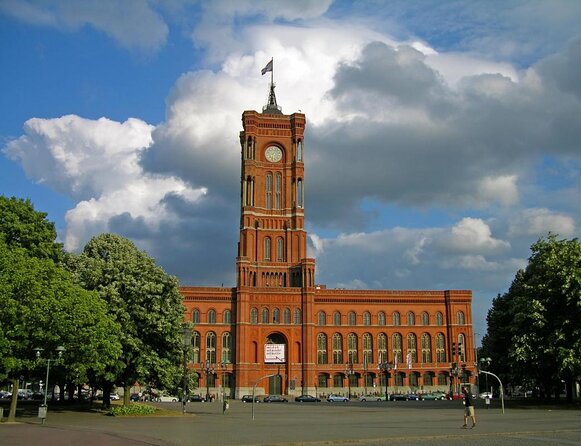
Berlin is spread out. Its major sights are not all clustered around one pretty old center, so walking between them can eat up valuable time. A bike gives you a practical middle ground: faster than walking, more open and flexible than a bus, and close enough to notice changes in the city from one block to the next.
This is not a strenuous cycling challenge. The available comments describe a comfortable, relaxed pace, and the bicycles are regarded as easy to ride. You receive a bicycle and helmet, with infant seats available on request. Children are welcome, but anyone underage must be accompanied by an adult.
The group size is capped at 15 people, with a minimum of four required for the outing to operate. That is a useful balance. You get the social feel of a group ride, but the guide can still stop, answer questions, and keep the group together.
You will meet at Free Berlin Bike Tours & Rental at Poststraße 11, near Nikolaiviertel. The tour returns to the same point. Bring clothing suited to the forecast, since the ride operates in all weather. Food and drinks are not included, so plan a snack or meal before or after the ride.
More Bike Tours in Berlin
- Berlin: Sights and Highlights Bike Tour with a Local Guide
★ 4.8 · 2,698 reviews - Berlin Highlights 3-Hour Bike Tour
★ 5.0 · 948 reviews - Berlin City Bike Tour with Beer Garden Stop
★ 5.0 · 917 reviews
Nikolaiviertel and the beginnings of Berlin
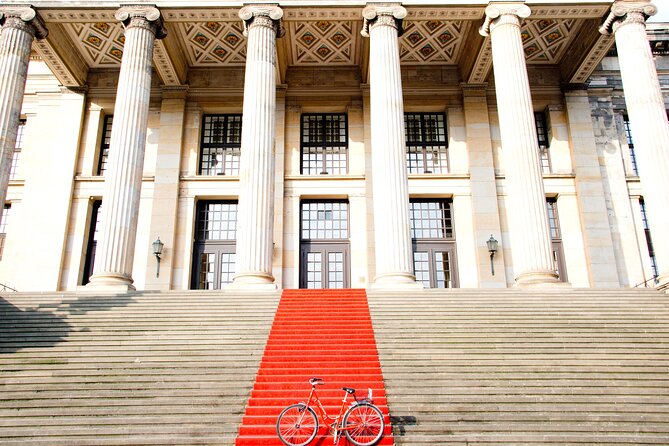
The ride starts in Nikolaiviertel, a small area with an old-town feel near the Spree. Much of what you see here was created in the late 1980s, so this is not an untouched medieval quarter. Still, its narrow streets and traditional styling offer a pleasant opening to a city that can otherwise feel very broad and modern.
This first stop is brief, about 10 minutes, but it helps set the stage. Berlin did not begin as a grand imperial capital. It grew from settlements around the river, and the Nikolaiviertel gives the tour a sense of that earlier city before the route moves into royal, political, and twentieth-century Berlin.
You will also pass the Berlin TV Tower. Opened in 1969, it was the second-tallest building in the world at the time. The tower is one of the clearest reminders that East Berlin once wanted to project confidence, modernity, and technical power. You may not stop for a tower visit, so treat this as an orientation point rather than a ticketed attraction.
Bebelplatz and the weight of Berlin’s past
Bebelplatz is one of the tour’s most layered stops. Around the square are Berlin’s old university, the former opera house, St. Hedwig’s Cathedral, and other grand buildings that create a classic central Berlin panorama.
The square is also linked to the Nazi book burning of 1933. Thousands of books were burned publicly here, and the memorial asks you to consider how a society can turn against free thought and culture. The stop usually lasts about 10 minutes, but the subject can make it feel longer in a useful way.
The nearby university is associated with more than 25 Nobel Prize winners, including Albert Einstein, and with major figures such as Karl Marx. Several guides connected with this tour have studied there, giving them a personal connection to the area. That detail can make the stop feel less like a standard list of famous names and more like a place still tied to Berlin’s academic life.
One strength of this tour is its willingness to spend time on difficult subjects. If you want only architecture and light sightseeing, the emphasis may feel heavy. If you want an honest introduction to Berlin, it gives important context early.
Checkpoint Charlie and the divided city
On the English-language version, the route includes Checkpoint Charlie, the best-known former border crossing between East and West Berlin. The site is now surrounded by commercial development and can feel theatrical, but its importance comes from what the crossing represented during the Cold War.
A guide can help you separate the famous image from the larger story. Berlin was not simply divided by a line on a map. Families, workplaces, neighborhoods, and daily routines were split by a heavily guarded border. The 10-minute stop is short, so you should not expect a full museum visit or a detailed account of every escape attempt.
The listing specifically says Checkpoint Charlie is included only in the English version, while Prenzlauer Berg is included only in the German version. If you are choosing by language, check the route carefully. The English tour appears to favor the central landmarks and the city’s political history.
Same city, a completely different kind of day:
- Berlin: Reichstag, Dome and Government District Guided Tour
★ 4.7 · 18,288 reviews - Berlin: 1-Hour City Tour by Boat with Guaranteed Seating
★ 4.3 · 16,993 reviews - Berlin: Boat Tour Along the River Spree
★ 4.4 · 11,252 reviews - Discover Berlin Half-Day Walking Tour
★ 5.0 · 9,624 reviews
Potsdamer Platz, from nightlife to no-man’s-land
Potsdamer Platz gives you one of Berlin’s best lessons in urban change. Before World War II, it was known for heavy traffic and nightlife during the Roaring Twenties. During the division of Berlin, it became a broad empty zone near the Wall.
After reunification, the area turned into one of Europe’s largest construction sites. Modern office towers and public spaces now fill ground that once symbolized separation. The stop is not just about buildings. It shows how Berlin has repeatedly rebuilt itself, sometimes with confidence and sometimes with visible uncertainty.
Cycling makes this point especially well. You move through the city rather than viewing it from a single platform. The contrast between older streets, open memorial spaces, and modern development becomes clear as the route connects them.
The Holocaust Memorial and a serious pause
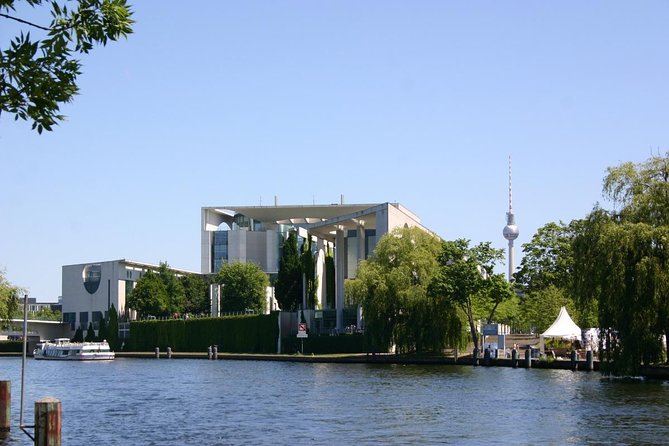
The Memorial to the Murdered Jews of Europe is among the most important stops on the ride. Its field of concrete stelae creates an unsettling, disorienting space close to the Brandenburg Gate. The tour treats it as a place for reflection on the crimes of Nazi Germany and on Germany’s effort to confront that past rather than hide it.
The stop is listed at about 10 minutes. That is enough for an introduction, but not enough for the nearby underground information center if you want to study the names and family stories in detail. I would treat the bike tour as a first look, then return on your own if this subject matters deeply to you.
This is also where the tour’s tone becomes clear. The guides are not only pointing out photo stops. They are explaining why these places matter. Rufus, who studied political science, was praised for connecting Holocaust themes, the Berlin Wall, and the city’s monarchic past. Other guides, including Simone and Jake, were singled out for making serious history understandable while keeping the ride personable.
Tiergarten and the Brandenburg Gate
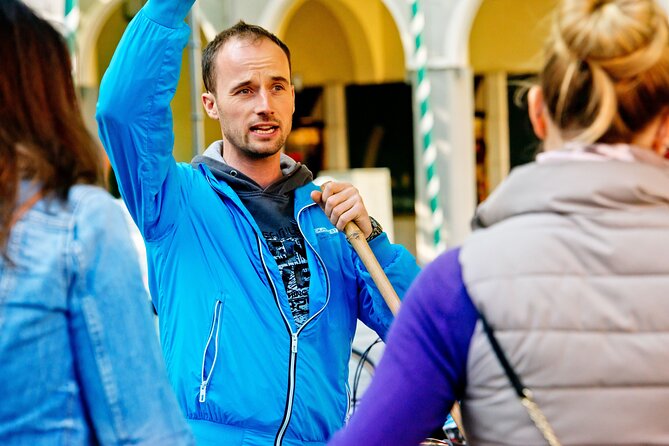
After the memorial, the route moves toward Tiergarten, Berlin’s large central park. Its name means Garden of the Animals, a reference to its earlier use as a hunting ground rather than its modern purpose. This portion gives you a brief change of mood and a chance to pedal through open space.
Then comes Brandenburg Gate, Berlin’s defining monument. It has served as a royal entrance, a symbol used by Nazi propaganda, and an image of division and reunification. Today it is the city’s most recognizable meeting point.
The stop is about 10 minutes. You will have time to see the gate, take photos, and hear why it carries so much political weight. Do not expect a long private visit or access to areas closed to the public. The value is in seeing how the gate connects several eras of Berlin in one place.
The Reichstag and the modern government quarter
The Reichstag is Germany’s parliament, now known for its glass dome. The dome symbolizes public access and political transparency, though the building itself has a much more complicated past.
The bike tour typically presents the Reichstag from outside. It does not include entry to the dome, and no admission ticket is part of the experience. If you want to visit inside, arrange that separately and allow extra time. The ride gives you the useful overview, especially the way the Reichstag sits among the modern government buildings.
Guides also tell amusing stories about Germany’s political center, sometimes comparing it with the White House. The humor can lighten a serious route, although one person felt that a guide used too much coarse language. Guide style varies, so this is worth considering if you prefer a formal presentation.
Museum Island and Berlin’s Spree Athens
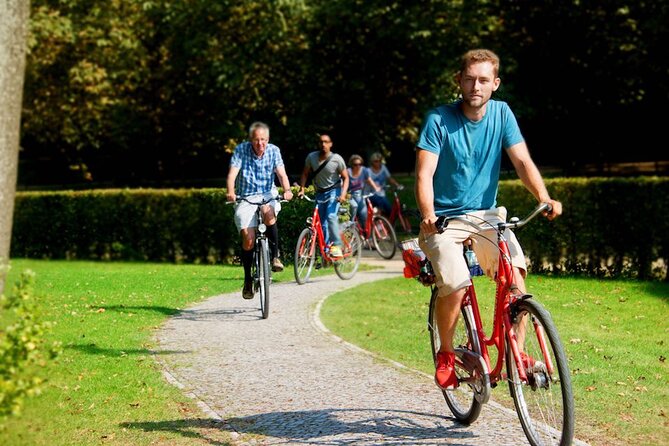
The final major stop is Museum Island, the celebrated group of museums and monumental buildings along the Spree. The nickname Spree Athens points to Berlin’s nineteenth-century ambition to create a grand cultural center modeled on classical ideals.
The 10-minute stop gives you an architectural overview rather than entry to the museums. There are no museum admissions included, so plan a separate visit if you want to see the Pergamon Museum collection, the Neues Museum, or the other institutions in detail.
For a first introduction, this is a strong ending. You have moved from Berlin’s modest beginnings in Nikolaiviertel to royal squares, Nazi memorials, Cold War landmarks, reunification projects, government buildings, and cultural institutions. The route gives you a useful mental map for later sightseeing.
What the guide can add to the ride
The guide is the most important variable here. Several guides have been praised for making the ride both informative and relaxed. Jake is repeatedly described as engaging, funny, and good at adapting the route to a group’s interests. Simone is noted for her enthusiasm and clear explanations, while Marius is praised for going beyond expectations.
Rufus brought political science training to the discussion, and Luka was credited with giving first-time visitors a strong introduction. Reiko was appreciated for humor and practical recommendations. These details matter because the itinerary alone is fairly standard. The difference comes from how the guide connects each stop.
The feedback is not uniformly perfect. One English-language ride was difficult to understand because of the guide’s command of English. Another person felt the tour focused too much on World War II and not enough on art. A separate comment described a newer guide as less polished and raised concerns about smoking during the ride.
That does not cancel the strong overall record, but it is a fair warning: guide quality can vary by date and language. The operator offers English, German, and French options, depending on the selection you make. If clear English is essential, confirm the language option when booking and be ready to ask questions during the ride.
Is $42.34 a fair price?
At $42.34 per person, the tour is a reasonable purchase if you value orientation, transport, and commentary in one package. You receive the bicycle, helmet, professional guide, and roughly three hours of sightseeing. Since many central landmarks are covered, the price can save you time and help you decide where to return later.
It is less useful if you want detailed interior visits. The tour does not include food, drinks, museum admission, the Reichstag dome, or extended time at the memorials. You are paying for movement between sights and interpretation, not a series of admissions.
The small group also improves the value. A maximum of 15 people means you can usually hear the guide and stop for questions. The Free Berlin concept lets each guide design the route, so no two outings need to feel exactly alike. That flexibility is appealing, though it also means the exact rhythm can vary.
Free cancellation is available up to 24 hours before the start time for a full refund. Changes or cancellations inside that window are not accepted for a refund. The activity needs at least four participants to operate, and if the minimum is not reached, you are offered another date or experience, or a full refund.
Who will enjoy this Berlin bike tour?
I would choose this for a first visit, especially if you have only a few days in Berlin. It covers the sights most people want to place on a map, while the guide supplies the political and historical links that make the city easier to understand.
It also suits families with older children and teenagers. Children are welcome, and the pace is described as manageable. Still, the Holocaust Memorial, book burning site, Nazi history, and Cold War material require maturity. One family found the substantial historical explanations rewarding for children aged 12 and 15, but younger children may find the stops slow or serious.
The tour is a good match for anyone who wants to cycle but does not want a hard workout. You will cover ground, yet the scheduled stops keep the pace moderate. It is also useful for independent visitors who want practical suggestions for the rest of their stay.
I would think twice if art museums, neighborhood life, or Berlin’s creative culture are your main goals. The English route includes Museum Island as an architectural stop, but it does not provide museum entry. Prenzlauer Berg, with its bohemian atmosphere and post-reunification character, is listed for the German version rather than the English one.
Should you book it?
Book this tour if you want a clear, fast introduction to central Berlin, comfortable cycling, and serious historical context. The strongest value comes from the combination of transport and storytelling, especially with an engaging guide such as Jake, Simone, Marius, or Rufus.
Skip it if you want long photo stops, museum interiors, or a lighter focus on Berlin’s past. For most first-time visitors, though, three hours on a bike is a smart way to see the city’s major symbols and decide what deserves a closer look later.
FAQ
How long is the Berlin guided bike tour?
The tour lasts approximately three hours.
Where does the tour start?
It starts at Free Berlin Bike Tours & Rental, Poststraße 11, 10178 Berlin, Germany.
Where does the tour end?
The activity ends back at the starting meeting point.
What sights are included?
The route includes Nikolaiviertel, Bebelplatz, Checkpoint Charlie on the English version, Potsdamer Platz, the Holocaust Memorial, Tiergarten, Brandenburg Gate, the Reichstag, and Museum Island. The TV Tower and other notable buildings are also viewed along the way.
Is the bicycle included in the price?
Yes. Bicycle use and a helmet are included.
Is the tour offered in English?
Yes. The tour operates in English, German, and French, depending on the option selected. Checkpoint Charlie is listed as part of the English version.
Can children join the tour?
Yes. Children are welcome, and infant seats can be provided on request. Children must be accompanied by an adult.
What happens if I need to cancel?
You can cancel up to 24 hours before the start time for a full refund. Cancellations or changes made less than 24 hours before the start time are not accepted for a refund.
More Cycling Tours in Berlin
- Berlin Highlights: 3-Hour Bike Tour
★ 4.9 · 809 reviews - Berlin Highlights Sightseeing Bike Tour in Small Groups
★ 5.0 · 652 reviews - Berlin: Alternative Bike Tour of Kreuzberg & Friedrichshain
★ 4.7 · 548 reviews - Berlin: Guided Bike Tour of the Berlin Wall and Third Reich
★ 4.7 · 499 reviews
Just added around Berlin
- Love and War in Berlin: Self-Guided Story Puzzle Walk★ 5.0 · 7 reviews
- Rickshaw Tours Berlin – Groups of up to 16 people with several rickshaws★ 4.0 · 97 reviews
- eSIM for Germany and 34 European Countries★ 4.5 · 16 reviews
- Walking on the Wall: 3-Hour Tour in Berlin★ 4.5 · 34 reviews
- Warnemuende Shore Excursion: Berlin Private Sightseeing Tour from Rostock★ 5.0 · 4 reviews
- Your ticket to The Wall Museum Berlin★ 3.0 · 60 reviews
- Warnemuende Shore Excursion: Private Berlin Tour★ 4.5 · 27 reviews
- Berlin’s Gay, Lesbian, and Queer Scene Small-Group Walking Tour★ 4.5 · 66 reviews
Bike Tours, compared.
Sights and Highlights Bike Tour with a Local Guide
Read our review →
Classic Mike’s Bike Tour daily @ 11.30 incl Beer Garden & Surfers
Read our review →

Browse the lists this tour appears in