
Reviewed · BIKE TOURS
Berlin: Experience the Alternative Kreuzberg on a Bike Tour
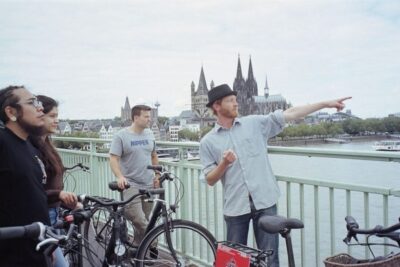
Berlin’s alternative side is easiest to understand from a bicycle seat. This three-hour ride moves from the polished center into Kreuzberg, Friedrichshain, and former border areas where squatters, artists, migrant families, political activists, and new businesses have all left their mark. You’ll see Berlin as a city still changing beneath its famous Wall story.
I like the personal guide style, with guides such as Jake, Bjorn, Karl, Rico, Rufus, and Vincent adding local stories and humor. I also like the route’s sharp contrasts, from peaceful Engelbecken and the Spree waterfront to the rough traffic and concrete of Kottbusser Tor.
The main consideration is that this is as much a talking tour as a cycling tour. You stop often, and one rider felt there was less time in the saddle than expected. Bike chains may also mark loose trousers, so dress with care.
In This Review
- Key points to know before you book
- Why this ride gets beyond postcard Berlin
- Starting at Nikolaiviertel, then leaving the old city behind
- Kreuzberg: immigration, politics, and everyday city life
- Engelbecken and Das Baumhaus: quiet corners with big stories
- Squats, artists, and the river near YAAM
- East Side Gallery and Oberbaum Bridge
- Osthafen and the Spree
- Falckensteinstraße and Görlitzer Park
- Liegnitzer Straße and the car loft
- Waterfront life, boule, and the many faces of Kreuzberg
- Admiral Bridge and the hard edge of Kottbusser Tor
- Is $42.33 a fair price?
- Fitness, clothing, weather, and family details
- Who should choose this Berlin bike tour?
- Should you book the Alternative Kreuzberg Bike Tour?
- FAQ
- How long does the bike tour last?
- Where does the tour start?
- Where does the tour finish?
- What time does the tour start?
- Is bicycle use included?
- Is the tour offered in English?
- Can children join the tour?
- What happens if the weather is poor?
- Can I cancel for a full refund?
Key points to know before you book
- Kreuzberg is the main event: Expect stories about immigration, squats, artists, anarchist politics, redevelopment, and daily life.
- The route crosses Berlin’s old divide: The East Side Gallery, Oberbaum Bridge, Osthafen, and Wall-era border zones give the ride strong historical weight.
- You see places missed on a standard city tour: Görlitzer Park, Falckensteinstraße, Liegnitzer Straße, Engelbecken, and Das Baumhaus show a less polished Berlin.
- Guides shape the route: The Free Berlin concept lets each guide design a personal route, so the exact order and emphasis can vary.
- It is active but not especially strenuous: Frequent stops make the ride manageable for most participants, including families.
- Practical value is solid: At about $42.33 per person, the price covers the bicycle, helmet, and a three-hour guided route.
Why this ride gets beyond postcard Berlin
Many first-time visits to Berlin focus on the Brandenburg Gate, Museum Island, the Reichstag, and the Wall memorials. Those places matter, but they do not fully explain why Berlin feels so open-ended and contradictory.
This ride takes you into districts where the city’s story is less tidy. Kreuzberg is not presented as a single theme park of murals and nightlife. You see the tension between low-cost community life and expensive development, between Turkish markets and luxury apartments, between alternative culture and ordinary urban pressure.
The guides are a major part of the experience. Rico has been praised for keeping the ride safe while adding humor and strong historical detail. Jake is known for personal stories and careful explanations. Bjorn brings a thoughtful look at alternative culture, while Karl has a lively way of sharing small facts. Vincent has a particular strength in explaining Berlin’s communities and cultural changes.
Since each guide creates a route, no two outings need to feel identical. That is a plus if you enjoy a less scripted experience. It also means you should not expect every stop to receive the same amount of time on every departure.
More Bike Tours in Berlin
- Berlin: Sights and Highlights Bike Tour with a Local Guide
★ 4.8 · 2,698 reviews - Berlin Highlights 3-Hour Bike Tour
★ 5.0 · 948 reviews - Berlin City Bike Tour with Beer Garden Stop
★ 5.0 · 917 reviews
Starting at Nikolaiviertel, then leaving the old city behind
The meeting point is Free Berlin Bike Tours & Rental at Poststraße 11, near Nikolaiviertel. The opening stop lasts only about five minutes, but it sets up the central idea of the ride.
Nikolaiviertel represents an older, more established version of Berlin. The tour uses it as a starting line before moving toward districts that better reflect the city’s modern urban life. That contrast is useful. You begin with a familiar historic center, then pedal away from the part of Berlin most visitors already know.
The listed start time is 2:24 pm, and the activity returns to the same meeting point after roughly three hours. The start and finish are convenient if you want to continue sightseeing afterward, though the late afternoon timing means you should keep your evening plans flexible.
Kreuzberg: immigration, politics, and everyday city life
Kreuzberg receives about 30 minutes of focused attention, the longest stop in the published route. That makes sense. This district carries much of the tour’s character.
You will hear about Kreuzberg as a meeting place for different communities, especially its Turkish and other migrant populations. You will also look at the district’s alternative scene, including squatting, political activism, artists, and people who built unconventional lives in the spaces available to them.
What I appreciate here is the refusal to reduce Kreuzberg to one label. It can be rough, creative, social, commercial, residential, and highly fashionable within a few streets. The point is not simply to find an edgy neighborhood. It is to understand how Berlin’s identity formed through conflict and adaptation.
Engelbecken and Das Baumhaus: quiet corners with big stories
Engelbecken offers a short pause in an unexpected setting. It sits among prefabricated buildings, older structures, and newer architecture, creating a calm pocket inside a dense part of the city.
This is a good stop for understanding how sharply Berlin’s districts can change from block to block. The peaceful water and open space offer a break from traffic, but the surrounding buildings keep the city’s political and architectural history close at hand.
Das Baumhaus, or the Treehouse by the Wall, carries a more unusual story. The stop focuses on a guest worker who came to Berlin, adapted quickly to Kreuzberg’s independent spirit, and claimed a small gardenhouse beside the Wall. The story captures the bold, improvised attitude that shaped parts of the district.
You do not need to know every detail of Berlin’s counterculture before joining. The guide explains how ordinary people used creativity and nerve to make a place for themselves in a divided city.
Same city, a completely different kind of day:
- Berlin: Reichstag, Dome and Government District Guided Tour
★ 4.7 · 18,288 reviews - Berlin: 1-Hour City Tour by Boat with Guaranteed Seating
★ 4.3 · 16,993 reviews - Berlin: Boat Tour Along the River Spree
★ 4.4 · 11,252 reviews - Discover Berlin Half-Day Walking Tour
★ 5.0 · 9,624 reviews
Squats, artists, and the river near YAAM
The ride also passes a former squatting site that became an important place for artists. Squatting helped shape Berlin’s alternative scene, especially in the 1980s and again during the early 2000s. Over time, the building became a space for artists of different kinds.
This part of the route helps explain why Berlin has attracted creative people for so long. The story is not only about finished galleries or famous clubs. It is also about buildings being reused, communities organizing themselves, and neglected spaces gaining a second life.
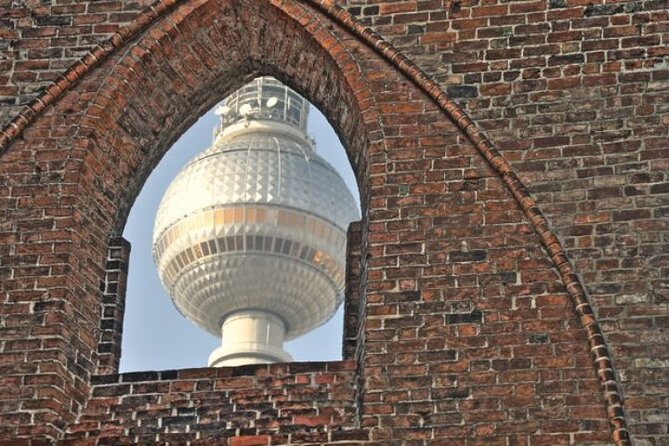
Near YAAM, the view becomes one of the tour’s visual highlights. From this area you can look toward the TV Tower, Holzmarkt, Oberbaum Bridge, and the Spree. It is a useful pause because the view combines several versions of Berlin at once: old East Berlin symbols, new riverside projects, nightlife, public space, and former industrial land.
If you enjoy city views, this is one of the better places to stop and take in the scale of the area. The ride is not only about street-level details.
East Side Gallery and Oberbaum Bridge
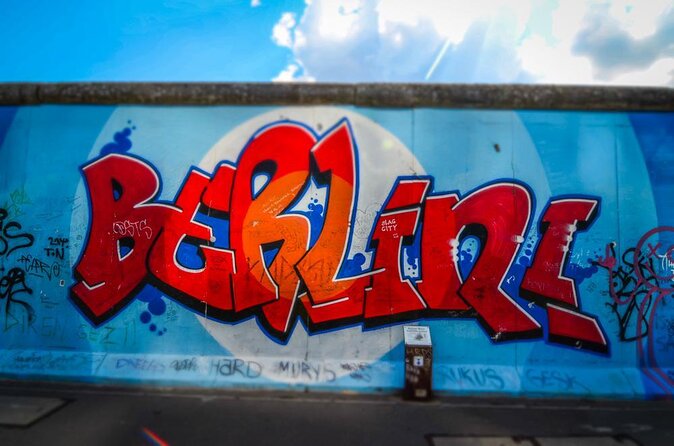
The East Side Gallery is the longest remaining section of the Berlin Wall and is covered with large-scale art. You get about ten minutes here, enough to see part of the murals and understand how the Wall has shifted from a barrier into a public artwork.
The setting matters. The Wall runs beside a newly designed business quarter, so the site makes Berlin’s rapid change easy to see. Art, commercial development, memory, and tourism all share the same narrow stretch of land.
Oberbaum Bridge follows with another short stop. This landmark once marked a crossing between divided parts of the city and now links Kreuzberg with Friedrichshain. Its meaning is both practical and symbolic. You cross a bridge that once represented restriction and separation, now surrounded by traffic, restaurants, offices, clubs, and riverside activity.
The stop works best when the guide connects the bridge to the wider idea of crossing borders. That can mean national borders, political divisions, social boundaries, or the lines between old and new Berlin.
Osthafen and the Spree
Osthafen was once restricted borderland. Today, it is associated with young urban creatives and new development along the Spree. From the river, you gain a clearer sense of how heavily the former East German state controlled movement and access.
The Wall was not placed randomly. Rivers, rail lines, industrial land, and open edges all became part of a system designed to limit freedom. Standing near the Spree makes that geography easier to grasp than a history lesson indoors.
This is also one of the ride’s more restful moments. The river gives you a short break and a pleasant view, though the stop is only about five minutes. You will not spend a long time lingering, so keep your camera ready.
The route includes a distinctive sculpture that has prompted several interpretations. The official explanation is said to be the least convincing one, which fits the playful and questioning tone of the tour. It is a small detail, but these odd stories often make a city easier to remember.
Falckensteinstraße and Görlitzer Park
Falckensteinstraße is a strong example of Kreuzberg’s mixture of buildings, people, and history. The street shows how a city can feel dense and chaotic while still offering pockets of escape and everyday comfort.
You might see the district as both ordinary and theatrical here. That is part of its appeal. It is not a preserved historic quarter. It is a living neighborhood where different social groups and building styles sit close together.
Görlitzer Park occupies the site of a former railway station. Its conversion into a park reflects the way Berlin has repeatedly reused leftover urban spaces. The stop also addresses the uneasy border between alternative living and disorder.
This is not a polished park visit. The guide’s explanation gives you a better way to read the site, including the pressures and contradictions that come with open public space in a large city.
Liegnitzer Straße and the car loft
Liegnitzer Straße brings another sharp contrast. In the middle of a neighborhood associated with political activism, anarchists, and long-established Berlin residents, you find a striking example of modern luxury: a building where owners can take their cars up to their balconies.
The detail is almost comic, but it says something serious about redevelopment. High-end projects can appear directly beside long-standing communities and alternative spaces. Berlin’s old reputation and new wealth are now neighbors, sometimes uncomfortably close.
This is the kind of stop that gives the tour more substance than a simple list of murals and cafés. You begin to notice who can afford to stay, who has been pushed out, and how quickly a neighborhood’s image can change.
Waterfront life, boule, and the many faces of Kreuzberg
The ride includes a waterfront stretch with a more relaxed feel, including the Turkish market held on Tuesdays and Fridays. The market is not guaranteed on every departure, since it depends on the day, but the route places you in an area where food, trade, and riverside life meet.
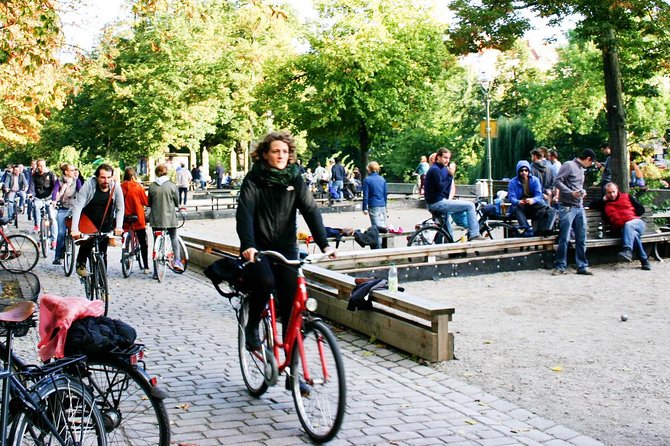
Another stop offers a short break in a bohemian neighborhood where people gather to play boule. This is a small scene, yet it helps balance the heavier Wall and redevelopment stories. You get a glimpse of people simply enjoying the city, rather than hearing only about its conflicts.
The guide also tackles Kreuzberg’s reputation as a home for anarchists, slobs, and survival artists. The useful point is that the district is much broader than those stereotypes. It includes families, shopkeepers, artists, professionals, activists, nightlife crowds, and people who have lived there for decades.
That range is one of the best reasons to choose this ride. You are not shown an artificial alternative Berlin. You are shown a district where many versions of urban life sit side by side.
Admiral Bridge and the hard edge of Kottbusser Tor
Admiral Bridge is a pleasant late-tour stop. In summer, people gather there to begin an evening in the bars or watch the sunset. The atmosphere is informal, and you are encouraged to take the city as you find it.
The final stop at Kottbusser Tor changes the mood completely. Known locally as Kotti, it is defined by heavy traffic, stark 1970s architecture, and a visible drug scene. The contrast with the waterfront stops is deliberate.
Kotti can feel intense, especially if you prefer neat streets and conventional sightseeing. I would not choose this tour expecting Berlin to be presented in a softened way. Its value is that the guide explains how these difficult places fit into the city rather than skipping them.
Is $42.33 a fair price?
At about $42.33 per person, the tour is reasonably priced for three hours of guiding, bicycle use, helmet hire, and a route through several districts that are difficult to cover efficiently on foot.
The value is strongest if you want interpretation. You can rent a bicycle and ride through Kreuzberg on your own, but you may pass the former railway station, Wall sites, squats, and redevelopment zones without understanding their connections. A good guide turns scattered sights into a story.
The price does not include food or drinks. Bring water, and plan to buy anything else separately. One account describes a relaxing river ride with a cold beer on board, but the listed tour inclusions do not promise drinks, so do not book expecting that feature.
The group size ranges from four to 15 people. That is small enough for questions without promising a private tour. The minimum group requirement also matters in quieter periods. If too few people book, the operator may offer another date or experience, or provide a full refund.
Fitness, clothing, weather, and family details
The ride is family-friendly, and children are welcome when accompanied by an adult. Infant seats can be provided on request. Most people should manage the pace because the group stops regularly for explanations, and one French-language account described it as suitable for everyone and not overly sporty.
Still, you are cycling in a city. Comfortable clothing and sensible shoes are wise. Wear trousers that do not hang near the chain, since a loose leg can pick up grease. The operator runs the tour in all weather, so check the forecast and dress for rain, wind, or sun.
The experience is offered in English, with German available depending on the option selected. The listed booking details show English for this departure, so check your chosen language before paying.
Free cancellation is available up to 24 hours before the start time. Changes or cancellations inside that window are not accepted for a refund.
Who should choose this Berlin bike tour?
I would recommend it to you if you have already seen Berlin’s main monuments or want a first look at the city that goes beyond them. It suits people interested in urban change, Wall history, street art, and local politics more than those seeking a fast list of famous sights.
It is also a good choice if you like guides who tell personal stories. The strongest guide feedback points to humor, safety, clear explanations, and the ability to connect difficult history with ordinary streets.
Families can join, and casual cyclists should be comfortable with the frequent pauses. You may want a different activity if you dislike group cycling, need a highly predictable route, or expect three hours of constant riding.
Should you book the Alternative Kreuzberg Bike Tour?
Yes, if your idea of Berlin includes its contradictions. The ride gives you Wall art, bridges, parks, markets, river views, immigrant neighborhoods, artist spaces, redevelopment, and hard urban problems in one compact afternoon.
The route is not fully fixed, and the pace leaves plenty of time for explanations. That is its strength and its possible weakness. You gain context, but you do not cover every kilometer by bike.
With a 4.8 rating from 126 ratings and 97 percent of customers recommending it, the experience has a strong record. I would book it early, especially since it is often reserved about 10 days ahead, and I would choose it near the start of your Berlin stay so the guide can point you toward places worth revisiting.
FAQ
How long does the bike tour last?
The tour lasts approximately three hours.
Where does the tour start?
It starts at Free Berlin Bike Tours & Rental, Poststraße 11, 10178 Berlin, Germany.
Where does the tour finish?
The tour returns to the same meeting point.
What time does the tour start?
The listed start time is 2:24 pm.
Is bicycle use included?
Yes. Bicycle use and a helmet are included in the tour price.
Is the tour offered in English?
Yes. The activity is offered in English. German is also available depending on the option selected.
Can children join the tour?
Yes. Children are welcome, but they must be accompanied by an adult. Infant seats can be provided on request.
What happens if the weather is poor?
The tour operates in all weather conditions, so you should dress appropriately for the forecast.
Can I cancel for a full refund?
Yes. You can cancel at least 24 hours before the start time for a full refund. The tour also requires a minimum number of participants, and if that minimum is not reached, you may receive an alternative date or experience, or a full refund.
More Cycling Tours in Berlin
- Berlin Highlights: 3-Hour Bike Tour
★ 4.9 · 809 reviews - Berlin Highlights Sightseeing Bike Tour in Small Groups
★ 5.0 · 652 reviews - Berlin: Alternative Bike Tour of Kreuzberg & Friedrichshain
★ 4.7 · 548 reviews - Berlin: Guided Bike Tour of the Berlin Wall and Third Reich
★ 4.7 · 499 reviews
Just added around Berlin
- Love and War in Berlin: Self-Guided Story Puzzle Walk★ 5.0 · 7 reviews
- Rickshaw Tours Berlin – Groups of up to 16 people with several rickshaws★ 4.0 · 97 reviews
- Walking on the Wall: 3-Hour Tour in Berlin★ 4.5 · 34 reviews
- eSIM for Germany and 34 European Countries★ 4.5 · 16 reviews
- Warnemuende Shore Excursion: Berlin Private Sightseeing Tour from Rostock★ 5.0 · 4 reviews
- Your ticket to The Wall Museum Berlin★ 3.0 · 60 reviews
- Warnemuende Shore Excursion: Private Berlin Tour★ 4.5 · 27 reviews
- Berlin’s Gay, Lesbian, and Queer Scene Small-Group Walking Tour★ 4.5 · 66 reviews
Bike Tours, compared.
Sights and Highlights Bike Tour with a Local Guide
Read our review →
Classic Mike’s Bike Tour daily @ 11.30 incl Beer Garden & Surfers
Read our review →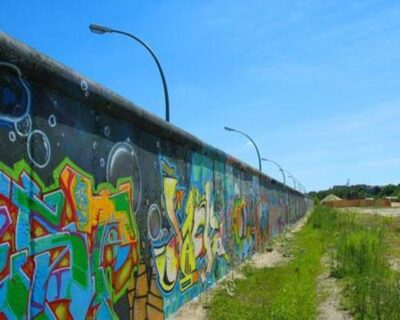
Browse the lists this tour appears in