Reviewed · GUIDED
Berlin: 4-Hour Guided Highlights Tour in Spanish
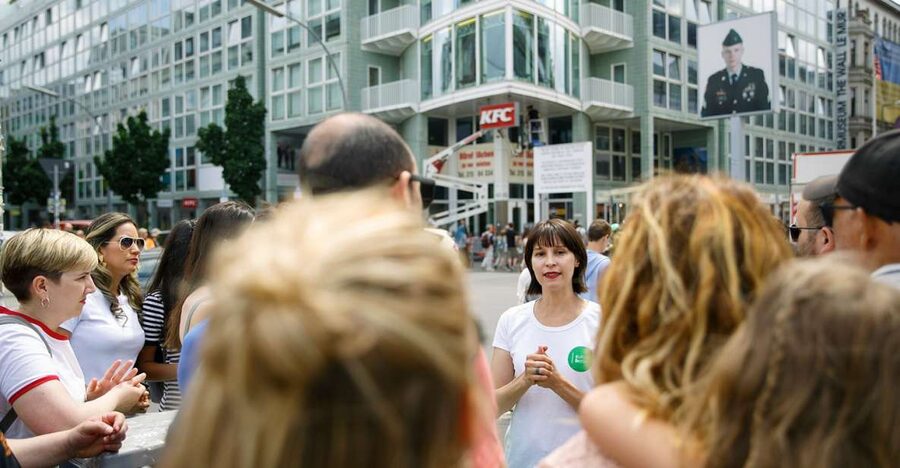
Berlin’s story comes into focus on foot, and this four-hour Spanish-language tour gives you a strong first look at it. You move from medieval Berlin near San Nicolas to Museum Island, Hitler’s rise, the Holocaust, the Berlin Wall, and modern Potsdamer Platz before finishing at Brandenburg Gate.
I like the clear route through central Berlin and the way the tour connects grand buildings with everyday life on both sides of the Wall. I also like the human angle: guides such as Evelyn, Celia, and Constantino have been praised for clear explanations, thoughtful discussion, and patience with slower walkers. The main drawback is simple: this is a long walking tour, and it is offered only in Spanish.
In This Review
- Key points at a glance
- From Alexanderplatz to Berlin’s earliest roots
- Museum Island and the Berliner Dom
- Unter den Linden and the old royal center
- Gendarmenmarkt, one of the city’s great squares
- Hitler’s rise and the remains of the Gestapo Headquarters
- The Holocaust Memorial and a moment of remembrance
- Understanding why the Berlin Wall was built
- Potsdamer Platz and the city rebuilt
- Finishing at Brandenburg Gate
- How much value do you get for $29?
- The Spanish-speaking guide makes the difference
- Who should book this walking tour?
- Should you book the Berlin Spanish highlights tour?
- FAQ
- What language is the tour offered in?
- How long does the tour last?
- Where does the tour begin?
- What time does the tour start?
- Where does the tour end?
- Which major sights are included?
- Does the tour explain the Berlin Wall?
- Is the tour wheelchair accessible?
- Can I cancel or pay later?
Key points at a glance
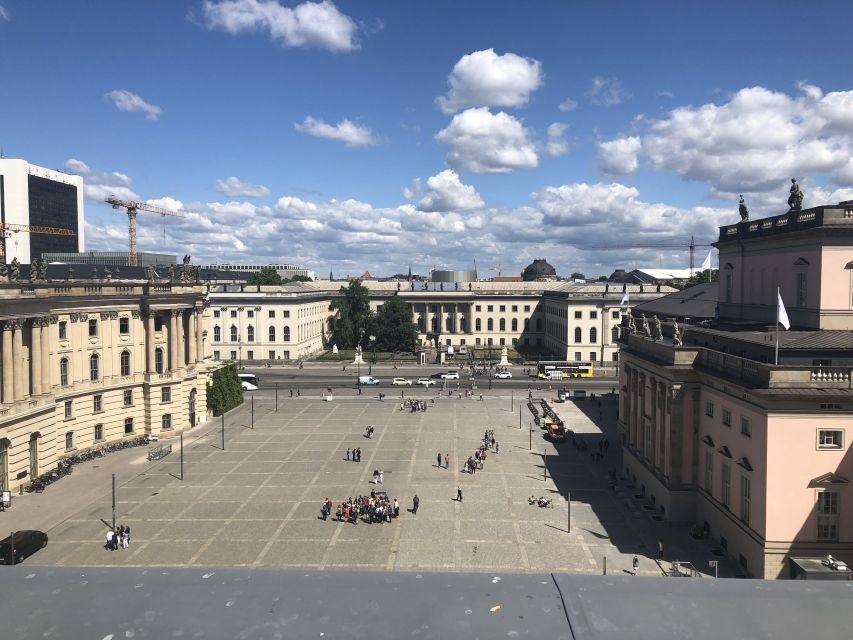
- Start beside the TV Tower at Alexanderplatz: Meet by the green Spanish tours flag, near Espresso House and the only entrance to the Fernsehturm.
- Follow Berlin’s story across centuries: The route links San Nicolas, Museum Island, Unter den Linden, Gendarmenmarkt, and Brandenburg Gate.
- Get serious Cold War context: Learn why the Wall was built, how East Germans tried to cross it, and what daily life felt like on both sides.
- Pause at major sites without museum entry: You see the Berliner Dom, Holocaust Memorial, former Gestapo Headquarters remains, Potsdamer Platz, and more from the city streets.
- Travel entirely in Spanish: Guides including Evelyn, Celia, and Constantino have led groups with warmth, clarity, and plenty of historical detail.
- Pay a modest price for a broad introduction: At $29 per person, the tour is good value if you want orientation and context rather than long indoor visits.
From Alexanderplatz to Berlin’s earliest roots
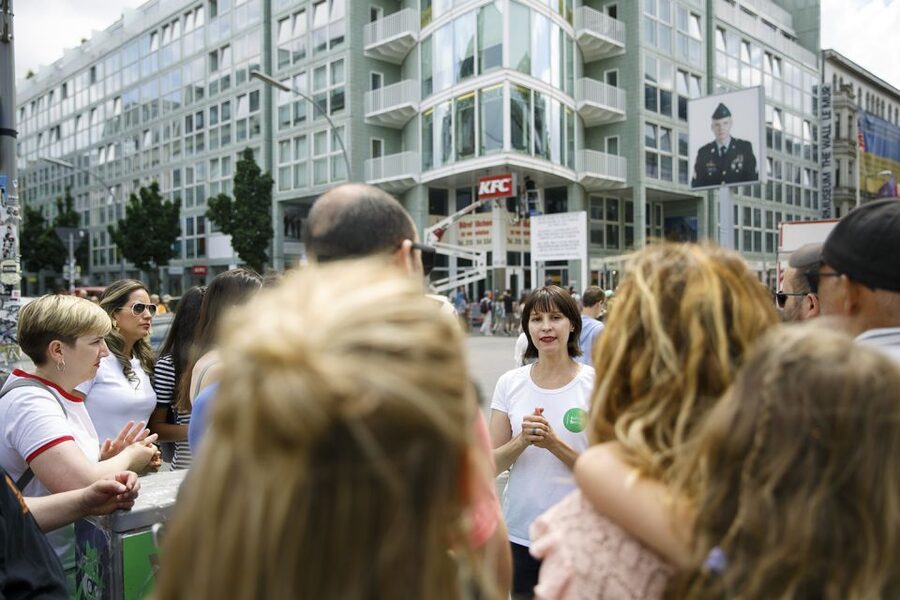
The tour begins at the TV Tower in Alexanderplatz, one of the easiest places in central Berlin to find. Look for a green flag marked tours en español, beside the only entrance to the tower, between the Fernsehturm and Alexanderplatz train station, near Espresso House.
That clear meeting point matters in a city with several large squares and many transport exits. Arrive ready to walk, since the route begins promptly at 10:00 every day and continues in rain or shine.
From Alexanderplatz, you head toward the San Nicolas neighborhood. This is where the guide introduces Berlin’s beginnings, giving you a useful frame for everything that follows. The early part of the route helps you see Berlin as more than a city of 20th-century conflict. It had older roots, political power, royal ambition, and urban change long before the Wall divided it.
I like beginning here because the tour does not throw you straight into a list of famous monuments. You first get a sense of how the city developed. A Spanish-speaking guide can also pause to explain terms, names, and events in a way that feels natural to you, rather than forcing you to keep up with a language you only partly understand.
A few more Berlin trips to weigh up
- Berlin: Reichstag, Dome and Government District Guided Tour
★ 4.7 · 18,288 reviews - Berlin: Government District around the Reichstag Guided Tour
★ 4.7 · 8,447 reviews - Berlin: Hidden Backyards Guided Walking Tour
★ 4.8 · 5,360 reviews
Museum Island and the Berliner Dom
Next comes Museum Island, a UNESCO World Heritage Site in the middle of Berlin. The tour takes you through this grand central area and past the Berliner Dom, the city’s striking cathedral.
This section is best treated as an outdoor introduction rather than a museum tour. The price includes a guided walk in Spanish, not admission to Berlin’s museums or the cathedral. If you want to visit those interiors, plan separate time before or after the tour.
The guide’s role here is to explain how the buildings fit into Berlin’s political and cultural center. You get the broad picture while standing among some of the city’s most recognizable architecture. That is useful on a first day, when you may not yet know which areas deserve a closer visit.
The pace should also help you decide what to return to. Museum Island can easily fill half a day or more on its own, so a short outdoor visit gives you orientation without committing your entire schedule. If museums are your main reason for visiting Berlin, remember that four hours of walking will not replace an indoor museum visit.
Unter den Linden and the old royal center
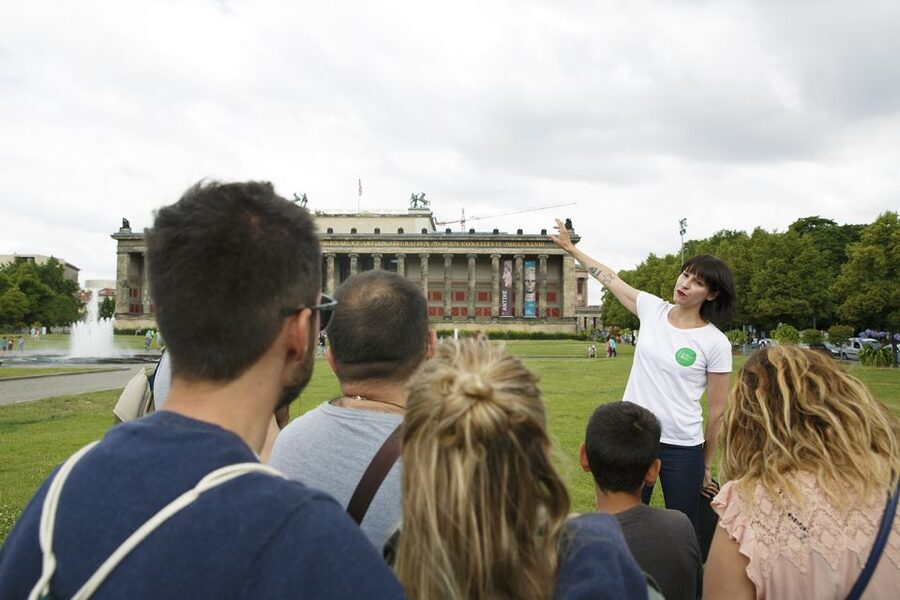
From Museum Island, the route continues along Unter den Linden, historically known as Kaisers Avenue. This broad boulevard leads past Humboldt University, the former Royal Library, and the State Opera.
Here, Berlin’s old power center becomes easier to read. Rather than seeing each building as an isolated photo stop, you can connect the avenue to Prussian rule, scholarship, music, and the state institutions that shaped the capital.
This is also a good stretch for listening. The sites are close enough together that a guide can keep the story moving without long transfers. You are still walking, though, so comfortable clothes are specifically recommended. The tour is listed as wheelchair accessible, but anyone who uses a wheelchair may still want to confirm the exact route and current street conditions before booking.
The route has an appealing mix of famous places and useful background. You get the photo value of grand architecture, but you also learn why this part of town mattered. That balance is one reason the experience works well as a first orientation to Berlin.
Gendarmenmarkt, one of the city’s great squares
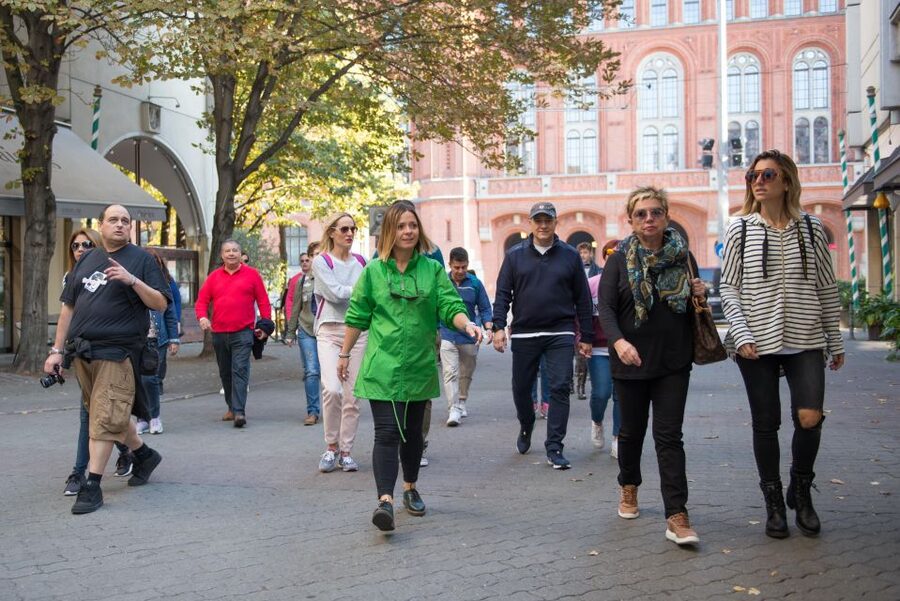
Gendarmenmarkt brings the tour to one of Berlin’s most handsome public spaces. You pause here for photographs, giving your feet a short break while the guide explains the setting.
A photo stop sounds basic, but it is welcome on a walking route this long. You have time to look around instead of snapping a picture while the group is already moving. The square also creates a natural pause between Berlin’s royal and cultural center and the darker chapters ahead.
The full schedule can include a break of roughly half an hour for coffee, a bathroom stop, and rest. That timing may vary, so do not count on it as a formal meal break, but it is helpful to know the tour is not necessarily four nonstop hours of walking.
If you are traveling with family, this pause can make a real difference. One guide, Evelyn, was especially praised for being patient with slower walkers. That suggests the tour can work for mixed-age groups, though you should still be comfortable spending much of the morning on foot.
Same city, a completely different kind of day:
- Berlin: 1-Hour City Tour by Boat with Guaranteed Seating
★ 4.3 · 16,993 reviews - Berlin: Boat Tour Along the River Spree
★ 4.4 · 11,252 reviews - Discover Berlin Half-Day Walking Tour
★ 5.0 · 9,624 reviews - Berlin: Hop-on Hop-off Bus Tour with Live Commentary
★ 4.3 · 8,579 reviews
Hitler’s rise and the remains of the Gestapo Headquarters
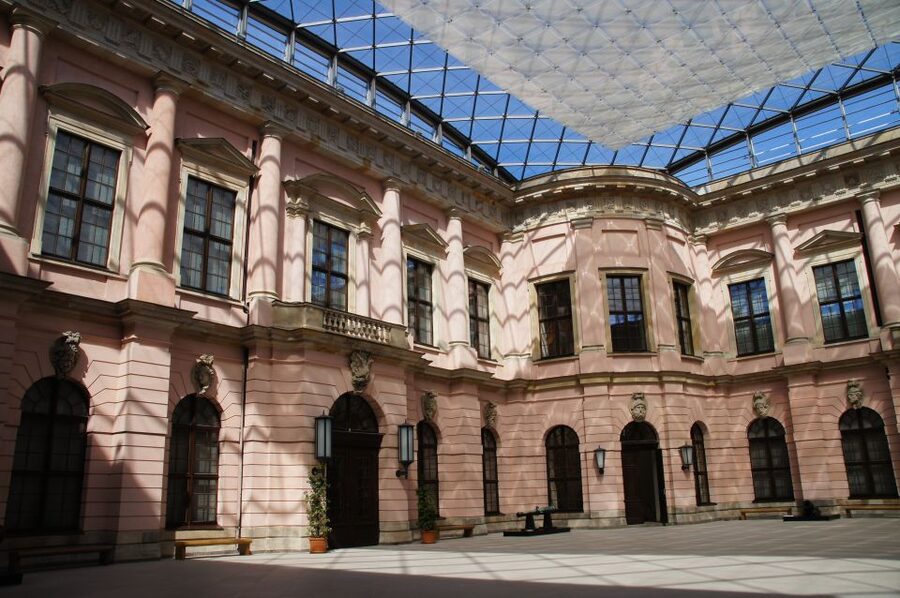
The mood changes as the tour turns to Hitler’s rise to power. You see the remains of the Gestapo Headquarters and hear how Berlin became the center of Nazi rule.
This part is not presented as a quick parade of monuments. The route uses surviving traces and city streets to explain how power took hold. That approach helps you connect political events to the places where they unfolded.
A good guide matters here. The subject can become a dry list of dates, or it can help you understand how ordinary life and government changed under dictatorship. The strongest descriptions of guides on this tour point to clear explanations and room for reflection rather than a rushed lecture.
You should expect serious material. This is not a light sightseeing walk from start to finish. The shift from royal Berlin to Nazi Berlin is deliberate, and it gives the later Holocaust Memorial stop more weight.
The Holocaust Memorial and a moment of remembrance
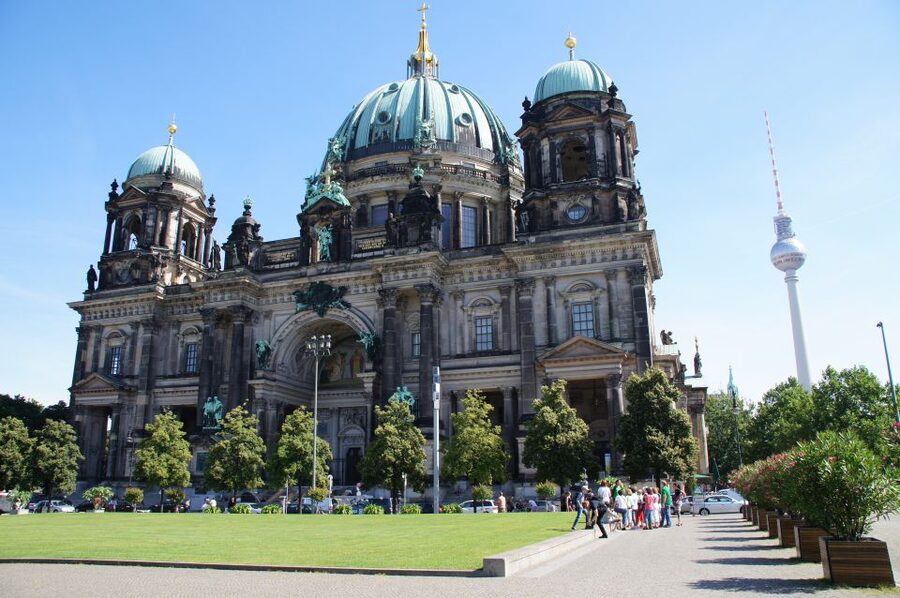
The Memorial to the Murdered Jews of Europe is one of the tour’s most important stops. The guide helps you remember the scale and human cost of the Holocaust while you stand in the heart of present-day Berlin.
The memorial is powerful partly because it does not offer a simple, comfortable message. Its rows of concrete blocks create a space that feels different as you walk through it. The tour gives you context so the memorial is not just an unusual place for photographs.
This is an area where a thoughtful guide can improve the experience. Celia, one of the guides associated with this tour, was praised for encouraging debate and reflection while keeping the subject understandable and human. That style will suit you if you want more than dates and official facts.
The stop also makes clear that Berlin’s central sights are not all cheerful attractions. You will spend part of the tour confronting difficult history. That honesty is a strength, but it is worth knowing before you book, especially if you are looking for a purely lighthearted city walk.
Understanding why the Berlin Wall was built
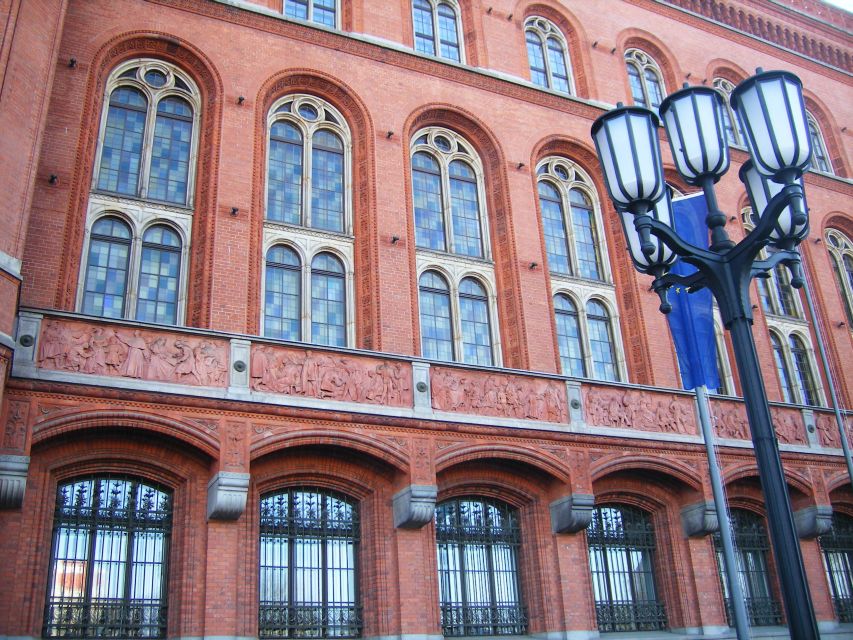
The tour then turns to Berlin’s division. You learn why the Wall was constructed, how it split East and West Berlin, and what daily life looked like for people on each side.
This is the section many people will value most. The Wall is often reduced to a symbol of the Cold War, but the guide explains its effect on local residents. Streets, families, jobs, friendships, and routines were all shaped by the border.
You also hear stories of East Germans who risked their lives trying to reach West Berlin. Those accounts make the Wall easier to understand as a lived reality, not just a line on a map or a piece of painted concrete.
The tour covers the Wall’s birth and fall, so you get a compact timeline of the division. It will not provide every detail of Berlin’s Cold War story in four hours, but it gives you the basic causes, human consequences, and turning point you need for later sightseeing.
This is where the Spanish format can be especially valuable. If political history is not your strongest subject, a guide can explain the difference between East and West in everyday terms. You can ask questions and follow the links between events instead of trying to translate a plaque while the group moves on.
Potsdamer Platz and the city rebuilt
Potsdamer Platz shows a very different Berlin. After the weight of the Wall and Nazi history, you arrive in a modern district that represents the city’s postwar rebuilding and new identity.
The contrast is part of the point. Berlin does not hide its past, but it also does not look frozen in it. The route lets you see how a former border zone became a major modern public space.
This stop is particularly useful if you want to understand Berlin’s unusual mix of old and new. You see historic monuments, surviving wartime traces, Wall-era stories, and modern architecture in one continuous walk.
Do not expect a long architectural tour of every building at Potsdamer Platz. The emphasis remains on the broad story of the city and its transformation. Still, it is a satisfying visual change before the final stop.
Finishing at Brandenburg Gate
The tour ends at Brandenburg Gate, Berlin’s most famous symbol. Ending here gives the route a strong sense of shape: you begin near Alexanderplatz, move through the city’s older center and its hardest chapters, and finish at a monument linked with Berlin’s modern reunification.
Brandenburg Gate is also a practical place to continue exploring. From here, you can decide what deserves a closer visit, return to a location that caught your attention, or simply use the area as a central reference point for the rest of your day.
I like this ending better than finishing at a random side street. You have a clear landmark, a natural photo opportunity, and a final reminder that Berlin’s story is about division and connection at the same time.
How much value do you get for $29?
At $29 per person, this is priced as an affordable city introduction. You are paying for four hours with a live Spanish-speaking guide, not for museum admission, meals, or a private car.
The value is strongest if you are visiting Berlin for the first time and want a useful framework before exploring on your own. In four hours, you cover a large part of central Berlin and receive context for sites that might otherwise feel scattered.
The price is also attractive for families or groups watching their budget. A private group option is available if you want a more personal arrangement, but the regular experience is the better deal when you mainly need orientation and explanation.
The tradeoff is depth. You will pass several major sights rather than spending a long time inside them. If you want a specialist tour focused only on the Wall, Nazi Berlin, architecture, or museums, a more narrowly designed experience may suit you better.
The tour also runs every day, beginning at 10:00, which makes it easy to place near the start of a Berlin visit. Free cancellation up to 24 hours before the tour and the option to reserve now and pay later add flexibility to a changing itinerary.
The Spanish-speaking guide makes the difference
This experience depends heavily on the person leading it. The strongest guide names connected with the tour are Evelyn, Celia, and Constantino.
Evelyn has been praised for clear explanations, strong historical command, and patience with slow walkers. That combination matters because the route includes many stops and a wide range of subjects. A guide who can adjust the pace makes the morning more comfortable for families and mixed-age groups.
Celia’s style includes discussion and reflection, especially when explaining Berlin’s division before and after the Wall fell. Choose this tour if you like asking why events happened, not just memorizing when they happened.
Constantino has led a version of the outing with an approximately 30-minute pause for coffee, rest, and bathroom time. Since guides and daily conditions can affect the flow, treat that as a useful possibility rather than a guaranteed feature.
The tour is only in Spanish. That is a major advantage if you want history explained in Spanish, but it rules out the experience if your group needs English or another language. The reported overall rating is 4.8 from 164 reviews, a strong sign that the guide-led format is working well for its intended audience.
Who should book this walking tour?
I would choose this tour if you want to get your bearings quickly and understand how Berlin’s major sights connect. It suits first-time visitors, Spanish-speaking families, couples, and anyone who prefers a spoken explanation to reading plaques alone.
It is also a good match for you if Berlin’s 20th-century history is a priority. The Wall, Nazi rule, the Holocaust, and reunification receive more attention than they would on a simple architecture walk.
You should think twice if you dislike long walks, want extensive time inside museums, or prefer to explore at your own pace. The four-hour route covers a lot, and the only stated language is Spanish.
Because hotel-lobby pickup is optional and a private group can be arranged, the experience can work for different kinds of plans. Confirm those arrangements when booking, especially if your group has specific mobility needs or wants a more personal format.
Should you book the Berlin Spanish highlights tour?
Book it if you want an affordable, broad introduction to Berlin led in Spanish, with special attention to the Wall and the city’s difficult 20th-century story. The route is well chosen, the ending at Brandenburg Gate is satisfying, and the guide can turn a long walk into a clear narrative.
Skip it if you need museum entry, a short sightseeing stroll, or a tour in another language. For most Spanish-speaking visitors who can manage four hours on foot, $29 is a sensible price for the amount of central Berlin and historical context covered.
FAQ
What language is the tour offered in?
The tour is offered only in Spanish, with a live Spanish-speaking guide.
How long does the tour last?
The guided walking tour lasts four hours.
Where does the tour begin?
Meet beside the TV Tower, or Fernsehturm, at Alexanderplatz. Look for a green flag marked tours en español, between the TV Tower and Alexanderplatz train station, near Espresso House.
What time does the tour start?
Tours run every day and begin at 10:00 in front of the TV Tower at Alexanderplatz.
Where does the tour end?
The tour ends at Brandenburg Gate.
Which major sights are included?
The route includes San Nicolas, Museum Island, the Berliner Dom, Unter den Linden, Humboldt University, the Royal Library, the State Opera, Gendarmenmarkt, the remains of the Gestapo Headquarters, the Memorial to the Murdered Jews of Europe, Potsdamer Platz, and Brandenburg Gate.
Does the tour explain the Berlin Wall?
Yes. You learn why the Wall was built, why it fell, how Berlin was divided, how people lived on both sides, and how some East Germans risked their lives to cross into West Berlin.
Is the tour wheelchair accessible?
The activity is listed as wheelchair accessible. Since it is a four-hour walking tour, you may want to confirm the route details when booking.
Can I cancel or pay later?
You can cancel up to 24 hours in advance for a full refund. The reserve-now-and-pay-later option lets you book without paying immediately.
Just added around Berlin
- Love and War in Berlin: Self-Guided Story Puzzle Walk★ 5.0 · 7 reviews
- Rickshaw Tours Berlin – Groups of up to 16 people with several rickshaws★ 4.0 · 97 reviews
- Walking on the Wall: 3-Hour Tour in Berlin★ 4.5 · 34 reviews
- eSIM for Germany and 34 European Countries★ 4.5 · 16 reviews
- Warnemuende Shore Excursion: Berlin Private Sightseeing Tour from Rostock★ 5.0 · 4 reviews
- Your ticket to The Wall Museum Berlin★ 3.0 · 60 reviews
- Warnemuende Shore Excursion: Private Berlin Tour★ 4.5 · 27 reviews
- Berlin’s Gay, Lesbian, and Queer Scene Small-Group Walking Tour★ 4.5 · 66 reviews
Guided, compared.

Reichstag, Dome and Government District Guided Tour
Read our review →