
Reviewed · BIKE TOURS
3-Hour Bike Tour of Tiergarten and Berlin’s Hidden Places
Berlin’s story is easier to grasp from a bike seat than through a coach window. This three-hour ride links leafy Tiergarten paths with old quarters, rebuilt churches, postwar housing, and odd corners that most first-time visitors would miss. I especially like the mix of quiet cycling and sharp historical contrasts, plus the chance to see places such as the Global Stone Project and the medieval Franziskaner Klosterkirche.
I also like the small group size, capped at 15, and the fact that a professional guide, bicycle, and helmet are included for $45.10. The main drawback is simple: the tour is German-only, and three hours without a planned food or drink break may feel long if you have not eaten beforehand.
In This Review
- Key points to know before you book
- Why a bicycle is the right way to meet Berlin
- Starting at Poststraße 11 in central Berlin
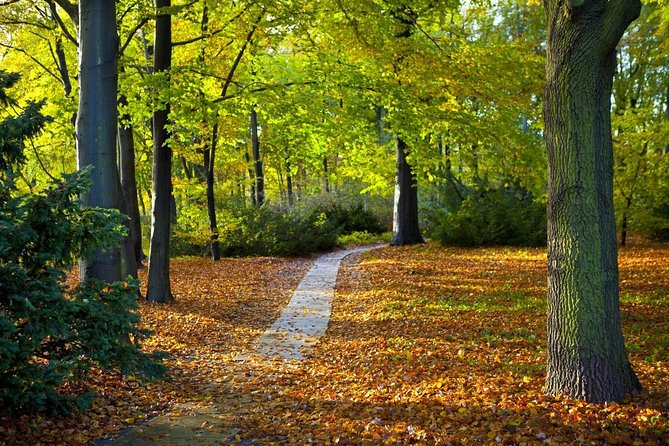
- Tiergarten: Berlin’s broad green center
- Nikolaiviertel and the place where Berlin began
- Märkisches Museum and Berlin’s changing shape
- Bears, churches, and the city’s older clues
- The Global Stone Project and Berlin’s stranger side
- Hansaviertel and the future imagined in 1957
- Clärchens Ballhaus and Scheunenviertel
- How much ground you cover in three hours
- Price, group size, and who gets the best value
- Should you book this Berlin bike tour?
- FAQ
- How long is the bike tour?
- Where does the tour start?
- Where does the tour finish?
- Is bike use included?
- What language is the tour offered in?
- How many people can join the tour?
- Is food or drink included?
- Can children join the tour?
- Does the tour run in bad weather?
- What is the cancellation policy?
Key points to know before you book
- The route moves beyond postcard Berlin: You visit Tiergarten, Nikolaiviertel, Scheunenviertel, Hansaviertel, and several unusual city sites.
- The cycling is designed for sightseeing: Bike lanes, garden paths, and quiet side streets keep the pace leisurely rather than athletic.
- David may lead the tour: He is described as a Berlin original, with strong subject knowledge and a good sense of humor.
- The group stays fairly small: A minimum of five and maximum of 15 people keeps the outing more personal than a large bus tour.
- Bring water and eat first: Food and drinks are not included, and one four-star review specifically wished for a short refreshment stop.
- It runs in all weather: Dress for Berlin’s conditions, since rain or cool temperatures will not automatically stop the ride.
Why a bicycle is the right way to meet Berlin
Berlin can feel spread out. Important sights sit far apart, and the city changes character from one district to the next. A bicycle helps bridge those gaps without placing you behind glass or forcing you to spend the whole morning underground.
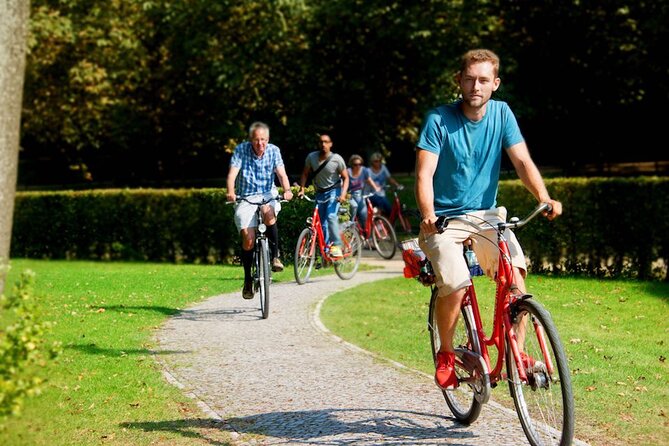
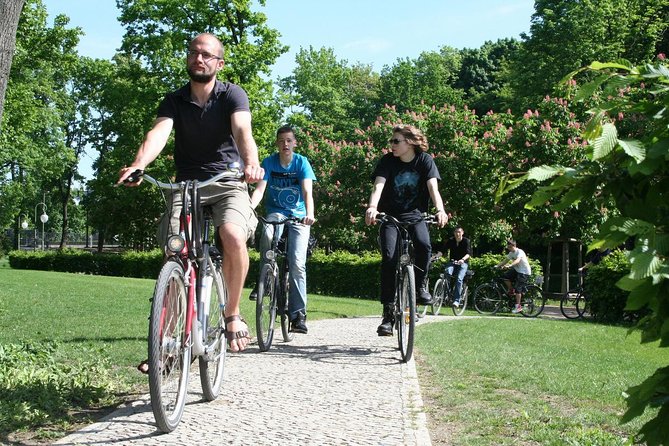
This is not a speed tour. The route uses bike lanes, garden paths, and quiet streets, with regular stops for stories and short looks around. You get the practical advantage of covering more ground than you would on foot, while still being close enough to notice courtyards, old walls, memorial details, and changes in the city plan.
The guide is central to the experience. David is named as one of the guides, and his style is described as both humorous and well informed. That combination matters in Berlin, where the dates and destruction can become heavy. A good guide helps you connect the facts without turning the ride into a lecture.
The tour is offered only in German. If you want the same kind of outing in English, you need to choose a private tour instead. That language restriction is the first thing to settle before booking.
More Bike Tours in Berlin
- Berlin: Sights and Highlights Bike Tour with a Local Guide
★ 4.8 · 2,698 reviews - Berlin Highlights 3-Hour Bike Tour
★ 5.0 · 948 reviews - Berlin City Bike Tour with Beer Garden Stop
★ 5.0 · 917 reviews
Starting at Poststraße 11 in central Berlin
The meeting point is Free Berlin at Poststraße 11, 10178 Berlin. This is also where you receive the bicycle and helmet, and where the ride ends. The activity is near public transportation, so you do not need hotel pickup, but you do need to make your own way to the start.
Allow a little time before departure to arrive without rushing. The first part of the scheduled route is connected with the bike rental and departure point, so this is when you get settled on the urban cruiser and prepare for the ride.
The bicycles are included, as is a helmet. That makes the $45.10 price easier to judge. You are paying not only for a guide but also for the use of the bike, which saves you from arranging a separate rental for the day. The value is strongest if you want an introduction to Berlin rather than simply a short rental period.
The group size ranges from five to 15 people. Fifteen is large enough to give the outing some social energy, but still much more manageable than a mass sightseeing tour. A minimum number is required, so a cancellation is possible if that number is not reached. In that case, you are offered another date or experience, or a full refund.
Tiergarten: Berlin’s broad green center
Tiergarten is the first major setting, with about 30 minutes assigned to Berlin’s central park. The comparison to New York’s Central Park is useful, but the important point here is how the park changes your sense of the city.
You leave the hard edges of central streets for leafy lanes and garden paths. This gives the tour a gentle start and lets you get used to the bicycle before the route moves through more built-up districts. The park also provides a calm place to hear about Berlin’s past without traffic noise pressing in.
I like this opening because it shows that Berlin is not only grand avenues and monumental buildings. The city has room to breathe. A bike makes that contrast especially clear: one minute you are pedaling through a green stretch, and soon after you are back among layers of urban history.
The stop is not meant to replace a full visit to Tiergarten. You get a short guided look, not hours to wander. Still, it sets the tone for a tour that values paths and side streets as much as famous sights.
Nikolaiviertel and the place where Berlin began
The route then heads to Nikolaiviertel, identified as the place of Berlin’s origin. This quiet quarter in the heart of the city was remodeled after major destruction during the 1980s.
That history gives the area an unusual character. It is not a perfectly preserved medieval district. Instead, it reflects the way Berlin repeatedly reconstructs itself, sometimes with careful historical references and sometimes with modern choices layered over older traces.
You have about 10 minutes here, enough for an explanation and a quick look rather than a long stop inside museums or churches. The short timing works if you want a broad city introduction, but it may feel brief if you are drawn to architectural details.
This is one reason the bike format works well. The tour does not ask you to spend a full afternoon at every site. It gives you a first orientation, then carries you onward to another part of Berlin.
Same city, a completely different kind of day:
- Berlin: Reichstag, Dome and Government District Guided Tour
★ 4.7 · 18,288 reviews - Berlin: 1-Hour City Tour by Boat with Guaranteed Seating
★ 4.3 · 16,993 reviews - Berlin: Boat Tour Along the River Spree
★ 4.4 · 11,252 reviews - Discover Berlin Half-Day Walking Tour
★ 5.0 · 9,624 reviews
Märkisches Museum and Berlin’s changing shape
Near the Märkisches Museum, the guide points out large three-dimensional city models. These help explain the constant renewal of Berlin and show how its built form has changed.
A city model is especially useful early in a visit. Berlin’s districts can be hard to picture from street level, since walls, parks, wide roads, and redevelopment projects break the city into separate scenes. Seeing a physical model gives you a clearer sense of how those pieces relate.
The stop lasts about 15 minutes. It is less about entering a museum than about using the models as a visual aid. If you prefer famous interiors and major collections, this may seem modest. If you want to understand why Berlin can feel unfinished, rebuilt, and historically layered all at once, it is a smart pause.
The guide’s explanation is what turns a city model into something useful. Look for connections between the places you have already seen and those still ahead.
Bears, churches, and the city’s older clues
At the Bärenzwinger Berlin, the subject shifts to the bear associated with Berlin’s name. It is a small but memorable question: why does a bear appear in the city’s identity, and what does it tell you about Berlin?
You get around 10 minutes here. Do not expect a major attraction that fills an hour. The value is in the story and the way it adds a symbol to your growing picture of the city.
The next stops turn toward religion, destruction, and rebuilding. At Parochialkirche, the guide covers the church’s religious past, wartime damage, reconstruction, and designated survivors. Those themes fit Berlin well. Buildings here often carry several dates at once: original construction, destruction, partial survival, and a later attempt to make sense of what remained.
The Franziskaner Klosterkirche offers another short look at medieval Berlin. It is described as an abandoned place and a rare memorial to the city’s medieval past. The word abandoned sets expectations: this is not presented as a polished, fully restored church visit.
That rougher quality is part of the appeal. Berlin’s past is not confined to pristine monuments. Sometimes the more powerful reminder is a place where absence and survival are visible together. Each church stop lasts about 10 minutes, so listen closely and avoid expecting a long independent visit.
The Global Stone Project and Berlin’s stranger side
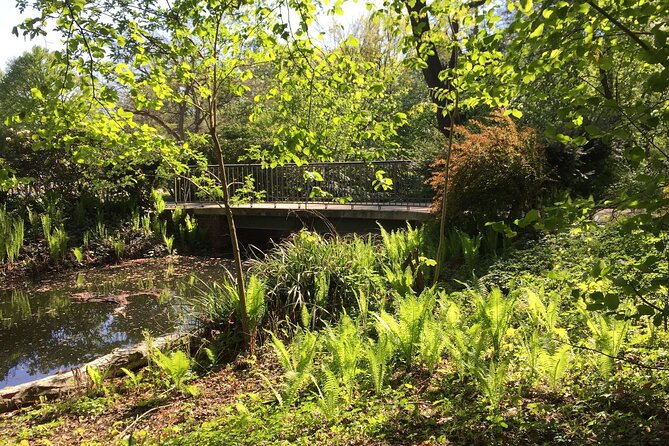
The Global Stone Project is introduced as Berlin’s Stonehenge, with a playful reference to the complications of love. This is one of the route’s more curious stops, and it shows the tour’s willingness to leave standard sightseeing behind.
You spend roughly 15 minutes here. The attraction is not just the object itself but the question of why it is there and how it fits Berlin’s taste for unusual public spaces and unexpected stories.
This kind of stop suits you if you enjoy asking what a place means rather than simply photographing its grandest building. It may not satisfy someone looking for a long list of iconic landmarks, but the tour already offers a different promise. You are getting a collection of stories that help Berlin feel less predictable.
The guide’s humor matters here. A strange site can fall flat if presented without context. A lively explanation gives it a place in the larger route.
Hansaviertel and the future imagined in 1957
Hansaviertel brings the ride into postwar housing and architectural ideas. The subject is the future of housing, at least as it was imagined in 1957.
This stop is valuable because it moves the story away from medieval origins and wartime ruins. Berlin’s history also includes bold experiments in how people should live, how housing should be arranged, and what a modern city should look like after destruction.
You spend about 15 minutes in the area. The visit is not framed as a specialist architecture tour, so you do not need prior knowledge to follow it. The guide gives you a lens for reading the buildings and understanding the optimism, planning, and assumptions behind them.
I would pay attention to the contrast between Hansaviertel and the older quarters earlier in the route. Together, they show how Berlin has repeatedly tested new ideas instead of simply restoring what was lost.
Clärchens Ballhaus and Scheunenviertel
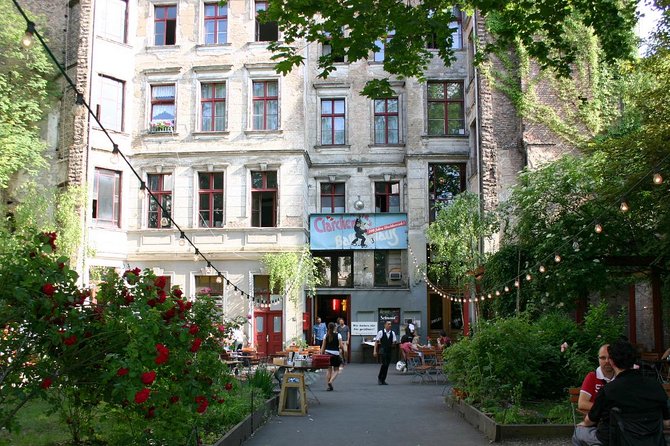
Clärchens Ballhaus adds music, age, and a slightly worn charm to the route. The stop is described as forever dancing, surrounded by a morbid charm. You have about 15 minutes here.
The appeal lies in the atmosphere of a place that has carried on through changing eras. It is not presented as a formal museum stop. Instead, it gives you a glimpse of Berlin’s social life and its affection for places that remain imperfect, old-fashioned, and full of character.
The final major stop is Scheunenviertel, with about 15 minutes devoted to its courtyards, shopping, restaurants, art, culture, and nightlife. This is a useful end point because it brings you into a district shaped by both history and present-day city life.
You will not have time to shop, eat a full meal, or explore every courtyard during the tour. Think of this as a first look. The guide can point out the parts that deserve a return visit later, when you are on foot and not working within a three-hour schedule.
How much ground you cover in three hours
The listed stops add up to a little over two hours, leaving the rest for cycling between them, explanations, and transitions. That balance is sensible. You are not sitting at one location for too long, but you are also not racing from one photo stop to the next.
The ride is described as leisurely, with bike lanes, garden paths, and quiet side streets. That makes it suitable for most participants, though children must be accompanied by an adult. The tour operates in all weather, so you should dress for rain, wind, or cooler temperatures rather than assuming the ride will be postponed.
There is no food or drink included. One practical tip is to eat before you start and carry water if permitted and convenient. A four-star assessment specifically noted that three hours felt long without a short break to buy something to eat or drink, even while calling the tour worthwhile.
The route also has a built-in tradeoff: you see many places, but most stops are short. You get breadth and context rather than a deep visit to any one site.
Price, group size, and who gets the best value
At $45.10 per person, this is fairly priced for a three-hour guided ride with a bicycle and helmet included. The price makes the most sense if you want both transportation and interpretation. A simple bike rental would give you wheels, but not the route, stories, or connections between districts.
I see especially good value for a first visit to Berlin, for someone who enjoys active sightseeing, or for anyone who finds a large capital hard to organize. The guide does the planning, and you get a useful city framework in a single outing.
You may find less value here if you already know central Berlin well, dislike cycling, or want to spend substantial time inside museums and historic buildings. This is an outdoor orientation tour, not a ticketed attraction crawl.
The 96 percent recommendation rate and 4.8 rating from 26 ratings suggest a strong overall reception, but the smaller number also means you should weigh the practical limits yourself. The German-only format and lack of a refreshment stop are not minor details for every reader.
You can cancel for a full refund up to 24 hours before the start time. Changes or cancellations inside that window are not refunded, and the local time cutoff applies.
Should you book this Berlin bike tour?
Book it if you want Berlin’s story told through contrasts: park paths beside central streets, medieval remains beside reconstructed quarters, experimental housing beside old dance halls, and famous symbols beside odd public art.
I would choose this tour early in a Berlin stay, since it can help you decide which districts deserve more time later. Come fed, bring weather-appropriate clothing, and be ready to follow the tour in German. If those conditions suit you, the combination of cycling, local stories, and lesser-seen corners offers a useful and entertaining three hours for the price.
FAQ
How long is the bike tour?
The tour lasts approximately three hours.
Where does the tour start?
It starts at Free Berlin, Poststraße 11, 10178 Berlin, Germany.
Where does the tour finish?
The activity ends back at the meeting point.
Is bike use included?
Yes. Use of a bicycle and helmet is included in the price.
What language is the tour offered in?
The tour is available only in German. An English-language option requires choosing a private tour.
How many people can join the tour?
The minimum is five participants, and the maximum is 15.
Is food or drink included?
No. Food and drinks are not included unless specifically stated. Plan to eat beforehand, since the ride lasts about three hours.
Can children join the tour?
Yes, but children must be accompanied by an adult.
Does the tour run in bad weather?
Yes. It operates in all weather conditions, so you should dress appropriately.
What is the cancellation policy?
You receive a full refund if you cancel at least 24 hours before the experience start time. Cancellations or changes made less than 24 hours before the start are not refunded or accepted.
More 3-Hour Experiences in Berlin
- Berlin: 3-Hour Street Art Tour
★ 4.7 · 778 reviews - Berlin: 3-Hour Secret Food Tour
★ 4.8 · 269 reviews - Berlin: 3-Hour Segway Tour
★ 4.7 · 112 reviews - Berlin Private Custom 3-Hour Tour by Car
★ 5.0 · 84 reviews
More Cycling Tours in Berlin
- Berlin Highlights: 3-Hour Bike Tour
★ 4.9 · 809 reviews - Berlin Highlights Sightseeing Bike Tour in Small Groups
★ 5.0 · 652 reviews - Berlin: Alternative Bike Tour of Kreuzberg & Friedrichshain
★ 4.7 · 548 reviews - Berlin: Guided Bike Tour of the Berlin Wall and Third Reich
★ 4.7 · 499 reviews
Just added around Berlin
- Love and War in Berlin: Self-Guided Story Puzzle Walk★ 5.0 · 7 reviews
- Rickshaw Tours Berlin – Groups of up to 16 people with several rickshaws★ 4.0 · 97 reviews
- Walking on the Wall: 3-Hour Tour in Berlin★ 4.5 · 34 reviews
- eSIM for Germany and 34 European Countries★ 4.5 · 16 reviews
- Warnemuende Shore Excursion: Berlin Private Sightseeing Tour from Rostock★ 5.0 · 4 reviews
- Your ticket to The Wall Museum Berlin★ 3.0 · 60 reviews
- Warnemuende Shore Excursion: Private Berlin Tour★ 4.5 · 27 reviews
- Berlin’s Gay, Lesbian, and Queer Scene Small-Group Walking Tour★ 4.5 · 66 reviews
Bike Tours, compared.
Sights and Highlights Bike Tour with a Local Guide
Read our review →
Classic Mike’s Bike Tour daily @ 11.30 incl Beer Garden & Surfers
Read our review →

Browse the lists this tour appears in