
Reviewed · WINE TOURS
Trier: Guided City Walk with Wine Tasting
Trier’s Roman monuments make a fine backdrop for a wine tasting, but the clever part of this tour is how the two subjects are tied together. Each wine has a connection to a building, place, or chapter in the city’s past. Guide Simon, who grew up in Trier, brings local stories and wine knowledge to a route from Porta Nigra to the Forum Baths.
I especially like the five regional wines served during the summer and the way the tour covers several major sights without turning into a dry history lecture. The included water and breadsticks are useful, too. The main consideration is that you taste while standing outdoors in public places, so city noise, rain, or a busy street can sometimes make it harder to hear.
In This Review
- Key points to know before you book
- Starting beside Porta Nigra, Trier’s Roman calling card
- From the Market Cross to Trier’s cathedral quarter
- Wine with a story at Liebfrauenkirche
- The basilica and Electoral Palace: imperial Trier in one view
- Kaiserthermen and the walk toward the Forum Baths
- What the $43 price really covers
- Summer Riesling or winter Glühwein
- Who will get the most from this Trier walk?
- Useful planning details before you meet Simon
- Should you book the Trier wine walk?
- FAQ
- How long is the Trier guided city walk with wine tasting?
- Where does the tour start?
- Where does the tour finish?
- How many wines are included?
- Can I choose grape juice instead of wine?
- Is the tour wheelchair accessible?
Key points to know before you book
- Five wines, four mulled wines, or grape juice: Summer tours include five regional wines. From mid-November through January, groups of at least six may receive four local mulled wines instead.
- A compact Roman-to-modern history lesson: The route links Porta Nigra, the cathedral, the basilica, Roman baths, and central squares in two hours.
- Simon is the central strength: He is praised for his humor, patience, local knowledge, and ability to connect wine with Trier’s story.
- The route is fully barrier-free: You do not need to climb steps, and the activity is wheelchair accessible.
- The finish is useful for dinner planning: You receive a voucher for one glass of wine with a main course at Weinwirtschaft Friedrich-Wilhelm near the basilica.
- Bring weather protection: The walk runs in rain or shine, with no hotel pickup or drop-off.
Starting beside Porta Nigra, Trier’s Roman calling card
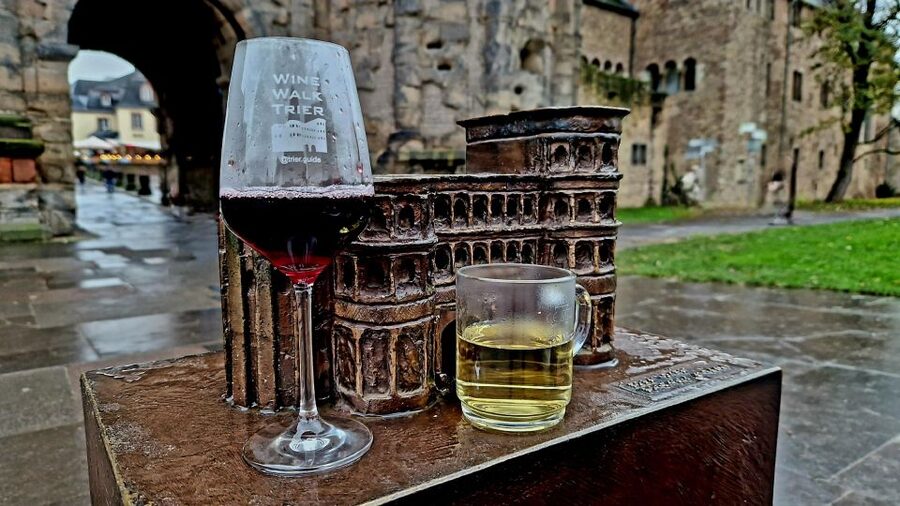
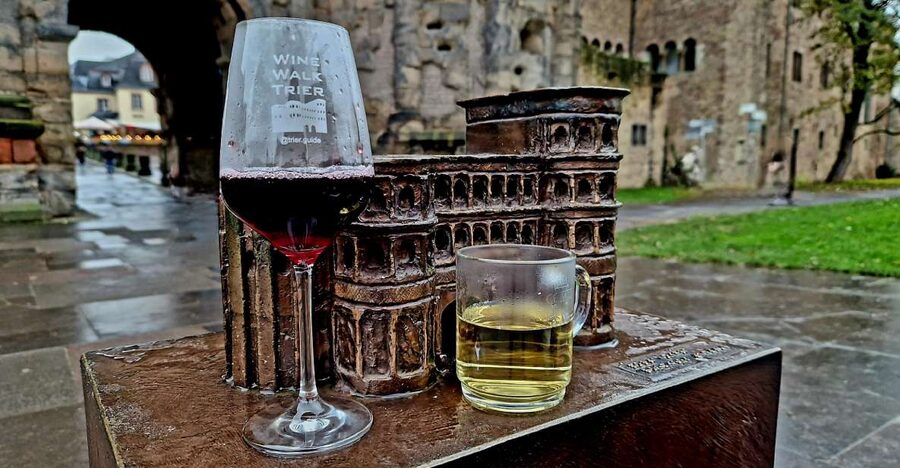
Meet on the left side of the Tourist Information office, in front of the city model near the flags. This is close to the famous Porta Nigra and within easy reach of Trier’s central train station, making the meeting point practical if you are coming in for a day trip from Luxembourg or elsewhere in Germany.
It is worth paying attention to the meeting instructions. This tour is not operated by the Tourist Information office itself. Look for the guide near the city model rather than simply walking into the tourist office and asking for the group.
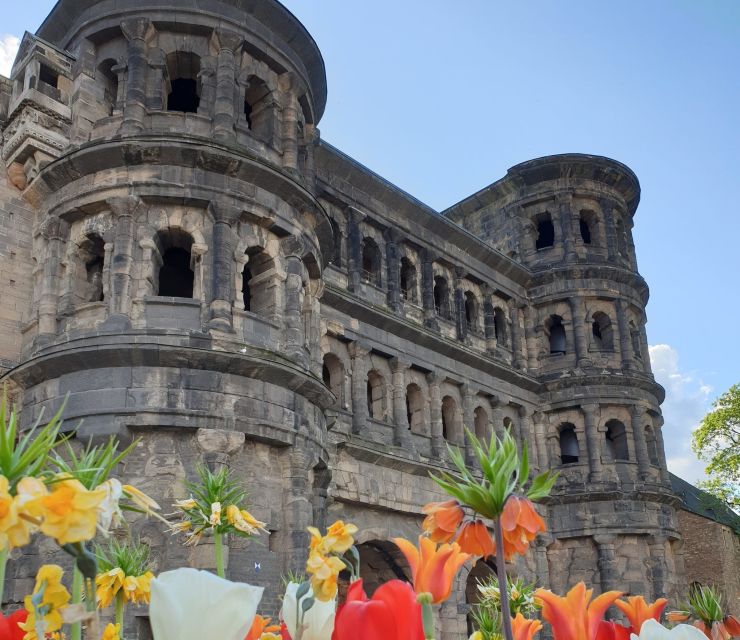
The walk begins at Porta Nigra, the dark stone gate built by the Romans as part of the city fortifications. It is an effective first stop because you immediately see why Trier feels different from many German city breaks. Roman remains are not tucked away in a museum here. They are part of the streets you use.
At this early stop, one of the tastings may be served. The point is not simply to drink a glass and move on. Simon explains the connection between the wine, the Moselle region, and the place where you are standing. That approach gives the tasting a purpose and helps you remember the city through several senses.
The first minutes can be slightly exposed to street noise. If the group is standing near traffic or other tour groups, position yourself close to Simon. One person specifically found the noise made listening tricky at times, though the information was worth the effort.
A few more Germany trips to weigh up
- Hamburg: Harbor Cruise with Wine and Cheese
★ 4.7 · 795 reviews - Trier: Discovery Tour – Germany’s Oldest Wine Cellar
★ 4.7 · 218 reviews - Heidelberg: Sightseeing Boat Tour with Mulled Wine
★ 3.6 · 202 reviews
From the Market Cross to Trier’s cathedral quarter
From Porta Nigra, the group walks toward the Market Cross on the Main Market. This square gives you a feel for Trier’s central old town, with its mixture of historic façades, pedestrian streets, and daily city life.
The Market Cross is a good place for a short explanation because Trier’s past is not limited to the Roman period. Simon’s storytelling covers the long sweep from Roman rule and the rise of Christianity through the Middle Ages, the world wars, and modern Trier. You are not getting a stop-by-stop list of dates. The value is in seeing how different eras overlap within a small area.
The route then reaches Trier Cathedral. The cathedral and the nearby Liebfrauenkirche show the city’s importance as a Christian center. You may stop for photographs and an exterior explanation, with time built into the walk to look more closely at places you may want to revisit later.
That is one of the tour’s practical strengths. The two-hour format does not try to replace a full museum visit or an extended cathedral tour. Instead, it gives you a map in your head. You learn which buildings deserve more of your own time after the walk.
At the Liebfrauenkirche, another wine may be paired with the stop. The pairing is part of the tour’s structure: a site, a piece of history, then a regional wine. It makes the tasting feel less like a string of unrelated pours.
Wine with a story at Liebfrauenkirche
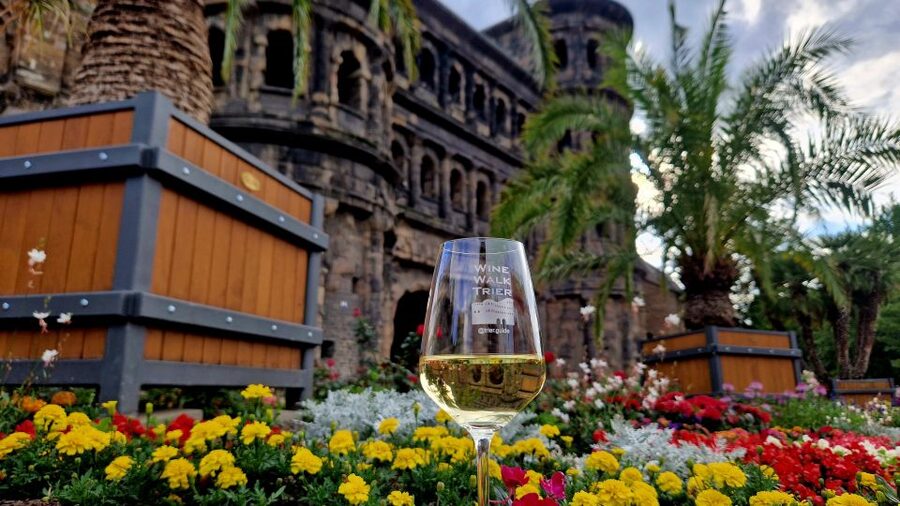
The Moselle region is closely associated with Riesling, and the wines served here are selected to introduce you to local styles. The experience is not presented as a formal cellar tasting with technical lectures and a printed score sheet. It is more social and informal, with Simon explaining the local connection as the group moves through Trier.
That format suits you if you want to learn a little without needing prior wine knowledge. You can ask questions, compare the wines, and listen to the city story at the same time. The wine is generous enough to make the walk sociable, so pace yourself and use the water provided.
Breadsticks are included as a simple snack. They will not replace lunch, but they are welcome between tastings. This is a particularly helpful detail because five samples over two hours can feel different from a standard sightseeing walk.
Nonalcoholic grape juice is available instead of wine, but it must be arranged by email. Do this before the tour rather than relying on a last-minute request. The stated summer format is five wines, while the winter format can change according to group size.
The basilica and Electoral Palace: imperial Trier in one view
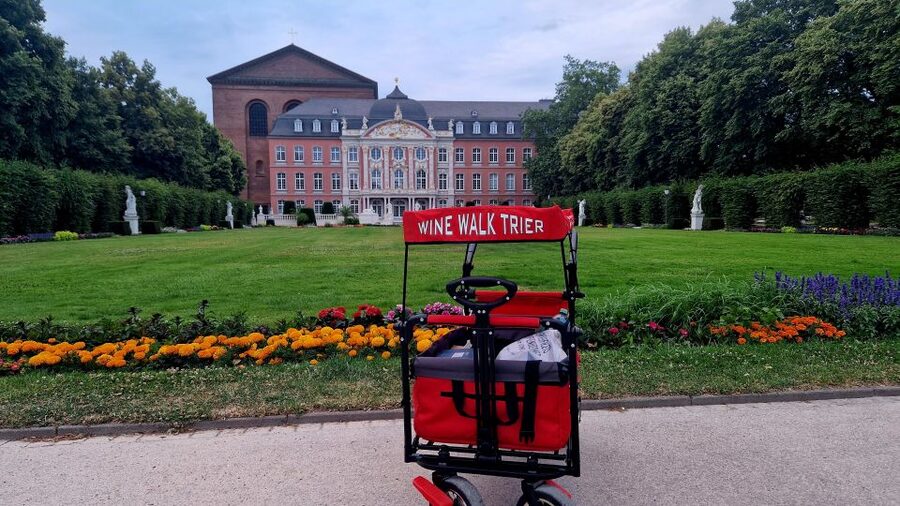
The route continues to the Aula Palatina, also known as the basilica, and the Electoral Palace. These are among the most striking stops on the walk, especially because they place Roman and later political power close together.
The Aula Palatina is a large Roman basilica with a powerful sense of scale. It helps you picture Trier as an important Roman city rather than simply a place with one surviving gate. The Electoral Palace adds another layer, taking you into the era of Trier’s prince-electors and the city’s later political role.
A wine tasting is included around this part of the route. Here, the connection between wine and place is especially useful. Moselle wine is not just a product sold in shops around Trier. It belongs to the cultural setting of the region, and the guide uses the city’s buildings to explain that relationship.
Simon’s style, based on the information available, leans toward conversation rather than a memorized speech. He is often praised for answering questions, adding small details not found in ordinary guidebooks, and keeping the mood light. That makes a difference on a walking tour. Two hours of uninterrupted dates would be hard work, but humor and questions keep the pace moving.
The route does not promise interior visits at every monument. The focus is on guided explanations, photographs, and the chance to return later. If you want a detailed visit inside the cathedral, basilica, or Roman baths, treat this as an introduction and leave extra time in your Trier schedule.
Same city, a completely different kind of day:
- Berlin: Reichstag, Dome and Government District Guided Tour
★ 4.7 · 18,288 reviews - Berlin: 1-Hour City Tour by Boat with Guaranteed Seating
★ 4.3 · 16,993 reviews - Hamburg: Sex and Crime in St. Pauli Tour for Ages 18+
★ 4.7 · 15,447 reviews - Hamburg: 1.5-Hour Harbor and Speicherstadt Day Cruise
★ 4.6 · 14,200 reviews
Kaiserthermen and the walk toward the Forum Baths
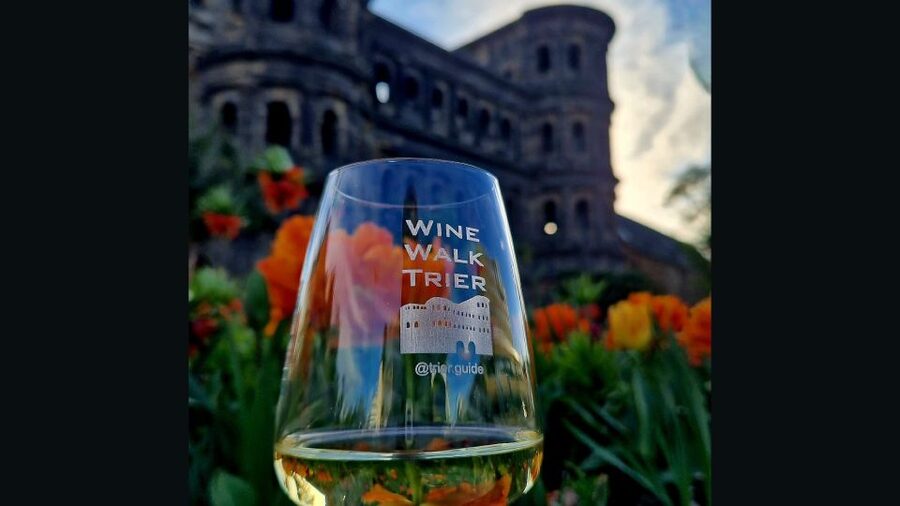
Next come the Kaiserthermen, the Imperial Baths. These Roman ruins show the scale and complexity of public bathing in ancient Trier. Even from the outside, the remains give the city a strong physical link to its Roman past.
This is one of the stops where the tour’s walking format works well. You are not only hearing about Roman Trier in an abstract way. You are moving through the area where the ruins still shape the city. The guide’s explanation helps you make sense of what you are seeing, especially if you have not studied Roman architecture before.
The route ends at Viehmarkt Square, outside the Forum Baths, another Roman bath complex. Ending here gives the tour a clear arc: you begin at a Roman defensive gate and finish beside Roman public buildings, while the stops in between bring in Christianity, medieval power, the prince-electors, and the wine culture of the Moselle.
The Forum Baths are not simply a final photo stop. They also give you a good point from which to continue exploring independently. The tour ends here, so plan your next move before you arrive. You may want to stay in the area, return to the cathedral quarter, or use the included wine voucher near the basilica for a later meal.
What the $43 price really covers
At $43 per person, this is not the cheapest way to walk around Trier, but the price includes more than a basic city orientation. You receive a two-hour guided walk, five regional wines in the summer, water, breadsticks, and a voucher for one glass of wine with a main course at Weinwirtschaft Friedrich-Wilhelm.
The tasting is the main reason the price can make sense. Buying five comparable pours independently would add up quickly, and you would not get the historical explanations or route planning. You are paying for a guide who brings the bottles to the sights, not for a winery visit with a seated tasting room.
The voucher adds some value, though you should read it accurately. It is for one glass of wine with a main course, not a free meal. The restaurant is beside the basilica, while the official tour finish is at the Forum Baths, so you may need to make your way back toward that part of the center.
A glass can be purchased after the tour for €6, and a wine glass holder costs €3. These extras are not included. They may appeal if you want to keep the souvenir glass or carry your drink more easily, but you do not need them to take part.
The activity offers free cancellation up to 24 hours before the start and a reserve-now, pay-later option. Those policies are useful if your Trier visit depends on train timing or changing weather, but the walk itself runs rain or shine.
Summer Riesling or winter Glühwein
Season matters here. From mid-November through the end of January, the tour may feature four different mulled wines from local wineries instead of the usual five wines, when at least six people register.
That winter version sounds like a different mood rather than a lesser one. Warm Glühwein fits Trier’s cold streets and gives the tasting a seasonal character. The important detail is that the four-mulled-wine format depends on at least six registered participants. If the group is smaller, the standard five-wine format may be used even during winter.
In warmer months, the wines are served chilled when appropriate. A summer tasting of Rieslings alongside old stone buildings is a pleasant way to break up sightseeing, particularly on a hot day. You should still drink at a moderate pace: the walk is short, but five samples can add up.
The tour takes place outdoors in all weather. Wear shoes suited to paved city streets and bring a rain jacket if the forecast is uncertain. Because there are no steps to climb and the route is completely barrier-free, the walk is accessible for wheelchair users, though public street conditions and crowding can still affect comfort.
Who will get the most from this Trier walk?
I would choose this tour if you have one day in Trier and want a strong first look at the city without giving up the region’s wine identity. It is also a good fit if you are staying in the Moselle area and want history with your tasting rather than a winery-only visit.
The tour suits:
- First-time visitors who want the main historic sights explained in context
- Wine drinkers interested in regional bottles and Moselle traditions
- Cruise, rail, and day-trip visitors who need a compact two-hour route
- Couples and small groups who enjoy conversation and a relaxed tasting
- Visitors who prefer a guide who can answer questions rather than deliver only a fixed script
- People seeking an accessible walk without steps
I would think twice if you dislike drinking outdoors, need a quiet setting for every explanation, or want long interior visits at each monument. The experience moves through public streets, so you should expect interruptions and short stops rather than museum-level detail.
It is also not a full Moselle vineyard excursion. You will learn about the wine-growing region and taste local wines, but the tour stays in Trier’s center. For vineyard views and cellar visits, you would need a different activity.
Useful planning details before you meet Simon
The tour is offered in German and English. Confirm the language when booking, particularly if your group needs one specific language.
Allow enough time to reach the city model beside the Tourist Information office. The meeting point is near the station, but arriving a few minutes early is wise. One late arrival was met with patience, but you should not count on the guide being able to wait indefinitely.
The end point is the Forum Baths, not the starting point. This matters if you have a train to catch or another timed visit. Trier’s center is compact, but leave a buffer after the two-hour finish.
If you want grape juice, arrange it by email in advance. If you are joining in winter, ask which tasting format applies to your date. And if you plan to use the restaurant voucher, keep the basilica area in your plans after the walk.
Should you book the Trier wine walk?
I would book it if you want an efficient introduction to Trier that combines the city’s Roman remains, Christian monuments, later political history, and Moselle wine. The strongest feature is the link between each tasting and a specific place. That gives the walk a clear theme and keeps the wine from feeling like an unrelated extra.
Simon’s local background, friendly manner, humor, and ability to handle questions are major advantages. The route covers a lot in two hours, and the included snacks, water, and restaurant voucher improve the value at $43.
Choose a different experience if your priority is a long vineyard visit, a seated wine seminar, or extensive time inside every monument. For most first visits, though, this is a smart way to get your bearings, taste the region, and leave Trier with a better sense of how its Roman past and modern wine culture fit together.
FAQ
How long is the Trier guided city walk with wine tasting?
The tour lasts two hours.
Where does the tour start?
Meet on the left side of the Tourist Information office, in front of the city model near the flags. The meeting point is near Porta Nigra.
Where does the tour finish?
The tour ends at the Forum Baths on Viehmarkt Square.
How many wines are included?
The summer tour includes five regional wines. From the middle of November through the end of January, groups of at least six may receive four different mulled wines from local wineries instead.
Can I choose grape juice instead of wine?
Yes. Four different grape juices can be arranged instead of wine, but you need to book this option by email.
Is the tour wheelchair accessible?
Yes. The route is completely barrier-free and does not require you to climb steps.
More Walking Tours in Germany
- Discover Berlin Half-Day Walking Tour
★ 5.0 · 9,624 reviews - Berlin: Third Reich and Cold War 2 Hour Walking Tour
★ 4.9 · 6,830 reviews - Munich: Third Reich & WWII Walking Tour
★ 4.6 · 6,181 reviews - Berlin: Discover Berlin Walking Tour
★ 4.9 · 5,998 reviews
Just added around Germany
- Aachen old town tour – GERMAN (public)★ 5.0 · 24 reviews
- Aachen Private Walking Tour With A Professional Guide★ 5.0 · 11 reviews
- Cologne Highlights: Exclusive Private Tour★ 5.0 · 5 reviews
- Explore Cologne’s best Street Art Quarter★ 4.5 · 4 reviews
- Bremen Private Walking Tour With A Professional Guide★ 5.0 · 7 reviews
- Private Walking Tour through the Fascinating Bremen’s City Center★ 5.0 · 5 reviews
- Bremen Exploration Private Game and City Tour on your Phone★ 4.5 · 7 reviews
- e-Scavenger hunt Bremen: Explore the city at your own pace★ 4.0 · 24 reviews
Wine Tours, compared.

Advent Tour with Stollen Tasting and Mulled Wine
Read our review →
Heidelberg and Rhine Valley Day Trip With Wine Tasting and Dinner from Frankfurt
Read our review →
Browse the lists this tour appears in