
Reviewed · CITY TOURS
Rostock: City Walking Tour
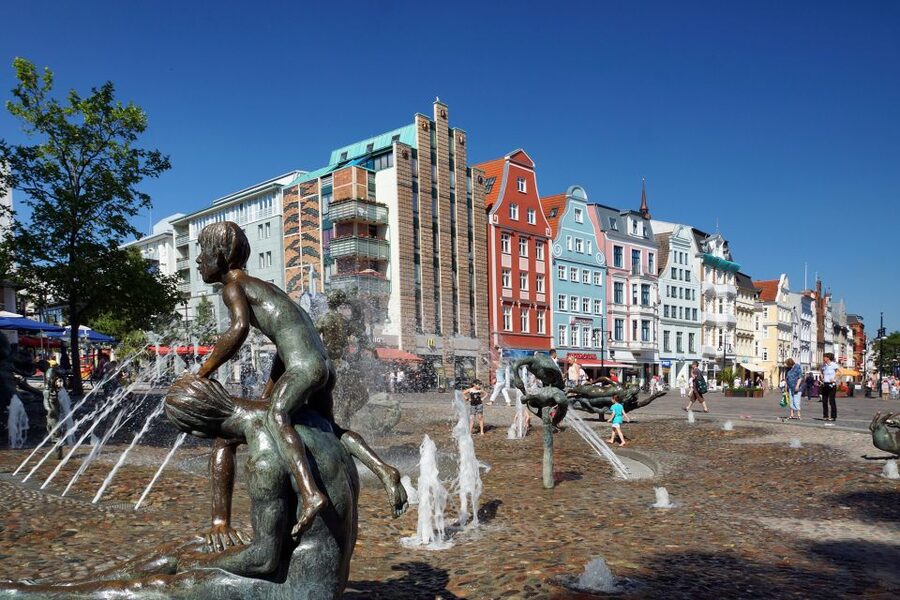
Rostock’s old town is best understood on foot, where the Rathaus, Gothic churches, medieval wall, and harbor area fit into one compact city story. This private two-hour walk gives you a clear first look at the Hanseatic center without turning the outing into a long lecture.
I like the small-group format, with up to six people, and the focus on seeing the city rather than memorizing dates. I also like that you can ask questions as you go, while the route moves through alleys, riverside boulevards, and the university square.
The main drawback is simple: the tour is offered in German and is not suitable for people with mobility impairments. It is also an overview, not a full museum visit or a detailed study of Rostock’s past.
In This Review
- Key points to know before booking
- Starting at Rostock’s Rathaus beneath the Greif
- Rostock’s old town, explained without a history lecture
- Gothic churches and the details above street level
- Medieval walls and the shape of the old city
- University Square and the city beyond medieval Rostock
- Riverside boulevards and the harbor area
- A private format that keeps the pace personal
- What the $147 group price means
- Language, walking demands, and timing
- The guide’s style and the strongest reason to book
- Who will get the most from this Rostock walk
- Should you book the Rostock City Walking Tour?
- FAQ
- Where does the Rostock walking tour meet?
- How long does the tour last?
- What is included in the price?
- How much does the tour cost?
- How many people can join the private group?
- What language is the tour offered in?
- Which Rostock sights are covered?
- Is the tour suitable for people with mobility impairments?
- Can I cancel for a full refund?
- Do I have to pay when I book?
Key points to know before booking
- Meet beneath the Greif: Find your guide at the main entrance of Rostock’s Rathaus, under the griffin symbol.
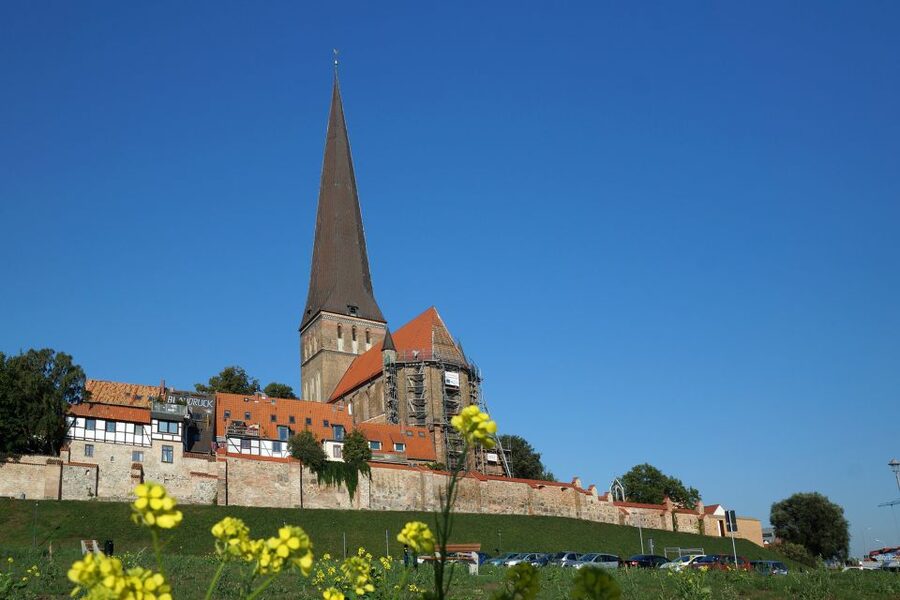
- Two hours on foot: The route links central sights with old-town lanes, the harbor area, and riverside streets.
- Private group of up to six: The $147 price covers the group, not each person.
- German-language guiding: The live tour is offered in German.
- A practical city introduction: The emphasis is on walking and seeing key places, with history explained in manageable portions.
- Strong overall rating: The experience has a 4.9 rating from 198 bookings.
Starting at Rostock’s Rathaus beneath the Greif
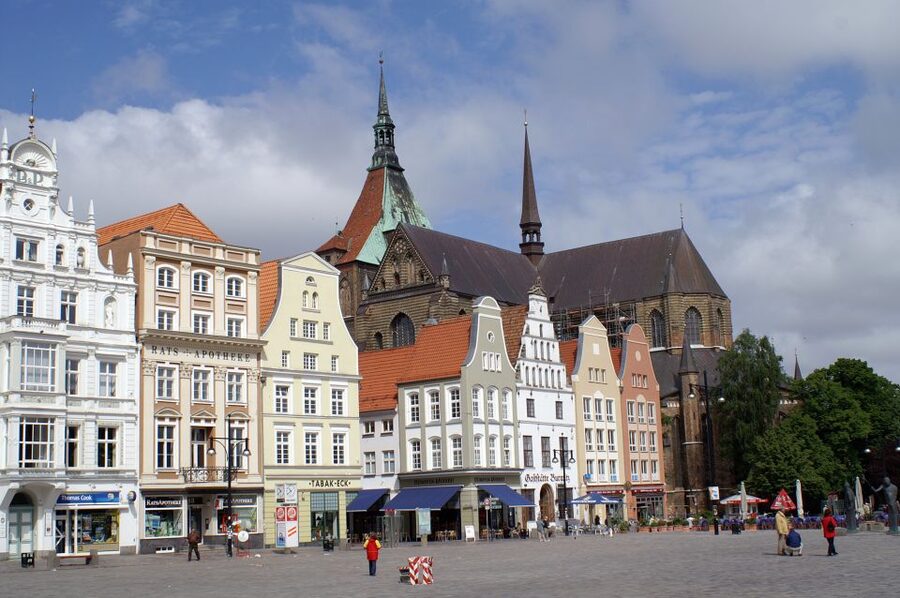
Your meeting point is easy to identify: the main entrance of the Rathaus, directly beneath the symbol of the Greif, or griffin. This is a useful place to begin because you are already in the heart of Rostock’s old town rather than at a remote pickup point.
Starting here also puts the city’s civic center first. The Rathaus is one of the major sights discussed during the walk, and it gives you an immediate sense of Rostock as a former Hanseatic city. Your guide from ROSTOCK GUIDE Anne Kirchmann then leads the group into the surrounding center.
The meeting point matters more than it may seem. In a city with several historic areas, a central start helps you get your bearings quickly. You will not spend part of the two hours waiting for transport or walking from a suburban meeting place.
Look for the entrance and the griffin symbol before the scheduled start. The information provided does not include hotel pickup or transportation, so plan to arrive at the Rathaus on your own.
A few more Rostock trips to weigh up
- Rostock: Private Guided Walking Tour
★ 5.0 · 4 reviews - Discover Berlin Half-Day Walking Tour
★ 5.0 · 9,624 reviews - Berlin: Third Reich and Cold War 2 Hour Walking Tour
★ 4.9 · 6,830 reviews
Rostock’s old town, explained without a history lecture
The tour covers the old town through a mix of major buildings and smaller streets. You can expect the guide to point out medieval architecture, the town hall, Gothic churches, and parts of the old city wall.
That balance is important. Rostock’s past can easily become a string of dates about the Hanseatic League, trade, wars, and rebuilding. Here, the stated focus is a walking tour, not an extended classroom session. One particularly useful feature is the effort to keep the history connected to what you are looking at right now.
I like this approach for a first visit. When a guide explains a church facade, a wall section, or a town square while you are standing beside it, the information has a place in your memory. You can then return later for a closer look if a building catches your attention.
The tour also reaches beyond the best-known postcard views. Old-town alleys can show how the center changes from formal civic spaces to quieter corners. The route is not described street by street, so the exact order may vary, but you should expect a broad look at the city center rather than a fixed list of interiors.
Gothic churches and the details above street level
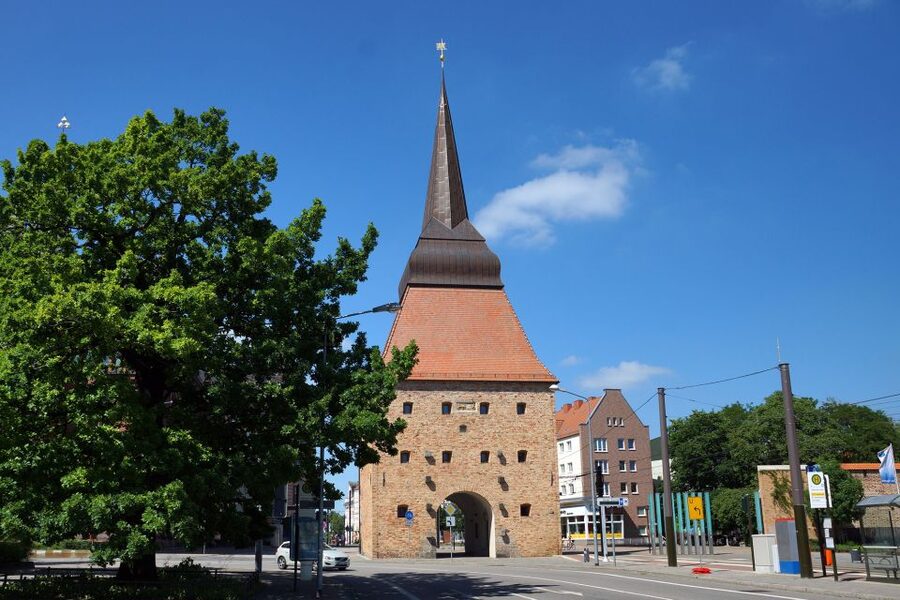
The Gothic churches are among the key sites on the route. The tour information does not name individual churches or promise entry, so you should think of these stops as exterior visits unless your guide advises otherwise.
That still leaves plenty to notice. A guide can help you read the scale and purpose of the buildings, explain how they fit into Rostock’s old center, and point out features that are easy to miss when you are walking alone. The value is not only in seeing an impressive facade. It is in understanding why it belongs where it does.
If you enjoy architecture, keep your eyes up as you move between stops. Gothic details often sit above normal eye level, and the best parts of a building are not always visible from a quick glance. At the same time, this is not advertised as a specialist architecture tour, so expect clear background rather than technical analysis.
The two-hour length should suit visitors who want a useful introduction without spending an entire morning on church interiors and architectural detail. If you want extensive time inside religious buildings, you may need to explore independently afterward.
Medieval walls and the shape of the old city
The medieval city wall gives the walking tour a physical link to Rostock’s earlier boundaries. Instead of learning only about the city as an idea, you can see how its defenses helped define the old center.
Walls are especially helpful for understanding urban growth. They show where the medieval city ended and help explain why streets and districts developed in particular ways. Your guide can connect this visible structure with the town hall, churches, and lanes you have already passed.
The supplied information does not specify which wall sections or gates are included, so do not book this expecting a complete circuit of Rostock’s fortifications. The wall is one part of a wider route, not the sole subject.
For me, that is the right role for it. The tour gives you enough context to recognize the old city’s outline, then moves on to other parts of Rostock. You get variety instead of two hours focused on one type of monument.
Same city, a completely different kind of day:
- Rostock: Guided tour of the historic city center
★ 4.5 · 311 reviews - Best Berlin Shore Excursion from Warnemunde or Rostock Port
★ 4.8 · 200 reviews - Rostock: Full-Day, Half-Day, or Sunset Sailing Experience
★ 4.7 · 174 reviews - Rostock: Electric Boat Rental on the Warnow River
★ 4.8 · 106 reviews
University Square and the city beyond medieval Rostock
The route includes the university square, adding a younger and more active side to the old town. This keeps the walk from presenting Rostock as a city frozen in the Middle Ages.
The university square helps connect the historic center with everyday city life. It is a useful reminder that the old town is not only a collection of monuments. It is also a place shaped by students, residents, public spaces, and changing uses over time.
The tour is described as spanning medieval architecture through the 20th century. That broader time frame is one of its strengths. You can expect the guide to place older buildings within a story that continues into more recent changes, rather than treating the medieval period as the whole identity of Rostock.
Still, the two-hour schedule limits the amount of detail possible. You will receive a well-sized overview, not a full account of every century or neighborhood. If a particular period interests you, ask about it during the walk. The format allows questions, and direct conversation is one of the benefits of booking a private group.
Riverside boulevards and the harbor area
The walking tour also reaches the historic harbor area and riverside boulevards. This changes the mood of the route after the tighter streets of the old town.
Riverside sections can help you understand Rostock’s connection to water and trade. The harbor is not simply an attractive place to stroll. It is part of the city’s economic identity, and it gives useful context to the Hanseatic story introduced near the town hall.
The exact harbor sights are not listed, so I would not assume the tour includes a boat ride, a port excursion, or a long stop at a specific attraction. The description supports a walking visit to the historic harbor area, with commentary from the guide.
That distinction helps you plan. If your schedule includes time at the harbor already, the tour may tie together places you have seen separately. If you are visiting Rostock for only a short time, this part of the route gives you a taste of the waterfront without requiring a separate harbor tour.
A private format that keeps the pace personal
This is a private tour for a group of up to six people. That makes the experience quite different from a large city walk, where you may be standing at the back of a crowd or waiting for everyone to catch up.
A small group also makes questions easier. You can ask about a building, a street, or a local custom while you are beside it, then adjust the conversation to your interests. One useful feature of the feedback is that the guide keeps the focus on walking and explanation, rather than spending ten minutes on a single Hanseatic topic.
That should appeal to you if you want a guide who provides context but does not bury the city under historical figures and dates. The tour can be particularly useful early in a visit, when you want to decide which parts of Rostock deserve more of your own time.
The private format does not mean the route is tailored in every detail. The listed sights and two-hour duration set the general shape. It does mean you have a more direct exchange with the guide and do not have to match the pace or interests of a large public group.
What the $147 group price means
The price is $147 for the whole group, with up to six people included. If six people join, the cost works out to $24.50 per person. For two people, the effective price is $73.50 each, so the value improves sharply when you fill the group.
That makes this a sensible option for a family or a group of friends traveling together. You are paying for a private guide and a focused two-hour introduction, not for tickets to museums, transport, food, or extra activities. The guide is included, but other admissions are not listed.
I would compare it with your own plans. If you are comfortable reading about Rostock and finding the major sights yourself, a paid walk may not be essential. If you value local explanation, want to ask questions, and prefer a private pace, the group price can be fair when shared among several people.
The price is less attractive for a solo visitor or a couple unless the personal format is a high priority. You should also check the available starting time before booking, since the activity page says times vary with availability.
Language, walking demands, and timing
The live guide speaks German, and German is the listed tour language. You should be comfortable following a two-hour explanation in German before booking. No alternate language is provided in the supplied details.
The route involves walking through the old town, harbor area, alleys, boulevards, and university square. The activity is marked as unsuitable for people with mobility impairments. The information does not give a total distance, number of steps, or seating arrangements, so you should not assume regular breaks or a fully step-free route.
Two hours is long enough to cover a useful range of sights but short enough to fit into a busy day. I would schedule it near the start of your Rostock visit if possible. The town hall, churches, wall, university square, and harbor can then serve as reference points for later independent walks.
The weather may also affect comfort because this is an outdoor walking experience. The details do not state a weather policy or indoor alternatives, so check conditions and dress for a walk.
The guide’s style and the strongest reason to book
The guide is presented as a local expert from ROSTOCK GUIDE Anne Kirchmann. The most praised quality is the balance between useful information and a relaxed route. The explanations are described as interesting, clear, and not overloaded with historical numbers.
That balance is worth emphasizing. A city tour should help you notice more, not make you wish for a quiet street. The guide’s role here is to connect the places you see, answer questions, and keep the group moving through Rostock’s center.
The activity has a 4.9 rating from 198 bookings, with especially strong marks for the guide and the organization of the walk. One recent experience was rated four stars, with the tour described as informative, clearly explained, and open to questions. That sounds like the right expectation: solid orientation and conversation, rather than a theatrical performance or an exhaustive academic study.
Who will get the most from this Rostock walk
I would recommend this tour to you if:
- You are visiting Rostock for the first time.
- You want the main old-town sights in a short period.
- You prefer a private group to a large public tour.
- You enjoy asking questions as you walk.
- You want history in clear portions, without a long lecture.
- You are traveling with up to five companions and can share the group price.
- You are comfortable with a German-language guide.
I would look elsewhere if you need an accessible route, want a tour in English, or hope to spend substantial time inside museums and churches. This is also not the right choice if you prefer to explore entirely at your own pace with no fixed route.
Should you book the Rostock City Walking Tour?
Book it if you want a compact, private introduction to Rostock that links the Rathaus, Gothic churches, medieval wall, university square, old-town lanes, and harbor area. The strongest reasons are the small group, the chance to ask questions, and the guide’s practical focus on seeing the city rather than reciting a long list of dates.
The $147 price makes the most sense for a full group of six. Confirm that German works for everyone, arrive at the Rathaus entrance beneath the Greif, and wear shoes suited to two hours on foot. If those conditions fit your plans, this is a useful way to get your bearings before exploring more of Rostock on your own.
FAQ
Where does the Rostock walking tour meet?
Meet your guide in front of Rostock’s Rathaus at the main entrance, under the symbol of the Greif, or griffin.
How long does the tour last?
The walking tour lasts two hours.
What is included in the price?
An expert guide is included. The provided details do not list museum admission, food, transportation, or other extras.
How much does the tour cost?
The price is $147 per private group of up to six people.
How many people can join the private group?
The group can include up to six people.
What language is the tour offered in?
The live tour guide speaks German, and German is the listed activity language.
Which Rostock sights are covered?
The route covers key parts of the old town and historic harbor area, including the Rathaus, Gothic churches, medieval city wall, university square, old-town alleys, and riverside boulevards.
Is the tour suitable for people with mobility impairments?
No. The activity is marked as unsuitable for people with mobility impairments.
Can I cancel for a full refund?
Yes. You can cancel up to 24 hours in advance for a full refund.
Do I have to pay when I book?
No. The reserve now and pay later option lets you hold a place without paying immediately.
Just added around Rostock
- Rostock: Private Guided Walking Tour★ 5.0 · 4 reviews
- Rostock: Tour with the Rostocker Executioner★ 4.7 · 28 reviews
- Rostock: Electric Boat Rental on the Warnow River★ 4.8 · 106 reviews
- Rostock: Hot Rod Harbor City Tour★ 4.9 · 16 reviews
- Rostock: Hot Rod Sightseeing Tour to Warnemünde★ 5.0 · 19 reviews
- Berlin and Sachsenhausen: Shore Trip from Warnemünde Port★ 4.8 · 40 reviews
- Distillery tour with guide!★ 4.7 · 14 reviews
- Discover Rostock: A Guided City Tour for Cruise Guests★ 3.7 · 7 reviews
City Tours, compared.

1-Hour City Tour by Boat with Guaranteed Seating
Read our review →
City History Canal Sightseeing Tour on a Motorboat
Read our review →


Browse the lists this tour appears in