

Reviewed · ROSTOCK TOURS
Rostock: Tour with the Rostocker Executioner
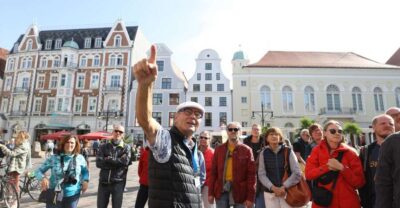
Rostock’s old center looks handsome by daylight, with brick churches, market squares, and grand civic buildings. This tour gives those streets a darker voice. A trained actor plays the town executioner, leading you from the town hall through the oldest district while explaining crime, punishment, strange duties, and the grim work behind them.
I like two things here: the walk connects real streets with uncomfortable history, and the subject is presented with enough humor to keep it lively rather than bleak. The tales of the sparrow tax, street cleaning, and medieval punishments add odd details you are unlikely to hear on a standard city walk. The main consideration is language: the live tour is in German, and one recent participant found the guide’s pace a little fast.
In This Review
- Key points before you book
- Meeting Rostock’s executioner beneath the town hall
- The old center through a darker lens
- Neuer Markt and St. Mary’s Church
- Curious duties, odd taxes, and street cleaning
- What the executioner actually did
- Torture, death, and modern language
- A brisk 90-minute walk
- Is $16 good value?
- Who will enjoy this Rostock tour?
- Should you book the Rostock executioner?
- FAQ
- Where does the Rostock executioner tour begin?
- How long does the tour last?
- What language is the tour in?
- What places does the route include?
- Is the tour suitable for children?
- Can I cancel or pay later?
Key points before you book
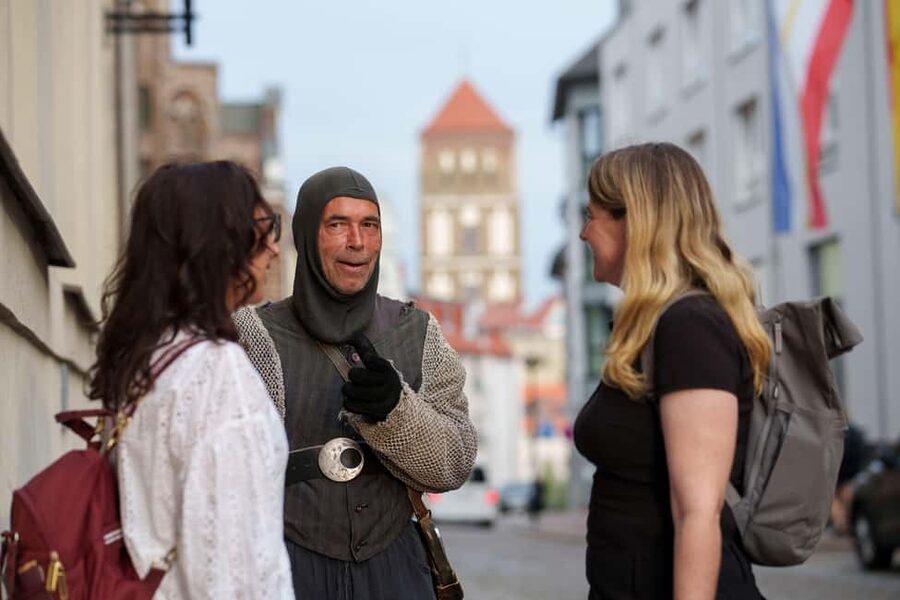
- A costumed executioner leads the walk: The guide is a trained actor who presents Rostock’s past in character.
- The route covers central old Rostock: Expect the town hall, Neuer Markt, St. Mary’s Church, Steintor, and Heiligengeisthof, among other stops.
- The stories are both grim and funny: Crime, punishments, sanitation, taxes, and old sayings all come into play.
- The tour lasts 1.5 hours: That is enough time for a focused look at the historic center without taking up half your day.
- German is the only stated tour language: You need to be comfortable following a live German presentation.
- It costs about $16 per person: For a character-led walking tour with historical content, that is a modest price, especially if you enjoy unusual local stories.
Meeting Rostock’s executioner beneath the town hall
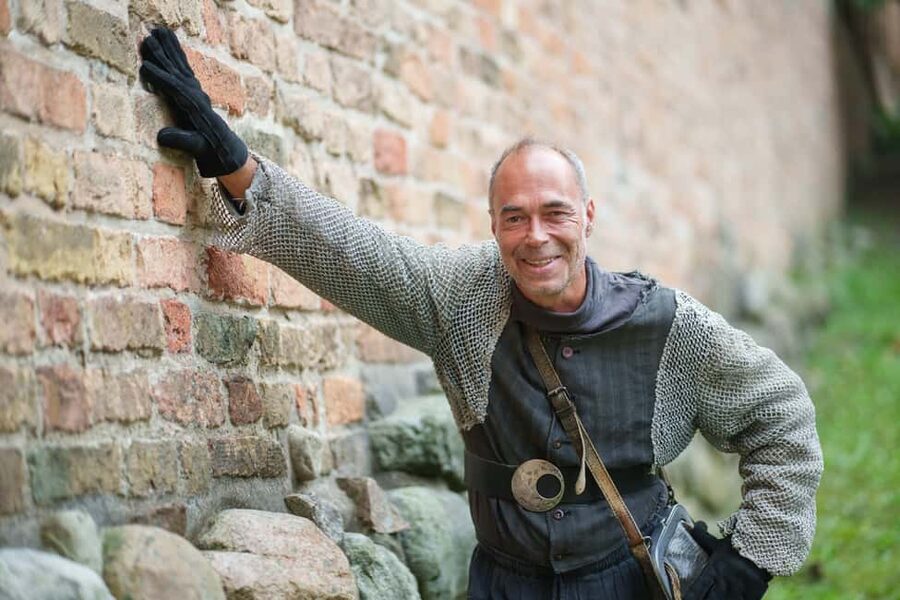
Your starting point is easy to find: under the arcades in front of Rostock’s town hall. The instructions add a small joke, saying there will be only one hangman and only one executioner there. That tells you what kind of experience this is. It is not a quiet academic lecture. The guide uses a role and a bit of theater to make the past easier to follow.
The guide is a trained actor, and the experience is presented by Tobias Hamann. The supplied details do not identify a separate personal name for the performer on a particular date, so you should expect the executioner character rather than a named historical reenactor. That is useful to know if you prefer a formal city guide or a more playful presentation.
The town hall is a fitting place to begin. It connects the tour to the institutions that governed Rostock, judged wrongdoing, and ordered punishments. From here, the executioner can explain his position within the old legal system rather than treating executions as isolated spectacles.
That setting also gives the walk a strong sense of place. You are not hearing a general lecture about medieval Germany in a modern room. You are standing in the center of Rostock, moving through streets where civic power, trade, religion, and punishment once met.
Other Rostock days worth putting on the list:
- Rostock: Guided tour of the historic city center
★ 4.5 · 311 reviews - Best Berlin Shore Excursion from Warnemunde or Rostock Port
★ 4.8 · 200 reviews - Rostock: City Walking Tour
★ 4.9 · 198 reviews
The old center through a darker lens
The route focuses on Rostock’s oldest and most attractive district. You will pass the town hall, the Kerkhoff, and Krahnstöverhaus, then continue toward Kuh and Steintor. The walk also includes Neuer Markt, St. Mary’s Church, and Heiligengeisthof.
The appeal is the contrast. Rostock’s architecture gives you the polished public face of the city, while the executioner talks about what happened when people broke the rules. I like this approach because it gives familiar buildings a second meaning. A market square is no longer just a place to admire brick architecture. It becomes part of the setting for law, trade, public order, and punishment.
At the Kerkhoff and Krahnstöverhaus, you can expect the guide to place local stories against the city’s older buildings. The available details do not assign a separate speech or activity to each stop, so do not expect a fixed performance at every address. Instead, think of the route as a connected story, with the streets and structures providing the backdrop.
The Steintor adds another strong point on the walk. Rostock’s gates and fortified edges help explain how a historic city was organized and controlled. The tour’s subject fits naturally here, since questions of entry, order, and authority were part of daily urban life.
Neuer Markt and St. Mary’s Church
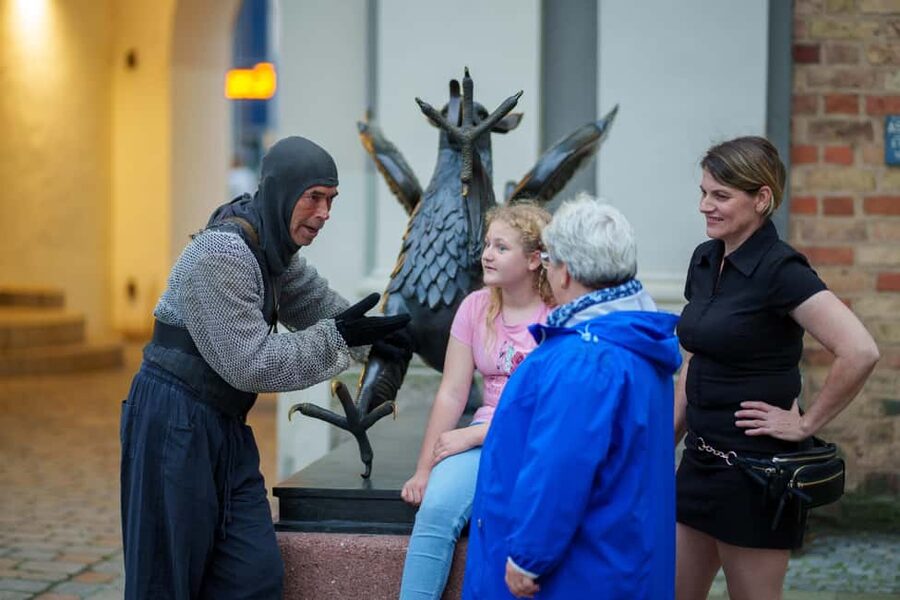
Neuer Markt is one of the route’s central places. A public square is an ideal setting for stories about old justice because it helps you picture how law was made visible to the population. The tour information does not promise a reenacted execution or a staged punishment, so you should expect explanation and storytelling rather than graphic theatrical action.
St. Mary’s Church brings another side of old Rostock into view. Religion shaped ideas about sin, guilt, punishment, and forgiveness, while church buildings helped define the city’s public identity. The executioner’s account can add a human and practical layer to what might otherwise be an architectural stop.
This is also where the tour’s mix of serious facts and humor matters. The subject includes death and torture, but the aim is described as entertaining and curious. I would choose this walk if you like history with a slightly wicked edge. I would not choose it for very young children or for anyone looking for a calm, purely architectural stroll.
The age rule is clear: the experience is not suitable for children under 14. That is sensible given the topics. Even older teenagers may want to know that the walk deals openly with crime, punishments, torture, and execution.
Curious duties, odd taxes, and street cleaning
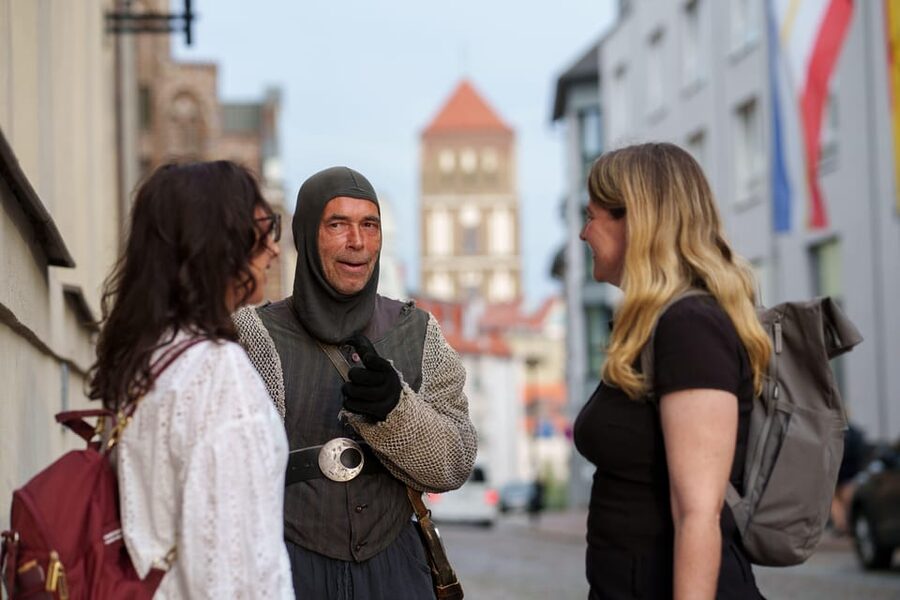
The most memorable material may be the small, strange details. You will hear about the sparrow tax, the Ausbringen der Priveten, and why the hair had to come off the streets. These questions make the tour more than a list of dates and buildings.
The sparrow tax is exactly the sort of detail that can make old urban history stick. It points to the way authorities tried to manage problems, pests, or public duties through rules and payments. The supplied description does not spell out the full explanation, so the guide’s telling is important here. You should expect the executioner to explain what the term meant in Rostock’s historical setting.
Ausbringen der Priveten concerns the removal of privies, or household waste. The phrase opens a window onto sanitation before modern sewage systems. Asking how waste was handled tells you something practical about city life that grand architecture cannot. It also explains why certain jobs were necessary, unpleasant, and socially marked.
Then there is the question of why hair had to come off the streets. That odd phrase promises one of the walk’s more curious explanations. It may sound like a joke at first, but it reflects the kind of small urban rule or working practice that gives the tour its character. You will learn not only about famous crimes, but also about the dirty, routine tasks that kept a medieval city functioning.
I like these details because they make the past feel less polished. Rostock was not only brick facades and church towers. It was also taxes, waste, hair, public rules, and people whose jobs dealt with the unpleasant side of city life.
Same city, a completely different kind of day:
- Rostock: Full-Day, Half-Day, or Sunset Sailing Experience
★ 4.7 · 174 reviews - Rostock: Electric Boat Rental on the Warnow River
★ 4.8 · 106 reviews - Berlin and Sachsenhausen: Shore Trip from Warnemünde Port
★ 4.8 · 40 reviews - Rostock: Hot Rod Sightseeing Tour to Warnemünde
★ 5.0 · 19 reviews
What the executioner actually did
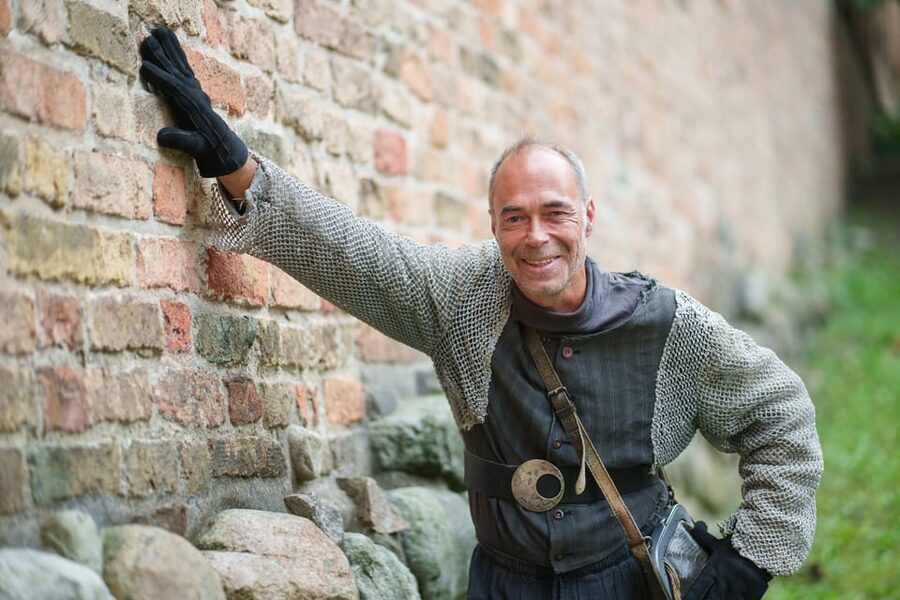
The tour explains the executioner’s various tasks and his place in the legal system. That distinction matters. The executioner was not simply a figure who appeared at the end of a trial. His work was tied to the way authorities investigated, punished, and displayed the consequences of breaking the law.
You will learn about jurisdiction and the punishments used at the time. The description also points to criminal stories from Rostock, so the presentation should connect broad legal ideas with specific cases and local incidents. Because the guide is playing the executioner, these facts come through a personal role rather than an impersonal timeline.
That format can make difficult material easier to remember. Instead of hearing a string of legal terms, you get a sense of how a working executioner might have fit into the city’s system. At the same time, you should keep in mind that this is an entertaining historical tour, not a university seminar or a full study of Rostock’s criminal law.
Several people praised the amount of information packed into the 90 minutes. One participant found the tour very informative, while another noted that there were many facts in a short time. That is both a strength and a warning. If you enjoy a fast-moving presentation, you will get plenty to think about. If you prefer time to pause, take notes, or study every building, the pace may feel brisk.
Torture, death, and modern language
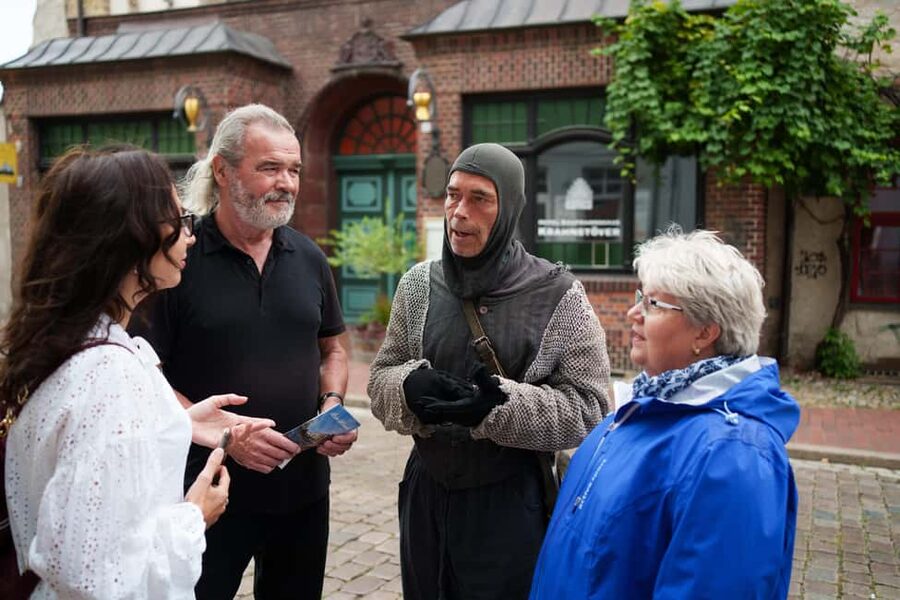
One of the tour’s best ideas is the link between medieval punishments and modern speech. The executioner points out how many expressions connected with torture and death have entered everyday language without us noticing.
This part gives the walk a useful modern hook. You are not just looking backward at practices that seem distant and strange. You are also asked to notice how old violence survives in ordinary words and phrases. That can change the way you hear familiar language after the tour.
The description does not list the specific expressions, so I would not book this expecting a prepared glossary. Instead, expect the guide to reveal examples during the walk, along with stories of crimes and punishment in Rostock.
The tone is important. The tour is described as scary and funny, not simply gruesome. Recent comments praise the guide as original, entertaining, and good at answering additional questions. That suggests the character work is a major part of the value. You are paying for a live performance as well as local history.
Still, humor about execution and torture is not for everyone. If you find dark comedy uncomfortable, a conventional history walk may suit you better. The tour’s focus is not designed to soften the subject. It uses the executioner’s role to make the material vivid.
A brisk 90-minute walk
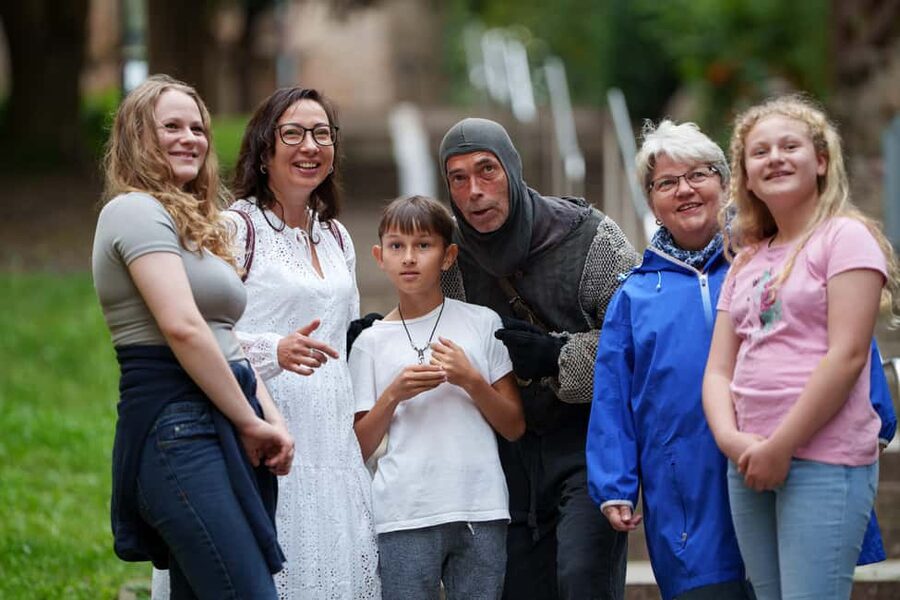
The tour lasts about 1.5 hours. That timing works well for a city visit because it gives you a strong introduction to central Rostock without taking over your entire day. You can fit it between other sightseeing plans, though you should allow enough time to listen carefully and walk with the group.
The route includes several central landmarks, but the experience is still a walking tour. It is not suitable for people with mobility impairments, according to the stated conditions. No separate vehicle, seating arrangement, or accessible alternative is provided.
The live guide speaks German. This is the most important practical point for international visitors. You need enough German to follow spoken explanations, jokes, historical terms, and quick transitions between stories. One person specifically found the guide spoke a little quickly in places. That may not trouble confident German speakers, but it could make the tour hard to follow if your listening skills are limited.
The available information does not state the group size. It also does not promise headphones or written translations. If you need either of those, ask before booking rather than assuming they are available.
Is $16 good value?
At around $16 per person, this is a reasonably priced way to see central Rostock with a clear theme. You receive a 90-minute guided walk led by a trained actor, with local stories, legal history, criminal cases, and unusual customs woven into the route.
The value is strongest if you would otherwise walk through the old center without understanding how its public spaces worked. A standard sightseeing stroll can show you the town hall, gates, market, and church. This tour gives those places a story line and a point of view.
The price is less compelling if you want a broad introduction to all of Rostock’s history. The tour concentrates on the executioner, crime, punishment, and the city’s darker side. It is not presented as a general orientation covering every major period or sight.
Flexible booking also helps. You can cancel up to 24 hours in advance for a full refund, and you can reserve now and pay later. Those terms reduce the risk if your schedule in Rostock is still shifting, but they do not change the language and mobility limits.
Who will enjoy this Rostock tour?
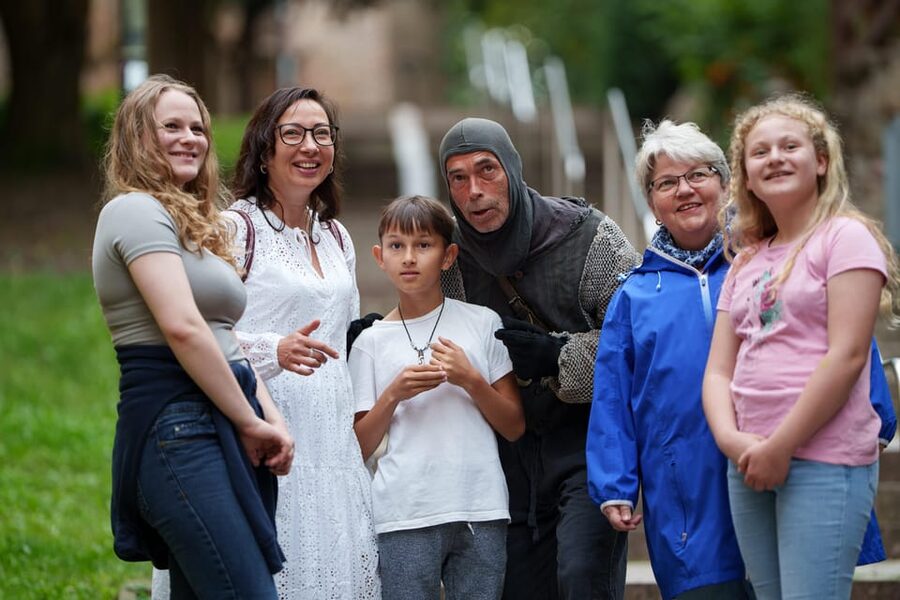
I would recommend it most strongly to adults and older teenagers who like local history told through stories. It should suit you if you enjoy:
- Dark history presented with humor
- Medieval law and punishment
- Odd facts about sanitation, taxes, and daily life
- Character-led walking tours
- Architecture explained through social history
- A compact activity lasting 90 minutes
It is also a good pick for people who already know Rostock. The walk can add new material even if you recognize the main buildings. A local participant described learning many new things despite being an old Rostock resident, which is a useful sign that the content goes beyond basic landmarks.
I would be more cautious if you need English, dislike theatrical guides, have difficulty with fast spoken German, or cannot manage a walking route. The tour is also not intended for children under 14.
Should you book the Rostock executioner?
Book it if you want Rostock’s old center explained through crime, punishment, strange civic duties, and dark humor. The strongest reasons are the unusual subject, the route through major central sights, and the trained actor who gives the walk a clear personality.
Skip it if you want a broad city overview, an English-language experience, or a gentle family activity. For the right audience, $16 is a fair price for a brisk and memorable look at Rostock’s less polished past. Just arrive ready for German spoken live, a fast flow of facts, and a few stories that may make the pretty old town feel considerably darker.
FAQ
Where does the Rostock executioner tour begin?
The meeting point is under the arcades in front of Rostock’s town hall.
How long does the tour last?
The walking tour lasts 1.5 hours.
What language is the tour in?
The live tour guide speaks German. German is the only language specified for the experience.
What places does the route include?
The route includes the town hall, Kerkhoff, Krahnstöverhaus, Kuh, Steintor, Neuer Markt, St. Mary’s Church, and Heiligengeisthof.
Is the tour suitable for children?
No. The tour is not suitable for children under 14.
Can I cancel or pay later?
You can cancel up to 24 hours in advance for a full refund. You can also reserve your place and pay later.
Just added around Rostock
- Rostock: Private Guided Walking Tour★ 5.0 · 4 reviews
- Rostock: Electric Boat Rental on the Warnow River★ 4.8 · 106 reviews
- Rostock: Hot Rod Harbor City Tour★ 4.9 · 16 reviews
- Rostock: Hot Rod Sightseeing Tour to Warnemünde★ 5.0 · 19 reviews
- Berlin and Sachsenhausen: Shore Trip from Warnemünde Port★ 4.8 · 40 reviews
- Distillery tour with guide!★ 4.7 · 14 reviews
- Discover Rostock: A Guided City Tour for Cruise Guests★ 3.7 · 7 reviews
- Brewery tour with guide!★ 4.8 · 13 reviews
Rostock Tours, compared.

Best Berlin Shore Excursion from Warnemunde or Rostock Port
Read our review →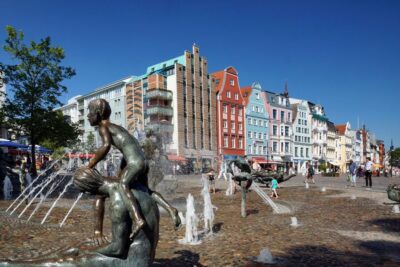

Full-Day, Half-Day, or Sunset Sailing Experience
Read our review →

Berlin and Sachsenhausen: Shore Trip from Warnemünde Port
Read our review →

Browse the lists this tour appears in