
Reviewed · CITY TOURS
Romantic Berlin Rickshaw City and Photo Tour – incl. pick-up
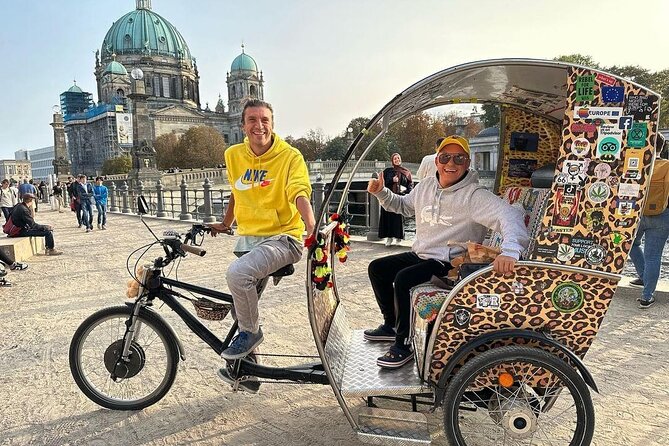
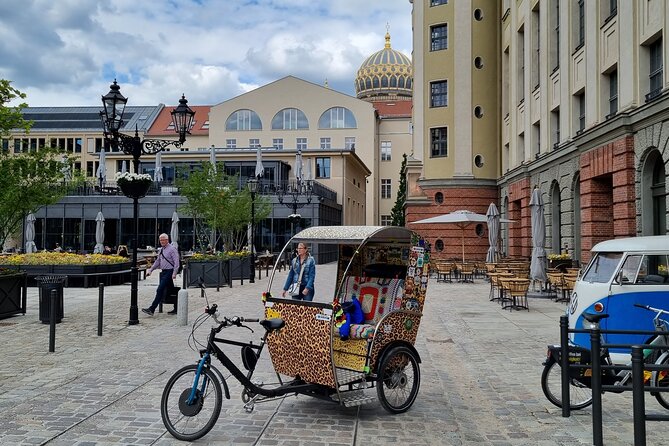
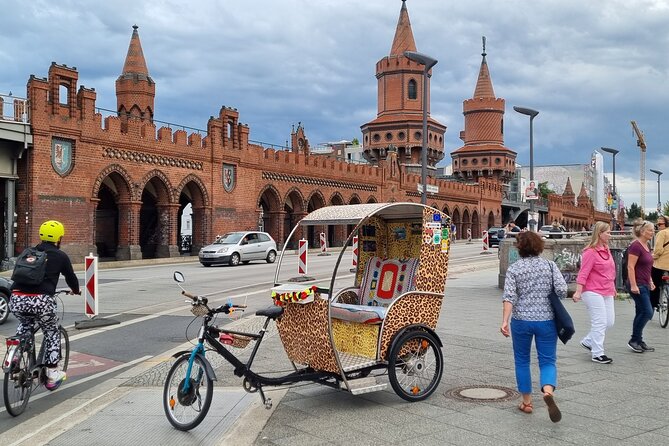
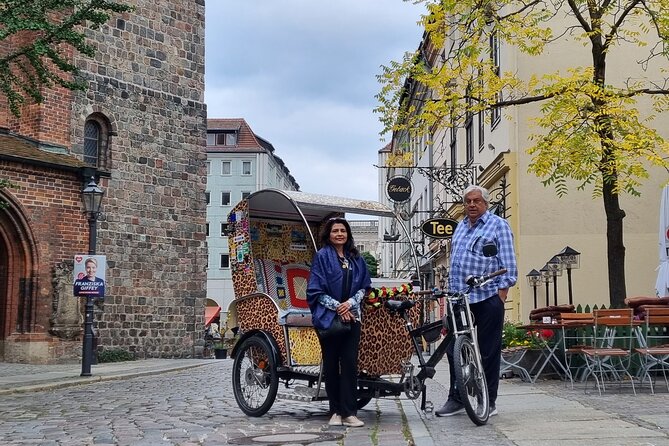
Berlin’s major sights pass by at a wonderfully human pace on this private rickshaw ride. You sit side by side, wrapped in a warm blanket if needed, while your driver-guide handles the traffic and pauses for photos at places such as Brandenburg Gate, the Reichstag, Checkpoint Charlie, and Museum Island. It is a compact way to get your bearings without walking miles.
I like the private format, which keeps the outing personal and lets you shape parts of the route. I also like the photo service and pickup, especially for a couple celebrating a special day. The main catch is value: at $183.35 per group for roughly one to two hours, this is a costly short tour, and one past rider felt there was not enough time riding or enough historical detail.
In This Review
- Key points at a glance
- A romantic way to see central Berlin
- Brandenburg Gate and the Reichstag
- Soviet Memorial and the open space of Tiergarten
- Potsdamer Platz and the Topography of Terror
- The Berlin Wall and Checkpoint Charlie
- Gendarmenmarkt, Bebelplatz, and Neue Wache
- Museum Island, Berlin Cathedral, and Alexanderplatz
- What the guide and extras add
- Who will get the best value
- Booking details worth knowing
- Should you book the Berlin rickshaw tour?
- FAQ
- Where does the tour start and finish?
- Is pickup included?
- How many people can join the rickshaw tour?
- Is admission to the Reichstag or other attractions included?
- What is included in the price?
- What happens if the weather is bad?
Key points at a glance
- Private ride for two: The price covers one group of up to two people, not two separate seats booked independently.
- Pickup near Brandenburg Gate: Collection within 2 km is included. Beyond that, the extra charge is €10 per kilometer, paid locally.
- Berlin’s central sights in one sweep: The route links the Reichstag, Potsdamer Platz, the Wall, Checkpoint Charlie, Gendarmenmarkt, Museum Island, and Alexanderplatz.
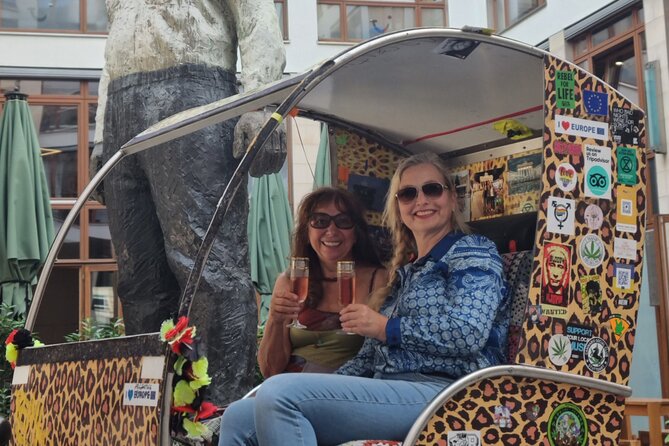
- Comfort extras included: You get private transport, WiFi, a blanket, music on request, a guide, a photographer, and alcoholic beverages.
- Outdoor activity: The tour requires good weather, and Berlin can feel cold in an open rickshaw.
- Flexible but brief: The guide can adapt the tour to your wishes, though the stated duration gives limited time for long stops.
A romantic way to see central Berlin
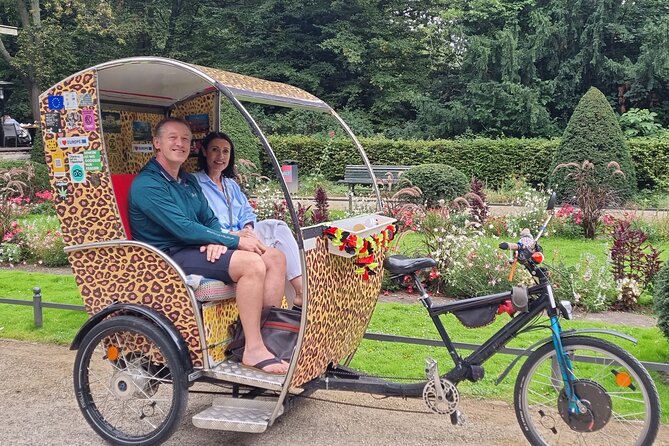
This is not a standard hop-on, hop-off outing. A rickshaw puts you close to the street, with no large vehicle windows between you and Berlin’s buildings, memorials, and passing squares. The ride also feels more private than a group bus, which suits couples who want photographs and a little ceremony around their sightseeing.
The experience begins at Pariser Platz, beside Brandenburg Gate, and ends back at the meeting point. Pickup is included within a 2 km radius of the gate, a useful perk if you are staying in central Berlin. If your accommodation is farther away, the stated fee is €10 per kilometer beyond that radius, paid on the spot.
The price is $183.35 per group of up to two, so I would judge it as a special-occasion purchase rather than a budget sightseeing ride. You are paying for privacy, the driver-guide, a photographer, drinks, and door-to-door convenience more than for a long tour. If you split the cost as a couple, it becomes easier to justify, but it remains expensive for a one-hour outing.
The duration is approximately one to two hours. That range matters. A shorter run may give you a quick circuit with brief photo stops, while a longer version should allow more time at the key places. The listed stops often have only about two minutes assigned to them, so you should think of this as a moving overview with snapshots, not a museum-style lesson.
A few more Berlin trips to weigh up
- Berlin: Fotografiska Photography Exhibition Ticket
★ 4.6 · 168 reviews - 5hours: Guide, Chauffeur & Photographer in Berlin private Tour
★ 5.0 · 66 reviews - BERLIN PHOTO TOUR with a professional Photographer from Berlin
★ 5.0 · 44 reviews
Brandenburg Gate and the Reichstag
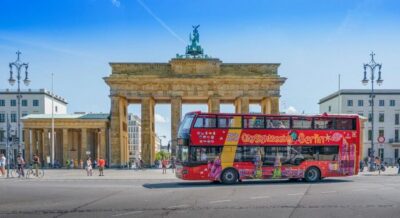
Brandenburg Gate is the natural opening scene. Built from 1788 to 1791, the sandstone gate was designed by Carl Gotthard Langhans the Elder and inspired by the Propylaea of Athens. Friedrich Wilhelm II wanted a grand architectural finish for Unter den Linden, and the result became one of Berlin’s best-known symbols.
From the rickshaw, you can appreciate the gate’s broad proportions and its role at the end of Pariser Platz. This is also a practical place for your first photographs, especially because the tour starts nearby and returns here.
The Reichstag follows as one of the most important political buildings in Germany. Its walls are tied to major turning points: Philipp Scheidemann proclaimed the republic from the west portal balcony in 1918, the building was badly damaged by the 1933 fire, and Soviet soldiers raised a red flag there in April 1945.
The tour does not include admission to the Reichstag, and the stop is listed at about two minutes. You should not expect time to enter, visit the dome, or explore the interior. Instead, you get an outside view and a short explanation from the guide.
Soviet Memorial and the open space of Tiergarten
Near the route is the Soviet War Memorial, marked by a bronze Red Army soldier and two T-34 tanks. Names of fallen Soviet soldiers appear on the pillars, and around 2,500 soldiers are buried in the rear section.
This is a sober stop, not a romantic photo backdrop in the usual sense. I value its inclusion because it gives the route a clear connection to Berlin’s wartime past. The memorial also helps you understand how strongly the final battle for Berlin shaped the city after 1945.
The rickshaw then passes through or alongside Tiergarten, Berlin’s large central park. The area began as a hunting ground before Elector Friedrich III ordered it turned into a public pleasure park. In the 19th century, landscape designer Peter Joseph Lenné reshaped it as an English-style public park.
Tiergarten covers roughly 200 hectares and includes monuments, bridges, the Victory Column, the Federal President’s Office, the House of World Cultures, and the English Garden around a pond. You will not have time to explore all of this on a short rickshaw tour, but the ride gives you a refreshing break from the dense central streets.
Potsdamer Platz and the Topography of Terror
Potsdamer Platz shows modern Berlin replacing a damaged and divided past. City planners treated the area as a new district, with futuristic towers, cinemas, shops, cafés, and a large shopping arcade. The redevelopment covered 6.8 hectares between Potsdamer Platz and Reichpietschufer.
I like this part of the route because it lets you see Berlin’s sharp changes in a small area. The city does not present one tidy architectural style. Historic monuments, empty spaces, rebuilt districts, and modern commercial buildings sit close together.
The next important stop is the Topography of Terror. From 1933 to 1945, the site held major Nazi institutions, including the Secret State Police Office, the SS leadership, and the Reich Security Main Office. It was a central place for planning and directing Nazi crimes.
The stop is free and listed at about two minutes. That is enough to point out the site and set its meaning in context, but not enough for the full exhibition. If you want to read the displays carefully, you should plan a separate visit.
Nearby, the Martin-Gropius-Bau is devoted to cultural history, modern art, and photography. The building is worth noting from outside, though this tour does not include an admission visit.
Same city, a completely different kind of day:
- Berlin: Reichstag, Dome and Government District Guided Tour
★ 4.7 · 18,288 reviews - Berlin: 1-Hour City Tour by Boat with Guaranteed Seating
★ 4.3 · 16,993 reviews - Berlin: Boat Tour Along the River Spree
★ 4.4 · 11,252 reviews - Discover Berlin Half-Day Walking Tour
★ 5.0 · 9,624 reviews
The Berlin Wall and Checkpoint Charlie
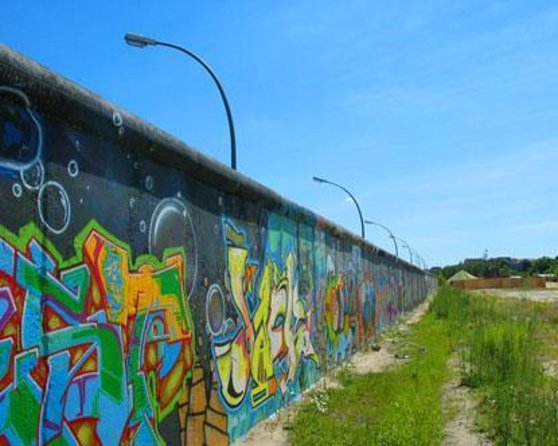
The Wall section gives you one of Berlin’s most powerful reminders of the city’s division. The supplied route information does not specify a particular surviving Wall segment, so you should ask your guide exactly where the rickshaw will pause and how much time is available for photographs.
Checkpoint Charlie is the better-known named stop. During the divided years, it was the most famous crossing controlled by the Americans. Only foreigners, employees of the West German permanent representation, and East German officials could use it.
Today, Checkpoint Charlie is a busy central intersection with a strong symbolic pull. The two-minute stop is useful for orientation, but it will not provide a full account of daily life beside the Wall or the escape attempts connected with Berlin’s division. I would treat it as a marker on the route, then return later if this subject matters deeply to you.
The ride also passes Friedrichstrasse, one of Berlin’s main north-south axes. After the Wall fell, the section between Checkpoint Charlie and Friedrichstrasse station developed into a major shopping street. That contrast, from restricted border corridor to commercial avenue, tells you much about Berlin’s rapid changes.
Gendarmenmarkt, Bebelplatz, and Neue Wache
Gendarmenmarkt is one of central Berlin’s most carefully composed squares. It began in the late 17th century near a quarter settled by French Protestant immigrants, and its name refers to the guard regiment and stables that occupied the area from 1736 to 1782.
The square includes the German Cathedral, the French Cathedral, and the concert hall. The German Cathedral contains the exhibition Ways, Wrong Ways, Detours, which follows the development of liberal parliamentary democracy in Germany across five floors. You will only see these buildings from the outside unless you arrange separate admission.
The concert hall is linked to Karl Friedrich Schinkel, one of Prussia’s major architects. Its theatrical past reaches back to a small comedy house opened here in 1776 under Frederick the Great. The building later became the Royal National Theater.
Bebelplatz is close by and carries a much darker memory. On May 10, 1933, the Nazis burned more than 20,000 books there, targeting works they labeled as opposed to a German spirit. The underground memorial, visible through glass, recalls the empty shelves that represent the destroyed books.
This is a place where a short explanation can have real weight. Heinrich Heine had written that where books are burned, people are eventually burned too. The tour’s quick stop may spark the thought, but you should allow extra time later if you want to visit the surrounding museum area.
Neue Wache, next to the former armory, was designed by Schinkel and built between 1816 and 1818. Since 1993, it has served as Germany’s central memorial to victims of war and tyranny. The small building has a serious, quiet presence that contrasts with the traffic outside.
Museum Island, Berlin Cathedral, and Alexanderplatz
Museum Island is one of Europe’s major museum centers and a UNESCO World Heritage Site. A rickshaw gives you a good way to connect its buildings without exhausting your feet, but the tour does not include museum entry.
Berlin Cathedral is the island’s most recognizable church. Its distinctive design makes it an easy photograph, while the nearby Lustgarten offers an open place to view the cathedral and surrounding buildings. The square once belonged to the Berlin City Palace and remains a popular sitting and meeting place.
The route then reaches the New Synagogue on Oranienburger Strasse. It was once Germany’s largest and most important synagogue. What remains today reflects both the building’s former importance and the damage it suffered.
Nikolaiviertel provides a change of mood. Berlin’s oldest residential district includes Nikolaikirche, historic-looking houses, restaurants, and cafés. It offers an old-town feel in a city more often associated with broad avenues, 20th-century conflict, and modern construction.
The final named stop is Alexanderplatz, one of Berlin’s liveliest squares. It has been important in the 1920s, during the East German period, and in the present day. The square’s changing identity makes it a fitting end to a route that moves through imperial Berlin, Nazi Berlin, divided Berlin, and the reunited city.
What the guide and extras add
The private guide is the key variable. A cheerful, flexible driver can make the ride feel like a personal outing rather than a fixed circuit. One especially positive account described the guide as fun and a good driver, which is important in an open vehicle moving through central traffic.
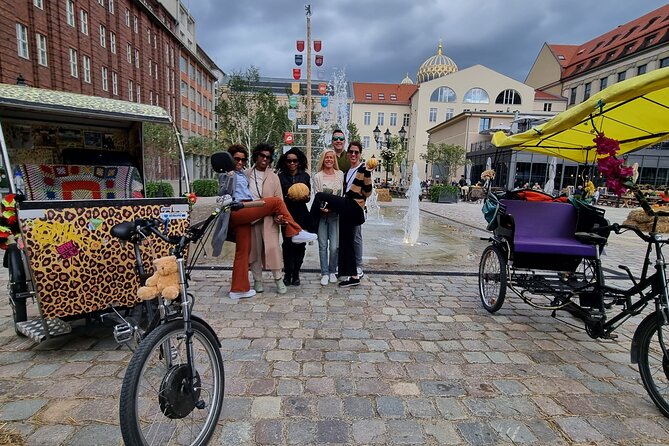
The service includes a photographer, so you can stay together in the rickshaw instead of repeatedly asking someone else to take pictures. You also get WiFi, a warm blanket, music on request, and alcoholic beverages. These extras make the tour feel designed for a date, anniversary, proposal, or birthday.
Still, the guide experience can vary. One past rider found the guide flexible but wanted more background information, more riding time, and better presentation of the drinks. That is useful warning. If you want detailed political and architectural commentary, say so at the start and ask the guide to spend less time on refreshments or photo setup.
The blanket is not a small matter. The ride is outdoors, and one outing took place in very cold weather. The couple still enjoyed it, but you should dress warmly and check the forecast before booking.
Who will get the best value
I would recommend this for a couple who values privacy, photographs, and convenience over a long sightseeing session. It also suits people who want a quick first look at central Berlin before choosing which sites deserve a longer visit.
The format can work well for someone who finds extensive walking difficult, since the rickshaw carries you from place to place and pickup is available near Brandenburg Gate. Service animals are allowed, and most people can participate according to the supplied conditions.
I would not choose it as my main Berlin history tour. The route covers too much ground in one to two hours, and many stops are only brief pauses. For museum interiors, detailed Wall history, the Reichstag dome, or careful study of the Topography of Terror, plan separate visits.
The private price also makes less sense for solo visitors. Since the fare is per group of up to two, it is best suited to two people sharing the cost. Music, drinks, photos, and a blanket add atmosphere, but they do not replace time or detailed interpretation.
Booking details worth knowing
You receive confirmation at booking, and the activity is offered in English. The tour begins at Pariser Platz 4A, 10117 Berlin, and returns there at the end.
Free cancellation is available up to 24 hours before the start time for a full refund. Changes or cancellations inside 24 hours are not accepted for a refund. The activity requires good weather. If poor weather causes cancellation, you are offered another date or a full refund.
Because the route is outdoors, I would avoid booking it as the one fixed highlight of a tightly packed final day. A weather change could affect your plans. The best choice is a day with a reasonable forecast and enough spare time to move the outing if necessary.
Should you book the Berlin rickshaw tour?
Book it if you want a short, private Berlin introduction with a romantic touch, easy pickup near Brandenburg Gate, and photographs of the city’s best-known central sights. The fun driver, flexible format, blanket, music, and drinks can make it memorable, especially for a celebration.
Skip it if your priority is low-cost sightseeing, long stops, or detailed historical teaching. At $183.35 for up to two people, the value depends on how much you care about privacy and the special rickshaw setting. Ask for a longer ride if available, dress for cold weather, and tell the guide which subjects matter most to you before setting off.
FAQ
Where does the tour start and finish?
It starts at Pariser Platz 4A, 10117 Berlin, near Brandenburg Gate, and ends back at the meeting point.
Is pickup included?
Pickup is included within a 2 km radius of Brandenburg Gate. Pickup farther away costs €10 per kilometer beyond that radius, paid on the spot.
How many people can join the rickshaw tour?
The price is for one private group of up to two people. Only your group participates.
Is admission to the Reichstag or other attractions included?
No. The Reichstag stop does not include an admission ticket, and the tour is mainly an outdoor route past Berlin’s landmarks. Other listed stops are also sightseeing pauses rather than included indoor visits.
What is included in the price?
The package includes private transportation, WiFi on board, a warm blanket, music on request, a guide, a photographer, and alcoholic beverages.
What happens if the weather is bad?
The activity requires good weather. If poor weather causes cancellation, you are offered a different date or a full refund. You can also cancel up to 24 hours before the start time for a full refund.
Just added around Berlin
- Love and War in Berlin: Self-Guided Story Puzzle Walk★ 5.0 · 7 reviews
- Rickshaw Tours Berlin – Groups of up to 16 people with several rickshaws★ 4.0 · 97 reviews
- Walking on the Wall: 3-Hour Tour in Berlin★ 4.5 · 34 reviews
- eSIM for Germany and 34 European Countries★ 4.5 · 16 reviews
- Warnemuende Shore Excursion: Berlin Private Sightseeing Tour from Rostock★ 5.0 · 4 reviews
- Your ticket to The Wall Museum Berlin★ 3.0 · 60 reviews
- Warnemuende Shore Excursion: Private Berlin Tour★ 4.5 · 27 reviews
- Berlin’s Gay, Lesbian, and Queer Scene Small-Group Walking Tour★ 4.5 · 66 reviews
City Tours, compared.

1-Hour City Tour by Boat with Guaranteed Seating
Read our review →
City History Canal Sightseeing Tour on a Motorboat
Read our review →

Browse the lists this tour appears in