
Reviewed · CONCENTRATION CAMP MEMORIAL TOURS
Never Again Berlin – Sachsenhausen Concentration Camp
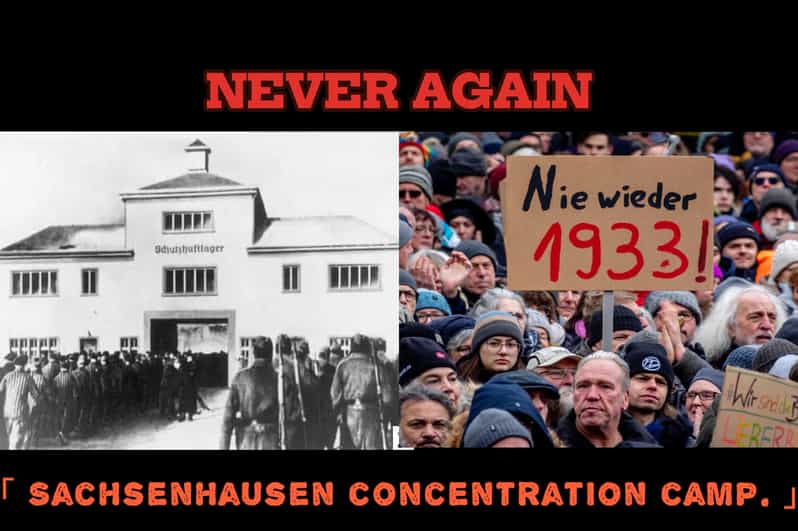
Sachsenhausen is chilling partly because of its setting. The camp sits near Oranienburg, close enough to town that daily life continued around it, while the SS trained, worked, and raised families beside imprisoned people. I love that this tour begins by explaining how Hitler gained power and why this site was chosen. I also like the striking fact that Allied bombing damaged Oranienburg but left the camp untouched.
The four-hour visit inside the memorial gives you time to understand the site rather than rush through a few photo stops. The train and bus ride are handled with the group, and guides such as Siobhan have made the day clear and calm for many people. The main drawback is that guide involvement may vary, and one past participant found the guide absent for much of the visit. Bring food, water, and sturdy shoes.
In This Review
- Key points to know before you go
- From Potsdamer Platz to Oranienburg
- Why Oranienburg matters before the camp
- The SS camp and the comfort of the perpetrators
- Tower A and the machinery of control
- Barracks, the kitchen, and the danger of forgetting
- Station Z and the mechanics of mass murder
- The infirmary and medical crimes
- How much time you really spend at Sachsenhausen
- Guide quality and what the price buys you
- Who should book this Sachsenhausen visit
- Should you book Never Again Berlin?
- FAQ
- Where does the Sachsenhausen tour begin?
- How long does the experience last?
- Is the train ticket included?
- Is entrance to Sachsenhausen Memorial included?
- What language is the tour in?
- What should I bring?
- Is the tour suitable for children?
Key points to know before you go
- The tour starts at Potsdamer Platz: Meet in front of Espresso House and look for the guide holding a small yellow flag.
- Oranienburg adds vital context: The walk from the station helps connect the camp to the ordinary city around it.
- Tower A and Station Z are major stops: You will examine SS control, prisoner labor, mass murder, the gas chambers, and the crematorium.
- The tour takes about 270 minutes: Plan on 35 minutes by train, 10 minutes by bus each way, and around four hours at the memorial.
- The train ticket costs extra: You need a Berlin ABC ticket before departure, while camp entry is included.
- This is serious material: The tour is not suitable for children under 12, and you should expect disturbing subjects.
From Potsdamer Platz to Oranienburg
Your morning or afternoon begins at Potsdamer Platz, in front of Espresso House. The guide carries a mini yellow flag, which gives you a simple way to find the group in a busy part of central Berlin.
The train ride takes about 35 minutes. That time is useful, not wasted. The tour uses it to set up the political story: Hitler’s rise, the spread of the concentration-camp system, and the role Sachsenhausen played within the Nazi system.
You need to buy a Berlin ABC ticket yourself before meeting the group. This is an important cost to remember when comparing the tour price. The advertised price is about $38 per person, with entry to the memorial included, but the return train ticket is extra.
After the train, a bus ride of roughly 10 minutes brings the group closer to the memorial. From there, you walk from the station area toward the visitor center. This approach helps you see Sachsenhausen as part of Oranienburg, not as an isolated museum dropped into an empty field.
More concentration camp memorial tours in Germany:
- Berlin: Sachsenhausen Concentration Camp Tour in English
★ 5.0 · 5,711 reviews - Dachau Concentration Camp Memorial Site Tour from Munich by Train
★ 4.5 · 5,637 reviews - Berlin: Sachsenhausen Concentration Camp Memorial Tour
★ 4.7 · 3,716 reviews
Why Oranienburg matters before the camp
The tour does not treat Sachsenhausen as a collection of grim buildings without context. It explains the city’s wartime experience and the odd fact that bombing struck Oranienburg while the concentration camp remained untouched.
That detail raises difficult questions about what people knew, what they ignored, and how the camp functioned beside a normal town. You also learn why the location was useful to the Nazi regime and how concentration camps fit into a wider network across Europe.
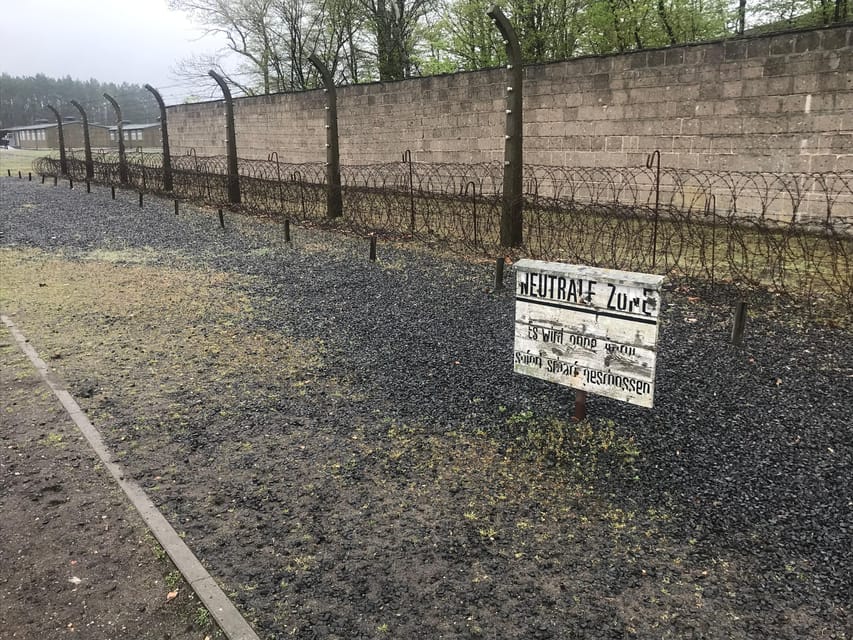
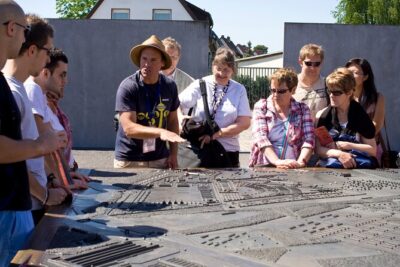
The visitor center has detailed models showing the camp’s layout. These models are especially helpful because the site is large and parts of it no longer look as they did during the Nazi period. With a clear plan in mind, you can better understand how gates, barracks, guard areas, work spaces, and restricted zones worked together to control prisoners.
The SS camp and the comfort of the perpetrators
One of the most unsettling parts of Sachsenhausen is the former SS training camp. The site is now connected with a Brandenburg police academy, a modern use that can feel jarring beside the camp’s past.
The tour also brings you near the camp commandant’s house. SS officers could spend time with their families while prisoners suffered nearby. That contrast is central to understanding the camp. The crimes were not carried out in some distant world removed from ordinary domestic life. People ate meals, raised children, and entertained visitors close to the prison compound.
You will also hear about sexual exploitation involving female prisoners. Reporters, ambassadors, and aid organizations visited the camp at different times, which leads to the hard question of who knew what was happening.
This is where a strong guide adds real value. The facts are disturbing enough, but the connections between public visibility, official visits, and private comfort require careful explanation. Siobhan has received especially warm praise for taking time with these details and adjusting the pace to the group.
Tower A and the machinery of control
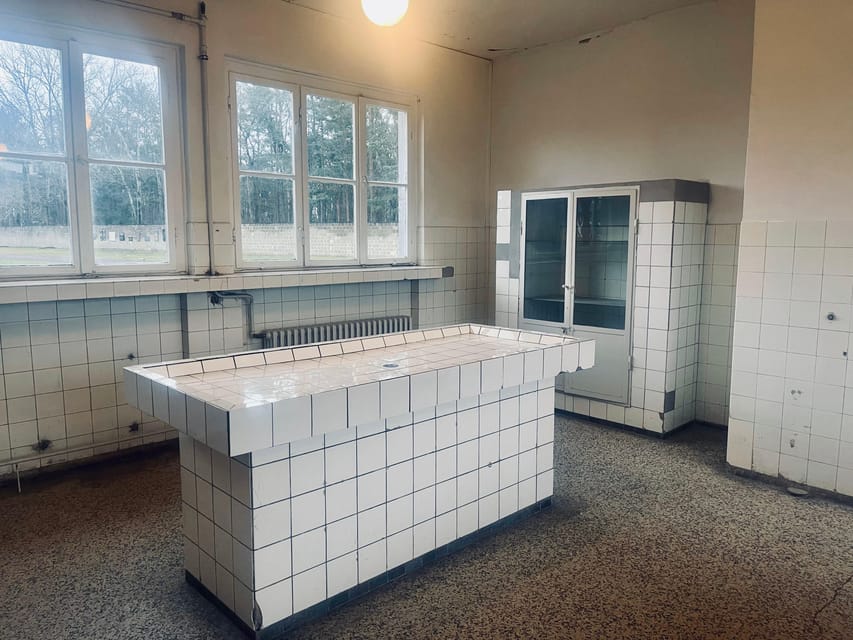
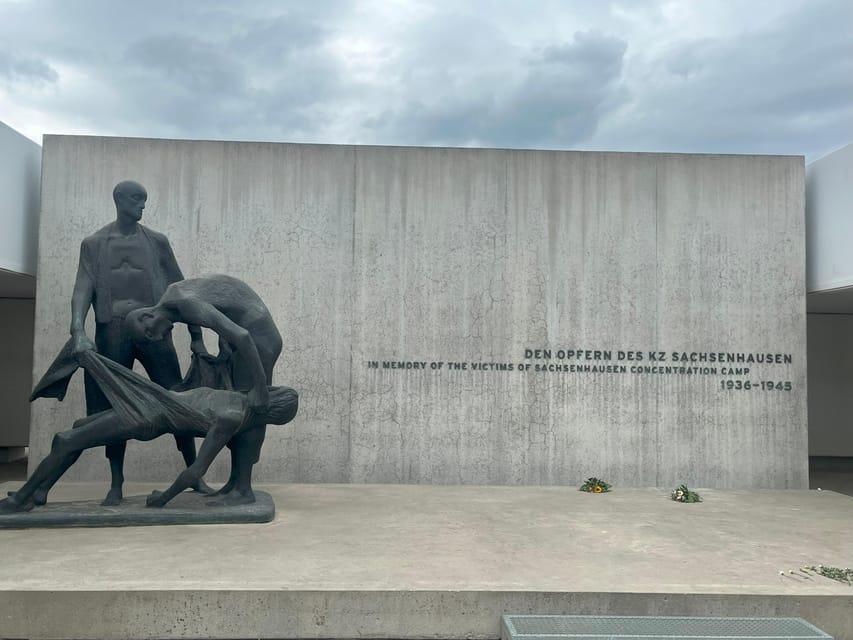
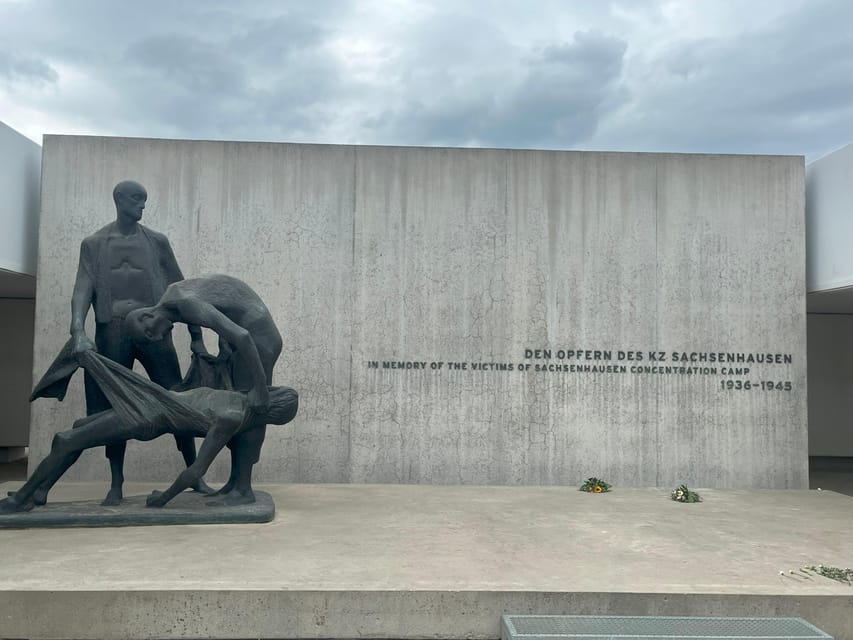
Tower A is the main entrance area and one of the clearest places to see how the SS presented power. The Perpetrators’ Room exhibition examines SS indoctrination and shows portraits of officers involved in running the camp.
The point is not to excuse them as people who were simply following orders. Instead, the material helps you examine how propaganda, hierarchy, racism, and obedience turned men into willing parts of a killing system. The portraits give the subject a human face without softening the crimes.
Daily roll calls were another tool of control. Prisoners could be forced to remain outside for long periods, sometimes in terrible weather, while the SS counted and punished them. The routine was meant to break people physically and mentally.
The shoe-testing track reveals how prisoners were exploited for profit. People in the lowest prisoner categories were forced to walk or run long distances in different shoes so companies and military planners could test footwear. It is a grim example of the Nazi system treating human beings as disposable labor.
The story here is broader than Sachsenhausen. The camp was part of a system that extracted work, encouraged private profit, and placed categories of prisoners into a racial and political hierarchy. That wider context makes the memorial more than a local site visit.
Same city, a completely different kind of day:
- Berlin: Reichstag, Dome and Government District Guided Tour
★ 4.7 · 18,288 reviews - Berlin: 1-Hour City Tour by Boat with Guaranteed Seating
★ 4.3 · 16,993 reviews - Hamburg: Sex and Crime in St. Pauli Tour for Ages 18+
★ 4.7 · 15,447 reviews - Hamburg: 1.5-Hour Harbor and Speicherstadt Day Cruise
★ 4.6 · 14,200 reviews
Barracks, the kitchen, and the danger of forgetting
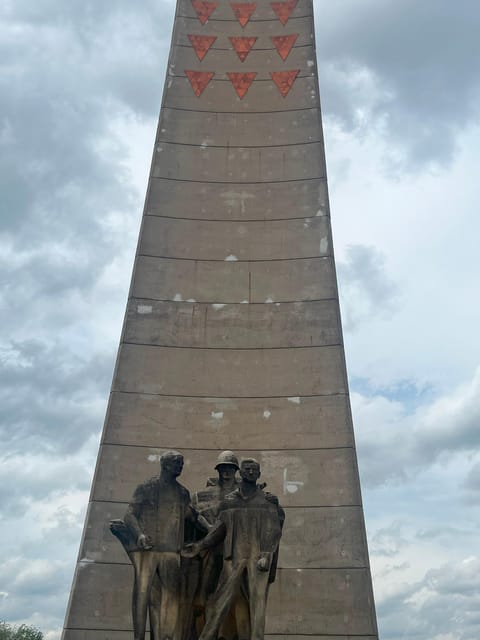
After the main guided sections, you have time to explore parts of the prisoners’ camp more independently. The barracks and camp kitchen help you picture the cramped, controlled routine imposed on prisoners.
The kitchen is also tied to present-day memory politics. Neo-Nazis have attacked parts of the memorial while denying the Holocaust. The tour connects this ongoing problem to the rise of the AfD, a German far-right political party.
That connection may be uncomfortable, but it is one of the tour’s useful features. You are not asked to treat the camp as a sealed chapter that ended in 1945. Instead, you are encouraged to consider how denial, racism, and political extremism continue to shape public life.
Your guide may not accompany you into every building during this portion. One past participant felt the guide stayed outside for most of the visit and offered limited answers. This is the clearest warning attached to the experience: your results depend heavily on the individual guide and on how the group is managed.
Station Z and the mechanics of mass murder
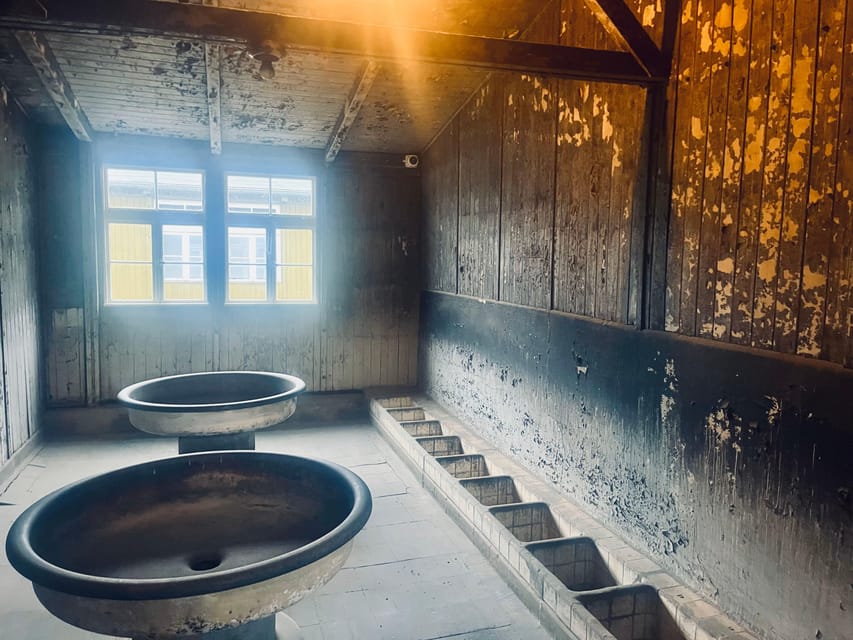
Station Z was the camp’s killing site. Here, the memorial explains the murder of Soviet prisoners, including child soldiers, and the operation of the gas chambers and crematorium.
The name itself is grim. Tower A marked the entrance to the camp, while Station Z was the final destination. The layout made the camp’s purpose brutally clear, from forced entry to planned death.
You should expect this section to be emotionally difficult. The site deals directly with mass murder rather than only with imprisonment and forced labor. The value of a guided visit is that the physical remains are explained without turning them into spectacle.
A good guide also helps you keep the scale in mind. The crimes were not isolated acts by a few individuals. They were organized through buildings, schedules, records, transport, guard units, medical staff, and administrative decisions.
The infirmary and medical crimes
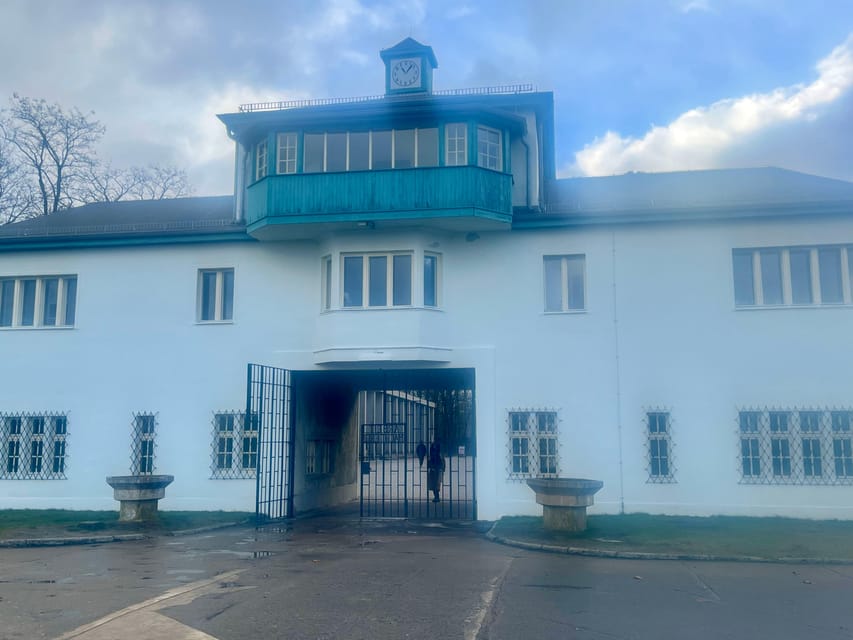
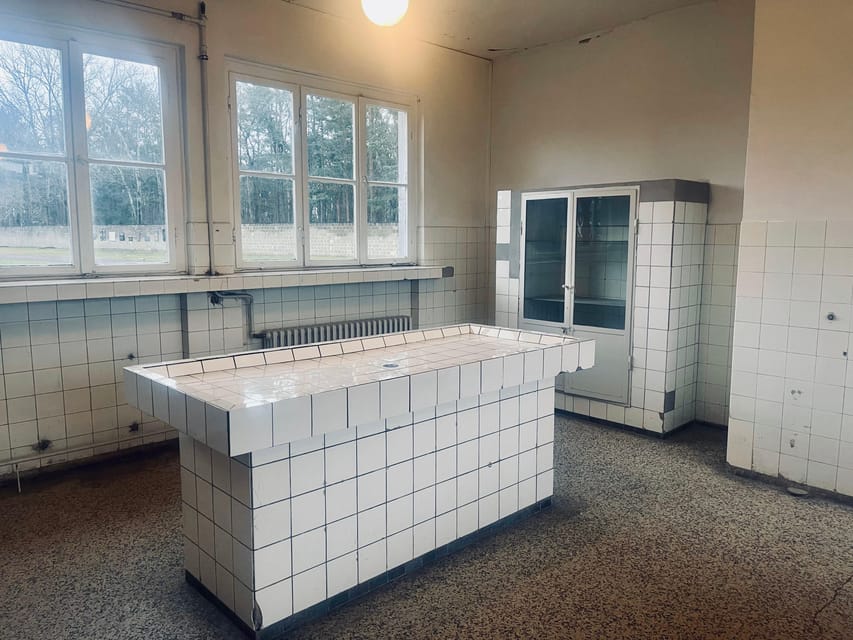
The infirmary reveals another layer of Nazi persecution. The subjects include racism, eugenics, control over women’s bodies, and medical experiments carried out on prisoners.
Doctors used prisoners as research subjects while seeking professional advancement. The language of medicine and science was twisted into a tool of selection and abuse. This part of the tour is important because it shows how respected institutions and career ambitions could serve a criminal state.
You may find the infirmary more difficult than the barracks because it challenges the idea that medical care is automatically humane. In Sachsenhausen, medical knowledge could be used to classify, control, experiment on, and destroy people.
The tour also discusses women’s experiences, including the regulation and exploitation of their bodies. That focus gives the visit a wider view than a military or architectural account of the camp.
How much time you really spend at Sachsenhausen
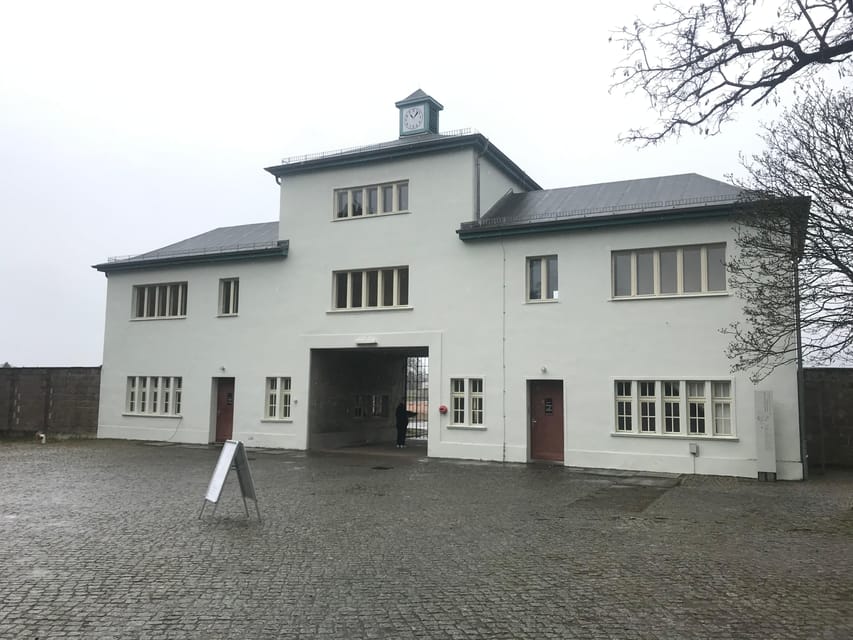
The full experience lasts about 270 minutes. The outbound train takes 35 minutes, the bus takes about 10 minutes, and the return journey follows the same pattern. That leaves roughly four hours at the memorial, including walking, guided sections, and a break.
Four hours is a sensible amount of time for a site this serious. A shorter visit could leave you with only a few dramatic images and little understanding of how the camp operated. Here, you have time for the visitor center, SS areas, Tower A, prisoners’ barracks, the kitchen, Station Z, and the infirmary.
The pace may feel heavy, especially in cold or wet weather. Wear comfortable shoes and clothing suited to walking outdoors. Bring snacks and water because food options at the camp are limited to two possibilities and may not be open.
Do not plan a tight appointment immediately afterward. The return train and bus are scheduled parts of the experience, but a memorial visit can also take emotional energy. Give yourself room to process what you have seen.
Guide quality and what the price buys you
The memorial can be entered without paying a separate admission fee, according to information shared about the site. That means the $38 price is mainly paying for the guide, the organization of the journey, and the historical explanation, not for an expensive ticket.
This makes the value depend on the guide. Siobhan has been singled out for clear explanations, a warm manner, and thoughtful pacing. She has also helped people who made a mistake on the way and adapted the visit to the group.
Other feedback points to inconsistency. One person felt the guide did not accompany the group through most of the memorial, while another found explanations vague and questions unanswered. There was also criticism of running two languages at once, which can split the group’s attention.
The tour is offered in English, but ask at the start how the day will be conducted if more than one language is present. A focused English tour will give you more time for questions and explanation.
The company describes the tour as affordable and suggests leaving a donation if the guide makes a strong impression. That is worth keeping in mind when calculating the total cost. You pay the listed amount, buy the ABC train ticket separately, and may choose to tip or donate.
Who should book this Sachsenhausen visit
I would choose this tour if you want help making sense of the memorial’s buildings, political context, and links to present-day extremism. It suits adults and older teenagers who can handle material about murder, medical abuse, forced labor, racism, and sexual exploitation.
It is also a good option if you prefer not to work out the route from central Berlin by yourself. The guide leads the train and bus journey, and the day has a clear structure from Potsdamer Platz and back again.
You may prefer visiting independently if you want to move at your own pace, avoid paying for a guide at a free memorial, or spend extra time in one section. An independent visit also avoids the risk of a guide who stays outside exhibits or handles questions poorly.
The tour is wheelchair accessible, though the day includes train travel, a bus, walking, and a large memorial site. Children under 12 are not permitted.
Should you book Never Again Berlin?
Book it if historical explanation and organized transport matter more to you than the lowest possible price. The route covers the camp’s main areas and connects Sachsenhausen to Nazi ideology, prisoner labor, medical crimes, Holocaust denial, and modern far-right politics.
The strongest reason to book is the chance of having a guide like Siobhan, who can turn a difficult site into a clear, thoughtful lesson. The main reason to hesitate is guide consistency, especially if you want close accompaniment in every building.
Bring your own food and water, buy the Berlin ABC ticket ahead of time, and wear shoes made for several hours of walking. If you approach the visit with patience and respect, this tour offers a serious look at how a concentration camp worked and why remembering it still matters.
FAQ
Where does the Sachsenhausen tour begin?
The meeting point is in front of Espresso House at Potsdamer Platz. The guide carries a mini yellow flag.
How long does the experience last?
The total duration is 270 minutes, or about four and a half hours. This includes the train and bus journeys between Berlin and Oranienburg and about four hours at the memorial.
Is the train ticket included?
No. You need to buy a Berlin ABC train ticket before the tour. The ticket is not included in the tour price.
Is entrance to Sachsenhausen Memorial included?
Yes. Entrance to the memorial is included in the tour price.
What language is the tour in?
The live tour guide speaks English. One past participant noted that two languages were handled at the same time, so you may want to confirm the language arrangement at the start.
What should I bring?
Bring comfortable shoes, water, snacks, and comfortable clothing. Food and drinks at the camp are limited, and the available options may not be open.
Is the tour suitable for children?
No. The experience is not suitable for children under 12. It covers mass murder, forced labor, medical experiments, racism, and other disturbing subjects.
Just added around Germany
- Aachen old town tour – GERMAN (public)★ 5.0 · 24 reviews
- Aachen Private Walking Tour With A Professional Guide★ 5.0 · 11 reviews
- Cologne Highlights: Exclusive Private Tour★ 5.0 · 5 reviews
- Bremen Private Walking Tour With A Professional Guide★ 5.0 · 7 reviews
- Private Walking Tour through the Fascinating Bremen’s City Center★ 5.0 · 5 reviews
- Explore Cologne’s best Street Art Quarter★ 4.5 · 4 reviews
- Bremen Exploration Private Game and City Tour on your Phone★ 4.5 · 7 reviews
- e-Scavenger hunt Bremen: Explore the city at your own pace★ 4.0 · 24 reviews
Concentration Camp Memorial Tours, compared.
Sachsenhausen Concentration Camp Tour in English
Read our review →
Dachau Concentration Camp Memorial Site Tour from Munich by Train
Read our review →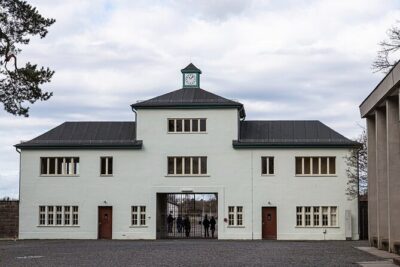
Sachsenhausen Concentration Camp Memorial Tour
Read our review →
Sachsenhausen Concentration Camp Bus Tour in English from Berlin
Read our review →Sachsenhausen Concentration Camp Tour in English
Read our review →
Sachsenhausen Concentration Camp Memorial Tour (Max. 15 Guests)
Read our review →Browse the lists this tour appears in