
Reviewed · CITY TOURS
Individual City Tour – Rickshaw Sightseeing in Berlin
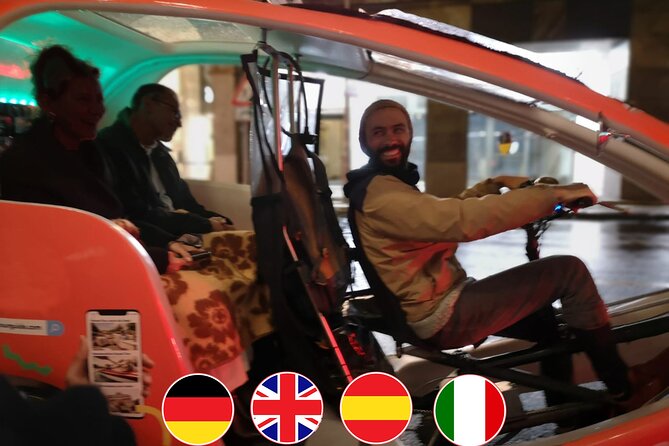
Berlin is spread out, and its most important sights belong to very different chapters of the city’s past. This private rickshaw tour ties them together without asking you to spend the day marching between Alexanderplatz, the Brandenburg Gate, and the old Berlin Wall. Leo is the guide most often named, and he mixes clear history with a relaxed ride through courtyards, cycle lanes, and park roads.
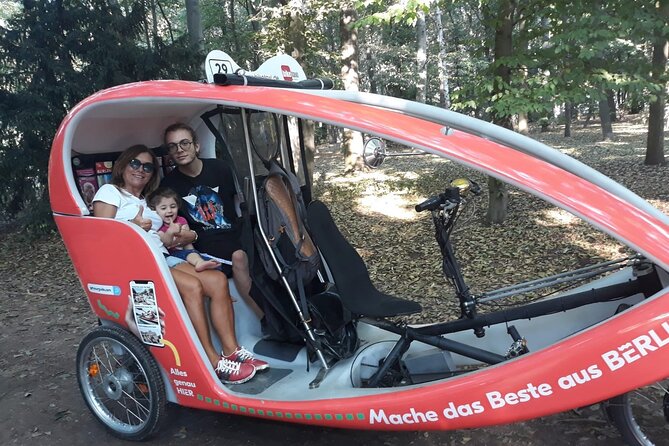
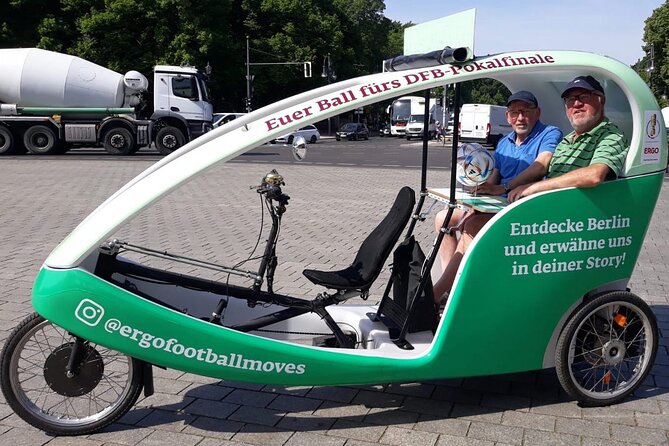
I like the private format, since you can ask about the subjects that matter to you and adjust the route. I also like the small vehicle, which can reach spots a bus cannot and pull close to landmarks for photos. The main catch is weather: a covered rickshaw is helpful, but you are still outdoors, so a very cold or wet day may limit your comfort.
In This Review
- Key points before you book
- Why a Berlin rickshaw works so well
- Alexanderplatz begins the story
- Museum Island and Hackesche Höfe
- From the Palace of Tears to Bebelplatz
- The grand center: Gendarmenmarkt and Checkpoint Charlie
- The Berlin Wall and Potsdamer Platz
- A slower ride through Tiergarten
- The government district and Brandenburg Gate
- Guides, comfort, and flexibility
- Who gets the best value
- Should you book this Berlin rickshaw tour?
- FAQ
- Where does the rickshaw tour start?
- Where does the tour finish?
- Is hotel pickup available?
- How long does the tour last?
- Is this a private tour?
- What language is offered?
- Are blankets provided in cold weather?
- Are admission tickets included?
- What is the cancellation policy?
Key points before you book
- A private ride for your own party: You do not share the rickshaw with strangers, and the guide can adapt the route to your interests.
- A fast first look at Berlin: In two or three hours, you can connect central sights from Alexanderplatz to Brandenburg Gate.
- A strong option for limited walking: The rickshaw helps if you have bad knees, tired legs, or a family member who cannot walk far.
- Warmth is taken seriously: Blankets are provided in cold weather, and hot water bottles have also been supplied on chilly rides.
- Pickup is available near Museum Island: Hotels and other locations within 2 kilometers can be collected free of charge.
- The route is flexible: Tell the guide what you plan to visit later, and the ride can be adjusted to avoid repeating the same ground.
Why a Berlin rickshaw works so well
At $53.21 per person, this is not the cheapest way to look at Berlin. Public transport costs less, and you can walk between many central sights at no charge. But this is a private experience, with an expert guide, direct access to a long list of landmarks, and no need to work out the city’s layout on your own.
That changes the value. If you are visiting Berlin for the first time, the tour gives you a useful mental map early in your stay. You can see where the historic center meets the government district, where the Wall once divided the city, and how the broad avenues give way to parks and courtyards.
The rickshaw also helps people who find a full day of walking difficult. One solo rider brought a walker and received help getting on and off. Another party included a person with bad knees and found the ride far easier than covering the same route on foot.
The standard ride lasts about one to three hours. That range matters. A one-hour outing gives you a quick orientation, while two or three hours lets the guide include Tiergarten, more photo stops, and personal requests. You should confirm the length you want when booking.
A few more Berlin trips to weigh up
- Berlin: 1-Hour City Tour by Boat with Guaranteed Seating
★ 4.3 · 16,993 reviews - Berlin: City Sightseeing Hop-On Hop-Off Bus Tour
★ 4.1 · 4,233 reviews - Berlin: 1-Hour City Sightseeing Cruise
★ 4.4 · 2,210 reviews
Alexanderplatz begins the story
The usual meeting point is the World Time Clock on Alexanderplatz. This is a practical place to begin because it is easy to find and sits near public transport. Alexanderplatz also gives you a quick lesson in Berlin’s layers.
The square began near the medieval edge of the city and later became a major center of East Berlin, then the capital of the German Democratic Republic. The World Time Clock remains one of the square’s best-known meeting points, with tourists and Berliners crossing paths around it.
You get about five minutes here. That is enough for an introduction and a few photos, not a full exploration of the square. If you want time inside nearby attractions, you will need a separate visit.
From here, the rickshaw heads toward Nikolaiviertel, the oldest settlement area of Berlin and Cölln, the historic twin city that grew beside it. Almost all of this quarter was destroyed in the Second World War and rebuilt for Berlin’s 750th anniversary.
Nikolaiviertel is useful because it shows how Berlin has rebuilt its past. It is not a preserved medieval district in the same way as an old quarter in some European cities. Instead, it is a reconstructed piece of the city, and the contrast between original history and later rebuilding is part of the lesson.
Museum Island and Hackesche Höfe
Museum Island was planned by Prussian kings and has been a UNESCO World Heritage site since 1999. The rickshaw brings you near this group of major museums, Berlin Cathedral, and the new Berlin Palace.
The tour allows roughly five minutes at the stop, so think of it as an outside introduction. Museum admission is not included. If you want to see the museums properly, use this ride to decide which one deserves your return visit.
I especially like this stop as part of a first-day route. Museum Island can feel confusing when you first arrive, but seeing its position beside the Spree and near the cathedral helps you place it within central Berlin.
Next comes the Hackesche Höfe, a series of linked courtyards in the old Spandauer Vorstadt district. They are often described as Germany’s largest enclosed courtyard area. Their appeal is the change of mood: decorative facades, small courtyards, shops, and a more youthful city feel replace the grand state buildings nearby.
A rickshaw is useful here because it can reach areas that are awkward for a car or bus. You may get a glimpse of courtyards and side streets that would be easy to miss from a large vehicle. The five-minute stop is short, so ask the guide if you want a closer look or plan to return independently.
From the Palace of Tears to Bebelplatz

The Palace of Tears is the former exit hall at Friedrichstraße station, once a border crossing between East and West Berlin. You can still walk through the old control counters, which gives the place a direct, physical link to the years when Berlin was divided.
This is one of the tour’s most useful Cold War stops. A large monument can explain a political system, but an exit hall and its control points make the division feel more personal. The five-minute visit is brief, yet it gives you a clear reason to come back for a longer look.
At Bebelplatz, the subject shifts to culture, power, and censorship. This handsome square is surrounded by buildings that recall what beauty and learning meant in Berlin three centuries ago. Beneath the square, an empty library commemorates the book burning of May 10, 1933.
The stop works best when the guide explains what you are seeing rather than simply pointing out the buildings. You can take in the square quickly, but the memorial rewards a pause and a moment of thought. As with most stops on this route, the rickshaw gives you the overview, not a full museum visit.
Same city, a completely different kind of day:
- Berlin: Reichstag, Dome and Government District Guided Tour
★ 4.7 · 18,288 reviews - Berlin: Boat Tour Along the River Spree
★ 4.4 · 11,252 reviews - Discover Berlin Half-Day Walking Tour
★ 5.0 · 9,624 reviews - Berlin: Hop-on Hop-off Bus Tour with Live Commentary
★ 4.3 · 8,579 reviews
The grand center: Gendarmenmarkt and Checkpoint Charlie
Gendarmenmarkt is one of Berlin’s finest squares, framed by a concert hall and churches with prominent towers. It is a place where the city’s architectural confidence is easy to see.
The rickshaw brings you close enough for photos and a short explanation. If you are interested in architecture, ask the guide to point out the relationship between the buildings rather than rushing on. Five minutes gives you the outline, but not much time to explore the square on foot.
Checkpoint Charlie then returns you to the divided city. The former border crossing recalls the Cold War, escape attempts, and the tense relationship between East and West Berlin. The site is free to view, but it is also one of the city’s most commercialized historic locations.
That makes the guide especially helpful. You can separate the real history of the crossing from the souvenir shops and staged displays that surround it. The rickshaw’s close approach is convenient, though you may want to return later if you want a slower look at the nearby museums and documentation.
The Berlin Wall and Potsdamer Platz
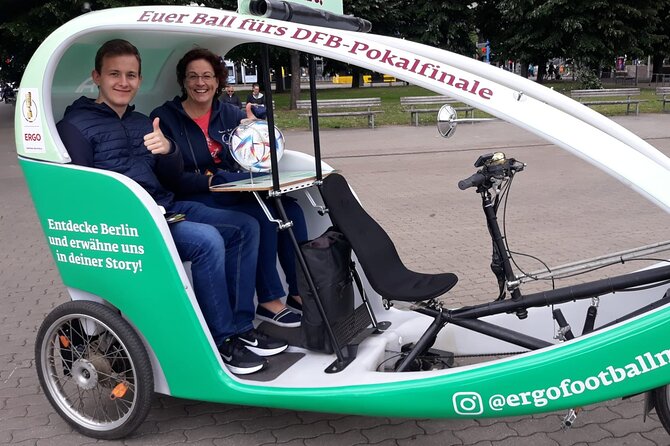
The Topography of Terror is one of the most serious points on the route. The longest remaining section of the Berlin Wall is preserved here in its original state, beside a site connected with Nazi terror.
You get only about five minutes during the ride, so do not treat this as a substitute for the full Topography of Terror exhibition. Still, the stop makes sense in a rapid city tour because it brings two major periods of German history into one place: Nazi rule and the later division of Berlin.
Potsdamer Platz offers a sharp change. Before the Second World War, it was one of Berlin’s key traffic centers. The division of the city destroyed its role, and after reunification it became a showcase for modern buildings.
The area is valuable for seeing how quickly Berlin can change from one block to the next. Modern towers and broad public spaces now occupy a place shaped by war and division. Older pieces of Potsdamer Platz remain hidden or scattered within the newer development, so listen closely if the guide points out what survived.
A slower ride through Tiergarten
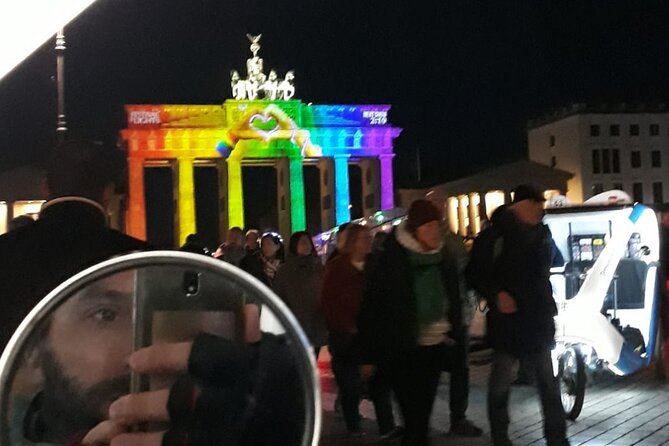
Tiergarten is the longest stop on the route, with about 30 minutes devoted to the park and its sights. This is where the tour stops feeling like a checklist and becomes a pleasant ride through Berlin’s green center.
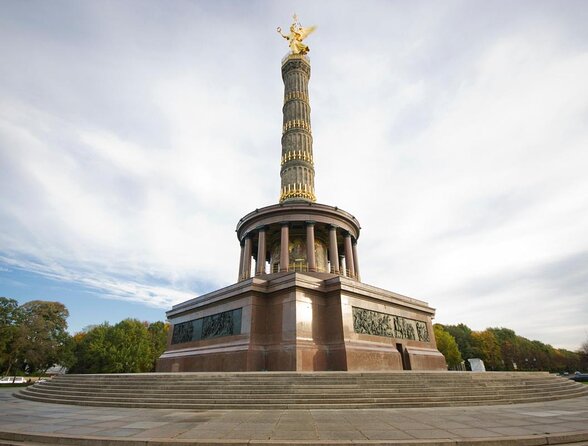
You pass bridges, waterways, and several important sites, including the Victory Column, Bellevue Palace, the House of World Cultures, the Carillon, and the Soviet Memorial. The route also travels through the park itself, giving you a break from the stone squares and traffic corridors of central Berlin.
The Victory Column, topped by the golden figure of Victoria, commemorates three Prussian victories. Its connection with the Love Parade is more recent and more popular, but the monument’s older meaning is easier to appreciate from nearby. The gilded cannons and other details are most visible when you are close, which is an advantage over a sightseeing bus.
Admission to the Victory Column is not included. The tour is mainly an exterior stop, so you should not expect time to climb it unless you arrange that separately.
Bellevue Palace began as a prince’s residence and has served as the first official residence of the German Federal President since 1994. You see it from outside, with no admission included. The nearby government sites help show how the park connects Berlin’s ceremonial, political, and cultural life.
The House of World Cultures and Carillon add variety, while the Soviet Memorial brings the Second World War firmly back into view. Tiergarten is also where a blanket matters most on a cold day. You are moving through open parkland, and the ride can feel chilly even when the city streets seem comfortable.
The government district and Brandenburg Gate
The government district was built largely around the year 2000 along the Spreebogen, near the historic Reichstag. It is one of the clearest places to see reunited Germany expressing its new political identity in modern architecture.
The guide can help you understand the contrast between the old Reichstag building and the newer government quarter. You will not be visiting the Reichstag interior on this tour, so plan a separate booking if that is a priority.
The final major stop is Brandenburg Gate, at the end of Unter den Linden. It is Berlin’s only surviving city gate and its best-known symbol. The gate has represented Prussian power, Nazi propaganda, the division of the city, and finally reunification.
That long list of meanings is why the stop deserves more than a quick photograph. The rickshaw gets you close, but the five-minute pause is still short. If you have never seen Brandenburg Gate, use the tour for your first look and return later for quieter photos and a closer walk around Pariser Platz.
The activity ends back at the meeting point on Alexanderplatz. Hotel pickup is free within 2 kilometers of Museum Island. Pickup farther away costs 5 euros per kilometer, so ask for the exact price before confirming if your hotel is outside that area.
Guides, comfort, and flexibility
Leo is the guide most frequently identified in the provided feedback, and his role is more than simply pedaling and pointing. He uses old photographs on some rides to show how Berlin changed, answers detailed questions about Nazi Germany and the Cold War, and adjusts the route when a family member has a particular interest.
Jakob is also named as a guide. English is offered, and the comments describe clear explanations and quick communication before and after the ride. That matters on a private tour because you can shape the experience instead of following a fixed group script.
Music is available by request. Drinks are not included, though they can be ordered separately. Warm blankets are included in cold weather, and some rides have also had hot water bottles. Those extras are not just decoration. Several of the most positive experiences took place in freezing weather, snow, or winter conditions.
The rickshaw is covered, according to the practical details shared about rainy weather, but you remain outside. Dress for the forecast, especially if you choose the longer option. A warm blanket can protect your lap, but it does not replace a proper coat, hat, and gloves.
The ride suits most people, and service animals are allowed. It is also near public transport. If you need help getting on or off, tell the guide in advance. The private setup makes such assistance easier than it would be on a large group bus.
Who gets the best value
I would recommend this for a first full day in Berlin, especially if you want to see the main areas before choosing where to spend more time. It also fits families, older adults, people with limited walking ability, and anyone who wants a personal guide rather than an audio recording.
Families can adjust the pace around young children. A two-year-old has been accommodated, and children have enjoyed the mix of open-air riding, major buildings, and short stops. Teenagers can also help shape the route by asking for subjects that interest them.
History fans will get the most from the ride if they ask questions. The route covers Prussian Berlin, Nazi Germany, the German Democratic Republic, the Cold War, reunification, and the modern government quarter. You will not receive a full academic treatment in a few hours, but you will get a strong framework for further visits.
I would hesitate only if you want long interior visits, a low-cost way to move around, or a guaranteed warm indoor experience. The route touches many places quickly, and several stops allow only five minutes. Think of it as a guided overview with personal access, not a replacement for Berlin’s museums.
The tour has free cancellation up to 24 hours before the start time. Changes or cancellations within 24 hours are not accepted for a refund.
Should you book this Berlin rickshaw tour?
Book it if you want a private orientation with real historical context, especially during your first days in Berlin. The combination of close access, flexible routing, and help for people who cannot walk far gives it more value than a basic sightseeing loop.
Choose two or three hours if you want Tiergarten and the full route. Choose a shorter ride if your main goal is to connect the central landmarks. Ask for Leo if available, share your interests before setting off, and tell the guide which sites you plan to visit later so the route can avoid repeats.
Skip it if you prefer spending an hour inside each museum or if the price feels high compared with public transport. For many visitors, though, the rickshaw is a smart way to get your bearings fast while hearing how Berlin’s divided past still shapes the city you see today.
FAQ
Where does the rickshaw tour start?
The usual starting point is the World Time Clock at Alexanderplatz, Alexanderplatz 1, 10178 Berlin.
Where does the tour finish?
The activity ends back at the meeting point on Alexanderplatz.
Is hotel pickup available?
Yes. Pickup from hotels or other locations within 2 kilometers of Museum Island is free. Locations farther away are charged at 5 euros per kilometer.
How long does the tour last?
The tour lasts approximately one to three hours, depending on the option booked and the route arranged.
Is this a private tour?
Yes. Only your personal party participates in the rickshaw tour.
What language is offered?
The tour is offered in English.
Are blankets provided in cold weather?
Yes. A warm blanket is included when the weather is cold. Hot water bottles have also been provided on some rides.
Are admission tickets included?
Most stops are viewed from outside and have no admission charge. Museum Island and the Victory Column list admission as not included.
What is the cancellation policy?
You can cancel up to 24 hours before the start time for a full refund. Cancellations or changes made within 24 hours are not accepted for a refund.
Just added around Berlin
- Love and War in Berlin: Self-Guided Story Puzzle Walk★ 5.0 · 7 reviews
- Rickshaw Tours Berlin – Groups of up to 16 people with several rickshaws★ 4.0 · 97 reviews
- Walking on the Wall: 3-Hour Tour in Berlin★ 4.5 · 34 reviews
- eSIM for Germany and 34 European Countries★ 4.5 · 16 reviews
- Warnemuende Shore Excursion: Berlin Private Sightseeing Tour from Rostock★ 5.0 · 4 reviews
- Your ticket to The Wall Museum Berlin★ 3.0 · 60 reviews
- Warnemuende Shore Excursion: Private Berlin Tour★ 4.5 · 27 reviews
- Berlin’s Gay, Lesbian, and Queer Scene Small-Group Walking Tour★ 4.5 · 66 reviews
City Tours, compared.

1-Hour City Tour by Boat with Guaranteed Seating
Read our review →
City History Canal Sightseeing Tour on a Motorboat
Read our review →

Browse the lists this tour appears in