
Reviewed · STREET ART & ALTERNATIVE TOURS
East Meets West: Berlin Food Culture & Street Art
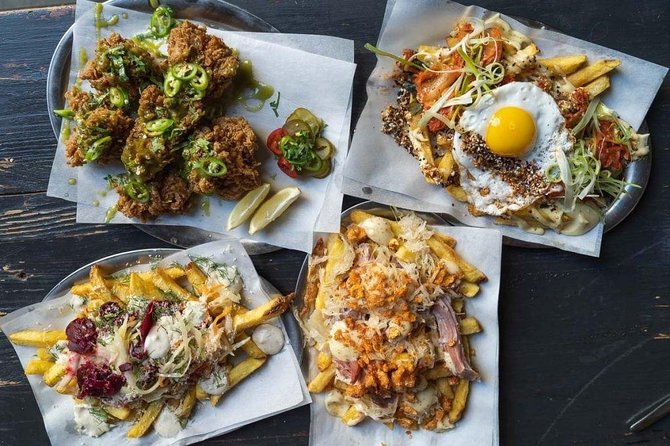
Berlin’s food story makes more sense when you walk it. This 3.5-hour route links Friedrichshain, the East Side Gallery, and Kreuzberg, using schnitzel, Turkish street food, Ukrainian dishes, currywurst, coffee, beer, and vegan doughnuts to explain how Berlin changed after war, division, migration, and reunification.
I like the small maximum of eight people, which gives guides such as Lee, Elena, Tiago, and Will room to answer questions. I also like the range: you move from a Berlin classic to Anatolian flavors and modern vegan food, rather than eating the same style of dish all afternoon.
The main caution is value. At $169.38 per person, the six tastings need to matter to you, and one part of the group may find the food stops more casual than substantial. You also need a BVG transport ticket, and this is a walking tour in weather that may call for a rain jacket.
In This Review
- Key points to know before booking
- Why this route tells Berlin’s story through food
- Friedrichshain and the remaining Berlin Wall
- Crossing into Kreuzberg
- Schnitzel, coffee, and the first tastes
- Street art beyond the Wall
- Ukrainian food and Berlin’s newer arrivals
- Markthalle Neun and the city’s food community
- Turkish street food in Kreuzberg
- Currywurst and the city’s signature snack
- Vegan doughnuts and the route’s modern finish
- Does $169.38 offer good value?
- Who should book this Berlin food walk?
- My booking verdict
- FAQ
- How long does the East Meets West tour last?
- Where does the tour begin and end?
- What food and drinks are included?
- Is a vegetarian option available?
- How large is the group?
- Is public transport included?
- What happens if I need to cancel?
Key points to know before booking
- East Berlin to Kreuzberg: Follow a clear route from Friedrichshain across the former border into West Berlin.
- Six local tastings: Expect food and drinks ranging from Berlin schnitzel and currywurst to Turkish, Ukrainian, coffee, beer, and vegan doughnuts.
- Street art with political meaning: The East Side Gallery and Kreuzberg murals frame Berlin’s past and present through public art.
- Guides shape the experience: Lee, Elena, Tiago, and Will are among the guides praised for explaining food, neighborhoods, and history.
- Maximum of eight people: The small group suits visitors who want to ask questions and keep a personal pace.
- Come hungry: The portions can add up to a full meal, so breakfast beforehand should be light.
Why this route tells Berlin’s story through food
This is not simply a list of places to eat. The route uses food as a key to Berlin’s neighborhoods.
You begin in Friedrichshain, once part of East Berlin, then pass the longest surviving stretch of the Berlin Wall at the East Side Gallery. From there, you cross into Kreuzberg, formerly West Berlin, where Turkish immigration helped shape the area’s food and identity.
That change from East to West is the tour’s strongest idea. Berlin’s political history can feel scattered when you see it one monument at a time. Here, the guide connects streets, murals, migration, and meals. A Turkish dish is not just lunch. A currywurst is not just a sausage. A market hall is not just a place to browse.
The tour is offered in English and lasts about three hours and 30 minutes. It starts at noon, so this is best treated as a late lunch rather than a morning snack crawl. I would eat a small breakfast, but I would not arrive after a large meal.
More Street Art & Alternative Tours in Berlin
- Berlin: City Street Art Guided Walking Tour
★ 4.8 · 886 reviews - Berlin: 3-Hour Street Art Tour
★ 4.7 · 778 reviews - Berlin Street Art Walking Tour – Off The Grid
★ 5.0 · 270 reviews
Friedrichshain and the remaining Berlin Wall
The meeting point is outside Industriepalast Hostel at Warschauer Strasse 43 in Friedrichshain. This neighborhood is introduced as home to revolutionary East Berliners, and the first stop gives you a quick sense of the former East side before the food begins in earnest.
The Friedrichshain stop is listed at about 20 minutes. That is enough time for orientation, but not a full neighborhood tour. You should expect a compact introduction to the streets and their role in East Berlin, not a long museum-style history lesson.
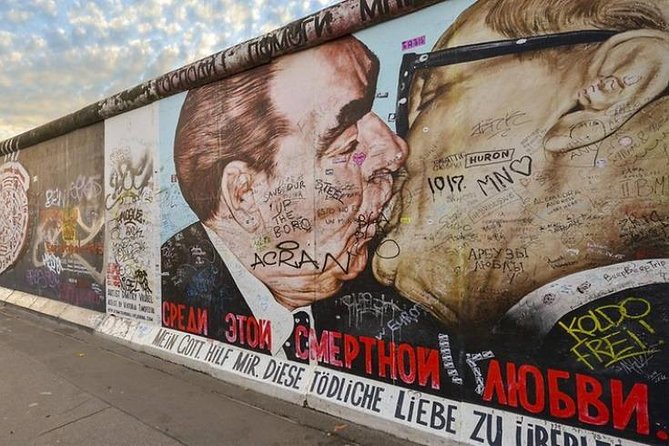
Next comes the East Side Gallery, another 20-minute stop. Here you see an actual remaining section of the Wall covered in political and artistic work. The appeal is immediate: this is history you can touch, while the murals show how the Wall moved from a symbol of state control to a public canvas.
I like this stop because it gives the day a firm starting point. You are not hearing about divided Berlin in the abstract. You are standing beside the Wall and looking at art made on the physical remains of that division.
Still, keep your expectations in check. Twenty minutes is brief for a site with so many murals and stories. The guide will focus the visit, which is useful, but you may want to return on your own if you hope to examine the gallery at length.
Crossing into Kreuzberg
The walk continues toward Kreuzberg, the former West Berlin neighborhood that became known for its alternative culture, bars, food, and street art. The listed stop lasts about 30 minutes, giving the guide time to explain how the neighborhood developed and why its character differs from Friedrichshain.
Kreuzberg is where the tour’s food theme becomes especially strong. Turkish residents helped rebuild and reshape the area during the 1980s and 1990s, and the neighborhood is now home to Berlin’s largest Turkish community outside Turkey.
That context matters. You are not being taken to a generic international food district. You are seeing how migration changed the city’s daily life, restaurant culture, and public spaces. The route also shows how Berlin’s old East-West divide has been overlaid by newer layers of immigration and creative culture.
This section involves a moderate amount of walking. Wear comfortable shoes, and bring a rain jacket or poncho if the forecast looks uncertain. The tour continues in wet weather unless the operator makes a change, and several food stops are spaced through the neighborhood rather than gathered in one hall.
Schnitzel, coffee, and the first tastes
One stop is Scheers Schnitzel, described as a Berlin schnitzel institution serving the dish in local style. This gives you a traditional German reference point before the route turns toward Berlin’s international food culture.
Schnitzel is familiar food, but its place on this tour is useful. It provides a baseline for the rest of the afternoon. You can compare a classic Berlin comfort dish with the Turkish, Ukrainian, and plant-based foods that follow.
The route also includes a visit to one of Friedrichshain’s hip coffee shops. The exact café may depend on the operating schedule, but the purpose is clear: Berlin’s food identity includes serious coffee culture as well as old-fashioned street food.
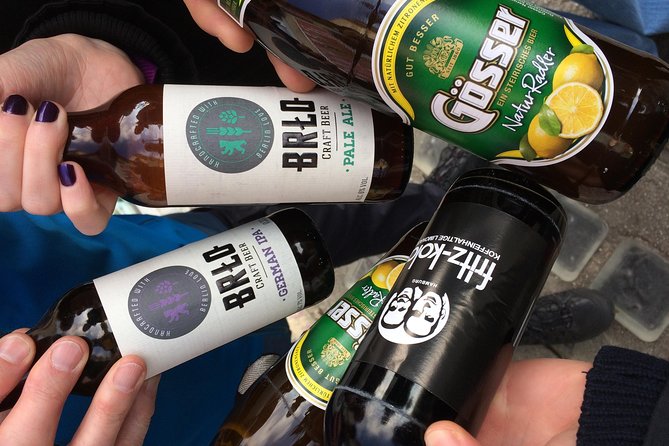
The included tastings are described as six local samples, along with beverages, food tasting, and local Berliner Pilsner beer. The exact order and combination may change, so do not assume every item arrives as a full individual serving. Still, the food adds up. I would not plan a large dinner reservation immediately afterward unless you are comfortable keeping it light.
Same city, a completely different kind of day:
- Berlin: Reichstag, Dome and Government District Guided Tour
★ 4.7 · 18,288 reviews - Berlin: 1-Hour City Tour by Boat with Guaranteed Seating
★ 4.3 · 16,993 reviews - Berlin: Boat Tour Along the River Spree
★ 4.4 · 11,252 reviews - Discover Berlin Half-Day Walking Tour
★ 5.0 · 9,624 reviews
Street art beyond the Wall
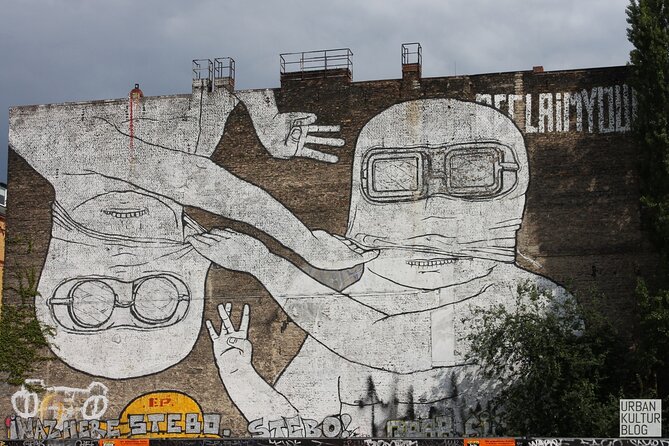
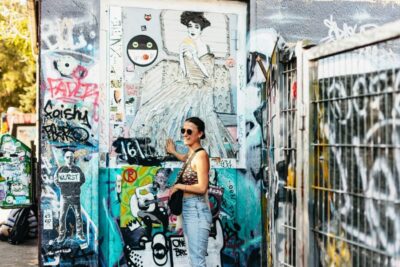
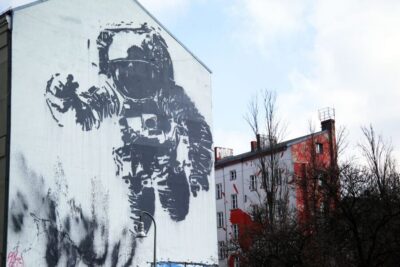
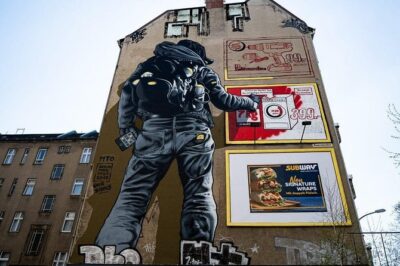
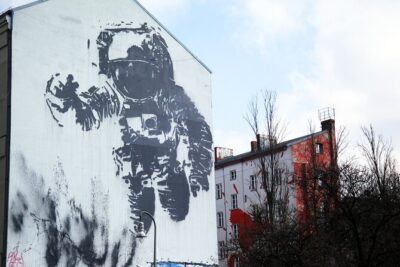
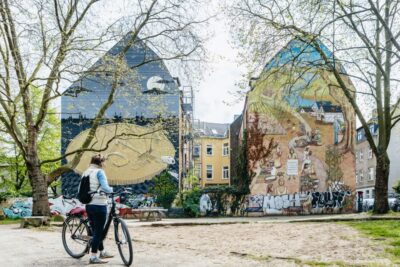
The street-art portion moves from the East Side Gallery into Kreuzberg, described as one of Europe’s major centers for street art. The route includes at least one well-known mural and uses the work to discuss East and West, the past, and Berlin’s future.
This is an important distinction. The tour is not only a food walk with a quick photo stop at the Wall. Street art is one of the main subjects, and the guide helps place individual murals within Berlin’s changing neighborhoods.
The listed street-art stop lasts about 15 minutes. That makes it a focused look rather than a full graffiti expedition. If your top priority is photographing every major mural in Berlin, you will need more time elsewhere. If you want a compact introduction tied to local politics and culture, the format works better.
Guides have different personalities, so the experience may vary. Lee is described as strong on local areas and cuisine. Elena is praised for stories about Berlin, its people, and the neighborhoods along the route. Tiago is noted for explaining food, culture, and local history, while Will is singled out for making the historical side especially clear.
Ukrainian food and Berlin’s newer arrivals
Slava Berlin, a Ukrainian soul-food restaurant, adds a more recent immigration story. The restaurant is women-led by immigrants, and the stop presents Ukrainian food as part of modern Berlin rather than as a side note to German cuisine.
You also get nalivanki, a Ukrainian drink, as part of this tasting. This is the kind of stop that gives the tour a current edge. Berlin’s food culture is still changing, and the Ukrainian presence adds another chapter to the city’s long pattern of arrivals, adaptation, and exchange.
The stop is scheduled for about 20 minutes. That is enough for a tasting and explanation, but it is not a leisurely restaurant meal. If you prefer to sit down for long courses, this fast-moving format may feel rushed. If you like sampling several places in one afternoon, it keeps the route moving.
Dietary needs should be given when you book. A vegetarian option is available, but you should not wait until the meeting point to ask. The operator also asks you to share other specific dietary requirements in advance.
Markthalle Neun and the city’s food community
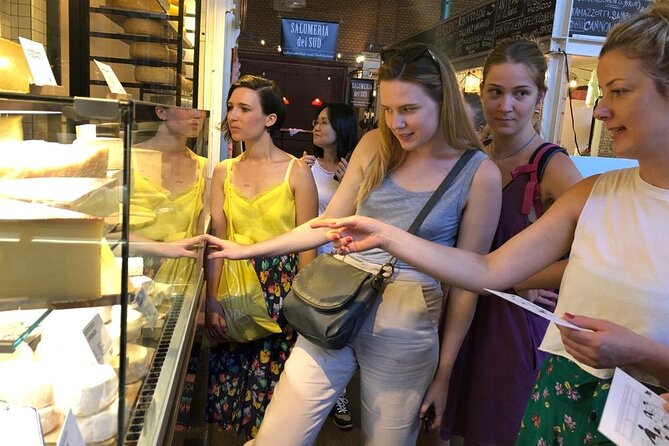
Markthalle Neun is one of the tour’s most useful stops for understanding Berlin’s food scene. The renovated market hall dates to the early 1900s and survived World War II, as well as later pressure to become a more commercial space.
Today, it functions as an independent food center with events that connect Berlin producers, food makers, and drink specialists. The stop lasts about 30 minutes, which gives you time to see the building and understand its role in the city’s culinary life.
I like this pause because it broadens the experience beyond individual bites. Restaurants tell you what a neighborhood eats. A market hall shows how food people, producers, events, and local shoppers connect.
The schedule at Markthalle Neun can affect what you see, since its event calendar changes. The tour still includes the hall as a key point, but you should not assume every visit will have the same stalls or atmosphere.
Turkish street food in Kreuzberg
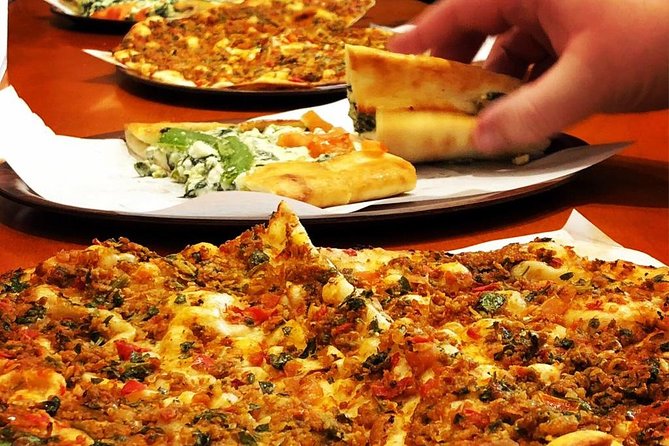
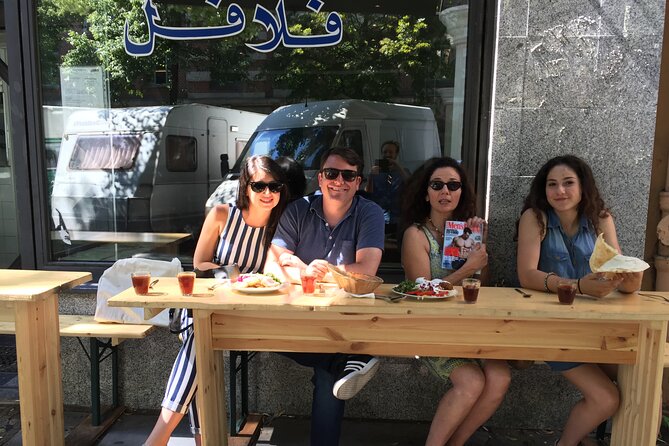
At Leylak, the guide turns fully toward the Turkish influence on Kreuzberg. The stop focuses on food from the Anatolian region and typical street-food recipes.
This is one of the strongest cultural sections of the walk. Turkish residents did not simply open restaurants for visitors. They helped rebuild the neighborhood and made Turkish food part of ordinary Berlin life. The meal gives you a direct way to understand that history.
The tasting lasts about 20 minutes. You may find the food more substantial than a tiny sample, but this is still a multi-stop tour, not a single restaurant visit. The benefit is range. The drawback is that you may not have time to linger over each dish or ask every question about ingredients.
For me, this is where the tour feels most authentic. You are not being asked to choose between German food and immigrant food. The point is that modern Berlin includes both, often on the same street.
Currywurst and the city’s signature snack
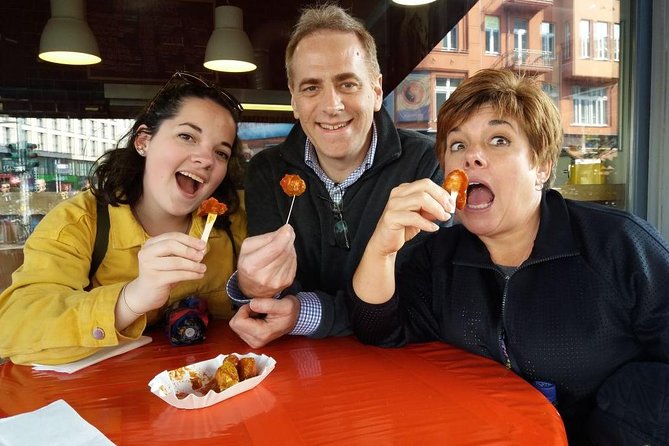
Ketels Curry covers the story of currywurst, one of Berlin’s defining fast foods. The guide explains how this dish changed the city’s food habits and why its origin story is not always widely known, even among Berliners.
This is a good example of the tour’s method. You get a familiar food, then a piece of local history that may be less familiar. Currywurst is quick to eat, easy to find, and tied to the city’s postwar identity, making it a natural stop on a route about Berlin’s changing culture.
The stop is listed at 20 minutes. You should have enough time for the tasting and story, but not an extended meal. If you already know currywurst, the added value comes from the explanation rather than novelty.
Vegan doughnuts and the route’s modern finish
The final food stop is Brammibal’s Donuts at Maybachufer. These are vegan doughnuts, and the stop points to Berlin’s strong plant-based food culture.
Ending with a sweet, modern item gives the tour a different final note from its traditional schnitzel and currywurst. It also reinforces the larger theme: Berlin food is not fixed. The city keeps adding new influences and new ways to eat.
The route finishes at U Kottbusser Tor, on the U8 and U1 lines. That is practical if you plan to continue around Kreuzberg or connect to another part of the city. You are not returned to Friedrichshain, so plan your afternoon from the end point rather than the start.
Does $169.38 offer good value?
The price is high for a walking tour, so you should judge it as a combined food, history, and neighborhood experience. You are paying for six tastings, drinks including Berliner Pilsner, a local guide, and a small group rather than simply buying six snacks.
The value is strongest if you want a guide to connect the food with Berlin’s political and social changes. It is weaker if your main goal is a cheap meal or a long sightseeing tour. One possible criticism is that some stops use inexpensive street food, so the total price may feel steep if you measure value only by portion size.
I would also note that you need a BVG transport ticket. The tour itself involves walking between areas, but public transport may be needed for part of the route or your wider Berlin plans. Factor that cost into the day.
The average booking point is about 23 days before the tour. That suggests planning ahead, especially since the group is limited to eight people. The operator may reconfirm the meeting time and place by email because these details can change with the season.
Who should book this Berlin food walk?
I would recommend it to first-time visitors who want a fast but meaningful introduction to Friedrichshain and Kreuzberg. It is also a good fit if you enjoy asking questions, since a group of eight leaves more room for conversation than a large coach tour.
You will get the most from it if you like both food and context. The best moments are not only the tastings, but the links between them: Wall history, Turkish migration, Ukrainian food, market culture, street art, and Berlin’s plant-based present.
I would hesitate if you want a formal sightseeing tour with long stops at major monuments. The East Side Gallery visit is short, and the street-art section is focused. I would also hesitate if you need a quiet, seated meal or have strict dietary needs that cannot be handled through advance notice.
The tour has a 4.9 rating from 157 reviews, with 97 percent recommending it. The strongest pattern is clear: guides such as Lee, Elena, Tiago, and Will receive praise for explaining the city as well as the food. The weaker experience comes when a visitor expects more major sights or finds the casual food stops too inexpensive for the price.
My booking verdict
Book this tour if you want Berlin explained through what its neighborhoods eat. You will see the Wall, cross from former East to former West, look at major street art, and taste a broad mix of local and immigrant food in one afternoon.
Skip it if you mainly want a bargain food crawl or a thorough Wall sightseeing tour. For everyone else, the small group, varied stops, and strong guide-led storytelling make it a useful first-day orientation to Berlin’s food culture. Arrive hungry, wear good shoes, and keep your evening meal flexible.
FAQ
How long does the East Meets West tour last?
The tour lasts approximately three hours and 30 minutes.
Where does the tour begin and end?
It begins at Industriepalast Hostel, Warschauer Strasse 43, in Friedrichshain. It ends at U Kottbusser Tor, which is served by the U8 and U1 lines.
What food and drinks are included?
The experience includes six local tastings, beverages, food tastings, and local Berliner Pilsner beer. Stops include Berlin schnitzel, Turkish street food, Ukrainian food and nalivanki, currywurst, coffee, and vegan doughnuts, though the exact tasting order or selection may change.
Is a vegetarian option available?
Yes. A vegetarian option is available, and you should advise the operator when booking. You should also provide any other dietary requirements in advance.
How large is the group?
The experience has a maximum of eight travelers, allowing for a small-group format.
Is public transport included?
No. A BVG transport ticket is not included. The tour involves a moderate amount of walking, and comfortable shoes are recommended.
What happens if I need to cancel?
You can cancel for a full refund if you do so at least 24 hours before the experience start time. Cancellations or changes made less than 24 hours before the start are not accepted for a refund.
More Food in Berlin
- Berlin: Mitte Culinary Food Tour
★ 4.5 · 447 reviews - Berlin: 3-Hour Secret Food Tour
★ 4.8 · 269 reviews - East Berlin Food & History Tour with Eating Europe
★ 5.0 · 204 reviews - Berlin: Disgusting Food Museum Entry Ticket and Tasting
★ 4.4 · 204 reviews
More Food & Drink in Berlin
- Berlin Center Food Tour with 8+ Authentic Local Tastings
★ 5.0 · 1,227 reviews - Berlin City Bike Tour with Beer Garden Stop
★ 5.0 · 917 reviews - Kreuzberg: Culinary Food Tour
★ 4.5 · 770 reviews - Berlin: BRLO BRWHOUSE Tour and Craft Beer Tasting
★ 4.4 · 654 reviews
Just added around Berlin
- Love and War in Berlin: Self-Guided Story Puzzle Walk★ 5.0 · 7 reviews
- Rickshaw Tours Berlin – Groups of up to 16 people with several rickshaws★ 4.0 · 97 reviews
- eSIM for Germany and 34 European Countries★ 4.5 · 16 reviews
- Walking on the Wall: 3-Hour Tour in Berlin★ 4.5 · 34 reviews
- Warnemuende Shore Excursion: Berlin Private Sightseeing Tour from Rostock★ 5.0 · 4 reviews
- Your ticket to The Wall Museum Berlin★ 3.0 · 60 reviews
- Warnemuende Shore Excursion: Private Berlin Tour★ 4.5 · 27 reviews
- Berlin’s Gay, Lesbian, and Queer Scene Small-Group Walking Tour★ 4.5 · 66 reviews
Street Art & Alternative Tours, compared.

Neustadt District Street Art Guided Walking Tour
Read our review →
Browse the lists this tour appears in