
Reviewed · WINE TOURS
Cologne-Nippes: Cheese and wine with champagne and Grand Cru
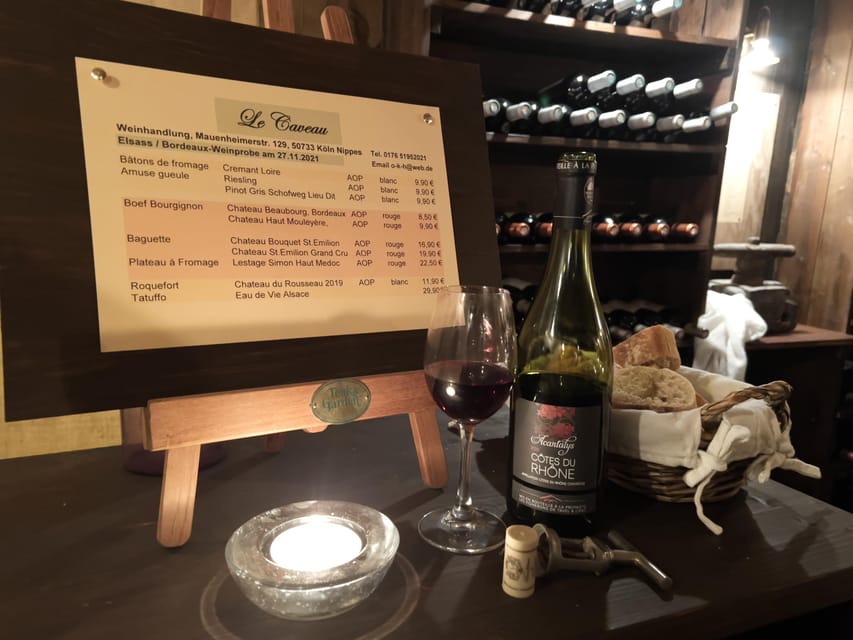
The evening begins with champagne and ends with a French Grand Cru, but the real event is the steady march of cheese, wine, stories, and conversation in between. At Le Caveau wine shop in Cologne-Nippes, sommelier Karl guides you through French pairings in a wine bar or courtyard setting, depending on the weather. The generous tasting portions make this feel more like a long supper than a quick sample session.
I like the opening ritual: champagne, a Rivesaltes Ambré aperitif, and a small amuse-gueule ease you into the evening. I also like the clear pairing format, with cheese, wine, bread, olives, and water arranged to help you compare flavors rather than simply drink your way through a list. The main caution is language and teaching style: everything is in German, and the amount of explanation can vary.
In This Review
- Key points at a glance
- A French-style evening in Cologne-Nippes
- Champagne, Rivesaltes, and the first bite
- Seven French wines, seven cheeses
- What Karl adds to the table
- The cheese matters as much as the wine
- The final Grand Cru
- Is $93 a fair price?
- German language and group atmosphere
- Dates, timing, and planning your night
- Who will enjoy this most?
- My call on the Cologne-Nippes tasting
- FAQ
- Where does the cheese and wine evening take place?
- How long does the tasting last?
- What language is the tasting in?
- Who leads the tasting?
- How many wines are included?
- How many cheeses are included?
- What food and nonalcoholic items are provided?
- Can I book a private tasting?
- Are children allowed?
- Can I cancel my booking?
Key points at a glance
- A four-hour French tasting: Plan for a slow, social evening rather than a short stop between sightseeing plans.
- Seven wines and seven cheeses: The format centers on matching each wine with a French cheese, with additional salami or Jura AOP cheese.
- Champagne to Grand Cru: You begin with a welcome glass and finish with an exclusive Grand Cru.
- Sommelier Karl leads in German: His anecdotes and guidance are a strong part of the experience, but conversational German is important.
- Generous pours: One tasting included about nine nearly full glasses, so this is not a tiny sip-and-spit session.
- Le Caveau in Cologne-Nippes: Meet in the courtyard of the wine shop at 129 Mauenheimer Strasse.
A French-style evening in Cologne-Nippes
This is not a formal lecture in a classroom. It is a hosted evening built around a table, a series of bottles, and the pleasure of matching one flavor against another.
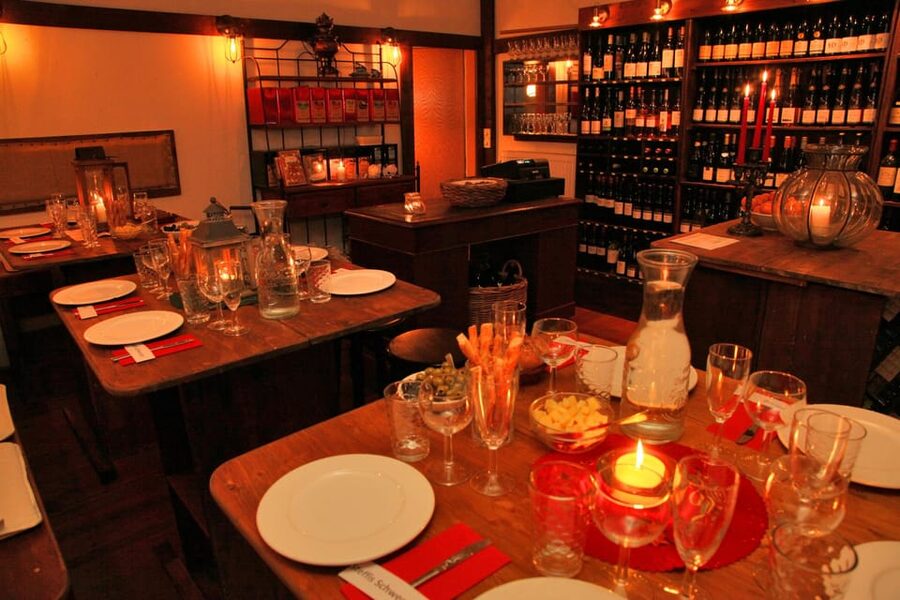
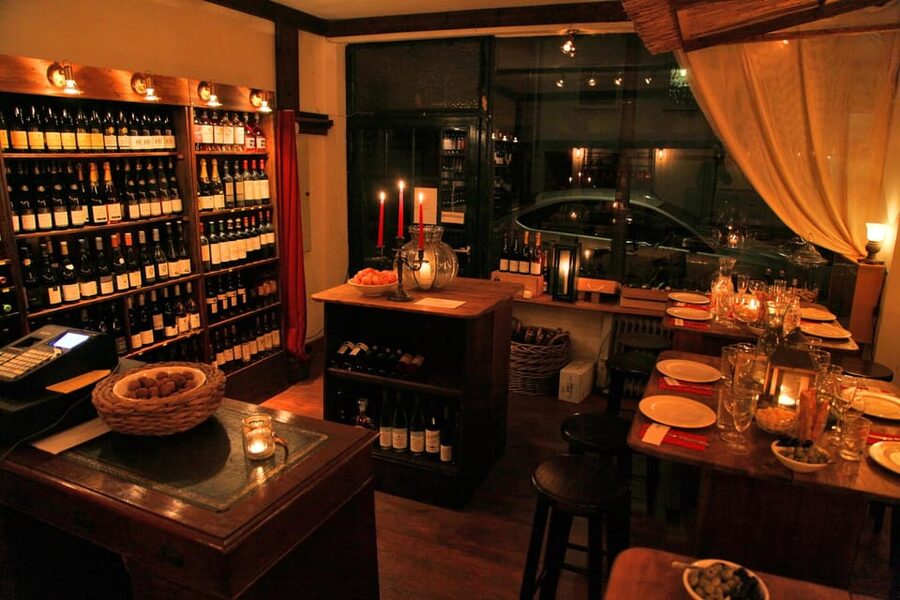
The setting is Le Caveau wine shop in Cologne-Nippes. The tasting may take place in the cozy wine bar or cellar, with candlelight and a relaxed atmosphere, or outside in the courtyard when the weather is kind. The courtyard setting has already proved a pleasant option on warm evenings, but you should book this for the food and wine rather than for a guaranteed outdoor meal.
The meeting point is specific: the courtyard of Le Caveau, 129 Mauenheimer Strasse, 50733 Cologne. You will want to allow time to reach Nippes and arrive ready to stay put. The scheduled experience lasts four hours, also listed as 270 minutes, so do not try to squeeze it between tightly timed activities.
That long schedule is part of the appeal. Cheese and wine need time. You taste, listen, compare, and talk. The evening is meant to feel convivial, not rushed.
A few more Cologne trips to weigh up
- Cologne-Nippes: Gourmet wine tasting with cheese platter
★ 4.6 · 26 reviews - Cologne: Black wine tasting with secret station – Haus der Manufakturen
★ 4.4 · 10 reviews - Cologne-Nippes: wine hopping (wine trip)
★ 4.9 · 7 reviews
Champagne, Rivesaltes, and the first bite
The welcome starts with champagne, followed by a Rivesaltes Ambré aperitif and an amuse-gueule. This gives the opening a little shape instead of dropping you straight into the first serious wine.
Rivesaltes Ambré is a French fortified wine with a sweet, nutty style, and its role here is to wake up your palate before the main tasting. The amuse-gueule is small, but useful. It gives you something to eat before the wine flow begins and sets a food-first tone for the evening.
You will also have bread and water throughout the tasting. Those are simple details, but they matter during a long sequence of wines. Bread gives you a neutral bite, while water helps clear the previous flavor before the next pairing.
The first stage is also a chance to meet the people around you. Fixed-date tastings can include people who came alone, while private tastings are available for groups of eight or more. The format suits easy conversation, though it may feel less focused if you are hoping for one-to-one instruction.
Seven French wines, seven cheeses
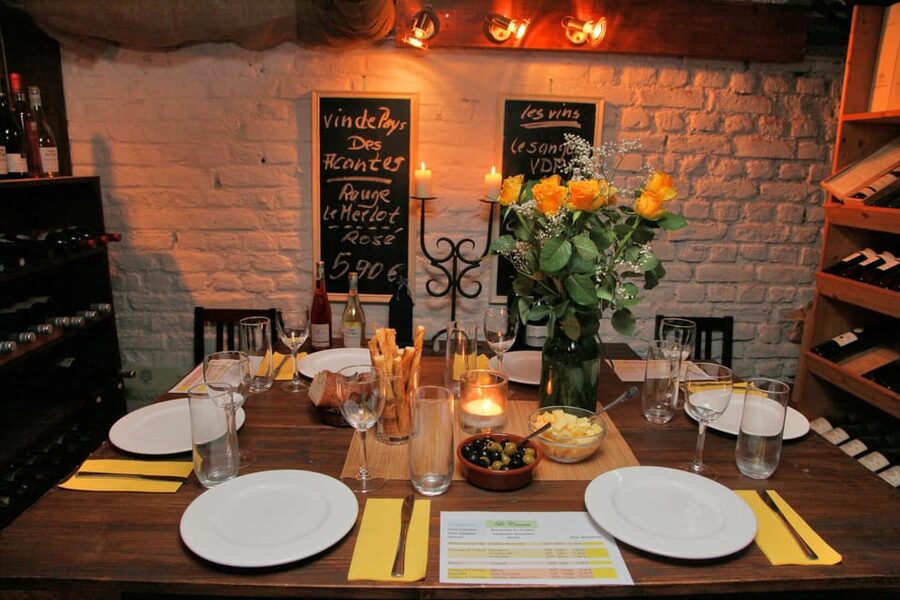
The heart of the evening is the pairing sequence. You receive seven French wines and matching cheeses, with an additional salami or AOP cheese from the Jura, olives, bread, and water.
The important point is that the cheese is not just a snack placed beside the wine. The stated aim is to show how the two work together. A cheese can soften a wine, sharpen its fruit, highlight salt, or make a wine seem fuller. When the pairing works, you learn through taste rather than through a long technical explanation.
You receive a list of the wines, dishes, and cheeses at the start. Keep it beside your plate. It lets you note the names you like and gives you a useful shopping guide after the evening. If you already have favorite regions or grape varieties, mark them as you go.
The amount served deserves attention. One participant described receiving about nine nearly full glasses rather than small tasting measures. The exact pour may vary, but you should prepare for a substantial amount of wine. Eat the provided food, use the water, and pace yourself across the four hours.
That generous approach can be a plus if you want to really assess each bottle. It can also be a drawback if you expected a restrained professional tasting. This is not clearly presented as a spit-cup format, and you should not assume that every pour will be a tiny sample.
What Karl adds to the table
Sommelier and French wine connoisseur Karl leads the tasting in German. His role is to explain the wines and cheeses, share stories and anecdotes, and help connect each bottle to its food partner.
When the evening works well, this personal guidance is the reason to choose a hosted tasting instead of buying a bottle and a cheese plate on your own. You get a sequence chosen for comparison, not seven unrelated wines. You can ask questions, hear the background to the selections, and discuss your own impressions with the group.
The strongest experiences appear to come when Karl provides information for every wine and cheese pairing. That is what you should expect from the format, but you should also know that the teaching can be uneven. One attendee found the wine good and plentiful but felt there was too little explanation. Another experienced group felt that bottle labels sometimes offered more information than the presentation.
That difference matters. If you are an experienced wine drinker looking for a highly technical seminar, this may not always meet your needs. If you want a friendly tasting with stories, food, and a host who can keep the evening moving, the format may suit you better.
The event is described as being guided by an experienced French connoisseur and sommelier, but the depth of the discussion depends on the session. I would arrive with a few questions ready: What makes this cheese a good match? How should you serve this wine? What should you notice in the finish? Direct questions may help you get the level of detail you want.
Same city, a completely different kind of day:
- Cologne: Panoramic City Cruise
★ 4.3 · 5,698 reviews - Cologne: Brewery Tour with 3 Kölsch Beer Tastings
★ 4.7 · 3,108 reviews - Cologne: Top Sights Rhine River Cruise – Skyline Tour
★ 4.4 · 3,030 reviews - Cologne: Chocolate Museum Entrance Ticket
★ 4.4 · 2,790 reviews
The cheese matters as much as the wine
The cheese selection gives the evening its identity. Seven French cheeses form the main pairing course, joined by salami or a Jura AOP cheese and olives.
You should expect variety rather than a single regional theme. The supplied details do not name the individual cheeses, so you will not know the exact lineup before arriving. That keeps the tasting flexible, but it also means you cannot choose the evening based on a favorite appellation or cheese style.
For me, the best use of the cheese course is comparison. Taste a small piece on its own first. Then try it with the wine. Notice what changes. The cheese may make a dry wine seem softer, bring out a wine’s fruit, or expose a sharp edge that was less obvious in the glass.
The pairing instructions are supposed to connect each cheese with its wine, but that connection may not always be made clearly. If the host moves quickly, ask which cheese is intended for the glass in front of you. You should not have to guess your way through all seven pairings.
The cheese itself has received mixed impressions. Some attendees described the plates as delicious and found the matching effective. Another experienced group considered the cheese acceptable but not especially remarkable. That is a fair warning for serious cheese hunters: the experience is about the complete evening, not a rare-cheese showcase.
The final Grand Cru
The closing Grand Cru gives the evening a clear finish. Rather than ending with the last standard pairing, the tasting reserves one exclusive bottle for the finale.
That structure works well. It gives you a point of comparison after the earlier wines and makes the final glass feel like a reward. You can revisit what you have learned about aroma, texture, acidity, sweetness, and the effect of cheese on wine.
The name Grand Cru carries weight, but it does not guarantee that every person will love the wine. Wine is personal, and the level of quality you perceive depends on your taste, experience, and expectations. The event uses the Grand Cru as a special ending, but you should not book solely on the label.
One dissatisfied attendee expected more prestigious wines for the price and title of the event. That is useful context. If you are paying $93 per person mainly to taste rare bottles, ask yourself how much you value the host, food, atmosphere, and generous pours. If the answer is not much, the price may feel high.
Is $93 a fair price?
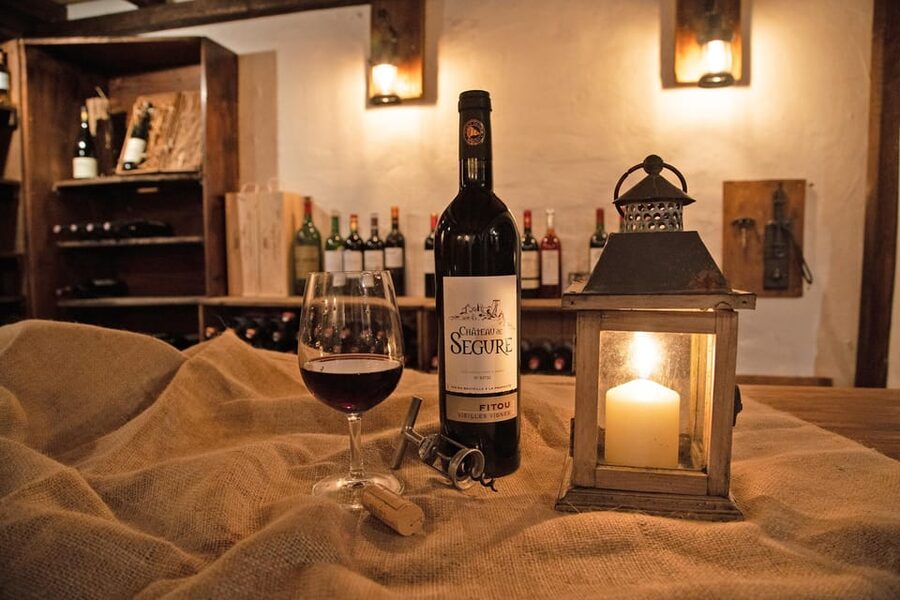
At $93 per person, this is not a bargain wine bar stop. You are paying for up to four and a half hours of hosted food and drink, including champagne, a Rivesaltes Ambré aperitif, seven French wines, a Grand Cru, seven cheeses, an amuse-gueule, salami or Jura cheese, olives, bread, and water.
The value is strongest if you want an evening activity rather than a simple tasting flight. You receive a full social experience, a printed list to take home, and enough food and wine to make the event feel substantial. The generous pours also mean the advertised price may compare favorably with buying a similar number of bottles and cheeses separately, though the exact value depends on the bottles selected.
The value is weaker if you want a tightly structured wine course led by constant technical commentary. One poor experience described a chaotic organization, self-service bottle opening and pouring, and little explanation of the pairings. That is not the experience everyone had, but it is a real consideration.
I would think of the price as covering three things: the food and wine, the setting, and the chance to spend a long evening with a host and fellow wine lovers. The first two are clearly built into the format. The third depends on the group and on how actively the session is led.
German language and group atmosphere
The live tour language is German, and the activity is not designed specifically for international visitors. You do not need to speak perfect German, but you should be comfortable following a sustained conversation about wine and food.
A participant who understood German better than they spoke it managed well, but would not recommend the tasting to anyone without at least conversational or intermediate understanding. That is practical advice. You can probably enjoy the cheese and wine without catching every word, but you will miss much of the reason to book a guided tasting.
The atmosphere is intended to be relaxed and social. You can make new acquaintances, compare opinions, and talk about the bottles as the evening progresses. This may be ideal if you enjoy communal dining. It may be less appealing if you want a quiet, private dinner.
Private tastings are available from Monday to Thursday for groups of at least eight, on request. That option gives a group more control over the atmosphere and date, but the information provided does not promise a different menu or a more technical presentation.
Dates, timing, and planning your night
The listed 2026 dates are April 18, May 23, October 10, and November 14. March 7 is fully booked. Fixed-date bookings are available from one person, so you do not need to bring a group.
Because the evening lasts four hours, it works best as the main plan for the night. Do not schedule a concert, train, or restaurant reservation immediately afterward. The pace is social, and a tasting with multiple wines can run on the rhythm of conversation rather than a strict timetable.
The meeting point is at the wine shop courtyard. The activity may be in the wine bar, cellar, or courtyard, so dress for the setting and season. No specific dress code is provided, and no special equipment is needed.
Cancellation is flexible up to 24 hours before the start for a full refund. You can also reserve now and pay later, which helps if your Cologne plans are still shifting.
Who will enjoy this most?
I would recommend this evening to an adult who likes French wine, cheese, and conversation more than fast sightseeing. It is particularly suited to couples, solo diners comfortable joining a table, and small groups looking for a slow night with a clear culinary theme.
It also suits people who are curious but not yet expert. You can learn by tasting, and the list of wines and cheeses gives you something useful to take away. The relaxed setting may feel less intimidating than a formal wine school.
Experienced wine drinkers should make a more careful choice. If you want advanced discussion of terroir, vintage, faults, production methods, and appellation rules, the session may be too light. The uneven reports about explanations and service mean I would not treat the event as a guaranteed technical masterclass.
Children under 18 are not permitted. That is sensible given the length and amount of alcohol. You should also consider your own tolerance for a long tasting with generous pours.
My call on the Cologne-Nippes tasting
Book it if you want champagne, French cheese, a good amount of wine, and a sociable four-hour evening led in German. The combination of an aperitif, seven pairings, written notes, and a Grand Cru finish gives the night a pleasing arc, and the best sessions appear to offer warm hosting, good stories, and clear matches.
Skip it if you speak little German, dislike communal events, or expect a rigorous sommelier seminar with rare bottles and tightly managed service. For the strongest chance of a satisfying evening, arrive ready to ask questions, pace yourself, and judge the $93 as the cost of an entire hosted experience rather than just a wine flight.
FAQ
Where does the cheese and wine evening take place?
It meets in the courtyard of the Le Caveau wine shop at 129 Mauenheimer Strasse, 50733 Cologne.
How long does the tasting last?
The experience lasts four hours, also listed as 270 minutes.
What language is the tasting in?
The live guide language is German. The event is not specifically designed for foreign tourists.
Who leads the tasting?
Sommelier and French wine connoisseur Karl leads the tasting and discusses the wines and cheeses.
How many wines are included?
Seven French wines are included, with one of them being an exclusive Grand Cru. Champagne and a Rivesaltes Ambré aperitif are also included.
How many cheeses are included?
The tasting includes seven French cheeses. Salami or an AOP cheese from the Jura is also listed.
What food and nonalcoholic items are provided?
You receive an amuse-gueule, cheeses, salami or Jura cheese, olives, bread, and water.
Can I book a private tasting?
Yes. Private tastings are available for groups of at least eight people from Monday to Thursday, subject to request.
Are children allowed?
No. The experience is not suitable for children under 18.
Can I cancel my booking?
You can cancel up to 24 hours in advance for a full refund. Reserve-now, pay-later booking is also available.
Just added around Cologne
- Aachen old town tour – GERMAN (public)★ 5.0 · 24 reviews
- Aachen Private Walking Tour With A Professional Guide★ 5.0 · 11 reviews
- Cologne Highlights: Exclusive Private Tour★ 5.0 · 5 reviews
- Explore Cologne’s best Street Art Quarter★ 4.5 · 4 reviews
- Aachen – Old town Guided tour★ 3.5 · 4 reviews
- The rather unknown Melaten★ 4.9 · 26 reviews
- Rickshaw Glühwein Ride★ 4.6 · 24 reviews
- Public brewhouse tour Cologne in English★ 4.9 · 154 reviews
Wine Tours, compared.

Advent Tour with Stollen Tasting and Mulled Wine
Read our review →
Heidelberg and Rhine Valley Day Trip With Wine Tasting and Dinner from Frankfurt
Read our review →
Browse the lists this tour appears in