
Reviewed · FOOD TOURS
Classic Bites and Culinary Trends Neighborhood Food Tour in Berlin
Berlin’s food story is less about old German recipes than about a city shaped by migration, division, reunification, and restless new ideas. This small-group walk through Prenzlauer Berg links former East Berlin streets with currywurst, specialty coffee, pastries, kebabs, fusion food, and local beer.
I like the six food stops and 10-plus tastings, which turn the tour into a full lunch rather than a few token samples. I also like the local history, from pre-Wall East Berlin to the role of immigrant communities in modern Berlin cooking. The main drawback is price: at $205.67 per person, this is costly for a tour built largely around street food, snacks, and beer.
In This Review
- Key points to know before booking
- Why this tour tells Berlin’s food story well
- Starting at Schönhauser Allee in former East Berlin
- Stargarder Straße and the old Prenzlauer Berg streets
- Pappelallee’s specialty coffee stop
- Dunckerstrasse for handmade sweets
- A savory fusion stop and Berlin beer
- Kastanienallee and Berlin’s immigrant food culture
- Oderberger Straße ends on a sweet note
- How much food do you really get?
- Is $205.67 a fair price?
- Who will enjoy this Berlin food walk?
- Should you book Classic Bites and Culinary Trends?
- FAQ
- How long does the food tour last?
- How much does the tour cost?
- What language is the tour offered in?
- How many people can join the group?
- Where does the tour begin?
- Where does the tour end?
- Is lunch included?
- Is beer included?
- Can I cancel for a full refund?
Key points to know before booking
- Former East Berlin setting: You walk through Schönhauser Allee and Prenzlauer Berg, with stories about life before and after the Berlin Wall.
- A full meal in small portions: Six stops offer more than 10 tastings, and you should arrive hungry.
- Coffee gets serious: One neighborhood café roasts its own beans and serves eight types of espresso.
- Berlin food is international: Expect immigrant-influenced dishes alongside traditional local snacks.
- Beer is part of the lesson: You sample classic and craft Berlin beers and play a tasting game.
- Small public group: The maximum is eight people, though one reported outing had nine.
Why this tour tells Berlin’s food story well
You do not come to this experience for a grand restaurant meal. You come to understand why Berlin eats the way it does.
The route focuses on Prenzlauer Berg, an area known for refurbished side streets, cafés, bars, food stalls, and old industrial buildings. The setting gives the guide room to talk about East Berlin before 1989, the changes that followed reunification, and the steady arrival of new communities and new tastes.
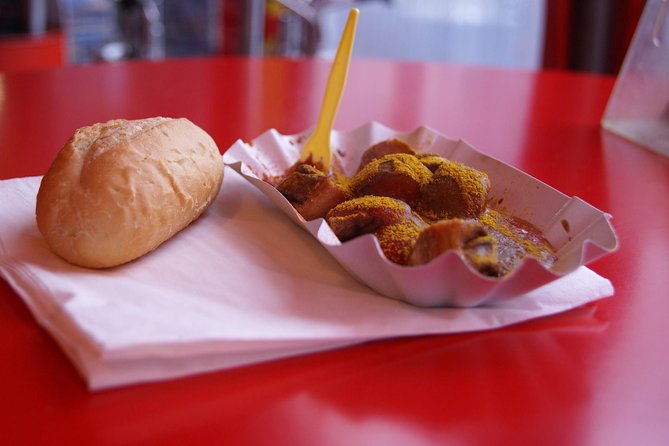
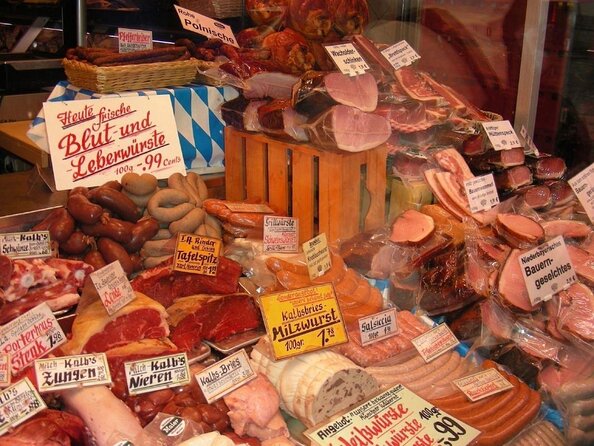
That mix is the tour’s strongest idea. Berlin certainly has local specialties, including currywurst, ketwurst, Berliner doughnuts, and beer. But the city’s everyday food culture also comes from Turkish, Middle Eastern, Mediterranean, and other international traditions. A good guide connects a plate of food to the people and events that brought it here.
The experience is conducted in English and limited to eight participants. That matters. A tiny group makes it easier to ask questions, compare impressions, and keep the pace personal. Guides named on past outings include Tiago, Holger, Violeta, Jane, Sean, Marcel, Elena, Lee, and Dov. The strongest descriptions of the tour consistently point to guides who add plenty of Berlin history rather than simply escorting you from snack to snack.
More Food Tours in Berlin
- Berlin Center Food Tour with 8+ Authentic Local Tastings
★ 5.0 · 1,227 reviews - Kreuzberg: Culinary Food Tour
★ 4.5 · 770 reviews - Berlin: Mitte Culinary Food Tour
★ 4.5 · 447 reviews
Starting at Schönhauser Allee in former East Berlin
The meeting point is Espresso House at Schönhauser Allee 116. The opening 15 minutes set the scene with an introduction to former East Berlin.
This is useful context before the food begins. Schönhauser Allee is not just a street leading to lunch. It helps place you in the northern part of the old eastern sector, where the guide can explain what local life was like before the Wall fell and how the neighborhood changed afterward.
The route then reaches a historical East Berlin street-food snack. The exact food is not named in the tour details, but the point is clear: this first bite is tied to the former eastern side of the city and is not presented as a generic German snack.
That opening should appeal to you if you like food with a story. If you want a simple list of famous dishes with little background, the historical introduction may feel slower than expected.
Stargarder Straße and the old Prenzlauer Berg streets
After the first tasting, you walk toward Stargarder Straße. The next 15 minutes focus on Prenzlauer Berg’s refurbished side streets and the contrast between their present appearance and their earlier life.
This part of the tour helps you read the neighborhood. Freshly restored buildings and attractive cafés can make Prenzlauer Berg look polished, but the guide’s job is to show what existed before the area became fashionable. You hear about local life before the Berlin Wall and the social and political shifts that reshaped the district.
The walking is part of the value. You are not being driven between isolated food stops. You see how cafés, bars, food stalls, and residential streets fit together. One account described walking about four miles over the course of the outing, so comfortable shoes are a sensible choice.
The streets may be uneven. Most participants can take part, and service animals are allowed, but one family found the route difficult for a wheelchair because of bumpy surfaces. The operator describes the tour as wheelchair friendly because there are no steps and the venues are accessible, yet the pavement itself can still be a challenge. If anyone in your group has limited mobility, contact the operator before booking and ask about a private outing.
Pappelallee’s specialty coffee stop
The coffee stop on Pappelallee is one of the more distinctive parts of the route. You visit a small neighborhood barista café that roasts its own beans and serves eight types of espresso.
This is more than a quick caffeine break. The unusual range gives the guide a chance to explain how coffee has become part of Berlin’s current food culture. You can expect a tasting focused on espresso rather than a standard cup of drip coffee.
The stop lasts about 15 minutes, which keeps the tour moving but does not leave much time for a leisurely café visit. If you are sensitive to caffeine, remember that this comes before the beer and later dessert. The tour details do not specify how many espresso varieties you personally taste, only that the café serves eight kinds.
I like this stop because it shows the difference between old Berlin street food and the newer food businesses that now shape the city. The tour is not locked in the past. It treats Berlin as a place where traditions and modern food habits sit side by side.
Same city, a completely different kind of day:
- Berlin: Reichstag, Dome and Government District Guided Tour
★ 4.7 · 18,288 reviews - Berlin: 1-Hour City Tour by Boat with Guaranteed Seating
★ 4.3 · 16,993 reviews - Berlin: Boat Tour Along the River Spree
★ 4.4 · 11,252 reviews - Discover Berlin Half-Day Walking Tour
★ 5.0 · 9,624 reviews
Dunckerstrasse for handmade sweets
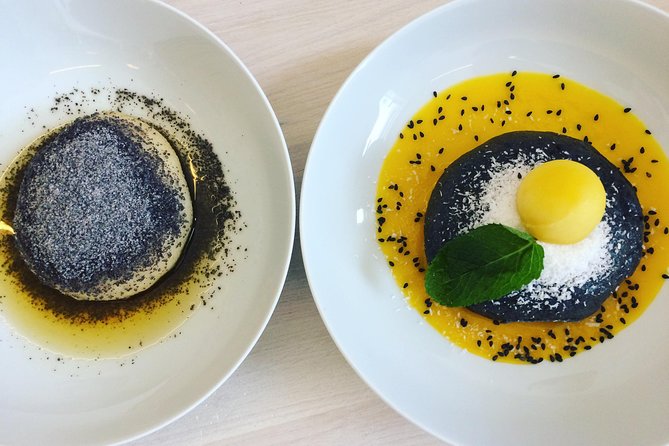
On Dunckerstrasse, the group stops at a Berlin patisserie for handmade cakes and selected pastries. Allow about 20 minutes.
This is the first clearly sweet-focused stop, though it will not be the last. The pastries add a change of pace after the opening snack and coffee. They also show another side of Berlin’s food scene, one based on careful baking rather than fast street food.
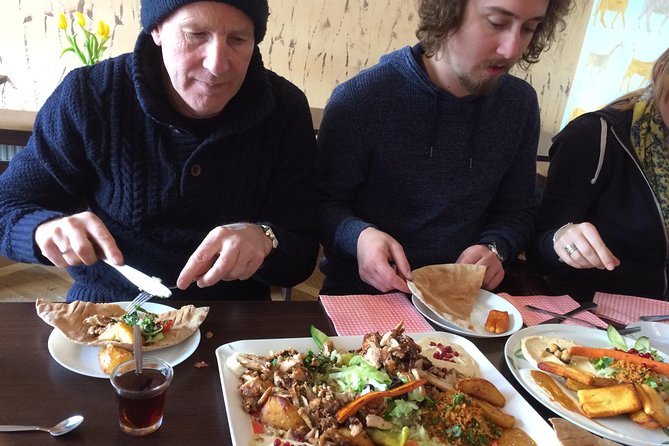
You should not expect a full slice of cake at every stop. Tastings are designed to be shared across a long route, although the total amount of food is substantial. Several guides have been praised for generous portions, and one group ended up splitting later dishes because everyone was already full.
That is worth keeping in mind. Come with an empty stomach, but do not assume you must eat every portion offered. A food tour works better when you pace yourself.
A savory fusion stop and Berlin beer
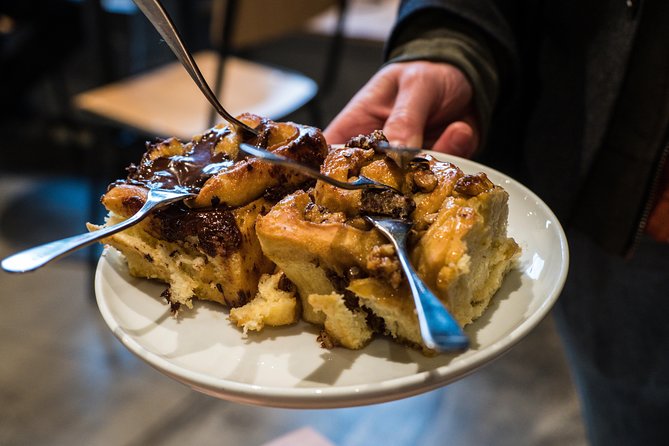
The next stop in Prenzlauer Berg lasts about 30 minutes and features a fusion savory dish paired with a locally brewed drink. The exact dish can change, so you should approach it as a current taste of Berlin rather than a fixed national specialty.
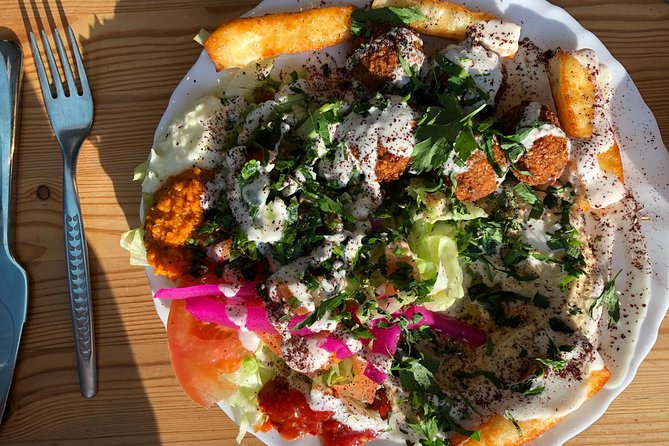
This is where the tour’s title makes sense. Berlin cuisine is not limited to pork, potatoes, and sausages. The city’s food identity has grown through international residents, creative cooks, and informal street-food businesses. Past tastings have included kebab plates and other dishes brought to Berlin by immigrant communities.
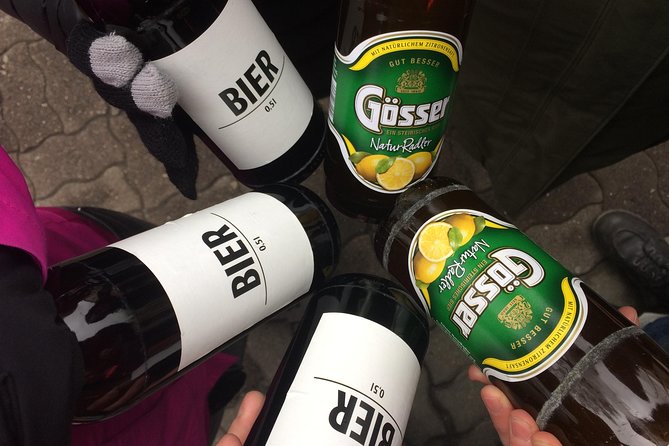
A separate beer stop follows, also in Prenzlauer Berg, for about 20 minutes. Berlin permits drinking beer in public, and the guide explains why that is part of city life. You then sample classic and craft Berlin beers in a tasting game.
Beer is included, but the timing and exact pours can vary. Alcoholic drinks at an outdoor beer garden are included in spring, summer, and autumn when weather permits. This makes the beer portion appealing in good weather, but you should not assume the same outdoor setting in cold or wet conditions.
The beer tasting works well as a social pause. It gives you a chance to compare styles while learning something practical about local drinking customs. If you do not drink alcohol, the supplied details do not specify a replacement, so ask before booking.
Kastanienallee and Berlin’s immigrant food culture
The stop on Kastanienallee focuses directly on immigrant influence. You get an insider’s explanation of the major role immigrant communities have played in Berlin’s food scene, along with a tasting connected to that subject.
This is an important part of the experience. You are not simply told that Berlin is multicultural. You taste the result. Past food selections have included falafel, kebabs, and other international dishes, with one particularly memorable stop described as Kebab with Attitude.
The strongest version of this tour treats these foods as part of Berlin, not as side notes to supposedly more authentic German cooking. That is a more honest picture of the city. Berlin’s food identity is built from many sources, and the guide helps you understand how those influences became part of daily life.
You also pass the brick Kulturbrauerei, a former brewery complex that was Germany’s largest beer producer in the mid-1800s. The stop is mainly for historical context and photographs, but it adds a useful link between Berlin’s industrial past and its current food-and-drink culture.
Oderberger Straße ends on a sweet note
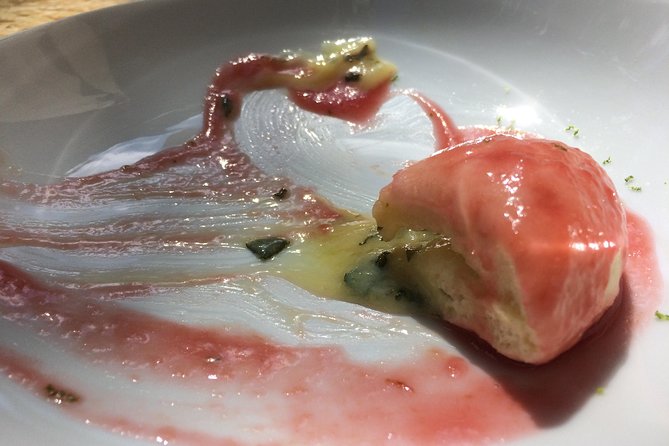
The final named stop is on Oderberger Straße and lasts about 20 minutes. There is always room for dessert, and the seasonal option may be natural ice cream, a visit to a Berlin beer garden, or a warm, fluffy dessert.
Because the ending changes with the season and weather, you should not book this expecting one exact sweet. Past tastings have included Berliner doughnuts and Hokey Pokey ice cream, both singled out as favorites by participants. Another outing ended with drinks at a bar, a pleasant finish after the food stops.
The changing final course is a small weakness if you want a carefully fixed menu. It is also a strength if you prefer an experience that reflects what Berlin is offering at that time of year.
The tour ends at Eberswalder Straße, 10437 Berlin. The U2 underground line is nearby, along with tram routes M10 and M12, so you can continue sightseeing without needing a taxi.
How much food do you really get?
The tour includes food tastings, snacks, lunch, and regional beer. The operator describes six places with more than 10 tastings, enough to cover lunch and possibly more.
I would treat this as a substantial grazing meal rather than a formal lunch. You get sweet and savory items spread across the route, with pauses between them. The walking helps, but you can still become very full by the middle of the tour.
The range is one of the best reasons to book. You may sample traditional Berlin street food, specialty coffee, pastries, fusion food, immigrant-influenced dishes, kebab or falafel, beer, and dessert in a single afternoon.
The tradeoff is that the menu is not a portrait of classic German cuisine alone. If your goal is pork dishes, sausages, and regional German cooking, this may disappoint. One person specifically expected more typical German food and found the international focus surprising. If you want to understand modern Berlin, though, that international mix is the central point.
Is $205.67 a fair price?
At $205.67 per person, this is an expensive food walk. The value depends on how much you use the guide’s knowledge and how many tastings you receive.
The price covers the guide, lunch-sized food, more than 10 tastings, and regional beer. It also buys a small group capped at eight people, a four-mile-style walking route, neighborhood interpretation, and recommendations for other places to eat. Several guides have offered suggestions beyond the scheduled stops, which can be especially useful at the start of a Berlin visit.
Still, the price is high when compared with the nature of the food. Much of it is street food, snacks, coffee, pastries, and beer rather than a seated multi-course meal. A budget-minded eater could spend far less by visiting a few food stalls independently.
I would consider the price worthwhile if you value a guided introduction, want history with your lunch, and prefer not to plan the stops yourself. It is harder to justify if you care mainly about quantity or classic German dishes.
Who will enjoy this Berlin food walk?
I would recommend it most strongly for first-time visitors who want to get their bearings in Prenzlauer Berg and learn how Berlin changed after reunification.
It also suits people who like trying several foods instead of committing to one restaurant. Couples, solo participants, and small groups should benefit from the limited group size and frequent chances to talk with the guide.
You should book with realistic expectations if you want traditional German cooking. This is a tour of Berlin’s mixed food culture, not a sausage-and-pork tour. You also need to be comfortable walking for several hours and eating at regular intervals.
The experience is offered in English, confirmation arrives at booking, and it is near public transportation. Most people can participate, but uneven streets may make the route difficult for some wheelchair users. Free cancellation is available up to 24 hours before the start time. If the minimum number is not met, the operator offers another date or experience, or a full refund.
Should you book Classic Bites and Culinary Trends?
Book it if you want food and Berlin history in the same outing, especially if you are curious about former East Berlin and the city’s immigrant-run food culture.
I would choose this tour early in your stay. The route can give you ideas for later meals, cafés, bars, and neighborhoods. Guides such as Tiago, Holger, Violeta, and Jane have been praised for making the history lively and for adding useful food suggestions.
Skip it if $205.67 feels too steep for street food and beer, or if you want a tightly defined menu of classic German dishes. For everyone else, the small group, broad tasting range, and strong connection between place and food make this a useful, filling introduction to modern Berlin.
FAQ
How long does the food tour last?
The tour lasts about 3 hours and 30 minutes.
How much does the tour cost?
The listed price is $205.67 per person.
What language is the tour offered in?
The tour is offered in English.
How many people can join the group?
The tour has a maximum of eight participants.
Where does the tour begin?
It begins at Espresso House, Schönhauser Allee 116, 10439 Berlin, Germany.
Where does the tour end?
It ends at Eberswalder Straße, 10437 Berlin, near the U2 underground line and tram routes M10 and M12.
Is lunch included?
Yes. The food tastings are intended to cover lunch, with more food for some people.
Is beer included?
Yes. Regional beer and local alcoholic beverages are included. Beer garden drinks are offered in spring, summer, and autumn when weather allows.
Can I cancel for a full refund?
Yes. You can cancel at least 24 hours before the start time for a full refund. Changes or cancellations made less than 24 hours before the start time are not accepted for a refund.
More Food in Berlin
- Berlin: 3-Hour Secret Food Tour
★ 4.8 · 269 reviews - East Berlin Food & History Tour with Eating Europe
★ 5.0 · 204 reviews - Berlin: Disgusting Food Museum Entry Ticket and Tasting
★ 4.4 · 204 reviews - Berlin: Guided Street Food Tour with Tastings
★ 4.8 · 192 reviews
More Food & Drink in Berlin
- Berlin City Bike Tour with Beer Garden Stop
★ 5.0 · 917 reviews - Berlin: BRLO BRWHOUSE Tour and Craft Beer Tasting
★ 4.4 · 654 reviews - Berlin Craft Beer & Cultural Tour With Snack
★ 5.0 · 343 reviews - Berlin City Bike Tour with Beer Garden Stop
★ 4.9 · 308 reviews
Just added around Berlin
- Rickshaw Tours Berlin – Groups of up to 16 people with several rickshaws★ 4.0 · 97 reviews
- Love and War in Berlin: Self-Guided Story Puzzle Walk★ 5.0 · 7 reviews
- Walking on the Wall: 3-Hour Tour in Berlin★ 4.5 · 34 reviews
- eSIM for Germany and 34 European Countries★ 4.5 · 16 reviews
- Warnemuende Shore Excursion: Berlin Private Sightseeing Tour from Rostock★ 5.0 · 4 reviews
- Your ticket to The Wall Museum Berlin★ 3.0 · 60 reviews
- Warnemuende Shore Excursion: Private Berlin Tour★ 4.5 · 27 reviews
- Berlin’s Gay, Lesbian, and Queer Scene Small-Group Walking Tour★ 4.5 · 66 reviews
Food Tours, compared.

Elbphilharmonie Plaza and HafenCity Food Tour
Read our review →
Berlin Center Food Tour with 8+ Authentic Local Tastings
Read our review →
Beer and Food Tour with Dinner & Oktoberfest Museum
Read our review →

Browse the lists this tour appears in