
Reviewed · 2-HOUR EXPERIENCES
Berlin: Karl-Marx-Allee 2-Hour Tour
Karl-Marx-Allee is Berlin’s grand socialist boulevard, a nearly 2-kilometer stretch of towers, arcades, apartment blocks, and carefully planned public spaces. This two-hour walk explains how the street changed from Frankfurter Allee to Stalinallee, then to Karl-Marx-Allee, while showing you the architecture that made it a showcase for East Germany.
I like the clear historical thread and the chance to see major sights such as Frankfurter Tor, Strausberger Platz, and the Kosmos cinema in one walk. I also like that guides such as Tobias use old photographs, posters, and local details to make the buildings easier to understand. The main drawback is simple: this is a focused architecture and history tour, not a broad introduction to Berlin, and the meeting point can vary by booking option.
In This Review
- Key points at a glance
- Why Karl-Marx-Allee deserves two hours
- Frankfurter Tor and the boulevard’s grand entrance
- From Frankfurter Allee to Stalinallee
- The Friedrichshain apartment blocks and their arcades
- The Kosmos cinema and East Berlin culture
- The Hochhaus an der Weberweise
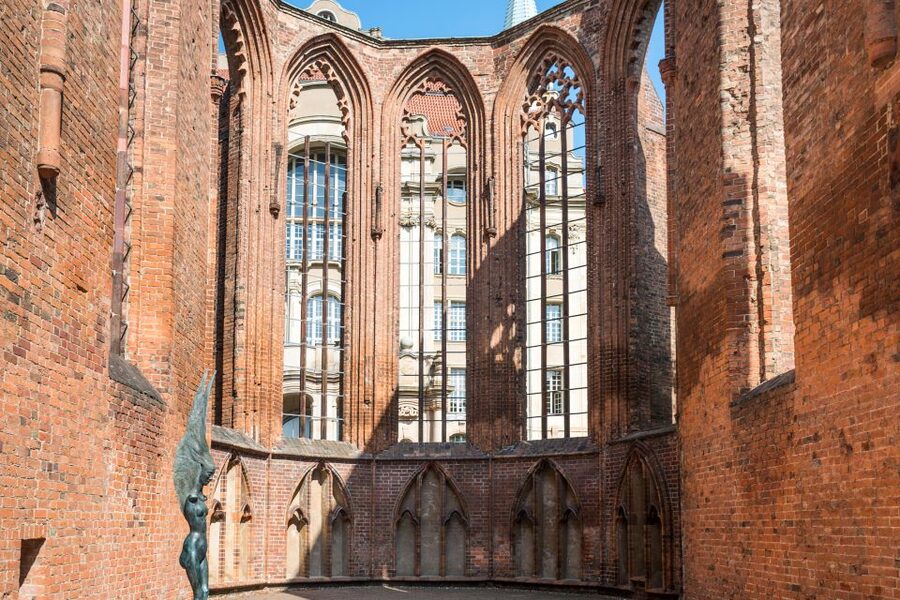
- The partial ruins of the Church of the Resurrection
- Strausberger Platz and the socialist city center
- What the guide adds to the walk
- Is two hours enough?
- Who will get the most from this experience?
- Price, flexibility, and overall value
- Should you book the Karl-Marx-Allee tour?
- FAQ
- How long is the Karl-Marx-Allee tour?
- How much does the tour cost?
- Which languages are available?
- What sights are included?
- Is hotel pickup included?
- Can I cancel for a refund?
Key points at a glance
- Frankfurter Tor’s twin towers: One of Berlin’s most striking examples of socialist monumental design.
- A street with three names: Follow the boulevard’s changes from Frankfurter Allee to Stalinallee and finally Karl-Marx-Allee.
- Arcaded apartment blocks: See the Friedrichshain housing built to project an image of a planned socialist city.
- Josef Kaiser’s Kosmos cinema: A major cultural building with a place in the story of East Berlin.
- Strausberger Platz as a gateway: Study the high-rise buildings that framed the route toward the socialist city center.
- More than façades: The route includes the Hochhaus an der Weberweise and partial ruins of the Church of the Resurrection.
Why Karl-Marx-Allee deserves two hours
Many visitors know Berlin through the Brandenburg Gate, the Reichstag, and the Berlin Wall. Karl-Marx-Allee offers a different Berlin, one shaped by postwar reconstruction and the political aims of East Germany.
The boulevard was built to be seen. Its broad scale, formal buildings, and repeated architectural details were meant to project order, confidence, and a new social model. You are not just walking past apartment buildings. You are reading a political message in stone, tile, towers, and public space.
That makes a guide useful. On your own, you may notice the scale and unusual towers, but it is harder to understand why this street mattered so much. A good explanation connects the names, buildings, housing program, and changing political climate.
The tour lasts two hours, which is long enough to cover the main sights without turning into an all-day commitment. At $23 per person, I consider it a fair price if you care about Berlin’s 20th-century story, architecture, or the former East Berlin. You are paying for a walking route and an expert guide, not transportation or entry tickets, so the value rests mainly on the quality of the commentary.
A few more Berlin trips to weigh up
- Berlin: Third Reich and Cold War 2 Hour Walking Tour
★ 4.9 · 6,830 reviews - Berlin’s Best: 2 Hour Walking Tour Third Reich and the Cold War
★ 5.0 · 5,486 reviews - Berlin: 2-Hour Lake Oberhavel Cruise from Tegel
★ 4.4 · 577 reviews
Frankfurter Tor and the boulevard’s grand entrance
Frankfurter Tor is the visual star of the walk. Its distinctive towers give the intersection a ceremonial feel, and they immediately show that Karl-Marx-Allee was designed as more than an ordinary city street.
The towers help you understand the boulevard’s scale. They act as a formal gateway, marking a major approach into the planned socialist center. Their shape and placement make the area easy to recognize, but the guide adds the part you cannot get from a quick photograph: why the towers were placed there and how they fit the wider plan.
This is a good place to pay attention to proportion. Karl-Marx-Allee was not designed as a narrow medieval street or a casual neighborhood road. It was made for long views, processions, public display, and a sense of civic importance.
You can also begin to spot the tension that runs through the whole tour. The buildings were created to represent a bright new future, yet they also reflect a strict political period. The architecture can look impressive and imposing at the same time.
From Frankfurter Allee to Stalinallee
The boulevard’s name tells its political story. It began as Frankfurter Allee, became Stalinallee, and later received the name Karl-Marx-Allee. Those changes were not minor edits on a map. They followed shifts in power, ideology, and public memory.
Your guide explains how the street became the first socialist street in Germany. That description helps place the architecture in context. The buildings were not simply housing projects. They were part of a planned statement about how a socialist capital should look and how its citizens should live.
The route is especially useful if you want to understand East Germany beyond the Berlin Wall. Karl-Marx-Allee shows the state’s public face: monumental, organized, and eager to present a successful model of urban life.
At the same time, you should keep the limits of the display in mind. A grand boulevard does not tell the whole story of life in East Germany. The tour focuses on the built environment and the ideas behind it, so you will get a concentrated look at one part of that period rather than a complete political history.
The Friedrichshain apartment blocks and their arcades
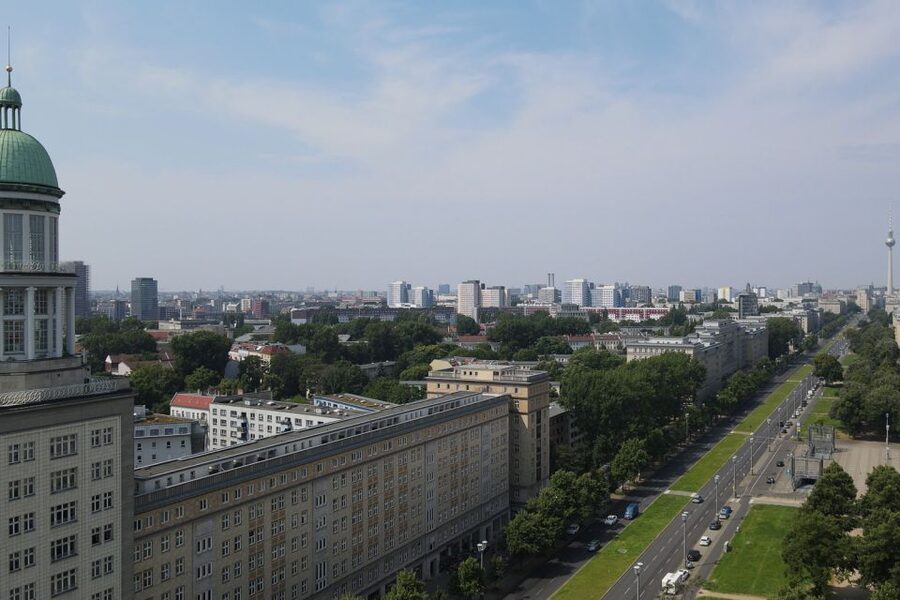
The apartment buildings in Friedrichshain are among the most revealing parts of the walk. Their arcades create a repeated rhythm along the street and give the buildings a formal, almost palace-like appearance.
That style matters because the housing was meant to be seen as a public achievement. The apartments were presented as modern homes for working people, yet the design borrowed from monumental architectural traditions. This mixture makes the boulevard more interesting than a simple row of identical blocks.
As you walk, look at how the arcades shape the ground level. They give the buildings a sense of continuity and make the street feel planned from end to end. The design also shows how architecture can carry a message before anyone says a word.
A guide can point out details that are easy to miss, including features connected with the original vision of the street. One guide, Tobias, is praised for using historical photographs, old posters, and anecdotes during the walk. If he leads your tour, those visual comparisons should help you see how the buildings and public spaces were intended to function.
The arcades are also a useful reminder that this was a residential boulevard, not just a ceremonial one. Behind the grand appearance were homes and ordinary daily routines. That contrast between political display and domestic life gives the route much of its character.
Same city, a completely different kind of day:
- Berlin: Reichstag, Dome and Government District Guided Tour
★ 4.7 · 18,288 reviews - Berlin: 1-Hour City Tour by Boat with Guaranteed Seating
★ 4.3 · 16,993 reviews - Berlin: Boat Tour Along the River Spree
★ 4.4 · 11,252 reviews - Discover Berlin Half-Day Walking Tour
★ 5.0 · 9,624 reviews
The Kosmos cinema and East Berlin culture
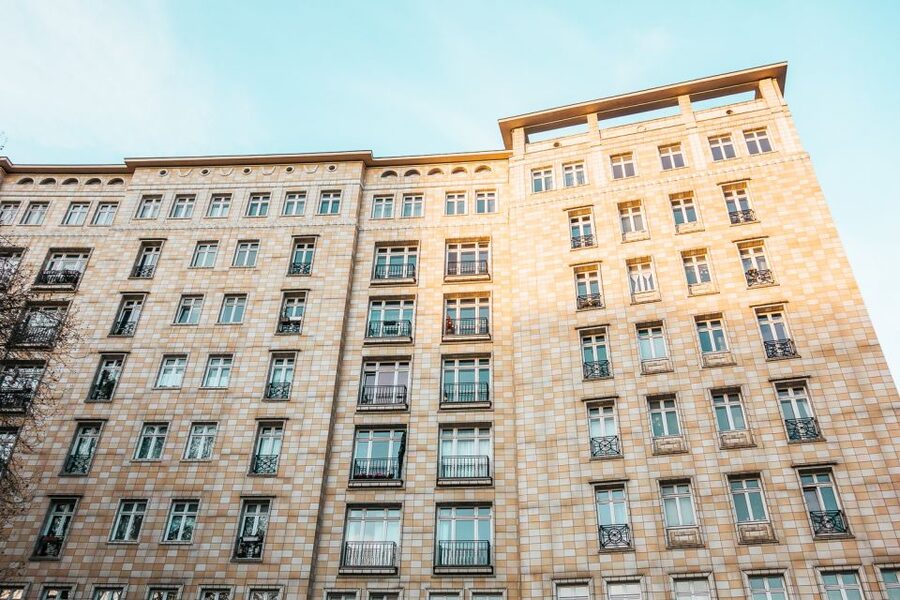
The Kosmos cinema, designed by Josef Kaiser, adds a cultural stop to an otherwise architectural route. It shows that Karl-Marx-Allee was planned to include places for entertainment and public life, not only housing and political symbolism.
The cinema is worth seeing as part of the larger plan. A socialist showcase street needed cultural buildings as well as apartments. The Kosmos helped provide that public role, and its design belongs to the same carefully considered urban scheme.
This stop may be especially useful if you are interested in how governments use cinemas, theaters, and public buildings to shape shared culture. The building gives the guide a chance to move beyond façades and explain how people encountered the boulevard in everyday life.
Do not expect a film screening or an interior visit based on the information provided. The experience is a walking tour, so the value here comes from seeing the building and understanding its place in the street’s design.
The Hochhaus an der Weberweise
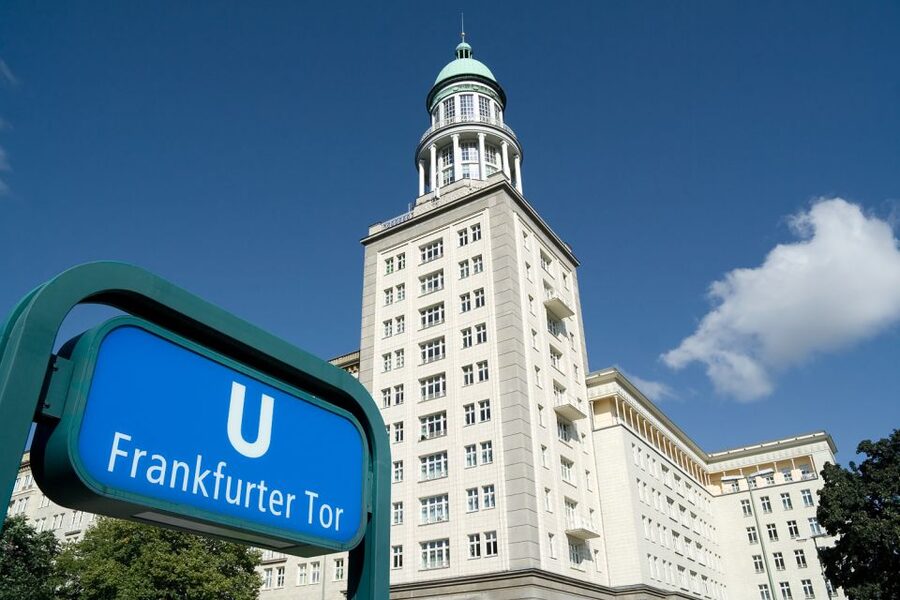
The Hochhaus an der Weberweise offers another change of scale. Unlike the long apartment blocks with arcades, this high-rise gives you a more vertical landmark and helps show how different building types were combined along the route.
It is a useful stop for understanding the development of postwar urban design. The boulevard was not created from one repeated template. Its planners used towers, high-rise buildings, long residential blocks, open spaces, and formal entrances to create a carefully ordered sequence.
I would pay attention to how this building relates to the surrounding street. The tour is strongest when you compare the parts rather than viewing each building alone. Frankfurter Tor feels like a gateway, the arcaded blocks create continuity, and the Hochhaus an der Weberweise adds height and emphasis.
That comparison also makes the walk more accessible for people who are not architecture specialists. You do not need to know technical terms. The guide helps you notice the choices in scale, rhythm, and placement.
The partial ruins of the Church of the Resurrection
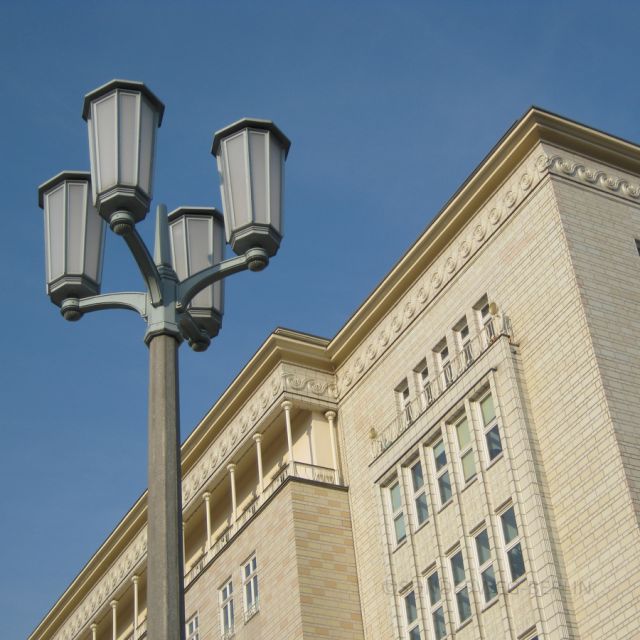
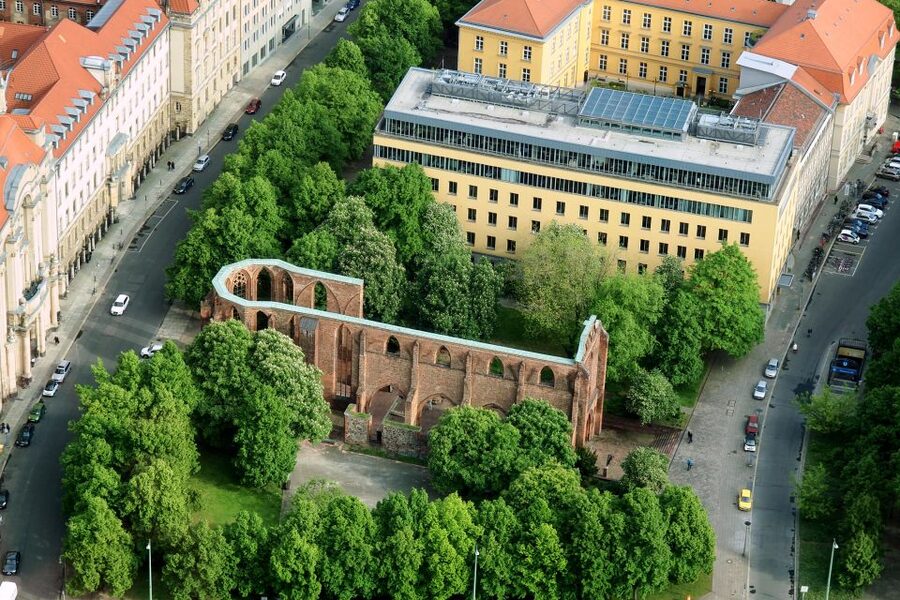
The partial ruins of the Church of the Resurrection introduce a quieter and more complicated note. After the grand apartment blocks and monumental towers, the remains of the church remind you that older Berlin was not simply erased without leaving traces.
This stop gives the tour a useful pause. The boulevard represents a planned socialist future, while the church ruins point to destruction, survival, and the layers beneath postwar redevelopment. You can see how one political and architectural vision was built into an existing city with its own past.
The ruins are also valuable because they prevent the walk from becoming a parade of impressive buildings. Karl-Marx-Allee can look polished and controlled, but the partial church remains show that Berlin’s story is full of breaks and scars.
The information provided does not specify the full condition of the site or whether you enter the church remains. Plan to view this as a stop along the walking route, with the guide explaining its significance.
Strausberger Platz and the socialist city center
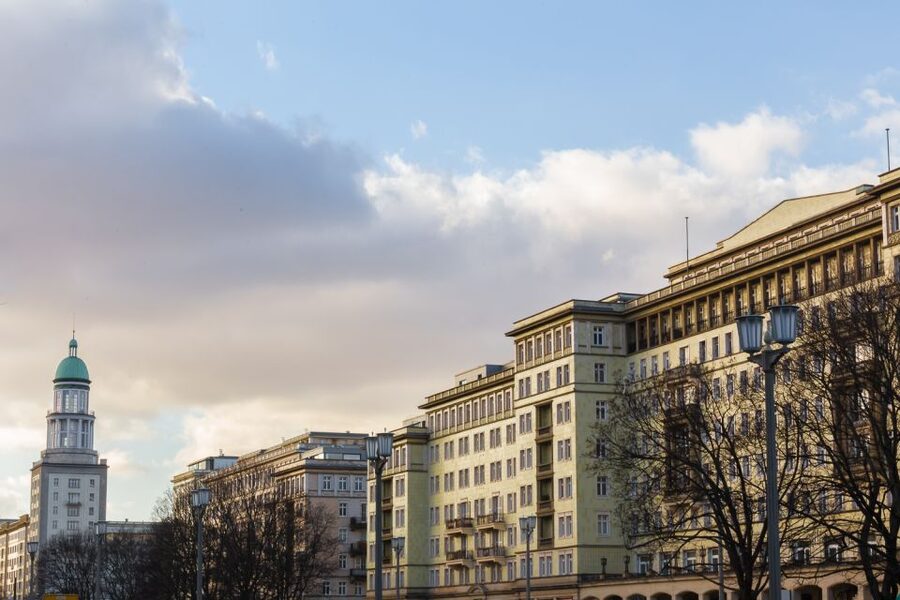
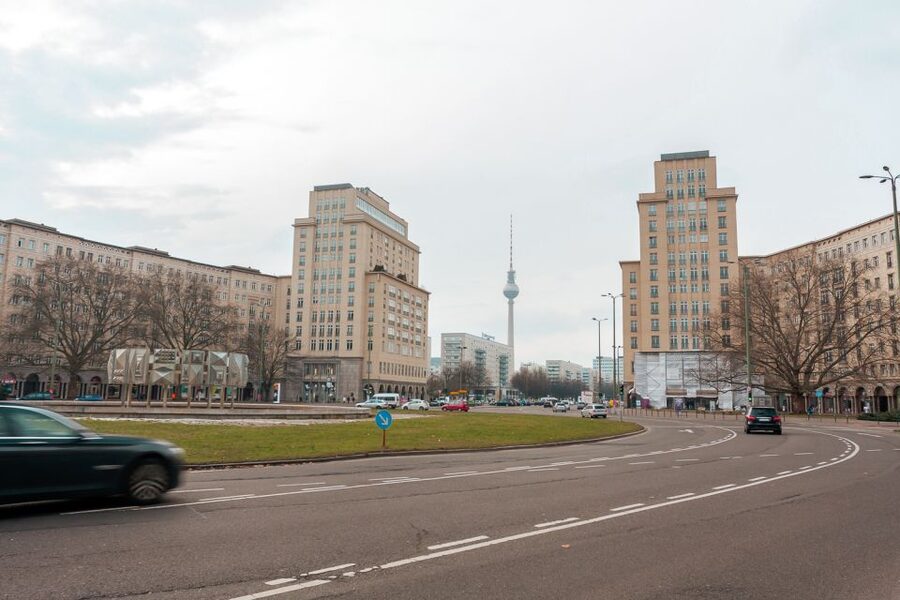
Strausberger Platz is another major highlight. Its distinctive high-rise buildings served as a gateway to the socialist city center, giving the square a formal role in the overall plan.
The open space lets you step back and see how the surrounding buildings work together. It is easier here to grasp the intended drama of the boulevard: long views, strong symmetry, and architecture that guides your eye toward the center.
This is also one of the best places to think about urban design rather than individual buildings. A single tower can be interesting, but a whole square tells you more about how planners wanted people to move, gather, and experience the city.
The route’s sequence from Frankfurter Tor to Strausberger Platz helps build that understanding. You see the monumental gateway, the housing blocks, cultural buildings, high-rise landmarks, and finally a major urban entrance. Each part has a role in the larger composition.
What the guide adds to the walk
The guide is the main reason to choose this experience instead of simply walking Karl-Marx-Allee with a map. The buildings are visible to everyone, but their names, political meaning, and original purpose are not always obvious.
The best commentary here uses evidence you can see. Historical photographs and old posters are particularly helpful because they let you compare the planned boulevard with earlier versions of the street. Anecdotes can also make the architecture feel connected to people rather than only to state policy.
The feedback connected with this tour places strong emphasis on guides who are passionate, communicative, and engaging. Tobias is specifically praised for bringing the area to life and explaining its history clearly. That matters on a subject that could otherwise become a dry list of dates and architectural labels.
The tour is offered in German and English. If you want the full benefit, choose the language in which you can comfortably follow a detailed explanation of architecture and political history.
Is two hours enough?
Two hours is a sensible length for this route. Karl-Marx-Allee is nearly 2 kilometers long, and the tour covers several important buildings and public spaces. A shorter walk might rush the context, while a much longer one could begin to feel repetitive for anyone with only a general interest in architecture.
You should expect steady walking and outdoor viewing. The activity includes a walking tour and guide, but no hotel pickup or drop-off. The exact meeting point can vary according to the option you book, so check that detail before you set out.
Because the route is spread along a boulevard, comfortable footwear is a practical choice. Give yourself enough time to reach the meeting point, especially since the location is not fixed across every booking option.
Who will get the most from this experience?
I would recommend this tour most strongly to people interested in:
- Berlin’s postwar division and East German history
- Architecture, urban planning, and public monuments
- Socialist-era housing and civic design
- Photography and large-scale city spaces
- The parts of Berlin that sit outside the usual first-visit route
It is also a good choice if you have already seen central Berlin and want a more focused subject. The tour gives you a new way to read Friedrichshain and the eastern part of the city.
I would be more cautious if your main goal is Berlin’s medieval history, royal sights, museums, or nightlife. Karl-Marx-Allee is a specialized subject. That focus is its strength, but it also means the walk will not cover the city’s best-known landmarks.
Families with older children who enjoy buildings and stories may find the route worthwhile, though the material is centered on history and architecture rather than entertainment. The tour can also suit repeat visitors who want something more specific than a general city walk.
Price, flexibility, and overall value
At $23 per person, the cost is modest for a two-hour guided experience in Berlin. You are not paying for admission, transport, or a long full-day program. You are paying for a specialist route through a part of the city that is easy to overlook and difficult to interpret well without help.
I think the price works because the tour brings together several stops that would otherwise feel disconnected. Frankfurter Tor, the arcaded apartments, Kosmos, the Hochhaus an der Weberweise, the church ruins, and Strausberger Platz become chapters in one story.
The free cancellation policy allows cancellation up to 24 hours in advance for a full refund, and the reserve-now, pay-later option keeps the booking flexible. Those terms are useful if your Berlin plans are still shifting.
The main value question is your interest level. If you care about architecture or the Cold War era, $23 is a good buy. If you prefer broad sightseeing with many famous landmarks, spend the money on a more general city tour instead.
Should you book the Karl-Marx-Allee tour?
Book it if you want to understand how East Berlin used architecture and urban planning to present a socialist future. The route covers the most important visual markers, from Frankfurter Tor and Strausberger Platz to the Kosmos cinema and the arcaded apartment blocks.
I especially like the combination of large public spaces and small historical clues. The towers provide the drama, while the name changes, old posters, historical photographs, and church ruins add the human and political layers.
Skip it if you want indoor attractions or a broad overview of Berlin. This is a two-hour outdoor walk with a narrow focus.
For the right audience, it is an excellent-value way to see Berlin from a different angle. You leave with more than photographs of unusual buildings. You gain a clearer sense of how a city can be designed to express power, hope, and political change.
FAQ
How long is the Karl-Marx-Allee tour?
The tour lasts two hours.
How much does the tour cost?
The listed price is $23 per person.
Which languages are available?
The live guide is available in German and English.
What sights are included?
The route includes Frankfurter Tor, the arcaded apartment buildings in Friedrichshain, the Kosmos cinema designed by Josef Kaiser, the Hochhaus an der Weberweise, the partial ruins of the Church of the Resurrection, and Strausberger Platz.
Is hotel pickup included?
No. Hotel pickup and drop-off are not included.
Can I cancel for a refund?
Yes. You can cancel up to 24 hours in advance for a full refund.
Just added around Berlin
- Love and War in Berlin: Self-Guided Story Puzzle Walk★ 5.0 · 7 reviews
- Rickshaw Tours Berlin – Groups of up to 16 people with several rickshaws★ 4.0 · 97 reviews
- eSIM for Germany and 34 European Countries★ 4.5 · 16 reviews
- Walking on the Wall: 3-Hour Tour in Berlin★ 4.5 · 34 reviews
- Warnemuende Shore Excursion: Berlin Private Sightseeing Tour from Rostock★ 5.0 · 4 reviews
- Your ticket to The Wall Museum Berlin★ 3.0 · 60 reviews
- Warnemuende Shore Excursion: Private Berlin Tour★ 4.5 · 27 reviews
- Berlin’s Gay, Lesbian, and Queer Scene Small-Group Walking Tour★ 4.5 · 66 reviews
2-Hour Experiences, compared.


Berlin’s Best: 2 Hour Walking Tour Third Reich and the Cold War
Read our review →
Browse the lists this tour appears in