
Reviewed · MUNICH TOURS
Munich’s Hidden Architecture Guided Tour
Munich’s south has a different voice from the postcard center. On this two-hour walk, Philipp takes you through old neighborhoods, street art spaces, riverside paths, unusual cultural hubs, and winter markets before finishing near Gans Woanders. The route brings you to the Alte Utting, a former passenger ship perched on a bridge, a sight even The New York Times found worth a look.
I like the way the tour connects architecture with local life, rather than treating buildings as isolated monuments. I also like the route’s variety: you move from urban art and repurposed structures to the Isar River, willow-covered scenery, and Giesing’s long local story.
The main catch is practical. This is a two-hour walking tour in winter, with uneven city streets and riverside sections, so you need warm clothing, comfortable shoes, and a reasonable level of mobility. The activity is not suitable for wheelchair users or people with mobility impairments.
In This Review
- Key points at a glance
- Why Munich’s south is worth your evening
- Starting at Piazza Zenetti
- Münchner Volkstheater and the city’s changing cultural side
- Bahnwärter Thiel, containers, wood, and street art
- Alte Utting on the bridge
- Dreimühlenstrasse and the move toward the river
- Wittelsbacherbrücke and the Isar
- Claude-Lorrain-Strasse and Giesing’s local character
- Little Venice and the willow island
- Ending at Gans Woanders
- Three Christmas markets in one short walk
- Is $36 good value?
- Who will enjoy this Munich walk?
- Should you book Munich’s Hidden Architecture Guided Tour?
- FAQ
- Where does the Munich architecture tour start?
- How do I find Philipp at Piazza Zenetti?
- Which subway station is closest to the meeting point?
- How long does the tour last?
- What languages does Philipp speak?
- Is a private group possible?
- What places are included on the route?
- Are Christmas markets included?
- Are food and drinks included?
- Is the tour suitable for wheelchair users?
- What should I bring?
- Can I cancel for a refund?
Key points at a glance
- Alte Utting on Lagerhausstrasse: See one of Munich’s most unusual public spaces, a ship set on a bridge and turned into a cultural meeting place.
- Three alternative Christmas markets: The seasonal stops add food, lights, and local character, but the full market element depends on visiting during the winter period.
- Giesing beyond the center: Walk through one of Munich’s last strongly local districts and hear about more than 700 years of southern Munich history.
- Bahnwärter Thiel and street art: Explore a creative venue made with shipping containers, wood, and repurposed objects.
- Isar and Willow Island: Trade central-city streets for water, trees, and a quieter side of Munich.
- Small-group feel with Philipp: The guide speaks English and German, and private groups are available.
Why Munich’s south is worth your evening
Most first-time visits to Munich focus on Marienplatz, the Residenz, the Frauenkirche, and the old town’s grand facades. Those places deserve their time, but they tell only one part of the city’s story. This walk heads south, where former industrial spaces, working-class neighborhoods, river scenery, and new art projects sit close together.
That change of setting is the tour’s main value. You are not simply being shown a list of landmarks. You are given a way to read the city through its newer uses of old spaces. Shipping containers become cultural rooms. A ship becomes a public venue. A river corridor becomes part of the city’s daily life rather than just a scenic backdrop.
Philipp is a professional architect, and that matters here. The route is built around details that are easy to miss when you walk alone. His talks are reported as clear, engaging, and thorough, with useful recommendations extending beyond the walk itself. He also answers questions, which is important on a route where architecture, local history, art, and neighborhood life overlap.
The experience earns a 4.9 rating from 47 ratings, with especially strong praise for the guide’s explanations, his passion for architecture and art, and the fact that the route reveals places even long-term Munich residents had not noticed. That is a useful sign for repeat visitors, not only first-time tourists.
A few more Munich trips to weigh up
- Munich 3-Hour Guided Bike Tour
★ 4.5 · 1,731 reviews - Munich’s Beer Halls and Breweries: 3-Hour Guided Tour
★ 4.6 · 928 reviews - Guided Dachau Concentration Camp Memorial Site Tour with Train from Munich
★ 5.0 · 920 reviews
Starting at Piazza Zenetti
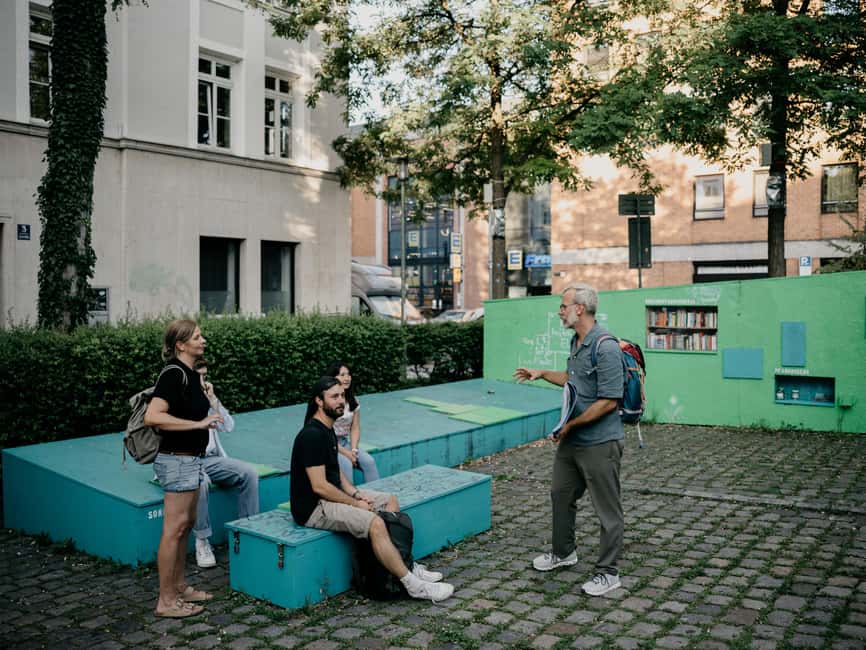
The meeting point is Piazza Zenetti, at the intersection of Tumblingerstrasse and Zenettistrasse. Look for turquoise and green outdoor furniture and small trees planted in boxes. Philipp identifies himself with a colorful backpack and a blue folder.
The easiest arrival is usually the U3 or U6 to Goetheplatz, followed by a walk of about 10 minutes to the square. Build in a little extra time. The tour moves through several southern districts, and arriving calmly is better than rushing in from the subway.
Piazza Zenetti sets the tone. This is not a grand ceremonial square designed for sightseeing. It is an everyday urban place, useful for starting a walk about how Munich’s south is changing. From here, the route heads toward a mix of cultural venues, old streets, and repurposed industrial corners.
The exact starting time depends on availability. Since the walk is seasonal and outdoors, check the date and start time carefully before booking.
Münchner Volkstheater and the city’s changing cultural side
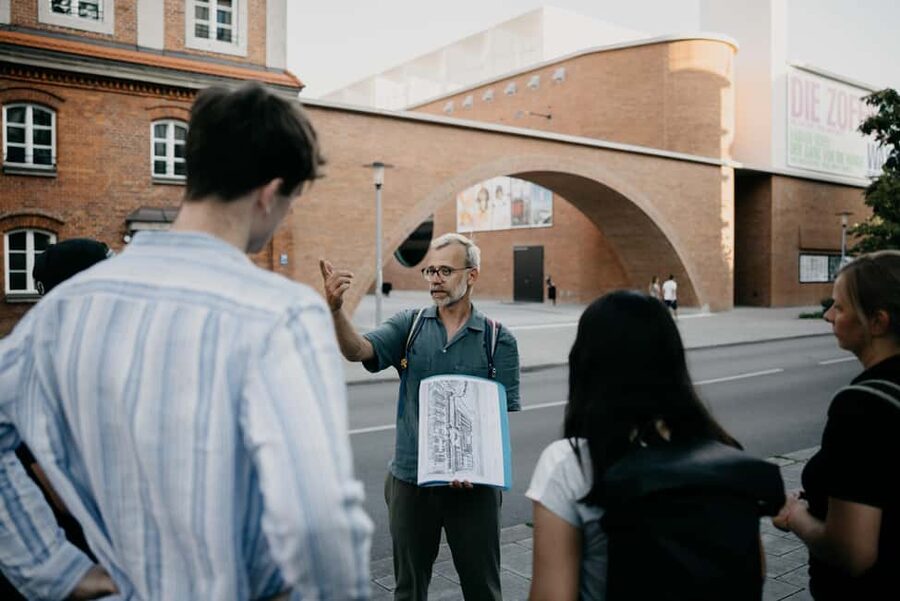
The Münchner Volkstheater is one of the early guided stops. Its presence helps frame the cultural side of southern Munich, where performance, design, and public life meet outside the classic old-town circuit.
You should expect a guided explanation rather than a theater performance or an announced interior visit. The value is in seeing how this part of the city supports cultural activity and how the building fits into the wider route.
This is also a good point to ask Philipp questions about architecture. The tour is strongest when you are curious about why a place looks the way it does, how it is used, and what changed around it. If you prefer a tour made almost entirely of formal interiors, famous paintings, and ticketed monuments, this will feel less conventional.
Bahnwärter Thiel, containers, wood, and street art
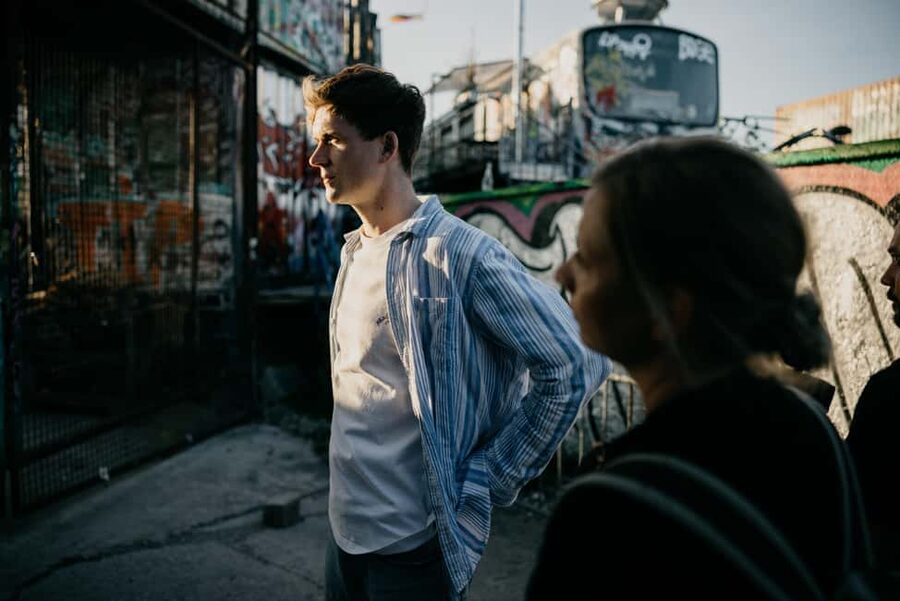
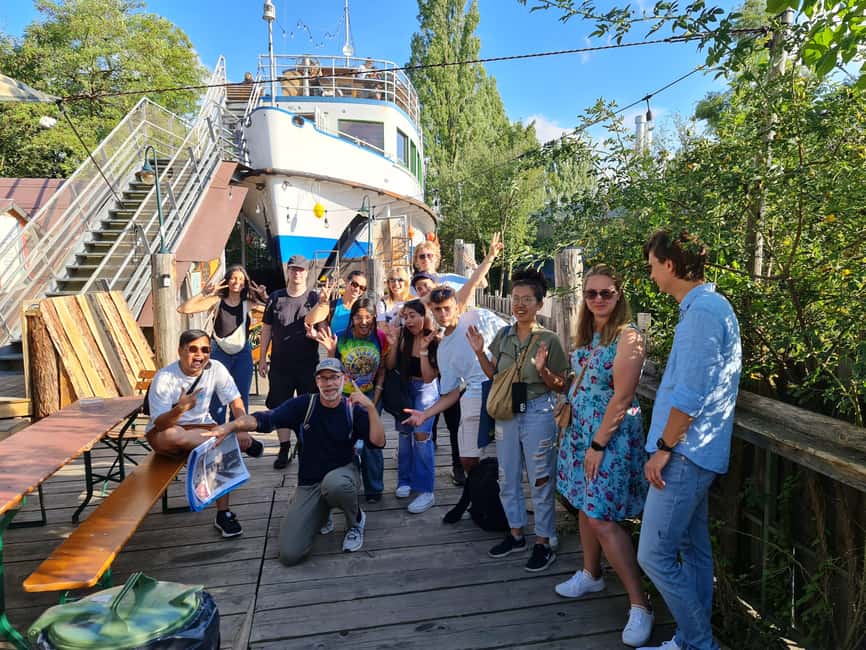
Bahnwärter Thiel is one of the route’s most distinctive stops. The cultural hub is built from shipping containers, timber, and reused materials, giving it a rough, inventive character that differs sharply from Munich’s polished historic center.
Here, Philipp explains the site and its role in the city’s alternative cultural life. The appeal is not just visual. You get to consider how temporary-looking structures can become lasting gathering places, and how art can change the meaning of an industrial setting.
Street art forms part of the same story. Rather than treating graffiti and public art as decoration, the walk places them within the character of the neighborhood. You may find the route especially rewarding if you enjoy cities where cultural spaces are made with practical materials and a little improvisation.
The drawback is that such places can change over time. Alternative venues are not always as fixed as a church or museum, so what you see on a particular date may depend on current use and access. The tour still offers the setting and the explanation, but do not book it expecting a conventional museum visit.
Same city, a completely different kind of day:
- From Munich: Neuschwanstein & Linderhof Castle Full-Day Trip
★ 4.5 · 12,494 reviews - Neuschwanstein & Linderhof Castle-Fairytale Day Tour from Munich
★ 4.5 · 7,275 reviews - Munich: Third Reich & WWII Walking Tour
★ 4.6 · 6,181 reviews - Dachau Concentration Camp Memorial Site Tour from Munich by Train
★ 4.5 · 5,637 reviews
Alte Utting on the bridge
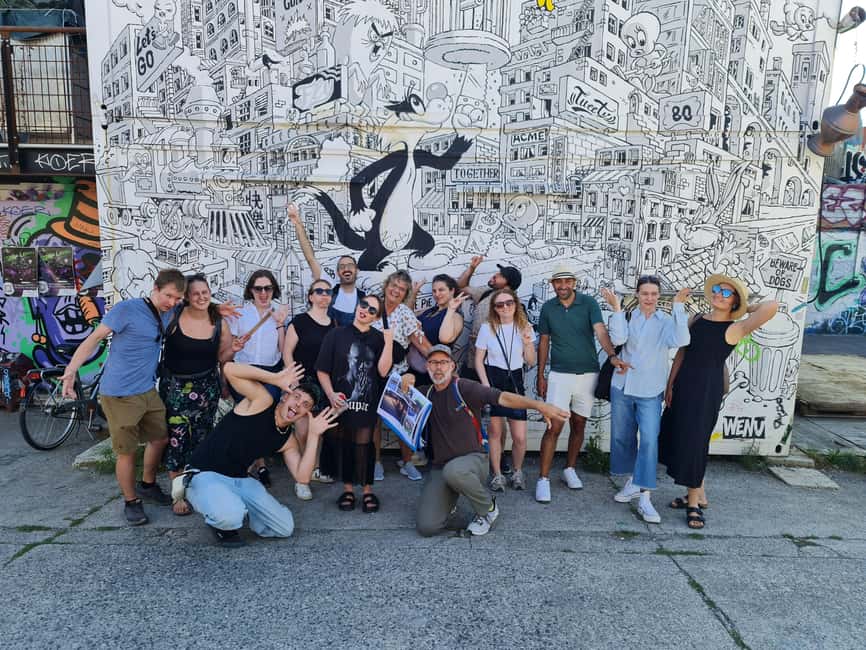
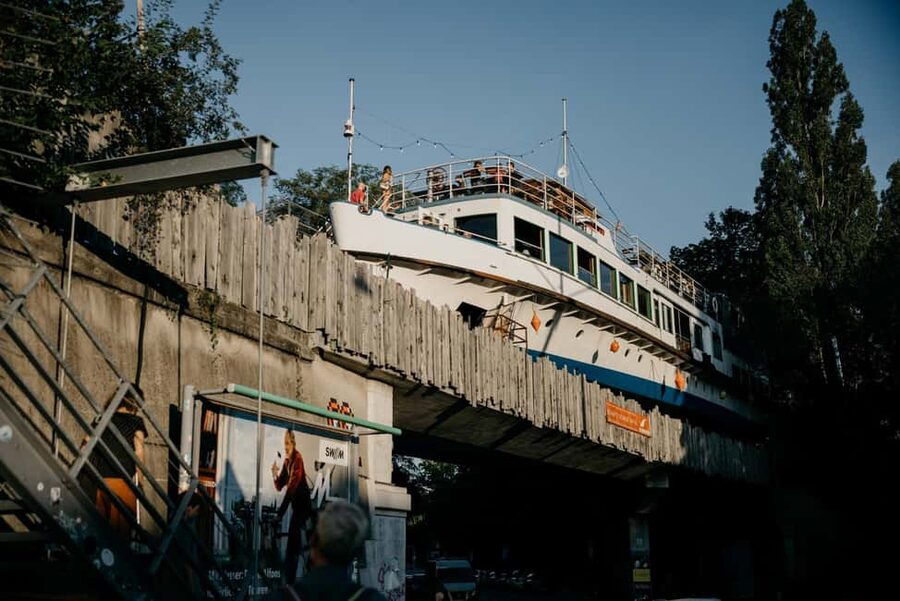
The Alte Utting is the signature sight of the walk. The former ship sits on a bridge at Lagerhausstrasse, creating one of those Munich scenes that makes you stop and look twice. The New York Times drew international attention to it with a question about whether Munich was getting cool and a reference to the boat on the bridge.
The ship’s appeal comes from the unlikely pairing. A vessel belongs on water, yet here it has been placed above a roadway and given a new public role. Philipp explains the site as part of Munich’s recent alternative culture and its use of unusual, repurposed structures.
This is an excellent camera stop, especially as daylight fades. The tour includes the chance to see the city and Isar area by night, depending on the chosen departure time and season. Evening light can make the walk feel especially atmospheric, but it also means colder conditions and less visibility on riverside sections.
Food and drinks are not included. If the venue is open and you want to stop afterward, plan to pay separately. The tour’s price covers the guide and walking route, not purchases at the cultural spaces or markets.
Dreimühlenstrasse and the move toward the river
From the Alte Utting, the walk continues through Dreimühlenstrasse. This part of the route helps connect the alternative venues with the older residential fabric of southern Munich.
You will hear more about how the city developed beyond its best-known center. The tour’s historical scope reaches back more than 700 years, but the information is tied to places along the route rather than delivered as a long classroom lecture.
That balance is one of the better features here. You get history, but you also get current city life. A street can tell you about old settlement patterns, changing uses, and the people who live nearby today. Philipp’s architectural background gives him a useful angle on those connections.
The route remains a walking experience, not a bus tour with long transfers. You should be ready to keep moving and listen outdoors. If you want frequent seated breaks, ask about the route before booking a private version.
Wittelsbacherbrücke and the Isar
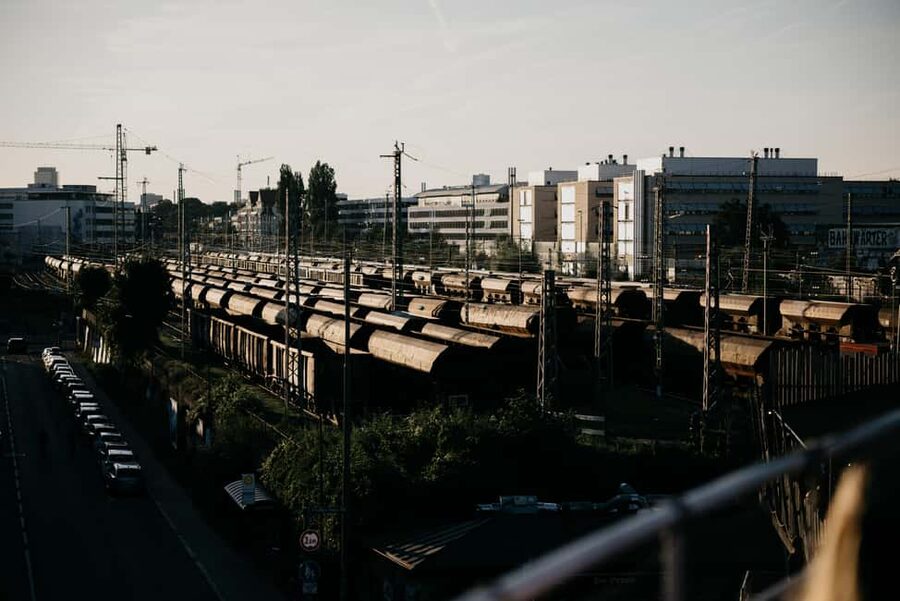
Wittelsbacherbrücke brings the Isar into the center of the experience. The river gives you a different view of Munich, with open air, water, and a break from the denser streets.
This section is valuable because it shows how nature and city life meet in Munich. You are not being taken far outside town. Instead, the river provides a change of pace within the southern districts, and the bridge offers a useful orientation point.
The walk then continues toward Claude-Lorrain-Strasse and the local streets of Giesing. Expect the emphasis to shift from creative venues to neighborhood identity. This is where the tour’s promise of an alternative Munich feels most convincing: you are moving through places that many visitors would not reach on a short central-city stay.
At night, the riverside portion may be darker and colder than the central streets. Bring a camera if you like city photography, but bring a proper coat first. Winter footwear with a firm sole is a smart choice.
Claude-Lorrain-Strasse and Giesing’s local character

Claude-Lorrain-Strasse leads into the Giesing side of the route. Giesing has its own identity and is presented as one of Munich’s last genuinely local-feeling districts, with a history reaching back more than seven centuries.
The attraction here is not one single famous monument. It is the cumulative picture: the street pattern, the neighborhood atmosphere, the history beneath ordinary places, and the contrast with central Munich’s tourist routes.
Philipp’s explanations are particularly useful for this kind of stop. A city district can seem unremarkable if you do not know what to notice. With context, small details become clues to how Munich grew and how its southern neighborhoods kept a character of their own.
I would recommend paying attention to the transition between the river, older streets, and newer cultural spaces. The tour works best when you see these parts as connected, rather than as unrelated photo stops.
Little Venice and the willow island
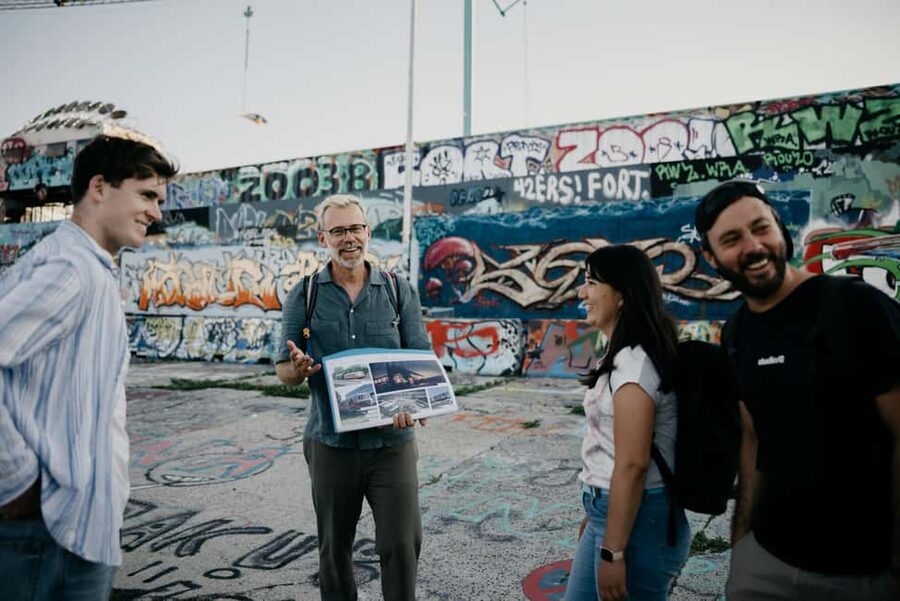
The route includes Little Venice, along with views of the Isar and a beautiful willow island. This gives the walk a softer, more natural finish after the urban art and industrial settings.
The name suggests a waterside scene, but the key point is the river environment itself. You get a look at Munich that is less formal and more open, with trees and water shaping the city experience.
This is one of the places where a daytime walk may offer clearer views, while an evening departure provides a different mood. Check the available times and choose based on your priorities. If photography and visible scenery matter most, earlier light may suit you better. If you want the atmosphere of markets and city lights, a later start may be the better fit.
The route’s nature sections do not turn it into a countryside hike. You remain within the city, but the Isar corridor offers welcome breathing room and a reminder that Munich’s appeal is not limited to its old squares.
Ending at Gans Woanders
The advertised finish is Gans Woanders. It is an appropriate endpoint for a tour built around creative spaces, neighborhood culture, and places with a strong sense of personality.
The activity details also refer to ending back at the meeting point, so confirm the final drop-off arrangement when you book. The route itself is described as finishing at Gans Woanders, and that is the location you should use for planning unless Philipp tells you otherwise.
Since food and drinks are not included, budget separately if you want refreshments at the end. This is also a useful place to continue your evening if the venue is operating, though opening details are not specified.
Three Christmas markets in one short walk
A seasonal highlight is the visit to three alternative Christmas markets. These are presented as some of Munich’s coolest and more unusual festive markets, rather than as a tour of the large, familiar central market.
That distinction matters. You are likely booking this for a less polished, more local-feeling Christmas atmosphere, with the markets tied to the neighborhoods and cultural spaces along the route. They add color and warmth to a winter walk that might otherwise feel quite cold.
The market visits are seasonal, so do not assume the same experience outside the Christmas period. The description specifically centers on an alternative winter version of the tour. Check availability for the date you want, and remember that food and drinks cost extra.
If you have dietary needs, the activity information does not give menus or allergy details. Treat the market stops as opportunities to buy something, not as included meals.
Is $36 good value?
At $36 per person, the price is fair if you want a guided introduction to parts of Munich that are difficult to discover efficiently on your own. You get two hours with Philipp, a route covering architecture, street art, cultural venues, Giesing, the Isar, and seasonal markets.
The value is strongest for visitors who would otherwise spend time trying to connect these places independently. Public transportation may get you near some stops, but it will not provide the explanation linking them together. A professional architect guiding the walk adds useful depth, especially if you care about design and urban change.
The price is less compelling if you want a formal architecture tour focused only on famous buildings. It is also less suitable if you dislike outdoor winter walks or prefer included food, drinks, and transport. Those extras are not part of the cost.
Private groups are available, which may improve the value for families or friends who want a more flexible conversation. The standard format is in English or German. Ask about private arrangements if you have a special request or want to give the tour as a Christmas voucher.
Who will enjoy this Munich walk?
I would choose this experience for:
- First-time visitors who have already seen the old town and want another side of Munich.
- Repeat visitors who want districts beyond the standard sightseeing circuit.
- People interested in architecture, street art, reused buildings, and alternative cultural spaces.
- Couples or friends looking for a winter evening activity with markets and city lights.
- Munich residents who want a fresh look at their own city.
- Anyone who values a strong guide and discussion more than a long list of famous monuments.
I would think twice if you have limited mobility, use a wheelchair, or do not enjoy walking outdoors in cold weather. The activity is not suitable for people with mobility impairments or wheelchair users. It is also not suitable for people over 95 years old, according to the stated restrictions.
Bring warm clothing, comfortable walking shoes, and a camera. Smoking is not allowed. Participation is at your own risk, so take the winter conditions seriously.
Should you book Munich’s Hidden Architecture Guided Tour?
Book it if you want Munich with the labels removed. The best parts are the strange ship on the bridge, Bahnwärter Thiel’s container-and-wood setting, the Isar and willow island, and Giesing’s local character. Philipp’s architectural training gives the route a clear point of view, while his friendly explanations make the details easier to notice.
Skip it if your ideal Munich tour stays inside major museums and grand historic buildings, or if you need a fully accessible route. For everyone else, $36 buys a focused two-hour introduction to southern Munich, with enough variety to make the city feel larger and more interesting than its postcard center.
Free cancellation is available up to 24 hours before the activity for a full refund, and you can reserve now and pay later. That flexibility is useful when winter weather may affect your plans.
FAQ
Where does the Munich architecture tour start?
The tour starts at Piazza Zenetti, at the intersection of Tumblingerstrasse and Zenettistrasse.
How do I find Philipp at Piazza Zenetti?
Look for turquoise and green outdoor furniture, small trees in boxes, and Philipp’s colorful backpack with a blue folder.
Which subway station is closest to the meeting point?
The recommended station is Goetheplatz on the U3 or U6. From there, Piazza Zenetti is about a 10-minute walk.
How long does the tour last?
The guided walk lasts two hours.
What languages does Philipp speak?
The tour is available in English and German.
Is a private group possible?
Yes. A private group is available, and you can also contact Philipp about special requests or a Christmas voucher.
What places are included on the route?
The route includes Münchner Volkstheater, Bahnwärter Thiel, Alte Utting on Lagerhausstrasse, Dreimühlenstrasse, Wittelsbacherbrücke, Claude-Lorrain-Strasse, Little Venice, and Gans Woanders.
Are Christmas markets included?
The experience includes visits to three alternative Christmas markets. The Christmas market portion is seasonal.
Are food and drinks included?
No. Food and drinks are not included in the $36 price.
Is the tour suitable for wheelchair users?
No. The activity is not suitable for wheelchair users or people with mobility impairments.
What should I bring?
Bring warm clothing, comfortable walking shoes, and a camera. Smoking is not allowed.
Can I cancel for a refund?
Yes. You can cancel up to 24 hours in advance for a full refund. You can also reserve now and pay later.
Just added around Munich
- Pub crawl incl. Oktoberfest museum guided tour with beer tasting (private)★ 5.0 · 5 reviews
- South Tyrolean specialties and wine tasting★ 5.0 · 5 reviews
- Size Matters Beer Tour Munich★ 4.6 · 105 reviews
- Short & sweet: Tasting the Viktualienmarkt★ 4.8 · 37 reviews
- Secret Food Tours Munich★ 4.8 · 5 reviews
- Munich: Romantic Wine Experience for Two at Viktualienmarkt★ 4.2 · 14 reviews
- Munich: Resistance against Hitler – Historical Walking Tour★ 5.0 · 5 reviews
- Residence of Munich private tour with skip the line ticket★ 5.0 · 4 reviews
Munich Tours, compared.

Neuschwanstein & Linderhof Castle-Fairytale Day Tour from Munich
Read our review →
Dachau Concentration Camp Memorial Site Tour from Munich by Train
Read our review →


Browse the lists this tour appears in