
Reviewed · MUNICH TOURS
Munich’s 500 Years of Architecture Guided Tour
Munich’s story is written in its buildings, and Philipp’s two-hour tour reads that story in order, from the late Gothic Frauenkirche to Renaissance, Baroque, Neo-Classical, Historicist, Art Nouveau, street art, and modern design. The route links famous churches with less expected places such as Müllersche Volksbad and the riverside Alte Utting experience.
I like two things here. First, the tour gives you a clear timeline instead of a random string of monuments. Second, it leaves the crowded Old Town by tram and reaches the Isar, adding a quieter side of Munich that many short city walks miss. The main consideration is pace: two hours covers a lot, so this is better for seeing and understanding than for lingering inside every building.
In This Review
- Key points at a glance
- From the Frauenkirche to Munich’s Gothic beginnings
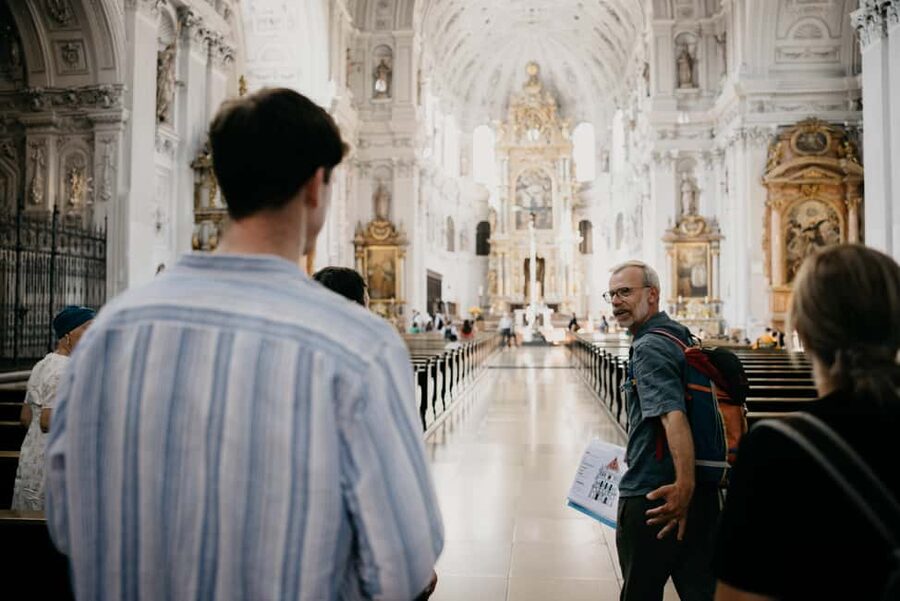
- Renaissance ambition inside St. Michael’s Church
- Baroque drama at Trinity and Theatine churches
- Royal Munich along the State Opera and Maximilianstraße
- Leaving the Old Town by tram for the Isar
- Art Nouveau, street art, and the final modern contrast
- What the $36 price gets you
- Who will get the most from this walk
- Practical advice before you go
- My verdict on Philipp’s Munich architecture route
- FAQ
- How long does the Munich architecture tour last?
- Where does the tour begin?
- How will I recognize Philipp?
- How do I reach the meeting point by public transportation?
- Which languages are available?
- Are church interiors included?
- Does the tour include transportation?
- Is the tour suitable for wheelchair users?
- What should I bring?
- Can I cancel the booking?
Key points at a glance
- A 500-year architectural timeline: Follow Munich from Gothic church design through Renaissance, Baroque, Neo-Classicism, Historicism, Jugendstil, street art, and modern architecture.
- Philipp leads in English or German: His approach combines royal stories, legends, unusual details, and darker chapters of city life.
- Church interiors are part of the plan: You may visit up to three impressive buildings inside, depending on access and timing.
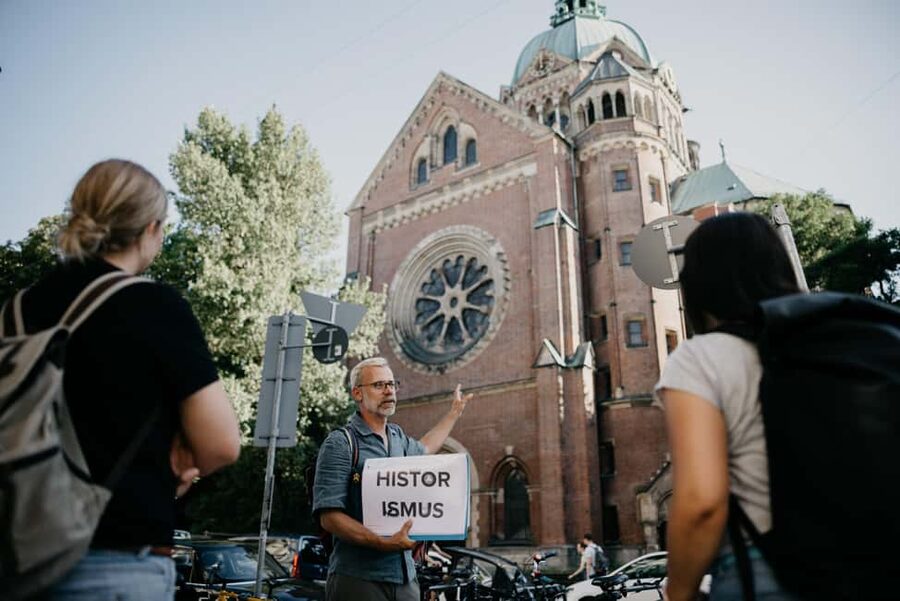
- The route reaches the Isar River: A tram ride breaks up the Old Town walk and brings you to St. Lukas, Müllersche Volksbad, and riverside sights.
- Christmas markets add seasonal character: The walk includes multiple markets, including a medieval Christmas market in a striking setting.
- The tour finishes with modern Munich: Street art and the Sudetendeutsches Museum provide a sharp contrast with the old churches.
From the Frauenkirche to Munich’s Gothic beginnings
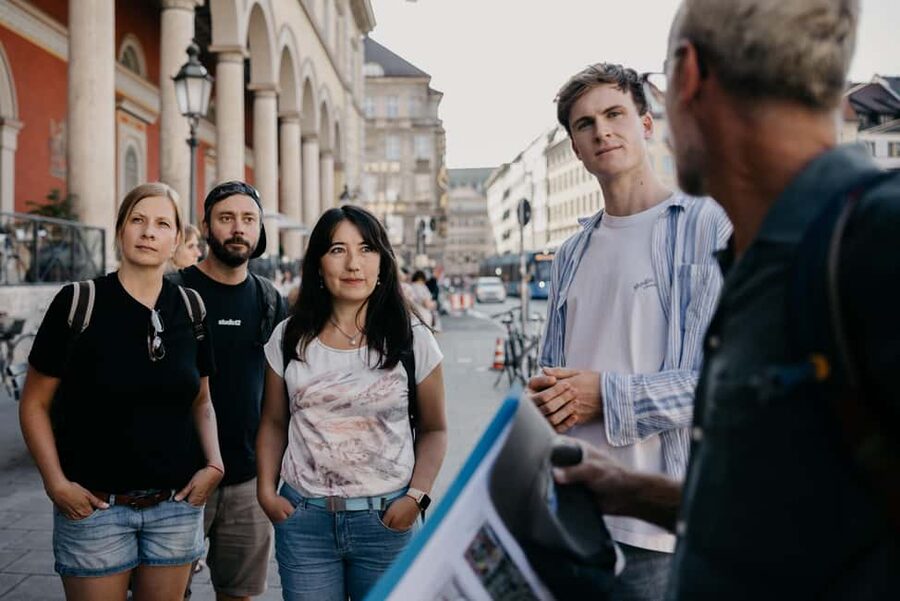
Meet Philipp outside the main entrance of the Frauenkirche at Frauenplatz 1. His bright yellow winter hat, yellow backpack, and large blue presentation folder make him easy to spot. The nearest public transport stop is Marienplatz, served by the S-Bahn and U3 and U6 subway lines, followed by a walk of about five minutes. Munich’s main station is roughly a 15-minute walk away.
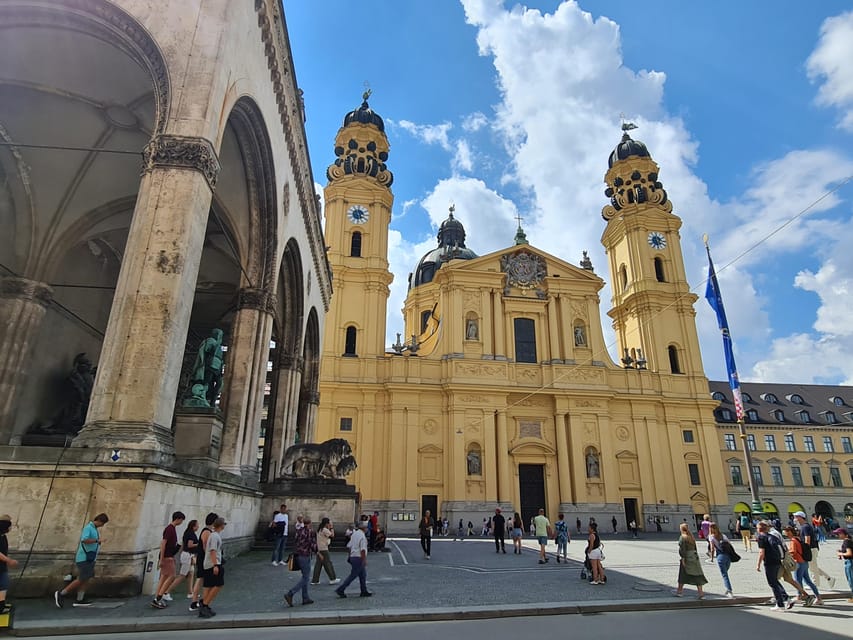
The Frauenkirche is the right starting point for a historical walk because its twin towers and late Gothic form place you at the end of the 15th century. Here, Philipp sets up the central idea of the tour: buildings are not isolated sights. They reflect the money, religion, politics, and ambitions of the people who commissioned them.
You can expect stories about the period behind the stonework, along with legends connected to the church. The experience is not only about taking a quick photograph of the famous silhouette. It is about noticing how Munich’s oldest major architectural layer still shapes the city center.
The chance to go inside up to three impressive buildings is useful, especially if you want more than an outside walking tour. Exact access can depend on opening conditions and the flow of the day, so I would treat interior visits as an important possibility rather than a guarantee for every named stop.
A few more Munich trips to weigh up
- Munich 3-Hour Guided Bike Tour
★ 4.5 · 1,731 reviews - Munich’s Beer Halls and Breweries: 3-Hour Guided Tour
★ 4.6 · 928 reviews - Guided Dachau Concentration Camp Memorial Site Tour with Train from Munich
★ 5.0 · 920 reviews
Renaissance ambition inside St. Michael’s Church
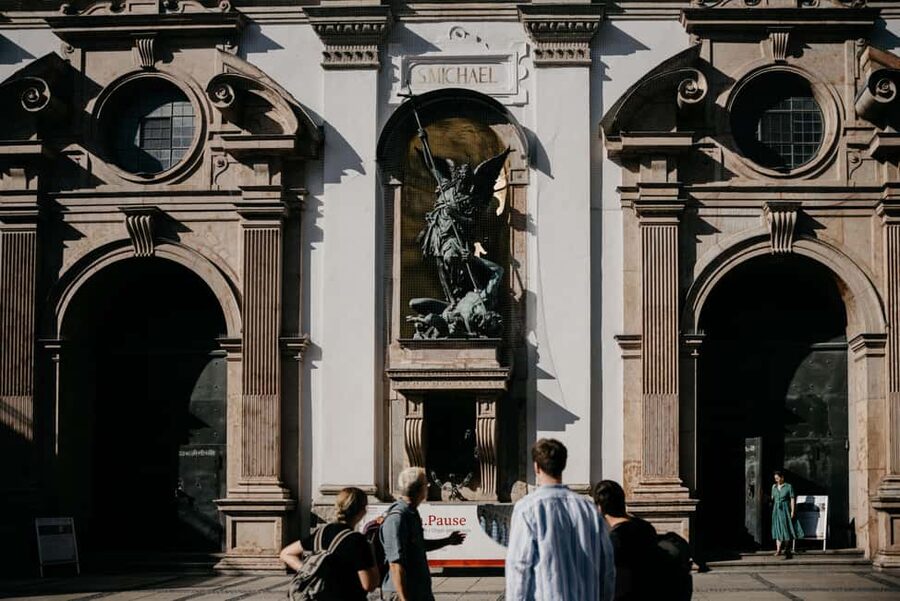
The next major period is the Renaissance, represented by St. Michael’s Church. The church is described as a world-record-holding masterpiece, giving Philipp a strong talking point as the tour moves from Gothic verticality to a different architectural language.
St. Michael’s also brings royal connections into the story. Munich’s churches are closely tied to the Bavarian court, and this is one of the places where tales about the royal family and the city’s power struggles can make the architecture easier to remember.
The route works well for first-time visitors because Philipp does not ask you to absorb five centuries at once. Each building marks a new step. You can compare the Frauenkirche with St. Michael’s while the earlier details are still fresh.
Baroque drama at Trinity and Theatine churches
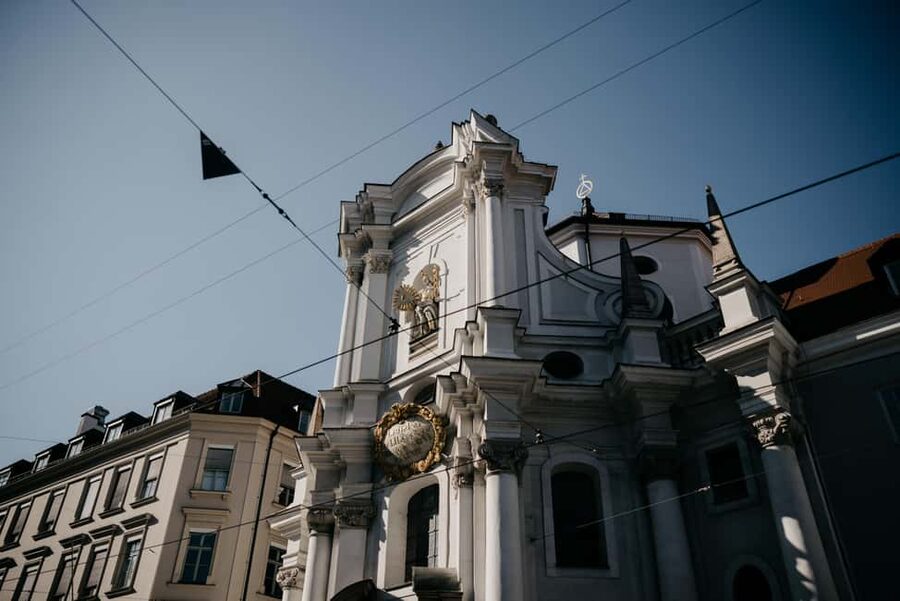
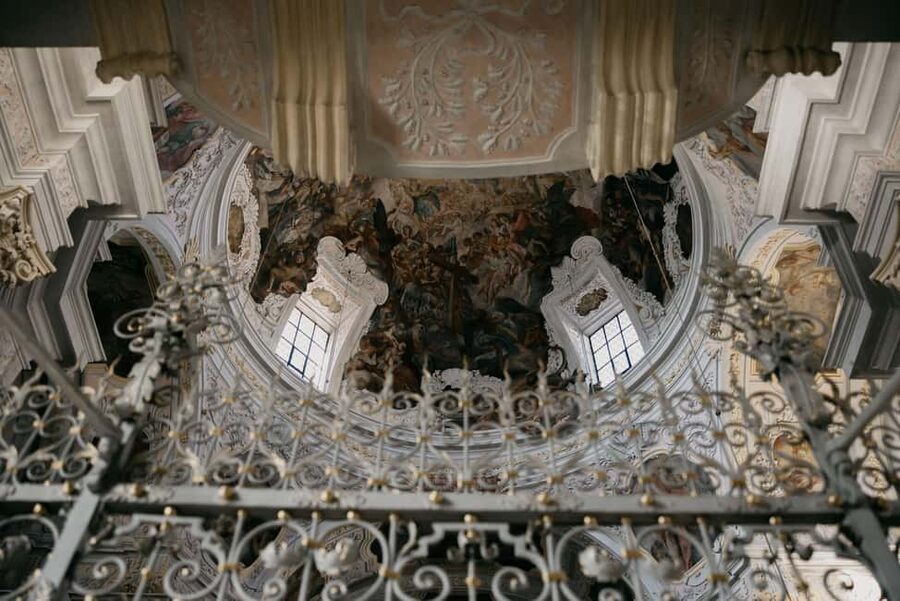
Trinity Church and the Theatine Church introduce the theatrical side of Munich’s Baroque period. This is where the walk shifts from the sturdy Gothic outline of the Frauenkirche and the Renaissance ambition of St. Michael’s to a style built around movement, ceremony, decoration, and visual impact.
The Theatine Church is especially important to Munich’s royal story. Along with Trinity Church, it gives Philipp room to explain how religious buildings also served as statements of status and authority.
The route includes several churches close to one another, which helps you make comparisons without spending the day crossing town. The tradeoff is that a two-hour tour cannot provide unlimited time in each interior. If you have a strong interest in church art or architectural photography, note the places you want to revisit afterward.
Christmas markets are part of the Old Town section when the seasonal markets are operating. The tour includes several markets and a medieval Christmas market in a distinctive setting. This adds atmosphere, but it can also make the center busier and slower to cross. Warm clothing and comfortable shoes are essential, especially in winter.
Royal Munich along the State Opera and Maximilianstraße
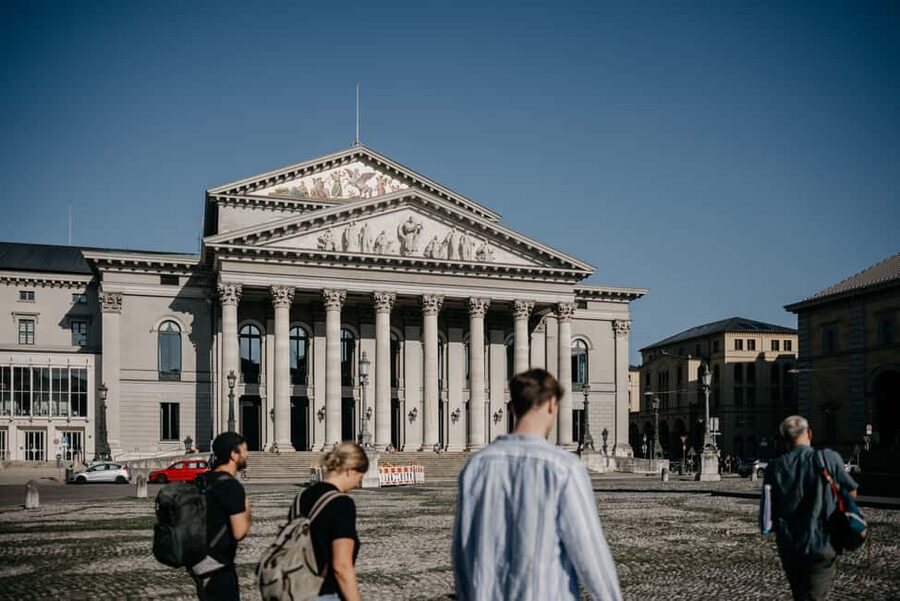
The Bavarian State Opera and Maximilianstraße shift the focus from churches to courtly and civic architecture. The opera house represents Munich’s continuing cultural life, while Maximilianstraße offers a long view of royal planning, grand buildings, and the city’s desire to present itself as a capital.
I like this section because it makes Munich feel larger than its postcard center. You are not simply moving from one old church to another. You are watching the city change as royal power, public culture, and urban design take their place beside religious architecture.
Philipp also includes amusing legends and some of Munich’s darker chapters. That balance matters. A city tour can become flat if every building is presented as noble and beautiful. Stories about questionable decisions, royal personalities, and less comfortable moments give the buildings human edges.
Same city, a completely different kind of day:
- From Munich: Neuschwanstein & Linderhof Castle Full-Day Trip
★ 4.5 · 12,494 reviews - Neuschwanstein & Linderhof Castle-Fairytale Day Tour from Munich
★ 4.5 · 7,275 reviews - Munich: Third Reich & WWII Walking Tour
★ 4.6 · 6,181 reviews - Dachau Concentration Camp Memorial Site Tour from Munich by Train
★ 4.5 · 5,637 reviews
Leaving the Old Town by tram for the Isar
The tram ride to the Isar is one of the most useful parts of the experience. It creates a clean break from the compact center and gives you a look at how Munich connects its historic core with quieter riverside areas.
The tour then reaches St. Lukas, one of the city’s notable churches, and Müllersche Volksbad. The latter is a striking historic public bath and a change of scale from the major religious buildings earlier in the walk. Its presence shows how architecture also serves everyday civic life, not just worship or royal display.
Two world records are part of the Isar section, though the supplied tour details do not specify which records. Philipp uses these surprises to keep the route moving beyond standard sightseeing. You will also hear stories connected with the river and its surroundings.
The break from the Old Town is valuable for another reason: it gives your eyes a rest. Munich’s center can feel crowded, particularly during the Christmas season. The riverside portion offers a calmer setting before the final shift toward modern design.
The route involves public transportation, but transportation to and from the start is not included. Your ticket to reach the meeting point is your responsibility. Since the experience lasts two hours, even a short delay at the start matters, so arrive early at Frauenplatz.
Art Nouveau, street art, and the final modern contrast
The last part of the tour turns to Jugendstil, the German term for Art Nouveau. This style brings flowing decoration and playful detail into the architectural timeline. After Gothic churches, royal avenues, and formal public buildings, Art Nouveau feels lighter and more expressive.
Street art then brings the story into the present. This is a smart ending because Munich’s architecture is not frozen in the past. Old styles remain visible, but the city continues to change through new art and new buildings.
The final museum stop is the Sudetendeutsches Museum. Its modern architecture provides the sharpest contrast of the day and gives Philipp a place to connect Munich’s past with present-day cultural work. The stated route finishes there, while the meeting details also describe the activity as ending back at the meeting point. Check the exact end point when you book, especially if you have a dinner reservation or train to catch.
What the $36 price gets you
At $36 per person, this is priced as an affordable guided city walk rather than a full-day specialist tour. The value comes from the range: you get Old Town churches, royal architecture, public buildings, a tram connection to the Isar, Art Nouveau, street art, and a museum in two hours.
You are also paying for the guide’s storytelling. Without a guide, you can photograph the Frauenkirche, St. Michael’s, the Theatine Church, and the State Opera, but it is harder to understand the order in which Munich’s styles developed or why royal stories belong beside religious buildings.
The price is strongest if you want a broad orientation early in your stay. Afterward, you can return to the interiors or neighborhoods that caught your attention. It is less ideal if you prefer a slow art-history lesson focused on only one church.
The tour is offered in English and German, and private groups are available. A private option may suit families or small groups with special requests, though the supplied information does not state the additional cost.
Who will get the most from this walk
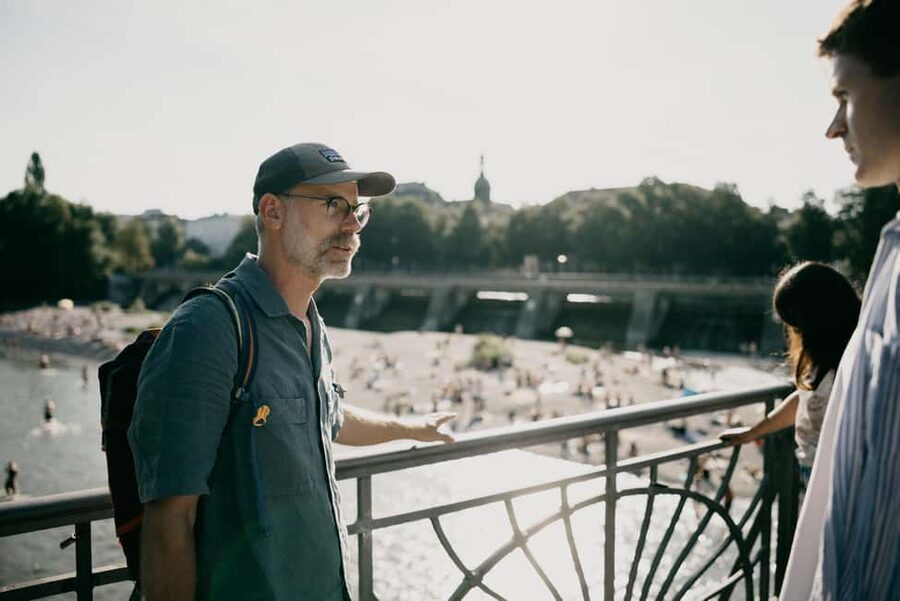
I would recommend this experience if you like architecture but do not want a technical lecture. Philipp’s route uses stories, legends, royal details, and humor to make the buildings easier to follow.
It also suits you if this is your first visit to Munich and you want a quick sense of how the city fits together. The combination of churches, markets, tram travel, river scenery, and modern culture gives you more range than a standard Old Town loop.
The tour may be less suitable if you have limited walking ability. The activity is not suitable for wheelchair users or people with mobility impairments, and comfortable shoes are required. The winter version calls for warm clothing, particularly during the outdoor sections and the time spent moving between stops.
Families and private groups may appreciate the changing subject matter. The route does not stay inside churches or museums for the entire two hours, so children who enjoy stories and visual contrasts may find it easier to follow than a formal museum visit.
Practical advice before you go
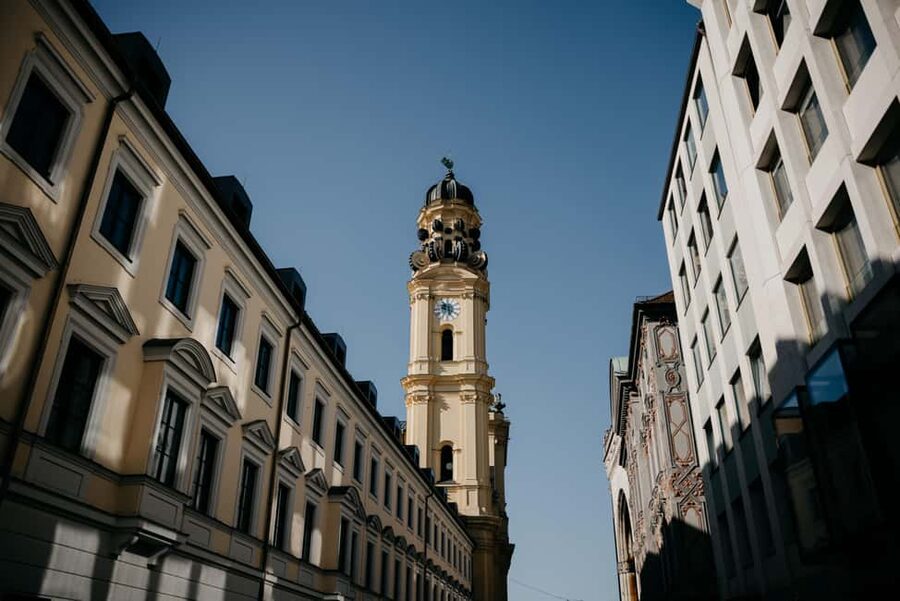
Wear shoes that can handle a city walk and dress for winter conditions. Bring a camera, though keep in mind that the tour’s main reward is the connection between places rather than one single viewpoint.
Arrive at the Frauenkirche meeting point early. Look for Philipp’s yellow hat, yellow backpack, and blue folder outside the main entrance. Marienplatz is the simplest transport target, with a five-minute walk to Frauenplatz.
Food and drinks are not included. The tour passes markets, but you should not count on having time for a full meal during the walk. If you want to browse market stalls or stop for a drink, plan to return later.
Smoking is not allowed during the activity. Participation is at your own risk. The tour permits free cancellation up to 24 hours before the start for a full refund, and you can reserve now and pay later, which helps if your Munich schedule is still shifting.
My verdict on Philipp’s Munich architecture route
Book this tour if you want Munich’s architecture explained as a connected story, not presented as a checklist. Philipp’s strongest feature is the route itself: Gothic churches lead to Renaissance and Baroque landmarks, royal Munich gives way to the Isar, and the final Art Nouveau, street art, and modern museum section keeps the experience from feeling stuck in the past.
The two-hour length is both its strength and its limit. You get an unusually wide sample of Munich, but you will not have long at every stop. I would take it near the start of a visit, then return on your own to the places that deserve more time.
At $36, the mix of guided interpretation, possible interior visits, Christmas markets, tram travel, riverside sights, and modern architecture makes good sense for most first-time visitors. Skip it only if you need a fully accessible route, dislike walking in cold weather, or want a slow, single-building study rather than a fast trip across five centuries.
FAQ
How long does the Munich architecture tour last?
The tour lasts two hours. Starting times vary, so check availability for the date you want.
Where does the tour begin?
The meeting point is outside the main entrance of the Frauenkirche at Frauenplatz 1 in Munich.
How will I recognize Philipp?
Philipp will be wearing a yellow winter hat and carrying a yellow backpack and a large blue presentation folder.
How do I reach the meeting point by public transportation?
Get off at the S-Bahn and U3 and U6 subway station Marienplatz, then walk about five minutes to Frauenplatz. Munich Central Station is about a 15-minute walk away.
Which languages are available?
The live tour is available in English and German.
Are church interiors included?
You have the chance to visit up to three impressive buildings from the inside. Access may depend on conditions at the time of the tour.
Does the tour include transportation?
The route includes a tram ride to the Isar area, but transportation to and from the meeting point is not included.
Is the tour suitable for wheelchair users?
No. The activity is not suitable for wheelchair users or people with mobility impairments.
What should I bring?
Bring comfortable walking shoes, warm clothing for winter weather, and a camera if you would like to photograph the sights.
Can I cancel the booking?
You can cancel up to 24 hours in advance for a full refund. Reserve now and pay later is also available.
Just added around Munich
- Pub crawl incl. Oktoberfest museum guided tour with beer tasting (private)★ 5.0 · 5 reviews
- South Tyrolean specialties and wine tasting★ 5.0 · 5 reviews
- Size Matters Beer Tour Munich★ 4.6 · 105 reviews
- Short & sweet: Tasting the Viktualienmarkt★ 4.8 · 37 reviews
- Secret Food Tours Munich★ 4.8 · 5 reviews
- Munich: Romantic Wine Experience for Two at Viktualienmarkt★ 4.2 · 14 reviews
- Munich: Resistance against Hitler – Historical Walking Tour★ 5.0 · 5 reviews
- Residence of Munich private tour with skip the line ticket★ 5.0 · 4 reviews
Munich Tours, compared.

Neuschwanstein & Linderhof Castle-Fairytale Day Tour from Munich
Read our review →
Dachau Concentration Camp Memorial Site Tour from Munich by Train
Read our review →


Browse the lists this tour appears in