
Reviewed · MUNICH TOURS
Munich: Scary Tour with actors in GERMAN
Munich’s old center looks polished by day, but after sunset its past turns grim. This 90-minute German-language tour uses actors in period dress to tell stories of witch hunts, torture, executions, prostitution, and the devil’s alleged role in building the Frauenkirche. It is history with a dramatic edge, not a standard monument walk.
I like the way the tour connects well-researched facts with live scenes, so the stories do not blur into a list of dates. I also like the compact route, which takes you past major sights including St. Michael’s Church, the Frauenkirche, the Town Hall, St. Peter’s Church, and the Old Town Hall. The main consideration is simple: all guiding and acting are in German, so this is not a good choice if you need English or Chinese interpretation.
In This Review
- Key points to know before you book
- Why this Munich tour feels different from a standard city walk
- Starting under the Karlstor archway
- Salzstraße and the age of witch hunts
- The Schöner Turm and the tragedy of the goldsmith
- The Frauenkirche and Munich’s devilish bargain
- Witchcraft stories on the way to the Town Hall
- St. Peter’s Church and the life of a hangman
- The Old Town Hall and Munich’s former red-light district
- What $46 buys you in 90 minutes
- Language, weather, and who should book
- Should you book the scary Munich tour?
- FAQ
- Where does the tour meet?
- How long does the tour last?
- What language is the tour conducted in?
- Is the tour wheelchair accessible?
- Does the tour operate in bad weather?
- What topics are covered?
Key points to know before you book
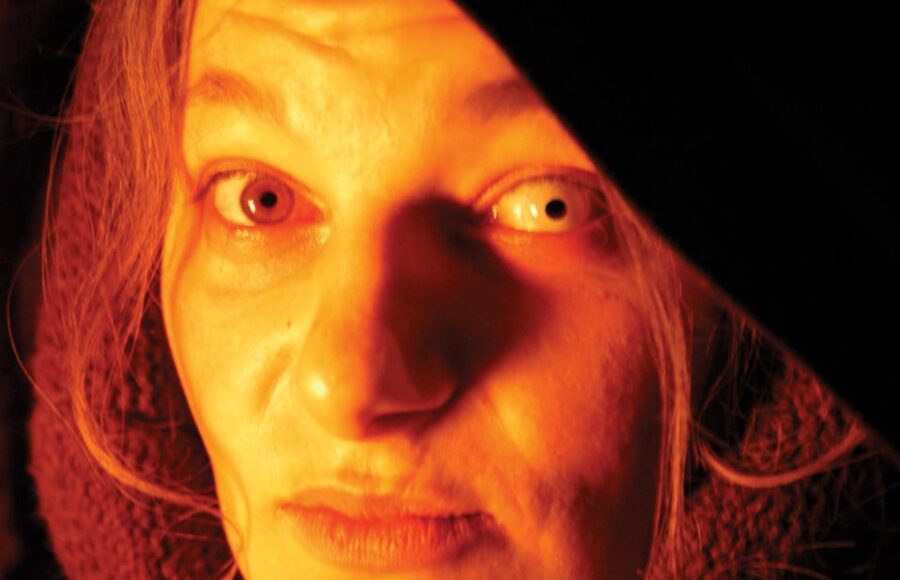
- Munich’s darkest stories: Witch trials, executions, torture, prostitution, hangmen, and old beliefs shape the route.
- Actors bring the history forward: Costumed scenes break up the walking and may include participation from people on the tour.
- A central old-town route: The walk begins at Karlstor and continues through Salzstraße to several major Munich landmarks.
- German only: The tour is conducted in German, with no English or Chinese option listed.
- A 90-minute evening plan: It fits neatly before or after dinner, but you should be ready to walk outdoors in any weather.
- Strong value for history fans: At $46 per person, the price makes most sense if you value live theater as much as sightseeing.
Why this Munich tour feels different from a standard city walk
Many Munich walks focus on royal power, grand churches, beer halls, and the city’s cheerful public face. This one asks a less comfortable question: how did ordinary people deal with crime, punishment, superstition, sex work, and religious fear?
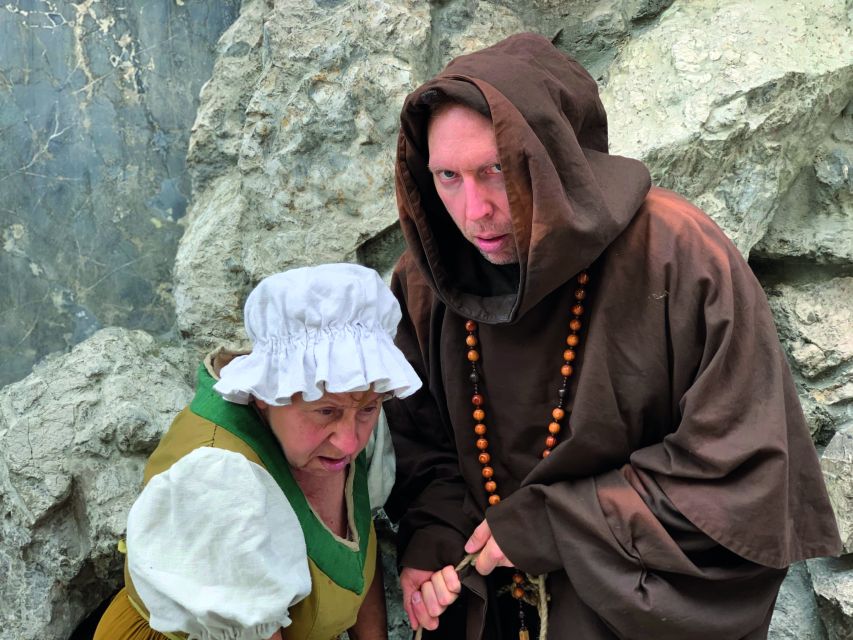
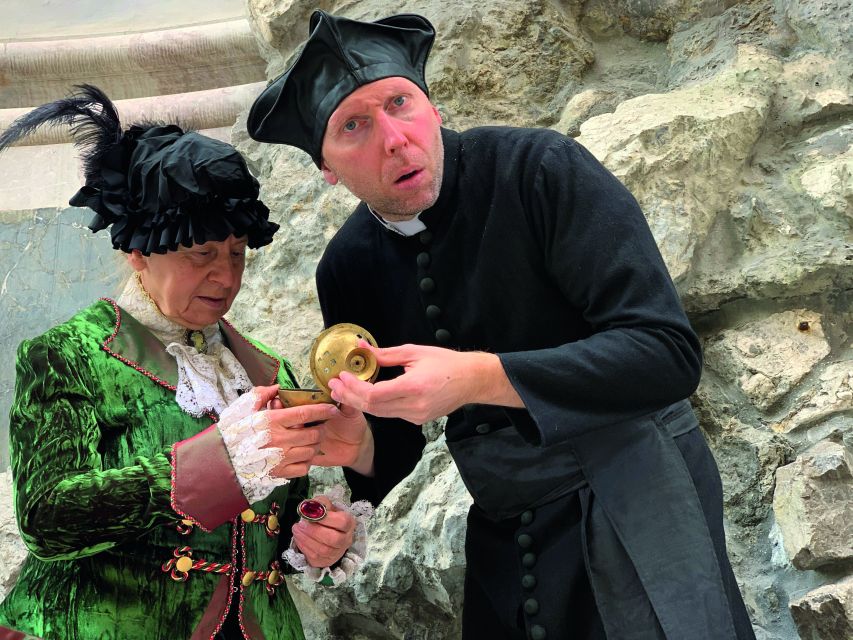
The format matters. A guide explains the setting, then professional actors recreate people and situations from the past. That shift from explanation to performance helps you follow the social connections. The hangman was not only linked to gallows and torture chambers. In the stories told here, hangmen could also work as pimps, placing them close to Munich’s underworld as well as its justice system.
You should not expect a haunted house or a parade of cheap shocks. The subject matter is dark, but the aim is to show how old beliefs and city rules shaped real lives. There is also humor in the performance, including the strange question of the devil’s shoe size at the Frauenkirche.
The tour has earned a 4.7 rating from 59 submitted ratings, with repeated praise for the acting, clear explanations, and entertaining pace. One useful detail comes through clearly: the actors help break up what could otherwise become a long stretch of historical information. For a city tour, that is a real benefit.
Other Munich days worth putting on the list:
- From Munich: Neuschwanstein & Linderhof Castle Full-Day Trip
★ 4.5 · 12,494 reviews - Neuschwanstein & Linderhof Castle-Fairytale Day Tour from Munich
★ 4.5 · 7,275 reviews - Munich: Third Reich & WWII Walking Tour
★ 4.6 · 6,181 reviews
Starting under the Karlstor archway
Your meeting point is beneath the archway of the Karlstor at Karlsplatz, also called Stachus. Look for the guide carrying a large blue bag marked with the white words Weis(s)er Stadtvogel. That is the practical detail that should save you from wandering around the square looking for a conventional tour sign.
The route begins at the former Neuhauser Tor. This old gate once marked the edge of Munich, and it provides the right opening for a tour about punishment. People condemned to death were led out of town toward the execution site, since public executions were kept beyond the settled center.
That location also helps explain an important old-city habit. Medieval and early modern towns often pushed unpleasant work and places beyond their walls. Execution grounds, certain trades, and people considered socially dangerous belonged outside the respectable center. As you walk, you will see how the city’s physical layout reflected its ideas about order and shame.
The tour takes place rain or shine. Evening weather can change quickly, so wear shoes you can walk in and bring protection from rain. Since the experience is performed outdoors along city streets, the weather affects comfort even when it does not cancel the tour.
Salzstraße and the age of witch hunts
From the old gate, the group follows historic Salzstraße toward the former Jesuit school. This section sets up one of the tour’s central themes: witch hunts were not vague folk tales floating outside official life. Religious institutions, political figures, and city authorities all played roles in the way accusations were understood and acted upon.
A staged argument between Duchess Renata and Jesuit Father Ignatius brings the 16th century into view. The scene concerns the construction of St. Michael’s Church and a tower collapse. In the old explanation, such an unusual disaster was blamed on accursed women.
That story gives you a useful glimpse into how fear worked. A building failure could be treated as evidence of supernatural wrongdoing, especially when people already suspected women of witchcraft. The performance shows how a natural event could be turned into a moral accusation.
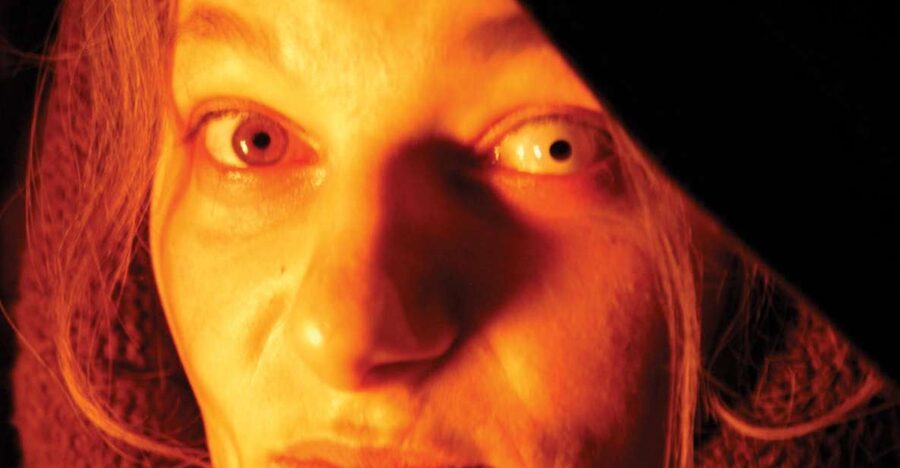
You will also hear the kinds of details that make the witch stories memorable: potions, broom rides, toad tongues, and children’s hands. These are unsettling subjects, but they also reveal the logic of old accusations. The tour asks why witches were said to fly on brooms and how such images became part of popular belief.
The actor scenes are especially useful here because the material could otherwise feel distant. One performance can show the clash between fear, faith, and authority faster than a long explanation. If you understand German well enough to follow dialogue, this is likely to be one of the strongest sections.
The Schöner Turm and the tragedy of the goldsmith
At the Schöner Turm, the story changes from mass fear to an individual misfortune. You hear about an unfortunate goldsmith, one of several people caught in the city’s harsh system of suspicion and punishment.
The stop gives the tour a human scale. Witch hunts and executions can become abstract when discussed only as social events. A single person’s fate reminds you that these rules had consequences for workers, tradespeople, and families.
The exact emotional weight of the scene will depend on the performance and your German comprehension. Still, the placement is effective. You are not simply being led from monument to monument. Each stop adds another piece to the city’s former system of justice, belief, and public reputation.
Same city, a completely different kind of day:
- Dachau Concentration Camp Memorial Site Tour from Munich by Train
★ 4.5 · 5,637 reviews - Neuschwanstein Castle Tour from Munich
★ 4.5 · 5,117 reviews - Third Reich Walking Tour Munich
★ 4.5 · 4,291 reviews - Munich Hop-On Hop-Off Tour: 1-Day or 2-Day Ticket
★ 4.3 · 4,161 reviews
The Frauenkirche and Munich’s devilish bargain
The Frauenkirche is the route’s most theatrical landmark. A strong blast of wind leads you toward this famous church, where you meet the Prince of Darkness himself.
The story concerns a pact between the devil and the master builder. According to the tale, the devil helped with the church’s construction, and the building still contains the proof in its famous footprint. The tour also explains why it can feel so windy here and raises the wonderfully odd question of the devil’s shoe size.
This is a good example of the tour’s balance between fact and legend. You hear a traditional story, but the performance does not require you to treat it as literal history. Instead, it shows how people used supernatural explanations to understand impressive buildings, sudden wind, and events they could not explain.
The Frauenkirche stop is also a strong visual break. Even if you already know Munich’s landmark, seeing it as the setting for a devil story changes the way you read the building. You may find the scene more playful than frightening, but that is part of the appeal. The tour is designed to entertain as well as unsettle.
Witchcraft stories on the way to the Town Hall
As the group continues, the witch stories return. Potions, broom rides, toads, and children appear in the tales, creating a string of grim images tied to the old fears surrounding witchcraft.
The route reaches the magnificent Town Hall, where the alchemist Marco Bragadino waits. He presents himself as a supposed goldsmith and tries to persuade the group of his powers.
This episode shifts the focus from witchcraft to fraud and alchemy. It also shows how easily claims of secret knowledge could attract attention. A person promising transformation, wealth, or hidden power occupied a space between science, performance, and deception.
The Town Hall setting gives the scene a public and political backdrop. Munich’s center was not only a place for worship and trade. It was also where authorities, officials, and ambitious characters could shape the city’s public story.
I like this change of subject. The tour does not repeat one type of horror for 90 minutes. It moves from accused witches to religious fear, then to a man selling the promise of gold. That variety helps the walk stay lively.
St. Peter’s Church and the life of a hangman
At St. Peter’s Church, you learn about the everyday life of the hangman. The tour asks what he looked like, why people avoided him, and how someone might obtain a piece of gallows rope.
This is one of the more unusual subjects on the route. Most visitors know that executions happened, but fewer consider the person who had to carry them out. The hangman occupied a necessary role while also being treated as socially tainted.
That contradiction is central to the story. The city needed the hangman to enforce its laws, yet ordinary people were wary of contact with him. His work placed him near torture, executions, and the criminal world, while his reputation kept him apart from respectable society.
The tour also includes the story of a beautiful woman escaping certain death. This gives the stop a dramatic turn and lets the actors build suspense rather than simply describe punishment. Participation from people in the group may be part of the performance, so you should be prepared for the possibility of being drawn into a scene.
If you prefer to watch quietly, the theatrical format may feel more active than a normal guided walk. If you enjoy live storytelling, that same feature should make the hour and a half pass quickly.
The Old Town Hall and Munich’s former red-light district
At the Old Town Hall, you cross the site of the former torture chamber while hearing gruesome stories. This is the point where the tour’s themes of law, fear, and public punishment come together.
The torture chamber is not presented as a modern attraction with props and special effects. Its value comes from the setting and the explanation of how punishment operated. The story asks you to picture a system in which confession, pain, and public example were closely tied.
The final section reaches the Platzl, once part of Munich’s red-light district. Prostitution remained in the historic center until the early 1970s, before the Olympic Games brought pressure to present a cleaner, more respectable image of the city.
That detail connects old city history to modern Munich. The removal of prostitution was not simply the end of an ancient custom. It was also part of a more recent effort to shape Munich’s public identity for residents and the outside world.
The subject is linked to the song Skandal im Sperrbezirk by the Spider Murphy Gang. You do not need to know the song to follow the point, but the reference shows how the former district became part of popular culture. The phrase about a decent city with no place for Rosi and her colleagues captures the tension between public respectability and the lives that respectable streets pushed aside.
What $46 buys you in 90 minutes
At $46 per person, this is not the cheapest way to see Munich’s old center. You are paying more than you would for a self-guided walk, and the tour does not include meals, museum admission, or transport.
The value comes from the professional actors and structured storytelling. You receive a route through several major sights, but the main product is the performance. If you want only basic facts about the Frauenkirche or Town Hall, a regular city walk may suit you better. If you want history acted out with humor, tension, and unusual subjects, the price is easier to justify.
The route also uses your time well. In 90 minutes, you visit a series of central locations without committing half a day to a large tour. That makes it useful on a short Munich stay, especially in the evening.
The strongest value is for people who already know the main landmarks and want another way to see them. The Frauenkirche is familiar. The devil’s footprint, local wind story, and the master builder’s bargain give it a fresh angle.
Language, weather, and who should book
This is a German tour, both for the guide and the actors. One rating specifically notes the lack of English or Chinese, so do not book it hoping to follow along through occasional translation. The dialogue and historical explanations carry much of the experience.
You should also be comfortable walking outdoors for 90 minutes. The tour is listed as wheelchair accessible, but the route takes place along city streets and through several historic areas. If you have specific mobility concerns, check the conditions before booking.
The content is best for adults and older children who can handle stories about torture, executions, witch hunts, and prostitution. It is not a light sightseeing walk, even though parts of the acting are funny.
The tour suits you if:
- You understand German well enough to follow staged dialogue.
- You enjoy local legends alongside documented history.
- You want Munich’s famous sights presented through unusual stories.
- You like live performance and may enjoy being included in a scene.
- You want a compact evening activity in the old center.
It is less suitable if you need an English guide, dislike grim subjects, or want a quiet architectural tour.
Should you book the scary Munich tour?
Book it if you want Munich after dark to feel less polished and more human. The witch hunts, hangman’s work, torture chamber, and former red-light district reveal the city’s difficult past, while the devil at the Frauenkirche and the alchemist at the Town Hall add theatrical fun.
I would choose this tour for a German-speaking visitor who has already seen the main sights or wants a lively first look at the old center. The repeated praise for the acting, clear links between events, and entertaining pace points to its main strength: history is presented in scenes you can remember.
Skip it if German is not comfortable for you. The lack of English or Chinese guiding is not a small detail here. It affects every story, joke, and dramatic exchange. For the right audience, though, $46 is a fair price for a focused walk that combines Munich landmarks with stories most ordinary sightseeing tours leave out.
FAQ
Where does the tour meet?
The meeting point is under the archway of Karlstor at Karlsplatz, also called Stachus. The guide will carry a large blue bag with the white words Weis(s)er Stadtvogel.
How long does the tour last?
The walking tour lasts 90 minutes.
What language is the tour conducted in?
The tour is conducted in German. No English or Chinese option is listed.
Is the tour wheelchair accessible?
Yes, the activity is listed as wheelchair accessible.
Does the tour operate in bad weather?
Yes. The tour takes place rain or shine.
What topics are covered?
The tour covers witch hunts, prostitution, torture, executions, hangmen, alchemy, old beliefs, and the traditional story of the devil’s connection with the Frauenkirche.
Just added around Munich
- Pub crawl incl. Oktoberfest museum guided tour with beer tasting (private)★ 5.0 · 5 reviews
- South Tyrolean specialties and wine tasting★ 5.0 · 5 reviews
- Size Matters Beer Tour Munich★ 4.6 · 105 reviews
- Short & sweet: Tasting the Viktualienmarkt★ 4.8 · 37 reviews
- Secret Food Tours Munich★ 4.8 · 5 reviews
- Munich: Romantic Wine Experience for Two at Viktualienmarkt★ 4.2 · 14 reviews
- Munich: Resistance against Hitler – Historical Walking Tour★ 5.0 · 5 reviews
- Residence of Munich private tour with skip the line ticket★ 5.0 · 4 reviews
Munich Tours, compared.

Neuschwanstein & Linderhof Castle-Fairytale Day Tour from Munich
Read our review →
Dachau Concentration Camp Memorial Site Tour from Munich by Train
Read our review →


Browse the lists this tour appears in