
Reviewed · HISTORICAL TOURS
Hamburg: Discover Hamburg from landmark to landmark
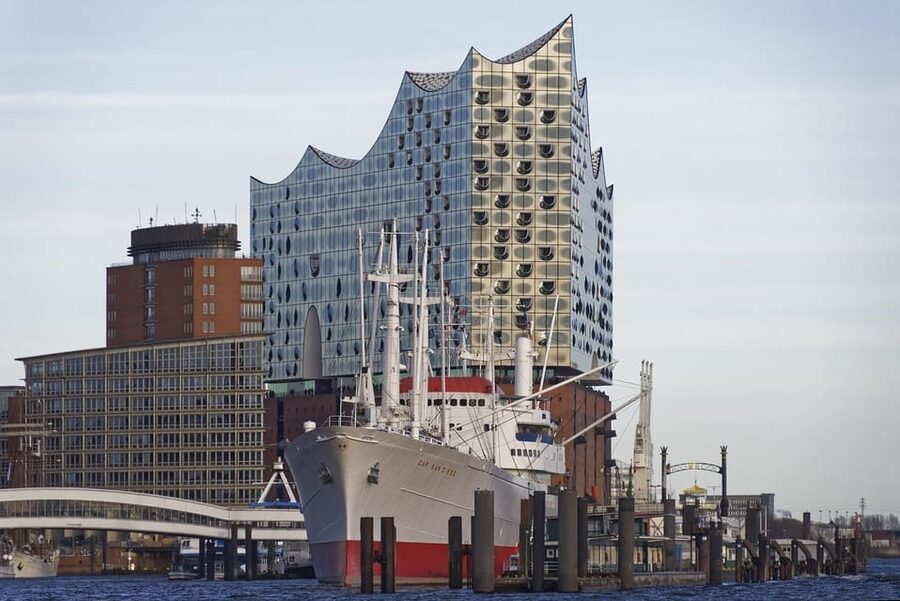
Hamburg’s story unfolds along this two-hour walk, from the city’s grand church and old warehouse district to the glassy Elbphilharmonie. You get a clear look at how a port city built on storage, trade, and shipping grew into a modern international center.
I like the route’s strong visual contrast: Speicherstadt’s brick warehouses lead naturally toward the bold modern architecture of HafenCity. I also like the practical extras, including local food suggestions, stories about Hamburg personalities, and a final harbor view. The main consideration is language: the tour is conducted in German, and one recent outing was described as pleasant but lighter on detail than a similar tour.
In This Review
- Key points at a glance
- From the Michel to modern Hamburg
- Meeting Hamburg at St. Michael’s Church
- Walking toward Speicherstadt
- From brick warehouses to HafenCity
- Ending beneath the Elbphilharmonie
- How much walking and preparation to expect
- Who will get the most from this tour
- Is the $25 price fair?
- Should you book it?
- FAQ
- Where does the tour begin?
- How can I identify the guide?
- Where does the sightseeing route finish?
- How long does the tour last?
- What language is the tour in?
- Is the tour wheelchair accessible?
- Can children and dogs join?
- Can I visit the Elbphilharmonie after the walk?
Key points at a glance
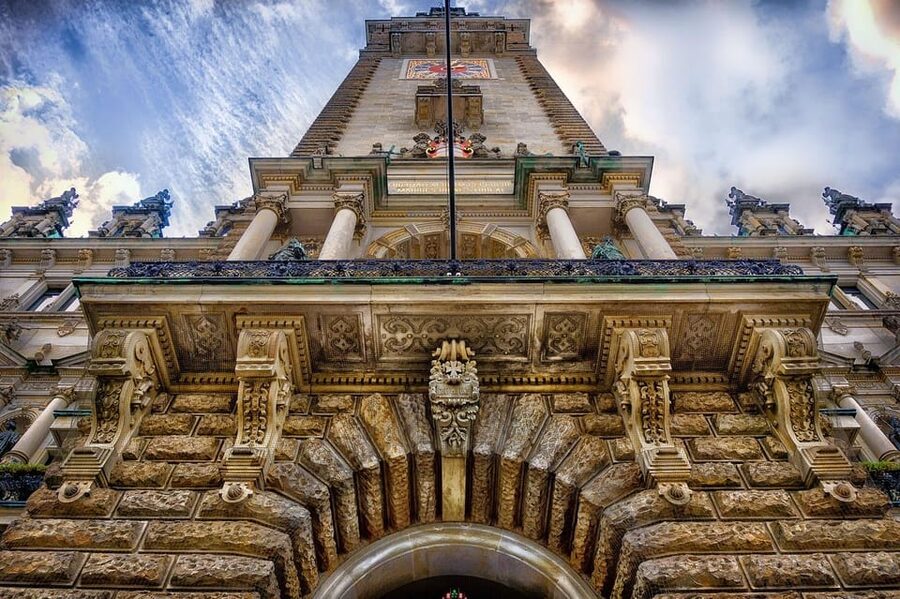
- Start at Hamburg’s Michel: Meet beside St. Michaelis Church, the city’s famous landmark and home to Germany’s largest church tower clock.
- Walk through centuries of change: The route links Hamburg’s old port identity with its newer global-city image.
- See Speicherstadt up close: The UNESCO World Heritage warehouse district provides the historic heart of the tour.
- Compare old and new HafenCity: Brick storage buildings give way to modern urban design and the Elbphilharmonie.
- Finish with harbor views: The tour ends at or around the Elbphilharmonie, where you can visit the building’s plaza on your own if it is open.
- Useful for mixed groups: Children and dogs are welcome, and the tour is listed as wheelchair accessible.
From the Michel to modern Hamburg
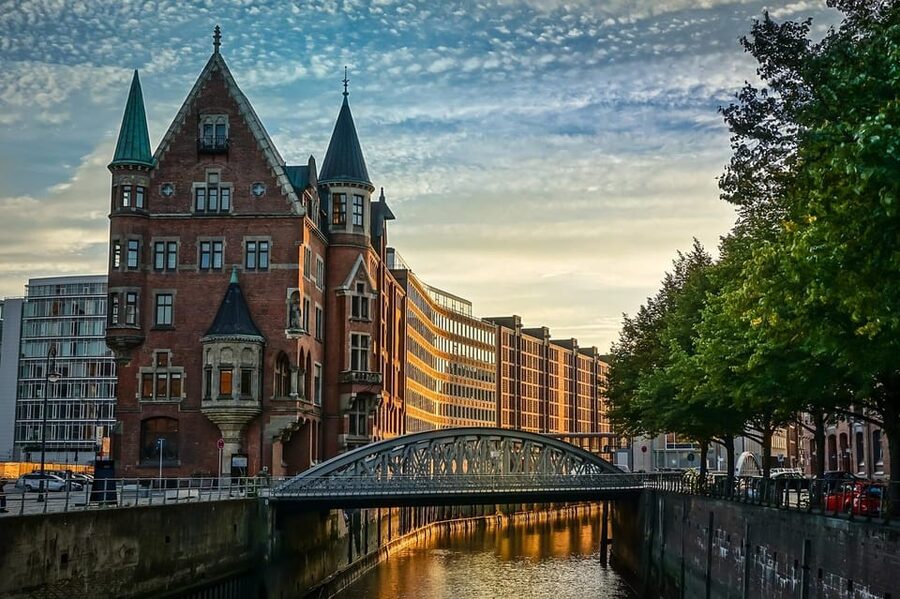
This walk works because it has a simple story. You begin with Hamburg’s old symbol, St. Michael’s Church, and end with its new one, the Elbphilharmonie. Between them, you pass through places that explain why Hamburg became wealthy, powerful, and architecturally adventurous.
The walk is not built around a long museum visit. Instead, your guide keeps you moving through the city, pointing out buildings and sharing background as the streets change around you. That makes the tour a good first orientation to Hamburg, especially if you want the city to make more sense before exploring it on your own.
At $25 per person, the price is reasonable for a two-hour guided city walk. You are paying for a route with several major sights rather than for admission to an attraction. The value is strongest if you want context, help connecting distant-looking neighborhoods, and a few local suggestions. It is less useful if you already know central Hamburg well or need an English-language tour.
The tour is listed in German only. That is the first thing I would check before booking. If you understand German, the format gives you a direct way to hear local stories and anecdotes. If you do not, the main sights are still visible, but much of the tour’s value comes through the guide’s spoken explanations.
A few more Hamburg trips to weigh up
- The Local Tour of Hamburg Historic Centre
★ 5.0 · 1,058 reviews - Hamburg: Historical Tour of the St. Pauli Sex Work District
★ 4.4 · 215 reviews - Hamburg: UNESCO-World Heritage Sites Tour
★ 4.7 · 137 reviews
Meeting Hamburg at St. Michael’s Church
The meeting point is to the right of the main entrance to St. Michaelis Church, commonly called the Michel. Look for a guide with a white shoulder bag. This is a useful detail in a busy public area, and it saves you from wandering around the church looking for the group.
The Michel is a fitting starting point. Its tower has long served as one of Hamburg’s best-known city symbols, and the church is noted here for having the highest church tower in Hamburg. You will also hear about the largest church tower clock in Germany, an unusual detail that gives the opening stop some character.
Your guide begins by placing the church in Hamburg’s wider story. The city’s identity has always been tied to trade, shipping, and the Elbe, but the Michel offers a religious and civic counterpoint to that commercial past. From here, the walk heads through western Hamburg toward the port districts and the newer city beyond them.
This opening stop may appeal to you most if you like tours that begin with a recognizable landmark and build outward. You get your bearings quickly. The drawback is that the tour does not appear to include a full interior visit or a climb of the church tower, so you should not book it expecting an extended church tour.
Walking toward Speicherstadt
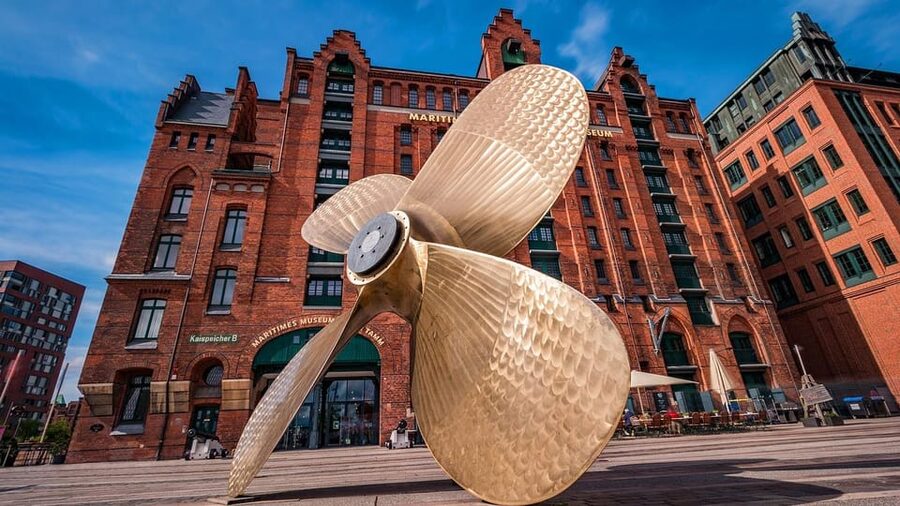
The route’s most valuable middle section is Speicherstadt, Hamburg’s historic warehouse district and a UNESCO World Heritage Site. The area is known for its large storage buildings, which reflect the practical side of the old port. Goods arrived by ship, were stored in the city, and then moved onward through Hamburg’s trading network.
Your guide uses the district to explain the city’s earlier role as a port with a huge warehouse complex. That story matters because Speicherstadt is not just a pretty group of brick buildings. Its design tells you how Hamburg worked before the city’s waterfront became a place for concerts, apartments, offices, and public spaces.
The change in mood is easy to notice as you walk. Speicherstadt gives you solid brick façades, canals, and a sense of old commercial Hamburg. It is a strong setting for stories about trade and the people who lived and worked around the port.
The tour also includes the Krameramtsstuben, one of Hamburg’s historic places. This stop adds a more personal side to the city’s past. Instead of seeing Hamburg only through major institutions and warehouse buildings, you get a glimpse of older everyday life and the people connected to the city’s streets.
Because the tour lasts two hours, your time at each place is likely focused. You will hear explanations and take photos, but you should not expect a long stop at every landmark. If you want detailed architectural study, a dedicated Speicherstadt tour would give you more time. For a first look at the district as part of a larger city story, this route makes good use of its limited time.
From brick warehouses to HafenCity
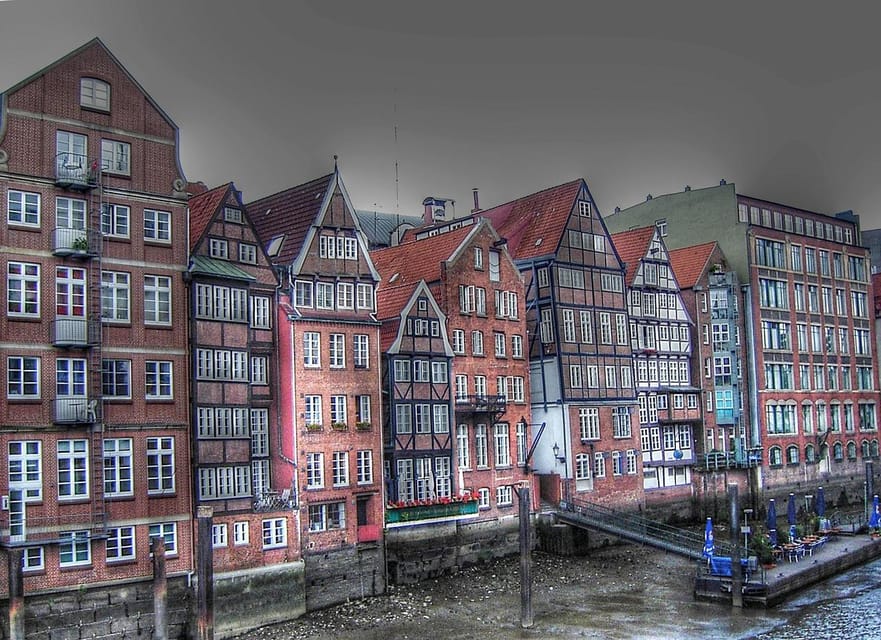
The walk then connects Speicherstadt with HafenCity, a newer part of Hamburg that looks and feels very different. That transition is one of the best reasons to choose this experience. You do not simply visit two separate sights. You see how one district changes into another.
HafenCity represents Hamburg’s modern redevelopment around the port. Its buildings and public spaces present a newer version of the city, while nearby Speicherstadt preserves the older warehouse era. The contrast helps you read Hamburg as a city still shaped by its waterfront, even as its uses have changed.
I like this part of the route because it gives you a useful visual comparison. In many cities, old and new districts are separated by public transport or a long taxi ride. Here, the walk makes the relationship clear. You move from storage buildings tied to maritime trade toward a district built for a present-day metropolis.
Your guide also provides anecdotes about Hamburg personalities and offers gastronomic tips. The food advice may be especially useful after the tour, since you can ask for ideas suited to your plans. The available information does not name individual guides, so you should not expect to request a particular guide when booking.
One recent rating described the tour as entertaining and easy to follow, while also noting that a similar guide-led walk had offered more detail and background. That is fair context for your decision. The tour’s strength is its route and overall flow. The depth of explanation may depend on the guide and on how much detail you already know.
Same city, a completely different kind of day:
- Hamburg: Sex and Crime in St. Pauli Tour for Ages 18+
★ 4.7 · 15,447 reviews - Hamburg: 1.5-Hour Harbor and Speicherstadt Day Cruise
★ 4.6 · 14,200 reviews - Hamburg: 90-Minute Evening Lights Harbor Cruise
★ 4.5 · 7,728 reviews - Hamburg: 2-Hour XXL Port of Hamburg Cruise Tour
★ 4.7 · 6,979 reviews
Ending beneath the Elbphilharmonie
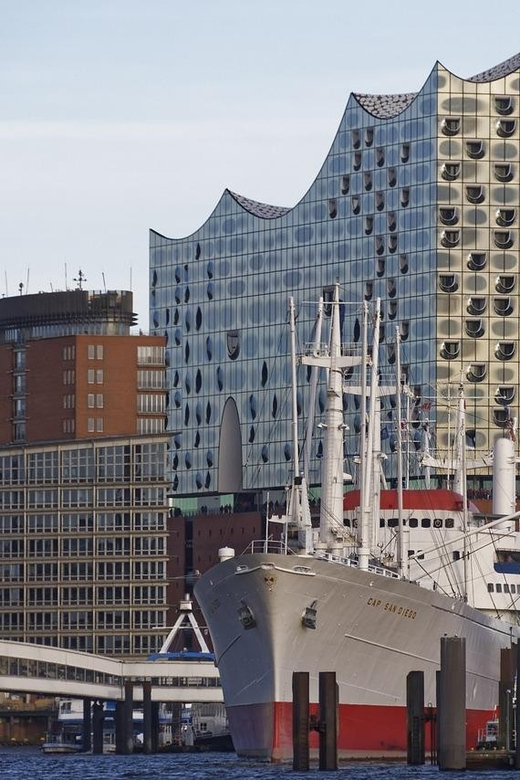
The Elbphilharmonie is the natural final point. Its modern design makes it a striking counterweight to the Michel and Speicherstadt. The tour presents the building as a concert hall of superlatives and as a symbol of tradition meeting modern port-city ambition.
You will learn how the Elbphilharmonie fits into Hamburg’s identity, then reach a place with a broad view toward the harbor. This closing view gives the tour a satisfying finish because you can look back at the port as both an old working center and a modern urban setting.
The tour information says you can visit the Elbphilharmonie on your own afterward, subject to plaza closures. That is worth planning around. The plaza is a separate, self-guided part of your visit, and access may not always be possible. Ask the guide about current access before you leave if seeing the building from inside matters to you.
There is a small inconsistency in the practical details: the route describes the Elbphilharmonie as the finish, while the meeting-point information says the activity ends back at the meeting point. Check the current departure and end instructions when you reserve. Either way, the Elbphilharmonie is clearly the tour’s final sightseeing focus.
Do not expect an extended concert hall tour or a performance ticket. The experience is a walking tour that explains the building and brings you to its surroundings. If you want to explore the Elbphilharmonie in greater depth, leave extra time afterward and confirm that the plaza is open.
How much walking and preparation to expect
This is a two-hour walking tour, so comfortable footwear matters. Hamburg weather can change, and the route is outdoors for much of the time. Wear clothing suited to the forecast and bring whatever rain protection you normally use for a city walk.
The route is listed as wheelchair accessible. That is an important advantage, though the route passes through public streets and historic areas, so you may still want to confirm current conditions if you have specific access needs. Children and dogs are welcome, which makes the tour practical for families and some mixed-age groups.
No transport is included or needed for the sightseeing route as described. You meet at the Michel and proceed on foot through Hamburg. That keeps the experience simple, but it also means you should allow enough time to reach the church before the stated start time.
Free cancellation is available up to 24 hours in advance for a full refund, and you can reserve now and pay later. Those policies are helpful if your Hamburg schedule is still changing. They do not change the main question, however: can you follow a German-language walking tour comfortably?
Who will get the most from this tour
I would choose this tour for a first day in Hamburg, especially if you want a broad introduction rather than one long visit inside a single attraction. The route gives you a useful mental map of the Michel, the old warehouse district, HafenCity, and the Elbphilharmonie.
It also suits anyone interested in the city’s changing identity. You see religious architecture, historic storage buildings, older residential history, modern redevelopment, and a major concert hall in one compact outing. That range is the tour’s main strength.
Families may appreciate the two-hour length, the welcome for children and dogs, and the wheelchair-accessible format. The route also gives you food suggestions that could help shape the rest of your day.
I would hesitate if you need English commentary, want a very detailed academic history, or prefer not to walk outdoors. The German-only format is not a minor detail. Also, the mixed feedback suggests that the amount of background may vary. One guide was described as very pleasant and the walk as recommendable, while another outing was considered less detailed than a previous tour.
Is the $25 price fair?
At $25, this is a modestly priced introduction to several of Hamburg’s headline areas. You receive two hours with a live guide, a planned route between major landmarks, local anecdotes, and practical eating suggestions. You are not paying for a museum admission, a concert, or a private tour, so the cost is best judged as an orientation fee.
The value increases if you would otherwise struggle to connect the Michel, Speicherstadt, HafenCity, and the Elbphilharmonie on your own. It also increases if you enjoy learning why buildings matter, rather than simply photographing them.
The value drops if your main goal is to enter every major attraction. This is a walking overview. You will see and discuss the landmarks, but the experience does not promise extended interiors or performances.
Should you book it?
Book this tour if you want a short, well-shaped introduction to Hamburg’s old port districts and modern waterfront, and if German is comfortable for you. The Michel to Speicherstadt to Elbphilharmonie route gives you strong contrasts, useful orientation, and a clear explanation of how Hamburg changed over time.
Skip it if you need English, want a long and highly detailed history lesson, or already know these neighborhoods. Before booking, confirm the end point and check whether the Elbphilharmonie plaza will be open for your own visit. For the right audience, $25 is a fair price for two hours that connect Hamburg’s most important visual symbols.
FAQ
Where does the tour begin?
The tour begins at St. Michaelis Church, Hamburg’s Michel. Meet to the right of the main entrance.
How can I identify the guide?
The guides can be recognized by their white shoulder bags.
Where does the sightseeing route finish?
The route’s stated finish is the Elbphilharmonie. The practical meeting information also says the activity ends back at the meeting point, so confirm the current end-point details when booking.
How long does the tour last?
The walking tour lasts two hours.
What language is the tour in?
The live tour guide speaks German. No other tour language is specified.
Is the tour wheelchair accessible?
Yes, the tour is listed as wheelchair accessible.
Can children and dogs join?
Yes. Children and dogs are welcome on the tour.
Can I visit the Elbphilharmonie after the walk?
You can visit the Elbphilharmonie on your own afterward, subject to plaza closures.
Just added around Hamburg
- Hamburg: Historical Tour of the St. Pauli Sex Work District★ 4.4 · 215 reviews
- Hamburg: St. Pauli Food and Bier Tour★ 4.7 · 5 reviews
- Hamburg: Private Tour Red Light District Walking Tour★ 4.7 · 227 reviews
- St. Pauli Tour: Drag-Attack with Barbie Stupid & Lee Jackson★ 4.8 · 280 reviews
- St. Michael’s, Elbe Tunnel & Harbor 2-Hour Hamburg Tour★ 4.9 · 21 reviews
- Satt Pauli – der kulinarische Rundgang durch St. Pauli★ 4.8 · 12 reviews
- Hamburg: Safari tour in St. Pauli★ 4.9 · 11 reviews
- Hamburg: Reeperbahn Comedy Club★ 4.3 · 53 reviews
Historical Tours, compared.

City History Canal Sightseeing Tour on a Motorboat
Read our review →






Browse the lists this tour appears in