
Reviewed · HOP-ON HOP-OFF BUS TOURS
City Sightseeing Berlin Hop-On Hop-Off Bus Tour
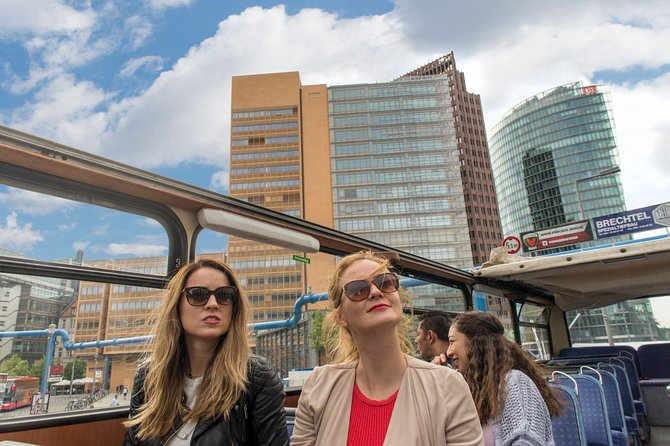
Berlin is spread out, and this bus tour gives you a useful first look without asking you to cross the city on foot all day. The red open-top buses link Brandenburg Gate, Checkpoint Charlie, Alexanderplatz, and the Victory Column, while a second route reaches East Berlin and the Wall sites.
I like the freedom to hop off when a building catches your eye, then continue when your feet need a rest. I also like the choice of a 24 or 48-hour ticket, especially if you use the first ride to mark places for a closer visit later. The main drawback is that stop signs and route changes can be confusing, and the audio plugs do not always work well.
In This Review
- Key points to know before booking
- Why Berlin Works Well From the Top Deck
- The Classic Route From KaDeWe to Potsdamer Platz
- Checkpoint Charlie, Gendarmenmarkt, and the Central District
- Alexanderplatz and Museum Island
- Brandenburg Gate and the Reichstag
- Hauptbahnhof, Bellevue, and the Victory Column
- Zoo, Kurfürstendamm, and Former West Berlin
- The East Berlin and Wall Route
- East Side Gallery and Ostbahnhof
- Audio Commentary, Seating, and Bus Comfort
- Timetables, Stops, and Getting Value From 24 or 48 Hours
- Who Should Book This Berlin Bus Tour?
- FAQ
- How long does the Classic Berlin bus route take?
- How long does the East Berlin and Wall route take?
- Is the East Berlin and Wall route included with every ticket?
- What languages are available for the audio commentary?
- Does the ticket include a boat cruise?
- When do the buses run?
Key points to know before booking
- Two routes cover two different Berlins: The Classic route handles central landmarks, while the All Lines ticket adds East Berlin and Wall locations.
- The complete Classic circuit takes about two hours: Buses leave roughly every 25 minutes, but traffic and road closures can affect the timetable.
- The East Berlin and Wall route takes about 60 minutes: It runs about every 40 minutes and is included only with the All Lines ticket.
- The bus stops are not always obvious: Use the City Sightseeing Berlin app for current stops, times, and updates.
- Audio is offered in 13 languages: English, German, Chinese, French, Italian, Japanese, Spanish, Polish, Portuguese, Hebrew, Arabic, and Turkish.
- A boat cruise requires an upgrade: Food, drinks, attraction admission, and hotel transportation are not included.
Why Berlin Works Well From the Top Deck
Berlin is not a compact old town where every major sight sits around one square. Its landmarks are scattered across former East and West Berlin, along broad avenues, parks, and districts with very different personalities.
That makes a hop-on hop-off bus useful here. I would not treat it as a replacement for the U-Bahn, tram, and walking, but it is a good way to understand the shape of the city on your first day. From the upper deck, you see how the grand central district connects to the shopping streets of former West Berlin, the government quarter, Tiergarten, and the Wall sites farther east.
The tour takes about two hours if you stay aboard for the full Classic circuit. In practice, you should allow extra time for traffic, boarding, stops, and sightseeing. Buses on this route are scheduled about every 25 minutes, with departures from the first stop between 9:30 a.m. and 5 p.m.
The 48-hour ticket is the better choice if you want to use the bus as both an orientation ride and a practical link between sights. The 24-hour ticket works best if you mainly want one broad circuit and a few carefully chosen stops.
More Hop-On Hop-Off Bus Tours in Berlin
- Berlin: Hop-on Hop-off Bus Tour with Live Commentary
★ 4.3 · 8,579 reviews - Berlin: City Sightseeing Hop-On Hop-Off Bus Tour
★ 4.1 · 4,233 reviews - Berlin: Hop-On Hop-Off Sightseeing Bus with Boat Options
★ 4.3 · 4,012 reviews
The Classic Route From KaDeWe to Potsdamer Platz
The central route begins around Tauentzienstrasse and KaDeWe, Berlin’s famous department store. This is the former West Berlin shopping district, with Kurfürstendamm nearby and a very different feel from the monumental avenues of the former East.
The first stops are useful for visitors staying near the western center. You pass Lützowplatz and the Kulturforum area before reaching Potsdamer Platz. Potsdamer Platz is one of Berlin’s clearest examples of post-Cold War rebuilding. Once split by the Wall and badly damaged in the war, it is now marked by modern towers, shopping, cinemas, and busy traffic lanes.
The bus stop near the Kollhoff Tower is a sensible place to get off if you want modern Berlin rather than another historic monument. I would use it as a short stop, not as the central purpose of the tour, since the area is large and the bus itself gives you a quick look.
Checkpoint Charlie, Gendarmenmarkt, and the Central District
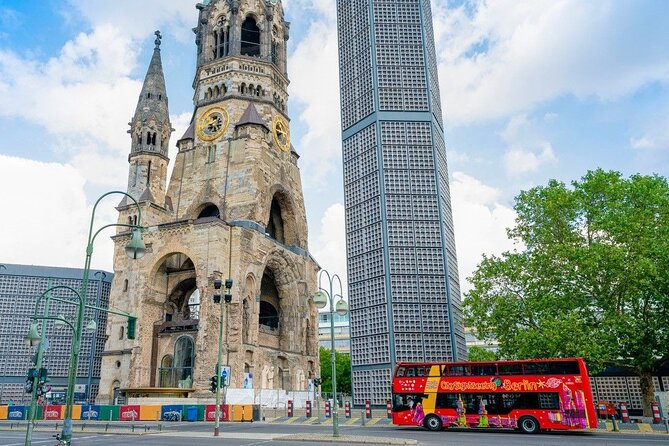
The route continues toward the Gropius Bau, a major exhibition building near the former Wall zone. From there, it reaches Checkpoint Charlie on Friedrichstrasse.
Checkpoint Charlie is one of Berlin’s best-known Cold War locations, but it is also one of the city’s most commercialized sights. You will see the famous checkpoint setting and nearby museums, signs, shops, and displays. If you want a serious look at the Wall and the divided city, plan time for a museum or memorial rather than relying only on the bus commentary.
Next comes Gendarmenmarkt, one of the prettiest squares in central Berlin. The square is known for its grand church buildings and formal layout. The bus gives you a quick visual introduction, but the details are best seen on foot.
The central route then reaches the Neptune Fountain and the Red Town Hall near Alexanderplatz. This is a practical stopping point for several nearby sights, including the Museum Island area and the broad streets around the old East Berlin center.
Alexanderplatz and Museum Island
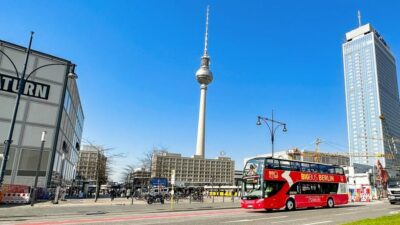
Alexanderplatz is a major transport and shopping hub, and it is one of the easiest places to use as a base for hopping off. The television tower dominates the view, while the surrounding square mixes postwar architecture, shops, food outlets, and heavy pedestrian traffic.
Do not expect Alexanderplatz to look like a preserved historic square. Its value is as a meeting point and as a window into East Berlin’s planned city center. You can also use it to reach Museum Island, though the bus lists Museum Island as its own stop near Lustgarten.
Museum Island is one of the most important cultural areas on the route. The museums hold major collections from ancient civilizations and European art, but admission is not included. If you plan to enter one, check its opening details separately and allow enough time. A bus pass helps you reach the area, but it does not turn a museum visit into a quick stop.
The route also passes Unter den Linden, Berlin’s grand central boulevard. This is one of the best stretches for staying on the bus. You get views of major buildings, formal avenues, and the connection between Museum Island, the Brandenburg Gate, and the government district.
Same city, a completely different kind of day:
- Berlin: Reichstag, Dome and Government District Guided Tour
★ 4.7 · 18,288 reviews - Berlin: 1-Hour City Tour by Boat with Guaranteed Seating
★ 4.3 · 16,993 reviews - Berlin: Boat Tour Along the River Spree
★ 4.4 · 11,252 reviews - Discover Berlin Half-Day Walking Tour
★ 5.0 · 9,624 reviews
Brandenburg Gate and the Reichstag

Brandenburg Gate is the central highlight of the Classic route. It is one of those sights that deserves both a passing view and a proper stop. From the bus, you see the gate in its wider setting. On foot, you can study the columns, walk through Pariser Platz, and continue toward the Reichstag and the Memorial to the Murdered Jews of Europe.
The Reichstag, home of the German Bundestag, comes next. Its glass dome is a major Berlin attraction, but entry arrangements are separate from the bus ticket. The bus stop is valuable because it places you close to the government quarter, where the city’s modern political identity meets its older monumental center.
This section can become crowded, especially around Brandenburg Gate. If you want photographs with fewer people, an early departure is a smart move. The buses run until about 5 p.m. from the first stop, so do not leave your final central stops until the end of the day.
Hauptbahnhof, Bellevue, and the Victory Column

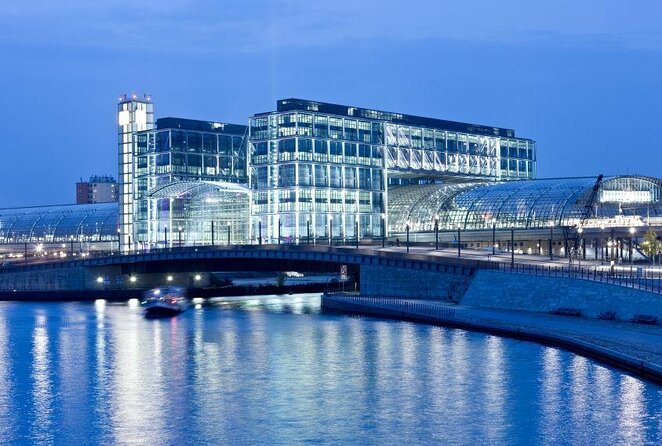
After the Reichstag, the route passes Berlin Central Station. The station is a striking modern building and a useful transport connection if you are arriving or leaving by rail. The stop is near the station, but the tour is not a hotel pickup service, so you must make your own way to the route.
The bus then travels toward Schloss Bellevue, the German president’s official residence. The building is set within the large Tiergarten park, and the ride here gives you a break from the dense central streets.
The Victory Column, or Siegessäule, is one of Berlin’s most recognizable monuments. It sits in the middle of a major traffic circle, surrounded by Tiergarten greenery. The bus provides a good view without requiring you to navigate the roads around the monument. If you hop off, remember that the stop is near the park and the column, not directly beside every central attraction.
This stretch shows why the tour is helpful for anyone who wants to cover ground without walking between every district. It is also where traffic can slow the schedule. Road closures, demonstrations, and city events may force buses to change course or skip a stop.
Zoo, Kurfürstendamm, and Former West Berlin
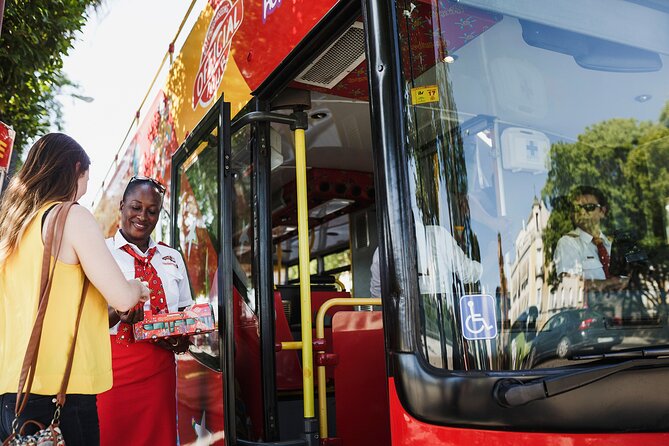
The Classic route heads back toward the Berlin Zoo and the Elephant Gate. This is a good stop if you are visiting the zoo or want to explore the western side of the city.
The final stops include Kurfürstendamm, one of Berlin’s best-known shopping boulevards. Café Kranzler is a familiar landmark, and the nearby streets offer department stores, cafés, hotels, and postwar West Berlin architecture. The route also stops farther along Kurfürstendamm at number 236.
This section is less about grand historic monuments and more about the city’s modern urban life. That contrast is useful. Berlin is not only museums and memorials. Its shopping streets, business districts, parks, and residential areas help explain how the city functions today.
Some passengers find the western section less exciting than the central route. I would agree if your time is short. If you have a 48-hour pass, use the western stops selectively and save more time for the central sights or the Wall route.
The East Berlin and Wall Route
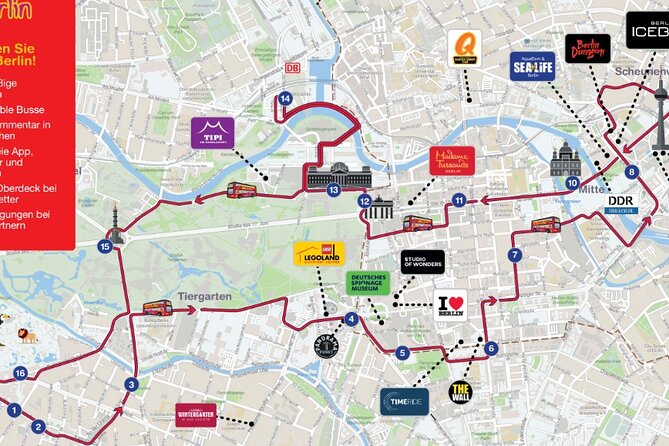
The second route is the most important reason to choose the All Lines ticket. It takes about 60 minutes and runs roughly every 40 minutes, with departures from its first stop between 10 a.m. and 5 p.m.
It begins near the Neptune Fountain and Red Town Hall, then travels along Oranienburger Strasse. This part of Berlin has restaurants, cultural venues, and traces of the city’s layered past. It is a useful link from the central district to the Wall memorial area.
The route then reaches Bernauer Strasse, home to the Berlin Wall Memorial. This is one of the strongest stops on the entire bus network. The memorial preserves sections of the Wall and explains how the border affected homes, streets, families, and daily life. It gives you more context than a quick photograph at Checkpoint Charlie.
Mauerpark follows. The park occupies part of the former border strip and is now a public open space. Its name means Wall Park, and the location helps you understand how the former division cut through ordinary neighborhoods rather than existing only at official checkpoints.
The bus returns toward Alexanderplatz before continuing along Karl-Marx-Allee. This broad East Berlin avenue is lined with monumental apartment blocks built under the socialist government. It offers a clear change in architecture and planning from the older streets of central Berlin.
East Side Gallery and Ostbahnhof

The route’s most visual stop is the East Side Gallery. This long surviving section of the Berlin Wall is covered with murals and painted panels. It is an open-air gallery, but it is also a remaining piece of the border itself.
I recommend getting off here if you want more than a passing view. The wall stretches along a busy urban area, and you need time to look at the paintings, read the information panels, and understand the setting. The stop is especially useful for anyone who has already seen Brandenburg Gate and Checkpoint Charlie and wants a more direct connection with the Wall’s physical remains.
The route ends at Ostbahnhof, one of Berlin’s main railway stations. This is a practical place to continue by public transportation, but it can create a planning problem if you expect to finish where you began. The East route and the Classic route do not always return you to your original boarding point, especially near the end of service.
I would check your final connection before hopping off. The tour stops operating around 5 p.m., and a route switch can leave you needing to use the city train, tram, taxi, or a separate ride back.
Audio Commentary, Seating, and Bus Comfort
The onboard commentary is available in 13 languages, including English, German, French, Spanish, Italian, Portuguese, Polish, Hebrew, Arabic, Turkish, Chinese, Japanese, and more. Free headphones are supplied, and Wi-Fi is available on the buses.
The commentary gives useful facts and stories as you pass the city’s main sights. Its quality can vary by route and bus. Some of the English content uses a light, joking tone, which may appeal to you if you prefer an entertaining ride. If you want a serious treatment of Berlin’s twentieth-century history, use the bus as an introduction and add a museum or memorial visit.
The audio connection is a recurring weak spot. A loose headphone socket or cord can make sound cut in and out, sometimes in only one ear. Try another seat or another set of headphones quickly rather than accepting a silent circuit.
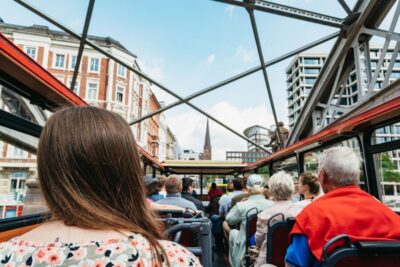
The open top is the best place for views, especially on clear days. It is also exposed to cold, rain, and wind. Lower-deck seats are more useful in poor weather, but they may offer less of the open city view. Seats can fill during busy periods, so boarding at an early stop gives you a better chance of choosing where to sit.
Timetables, Stops, and Getting Value From 24 or 48 Hours
Mobile and printed vouchers are accepted, and they may be redeemed at any stop. The voucher can be used flexibly for up to three months from the selected travel date, but the practical issue is activation once you begin using the pass.
For a 48-hour ticket, use or activate it on the first day you intend to ride. A ticket that is not properly recognized on the second day can require staff assistance and office calls, which is an unpleasant way to begin a morning.
The City Sightseeing Berlin app is worth downloading before you set out. Use it to check current departure times, route information, stop locations, and service changes. This matters because the stops may not look like standard city bus stops. You might find a staff member with a sign rather than a large, permanent marker.
The tour is not always the fastest way to move across Berlin. The bus may sit in traffic, pause at stops, or face diversions caused by demonstrations and road closures. If you need to reach a museum at a fixed entry time, use public transportation instead.
The value comes from combining transport with orientation. I would ride the full Classic circuit early, note the places I want to revisit, then use the pass for two or three targeted stops. With 48 hours, I would do the East Berlin and Wall route on one day and the central route on the other.
The price is easiest to justify for first-time visitors, families, older adults, and anyone who wants a break from long walks. It is harder to justify if you already know Berlin’s transit system and plan to visit only two nearby sights. In that case, ordinary public transportation may be cheaper and faster.
Free cancellation is available up to 24 hours before the experience start time for a full refund. Changes or cancellations inside that 24-hour window are not accepted for a refund.
Who Should Book This Berlin Bus Tour?
I would recommend it if you want a broad first look at Berlin, prefer not to walk between every major sight, or have only a short visit. It is also helpful if you are traveling with children, need regular rest breaks, or want an easy way to decide which districts deserve more of your time.
Choose the All Lines ticket if the Berlin Wall Memorial, Mauerpark, Karl-Marx-Allee, East Side Gallery, and Ostbahnhof matter to you. The Classic route alone covers the most familiar central sights, but it gives you less time with the physical remains and neighborhood effects of the Wall.
I would skip it if your main goal is detailed historical interpretation, a strict timetable, or fast point-to-point transport. The audio can be uneven, the stop signs are not always clear, and the tour day ends relatively early.
For the best result, start early, download the app, confirm the route before boarding, keep your voucher handy, and plan your return from the final stop. Used that way, this is a useful city orientation ride rather than a complete Berlin experience.
FAQ
How long does the Classic Berlin bus route take?
The Classic route takes about 120 minutes when completed as a full circuit. Buses are scheduled approximately every 25 minutes.
How long does the East Berlin and Wall route take?
The Trendy East Berlin and Wall route takes about 60 minutes. It runs approximately every 40 minutes.
Is the East Berlin and Wall route included with every ticket?
No. Access to both the Classic route and the Trendy East Berlin and Wall route is included only with the All Lines ticket.
What languages are available for the audio commentary?
The audio commentary is available in English, German, Chinese, French, Italian, Japanese, Spanish, Polish, Portuguese, Hebrew, Arabic, and Turkish. Free headphones are included.
Does the ticket include a boat cruise?
A boat cruise is included only if you select the upgrade that includes it. Food, drinks, attraction admission, and hotel pickup or drop-off are not included.
When do the buses run?
The Classic route first departs from Stop 1 at 9:30 a.m. and has its last departure from Stop 1 at 5 p.m. The East Berlin and Wall route runs from 10 a.m. to 5 p.m. Check the City Sightseeing Berlin app for current times and changes.
Just added around Berlin
- Love and War in Berlin: Self-Guided Story Puzzle Walk★ 5.0 · 7 reviews
- Rickshaw Tours Berlin – Groups of up to 16 people with several rickshaws★ 4.0 · 97 reviews
- Walking on the Wall: 3-Hour Tour in Berlin★ 4.5 · 34 reviews
- eSIM for Germany and 34 European Countries★ 4.5 · 16 reviews
- Warnemuende Shore Excursion: Berlin Private Sightseeing Tour from Rostock★ 5.0 · 4 reviews
- Your ticket to The Wall Museum Berlin★ 3.0 · 60 reviews
- Warnemuende Shore Excursion: Private Berlin Tour★ 4.5 · 27 reviews
- Berlin’s Gay, Lesbian, and Queer Scene Small-Group Walking Tour★ 4.5 · 66 reviews
Hop-On Hop-Off Bus Tours, compared.

Hop-On Hop-Off Sightseeing Bus with Boat Options
Read our review →
Browse the lists this tour appears in