
Reviewed · CITY TOURS
Braunschweig: Private City Walking Tour with Certified Guide
Braunschweig’s story comes into focus in its public squares, where a medieval lion, a Romanesque cathedral, half-timbered houses, and old trading routes all sit within an easy city-center walk. I like that this private tour links the grand Burgplatz with the more offbeat Happy Rizzi House, so you get both old Braunschweig and its modern sense of humor.
I also like the small private-group format and the guide’s freedom to begin at a place that suits your group. The certified local guides are praised for taking groups to the most interesting spots and explaining them in a lively, detailed way. The main drawback is that the tour is German-language only, so you will need enough German to follow the commentary.
In This Review
- Key points at a glance
- Why this walk is a good introduction to Braunschweig
- Burgplatz: lion, cathedral, and the old seat of power
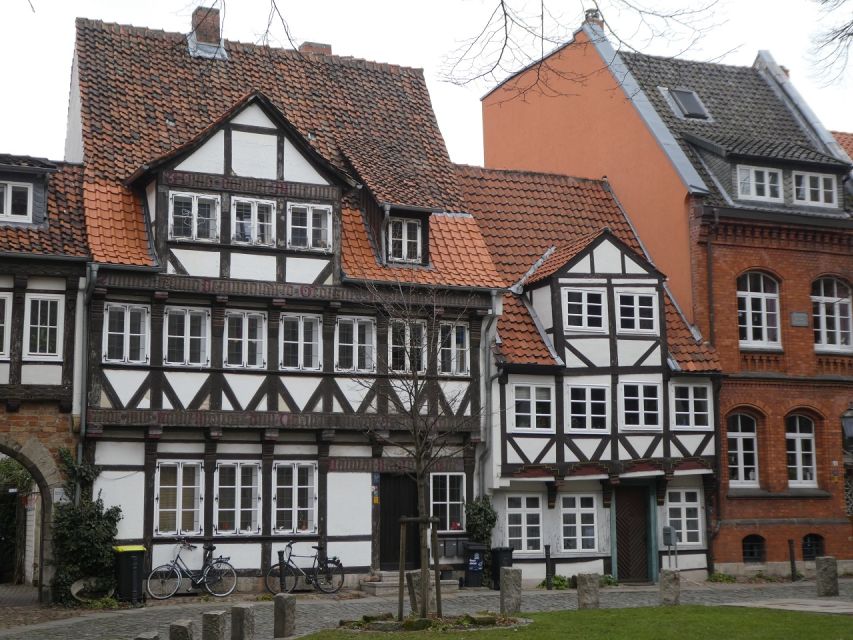
- Half-timbered houses and the Chamber of Crafts
- Town Hall and the former ducal palace
- Magniviertel and the surprising Happy Rizzi House
- Kohlmarkt and the routes that brought trade
- Altstadtmarkt and Braunschweig’s Hanseatic center
- What the private format changes
- Language, pace, and accessibility
- Guide quality and the experience on the street
- Is $113 good value for 90 minutes?
- Who should book this Braunschweig walk?
- FAQ
- How long does the walking tour last?
- How far will I walk?
- Is the tour private?
- What language is the tour conducted in?
- Where does the tour start and end?
- Is the tour wheelchair accessible?
- What happens if bad weather affects the tour?
- Should you book it?
Key points at a glance
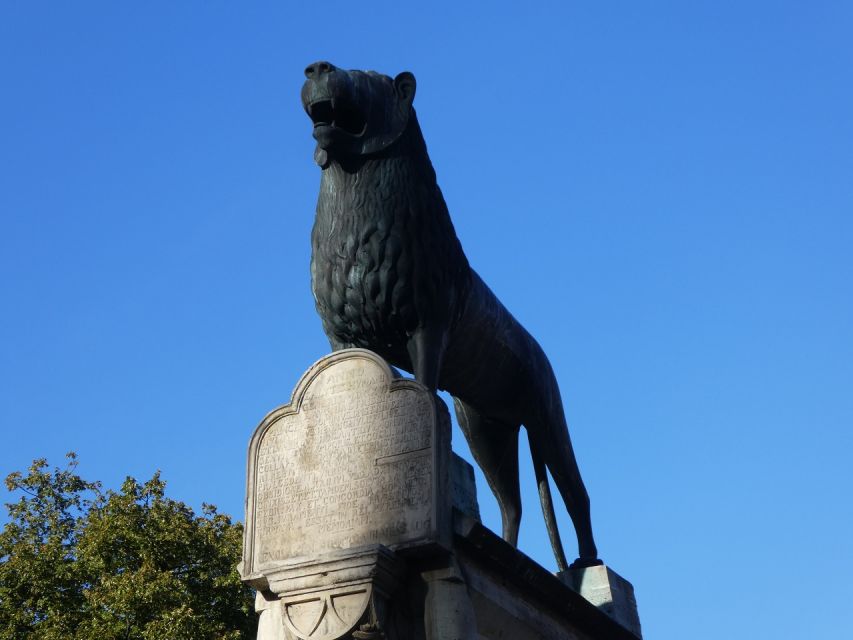
- Burgplatz sets the scene: See the Brunswick Lion, cathedral, and historic buildings in the city’s signature square.
- The route covers about 1.5 kilometers: It is a manageable walk, but comfortable shoes still matter.
- Magniviertel adds a different mood: Half-timbered houses meet the colorful, modern Happy Rizzi House.
- Kohlmarkt explains Braunschweig’s trade links: This former route junction helps make sense of the city’s medieval growth.
- Altstadtmarkt reveals the Hanseatic past: See St. Martin’s Church and the Cloth Hall, once tied to the cloth trade.
- Private means flexible: Your group can request a suitable starting point in the city center, subject to the tour arrangement.
Why this walk is a good introduction to Braunschweig
Braunschweig can be easy to underestimate. It is not one of Germany’s first cities named in every guidebook, yet its center brings together a thousand years of political power, religious life, trade, architecture, and modern art. A walking tour gives those pieces a useful order.
The route is short enough for a first afternoon in town. In 90 minutes, you move through several important districts without spending much time on transport or waiting for a large group to gather. I find that useful in Braunschweig because the main sights are close enough to connect on foot, but their stories are not always obvious when you see them on your own.
A certified local guide adds the missing links. You are not simply looking at a lion statue, a cathedral, or an old square. You are hearing how those places fit into the city’s role in the Middle Ages and its later development.
This is a private walk for as many as 25 people at one group price of $113. That works out well for a family, school group, or party of friends, particularly if you can fill much of the permitted group size. For one or two people, the cost per person is much higher, so the value depends heavily on your group.
A few more Germany trips to weigh up
- Discover Berlin Half-Day Walking Tour
★ 5.0 · 9,624 reviews - Berlin: Third Reich and Cold War 2 Hour Walking Tour
★ 4.9 · 6,830 reviews - Munich: Third Reich & WWII Walking Tour
★ 4.6 · 6,181 reviews
Burgplatz: lion, cathedral, and the old seat of power
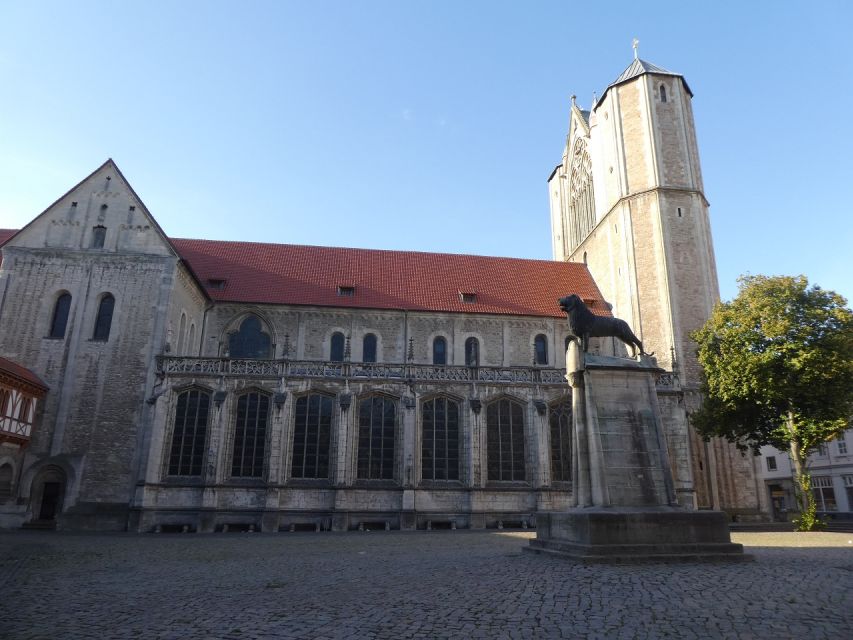
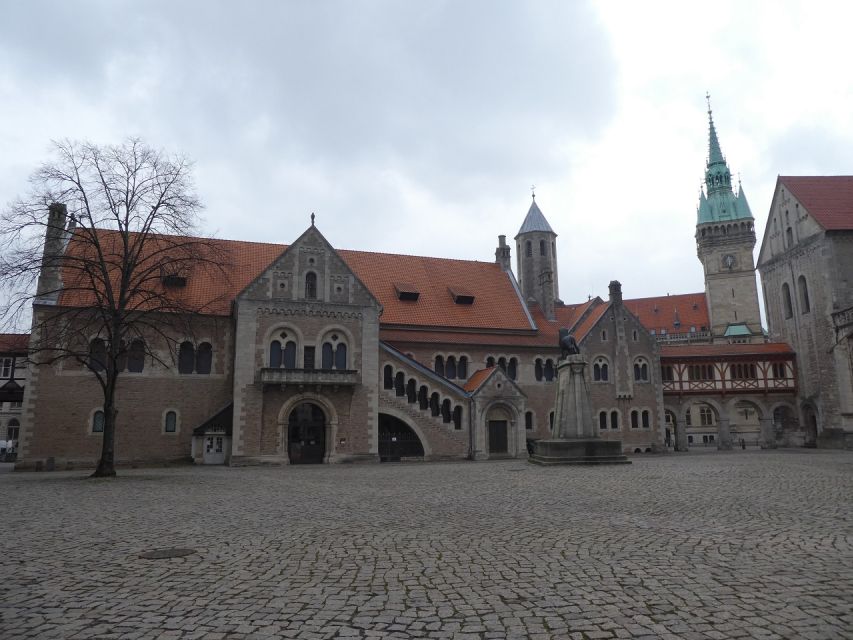
The tour begins at Burgplatz, the square most closely tied to Braunschweig’s identity. This is where you see the Brunswick Lion, the city’s famous symbol, along with the cathedral and centuries-old buildings that frame the square.
The lion is not just a decorative statue. It points to Braunschweig’s medieval importance and to the power once held by the city’s ruling dukes. Your guide uses the square to give you the basic political and architectural context before the walk moves into other parts of town.
The cathedral adds a different layer. Its age and presence make it one of the essential stops, but the tour’s access to churches and public buildings can sometimes change if an official ceremony or event is taking place. If that happens, the guide provides another attraction instead. That is worth keeping in mind if entering the cathedral is especially important to you.
Around Burgplatz, the old buildings help you read the city as more than a collection of isolated monuments. The square has enough visual variety to make a strong opening: religious architecture, civic power, sculpture, and traditional houses all appear within a compact area.
Half-timbered houses and the Chamber of Crafts
From Burgplatz, the walk brings you to half-timbered buildings associated with the Chamber of Crafts. These houses are useful reminders that historic Braunschweig was not built only from grand churches and ducal structures.
Half-timbered architecture gives a town a more human scale. Wooden framing, narrow facades, and closely grouped buildings tell you about older urban life, when homes and workshops occupied the same streets. Your guide can help you notice the details rather than treating the buildings as a generic old-town backdrop.
This part of the walk should appeal to anyone interested in architecture and traditional German town centers. It is also a good moment to slow down and look above street level. The route is only about 1.5 kilometers, but a guide’s explanation makes the short distance feel substantial.
Town Hall and the former ducal palace
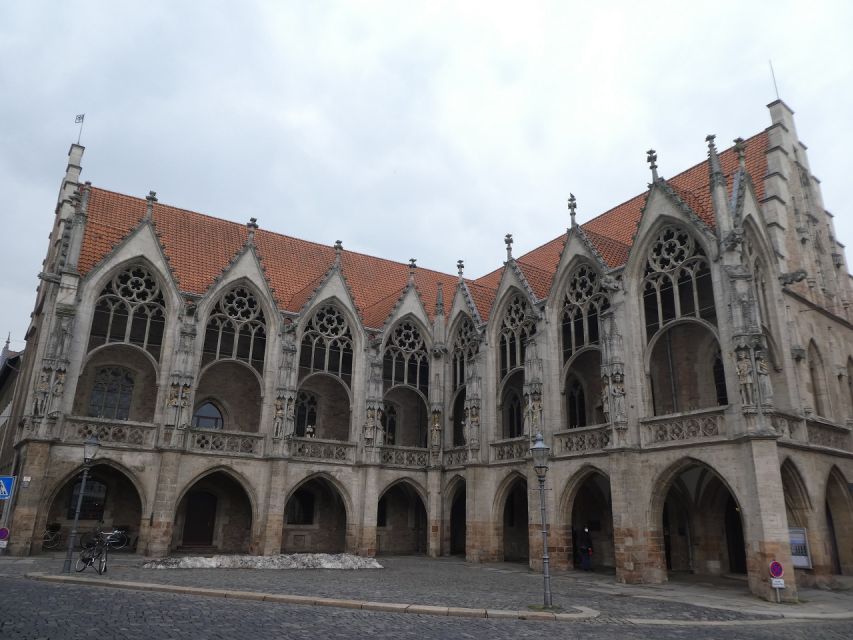
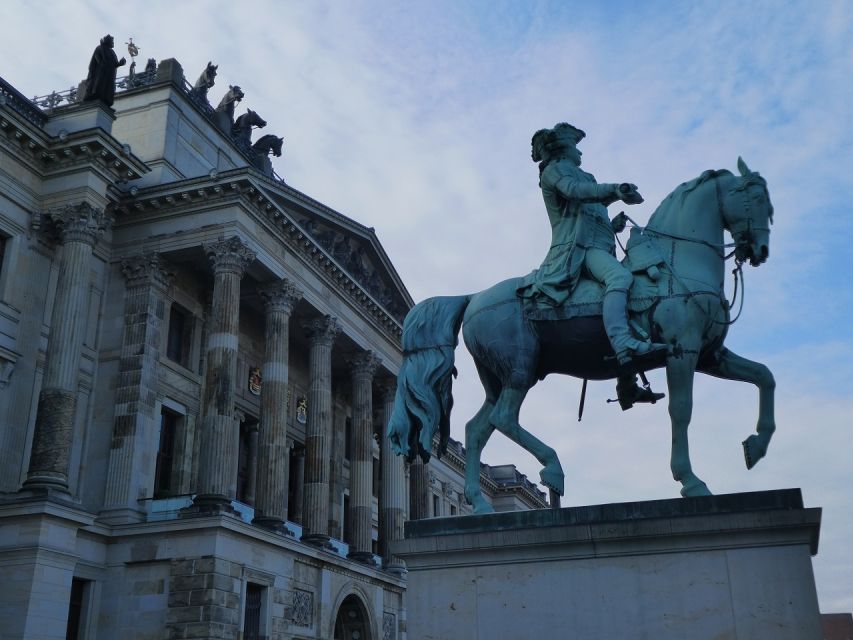
The next portion introduces Braunschweig’s civic and ducal past through the Town Hall and the former ducal palace. These stops shift the focus from medieval religious and commercial life to the institutions that shaped the city’s later public identity.
The Town Hall represents the city’s civic side. It helps balance the earlier emphasis on the cathedral and the ruling dukes. The former ducal palace, meanwhile, recalls Braunschweig’s role as a seat of regional power.
Do not expect a long interior visit to every building. This is a city walking tour, not a series of museum admissions. Its value comes from seeing the buildings in place and hearing the guide explain how the city center developed around them.
I like this approach for a first visit because you get a useful framework without committing half a day to one landmark. If you already know Braunschweig well, the tour may feel introductory. If the city is new to you, these stops help you decide where to return for a closer look.
Same city, a completely different kind of day:
- Berlin: Reichstag, Dome and Government District Guided Tour
★ 4.7 · 18,288 reviews - Berlin: 1-Hour City Tour by Boat with Guaranteed Seating
★ 4.3 · 16,993 reviews - Hamburg: Sex and Crime in St. Pauli Tour for Ages 18+
★ 4.7 · 15,447 reviews - Hamburg: 1.5-Hour Harbor and Speicherstadt Day Cruise
★ 4.6 · 14,200 reviews
Magniviertel and the surprising Happy Rizzi House
Magniviertel provides one of the route’s strongest changes in mood. Here, traditional half-timbered houses share attention with the Happy Rizzi House, a colorful, playful building that looks deliberately out of place beside the older architecture.
That contrast is part of the fun. A tour focused only on medieval buildings can become visually repetitive. The Happy Rizzi House breaks the pattern and shows that Braunschweig is not trying to freeze itself in the past.
The building also gives your guide an easy way to discuss the city’s modern character. You move from old timber frames to bold contemporary design within the same district, which makes the walk feel more like a portrait of a living city than a museum visit.
Magniviertel is likely to be one of the most memorable sections for children and for anyone who enjoys unusual architecture. It is also a useful photo stop, although video and audio recording are not allowed during the activity. Bring a phone or camera for still images if you wish, but follow the guide’s instructions.
Kohlmarkt and the routes that brought trade
The walk continues to Kohlmarkt, a place tied to important medieval trade routes. This is where the tour’s economic story becomes clearer.
Braunschweig did not grow by accident. Its position at a junction of trade routes helped connect it with wider commercial networks. Kohlmarkt lets you picture the city as a place of movement, exchange, and business rather than simply a ducal residence with attractive buildings.
That context matters because the next section, the Old Town, is closely linked to Hanseatic life. Without the trade background, the square and guild buildings can seem like separate sights. With it, they become part of a larger story about merchants, crafts, and the city’s place in northern European commerce.
The guide’s role is especially useful here. A plaque may tell you a building’s name and date, but it rarely explains why a particular junction mattered. This is the kind of connection that makes a short walking tour worth considering.
Altstadtmarkt and Braunschweig’s Hanseatic center
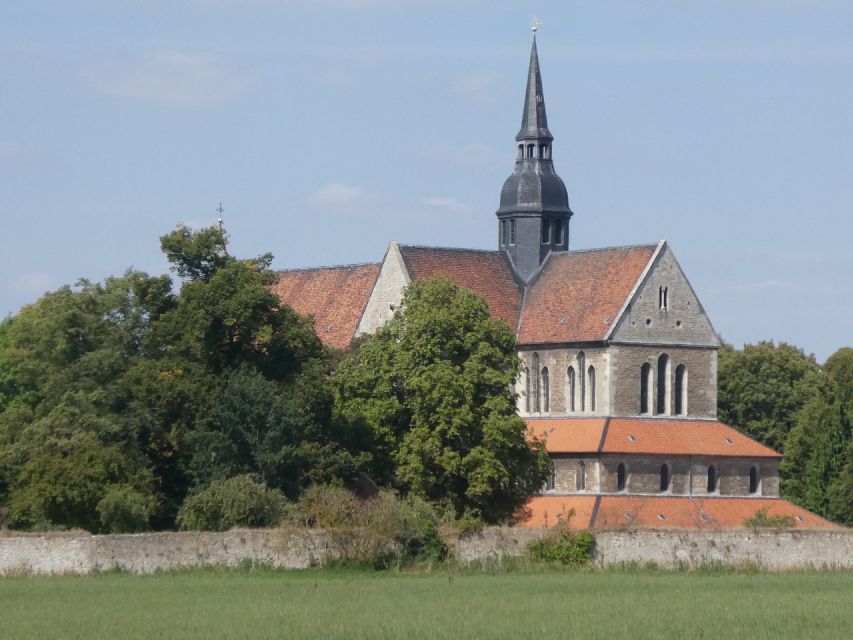
The tour ends in the Altstadt, where you see the Altstadtmarkt, St. Martin’s Church, and the Cloth Hall. This section gives the walk its clearest look at Braunschweig’s Hanseatic character.
The Altstadtmarkt was a center of commercial and civic life. Its buildings reflect the importance of trade and organized urban society. St. Martin’s Church adds the religious side of the square, while the Cloth Hall recalls the guild and merchant activity connected with cloth.
The Cloth Hall is particularly helpful for understanding how medieval cities worked. Trade was not just a matter of individual sellers setting up wherever they pleased. Guilds, merchants, and established buildings shaped the flow of goods and the rules of business.
The tour finishes at the Altstadtmarkt or another requested point in the city center. That gives you a practical place to continue exploring on foot. You can also use the final location as a starting point for a meal, more sightseeing, or a return to one of the landmarks that caught your attention.
What the private format changes
A private tour is not automatically better than a group tour, but here it offers several clear advantages. You do not have to adjust your pace to a large mixed party, and you can ask questions without waiting for a quiet moment.
The guide can also begin at a place that works for your group. One group arranged to start where it wanted, and that kind of flexibility can save time if you are already in central Braunschweig. Confirm the exact meeting point when booking, then arrive five minutes early.
The permitted group size is up to 25 people. That is generous, so the experience can feel very personal for a couple or family but less intimate if the group is full. The price is charged per group, not per person, which makes it most attractive when several people share the cost.
The meeting point is easy to identify: the guide carries a backpack with a LED display showing Get Your Guide and Braunschweig. The guide waits up to 30 minutes, but do not treat that as extra tour time. Arriving early is the sensible plan.
Language, pace, and accessibility
The live tour is offered in German. This is the biggest practical consideration. If you understand German comfortably, the format should work well, especially since the guide’s explanations are a central part of the experience. If you do not speak German, this is not the right choice unless someone in your group can translate for you.
The walk covers about 1.5 kilometers over 90 minutes. That is not a strenuous distance, but the tour involves standing and walking through the city, so wear comfortable shoes and clothes.
The activity can be done barrier-free and is wheelchair accessible. Still, the guide notes that access to churches and other public buildings can change during official events. If a particular interior stop matters to you, ask about current conditions before setting out.
The tour runs rain or shine. Braunschweig’s weather can change, so pack accordingly. Since the tour is outdoors for most of its duration, a light rain layer and suitable footwear are more useful than dressing for a formal indoor excursion.
Guide quality and the experience on the street
The strongest praise for this tour centers on the guide’s selection of places and the quality of the explanations. The guide is described as taking groups to the city’s most interesting points while offering detailed information that remains entertaining.
That combination matters. A history lecture can make a 90-minute walk drag, while a quick list of dates leaves you with little to remember. The best moments on a city tour come when facts are tied to what you are looking at, and this experience is designed around that connection.
The guide is certified and local, but no individual guide names are provided in the booking information. You should expect a German-speaking professional rather than a named guide you can request.
Do not plan to record the tour. Video and audio recording are not allowed. Instead, make brief notes after a stop if you want to remember names or dates, and leave room to pay attention to the streets around you.
Is $113 good value for 90 minutes?
At $113 per group of up to 25, the price is reasonable for a private city walk when shared among a larger party. A group of 10 pays about $11.30 per person, while a full group pays roughly $4.50 each. For two people, the per-person cost is much higher.
The value comes from the guide, not from admissions or refreshments. There are no food or drinks included, and hotel pickup and drop-off are not provided. You are paying for a local explanation of the city center, a private format, and a route that joins major sights with less obvious historical connections.
I would consider it good value for families, reunions, school groups, and friends who want one shared introduction. Solo visitors and couples should compare the total cost with a regular group walk or a self-guided route.
Free cancellation up to 24 hours before the tour and the reserve-now, pay-later option make planning easier. Those policies are useful if your schedule in Lower Saxony is still moving around, though they do not change the basic question of whether German-language guiding suits you.
Who should book this Braunschweig walk?
I would choose this tour if you want a clear first look at Braunschweig and prefer a guide to connect the sights. It is especially suitable for groups that value privacy, families who want to keep the pace manageable, and visitors interested in architecture, medieval trade, or local civic history.
It also works well early in your stay. The route introduces Burgplatz, Magniviertel, Kohlmarkt, and the Altstadtmarkt, giving you several areas to revisit later.
I would skip it if you need an English-language tour, want extensive interior visits, or prefer to explore entirely at your own pace. The walk is short and focused, not a full-day historical program.
FAQ
How long does the walking tour last?
The tour lasts 1.5 hours.
How far will I walk?
The route involves about 1.5 kilometers of walking.
Is the tour private?
Yes. It is offered as a private group activity for up to 25 people.
What language is the tour conducted in?
The live tour guide speaks German.
Where does the tour start and end?
The tour begins at the designated meeting point and ends back at the meeting point, at the Altstadtmarkt, or at another requested point in the city center.
Is the tour wheelchair accessible?
Yes. The tour can be done barrier-free and is wheelchair accessible.
What happens if bad weather affects the tour?
The tour operates rain or shine. You should bring comfortable clothes and shoes suited to the weather.
Should you book it?
Book this walk if you want Braunschweig explained rather than simply photographed. The route gives you the city’s key symbols, old houses, trade squares, Hanseatic center, and one wonderfully odd modern building in a manageable 90 minutes.
The deciding factor is German. If you can follow German comfortably and have a group to share the $113 cost, this private tour offers a practical, well-focused introduction. If you need English or want long visits inside the cathedral and other buildings, choose another format.
Just added around Germany
- Aachen old town tour – GERMAN (public)★ 5.0 · 24 reviews
- Aachen Private Walking Tour With A Professional Guide★ 5.0 · 11 reviews
- Cologne Highlights: Exclusive Private Tour★ 5.0 · 5 reviews
- Bremen Private Walking Tour With A Professional Guide★ 5.0 · 7 reviews
- Private Walking Tour through the Fascinating Bremen’s City Center★ 5.0 · 5 reviews
- Explore Cologne’s best Street Art Quarter★ 4.5 · 4 reviews
- Bremen Exploration Private Game and City Tour on your Phone★ 4.5 · 7 reviews
- e-Scavenger hunt Bremen: Explore the city at your own pace★ 4.0 · 24 reviews
City Tours, compared.

1-Hour City Tour by Boat with Guaranteed Seating
Read our review →
City History Canal Sightseeing Tour on a Motorboat
Read our review →

Browse the lists this tour appears in