
Reviewed · EVENING EXPERIENCES
Berlin By Night by Private Minivan Highlights and Taylor made
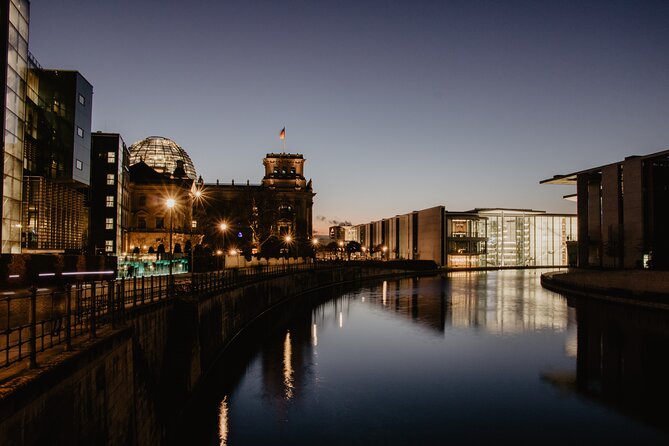
Berlin is at its most striking after sunset, when the Brandenburg Gate, Museum Island, and Potsdamer Platz take on a different mood and the city streets are less demanding. This private outing lets you choose a minivan, e-rickshaw, or walking format, so you can match the tour to your energy and mobility.
I especially like the small private group, which gives you room to ask questions and request certain sights. I also like the thoughtful route, which mixes famous stops with sobering places such as Bebelplatz and the Topography of Terror. The main consideration is timing: the listed stop allotments add up to roughly two hours and 15 minutes, while the tour is described as about two hours.
In This Review
- Key points at a glance
- Why Berlin by night works so well
- Alexanderplatz and the TV Tower
- Berlin Cathedral and Museum Island
- Bebelplatz and the book-burning memorial
- Gendarmenmarkt after dark
- Checkpoint Charlie and the Berlin Wall story
- Topography of Terror and original Wall remains
- Potsdamer Platz and modern Berlin
- The Holocaust Memorial
- Brandenburg Gate and Pariser Platz
- Choosing the right transport
- How much value do you get for $349.07?
- Who should book this Berlin evening tour?
- Should you book it?
- FAQ
- How long does the Berlin by Night tour last?
- How many people can join the private tour?
- Which transport options are available?
- Does the tour offer pickup?
- Are attraction admission tickets included?
- Are service animals allowed?
- Who is the named guide associated with the positive experience?
Key points at a glance
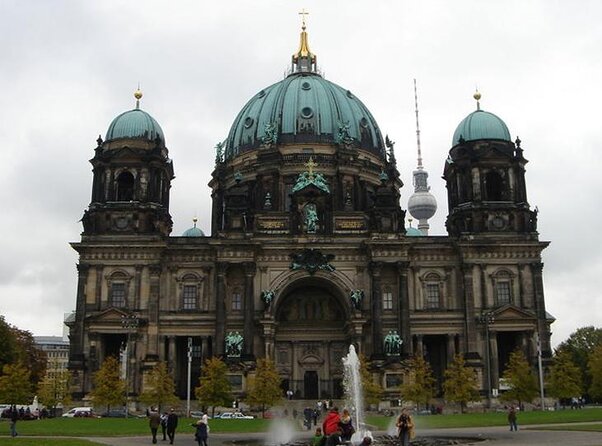
- Three ways to see Berlin: Choose to walk, ride in an e-rickshaw, or use a minivan.
- Private for up to six people: You are not sharing the experience with a large group.
- A strong central route: The outing covers Alexanderplatz, Museum Island, Checkpoint Charlie, Potsdamer Platz, and the Brandenburg Gate.
- Nighttime views with fewer crowds: Illuminated buildings and open squares give Berlin a calmer feel.
- Custom interests are welcome: The route can be adjusted around particular subjects or places.
- A particularly caring guide experience: Guide Levent helped a guest with visual impairment in and out of the van and walked alongside him at each stop.
Why Berlin by night works so well
This is not a sightseeing ride built around one grand attraction. It is a compact tour of central Berlin, moving from Prussian monuments to Nazi-era memorials and Cold War landmarks. At night, you can take in the major sights without spending the whole evening weaving through daytime crowds.
I see the flexible transport choice as the tour’s biggest practical advantage. Berlin’s central sights are spread across a fairly broad area. Walking the full route can be tiring, especially after a full day of museums. An e-rickshaw saves your legs while keeping you close to the streets, and the minivan makes the outing easier for anyone who needs extra support.
The private format matters, too. With space for only your party of up to six, you can ask for more time at one stop or request a stronger focus on a certain part of Berlin’s past. The tour is described as tailor-made, so it has more room to adapt than a fixed coach excursion.
The tradeoff is that two hours is not long for this many places. You will get a useful overview and time for photos, but not a full visit to the museums or memorial centers. Think of it as a smart orientation tour, not a replacement for a day spent exploring Berlin on foot.
A few more Berlin trips to weigh up
- Berlin: Solar Powered Sunset Catamaran Cruise & Audio Guide
★ 4.6 · 1,043 reviews - Berlin: Live-Guided Evening Sightseeing Tour by Open-top Bus
★ 4.1 · 783 reviews - Berlin: Bus Tour by Night with Live Commentary
★ 4.2 · 687 reviews
Alexanderplatz and the TV Tower
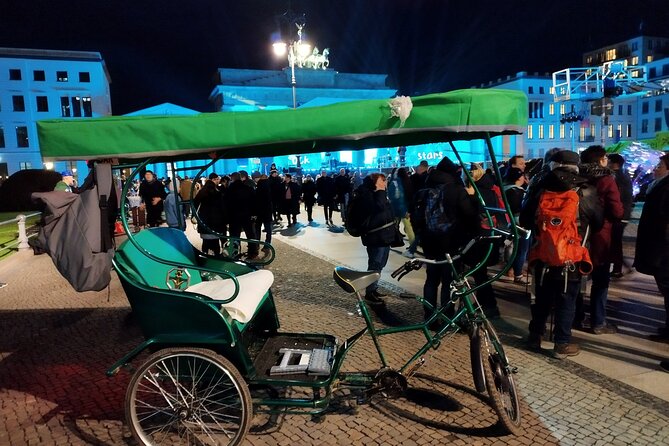
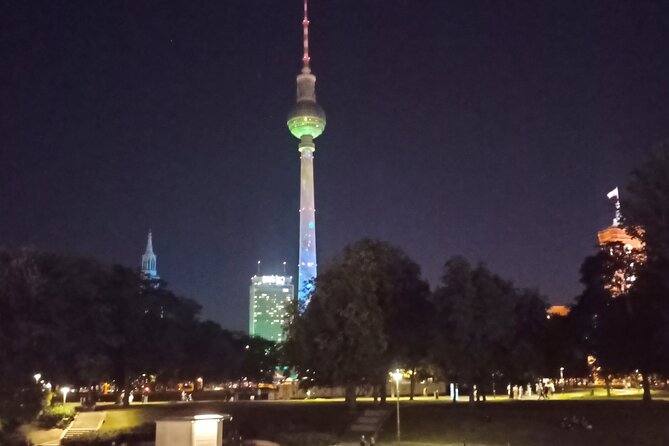
The route begins at Alexanderplatz, home to the Berliner Fernsehturm, or Television Tower. Germany’s tallest structure rises above the square and is one of Berlin’s clearest visual markers.
At night, the tower is especially easy to spot against the sky. You are given about 15 minutes here, which should be enough to look around and take photographs. The stop does not include admission, so this is an exterior viewing point rather than a tower visit.
That distinction is important. If you want to go up the TV Tower, you would need a separate plan and more time. On this outing, the value comes from seeing how the tower helps you understand Berlin’s eastern center and from getting your first major nighttime view.
Berlin Cathedral and Museum Island
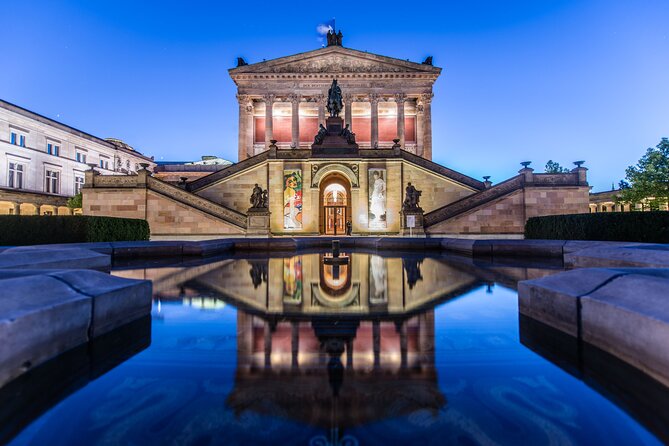
Next comes the Berlin Cathedral, or Berliner Dom, on Museum Island. The cathedral’s dome and grand facade make a strong nighttime subject, particularly when the surrounding streets are quieter.
The stop also brings several major buildings into view. You can see the former Lustgarten, the Old Museum, the Old National Gallery, the Bode Museum, and the unfinished reconstruction of the City Palace. The route also passes along Unter den Linden, Berlin’s famous historic boulevard.
You have about 15 minutes for this part of the visit. That is enough for a quick look at the architectural group, but not enough to enter the museums or explore the island properly. I would treat this as a preview. If one building catches your attention, note it for a return visit during daylight.
Museum Island is a UNESCO World Heritage Site, and the compact cluster of museums helps explain why central Berlin can feel like several different cities in one. You move from royal architecture to reconstructed buildings and major art collections within a short distance.
Bebelplatz and the book-burning memorial
Bebelplatz is one of the most important stops for understanding Berlin’s Nazi period. In 1933, about 25,000 books were burned here. A memorial now marks the event and recalls the destruction of ideas and culture under the Nazi regime.
The memorial is easy to miss if you rush through the square. A short stop with an explanation makes it far more meaningful than a quick photograph. You have about 15 minutes, giving you some space to take in the setting and ask questions.
This is one of the places where a private guide can add real value. The physical memorial is restrained, and its meaning is not always obvious at first glance. A clear explanation helps connect the location to the broader story of censorship and political repression.
Same city, a completely different kind of day:
- Berlin: Reichstag, Dome and Government District Guided Tour
★ 4.7 · 18,288 reviews - Berlin: 1-Hour City Tour by Boat with Guaranteed Seating
★ 4.3 · 16,993 reviews - Berlin: Boat Tour Along the River Spree
★ 4.4 · 11,252 reviews - Discover Berlin Half-Day Walking Tour
★ 5.0 · 9,624 reviews
Gendarmenmarkt after dark
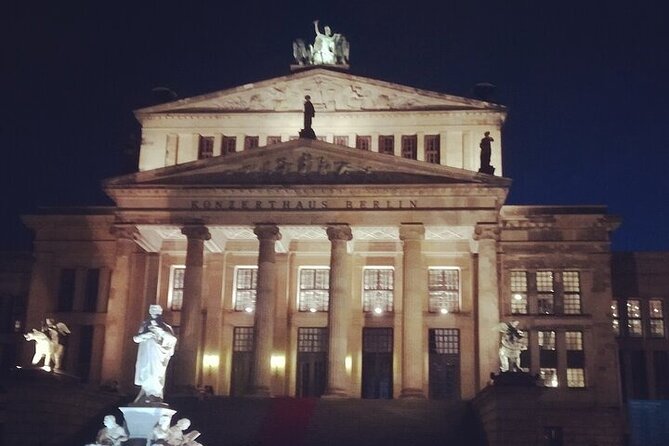
Gendarmenmarkt is a handsome square framed by the former Royal Concert Hall and two domed churches, the German Cathedral and French Cathedral. It is often regarded as one of Europe’s most beautiful squares.
Night lighting gives the square a formal, almost theatrical quality. The planned 15-minute stop is well suited to photographs and a short explanation of the buildings. You will not have time for a detailed architectural study, but you will see why this square earns a place on a central Berlin route.
The stop also gives the tour a welcome change of tone. After the difficult subject at Bebelplatz, Gendarmenmarkt offers a chance to appreciate Berlin’s grand civic architecture before the route turns toward the city’s divided past.
Checkpoint Charlie and the Berlin Wall story
Checkpoint Charlie was one of the best-known crossing points between East and West Berlin. During the Cold War, the site became a symbol of the political division between the two sides and came close to becoming the starting point of a much larger conflict.
You have about 10 minutes here. That is enough to see the location and understand its place in the Berlin Wall story, but the stop is brief. If you want a detailed look at the Wall, you will need to visit a museum or documentation center separately.
Checkpoint Charlie can feel highly commercialized today, so expectations matter. The power of the stop comes less from the present-day setting and more from the history attached to it. A guide can help you look past the surface and picture the tension that once defined this crossing.
Topography of Terror and original Wall remains
The tour continues along the former border strip to the Topography of Terror. This documentation center occupies the former site of the SS and Gestapo headquarters and is one of the most visited places in Berlin devoted to the period of National Socialism.
You also see original sections of the Berlin Wall nearby. The combination is powerful because it connects two major chapters of the city’s past: Nazi rule and the later division of Berlin.
The scheduled stop is about 10 minutes, so you should expect an exterior introduction rather than a full visit to the documentation center. The center itself requires more time if you want to read its exhibits carefully. Still, this short stop can help you decide if you want to return during the day.
For me, this is one of the route’s most worthwhile pairings. You see a physical remnant of the Wall while standing at a site connected to the machinery of Nazi terror. Berlin’s past is not arranged into neat, separate boxes, and this part of the route makes that clear.
Potsdamer Platz and modern Berlin
Potsdamer Platz offers a sharp contrast to the older buildings earlier in the evening. Once divided by the Berlin Wall, the area became one of Europe’s largest construction sites and was rebuilt with tall, futuristic buildings.
The Sony Center and surrounding towers give the square a modern, urban feel. You have about 15 minutes here, which is enough to see the main architectural group and take in the change from imperial Berlin to a rebuilt capital.
This stop is useful because it shows how Berlin continues to change. You are not only looking at preserved monuments. You are also seeing the city’s attempt to create a new center after war, division, and reunification.
The architecture may appeal more to some people than others. If your main interest is medieval or classical Europe, Potsdamer Platz may feel less personal than Museum Island or Gendarmenmarkt. I still think it earns its place because it gives the route a sense of present-day Berlin.
The Holocaust Memorial
The Memorial to the Murdered Jews of Europe comes next. Opened in 2005, it commemorates the murder of more than six million Jews during National Socialism.
The memorial’s field of concrete slabs is meant to be experienced in person, not simply viewed from a passing vehicle. The route allows about 10 minutes, so you will have time to walk among the slabs and pause for reflection, but not to visit every part of the site in depth.
Admission is listed as not included. The outdoor memorial can be seen as part of the tour, while any separate indoor areas would require their own arrangements.
I recommend treating this stop with care. It is not a standard photo opportunity. The setting is intentionally serious, and the short visit works best when you give yourself a quiet moment instead of trying to rush through it.
Brandenburg Gate and Pariser Platz
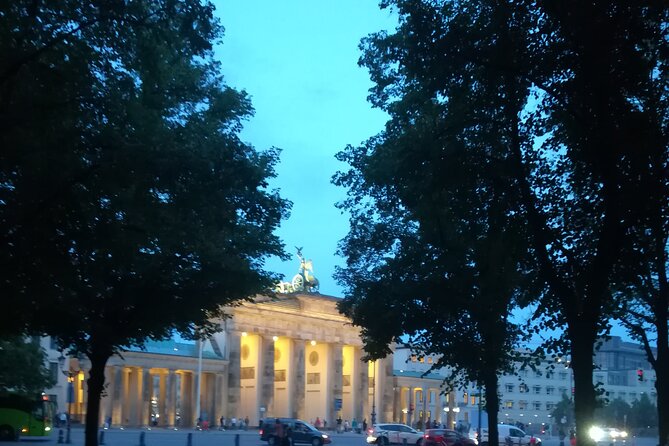
The final stop is the Brandenburg Gate at Pariser Platz, one of Berlin’s most important symbols. The neoclassical gate has been linked to the city’s royal past, its division during the Cold War, and the reunified capital that followed.
Fifteen minutes gives you time to view the gate from different angles and photograph it after dark. The surrounding square is also part of the experience, with the gate framing the end of the route.
Ending here makes good sense. After seeing Berlin’s royal buildings, Nazi memorials, Wall sites, and modern towers, you finish at a symbol of the city as a national capital. It is a familiar sight, but nighttime lighting gives it a more polished and ceremonial feel.
Choosing the right transport
You can take this tour on foot, by e-rickshaw, or by minivan. The choice changes the feel of the experience.
Walking gives you the closest contact with the streets and squares. It may suit you if you want to move at a slower pace and do not mind covering ground. However, the number of stops and the short overall duration suggest a brisk outing on foot.
The e-rickshaw offers a middle ground. You remain close to the city while reducing the physical effort. It may be a good fit if you want an open-air view but prefer not to walk between every location.
The minivan is the most practical option for a group that wants to cover the route with minimal strain. It is also worth considering if anyone in your party has mobility concerns. One guest specifically praised guide Levent for helping her husband with visual impairment in and out of the van and walking with him at every stop. That detail points to a level of personal care that can make a major difference.
Because this is a private tour, you can discuss your needs when booking or at pickup. Service animals are allowed, and the experience is near public transportation. Pickup is offered, though the supplied details do not specify the pickup area, so confirm that point before paying.
How much value do you get for $349.07?
The price is $349.07 per group of up to six people. That works out to about $58 per person for a full group of six, before considering any separate admission costs.
For a couple, the per-person price is much higher. For a family or group of friends filling all six spaces, the value improves sharply. You are paying for a private guide, a custom format, and transportation flexibility rather than for entry to a major attraction.
I would compare this cost with the price of several separate taxis, a public sightseeing ride, or a private guide hired for the same evening. The tour becomes more attractive when you want a single person to connect the sights and adjust the pace for your group.
The short duration limits the value if you expect long visits at each stop. You are buying an overview, nighttime access, and convenience. You are not buying museum admission or extended time at the Holocaust Memorial or Topography of Terror.
The free cancellation policy adds some booking comfort. You can cancel for a full refund up to 24 hours before the scheduled start time. Changes or cancellations made less than 24 hours ahead are not accepted for a refund.
Who should book this Berlin evening tour?
I would recommend it for first-time visitors who want to understand how central Berlin fits together. It is also a good choice for families, small groups, and anyone who wants to see major sights without committing to a long walk.
The minivan option makes it especially useful for people with limited stamina or mobility needs. The specific care shown by Levent, including assistance with boarding and walking beside a visually impaired guest, is encouraging for anyone who needs a more supportive outing. Still, you should explain your needs before the tour so the format can be prepared properly.
It may be less suitable if you want extended time inside museums, detailed historical lectures at every site, or a slow photography tour. The route covers a lot, and the schedule calls for short stops.
Should you book it?
Book this tour if you value privacy, flexible transport, and a broad introduction to Berlin after dark. It covers the city’s essential symbols while also giving proper attention to serious memorial sites that are easy to skip on a standard evening ride.
I would choose the minivan for convenience, the e-rickshaw for a closer street-level feel, and walking only if your group is comfortable keeping a fairly brisk pace. Before booking, confirm the pickup details and ask how the guide plans to handle the difference between the stated two-hour duration and the listed stop times.
For a group of six, the price is easier to justify. For two people, it is a more expensive way to see the sights, but the private attention and custom route may still be worth it, especially when mobility support or a specific interest matters.
FAQ
How long does the Berlin by Night tour last?
The tour is listed as lasting approximately two hours. The individual stop times provided add up to about two hours and 15 minutes, so the actual pace may vary.
How many people can join the private tour?
The price covers one private group of up to six people. Only your group participates.
Which transport options are available?
You can explore by foot, e-rickshaw, or minivan. The available format can be chosen to suit your group.
Does the tour offer pickup?
Yes. Pickup is offered, but the provided details do not specify the exact pickup area.
Are attraction admission tickets included?
The listed stops are generally marked as free admission. The Holocaust Memorial is specifically marked as admission not included. The tour is primarily an exterior sightseeing experience, and no museum entry is described.
Are service animals allowed?
Yes. Service animals are allowed on the experience.
Who is the named guide associated with the positive experience?
Guide Levent is specifically praised for explaining Berlin’s sights and assisting a guest with visual impairment. You can request him specifically, although the supplied information does not guarantee his availability.
Just added around Berlin
- Love and War in Berlin: Self-Guided Story Puzzle Walk★ 5.0 · 7 reviews
- Rickshaw Tours Berlin – Groups of up to 16 people with several rickshaws★ 4.0 · 97 reviews
- Walking on the Wall: 3-Hour Tour in Berlin★ 4.5 · 34 reviews
- eSIM for Germany and 34 European Countries★ 4.5 · 16 reviews
- Warnemuende Shore Excursion: Berlin Private Sightseeing Tour from Rostock★ 5.0 · 4 reviews
- Your ticket to The Wall Museum Berlin★ 3.0 · 60 reviews
- Warnemuende Shore Excursion: Private Berlin Tour★ 4.5 · 27 reviews
- Berlin’s Gay, Lesbian, and Queer Scene Small-Group Walking Tour★ 4.5 · 66 reviews
Evening Experiences, compared.
The Original Night Watchman Tour in Lantern Light
Read our review →
1.5-Hour Public Tour with Night Watchman Bremme
Read our review →
Munich Ghosts and Spirits Evening Walking Tour
Read our review →Browse the lists this tour appears in