
Reviewed · CITY TOURS
Augsburg’s Water Management System – City Walking Tour
Augsburg’s water system is not hidden behind museum glass. It runs through the city in working canals, grand fountains, and old waterworks that you can see during an easy two-hour walk. The tour connects the polished center with the quieter Lech quarter, then finishes at Rotes Tor, where Augsburg’s water story becomes easiest to understand.
I like the route for two reasons: you get both the handsome fountains and the small canals beside red-roofed houses, and a local guide gives the UNESCO designation useful context instead of leaving you to guess what you’re looking at. One consideration is that the tour can lean toward dates and facts. If you prefer personal stories or a close look at engineering, you may find the presentation more historical than technical.
In This Review
- Key points at a glance
- Why Augsburg’s water system makes a good walking tour
- Meeting the guide in Augsburg’s Old Town
- Fountains that turn water into civic art
- Walking the canals in the Lech quarter
- Rotes Tor and the oldest existing waterworks
- How informative is the guiding?
- What the 17-euro price buys you
- Who should book this walking tour?
- Practical tips for a better two hours
- Should you book Augsburg’s water management tour?
- FAQ
- How long does the Augsburg water management tour last?
- Where does the tour meet?
- What languages are available?
- What sights are included on the route?
- Does the tour visit a UNESCO World Heritage Site?
- Is the tour wheelchair accessible?
- What should I bring?
- Are entry tickets, food, and drinks included?
- Can I cancel or pay later?
Key points at a glance
- Augustus, Merkur, and Herkules fountains: Three major city fountains give the tour its most impressive visual stops.
- Lech quarter canals: Small historic waterways, cobblestones, and red-roofed houses show how water shaped everyday Augsburg.
- Rotes Tor waterworks: The route reaches the oldest existing waterworks in central Europe.
- UNESCO World Heritage context: Your guide explains why Augsburg’s water system matters beyond its individual canals and fountains.
- English or German guiding: You can choose between the two listed tour languages.
- Optional sound support: Bring your smartphone, headphones, and an internet connection to use the free elysium® system.
Why Augsburg’s water system makes a good walking tour
Augsburg is often treated as a quick stop between Bavaria’s better-known sights. That is a mistake if you enjoy cities shaped by practical problems. Here, water is not just scenery. It is the subject of the walk, and the route shows how Augsburg used canals, fountains, and waterworks over a long period.
The city’s water management system includes 22 elements, but this tour selects several that fit naturally into a central walking route. You do not need to visit every site to understand the main idea. The fountains show civic pride, the Lech canals show water integrated into neighborhoods, and Rotes Tor brings the story back to supply and infrastructure.
That combination gives the tour a useful rhythm. You begin with familiar city sights, move into a smaller canal district, and finish with the most direct evidence of Augsburg’s water technology. The subject may sound dry on paper. On foot, it becomes quite visual.
You should expect a guided city walk rather than a museum visit or a hands-on engineering demonstration. The focus is on historical information about water supply and the role of the system in Augsburg. One useful point to keep in mind is that the tour explains the history more than the detailed mechanics. If you want technical diagrams or a long discussion of construction methods, this may not go far enough.
A few more Germany trips to weigh up
- Discover Berlin Half-Day Walking Tour
★ 5.0 · 9,624 reviews - Berlin: Third Reich and Cold War 2 Hour Walking Tour
★ 4.9 · 6,830 reviews - Munich: Third Reich & WWII Walking Tour
★ 4.6 · 6,181 reviews
Meeting the guide in Augsburg’s Old Town
The meeting point is in front of the Tourist Information Center, in the heart of the city. That makes the start convenient if you are already sightseeing in Augsburg, and it gives you a clear place to organize yourself before the walk begins.
Wear comfortable shoes. The route includes cobblestone streets, and two hours on uneven paving is enough to make poor footwear noticeable. You should also dress for the weather, since the tour takes place outdoors and continues in rain or cold unless conditions affect the schedule.
Guiding is available in German and English. The tour is also listed as wheelchair accessible, though the old-town setting means you should still expect historic paving under your wheels. The supplied details do not specify the exact group size, so you should not book this expecting either a private walk or a guaranteed small group.
A free sound amplification option, called elysium®, may help if the streets are noisy or the group spreads out. To use it, bring your own smartphone, headphones, and an internet connection. It is optional, so you can simply listen to the guide directly if that suits you.
Fountains that turn water into civic art
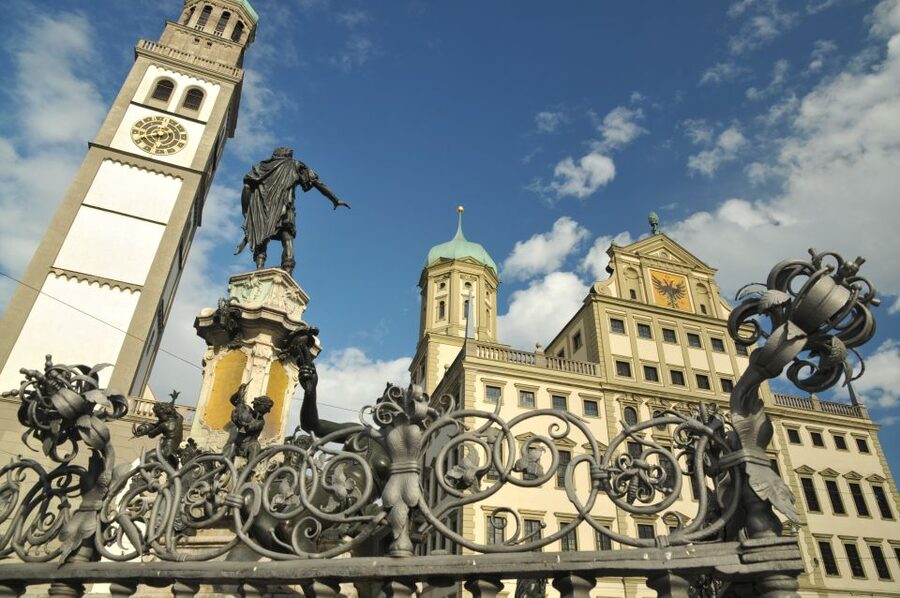
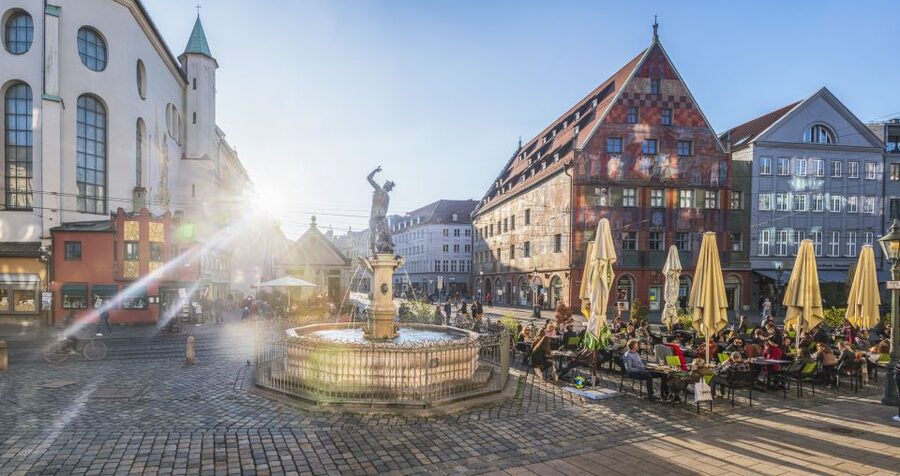
The route includes the Augustus Fountain, one of Augsburg’s major landmarks, along with the Merkur and Herkules fountains. These stops matter because they show a second side of the city’s water system. Water was not only collected, moved, and supplied. It was also placed in public spaces as a sign of wealth, order, and civic identity.
The Augustus Fountain is likely to be the visual high point early in the walk. It gives you a large, memorable object to connect with the explanation. The Merkur and Herkules fountains add variety and help show that Augsburg’s public water display was not limited to one monument.
A guide is especially useful here. Without context, fountains can blur into the usual old-city sightseeing list. With an explanation of their place in Augsburg’s wider water system, they become part of one story rather than three unrelated photo stops.
Do not expect entry into a fountain or attraction. Entry tickets are not included, and the experience is described as a walking tour of the outdoor elements. The value comes from the explanation and the route between the sites, not from paid access to an interior exhibit.
Walking the canals in the Lech quarter
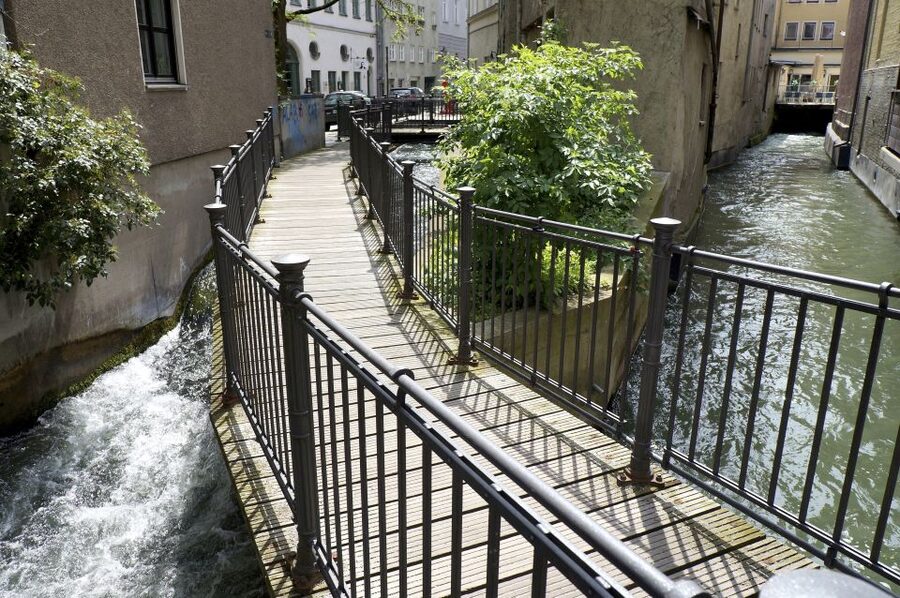
The Lech quarter brings a different mood. Instead of grand fountains in prominent public spaces, you see small historic canals running through a neighborhood of cobblestones and red-roofed houses. This is the part of the route that makes the water system feel close to daily urban life.
I particularly like this contrast. The fountains are designed to be noticed, while the canals can be easy to pass without understanding their purpose. A guide can point out how the waterways fit into the district and why they belong to Augsburg’s protected water system.
The setting also gives the walk a pleasant change of scale. You move away from monumental city-center sights and into narrower streets with water close by. That makes the tour feel less like a checklist of famous objects and more like a lesson in how a city grew around its resources.
The Lech quarter is also where comfortable shoes matter most. Cobblestones are part of the visual charm, but they can slow the pace and make the walk tiring for anyone with foot, balance, or mobility concerns. The tour is listed as wheelchair accessible, yet historic surfaces are worth considering when deciding if the route is right for you.
Same city, a completely different kind of day:
- Berlin: Reichstag, Dome and Government District Guided Tour
★ 4.7 · 18,288 reviews - Berlin: 1-Hour City Tour by Boat with Guaranteed Seating
★ 4.3 · 16,993 reviews - Hamburg: Sex and Crime in St. Pauli Tour for Ages 18+
★ 4.7 · 15,447 reviews - Hamburg: 1.5-Hour Harbor and Speicherstadt Day Cruise
★ 4.6 · 14,200 reviews
Rotes Tor and the oldest existing waterworks
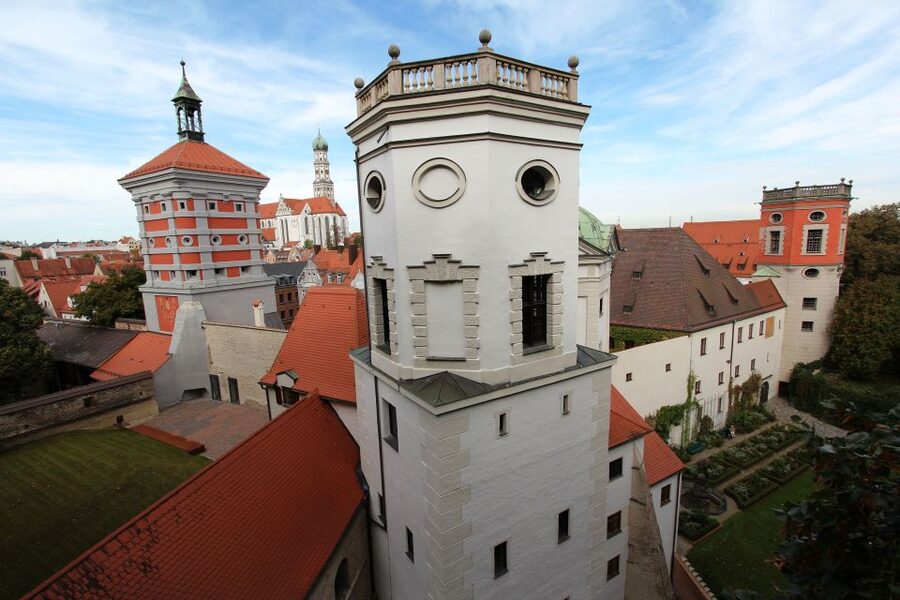
The walk heads to Rotes Tor, an imposing site and the tour’s strongest link to Augsburg’s water infrastructure. Here you discover what is described as the oldest existing waterworks in central Europe.
This stop gives the entire route a clear ending. The fountains show the public face of water, and the canals show its place in the neighborhood. Rotes Tor explains the organized system behind them. You leave with a better sense of why Augsburg’s water management is treated as a complete cultural site rather than a collection of pretty details.
The wording matters: this is a discovery stop at the waterworks, not a promise of a full technical tour inside every structure. Since entry tickets are not included, confirm the exact access available on your date if seeing interiors is important to you.
The stop should appeal most to people who like old infrastructure, city planning, and the practical reasons behind historic development. If your main interest is architecture alone, the fountains and old streets may be enough. If you want a clear story about how a city handled water, Rotes Tor is the point that ties the pieces together.
How informative is the guiding?
The tour is built around facts, dates, and the history of Augsburg’s water supply. That is good news if you like a structured explanation and want more than a short caption beside a monument. A guide can connect separate locations and explain why the UNESCO World Heritage designation includes the wider system.
The style may vary by guide. Brigitte Plonner received especially warm praise for making Augsburg’s water management easy to understand and for keeping the walk interesting and conversational, even with only a very small group. That suggests the experience can feel personal when the group is small and the guide encourages questions.
At the same time, one guide was described as focusing heavily on historical data with few personal stories or anecdotes. Another comment summed up the experience as informative, while noting that it is more about the history of water supply than the technical details.
That is a useful expectation to set before booking. You are signing up for a history-led walking tour. You are not signing up for a theatrical performance, an engineering workshop, or a tasting experience. If you enjoy dates and civic history, the format should suit you. If you need stories, humor, or constant visual action, ask questions and use the canal sections and fountains to keep the walk lively.
Weather also affects the experience. The route is outdoors, and rain can make the streets less pleasant. A rainy day does not change the subject, but it can make a fact-heavy walk feel slower. Bring weather-appropriate clothing and keep your schedule flexible enough to enjoy the route at a comfortable pace.
What the 17-euro price buys you
The detailed fare is 14 euros per person plus a 3-euro administration fee, or 17 euros before any currency conversion. The experience is also presented at about $20 per person. Check the final amount shown when booking, since exchange rates and booking pages can change.
For that price, you receive the guide, the two-hour walking tour, and optional access to the elysium® sound system. Food, drinks, and entry tickets are not included, but the listed route is built around outdoor sights, so that is not a major surprise.
I consider the value strongest if you are already planning to see Augsburg’s Old Town. The tour adds structure to sights you might otherwise pass quickly, and the guide gives you a reason to connect the fountains, canals, and Rotes Tor. It is less valuable if you only want to photograph the landmarks and move on, since you can see the outdoor features without a paid tour.
The reserve-now, pay-later option is useful if your day in Augsburg is still shifting. Free cancellation is available up to 24 hours before the start for a full refund. Those policies reduce the risk of booking around uncertain train times or changing weather, but you should still check the exact conditions during checkout.
Who should book this walking tour?

I would recommend it to you if you like:
- Historic city infrastructure and urban planning
- UNESCO sites explained through several connected locations
- A moderate two-hour walk rather than a full-day excursion
- Fountains, canals, old neighborhoods, and civic history
- Guided sightseeing in English or German
- A tour that stays in Augsburg instead of requiring transport between distant sites
Families with older children may find the canals and fountains easier to appreciate than a long indoor history talk. The route also suits first-time visitors who want a quick orientation to central Augsburg, though the content is more specialized than a general city introduction.
You may want a different experience if you are looking for extensive technical detail, interior access, food, drinks, or a highly anecdotal guide. The walk is also less appealing in poor weather if you dislike spending two hours outdoors.
Practical tips for a better two hours
Arrive at the Tourist Information Center with enough time to find the guide and settle your phone if you plan to use the sound system. Bring headphones that you know work with your smartphone, and make sure your internet connection is active before the tour starts.
Keep your hands free for walking and photography. Cobblestones call for attention, especially when you are looking down at canals or fountains. Comfortable shoes are not a formality here.
If you want a more personal experience, participate. Ask the guide how the canals relate to the fountains, what makes Rotes Tor important, and which of the 22 system elements are not included on this route. The tour’s factual style works better when you turn it into a conversation.
Allow time after the walk if you want to explore more. The two-hour route introduces several parts of the water system, but it does not claim to cover all 22 elements. You can use the tour as a starting point for further sightseeing rather than treating it as the final word on Augsburg’s water heritage.
Should you book Augsburg’s water management tour?
Book it if you want a focused, fairly priced walk that explains why Augsburg’s fountains and canals belong to one UNESCO World Heritage Site. The route has real variety, from the Augustus Fountain and other grand monuments to the small canals of the Lech quarter and the historic waterworks at Rotes Tor.
Go in expecting history, not a technical demonstration. The best guides can make the facts lively, but the format remains information-led and outdoors. For most visitors with two hours in Augsburg, comfortable shoes, and an interest in how cities work, this is a smart way to see a side of the city that is easy to miss.
FAQ
How long does the Augsburg water management tour last?
The walking tour lasts two hours.
Where does the tour meet?
Meet the guide in front of the Tourist Information Center in Augsburg.
What languages are available?
The tour is available in German and English.
What sights are included on the route?
The route includes the Augustus Fountain, Merkur Fountain, Herkules Fountain, the small historic canals in the Lech quarter, and the waterworks at Rotes Tor.
Does the tour visit a UNESCO World Heritage Site?
Yes. The guide explains Augsburg’s water management system, which is a UNESCO World Heritage Site.
Is the tour wheelchair accessible?
Yes, the activity is listed as wheelchair accessible.
What should I bring?
Bring comfortable shoes and clothing suited to the weather. If you want to use the optional elysium® sound system, bring your smartphone, headphones, and an internet connection.
Are entry tickets, food, and drinks included?
No. Entry tickets to attractions, food, and drinks are not included.
Can I cancel or pay later?
You can cancel up to 24 hours in advance for a full refund. A reserve-now, pay-later option is also available.
Just added around Germany
- Aachen old town tour – GERMAN (public)★ 5.0 · 24 reviews
- Aachen Private Walking Tour With A Professional Guide★ 5.0 · 11 reviews
- Cologne Highlights: Exclusive Private Tour★ 5.0 · 5 reviews
- Bremen Private Walking Tour With A Professional Guide★ 5.0 · 7 reviews
- Private Walking Tour through the Fascinating Bremen’s City Center★ 5.0 · 5 reviews
- Explore Cologne’s best Street Art Quarter★ 4.5 · 4 reviews
- Bremen Exploration Private Game and City Tour on your Phone★ 4.5 · 7 reviews
- e-Scavenger hunt Bremen: Explore the city at your own pace★ 4.0 · 24 reviews
City Tours, compared.

1-Hour City Tour by Boat with Guaranteed Seating
Read our review →
City History Canal Sightseeing Tour on a Motorboat
Read our review →



Browse the lists this tour appears in