
Reviewed · HISTORICAL TOURS
Quedlinburg UNESCO World Heritage Group Tour (private)
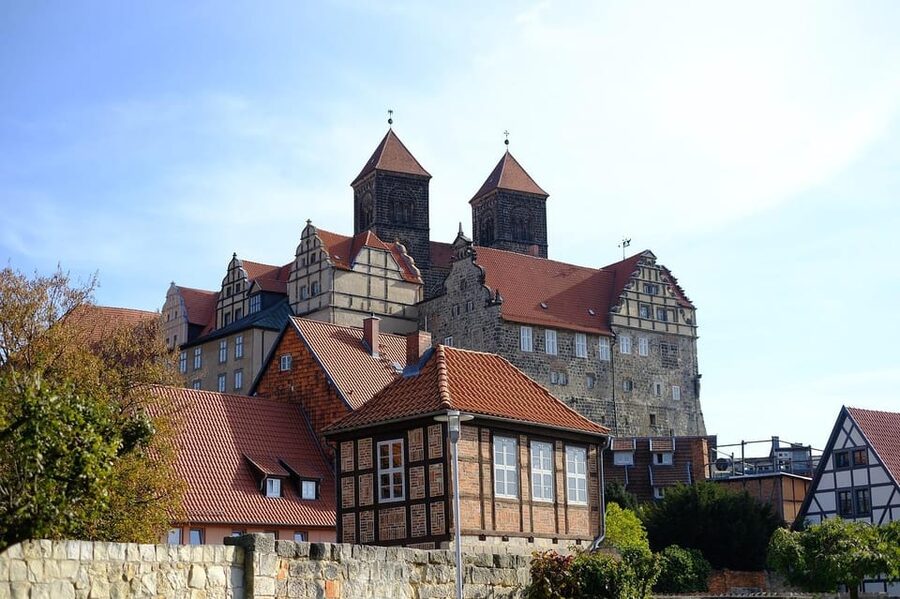
Quedlinburg’s best story is written in wood, stone, and crooked medieval streets. This private two-hour walk links the market square with the Schlossberg, giving you a useful first look at the town’s UNESCO-listed old center and more than 1,100 years of history.
I like the personal format, especially for families or a group sharing the $117 price. I also like the route’s variety: half-timbered houses, churches, museums, castle gardens, and food recommendations all fit into one compact outing. The main catch is that the tour is in German, and the steep Schlossberg section plus cobblestones can be tough for some walkers.
In This Review
- Key points at a glance
- Why Quedlinburg works so well on foot
- The market square and Quedlinburg’s civic heart
- Half-timbered houses, close up
- Up the Schlossberg to Quedlinburg’s grandest view
- A guide who makes the difference
- Food advice at the end of the walk
- Is $117 good value for up to 12 people?
- Weather, shoes, and family comfort
- Who should book this Quedlinburg walk?
- Should you book it?
- FAQ
- Where does the Quedlinburg tour begin?
- How long does the tour last?
- How much does the private tour cost?
- Are children charged for the tour?
- What language is the tour in?
- Is the inside of St. Servatii Collegiate Church included?
- Does the tour operate in bad weather?
- Is the route difficult to walk?
Key points at a glance
- Market-square starting point: Meet directly outside the green Quedlinburg Tourist Information office.
- Two historic zones: Walk the old town first, then climb toward the castle hill and collegiate church.
- Private group value: One price covers up to 12 people, with children and young people up to age 16 free.
- German-language guiding: Guides such as Klaus bring local stories and strong enthusiasm, though one review found his speaking pace fast.
- Churches from the outside: St. Servatii Collegiate Church is a highlight, but interior admission is not included.
- All-weather walking: Expect cobblestones, rain or shine, and a steeper stretch on the Schlossberg.
Why Quedlinburg works so well on foot
Quedlinburg rewards slow looking. Its old center is not just a single grand square with a few preserved buildings. It is a large collection of narrow lanes, timber-framed houses, churches, courtyards, and small architectural details. A guide helps you connect those pieces instead of wandering past them without context.
The tour covers the town’s development across more than 1,100 years. That long time span matters because Quedlinburg’s appeal is not tied to one period. Medieval religious power, civic life, craft traditions, famous local figures, and later artistic connections all appear along the route.
You meet at the city information office on the market square. This is a practical place to begin because it is easy to identify, and the guide waits outside to receive the group. From there, the walk moves into the historic center before reaching the Schlossberg.
Since this is a private group, you are not being fitted into a large crowd. That can make a real difference in a town where streets and courtyards invite questions. You can ask for clarification, slow down for photographs, or focus more on architecture, personalities, or food suggestions.
A few more Germany trips to weigh up
- Leipzig: City History Canal Sightseeing Tour on a Motorboat
★ 4.7 · 6,232 reviews - Berlin: Natural History Museum Entrance Ticket
★ 4.6 · 3,382 reviews - Leipzig: 1.5-Hour Historical Walking Tour in German
★ 4.7 · 2,217 reviews
The market square and Quedlinburg’s civic heart
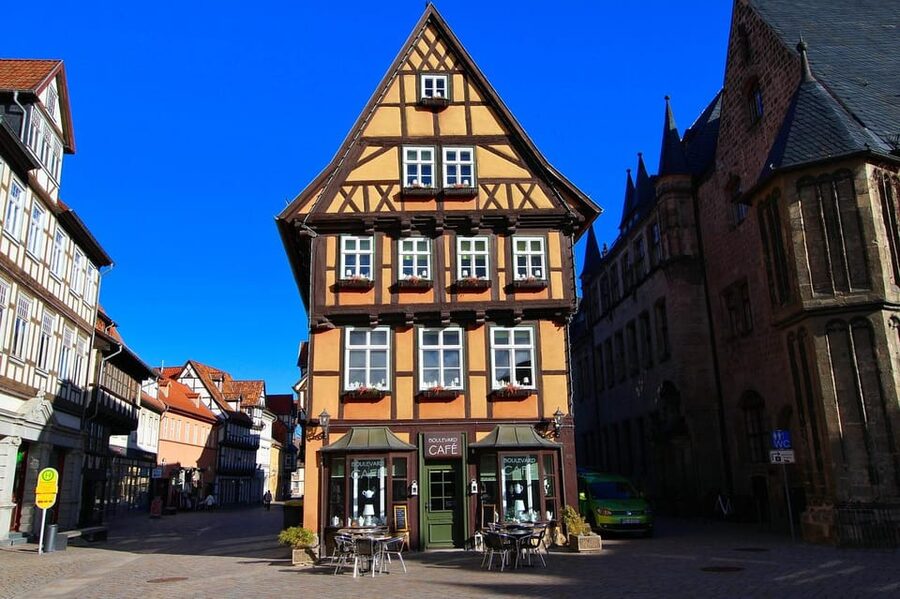
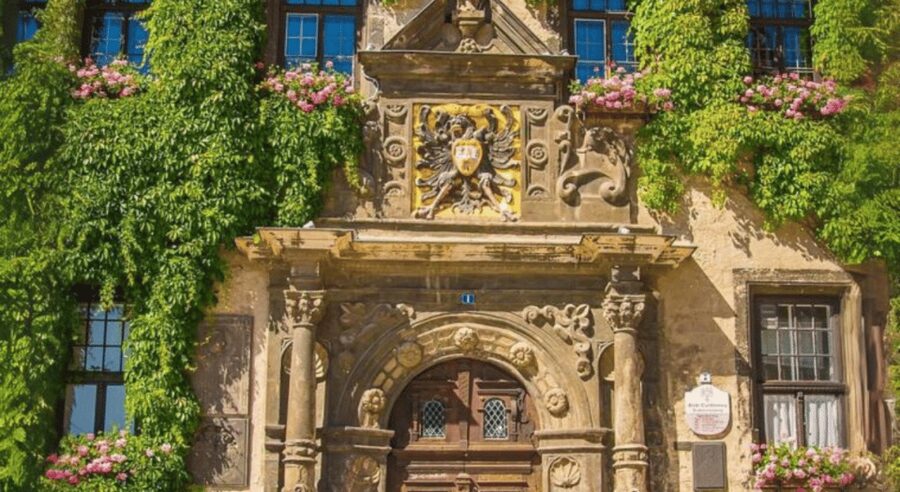
The first portion of the tour centers on the market square and the old town. The town hall gives you an immediate sense of Quedlinburg’s civic identity. It is one of the key landmarks on the route, and the guide uses it to place the square within the town’s wider story.
The market church of St. Benedikti adds another layer. Here, you begin to see how civic and religious buildings sit close together in the old center. The route does not simply point out façades. It presents the square as part of a working town shaped by public life, worship, trade, and local personalities.
From there, you continue toward the Schuhhof. The name and setting offer a more intimate change from the open market square. This is the kind of stop where a guide’s local knowledge becomes useful, since small passages and courtyards can be easy to miss when you explore alone.
The route also includes the Hell, the Blasii Church, and the Half-Timbered Museum. Those names give the walk a pleasant mix of scale. You move from major landmarks to smaller corners and then to a place that focuses on the building style that makes Quedlinburg so recognizable.
Half-timbered houses, close up
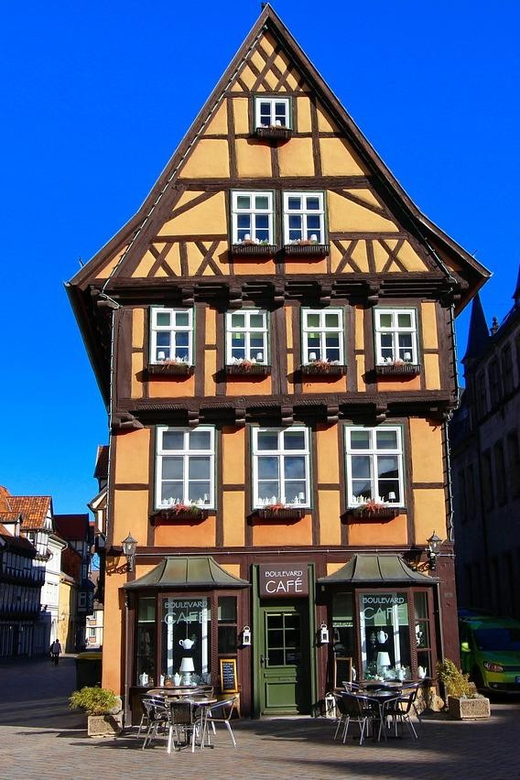
The half-timbered architecture is the visual star of the old town. You will see a wide variety of timber-framed designs rather than a row of identical façades. The close spacing, decorative woodwork, and uneven medieval streets make this part of the walk especially rewarding for photographers and architecture fans.
A guide can point out why these buildings are more than pretty scenery. Their construction, decoration, and placement reflect the town’s past trades and social life. The supplied tour details do not promise a technical building lecture, so do not expect an architecture seminar. Still, the route gives you a strong setting for learning how Quedlinburg grew.
I would pay attention to the transitions between streets. Some areas feel formal and civic, while others are tucked away and more domestic. That contrast is one reason a walking tour is more useful here than a quick bus or car overview. Quedlinburg’s character is found at eye level, in the spaces between the famous stops.
The Half-Timbered Museum is another useful stop because it adds a direct focus on the building tradition. It helps turn the town’s visual appeal into something you can understand. If you arrive early or stay afterward, you may want extra time to look again at the façades with the museum visit in mind.
Up the Schlossberg to Quedlinburg’s grandest view
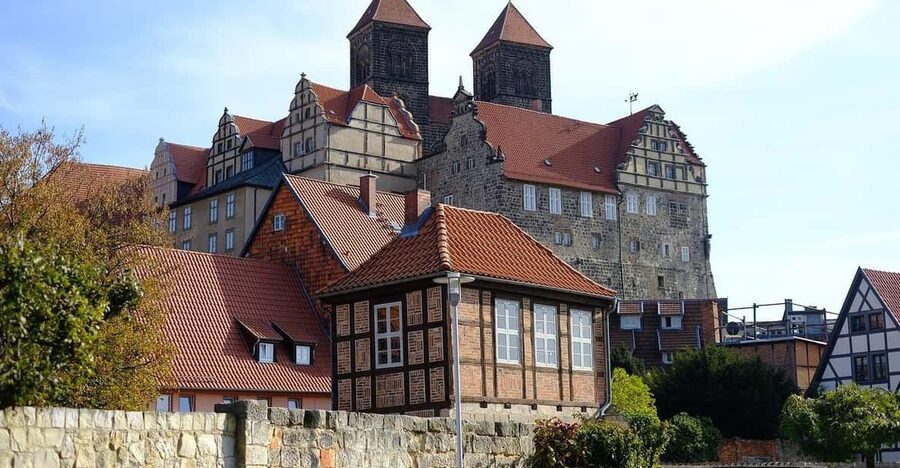
The second major part of the tour heads toward the Schlossberg. This is the high point of the route, both physically and historically. The climb includes a steeper section, so wear firm shoes and expect uneven cobblestones.
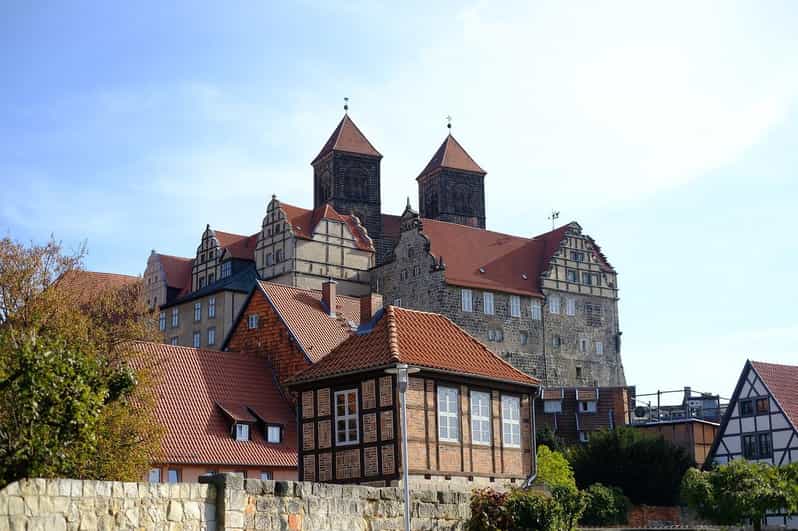
The Schlossberg is home to St. Servatii Collegiate Church, the tour’s main highlight. The church is included as an exterior stop only. That distinction is important: the price does not include entry inside the collegiate church, so you should not book this walk expecting an interior visit.
Even from outside, the church anchors the hilltop and gives the route a strong finish. The guide explains the role of the site within Quedlinburg’s long past, while the surrounding castle gardens add a calmer setting after the climb.
Klopstock House and the Lyonel Feininger Museum are also part of the Schlossberg circuit. These stops connect Quedlinburg with famous personalities and artistic life. You get more than a medieval town story. The route shows how notable people and cultural institutions became part of the city’s identity.
The exact amount of time spent at each stop can vary, especially with a private group. That is one of the format’s advantages. If your group is fascinated by Klopstock, Feininger, or church architecture, you can ask for more detail. If children are tiring near the top, you can keep the pace moving.
Same city, a completely different kind of day:
- Berlin: Reichstag, Dome and Government District Guided Tour
★ 4.7 · 18,288 reviews - Berlin: 1-Hour City Tour by Boat with Guaranteed Seating
★ 4.3 · 16,993 reviews - Hamburg: Sex and Crime in St. Pauli Tour for Ages 18+
★ 4.7 · 15,447 reviews - Hamburg: 1.5-Hour Harbor and Speicherstadt Day Cruise
★ 4.6 · 14,200 reviews
A guide who makes the difference
The quality of a private tour depends heavily on the guide. The strongest comments about this experience focus on enthusiasm, local authenticity, and the small stories shared along the way.
Klaus is named in the feedback, and his connection to Quedlinburg comes through clearly. One especially positive account praised his enthusiasm for his city and the many short stories he told. That is exactly what you want in a place like this. A list of dates and building names is useful, but local anecdotes help the streets feel lived in.
Another account described the tour as interesting and lively, with an exceptionally broad base of information. The same comment raised a useful caution: Klaus can speak quickly, and some of the explanation may be hard to catch. If German is not your first language, tell the guide at the start that you need a measured pace.
The tour is offered in German only. That makes it a natural choice for German-speaking families, couples, and groups. If you are still learning German, the private setup may help because you can ask for repetition. But you should be realistic about the amount of spoken detail you will follow during a fast-paced explanation.
The feedback is not uniformly positive. One low rating criticized pronunciation, general knowledge, and the guide’s approach with children. That is a reminder that expectations and guide fit matter. The overall rating is 4.6 from 32 reviews, with several very strong scores, but a private tour does not guarantee the same experience with every guide or group.
Food advice at the end of the walk
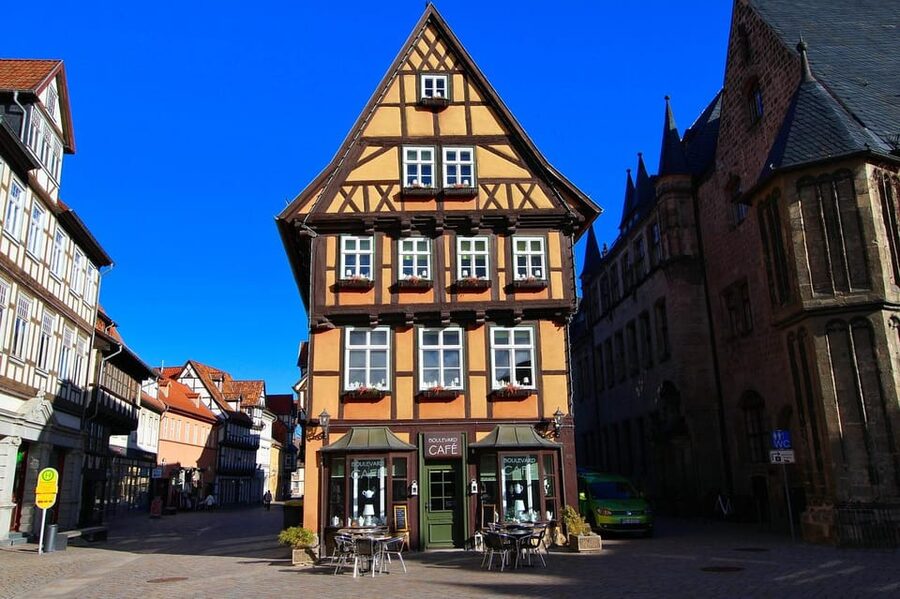
The tour includes an introduction to culinary hotspots and recommendations. This is a small feature, but I find it useful after a two-hour walking route. You are not left with only a list of monuments. You also get help deciding where to eat or take a break during the rest of your Quedlinburg visit.
The information provided does not name specific restaurants or promise a meal, tasting, or reservation. Think of this as local orientation rather than a food tour. Ask the guide for suggestions that match your group, especially if you need a family-friendly stop or want to stay near the old center.
Food advice is most helpful when you use it as a starting point. Ask what is close to the market square, what suits a quick lunch, and which places fit a longer dinner. Since the tour is private, you can make the conversation practical instead of listening to generic recommendations for a large crowd.
Is $117 good value for up to 12 people?
The price is $117 per group, with up to 12 people included. For a full group, that works out to less than $10 per person. That is strong value for a private, guided introduction to a UNESCO World Heritage town.
The value drops if only one or two adults book the experience, but the private format still brings benefits. You get a fixed group rather than joining strangers, and you can ask questions without waiting for a large tour to catch up.
Children and young people up to age 16 are free. Families should calculate the cost by group rather than by adult ticket. For parents who want historical context without arranging several separate visits, this can be an efficient way to introduce Quedlinburg.
The two-hour length is also sensible. It is long enough to cover the market square, old town, Schlossberg, museums, and church exterior without taking an entire day. At the same time, it is not long enough for a slow interior visit, a meal, or extended time at every museum. Plan to add your own time afterward if a particular site catches your interest.
Weather, shoes, and family comfort
The tour operates in all weather conditions. Bring a rain jacket and dress for walking rather than relying on a polished city outfit. Rain can make cobblestones more slippery, and the Schlossberg climb feels more demanding when the weather is poor.
Comfortable shoes are essential. The route includes cobblestone paths and a steeper section. The supplied information does not give detailed accessibility specifications, so anyone with mobility concerns should contact the provider before booking and ask about the current route.
Families can benefit from the private format, especially because the tour is free for children and young people up to 16. Still, the mixed feedback about child-friendliness means you should explain your family’s needs at the start. Ask the guide to keep children involved and to pause when necessary.
This is not a museum-hopping tour with long indoor rests. Much of it takes place outdoors, moving between streets, churches, houses, and the hilltop. If your group prefers a gentle pace, say so before the walk begins.
Who should book this Quedlinburg walk?
I would choose this tour for a first visit to Quedlinburg, particularly if you want the main old-town sights explained in a short period. It is also a good match for a group of friends or an extended family because the flat group price becomes more attractive as your party grows.
Architecture lovers will get the most from the half-timbered streets, the Half-Timbered Museum, and the changing scale between civic buildings and small lanes. History fans will appreciate the long timeline and the links to famous personalities. Families get a compact route and free admission for children up to 16, though the German-only format and hill climb deserve thought.
I would hesitate if you need an English-language guide, a fully accessible route, or guaranteed entry inside St. Servatii Collegiate Church. I would also look elsewhere if you want a food tasting or a full-day historical program. This is a focused walking introduction, not an all-inclusive Quedlinburg day.
Should you book it?
Book this tour if you want a private German-language orientation that combines Quedlinburg’s market square, half-timbered old town, and Schlossberg in two hours. The strongest reasons are the local storytelling, the range of sights, and the excellent group value at $117 for up to 12 people.
Before booking, make three checks: confirm that German suits your group, prepare for cobblestones and a steep section, and remember that St. Servatii is viewed from outside only. If those points work for you, this is a practical way to see why Quedlinburg earns its UNESCO status without spending an entire day on a guided walk.
FAQ
Where does the Quedlinburg tour begin?
The meeting point is directly outside the Quedlinburg Tourist Information office on the market square. The guide receives the group there shortly before the tour begins.
How long does the tour last?
The tour lasts two hours.
How much does the private tour cost?
The price is $117 for a private group of up to 12 people.
Are children charged for the tour?
Children and young people up to age 16 are free.
What language is the tour in?
The live guide conducts the tour in German.
Is the inside of St. Servatii Collegiate Church included?
No. The tour includes the Schlossberg and St. Servatii Collegiate Church from the outside, but entry inside the church is not included.
Does the tour operate in bad weather?
Yes. The tour operates in all weather conditions, including rain.
Is the route difficult to walk?
The route includes cobblestone paths and a steeper section on the Schlossberg. Wear suitable walking shoes and ask the provider about the route if mobility is a concern.
Just added around Germany
- Aachen old town tour – GERMAN (public)★ 5.0 · 24 reviews
- Aachen Private Walking Tour With A Professional Guide★ 5.0 · 11 reviews
- Cologne Highlights: Exclusive Private Tour★ 5.0 · 5 reviews
- Bremen Private Walking Tour With A Professional Guide★ 5.0 · 7 reviews
- Private Walking Tour through the Fascinating Bremen’s City Center★ 5.0 · 5 reviews
- Explore Cologne’s best Street Art Quarter★ 4.5 · 4 reviews
- Bremen Exploration Private Game and City Tour on your Phone★ 4.5 · 7 reviews
- e-Scavenger hunt Bremen: Explore the city at your own pace★ 4.0 · 24 reviews
Historical Tours, compared.

City History Canal Sightseeing Tour on a Motorboat
Read our review →






Browse the lists this tour appears in