
Reviewed · FOOD TOURS
Munich: 3-Hour Culinary Nightwatch Tour
Munich’s old town feels different after dark, especially when a costumed night watchman leads you past cemeteries, torture chambers, old gates, and narrow lanes where medieval trouble once brewed. This three-hour evening tour mixes grisly city tales with a tavern meal, a dessert, and drinks, so you learn history without giving up the pleasures of a night out.
I like the food built into the experience, since you begin with meat, bread, and a drink instead of meeting your guide hungry. I also like the human touch of the costumed guide, especially when the presentation is as lively as it was with Matthias, whose humor, singing, and strong command of the subject made one group’s evening last a little more than three hours.
The main thing to consider is language. The live tour is in German, and the first meal can feel cramped when the group is large. The food has also been uneven for some people, and the final dessert stop returns to the same tavern rather than introducing a second dining spot.
In This Review
- Key points to know before booking
- Meeting the night watchman at Marienplatz
- The first tavern stop: meat, bread, and a drink
- St. Peter’s cemetery and the unpleasant side of death
- The Old Town Hall and the old city gate
- Torture, prison, and the path of the medieval wall
- Gruftgasse and Schäfflergasse: gruesome tales and medieval drinks
- Frauenkirche, Promenadeplatz, and Munich’s palaces
- Salvatorkirche and the Theatine Church
- Dessert, a nightcap, and the value of the $88 price
- Who will enjoy this Munich evening?
- Should you book the nightwatch tour?
- FAQ
- How long is the Munich Culinary Nightwatch Tour?
- Where does the tour meet?
- How will I recognize the guide?
- What food is included at the first stop?
- Is dessert included?
- Is the tour conducted in English?
- What sights are included?
- Is the tour wheelchair accessible?
- What is the cancellation policy?
- Can I reserve without paying immediately?
Key points to know before booking
- Start with a tavern meal: Meat, bread, and a drink fuel the first part of the evening.
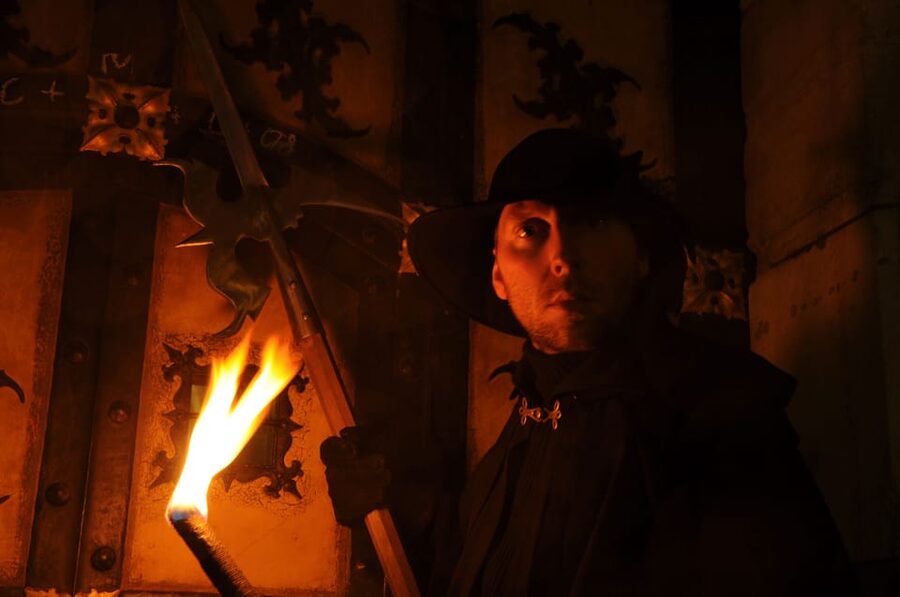
- Follow a costumed night watchman: The role gives the walk a theatrical edge without turning it into a stage show.
- Hear Munich’s darker stories: Cemetery customs, torture, prison life, host desecration, and foul-smelling corpses all enter the tale.
- Cover major old-town sights: The route includes St. Peter’s Church, the Old Town Hall, the Frauenkirche, and several palaces and churches.
- Finish with dessert and a nightcap: Kaiserschmarren may be served at the same tavern used for the opening meal.
- Expect German only: The experience works best if you can follow a lively spoken tour in German.
Meeting the night watchman at Marienplatz
The stated meeting point is the Mariensäule at Marienplatz, Munich’s central square. The guide carries a big blue bag marked with the white words Weis(s)er Stadtvogel, which gives you a useful visual clue in a busy square.
The tour description also refers to the meeting place as Marktplatz. Since Marienplatz is the specific location given for meeting, check the final booking details before you go and arrive with enough time to find the column. This matters more at night, when groups gather around the square and several guided activities may be starting at once.
Your guide wears historical costume and takes on the part of a night watchman guarding the streets. That role helps set the mood from the first minutes. You are not simply following a guide from one monument to the next. You are being led through a long-vanished Munich, where the job meant watching for fire, disorder, criminals, and other unwelcome activity.
The tone is meant to be entertaining, not solemn. A guide such as Matthias can turn the walk into a social evening, with jokes, songs, and a steady stream of stories. The quality of the night depends heavily on the individual guide, so the named praise for Matthias is useful if you are trying to gauge the style. Expect personality and performance as well as facts.
More Food Tours in Munich
- Munich: Viktualienmarkt Food Tour
★ 4.5 · 1,127 reviews - Munich: Beer and Food Tour with Dinner & Oktoberfest Museum
★ 4.7 · 1,086 reviews - Lunch Like a Local: Munich’s ORIGINAL Viktualienmarkt Food Tour
★ 5.0 · 416 reviews
The first tavern stop: meat, bread, and a drink
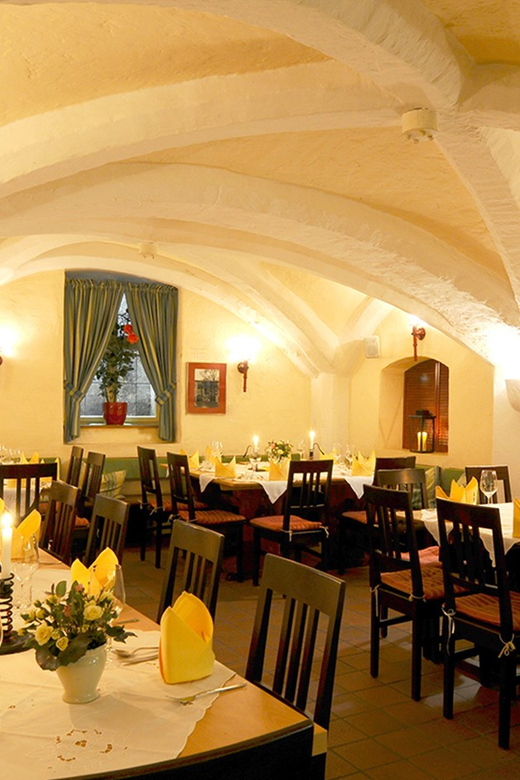
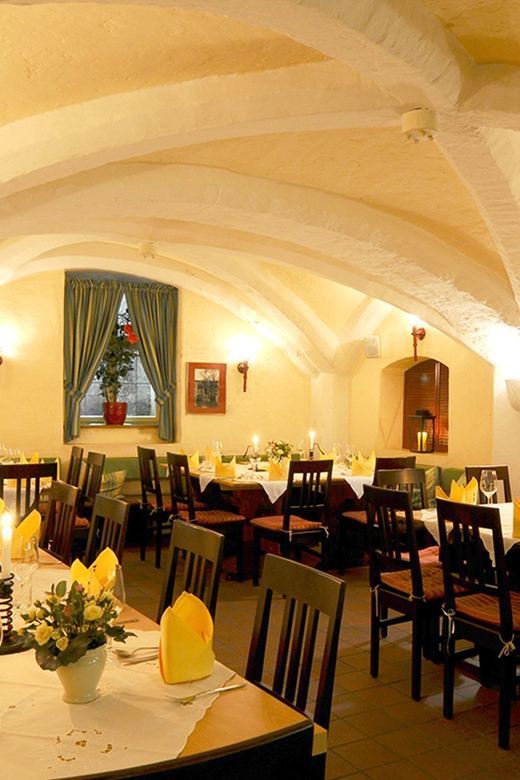
The evening begins in a quaint Munich tavern. You receive a hearty nightwatch meal of meat and bread, along with a drink. It is a simple idea, but it makes practical sense: you eat before walking, and the food gives the group a shared starting point.
Do not book this expecting a formal tasting menu or a detailed study of Bavarian cooking. The food is part of the story and the social setting, not the main reason to come. One assessment found the meal only average, while another described it as very good. That suggests you should see the included dinner as convenient and atmospheric rather than guaranteed culinary excellence.
The room can also feel tight. A large group was reported to have sat rather closely together, which may bother you if you prefer personal space or a quiet meal. On the other hand, the close seating helps people talk, and the group atmosphere seems to be an important part of the evening.
The drink adds to the old tavern feeling, though the supplied details do not specify every beverage choice. The tour is conducted in German, so this first stop may pass quickly if you cannot follow the language. If you do understand German, it gives you time to settle into the guide’s style before the walking begins.
St. Peter’s cemetery and the unpleasant side of death
After the meal, the night watchman leads you through Munich’s old town and toward St. Peter’s Church. This is where the tour’s darker material begins to take shape.
You hear about the cemetery, funeral customs, epitaphs, and the problems caused by poorly managed corpses. The stories include foul-smelling bodies and even missing church pews. These details work because they take you beyond grand buildings and famous names. You begin to picture the daily concerns of an older city, where death was close, public, and impossible to hide behind modern sanitation.
The material is grisly, so this is not the right evening for anyone seeking a gentle sightseeing walk. The guide’s humor helps keep the mood from becoming too heavy, but the subject matter remains frank. I find that the best part of this section is its attention to ordinary customs. A church is not presented only as a beautiful structure. You learn how people used it, how they mourned, and how disorder could show up in places meant for worship.
St. Peter’s is also an easy place to anchor the story. You can connect the guide’s talk to a real church and cemetery setting rather than hearing disconnected legends in the middle of a street.
The Old Town Hall and the old city gate
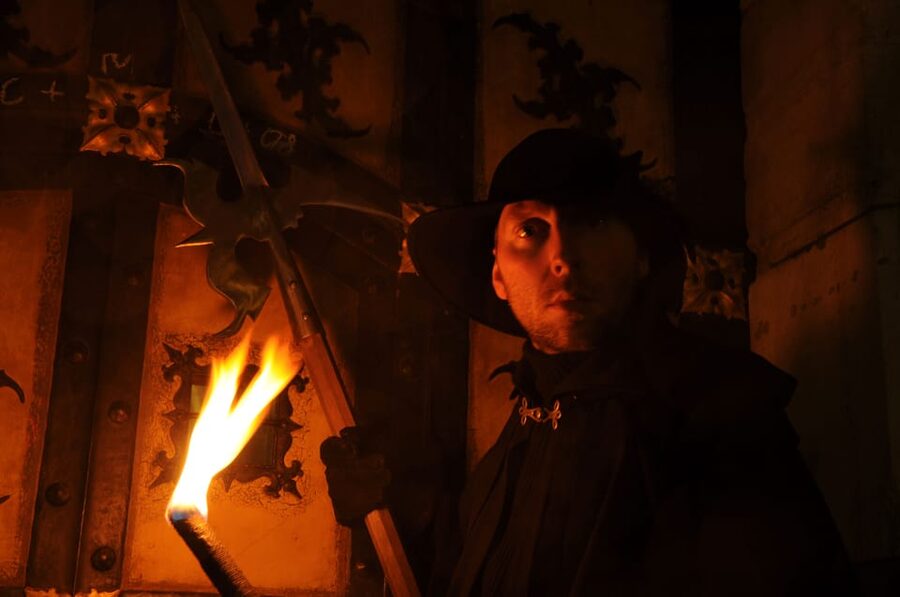
The route continues to the Old Town Hall on Salzstraße, a historic street with its own place in Munich’s past. Here the night watchman discusses the old city gate and the reconstruction of the town hall spire in the 1970s.
This stop shows how the tour handles time. It is not limited to medieval legends. The story also includes the way Munich’s buildings have been repaired, altered, and rebuilt. That makes the route more useful than a simple procession of old-looking façades.
You will hear about a city gate that once controlled movement into Munich, then look at a building whose spire required later reconstruction. The details remind you that an old town is not frozen in one period. Fires, war, damage, and changing needs have all shaped what you see today.
The route is walked through the center of Munich, so comfortable shoes are sensible. The experience lasts about three hours, and the food stops break up the walking. Still, anyone who finds extended standing difficult should take the duration seriously, even though the activity is listed as wheelchair accessible.
Same city, a completely different kind of day:
- From Munich: Neuschwanstein & Linderhof Castle Full-Day Trip
★ 4.5 · 12,494 reviews - Neuschwanstein & Linderhof Castle-Fairytale Day Tour from Munich
★ 4.5 · 7,275 reviews - Munich: Third Reich & WWII Walking Tour
★ 4.6 · 6,181 reviews - Dachau Concentration Camp Memorial Site Tour from Munich by Train
★ 4.5 · 5,637 reviews
Torture, prison, and the path of the medieval wall
Passing a torture chamber and prison, the group reaches the Old Court. This is one of the more dramatic stretches of the walk, since the setting and subject reinforce each other.
The stories here deal with punishment and confinement, but the value is not just shock. The night watchman helps you think about how authority worked in earlier Munich. A prison, a torture chamber, and a guarded wall all point to a city concerned with control, order, and protection.
From the Old Court, the route follows the line where the original 12th-century city wall once stood. You leave the moated castle and head west along the former edge of the city. That change in direction gives you a clearer sense of Munich’s older shape. Instead of hearing only that walls existed, you trace part of their footprint through the modern streets.
This is where a good guide earns the fee. The buildings may not always announce their medieval purpose, so the story has to connect today’s street plan with what disappeared. A skilled presenter can make an absent wall feel more real than a surviving fragment.
Gruftgasse and Schäfflergasse: gruesome tales and medieval drinks
Gruftgasse brings another dose of unsettling material. The name itself leads into stories about crypts and death, and the night watchman continues the tour’s focus on the less polished side of old Munich.
You then explore Schäfflergasse, where you learn a useful correction to a common modern assumption: in medieval Munich, wine was the drink of choice, not beer. That fact gives the tour a welcome turn. The evening is not only about corpses and punishment. It also challenges the familiar image of Munich as a city defined by beer in every age.
Small details such as this are why I prefer a themed walk to a quick monument tour. You leave with a few facts that can change how you look at the city’s food and drink culture. The night watchman’s meal may feel Bavarian in a modern sense, but the historical talk reminds you that local habits have changed.
The stories can be lively and sometimes crude. If you prefer a polished lecture, the humor and theatrical delivery may feel too broad. If you enjoy an informal guide who can make a group laugh, it is likely to be one of the evening’s strengths.
Frauenkirche, Promenadeplatz, and Munich’s palaces
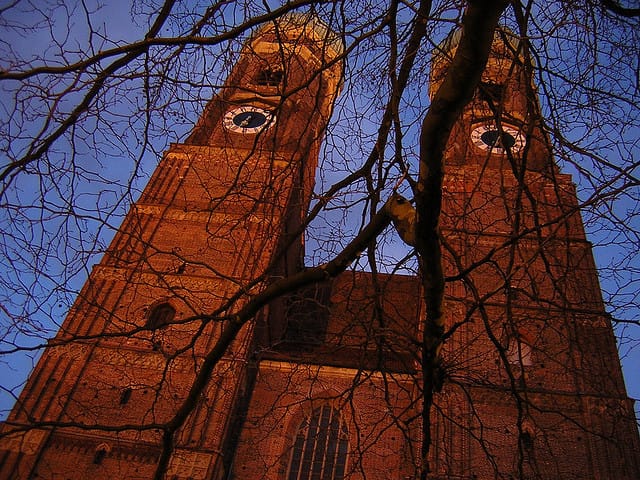
The two towers of the Frauenkirche provide one of the route’s clearest visual markers. The church is among Munich’s best-known sights, and seeing it during an evening walk gives the tour a strong sense of place.
You also pass Promenadeplatz, Palais Portia, and Palais Holnstein. These stops widen the focus beyond medieval streets and churchyards. The night watchman can connect the old town’s public spaces with courtly buildings and the people who shaped Munich’s political and religious life.
Do not expect long interior visits. This is primarily an outdoor walking tour, with the value coming from the guide’s narration and the sequence of streets. You will see important buildings from the outside while hearing stories that give them context.
That format suits a first evening in Munich because it helps you get your bearings around the center. It also works for repeat visitors who have already seen the façades but want a different way to read them. The costumed guide changes the pace from standard daytime sightseeing, when most visitors are focused on photographs and architectural details.
Salvatorkirche and the Theatine Church
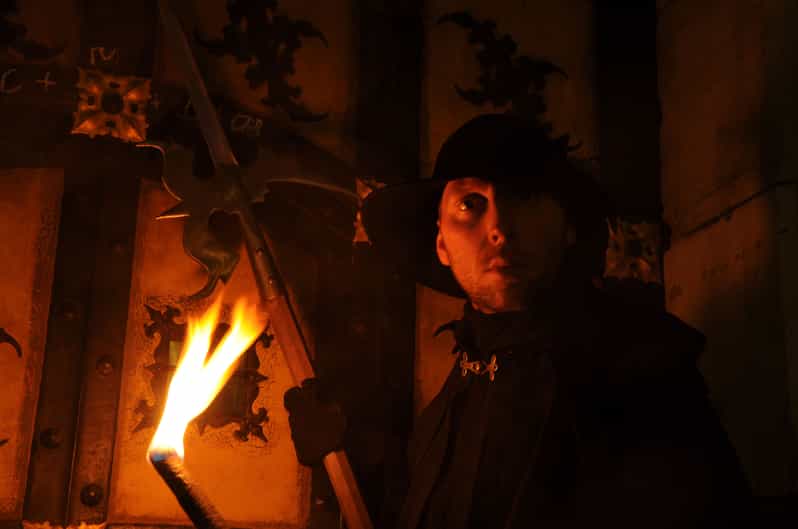
At Salvatorkirche, the subject turns to a shocking case of host desecration. It is a disturbing story, and the guide presents it as part of the religious tensions and fears that shaped earlier centuries.
This section requires some maturity. The tour does not soften every piece of the past, and the religious material can be uncomfortable. Its purpose is to show how accusations and beliefs could carry serious consequences, not to offer a light church tour.
At the Theatine Church, you hear about Henriette Adelaide and the role her son played in ensuring that the Theatine cloister was built. This gives the final stretch a more personal and political angle. Instead of only hearing about buildings, you connect construction to a family and to the decisions of people with power.
The contrast between Salvatorkirche and the Theatine Church keeps the route from feeling repetitive. One stop deals with a shocking religious crime. The other ties a major church complex to dynastic life and patronage. The guide’s job is to make these shifts feel like part of Munich’s story rather than isolated anecdotes.
Dessert, a nightcap, and the value of the $88 price
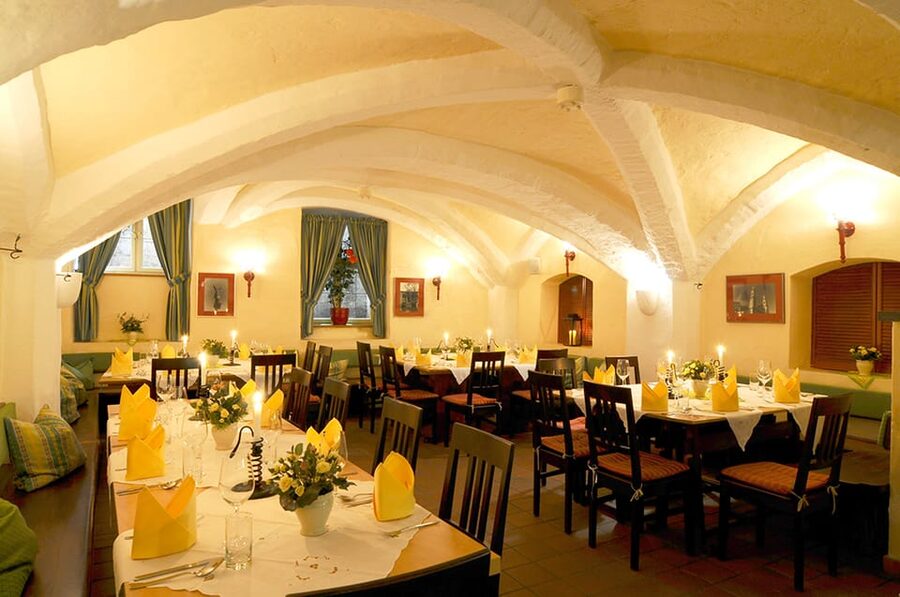
The group returns to the tavern for dessert and a nightcap. Kaiserschmarren has been served as the final sweet course, although the supplied details do not promise that it will be the dessert every time.
Returning to the same restaurant is both a plus and a minus. You avoid another move through the city, and the familiar setting makes the night feel like one complete gathering. If you expect a second venue or a more varied food program, you may find the ending less interesting.
At $88 per person, the price is easier to justify if you value the full package: a costumed guide, roughly three hours of storytelling and walking, a savory meal, a drink, dessert, and a nightcap. It is less compelling if you mainly want a cheap old-town walk or a serious food tour.
I would compare it with the cost of paying separately for dinner, dessert, drinks, and a guided evening visit. The price does not guarantee fine dining, but it does bundle the social and theatrical parts of the night. The rating of 4.3 from 87 bookings suggests a generally strong experience with some clear limits, especially the German-only format, cramped seating, and occasional food disappointment.
One practical risk is cancellation due to low enrollment. A booking for seven people was canceled two days before the scheduled date because too few people had signed up. Free cancellation is available up to 24 hours in advance, and you can reserve now and pay later, but you should still avoid making this the one non-negotiable event of a tightly packed Munich visit.
Who will enjoy this Munich evening?
I would choose this tour if you like local stories, theatrical guides, and a meal that is part of the entertainment. It suits couples, friends, and families with older children who can handle grim subjects and a German-language presentation.
It is especially useful for someone who wants a first look at Munich’s old town after the daytime crowds have thinned. The route includes major sights, but the guide spends more time on strange customs, crime, death, religion, and city defenses than a standard sightseeing walk would.
You should think twice if you need English, want a quiet gourmet dinner, or dislike horror-style storytelling. The tour is listed as wheelchair accessible, but the supplied details do not explain the exact street surfaces, seating arrangements, or access at every stop. Ask the operator for current route details if that affects your decision.
Should you book the nightwatch tour?
Book it if you want history with a meal and a bit of theater, and you can follow German. The strongest guides make the evening funny, social, and memorable, while the route gives you a useful look at Munich’s churches, streets, walls, palaces, and darker customs.
Skip it if the food matters more to you than the stories, or if returning to the same tavern for dessert feels like a letdown. At $88, this is not simply a walking tour, and it is not simply dinner. It is a packaged night out whose value depends on enjoying the guide’s personality as much as the sights.
FAQ
How long is the Munich Culinary Nightwatch Tour?
The tour lasts three hours. One supplied account says the evening lasted a little more than three hours.
Where does the tour meet?
The meeting point is the Mariensäule at Marienplatz in Munich. The activity information also uses the term Marktplatz, so check your booking details for the exact meeting instructions.
How will I recognize the guide?
The guide carries a big blue bag with the white words Weis(s)er Stadtvogel on it.
What food is included at the first stop?
The first stop includes a nightwatch meal with meat, bread, and a drink.
Is dessert included?
Yes. The second stop includes dessert and a nightcap. Kaiserschmarren has been served as the dessert, but a specific dessert is not guaranteed in the supplied details.
Is the tour conducted in English?
No. The live tour guide language is German, and the listed tour language is German.
What sights are included?
The route includes St. Peter’s Church, the Old Town Hall on Salzstraße, the Old Court, the former line of the 12th-century city wall, Gruftgasse, Schäfflergasse, the Frauenkirche, Promenadeplatz, Palais Portia, Palais Holnstein, Salvatorkirche, and the Theatine Church.
Is the tour wheelchair accessible?
The activity is listed as wheelchair accessible.
What is the cancellation policy?
You can cancel up to 24 hours before the tour for a full refund.
Can I reserve without paying immediately?
Yes. The reserve-now, pay-later option lets you secure a place without paying at the time of booking.
More 3-Hour Experiences in Munich
- Munich 3-Hour Guided Bike Tour
★ 4.5 · 1,731 reviews - Munich’s Beer Halls and Breweries: 3-Hour Guided Tour
★ 4.6 · 928 reviews - Munich 3-Hour Segway Tour: Nazi Munich & Royal Architecture
★ 4.9 · 194 reviews - 3H Best of München Sightseeings Tour
★ 4.8 · 72 reviews
Just added around Munich
- Pub crawl incl. Oktoberfest museum guided tour with beer tasting (private)★ 5.0 · 5 reviews
- South Tyrolean specialties and wine tasting★ 5.0 · 5 reviews
- Size Matters Beer Tour Munich★ 4.6 · 105 reviews
- Short & sweet: Tasting the Viktualienmarkt★ 4.8 · 37 reviews
- Secret Food Tours Munich★ 4.8 · 5 reviews
- Munich: Romantic Wine Experience for Two at Viktualienmarkt★ 4.2 · 14 reviews
- Munich: Resistance against Hitler – Historical Walking Tour★ 5.0 · 5 reviews
- Residence of Munich private tour with skip the line ticket★ 5.0 · 4 reviews
Food Tours, compared.

Elbphilharmonie Plaza and HafenCity Food Tour
Read our review →
Berlin Center Food Tour with 8+ Authentic Local Tastings
Read our review →

Beer and Food Tour with Dinner & Oktoberfest Museum
Read our review →

Browse the lists this tour appears in