
Reviewed · HISTORICAL TOURS
Karlsruhe: Guided City History & Culture Walking Tour
Karlsruhe was not shaped by centuries of slow growth. It was planned from scratch in 1715, when Karl III Wilhelm, Margrave of Baden-Durlach, left his old capital of Durlach and founded a new residence. That unusual beginning gives this walk a clear story and helps you see the city as a bold Baroque experiment rather than just another German town center.
I like the tour’s focus on two things: well-explained local history and the lasting mark of architect Friedrich Weinbrenner. I also like the short 1.5-hour length, which gives you useful bearings without taking half your day. The main drawback is simple: the tour is in German, and it runs outdoors in all weather, so your enjoyment depends on your language skills and your jacket.
In This Review
- Key points to know before you book
- Starting at Karlsruhe’s market square
- Reading the Baroque plan of Karlsruhe
- Karl III Wilhelm and the move from Durlach
- Weinbrenner’s classical Karlsruhe
- Anecdotes, atmosphere, and local tips
- What the 90-minute route gives you
- The value of $12 per person
- Who should take this Karlsruhe walk?
- Booking details that affect your choice
- Should you book this Karlsruhe tour?
- FAQ
- Where does the Karlsruhe walking tour begin?
- Where does the tour end?
- How long does the tour last?
- What language is the tour offered in?
- Is the tour wheelchair accessible?
- What is included in the price?
- Are food, drinks, or admission tickets included?
- Can I cancel the booking?
- Can children under three join the tour?
Key points to know before you book
- Karl III Wilhelm’s decision shapes the entire story: You learn why the margrave abandoned Durlach as his capital and created Karlsruhe as a new residence.
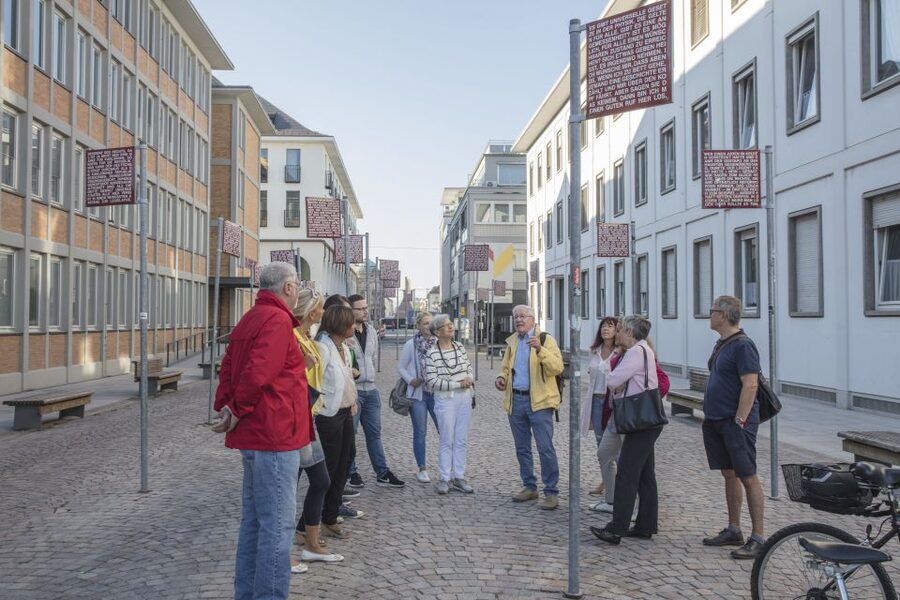
- Karlsruhe’s Baroque city plan is the star: The tour explains why a purpose-built city was such a novelty in the early 18th century.
- Weinbrenner adds a second architectural chapter: You hear how the classical city architect helped shape Karlsruhe after its Baroque beginnings.
- The guide adds humor and local advice: Funny anecdotes keep the history from feeling like a school lecture, while insider tips can help with the rest of your visit.
- The meeting point is easy to find: The walk begins and ends at the Karlsruhe Tourist Information beside the market square on Kaiserstraße.
- The price is modest: At $12 per person, this is a low-cost way to understand the city before exploring it on your own.
Starting at Karlsruhe’s market square
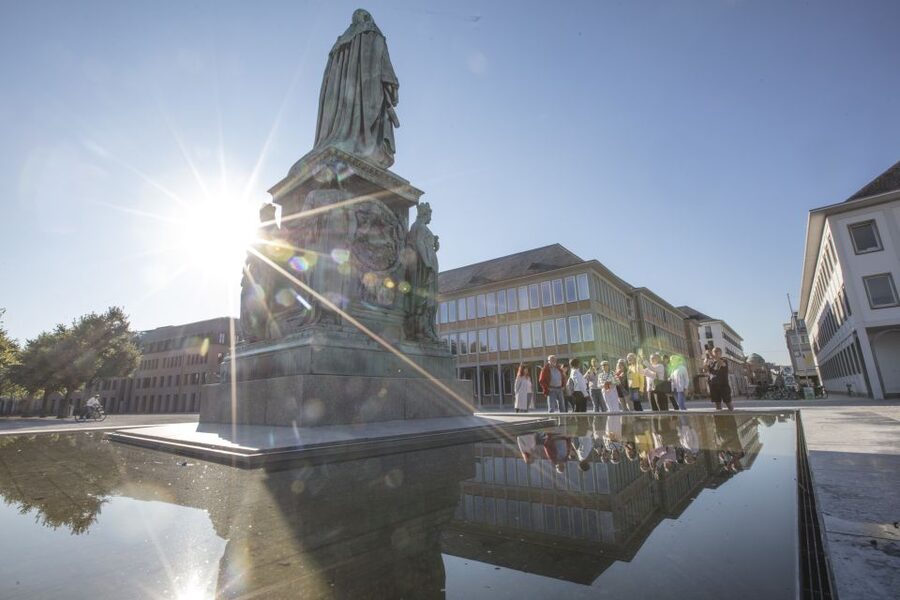
Your meeting point is the Tourist Information at Kaiserstraße 72-74, beside the market square in central Karlsruhe. Starting here makes practical sense. You are in a central part of town, and the walk returns to the same place, so you do not need to worry about finding your way back from an unfamiliar neighborhood.
The opening sets up Karlsruhe’s unusual birth. Many European cities grew around a castle, a church, a river crossing, or a trading post. Karlsruhe was different. It was founded in 1715 as a planned residence for Karl III Wilhelm, Margrave of Baden-Durlach.
That founding date matters. Karlsruhe is only about 300 years old, which is young by German standards. The guide uses that fact to frame the city as a place born from a decision, not from centuries of accidental growth.
You should expect the first part of the walk to focus on orientation and background rather than a long list of dates. The useful question is not only when Karlsruhe was founded, but why a ruler would leave Durlach and build a new capital. That choice gives the tour a human center: ambition, politics, taste, and the desire to create a residence on new terms.
A few more Germany trips to weigh up
- Leipzig: City History Canal Sightseeing Tour on a Motorboat
★ 4.7 · 6,232 reviews - Berlin: Natural History Museum Entrance Ticket
★ 4.6 · 3,382 reviews - Leipzig: 1.5-Hour Historical Walking Tour in German
★ 4.7 · 2,217 reviews
Reading the Baroque plan of Karlsruhe
The city’s planned design is one of the most valuable parts of the experience. Karlsruhe was created as a Baroque city, an approach that favored order, symmetry, and the visual power of a ruler’s residence.
You will learn why this plan was considered pioneering in its time. Instead of wandering through streets that had developed bit by bit, you can look at Karlsruhe as an idea placed on the ground. The city’s layout reflects the political world of its founder and the planning choices behind his new seat of power.
A guide is especially useful here because a map alone does not explain the reasons behind a design. The tour helps connect the physical city to Karl III Wilhelm’s decision-making. You are not simply told that Karlsruhe was planned. You are shown why that fact changes the way you read the streets and public spaces.
This is also where the walk can sharpen your sense of place. The goal is not to memorize a diagram. It is to notice that Karlsruhe feels different because its structure was intentional from the beginning.
The drawback is that the experience remains a walking overview. You should not expect admission to monuments, museum visits, or a long architectural study inside specific buildings. Admission tickets are not included, and the focus is on the city as a whole.
Karl III Wilhelm and the move from Durlach
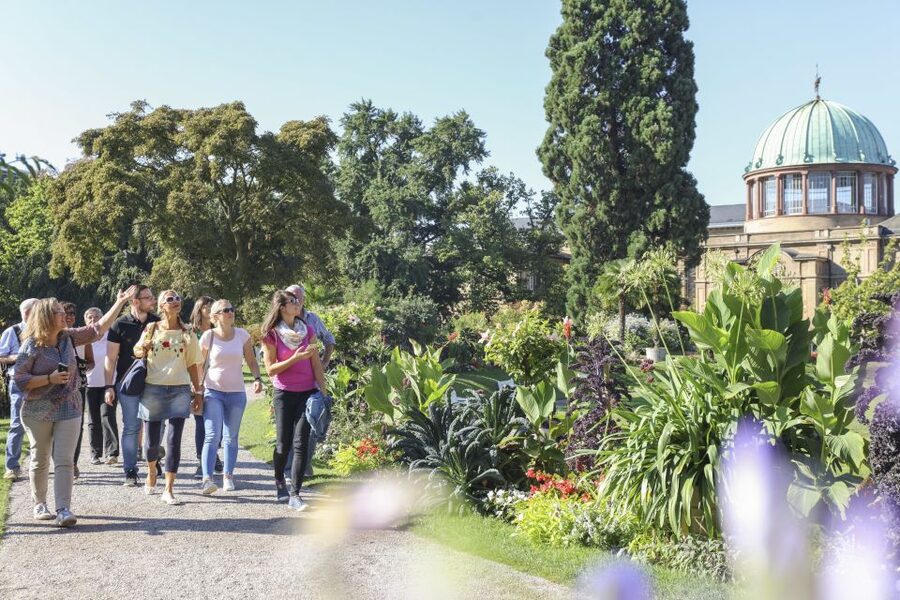
The story of Karl III Wilhelm gives the tour its strongest human interest. He founded Karlsruhe in 1715 and chose to leave Durlach, his former capital. That is a major decision, and the guide explains what made him want a completely new city.
The supplied tour details do not give a precise list of every reason or every stop, so you should think of this section as a guided explanation of the founding choice rather than a detailed reconstruction of court life. Still, it is a valuable angle. You are learning about a ruler who did not simply inherit a finished capital. He helped create a new one.
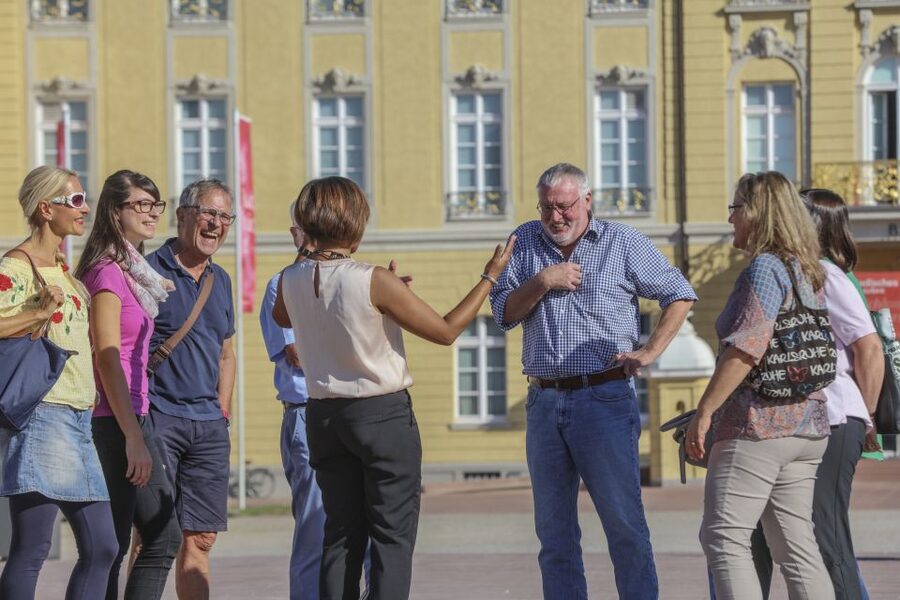
The guide’s anecdotes matter here. Political and architectural history can become dry when reduced to dates and titles. Personal stories and funny details make the margrave easier to picture, while also showing how grand city plans begin with very human motives.
The tour also links the founding period to Karlsruhe’s continuing sense of experiment. The city is presented not as a place frozen in its first design, but as one that kept changing and looking ahead. That connection between past, present, and future is part of the tour’s central idea.
For you, the practical benefit is clear: after this section, Karlsruhe’s layout should feel less random. You will have a story to attach to the city’s origins, which makes later independent sightseeing more rewarding.
Weinbrenner’s classical Karlsruhe
The tour also introduces Friedrich Weinbrenner, the classical city architect associated with Karlsruhe. His work gives the city another layer beyond its original Baroque plan.
This is an important distinction. Karlsruhe did not remain exactly as Karl III Wilhelm first imagined it. Later architectural ideas shaped the city, and Weinbrenner represents the classical period that followed the founding era.
You should expect the guide to explain Weinbrenner’s role and influence rather than offer an extended building-by-building tour. The details provided for this experience do not name individual Weinbrenner structures or promise entry into them. That keeps the walk broad and accessible, but it also means architecture fans looking for detailed interiors or technical analysis may want to add a separate visit.
I like this two-part architectural story. First comes the planned Baroque residence, then the classical influence that helped define Karlsruhe later. It gives you a simple framework for understanding why the city can feel both carefully ordered and shaped by more than one period.
The strongest praise associated with the tour centers on its content being highly interesting and clearly explained. That fits this subject well. Weinbrenner’s importance is easier to appreciate when someone connects his style to Karlsruhe’s wider development instead of asking you to identify architectural details on your own.
Same city, a completely different kind of day:
- Berlin: Reichstag, Dome and Government District Guided Tour
★ 4.7 · 18,288 reviews - Berlin: 1-Hour City Tour by Boat with Guaranteed Seating
★ 4.3 · 16,993 reviews - Hamburg: Sex and Crime in St. Pauli Tour for Ages 18+
★ 4.7 · 15,447 reviews - Hamburg: 1.5-Hour Harbor and Speicherstadt Day Cruise
★ 4.6 · 14,200 reviews
Anecdotes, atmosphere, and local tips
A good city walk should do more than recite information. This one adds funny anecdotes and personal insider tips from the guide.
The humor is useful because the subject includes rulers, urban planning, and architectural history, all topics that can become formal very quickly. Small stories can give the tour a lighter rhythm and help you remember the main points after the walk ends.
The insider tips may be just as useful as the historical material. The activity description does not specify particular restaurants, museums, or shops, so you should not book this expecting a fixed list of recommendations. Instead, expect practical suggestions shaped by the guide’s local knowledge.
The mood is meant to be personal rather than stiff. You get a local German-speaking guide who explains Karlsruhe’s past while helping you notice its present-day character. That combination suits a first visit, especially if you want context before exploring independently.
One point needs careful attention: the advertised tour language is German. The guide is described as live and German-speaking, and no other language is listed. If you are not comfortable following spoken German for 90 minutes, the value drops sharply. Check the available language information before booking rather than assuming an English version will be offered.
What the 90-minute route gives you
At 1.5 hours, this is a compact introduction rather than an all-day history program. That timing is one of its best features. You can fit it into a morning or afternoon and still have time for your own plans.
The route begins and ends at the Tourist Information by the market square. Based on the stated themes, the walk moves through Karlsruhe’s founding story, its Baroque planning, Karl III Wilhelm’s break with Durlach, and Weinbrenner’s classical influence. The guide then adds anecdotes and local advice along the way.
Because no detailed stop-by-stop route is provided, you should not expect a fixed checklist of named buildings. The experience is better understood as a connected city explanation. The value comes from seeing how the pieces relate, not from collecting photographs at a long string of monuments.
The short duration also limits the amount of detail possible. You will receive the main framework, not every political event or architectural change in Karlsruhe’s past. If you already know the city well, the tour may feel introductory. If Karlsruhe is new to you, that same focus makes it a sensible starting point.
The walk is wheelchair accessible, which is helpful for many visitors. It remains an outdoor activity, though, and tours take place in all weather. Wear shoes suitable for walking and dress for the forecast. A wet day can affect comfort even when the route itself remains accessible.
The value of $12 per person
At $12 per person, the tour is priced as an easy addition to a Karlsruhe visit. You are paying for 90 minutes with a local German-speaking guide, historical explanation, anecdotes, and tips. Food, drinks, personal expenses, admission tickets, and optional activities are not included.
The value is strongest if you are arriving without much background. A small amount of context can change how you spend the rest of your day. Instead of seeing Karlsruhe as a collection of streets and buildings, you can recognize the planned Baroque origins and the later classical influence.
It is also a good deal for anyone who prefers orientation before independent sightseeing. You return to the same central meeting point, so you can continue on your own without arranging extra transport.
The price does not mean you are buying an attraction ticket. There is no promise of entry to a museum or monument, and the tour is not built around food or drinks. If you want a private, highly specialized architecture lesson, this is not that product. For a short general introduction, though, $12 is reasonable.
Children under three may participate free of charge. That can help families, although the outdoor 90-minute format still requires you to plan around the weather and your child’s comfort.
Who should take this Karlsruhe walk?
I would choose this tour if you are visiting Karlsruhe for the first time and want the city to make sense quickly. It suits history-minded visitors, architecture fans seeking a broad introduction, and anyone curious about how a planned city differs from an older medieval center.
It also fits travelers who value stories over a rigid monument checklist. The margrave’s decision to move from Durlach, the city’s Baroque beginnings, and Weinbrenner’s later influence create a clear narrative.
You may want to skip it if you need an English-language tour, dislike outdoor walks, or prefer to explore silently at your own pace. You should also look elsewhere if your priority is interior access, detailed museum interpretation, or admission to specific buildings.
For families, the free participation for children under three is useful. Older children may enjoy the unusual founding story and funny anecdotes, but the experience is still a spoken history walk, so interest will depend on language and attention span.
Booking details that affect your choice
You can reserve now and pay later, which keeps your plans flexible. Free cancellation is available up to 24 hours in advance for a full refund. Starting times depend on availability, so check the date and time before you commit your day around the walk.
The activity takes place in Baden-Württemberg, Germany, and the listed meeting point is the Karlsruhe Tourist Information at Kaiserstraße 72-74, beside the market square. It ends at that same meeting point.
The tour is offered in German with a live guide. It is wheelchair accessible, but it is still an outdoor walk in all weather. Do not treat accessibility as a guarantee of dry or easy conditions. Bring weather-appropriate clothing and expect to spend the full 90 minutes outside.
Alcohol and drugs are not allowed. Beyond that, the experience is straightforward: arrive at the meeting point, follow the guide through central Karlsruhe, and finish back where you began.
Should you book this Karlsruhe tour?
Book it if you want a short, affordable explanation of why Karlsruhe looks the way it does. The best reasons are the city’s unusual 1715 foundation, the story of Karl III Wilhelm leaving Durlach, the Baroque plan, and Weinbrenner’s classical influence.
The tour is especially worthwhile before you explore Karlsruhe on your own. You get a framework, some humor, and local suggestions for $12, without surrendering an entire day. Just confirm that German works for you and prepare for outdoor conditions.
If those two points are fine, this is a sensible first look at Karlsruhe, with enough history to make the city’s planned character visible.
FAQ
Where does the Karlsruhe walking tour begin?
The tour begins at the Tourist Information Karlsruhe beside the market square, Kaiserstraße 72-74, 76133 Karlsruhe.
Where does the tour end?
The activity ends back at the same meeting point at the Karlsruhe Tourist Information.
How long does the tour last?
The walking tour lasts 1.5 hours.
What language is the tour offered in?
The live guided tour is offered in German.
Is the tour wheelchair accessible?
Yes, the activity is wheelchair accessible.
What is included in the price?
The price includes a local German-speaking guide, insider tips, and funny anecdotes.
Are food, drinks, or admission tickets included?
No. Food, drinks, personal expenses, admission tickets, and optional activities are not included.
Can I cancel the booking?
Yes. You can cancel up to 24 hours in advance for a full refund.
Can children under three join the tour?
Yes. Children under three may participate free of charge.
Just added around Germany
- Aachen old town tour – GERMAN (public)★ 5.0 · 24 reviews
- Aachen Private Walking Tour With A Professional Guide★ 5.0 · 11 reviews
- Cologne Highlights: Exclusive Private Tour★ 5.0 · 5 reviews
- Bremen Private Walking Tour With A Professional Guide★ 5.0 · 7 reviews
- Private Walking Tour through the Fascinating Bremen’s City Center★ 5.0 · 5 reviews
- Explore Cologne’s best Street Art Quarter★ 4.5 · 4 reviews
- Bremen Exploration Private Game and City Tour on your Phone★ 4.5 · 7 reviews
- e-Scavenger hunt Bremen: Explore the city at your own pace★ 4.0 · 24 reviews
Historical Tours, compared.
City History Canal Sightseeing Tour on a Motorboat
Read our review →
Browse the lists this tour appears in