
Reviewed · EAGLE'S NEST & BERCHTESGADEN TOURS
From Munich: Guided Group Tour to Eagle’s Nest
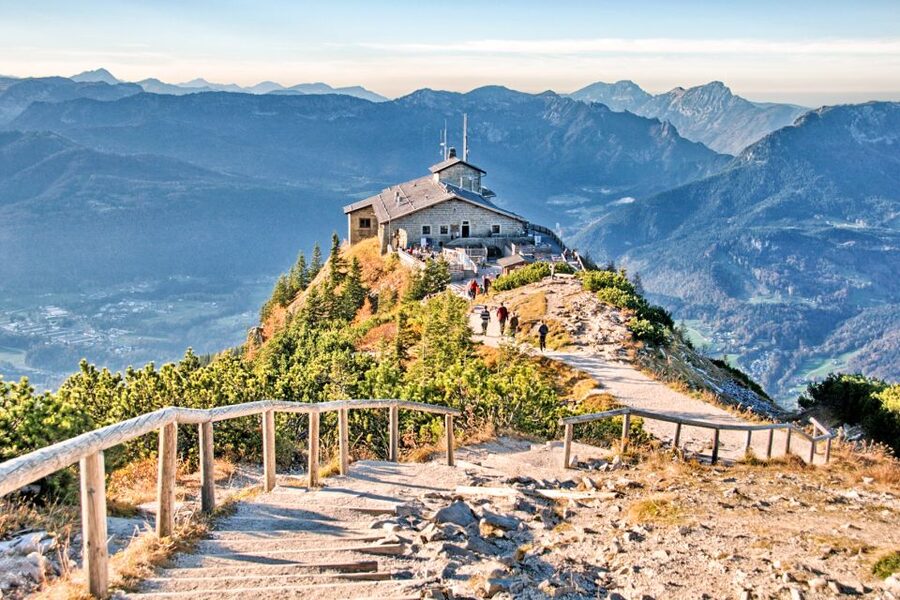
Hitler’s Eagle’s Nest is reached by a special mountain bus and a brass-lined elevator bored through solid rock, making the journey almost as memorable as the building itself. I like the scenic drive from Munich and the small-group format, which lets guides such as Mario, Armin, and Tom adjust the day to the weather and traffic.
I also like the thoughtful stops: a bakery break, free time in Berchtesgaden, and the NS-Documentation-Center. The drawback is the length. At 11 hours, this is a full day with plenty of time in a van, and the €31.90 entrance fee is extra on top of the $176 tour price.
In This Review
- Key points to know before booking
- Why Eagle’s Nest makes a strong day trip from Munich
- The drive from Munich to Berchtesgaden
- A bakery stop that improves the long morning
- Arriving at the Eagle’s Nest access point
- Through the rock tunnel and up by elevator
- Inside Eagle’s Nest, where the details matter
- The NS-Documentation-Center adds the missing context
- Berchtesgaden, Berghof remains, and possible extra stops
- Is the $176 price good value?
- Weather, timing, and the long return to Munich
- The guides are a major part of the experience
- Who should book this Eagle’s Nest tour?
- FAQ
- How long is the Eagle’s Nest tour from Munich?
- What is included in the tour price?
- Is the Eagle’s Nest entrance fee included?
- How do I reach the Eagle’s Nest building?
- Does the tour visit the NS-Documentation-Center?
- When does this tour operate?
Key points to know before booking
- The elevator ride is part of the story: You walk through a tunnel in the mountain before taking the lift up to Eagle’s Nest.
- The views depend on the weather: Clear skies reveal the Alps, but rain and mist can hide the best scenery.
- Small groups make a real difference: The van format allows for personal tips, easier pickups, and occasional short stops.
- The history is handled at several sites: Eagle’s Nest, the documentation center, and possible Berghof or bunker stops give the day more depth.
- The entrance fee is separate: Budget another €31.90 per person for admission.
- The tour is seasonal: It runs from May through October, subject to weather and opening conditions.
Why Eagle’s Nest makes a strong day trip from Munich
Eagle’s Nest, also called Kehlsteinhaus, sits high above Berchtesgaden in the Bavarian Alps. It was presented to Hitler for his 50th birthday in 1939, after a remarkable 13-month construction effort. The site is now visited for two very different reasons: the mountain setting is spectacular, and the building offers a direct connection to Germany’s Nazi past.
That combination makes this more than a scenic outing. You get Alpine roads, high mountain views, and a serious historical visit in one long day. I find that mix especially useful if you have limited time in Munich but want to understand more of Bavaria beyond the city.
The setting can feel almost too beautiful for the subject. That contrast is worth keeping in mind. Eagle’s Nest is not a shrine, and the tour works best when you treat it as a place to learn about how Nazi leaders used architecture, scenery, and grand retreats to project power.
A few more Munich trips to weigh up
- Munich 3-Hour Guided Bike Tour
★ 4.5 · 1,731 reviews - Munich’s Beer Halls and Breweries: 3-Hour Guided Tour
★ 4.6 · 928 reviews - Guided Dachau Concentration Camp Memorial Site Tour with Train from Munich
★ 5.0 · 920 reviews
The drive from Munich to Berchtesgaden
The day begins with hotel pickup when your accommodation is within the service area. You wait in the lobby, or in front of an apartment building. If your address is outside the pickup zone, the meeting point is in front of Le Meridien Hotel on Bayerstrasse, opposite Munich Central Station.
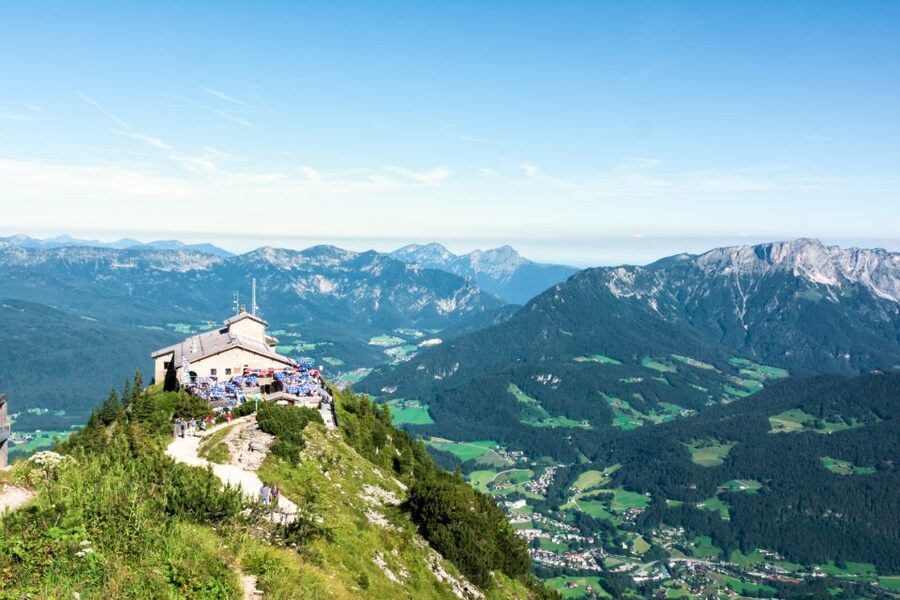
The drive takes you southeast from Munich toward the Berchtesgaden area. The route includes some of the most scenic roads in the German Alps, so the journey is part of the attraction rather than a simple transfer. You will want a window seat if possible, especially on a clear day.
The vehicle is an air-conditioned van, and the small-group setup is one of the tour’s strongest features. A full-size coach can feel anonymous on a long day like this. A van makes it easier to hear the guide, ask questions, and get help at stops.
The exact vehicle load varies, but the experience is designed for private or small groups. One group described traveling with eight passengers in a spacious van, while another found the vehicle comfortable even when full. That is still a long ride, so anyone who dislikes extended road trips should think carefully before booking.
Guides including Mario, Armin, Tom, and Armin have been praised for making the drive useful rather than filling it with silence. Their commentary covers Munich, German culture, local places, and the political background of Eagle’s Nest. Armin is also noted for safe driving and clear communication, while Tom has helped passengers with mobility needs getting in and out of the van.
A bakery stop that improves the long morning
A bakery stop is sometimes included along the way. It gives you a chance to buy pastries, drinks, and snacks, and it provides a useful bathroom break. This is a small touch, but it matters on an 11-hour day.
Do not assume lunch is included. It is not. You should bring some food money and use the bakery stop or later free time to eat. Guides have also recommended restaurants for the evening return to Munich, which can be handy if traffic changes your arrival time.
The flexible nature of the stop is helpful. One guide adjusted the morning after learning that several people had not eaten breakfast. That kind of personal attention is easier in a small group than on a rigid coach schedule, though the exact stop depends on the day’s traffic and timing.
Arriving at the Eagle’s Nest access point
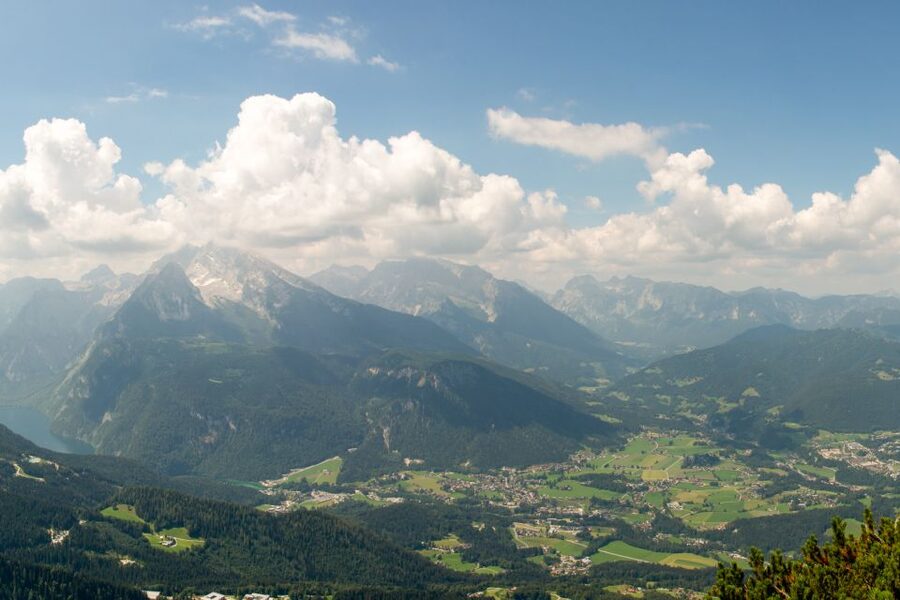
You do not drive your tour van directly to the entrance of Eagle’s Nest. At the mountain access area, a special bus takes you up the steep road toward the building. This transfer is required and is part of the standard visit.
The road itself is a memorable piece of engineering, but the practical point is that you need to follow the guide’s instructions closely. Timing matters because the mountain buses and elevator operate within the site’s opening arrangements. The tour includes skip-the-ticket-line access, which can help the group move through the arrival process more efficiently.
Even with that assistance, this is not a place where you should wander off without checking the meeting time. You receive free time at the top, but the return arrangements are organized around the bus and elevator system.
Same city, a completely different kind of day:
- From Munich: Neuschwanstein & Linderhof Castle Full-Day Trip
★ 4.5 · 12,494 reviews - Neuschwanstein & Linderhof Castle-Fairytale Day Tour from Munich
★ 4.5 · 7,275 reviews - Munich: Third Reich & WWII Walking Tour
★ 4.6 · 6,181 reviews - Dachau Concentration Camp Memorial Site Tour from Munich by Train
★ 4.5 · 5,637 reviews
Through the rock tunnel and up by elevator
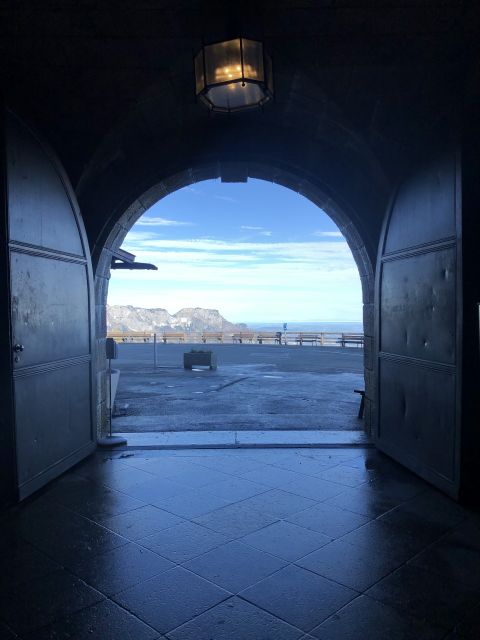
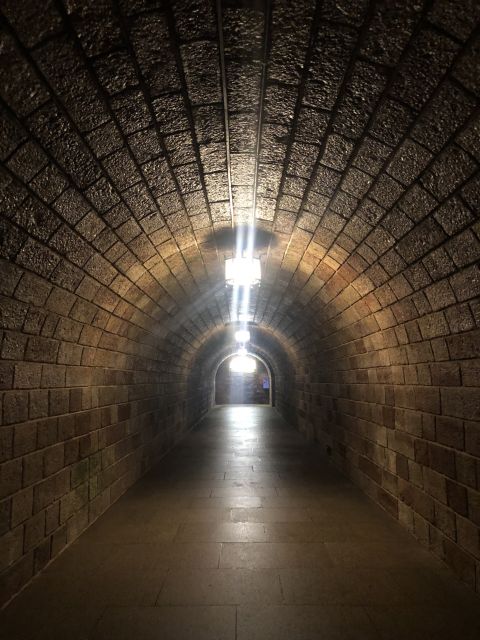
The entrance sequence is the site’s most distinctive feature. You walk through a tunnel bored into the mountain, then enter the elevator that carries you up to Eagle’s Nest. The lift was built to connect the mountain road with the retreat, and its enclosed route gives the visit a clear sense of place.
This is not just a modern transport detail. The tunnel and elevator show the scale of effort put into building a private retreat in a remote mountain setting. The transition from ordinary mountain road to tunnel, lift, and chalet is dramatic without needing much decoration.
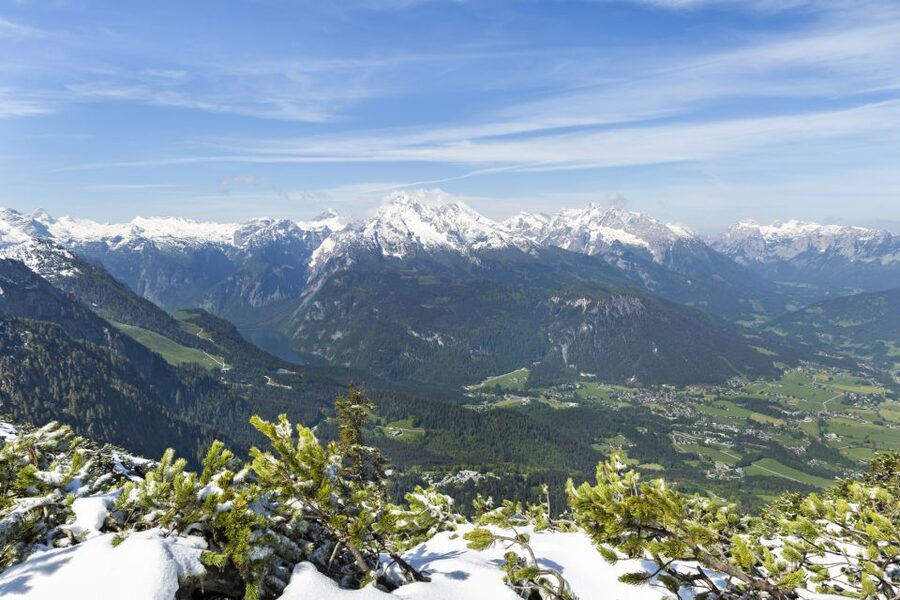
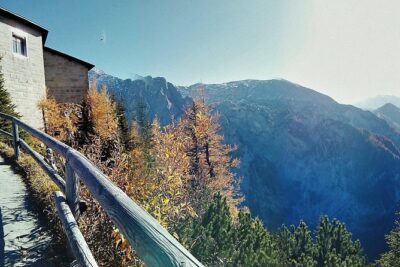
At the top, you can look around Eagle’s Nest and enjoy the open views over the Alps. On a clear day, the scenery is the star of the visit. The surrounding peaks and valleys make it easy to understand why the site was chosen for display and escape.
Weather is the great variable. Several visits had bright, picture-perfect conditions, while others encountered heavy rain, mist, and no mountain views at all. Bring comfortable shoes and a camera, but also bring a waterproof layer and realistic expectations. The mountain may give you a postcard view, or it may give you a gray wall of cloud.
Inside Eagle’s Nest, where the details matter
The lower rooms can be visited with an English-speaking guide. Plate-glass windows let you see parts of the building’s past, while the surrounding woodwork still carries graffiti left by Allied troops.
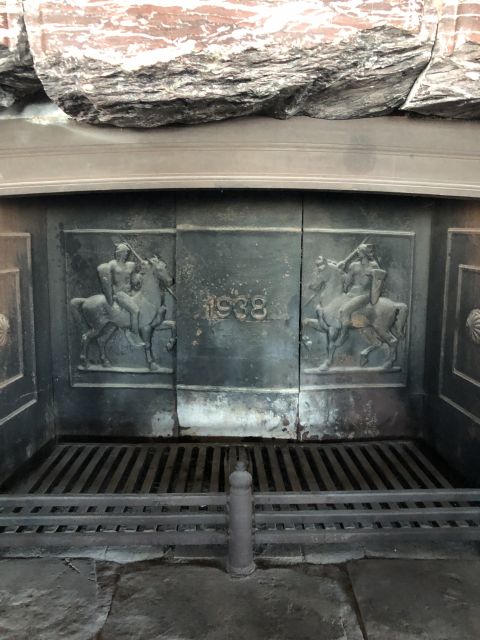
A large fireplace in the restaurant shows damage along its lower edges. Soldiers chipped off small pieces of marble as souvenirs, leaving the marks visible today. Hitler’s small study is now used as a cafeteria storeroom, a plain and somewhat awkward reminder that the building has been stripped of its original political purpose.
These details are more useful than trying to make the chalet feel grand. They show how the place changed after the war and how Allied troops treated it as a captured site rather than a preserved monument. The visit is relatively compact, so listen carefully to the guide and use your free time to look at the rooms and views at your own pace.
The building itself does not tell the entire story. Much of the Nazi leadership’s daily activity took place elsewhere in the Obersalzberg complex, particularly around the Berghof. That is why the documentation center matters so much.
The NS-Documentation-Center adds the missing context
After Eagle’s Nest, you get free time at the NS-Documentation-Center in Berchtesgaden. This is often the most substantial historical stop of the day. Its exhibits explain the Nazi presence in the Obersalzberg area and give more attention to the people affected by the regime.
An audio guide can take about 80 minutes, which gives you enough time for a serious visit without turning the day into a museum marathon. If you care strongly about the historical side, you may want every available minute here. The schedule has to balance the center with the mountain visit, transport, and the drive back to Munich.
The center also helps correct a common misunderstanding. Eagle’s Nest was a famous retreat, but it was only one part of a larger power center. The exhibits provide a broader setting for what you see on the mountain and make the visit less focused on Hitler as an individual.
Some guides arrange the documentation center before the mountain visit if the coach queues are already long. That is a smart adjustment when conditions allow. It can reduce waiting and give you the historical background before you reach the chalet.
Berchtesgaden, Berghof remains, and possible extra stops
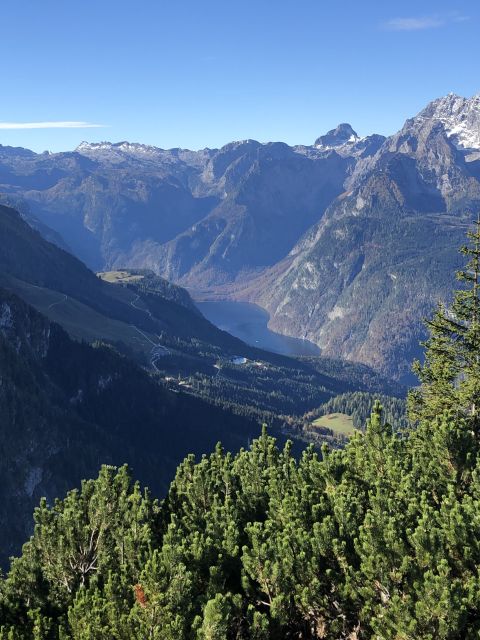
Free time in Berchtesgaden gives you a chance to see more than the mountain site. The town is described as attractive and interesting, and it offers a change of pace after the serious material at the documentation center.
Depending on traffic, weather, and the group’s schedule, your guide may also show you the remains of the Berghof or a nearby emergency bunker. These are not listed as guaranteed stops, so you should regard them as possible additions rather than promised parts of the day.
That flexibility is one reason small groups can feel more personal. Guides such as Mario and Armin have made short side trips when time allowed, and some have pointed out places that larger groups may pass without noticing. Still, an 11-hour itinerary has limits. A side stop may mean less time elsewhere, especially if traffic builds on the return to Munich.
Is the $176 price good value?
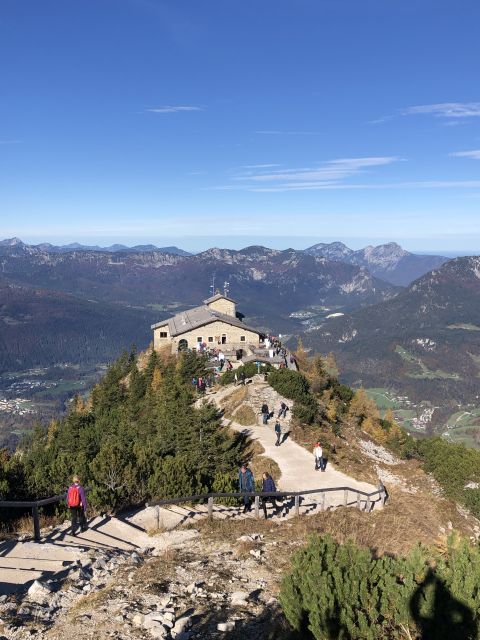
At $176 per person, this is not the cheapest way to reach Berchtesgaden. You also pay the €31.90 entrance fee, and lunch is not included. The real question is what you are buying beyond transport.
You are paying for hotel pickup in many cases, an air-conditioned van, a live English-speaking guide, route planning, and help with the mountain transfer. The guide also gives you historical context throughout the day rather than leaving you to piece together the site on your own.
For a first visit, I think the price is reasonable if you value convenience and personal attention. Driving yourself would require dealing with the long distance, mountain access arrangements, parking or transfers, opening conditions, and the return journey. Public transport may cost less, but it will not give you the same direct commentary or flexibility.
The value is strongest for couples, families, and small groups that want a guided day without a large coach. It is weaker for independent museum fans who want to spend many hours reading every exhibit, or for visitors focused only on mountain scenery. In those cases, the fixed 11-hour schedule and extra entrance charge may feel steep.
One recent booking also raised a fair point: including the Eagle’s Nest ticket in the original price would make budgeting easier. Since it is separate, allow for that cost when comparing tours.
Weather, timing, and the long return to Munich
May through October is the operating season, subject to weather and opening conditions. That qualification matters because mountain access can change with conditions, and the views are central to the appeal.
The day lasts about 11 hours. You should expect an early start, a full program, and a long ride back. Traffic can affect the return, especially after a full day in the mountains. One guide helped a group change its drop-off plan so it could reach a restaurant reservation after delays, but that kind of help should not be treated as a guarantee.
Wear comfortable shoes. You may walk through the tunnel, move around the mountaintop, visit the building, and spend time at the documentation center. A camera is worth bringing, though it will be far more useful on a clear day than in mountain mist.
If you need assistance getting into or out of the vehicle, tell the operator in advance. A guide has helped a passenger who needed extra support, but the supplied details do not promise a fully accessible vehicle or route.
The guides are a major part of the experience
The strongest feature here is the guide. Mario is often singled out for his humor, broad travel experience, local knowledge, and ability to keep conversation going during the long drive. Armin is praised for clear explanations, punctuality, safe driving, and adapting the day to the group. Tom receives high marks for practical advice, historical detail, and personal support.
That does not mean every departure will feel identical. Guide quality can shape any small-group tour, and the named guide may depend on the date. Still, the pattern is clear: this experience is built around human guidance, not simply a van ride to a famous viewpoint.
You can ask questions throughout the day, get tips for the best viewing areas, and receive advice about Berchtesgaden or later plans in Germany. That makes the tour especially useful early in a longer Bavaria trip, when a local guide can help you get oriented.
Who should book this Eagle’s Nest tour?
I would choose this tour if you want to combine Alpine scenery with serious 20th-century history and prefer not to organize the transport yourself. It is a good fit for first-time visitors, families, couples, and anyone who appreciates a small group and direct hotel pickup.
It also suits people who want more than the chalet alone. The documentation center, Berchtesgaden, and possible Berghof or bunker stops give the day a wider focus.
I would hesitate if you have only a few days in Munich and do not want to spend almost a whole day away from the city. I would also think twice if your main goal is a relaxed mountain outing. The subject is heavy, the schedule is long, and weather can erase the views that justify much of the journey.
Book it if you accept those tradeoffs and want a well-supported day in the Berchtesgaden Alps. Skip it if the extra entrance fee, long drive, or seasonal uncertainty bothers you. For most history-minded visitors with enough time, the combination of the tunnel elevator, Eagle’s Nest, documentation center, and personal guide makes this a worthwhile use of a Munich day.
FAQ
How long is the Eagle’s Nest tour from Munich?
The tour lasts about 11 hours, including the journey between Munich, Berchtesgaden, Eagle’s Nest, and the return to Munich.
What is included in the tour price?
Hotel pickup and drop-off within the service area, an air-conditioned van, and a live English-speaking guide are included.
Is the Eagle’s Nest entrance fee included?
No. The entrance fee is listed separately at €31.90 per person. Lunch is also not included.
How do I reach the Eagle’s Nest building?
A special mountain bus takes you to the entrance area. From there, you walk through a tunnel in the rock and ride an elevator up to Eagle’s Nest.
Does the tour visit the NS-Documentation-Center?
Yes. You receive free time to visit the NS-Documentation-Center in Berchtesgaden after the Eagle’s Nest portion of the day. Some schedules may visit it first to avoid queues.
When does this tour operate?
The tour runs from May through October, depending on weather and opening conditions.
Just added around Munich
- Pub crawl incl. Oktoberfest museum guided tour with beer tasting (private)★ 5.0 · 5 reviews
- South Tyrolean specialties and wine tasting★ 5.0 · 5 reviews
- Size Matters Beer Tour Munich★ 4.6 · 105 reviews
- Short & sweet: Tasting the Viktualienmarkt★ 4.8 · 37 reviews
- Secret Food Tours Munich★ 4.8 · 5 reviews
- Munich: Romantic Wine Experience for Two at Viktualienmarkt★ 4.2 · 14 reviews
- Munich: Resistance against Hitler – Historical Walking Tour★ 5.0 · 5 reviews
- Residence of Munich private tour with skip the line ticket★ 5.0 · 4 reviews
Eagle's Nest & Berchtesgaden Tours, compared.
Eagle’s Nest and Berchtesgaden Tour from Salzburg
Read our review →
Berchtesgaden and Eagle’s Nest Day Tour from Munich
Read our review →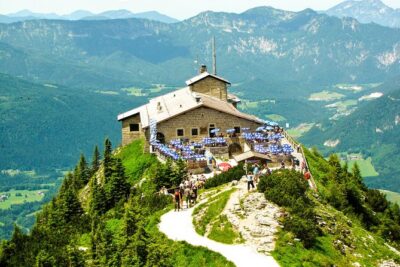
Berchtesgaden and Eagle’s Nest Day Trip from Munich
Read our review →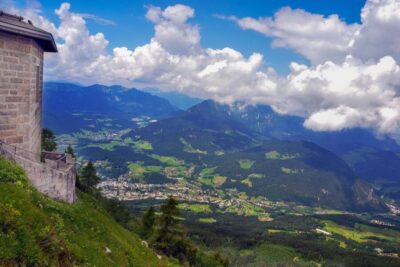
Eagle’s Nest-Berchtesgaden-Obersalzberg Private Half Day WWII Historical Tour
Read our review →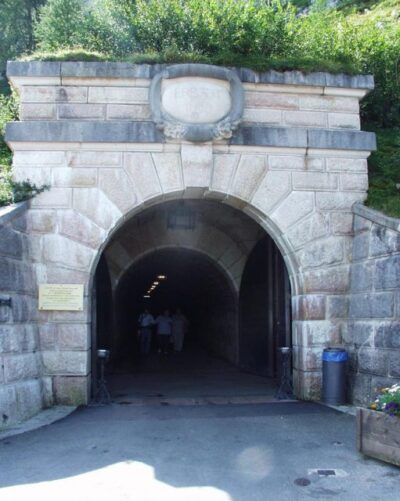
Browse the lists this tour appears in