
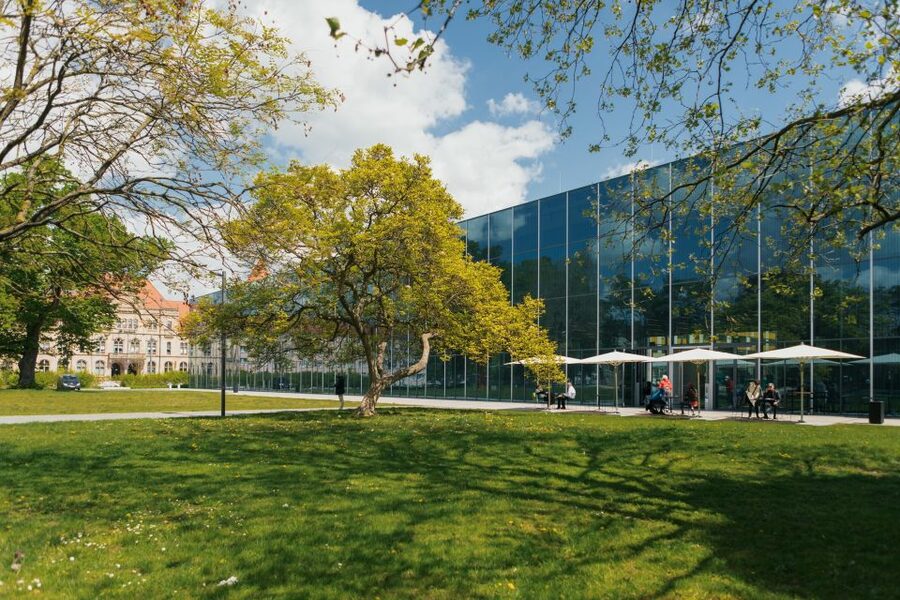
Reviewed · HISTORICAL TOURS
Dessau: Guided Walking Tour through History
Dessau’s most surprising feature is how many major ideas and people meet within one small city center. This 90-minute German-language walk links Bauhaus, the Basic Law, music, design, and eight centuries of local history without treating them as separate chapters.
I like the way the tour uses small anecdotes to make urban spaces easier to read, and I like that it reaches beyond the usual Bauhaus story to include Kurt Weill, Moses Mendelssohn, Hugo Junkers, and the city’s princely past. The main consideration is simple: if you do not understand German, this is not the right tour for you.
In This Review
- Key points at a glance
- Why Dessau makes a good history walk
- The city center as an open history book
- From princely Dessau to the age of ideas
- How Bauhaus came to Dessau
- The Basic Law connection
- Kurt Weill, Hugo Junkers, and Dessau’s wider reach
- Why the anecdotes matter
- What the 90-minute format means
- Price, language, and practical value
- Who should book this Dessau walk
- Should you book the guided walk through Dessau’s history?
- FAQ
- Where does the Dessau history walking tour take place?
- How long does the tour last?
- How much does the tour cost?
- What language is the tour in?
- What subjects does the tour cover?
- Does the tour include city-center sights?
- Is the tour wheelchair accessible?
- Where do I show my voucher?
- Can I cancel for a full refund?
- Does the tour operate in bad weather?
Key points at a glance

- Dessau in 800 years: Follow the city from Prince Leopold III. Friedrich Franz to modern Germany.
- Bauhaus with local context: Learn how and why the Bauhaus came to Dessau.
- More than architecture: Connect the city with the Basic Law, music, engineering, philosophy, and aviation.
- Anecdotes make the difference: The guide brings different eras and notable residents into the same story.
- City-center discoveries: Look for lesser-known places and details you could easily miss alone.
- Good practical value: At $13 per person, the 1.5-hour walk is an inexpensive way to get oriented.
Why Dessau makes a good history walk
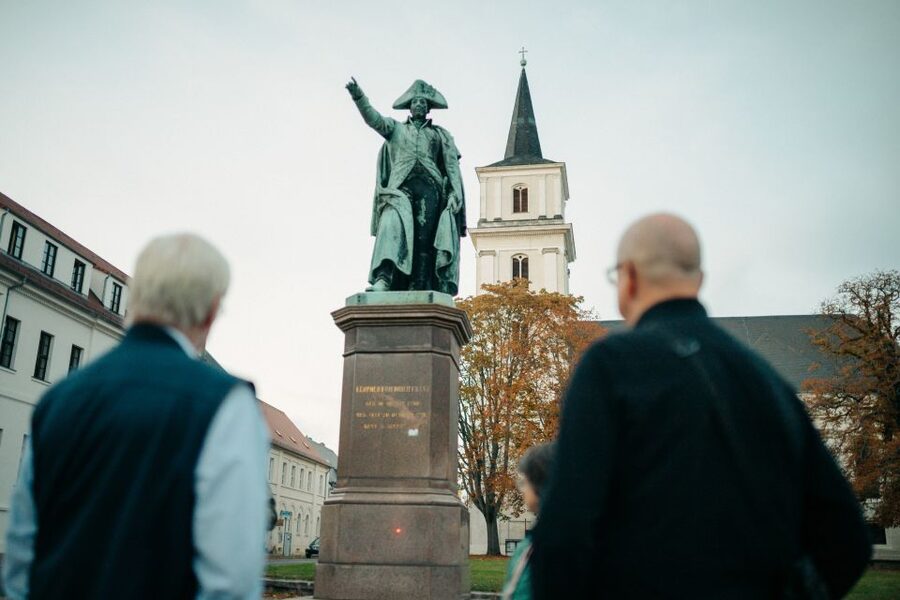
Dessau-Roßlau is not a city you understand from one postcard view. Its story moves through court culture, Enlightenment thought, industry, music, aviation, modern architecture, and postwar Germany. That mix gives this tour a wider reach than a walk focused only on Bauhaus buildings.
The city’s past stretches back about 800 years, and the guide uses that long timeline to show how different periods overlap. You hear about Prince Leopold III. Friedrich Franz and Friedrich Wilhelm Erdmannsdorff, then move toward figures such as Moses Mendelssohn, Kurt Weill, Hugo Junkers, Walter Gropius, and Wassily Kandinsky.
I find that approach useful because Dessau can otherwise seem like two separate places: an old German city on one hand and a modern design center on the other. This walk aims to connect them. It presents the city as a place shaped by rulers, thinkers, artists, engineers, and citizens rather than by one famous school alone.
The route focuses on the city center, where historical clues can be easy to overlook. You are not simply being shown buildings. You are being told why particular people, ideas, and events matter here.
A few more Germany trips to weigh up
- Leipzig: City History Canal Sightseeing Tour on a Motorboat
★ 4.7 · 6,232 reviews - Berlin: Natural History Museum Entrance Ticket
★ 4.6 · 3,382 reviews - Leipzig: 1.5-Hour Historical Walking Tour in German
★ 4.7 · 2,217 reviews
The city center as an open history book
The exact order of sights can depend on the guide and the day, but the tour is built around Dessau’s central urban spaces. That matters because a walking tour lets you see the distance between places and understand how the city’s story sits on the ground.
A good guide can turn an ordinary square, street, or facade into a prompt for a larger story. Here, those stories cover several eras at once. You might be looking at a place linked to the city’s rulers, then hearing how later residents shaped German culture or modern design.
The supplied experience details do not name individual guides, so you should not expect to choose a particular person when booking. Instead, you can expect a trained guide who leads the walk in German and uses anecdotes to give the route its character.
This is especially useful if you have arrived in Dessau with only a loose idea of what to see. The walk helps you sort the city’s major names and themes before you visit other sights on your own. It can also give repeat visitors something new. Two local participants even used the tour to learn more about their own city, with the small stories being a particular strength.
From princely Dessau to the age of ideas
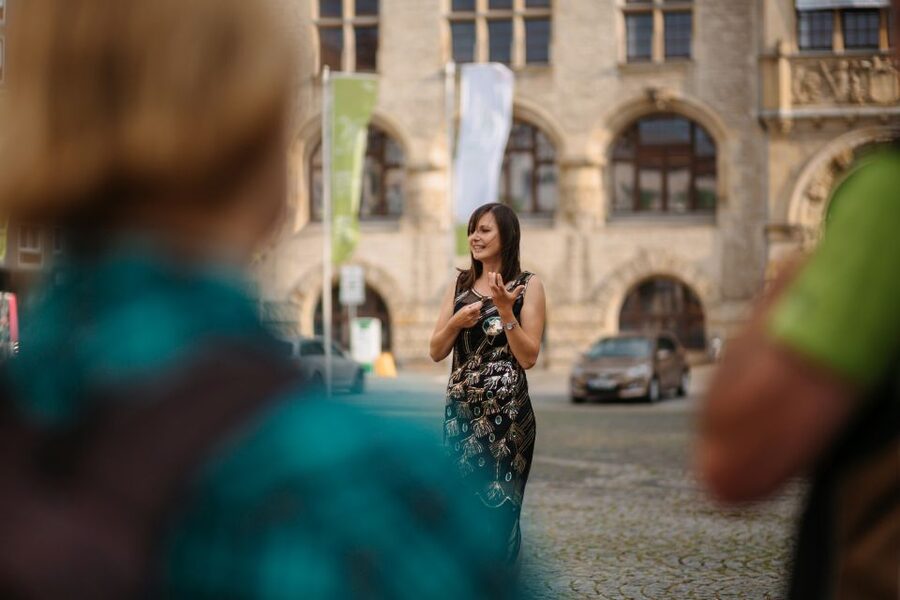
Dessau’s earlier history is represented by Prince Leopold III. Friedrich Franz and Friedrich Wilhelm Erdmannsdorff. Their inclusion gives the walk a useful sense of scale. Before Dessau became linked around the world with modern architecture, it was shaped by political power, court life, planning, and the ideas of its rulers.
Moses Mendelssohn adds another layer. He is one of the city’s notable children whose name became better known far beyond Dessau. His place in the story shows that the city’s importance is not limited to buildings. Intellectual life and philosophy also belong in the picture.
The value here is not just learning a list of famous names. You are shown how a medium-sized city can produce or attract people whose work reaches well beyond their birthplace. That gives the local streets more weight, even when the physical setting looks modest.
The tour also includes Max and Wilhelm Müller, two names that broaden the story further. Since the available details do not specify exactly how each stop is presented, I would treat this part as a guided introduction rather than a detailed specialist lecture on every person.
How Bauhaus came to Dessau
For many people, Bauhaus is the reason to visit Dessau. This tour addresses how the Bauhaus came to the city, which is more useful than simply pointing out that it was here.
The wording matters. You are learning about the connection between the school and Dessau, not just receiving a quick architecture label. The guide places Bauhaus within the wider history of the city and explains why its arrival changed Dessau’s public identity.
Walter Gropius and Wassily Kandinsky are among the figures included. Their names open the door to questions about architecture, art, teaching, and modern design. Even if you already know the basic Bauhaus story, the local setting can help you see it as part of Dessau’s development rather than as an isolated chapter in art history.
This tour does not promise entry to every Bauhaus site, a specialist architecture lecture, or a full museum visit. Its strength is the city connection. If your main goal is a close study of Bauhaus buildings and interiors, you will need more time elsewhere. If you want to understand why Dessau became part of the Bauhaus story, this walk is a sensible starting point.
Same city, a completely different kind of day:
- Berlin: Reichstag, Dome and Government District Guided Tour
★ 4.7 · 18,288 reviews - Berlin: 1-Hour City Tour by Boat with Guaranteed Seating
★ 4.3 · 16,993 reviews - Hamburg: Sex and Crime in St. Pauli Tour for Ages 18+
★ 4.7 · 15,447 reviews - Hamburg: 1.5-Hour Harbor and Speicherstadt Day Cruise
★ 4.6 · 14,200 reviews
The Basic Law connection
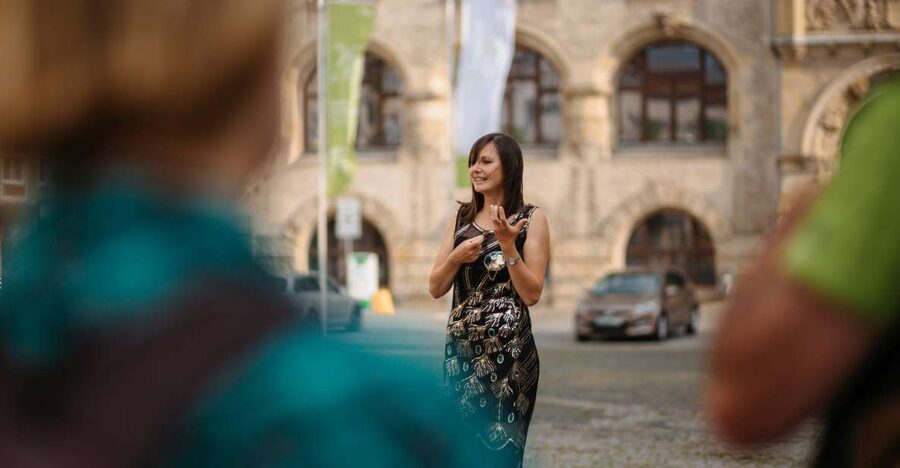
One of the tour’s more unusual subjects is Dessau’s connection with the Basic Law. That reference gives the walk a modern political angle and keeps it from becoming a parade of artists and architects.
The Basic Law is Germany’s constitutional foundation, so its appearance in a city walk signals that Dessau has a role in the country’s civic story as well as its cultural one. The experience description does not provide the full explanation or identify a specific stop, so you should expect an introduction to the connection rather than a detailed constitutional seminar.
I like this topic because it asks you to look at Dessau through more than one lens. The city is not only about princely history, Bauhaus design, or famous local figures. It also has a place in the story of modern Germany.
That wider frame is one reason the tour can work well near the beginning of a visit. It gives you several questions to carry with you as you explore the city afterward.
Kurt Weill, Hugo Junkers, and Dessau’s wider reach
Kurt Weill helps connect Dessau to music. Hugo Junkers brings in engineering and aviation. These subjects may seem far apart, but that contrast is precisely what gives the tour its character.
Kurt Weill is one of Dessau’s children whose reputation traveled far beyond the city. Learning about him here helps you see how a birthplace relates to a later international career. Hugo Junkers points in a different direction, toward technology, industry, and invention.
The guide also brings Max and Wilhelm Müller into the story, along with many other figures from different periods. You should not expect equal depth on every name during a 90-minute walk. Instead, the tour offers a series of connections that show how varied Dessau’s cultural and civic life has been.
That format suits curious first-time visitors. I would choose it if you like getting the broad shape of a place before deciding which people or subjects deserve more of your own reading time.
Why the anecdotes matter
The most useful detail about the guiding style is the emphasis on anecdotes. Facts tell you that someone lived, worked, or created something in Dessau. A good local story helps you remember why that person belongs in the city’s history.
The anecdotes also keep the tour from feeling like a condensed textbook. One local participant described the walk as a pleasant way to learn more about a familiar city, with the small stories being especially welcome. Another recent participant found it informative and enjoyed seeing interesting places.
That feedback matches the design of the experience. The tour gives contemporary witnesses from several eras a chance to speak, meaning their lives and work are used to animate the places around you. The result should feel more personal than a simple list of dates.
Still, an anecdotal approach is not for everyone. If you prefer a tightly dated political history or a technical study of architecture, you may want a more specialized tour. At $13, though, this walk asks little of your budget while giving you a useful first layer.
What the 90-minute format means
Ninety minutes is long enough to build a connected story but short enough to fit around a day of sightseeing. You can use it early in your stay to get your bearings, or place it before another Dessau activity when you want context first.
The compact length also sets a clear limit. You will not cover every corner of Dessau-Roßlau or receive a full lecture on each historical figure. The route is an overview through the city center, with selected places and stories doing the work.
I like this kind of timing for a city with several competing themes. A shorter walk helps you avoid spending half a day on background when you really want to see museums, architecture, or other sights afterward.
Starting times are not fixed in the information provided, so check availability for the date you want. The tour runs rain or shine. Bring suitable clothing and shoes, since the experience remains a walking tour in poor weather.
Price, language, and practical value
At $13 per person, this is a low-cost guided introduction to Dessau’s history. The price is especially reasonable if you use the tour to decide how to spend the rest of your day. A guide can point you toward subjects and places that would be hard to connect from a map alone.
The value depends heavily on language. The live guide speaks German, and no other language is listed. If you are comfortable in German, the price is attractive. If you are not, you should not book it expecting translation or multilingual commentary.
The tour is wheelchair accessible, an important practical point for visitors who need a more accommodating route. The available details do not describe pavement, slopes, or restroom access, so you may still want to confirm route specifics if you have particular mobility needs.
Before the walk begins, show your voucher at the ticket counter. You can skip the ticket line, and the booking terms allow you to reserve now and pay later. Free cancellation is available up to 24 hours before the start for a full refund.
Who should book this Dessau walk
I would recommend this tour to first-time visitors who want a clear introduction without spending a large amount of money or time. It is also a good choice for anyone who knows Bauhaus but wants to connect it with the rest of Dessau’s story.
It suits visitors interested in several subjects at once:
- German city history
- Bauhaus and modern design
- Music and philosophy
- Industry and engineering
- The Basic Law and modern Germany
- Local anecdotes and lesser-known central sights
It can also suit residents or repeat visitors who want a fresh look at familiar streets. The local reaction is useful here: even people from Dessau found new information in the walk.
I would not make it your only activity if you want a detailed Bauhaus study, a museum tour, or extensive coverage of Dessau-Roßlau beyond the center. The experience is an overview, not a full-day examination.
Should you book the guided walk through Dessau’s history?
Book it if you want an affordable, German-language introduction that links Bauhaus with the city’s older rulers, writers, musicians, engineers, and political history. The anecdotes and city-center focus give you more than a basic list of famous names, while the 90-minute length leaves room for your own plans.
Skip it if you need an English guide or want a specialist tour devoted only to Bauhaus architecture. For everyone else, the $13 price makes this a practical way to give Dessau’s streets a stronger sense of place.
FAQ
Where does the Dessau history walking tour take place?
The tour takes place in Dessau-Roßlau, in northern Germany, with a route through the city center.
How long does the tour last?
The guided walk lasts 1.5 hours.
How much does the tour cost?
The listed price is $13 per person.
What language is the tour in?
The live tour guide speaks German. German is the only listed tour language.
What subjects does the tour cover?
It covers Dessau’s 800-year history, the arrival of Bauhaus, the city’s connection with the Basic Law, and notable figures including Walter Gropius, Wassily Kandinsky, Kurt Weill, Hugo Junkers, Moses Mendelssohn, and others.
Does the tour include city-center sights?
Yes. The walk takes you through the city center and points out lesser-known places and details.
Is the tour wheelchair accessible?
Yes, the activity is listed as wheelchair accessible.
Where do I show my voucher?
Show your voucher at the ticket counter before the tour begins.
Can I cancel for a full refund?
Yes. You can cancel up to 24 hours in advance for a full refund.
Does the tour operate in bad weather?
Yes. The walk takes place rain or shine.
Just added around Germany
- Aachen old town tour – GERMAN (public)★ 5.0 · 24 reviews
- Aachen Private Walking Tour With A Professional Guide★ 5.0 · 11 reviews
- Cologne Highlights: Exclusive Private Tour★ 5.0 · 5 reviews
- Bremen Private Walking Tour With A Professional Guide★ 5.0 · 7 reviews
- Private Walking Tour through the Fascinating Bremen’s City Center★ 5.0 · 5 reviews
- Explore Cologne’s best Street Art Quarter★ 4.5 · 4 reviews
- Bremen Exploration Private Game and City Tour on your Phone★ 4.5 · 7 reviews
- e-Scavenger hunt Bremen: Explore the city at your own pace★ 4.0 · 24 reviews
Historical Tours, compared.

City History Canal Sightseeing Tour on a Motorboat
Read our review →






Browse the lists this tour appears in