
Reviewed · HISTORICAL TOURS
Augsburg: Historical Highlights Private Walking Tour
Augsburg’s story begins in 15 B.C., when Rome made it a provincial capital, and this private walk follows that long arc through the Fuggers, Mozart’s family, Berthold Brecht, and the city’s grand Town Hall. I like the small private format and the chance to adjust the emphasis as you go. I also like that the route links major sights with personal stories instead of treating Augsburg as a list of façades.
The main caution is price. At $362 per group of up to 15, it can be sensible for a full group, but it is a costly choice for one or two people, especially since entrance fees are not included. The tour is also not suitable for wheelchair users.
In This Review
- Key points at a glance
- Why Augsburg works so well in two hours
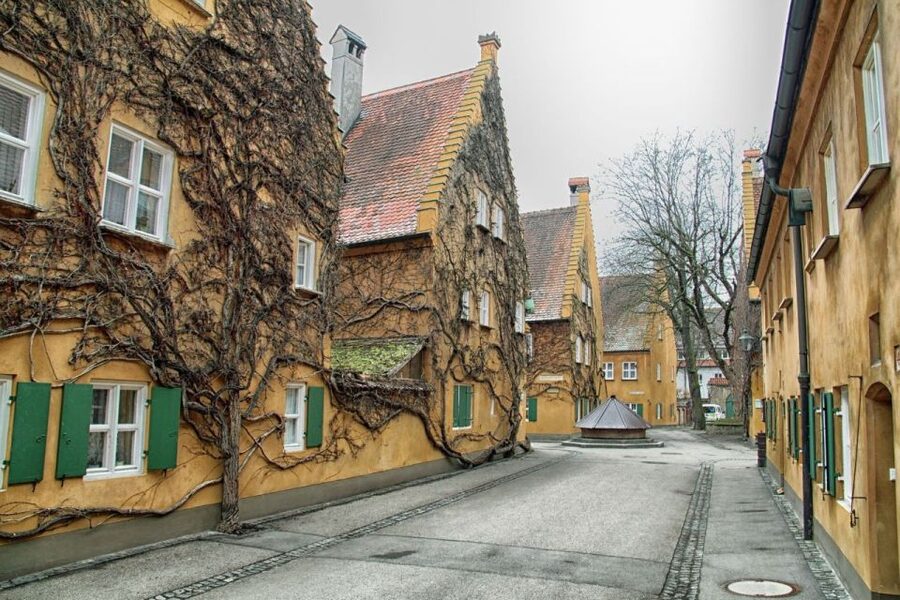
- Starting at the Fuggerei
- From Roman colony to Swabian capital
- Augsburg Town Hall and its six floors
- The Fugger family and Augsburg’s civic character
- Mozart’s father in Augsburg
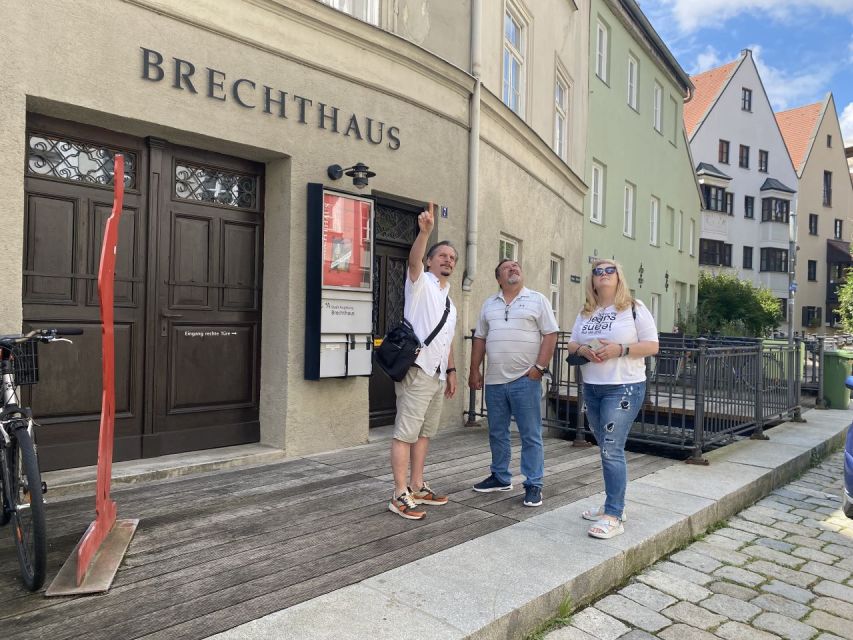
- Berthold Brecht’s birthplace
- SchaezlerPalais, the wartime survivor
- What the private format changes
- Who will get the most from this walk
- Timing, cancellation, and practical planning
- Should you book the Augsburg Historical Highlights Private Walking Tour?
- FAQ
- How long is the Augsburg Historical Highlights Private Walking Tour?
- Where does the tour begin?
- Where does the tour finish?
- What languages are available?
- Is this a private tour?
- What is included in the price?
- Are entrance fees included?
- Is the tour suitable for wheelchair users?
- Can I cancel for a refund?
Key points at a glance
- A Roman beginning in 15 B.C.: Learn how Augsburg grew from a Roman colony into the capital of a province.
- A private route you can shape: Ask your guide to spend more time on the subjects that interest your group.
- A remarkable Town Hall: See the building described as the first in the world with six floors.
- The Fugger connection: Visit the Fuggerei, founded as the world’s oldest social settlement.
- Two notable birthplaces: See where Wolfgang Amadeus Mozart’s father and Berthold Brecht were born.
- A graceful finish: End at SchaezlerPalais, which survived World War II without a scratch.
Why Augsburg works so well in two hours
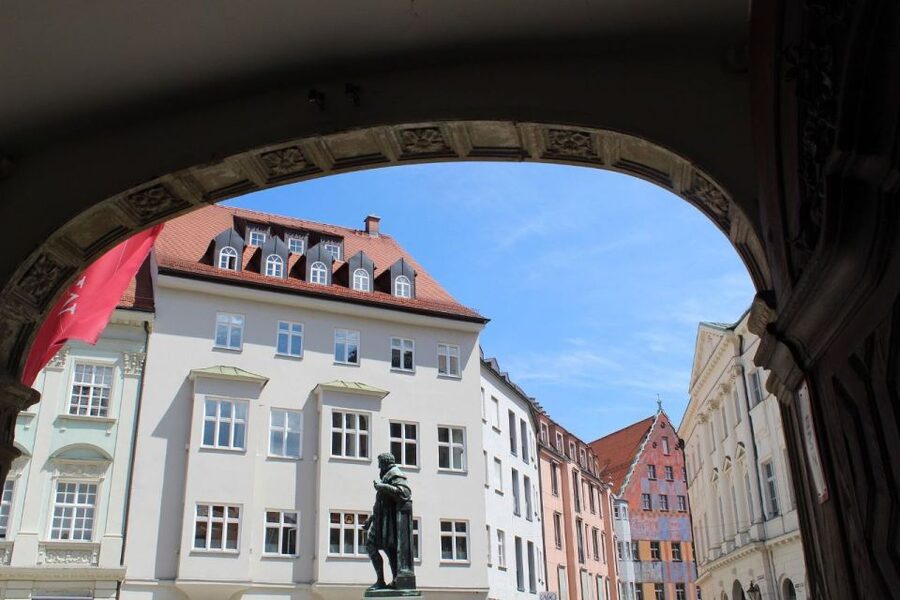
Augsburg is one of Germany’s oldest cities, and its past is unusually easy to organize around a few strong characters and places. Rome gives you the opening chapter. The Fugger family explains the city’s wealth. Mozart’s father and Berthold Brecht add cultural interest. The Town Hall and SchaezlerPalais show how Augsburg expressed that prosperity in stone and decoration.
That makes this a useful first look at the city. You are not simply walking from one sight to the next. You are getting a framework for understanding why Augsburg matters in Bavaria and why its streets contain such a mix of Roman, medieval, artistic, and civic history.
The two-hour limit is helpful. It keeps the walk focused and manageable, especially if Augsburg is one stop on a larger trip through Bavaria. You will not see every museum or absorb every detail, but you should come away knowing which parts of the city deserve a longer look.
The guide speaks German or English. The private group format means you can ask questions without worrying about holding up a large crowd. It also lets you request more attention to architecture, local history, famous residents, or the Fugger family as the walk develops.
A few more Germany trips to weigh up
- Leipzig: City History Canal Sightseeing Tour on a Motorboat
★ 4.7 · 6,232 reviews - Berlin: Natural History Museum Entrance Ticket
★ 4.6 · 3,382 reviews - Leipzig: 1.5-Hour Historical Walking Tour in German
★ 4.7 · 2,217 reviews
Starting at the Fuggerei
The meeting point is the Fuggerei, an especially fitting place to begin. The settlement was founded by the Fugger family and is described as the oldest social settlement in the world. That single fact gives you a direct way into Augsburg’s commercial and social history.
The Fuggers were a powerful banking family whose influence helped shape the city. Here, the story is not only about money. It is also about how wealth was used to create housing for people in need, and how a charitable idea became part of Augsburg’s identity.
You should ask your guide how the Fuggerei fits into the wider Fugger story. Since the walk is private, this is the point to say if you want more social history rather than a quick architectural stop. The ability to make that request is one of the tour’s best features.
Keep in mind that entrance fees are not included. The experience begins at the Fuggerei, but the provided information does not specify which interiors or paid areas are entered during the walk. If you want to go inside a particular site, confirm the plan with the guide and check whether an extra fee applies.
From Roman colony to Swabian capital
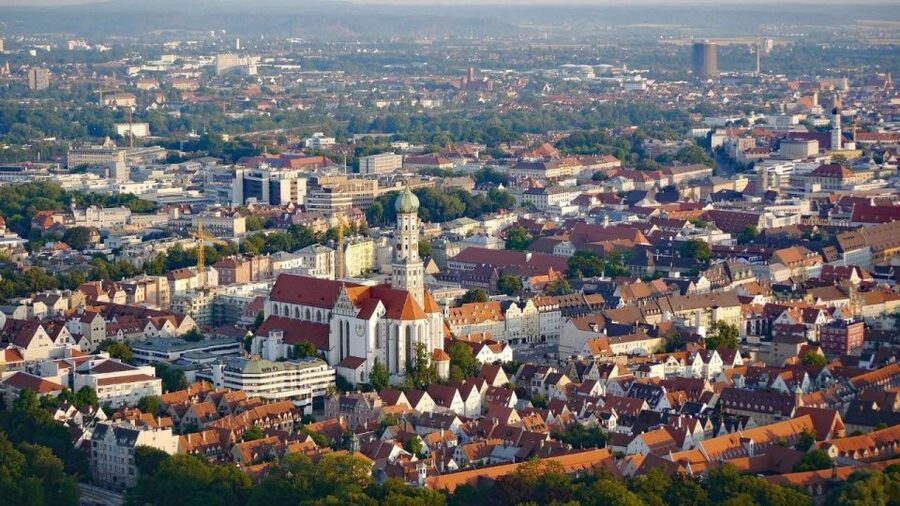
Augsburg’s Roman chapter reaches back to 15 B.C., when it was founded as a Roman colony. The city later grew into the capital of a province in the Roman Empire, a useful reminder that Augsburg was not always a quiet Bavarian regional center.
I find this historical scale one of the strongest reasons to take the tour. Many old European cities claim a long past, but Augsburg’s timeline gives you a clear sense of change: Roman administration, later commercial power, civic ambition, and modern regional importance.
Today, Augsburg is the capital of Swabia in Bavaria and is described as Germany’s third-oldest city. Those labels can feel abstract on their own, so a local guide helps connect them to the places in front of you.
Do not expect a specialist archaeological tour. The experience is designed as a broad city walk covering major highlights. If Roman history is your main reason for booking, tell the guide at the start so that the ancient chapter receives the attention you want.
Augsburg Town Hall and its six floors
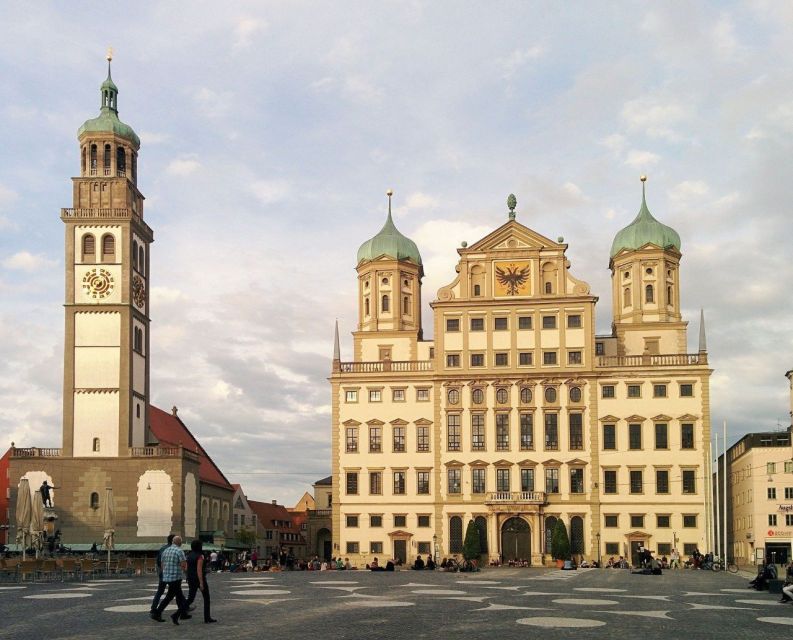
The Town Hall is one of the walk’s central sights. It is described as the first building in the world to have six floors, an unusual detail that gives the structure an immediate talking point.
That fact also hints at Augsburg’s civic confidence. A town hall is more than a government office. It announces what a city believes about its own importance, and Augsburg’s building reflects the wealth and ambition built up over centuries.
The tour gives you the chance to see the Town Hall within its larger setting rather than as an isolated photo stop. Your guide can explain how the building connects to the city’s political and commercial story.
Entrance fees are not part of the package, so do not assume that every interior is covered. The supplied details confirm the Town Hall as a highlight, but they do not promise a specific interior visit. Ask before booking if seeing the inside is essential to you.
Same city, a completely different kind of day:
- Berlin: Reichstag, Dome and Government District Guided Tour
★ 4.7 · 18,288 reviews - Berlin: 1-Hour City Tour by Boat with Guaranteed Seating
★ 4.3 · 16,993 reviews - Hamburg: Sex and Crime in St. Pauli Tour for Ages 18+
★ 4.7 · 15,447 reviews - Hamburg: 1.5-Hour Harbor and Speicherstadt Day Cruise
★ 4.6 · 14,200 reviews
The Fugger family and Augsburg’s civic character
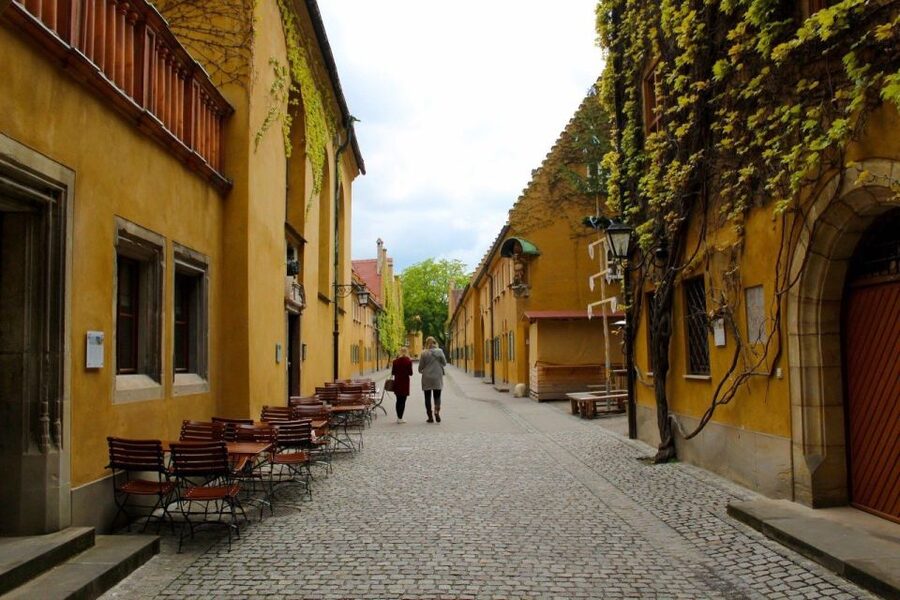
The Fugger story is central to understanding Augsburg. The family helped the city grow in wealth and influence, and the Fuggerei remains their most recognizable contribution to everyday social life.
I like this part of the walk because it moves beyond the usual parade of rulers and battles. You learn how a family shaped housing, civic life, and the image of the city. The subject also gives your guide room to discuss the tension between great wealth and charitable responsibility without turning the walk into a dry finance lecture.
Since this is a private tour, you can choose how far to follow the subject. Ask about the family’s role in Augsburg’s growth, the purpose of the Fuggerei, or how the settlement relates to the city today. The guide can adjust the balance on the spot, which is far more useful than a fixed script if your group has a particular interest.
Mozart’s father in Augsburg
The walk includes the birthplace of Wolfgang Amadeus Mozart’s father. This is a small but memorable link between Augsburg and one of Europe’s most famous musical families.
The stop is valuable because it adds a personal layer to a city that might otherwise seem defined only by grand institutions. You are not just hearing about Mozart in Salzburg or Vienna. You are seeing where his father was born in Augsburg.
The provided details do not say that Wolfgang Amadeus Mozart himself was born here, so keep the distinction clear. The point is the birthplace of his father, an interesting Augsburg connection rather than a claim that the composer lived in the city.
If music interests you, mention it to your guide. The route can be shaped around your group’s priorities, and this is exactly the sort of detail that can receive more attention when you are not part of a large scheduled group.
Berthold Brecht’s birthplace
The tour also visits the birthplace of Berthold Brecht, the acclaimed German artist and writer. Brecht gives Augsburg a modern cultural voice and broadens the walk beyond medieval and Renaissance history.
His birthplace makes a useful contrast with the Fuggerei and Town Hall. The earlier stops show institutional power and civic wealth. Brecht connects the city to literature, theater, and modern German culture.
The information provided does not specify an interior visit or an exhibition at the birthplace. Treat it as a stop in the city walk unless your guide confirms otherwise. If Brecht is a major reason for your interest, ask how much time the group can spend on his life and work.
SchaezlerPalais, the wartime survivor
The walk finishes at SchaezlerPalais. The palace survived World War II without a scratch, an extraordinary fact in a German city marked by the destruction of wartime bombing.
That ending gives the tour a strong final image. After moving through Roman beginnings, Fugger prosperity, famous births, and civic ambition, you arrive at a building that escaped one of the most destructive periods in European history.
The palace is also a reminder that survival can shape a city’s appearance. You can compare this intact building with the broader story of Augsburg’s wartime past and reconstruction, as explained by your guide.
Again, entrance fees are not included. The provided information confirms the palace as the finishing point, but not whether the tour enters it. If you want to visit inside, ask about admission and opening arrangements separately.
What the private format changes
A private group can include up to 15 people. That is a generous limit, and the price becomes easier to understand when shared across a full group. At the listed $362 total, the cost works out to about $24 per person for 15 people, before any entrance fees.
For two people, the same total is about $181 each. That is a very different value calculation. A couple who wants a personal guide may still find it worthwhile, but a small group on a tight budget should compare it with other Augsburg walks.
The strongest value comes from flexibility. You can ask questions, change the emphasis, and request more time at the Fuggerei, Town Hall, or the two birthplaces. The guide does not have to follow the interests of 30 strangers.
The public feedback supports this point. The overall rating is 4.9 from nine reviews, and the comments repeatedly praise the guide’s clear, engaging, and highly informative approach. One German participant specifically found the guide very good but considered the price too high, noting that a comparable tour cost 115 euros. That is an important warning: high marks for the experience do not automatically make the price a bargain.
Other comments describe the walk as very informative and entertaining, with an especially experienced city guide. A separate private-tour account highlights that the guide responded to the group’s wishes and shared a broad store of information. That matches what you should want from this format: not merely a person reciting dates, but someone who can follow your questions.
No guide’s name is supplied, so you cannot choose a particular guide in advance. You can choose German or English, however, which makes the walk practical for both local and international groups.
Who will get the most from this walk
I would recommend this tour most strongly to a group of friends or family members who want one guide for the entire party. The fixed group price makes more sense when divided among several people, and the private setting gives you room to ask questions.
It also suits first-time visitors who want a clear introduction to Augsburg before exploring on their own. The route covers the main historical themes without requiring a full day, and the guide can help you decide which sights deserve a return visit.
History fans should appreciate the range, especially if they like connecting Roman foundations with later city life. Music and literature enthusiasts also get worthwhile stops through Mozart’s father and Brecht.
This may not be the right choice if you want a long museum visit, a detailed Roman archaeology program, or a low-cost group walk. The tour covers major highlights, but it is still only two hours. It is an orientation with depth, not an all-day study of Augsburg.
Wheelchair users should choose another experience because the tour is specifically listed as unsuitable for wheelchair users. The information does not provide further detail about the walking surface or individual site access, so mobility needs should be discussed before booking.
Timing, cancellation, and practical planning
The duration is two hours, with starting times dependent on availability. That makes it easy to place the walk into a day of sightseeing, but you should check the available start times before building your schedule around it.
You meet at the Fuggerei and finish at SchaezlerPalais. Since the route begins and ends at different sights, plan the rest of your day from the palace rather than assuming you will return to the starting point.
The guide is available in German or English. Decide which language will work best for the whole group, especially if several people have different comfort levels.
You can cancel up to 24 hours in advance for a full refund. You can also reserve now and pay later, which helps if your Augsburg plans are still changing. These policies reduce the risk of booking early, though they do not change the question of whether the $362 group price fits your budget.
Should you book the Augsburg Historical Highlights Private Walking Tour?
Book it if you value a personal guide and a flexible route, especially when you can divide the cost among a sizeable group. The tour packs Augsburg’s Roman origins, Fugger legacy, civic architecture, musical connection, literary heritage, and wartime survival into a tidy two-hour introduction.
Think twice if you are traveling alone or as a couple and are mainly looking for the cheapest way to see the old city. The high price is the clear weakness, and entrance fees are extra.
For the right group, this is a focused and thoughtful way to get oriented. Ask at the start to shape the walk around your interests, and confirm which interiors are included. If you do that, you will get more from the private format than from simply following a fixed list of sights.
FAQ
How long is the Augsburg Historical Highlights Private Walking Tour?
The tour lasts two hours.
Where does the tour begin?
You meet your guide at the Fuggerei in Augsburg.
Where does the tour finish?
The tour finishes at SchaezlerPalais.
What languages are available?
The live tour guide speaks German or English.
Is this a private tour?
Yes. It is a private guided tour for your group, with up to 15 people.
What is included in the price?
The price includes a local professional tour guide and a private guided tour.
Are entrance fees included?
No. Entrance fees are not included.
Is the tour suitable for wheelchair users?
No. The activity is listed as not suitable for wheelchair users.
Can I cancel for a refund?
Yes. You can cancel up to 24 hours in advance for a full refund.
Just added around Germany
- Aachen old town tour – GERMAN (public)★ 5.0 · 24 reviews
- Aachen Private Walking Tour With A Professional Guide★ 5.0 · 11 reviews
- Cologne Highlights: Exclusive Private Tour★ 5.0 · 5 reviews
- Explore Cologne’s best Street Art Quarter★ 4.5 · 4 reviews
- Bremen Private Walking Tour With A Professional Guide★ 5.0 · 7 reviews
- Private Walking Tour through the Fascinating Bremen’s City Center★ 5.0 · 5 reviews
- Bremen Exploration Private Game and City Tour on your Phone★ 4.5 · 7 reviews
- e-Scavenger hunt Bremen: Explore the city at your own pace★ 4.0 · 24 reviews
Historical Tours, compared.

City History Canal Sightseeing Tour on a Motorboat
Read our review →






Browse the lists this tour appears in