Reviewed · GUIDED
Adventure Darkness – Guided tour in the dark
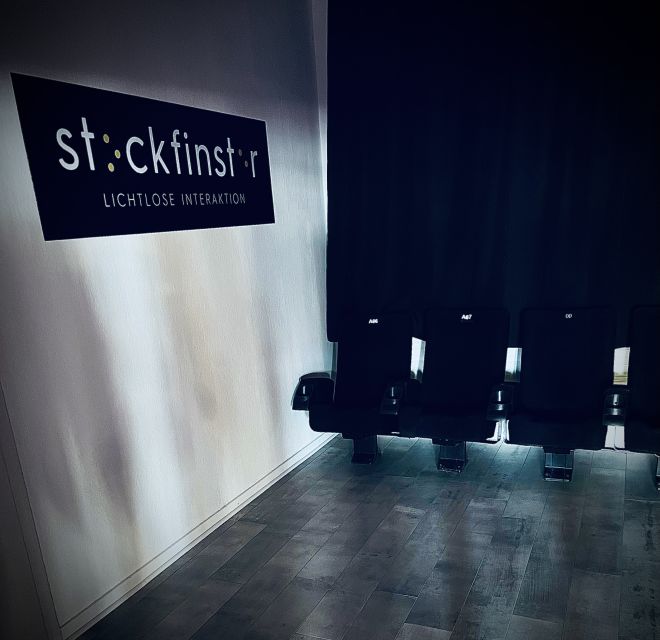
Total darkness changes a simple walk into a careful act of listening, touching, and trust. At Stockfinster in the Ruhr Area, a blind or severely visually impaired guide leads you through rooms that recreate daily life, a road crossing, and even a sporting challenge. You finish at a dark bar with a drink and time to talk.
I like the small groups, limited to eight people, and the clear focus on inclusion rather than cheap thrills. I also like the way the experience uses several senses, not just sound. The main drawback is practical: German is the only stated tour language, and one simulated street scene has had sound problems.
In This Review
- Key points to know before you go
- Why total darkness feels so different
- Starting with a cane and a new set of rules
- The first dark rooms: sound, smell, and touch
- Everyday situations without visual shortcuts
- Meeting the guide in the dark bar
- How much value do you get for $21?
- Language, age, and access details
- Who will enjoy this Ruhr Area experience?
- A few practical tips for a smoother visit
- Should you book Adventure Darkness?
- FAQ
- How long does Adventure Darkness last?
- How much does the tour cost?
- What language is the tour conducted in?
- How many people can join the group?
- What happens during the tour?
- What can you have at the dark bar?
- What should I not bring?
Key points to know before you go
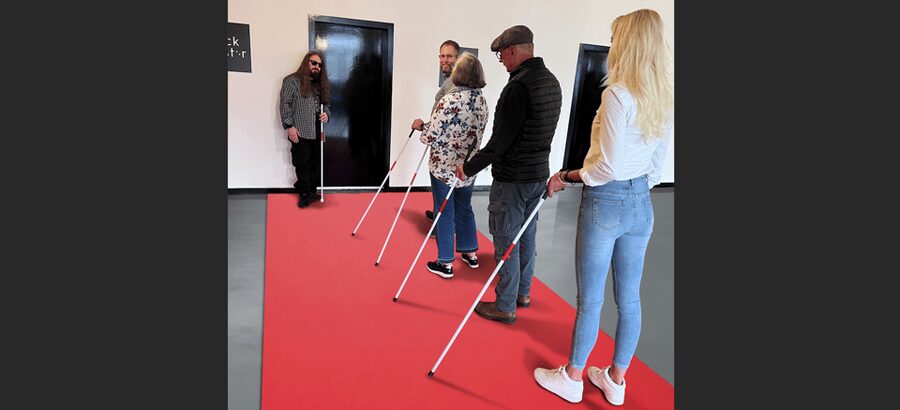
- Follow a blind guide through complete darkness: You use a long cane while your guide leads the way.
- Expect more than a simple walk: The rooms use sound, smell, touch, and taste to recreate everyday and unusual situations.
- The final 30 minutes take place in a dark bar: You can talk with your guide over fritz-kola, coffee, or beer.
- Groups stay small: A maximum of eight people gives the guide room to manage the group.
- Florian has guided the experience: His calm, friendly approach received special praise, though one sound effect did not work well for every group.
- Plan around strict rules: Cameras, jewelry, flashlights, and cellphones are not allowed inside.
Why total darkness feels so different
Most tours ask you to look closely. This one removes sight entirely. Once the lights go out, your long cane becomes your first point of contact, while your ears begin sorting every sound. A touch, a change in flooring, a smell, or a voice suddenly carries more weight.
You are not simply placed in a dark room and left to guess. The guide leads you through prepared adventure rooms designed around recognizable situations. The aim is to give you a small sense of how the world can be handled when visual information is not available.
That distinction matters. This is not a simulation of every part of visual impairment, and 90 minutes cannot reproduce a person’s daily experience. It can, however, make you notice how much of ordinary life depends on signs, traffic signals, visual directions, and quick glances.
The experience also puts the guide in the expert role. A blind or severely visually impaired person leads you safely through the rooms and explains what is happening. That direct contact gives the inclusion message more weight than a standard exhibit with a wall of text.
A few more Germany trips to weigh up
- Berlin: Reichstag, Dome and Government District Guided Tour
★ 4.7 · 18,288 reviews - Dresden: Semperoper Tickets and Guided Tour
★ 4.7 · 12,102 reviews - Berlin: Government District around the Reichstag Guided Tour
★ 4.7 · 8,447 reviews
Starting with a cane and a new set of rules
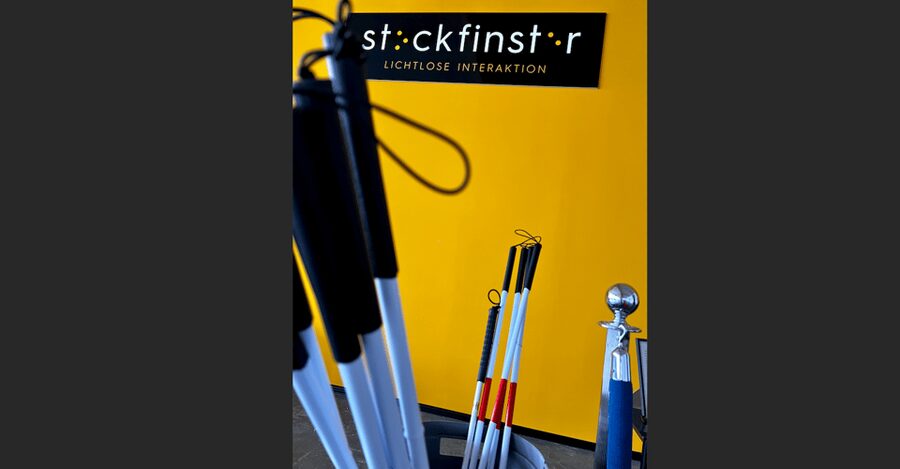
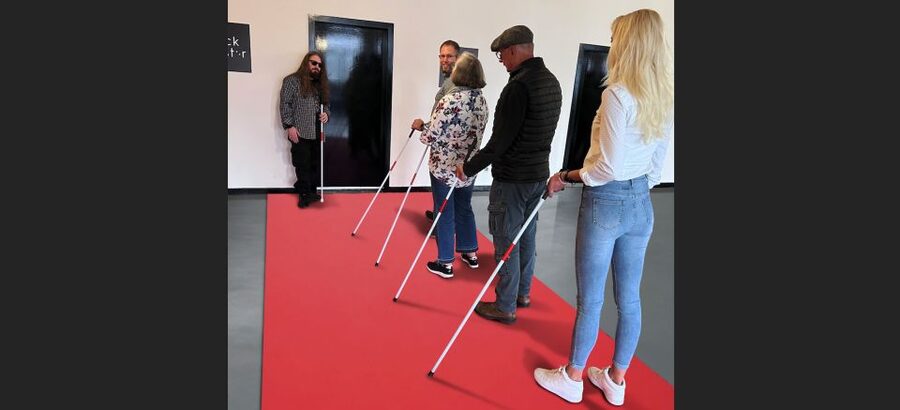
Before entering the dark rooms, you are equipped with a long cane. You will need to accept a slower pace and use the cane with care. In a small group, each person must also listen to the guide and avoid rushing ahead.
The ban on cameras, cellphones, flashlights, and jewelry is central to the experience, not a minor inconvenience. A phone screen or watch light would weaken the darkness, while jewelry can catch or damage something as you move through the rooms. Leave these items behind as instructed.
You should also prepare for a mental adjustment. At first, you may want to reach out in every direction or ask constant questions. The guide’s instructions become your main reference. With no visual shortcut available, you begin to pay closer attention to footsteps, voices, textures, and the position of the people around you.
The tour is limited to eight participants. I consider that a useful size for this kind of activity. A larger crowd would mean more noise, more waiting, and less chance to hear the guide clearly. A small group also makes it easier to discuss what happened afterward.
The first dark rooms: sound, smell, and touch
The opening section introduces a world built from senses you normally treat as background detail. You may notice how strongly a smell can suggest a place, or how a sound can make you form a picture in your mind.
The rooms are designed to address you in several ways:
- Haptically: You feel objects and surfaces rather than looking at them.
- Auditorily: Sounds help establish direction, movement, and place.
- Olfactorily: Smells provide clues that sight would normally supply.
- Through taste: The experience can also use taste as part of the sensory setting.
Without light, the brain reacts strongly to targeted signals. A small sound may seem close or far away. An object under your hand can become important because it helps you work out where you are. These reactions are part of the point, and the guide can help you understand them as you go.
You should not expect every effect to work perfectly every time. One reported problem involved the sound setting in the room built around a fictional street situation. That is worth keeping in mind if you are hoping for a polished theatrical production. The educational value does not depend on every sound cue working, but the occasional technical fault can reduce the clarity of one scene.
Everyday situations without visual shortcuts
The tour recreates typical everyday situations as well as special challenges. The value lies in how ordinary tasks can become less certain when you cannot rely on your eyes.
A road-crossing scene is a strong example. Sighted people often use visual signals, vehicle position, road markings, and the behavior of other people almost without thinking. In darkness, you must depend more on hearing and the guide’s instructions. Even a fictional crossing can make you reconsider how much information is normally delivered through sight.
The experience also includes a sporting challenge. The supplied details do not specify the sport, so you should not arrive expecting a particular game. The important part is the change in how you judge position, movement, and success when visual feedback disappears.
These scenes work best if you treat them as exercises in attention rather than tests you must win. You are not being asked to prove that you can function like a blind person. You are being shown how much planning, skill, and adaptation may be involved in situations that sighted people often handle automatically.
This is where the tour becomes useful for families, school groups, workplaces, and anyone thinking about access and inclusion. The lesson is practical. Clear instructions, good sound cues, safe public spaces, and patience can make a real difference.
Same city, a completely different kind of day:
- Berlin: 1-Hour City Tour by Boat with Guaranteed Seating
★ 4.3 · 16,993 reviews - Hamburg: Sex and Crime in St. Pauli Tour for Ages 18+
★ 4.7 · 15,447 reviews - Hamburg: 1.5-Hour Harbor and Speicherstadt Day Cruise
★ 4.6 · 14,200 reviews - From Munich: Neuschwanstein & Linderhof Castle Full-Day Trip
★ 4.5 · 12,494 reviews
Meeting the guide in the dark bar
After about 60 minutes, you reach the dark bar. This changes the mood from guided activity to conversation, but the setting remains without visual perception.
You can have fritz-kola, coffee, or a cold beer while talking with your guide about what you experienced. The drink is included as part of the bar setting, but the bigger value is the chance to ask questions and reflect while the experience is still fresh.
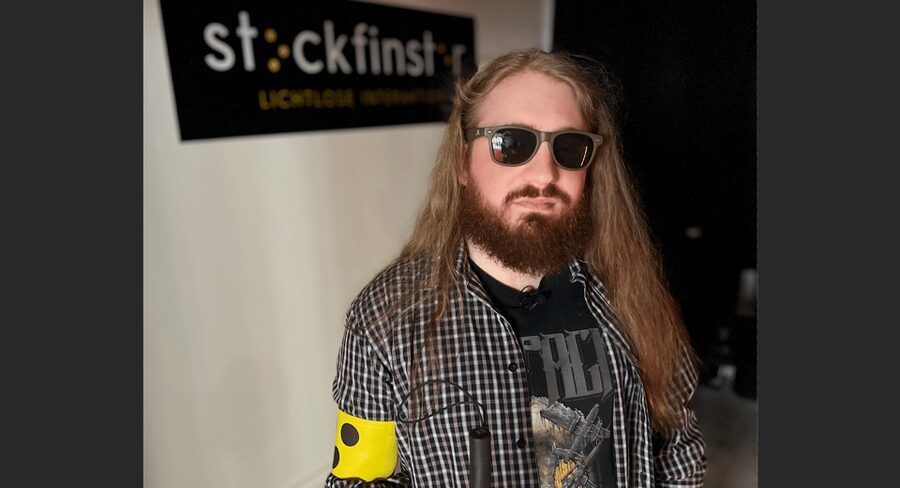
Florian is one guide associated with this tour. His friendly, adaptable manner was especially well received, and he appears to be comfortable responding to the group rather than simply reciting fixed instructions. That matters in darkness, where people can react in very different ways. Some may be quiet and cautious, while others may ask many questions or need more reassurance.
The conversation also helps prevent the activity from becoming a shallow novelty. You can connect the rooms to real questions about daily life, public spaces, and the challenges faced by people with visual impairments. The guide’s perspective is the part you cannot get from the darkness alone.
How much value do you get for $21?
At $21 per person, the tour is reasonably priced for a 90-minute guided activity in a small group. You are paying for more than time in a dark room. The price covers a structured route, a specialist guide, sensory scenes, and the final chance to talk over a drink.
The value depends on what you want. If you are looking for a fast, spectacular attraction with dramatic visuals, this is the wrong choice. There are no photos to take, no views, and no conventional showpiece moment.
If you want an activity that gives you something to discuss afterward, the price works well. The road-crossing and sport sections create clear examples, while the dark bar adds time for questions and thought. The small group is another reason the cost feels fair, since the guide can manage a limited number of people rather than a packed crowd.
You also get a flexible booking policy. You can cancel up to 24 hours in advance for a full refund, and the reserve-now, pay-later option lets you hold a place without paying immediately. That can help if your Ruhr Area schedule is still changing.
Language, age, and access details
The live guide speaks German. If you do not understand German well, this may be a serious limitation because instructions are essential in a dark environment. The available information does not confirm an English-language option, so you should not assume one is offered.
Children under five are not suitable for the activity. Older children may still need to be comfortable with darkness, close listening, and following instructions. The details do not give a recommended upper age or a separate child price.
There is conflicting information about wheelchair access. The activity details describe it as wheelchair accessible, but the suitability information says it is not suitable for wheelchair users. Because complete darkness, prepared rooms, and movement through the route may affect access, contact Stockfinster before booking if you use a wheelchair. Do not rely on the general accessibility label alone.
The tour requires an appointment. You must show the voucher in the app or bring a printed copy, and the voucher is valid for six months from purchase. Appointment changes or cancellations must be made at least 24 hours ahead. A late cancellation or missed appointment does not guarantee a replacement date.
Who will enjoy this Ruhr Area experience?
I would choose Adventure Darkness for adults, older children, educators, and families who want an activity with a social or learning purpose. It also suits groups interested in disability awareness and inclusion.
It is a good pick when the weather is poor because the experience takes place indoors, though the supplied information does not specify the exact meeting point or nearby transport. Plan extra time to find the venue and arrive for your appointment.
You should be comfortable giving up your phone and camera for the duration. You should also be ready for a slower, more uncertain experience. If darkness causes strong discomfort, ask yourself if you can follow instructions without a visual escape route.
This is not a photo stop or a casual filler between major sights. The strongest part is the shift in how you think about familiar tasks. The guide, not the room design alone, carries much of that impact.
A few practical tips for a smoother visit
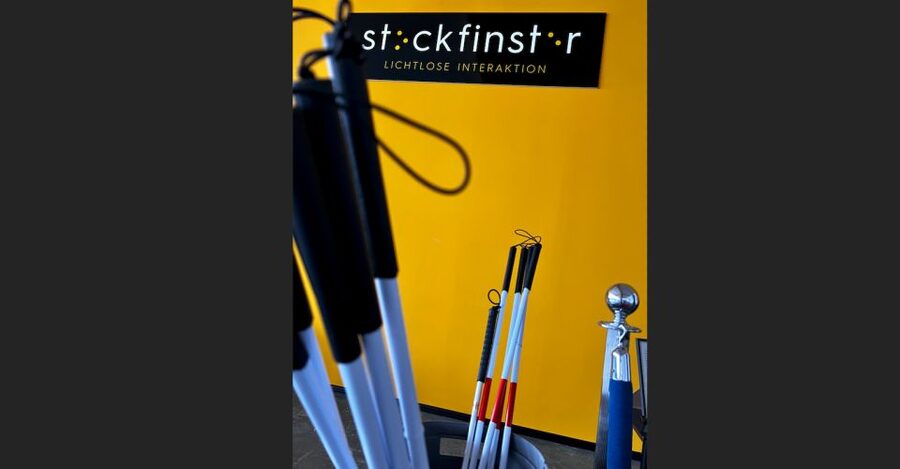
Arrive with only what you need. Since cameras, cellphones, flashlights, and jewelry are not allowed, avoid bringing valuables that you will need to remove at the entrance.
Wear clothing that lets you move comfortably, though no specific clothing rule is provided. Listen closely when the guide explains how to use the long cane and how to move with the group.
Do not judge the experience during the first few minutes. The initial darkness may feel awkward, and your attention may be scattered. Give yourself time to stop searching for sight and start using sound and touch.
Keep expectations realistic about the sensory effects. The rooms are designed to use several senses, but one sound element in the fictional street scene has not always worked properly. The tour is still built around the guide’s direction and the wider lesson about perception.
If you need English, wheelchair access, or another special arrangement, confirm it directly before paying. The listed language is German, and the wheelchair information needs clarification.
Should you book Adventure Darkness?
Book it if you want a thoughtful, low-cost activity that changes how you notice everyday spaces. The strongest reasons are the small group, the direct guidance from a blind or severely visually impaired person, and the discussion over a drink at the dark bar.
Skip it if you want a visual attraction, need an English-language tour, or would find complete darkness too stressful. Also check the wheelchair policy carefully, since the available details do not agree.
For most people who can manage the setting and understand German, $21 buys a memorable 90 minutes with a clear purpose. It is not perfect theatre, but it offers something more useful: a short, guided chance to question the visual assumptions built into ordinary life.
FAQ
How long does Adventure Darkness last?
The tour lasts 90 minutes. After about 60 minutes in the dark adventure rooms, you arrive at the dark bar for conversation and a drink.
How much does the tour cost?
The listed price is $21 per person.
What language is the tour conducted in?
The live tour guide speaks German. No other guide language is specified.
How many people can join the group?
The tour is limited to eight participants, making it a small-group experience.
What happens during the tour?
A blind or severely visually impaired guide leads you through dark rooms with a long cane. The route uses sound, smell, touch, and taste, and includes everyday situations, a fictional road crossing, and a sporting challenge.
What can you have at the dark bar?
At the end, you can talk with your guide over a glass of fritz-kola, a cup of coffee, or a cold beer.
What should I not bring?
Cameras, jewelry, flashlights, and cellphones are not allowed. You must show your voucher in the app or bring a printed copy on arrival.
Just added around Germany
- Aachen old town tour – GERMAN (public)★ 5.0 · 24 reviews
- Aachen Private Walking Tour With A Professional Guide★ 5.0 · 11 reviews
- Cologne Highlights: Exclusive Private Tour★ 5.0 · 5 reviews
- Bremen Private Walking Tour With A Professional Guide★ 5.0 · 7 reviews
- Private Walking Tour through the Fascinating Bremen’s City Center★ 5.0 · 5 reviews
- Explore Cologne’s best Street Art Quarter★ 4.5 · 4 reviews
- Bremen Exploration Private Game and City Tour on your Phone★ 4.5 · 7 reviews
- e-Scavenger hunt Bremen: Explore the city at your own pace★ 4.0 · 24 reviews
Guided, compared.

Reichstag, Dome and Government District Guided Tour
Read our review →