
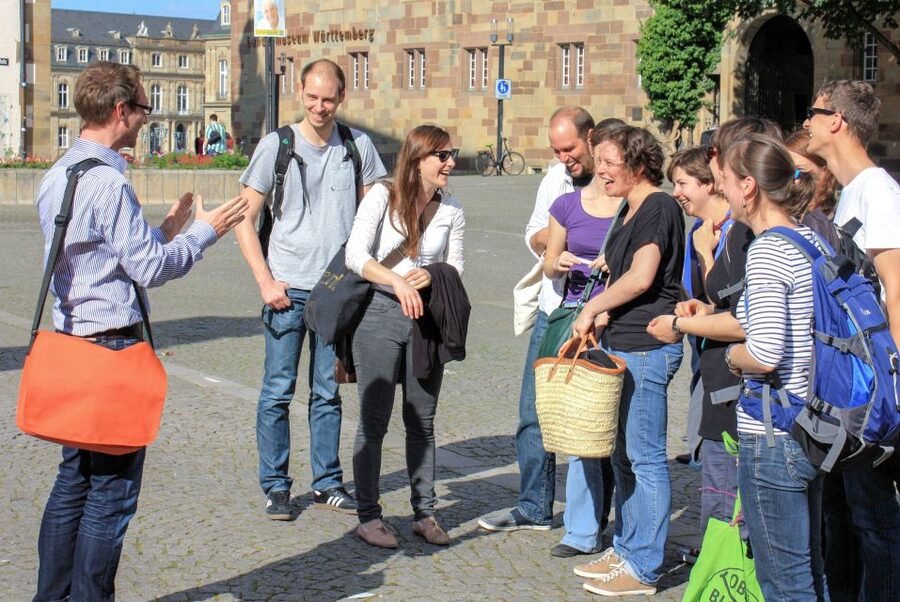
Reviewed · OLD TOWN WALKING TOURS
Stuttgart: entertaining guided tour to old town highlights
Stuttgart’s grand center is easy to understand on foot, but its story is not always obvious. This 1.5-hour walking tour links the New Palace, Schillerplatz, Schlossplatz, old town streets, palace gardens, and major cultural buildings into one compact introduction to the city.
I like the clear meeting point at the music pavilion and the chance to hear about Stuttgart’s buildings as you see them. I also like the practical local tips on shopping and leisure activities, which can help you plan the rest of your stay. The main caution is that this is a German-language tour, and the promised entertainment may depend heavily on the guide. Some people found the presentation humorous, while others felt it became a long, formal lecture in the sun.
In This Review
- Key points before you book
- Starting at the New Palace and Schlossplatz
- Schillerplatz and the old town streets
- Palace gardens, city life, and the culture mile
- The main station and Stuttgart’s changing architecture
- What the guide’s style means for your experience
- Is $16 a fair price for 90 minutes?
- Who should book this Stuttgart walking tour?
- Final decision: a useful German-language introduction
- FAQ
- Where does the Stuttgart walking tour begin?
- Where does the tour end?
- How long does the tour last?
- What language is the tour conducted in?
- What sights are included on the route?
- Is museum admission included?
- Can young children join the tour?
Key points before you book

- The tour begins at Stuttgart’s New Palace: Meet the guide with an orange bag at the music pavilion in front of the palace, then return to the same spot at the end.
- The route covers the city center’s major sights: Expect Schillerplatz, Schlossplatz, old town streets, the palace gardens, the main station, and the culture mile.
- The commentary focuses on history and architecture: You will hear how Stuttgart grew from a small settlement founded in the 10th century into one of Germany’s major cities.
- The guide speaks German: This matters more than the low price if you do not understand German well.
- The tour costs $16 per person: That is a fair price for a central orientation walk, especially if you plan to visit museums or shop afterward.
- The pace may include extended talks at major buildings: On a hot day, consider the starting time carefully, since one part of the experience was described as a long talk in direct sun.
Starting at the New Palace and Schlossplatz
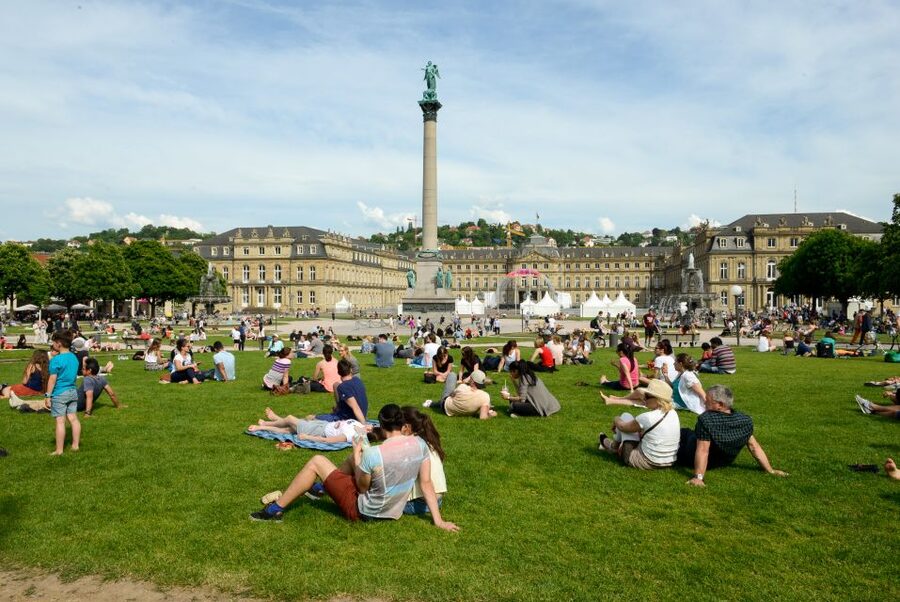
The meeting point is simple: find the music pavilion in front of Stuttgart’s New Palace and look for a guide carrying an orange bag. This is a useful place to start because the palace gives you an immediate sense of Stuttgart’s scale and royal past.
The New Palace is a large Baroque building facing Schlossplatz, or Palace Square. Its grand frontage is hard to miss, and it sets the tone for the central part of the tour. You are not simply walking from one unrelated sight to another. The route begins with the former seat of Württemberg’s rulers, then uses nearby squares and streets to explain how the city developed around it.
The palace now houses the Württemberg State Museum, with art and objects connected to the region. The tour does not include museum admission, so think of this stop as an outside introduction. If the building catches your interest, you can return later and visit at your own pace.
Schlossplatz is one of the city’s key open spaces. It gives you room to see the New Palace properly and to understand how the central district is arranged. Your guide can point out the relationship between the palace, gardens, public buildings, and nearby cultural institutions.
This first section is also where you should pay attention to the style of the commentary. The tour is advertised as entertaining, and one guide was praised for being very humorous. Yet the experience can also lean toward a formal talk about urban history and architecture. One group reported listening in direct sun for about half an hour in front of the palace on a 30-degree day.
That does not make the stop uninteresting, but it does affect comfort. If you prefer a quick-moving walk with constant jokes, this may feel slow. If you enjoy learning why a building looks the way it does, the same explanation may be worthwhile.
More old town walking tours in Stuttgart:
- Dresden: Semperoper and Old Town Tour
★ 4.8 · 5,735 reviews - Nuremberg: Old Town Guided Walking Tour
★ 4.6 · 2,416 reviews - Munich: Old Town & Viktualienmarkt City Walk in German
★ 4.7 · 2,304 reviews
Schillerplatz and the old town streets
From the palace area, the route continues toward Schillerplatz and Stuttgart’s old town. Schillerplatz is one of the most recognizable historic squares in the center, and it offers a change from the broad openness of Schlossplatz.
Here, the tour shifts from royal scale to the older street pattern. You get a closer look at the central city and hear more about how Stuttgart grew over time. The guide’s job is especially useful in this part because a short walk can cross several periods of architecture without making the changes obvious.
The old town portion is best understood as an orientation walk rather than a long stop at one monument. You will see historic corners, central streets, and the connections between the main squares. The guide can help you identify which areas are worth revisiting for food, shopping, museums, or a slower stroll.
I like this part for practical reasons. A first visit to a city can leave you with a list of names but no sense of distance. Walking from Schillerplatz through the old town and back toward the palace district gives you a usable mental map. You can then decide what deserves more time later.
Do not expect a large preserved medieval quarter on the scale of some German towns. The experience is about Stuttgart’s central sights and the way the city combines older traces with grand public buildings and modern urban life. The tour presents the old town as part of a larger city story, not as an isolated historic village.
The German-only format is important here. Much of the value comes from the guide’s explanation of what you are looking at. If you understand only a little German, you may still enjoy the walk and the buildings, but you will miss much of the context.
Palace gardens, city life, and the culture mile
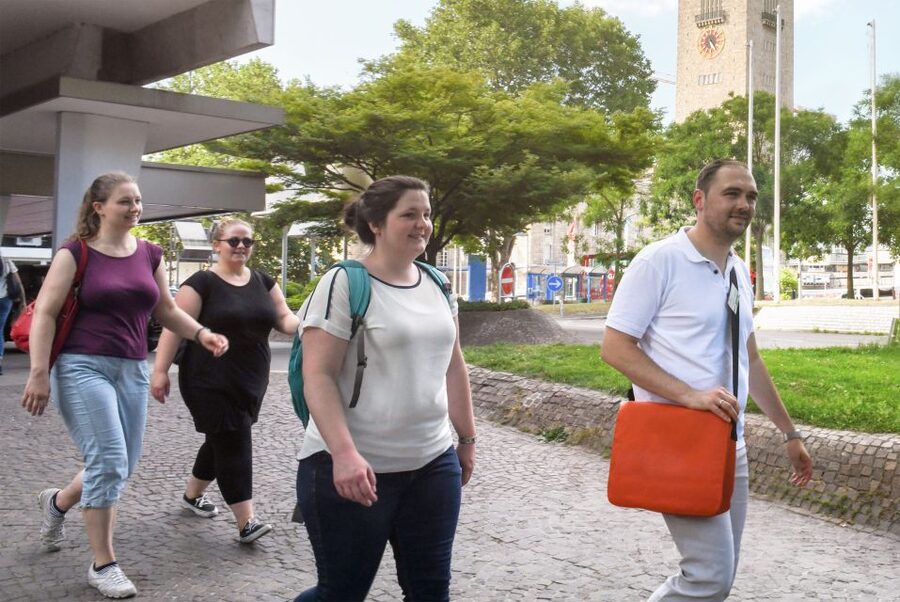
The palace gardens add a welcome change of pace. This is one of Stuttgart’s large green spaces, right in the middle of the central district. After the formal palace facades and city streets, the gardens give you a place to see how local life extends beyond museums and government buildings.
The tour does not promise a long garden visit or free time to sit. Instead, you should expect the gardens to be part of the walking route and city explanation. Your guide may use the area to discuss leisure, public space, and the way Stuttgart’s center is laid out.
This is also a good point to listen for the practical advice included in the tour. The guide offers tips on leisure activities and shopping, so you are not limited to dates and architectural labels. Those suggestions can be useful if you have another afternoon in the city and want ideas beyond the best-known sights.
The culture mile is another important part of Stuttgart’s center. This area includes several art museums and cultural institutions. The walk helps you see where these venues are located and how they fit into the city center.
The tour does not include entrance to the museums, and 90 minutes is not enough time to explore their collections. That is not a weakness if you use the walk as a first look. You can note the museums that interest you, then return with enough time to visit one properly instead of trying to squeeze everything into a single guided outing.
For art lovers, this part may be one of the most useful sections. For visitors focused only on old buildings, it may feel less essential. Stuttgart is not presented as a single-period historic town. Its appeal here comes from the mix of royal architecture, public gardens, museums, and active city streets.
The main station and Stuttgart’s changing architecture
The tour also points out Stuttgart’s listed Hauptbahnhof, or main railway station. The station is described as an impressive example of 19th-century architecture, making it a useful stop for anyone interested in how transportation shaped the city.
Railway stations are often treated as places to pass through. This walk asks you to look at the building itself and consider its design as part of Stuttgart’s urban story. The guide can explain the special buildings and architectural styles that appear along the route, giving you a better eye for details you might otherwise miss.
The station stop also adds variety. You are not spending the entire tour around palace squares. Instead, the route connects royal buildings, historic streets, green space, museums, and transport architecture.
The available details do not specify how long the group spends at the station or exactly how close the route gets. Plan on an outside explanation rather than a dedicated station tour. The focus remains on the city’s main sights and the links between them.
If architecture is your main reason for booking, this tour should suit you well, provided you understand German. If you want detailed access to interiors, it is less suitable. The walk shows you the city and explains its buildings, but admission to the State Museum and other cultural sites is not included.
A few more Stuttgart trips to weigh up
- Stuttgart: Guided Ghost Walking Tour
★ 4.5 · 662 reviews - Stuttgart: City Highlights – Guided Walking Tour
★ 4.7 · 189 reviews - Stuttgart: Guided Vineyards Tour
★ 4.3 · 146 reviews - Stuttgart: Private Guided Circular City Walk
★ 4.7 · 129 reviews
What the guide’s style means for your experience
The tour has a rating of 4.5 from 52 reviews, which suggests a strong overall response, but the comments point to a clear difference in expectations. One person found the guide very humorous. That is good news if you like a relaxed city walk with personality.
Other feedback was more cautious. A guide was described as friendly and well informed, but the tour did not always feel entertaining. The concern was not a lack of information. It was the balance between information and delivery. A talk about city history and architecture can be useful, but it may not feel lively if it runs for a long time in one place.
I would book this with the mindset of an informative central walk, not a theatrical performance. The word entertaining should not make you expect jokes every few minutes or a show built around audience participation. The actual tone may vary by guide.
Weather and timing also matter. A 30-degree midday walk with a long stop in front of the palace can be uncomfortable, especially if there is little shade. Check the available start times and, when possible, choose a cooler part of the day. Comfortable shoes are sensible because the route moves through squares, streets, gardens, and central public areas.
The tour ends back at the starting point, which makes planning easy. You can continue to the State Museum, return to the old town, explore the culture mile, or use the guide’s shopping and leisure suggestions.
Is $16 a fair price for 90 minutes?
At $16 per person, this is a reasonably priced introduction to central Stuttgart. You are paying for a live guide, a planned route, and an explanation of sights that can be difficult to interpret on your own.
The value is strongest if you are new to Stuttgart and want to get your bearings before choosing museums or other activities. In 90 minutes, you see several important areas without committing a full morning or afternoon. The guide’s local suggestions may also save you time later.
The value is weaker if you already know the city center or want entry into major attractions. Museum admission is not included, and the walk gives you outside views rather than a long visit inside the New Palace or the State Museum.
Families should note that children from 0 to 5 years old can join free. Older children may enjoy the squares and palace gardens, but the German commentary and long explanations could test their patience. Families should consider the child’s interest in history and architecture before booking.
The activity also offers free cancellation up to 24 hours before the start and a reserve-now, pay-later option. Those terms are useful if your Stuttgart schedule is still changing, but the more important decision is language and tour style.
Who should book this Stuttgart walking tour?
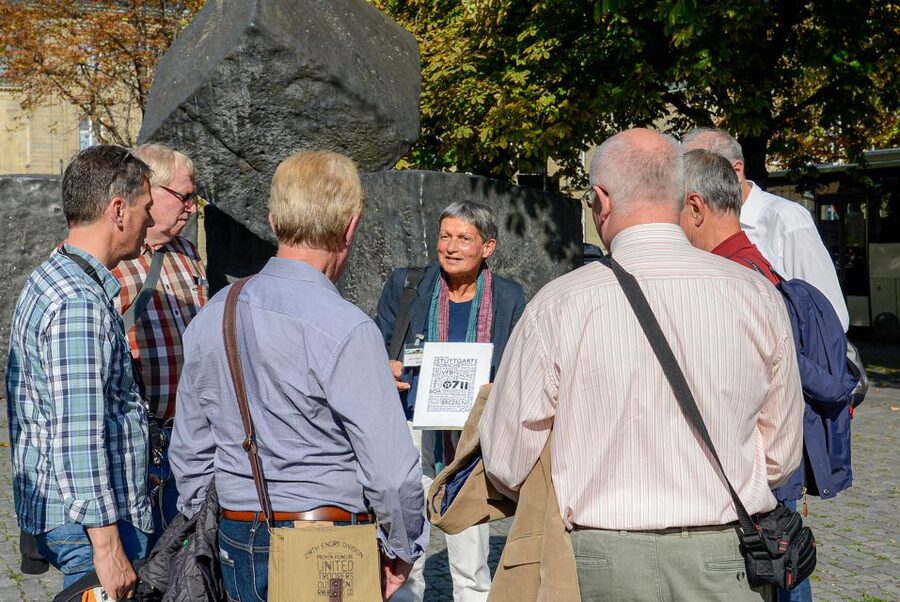
I would recommend it to you if you want a short, central introduction with a strong focus on buildings, city history, and orientation. It suits visitors who understand German and like connecting architecture with the story of a place.
It is also a good fit if you plan to visit Stuttgart’s museums. Seeing the culture mile with a guide first can help you choose where to spend your limited museum time. The same is true for the New Palace and the palace gardens. The walk gives you context, then you can return to the places that interest you most.
I would be more cautious if you want a fast, highly comic tour. The guide may be funny, but that is not guaranteed. The feedback points to a real split between a light, humorous presentation and a more serious lecture style.
You should also think about the weather. A long explanation in full sun can change the experience, so avoid the hottest midday start if the schedule allows. The route is compact, but comfort still matters when much of the commentary happens outdoors.
Final decision: a useful German-language introduction
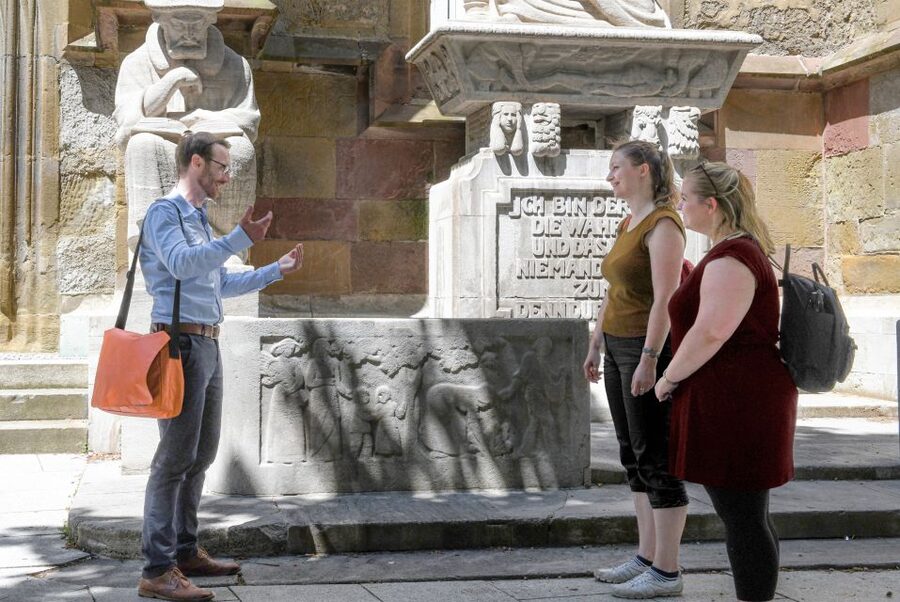
Book this tour if your priorities are central Stuttgart sights, architecture, and local orientation at a modest price. The route covers a lot in 90 minutes, and the meeting point, return point, and reserve-later option make it easy to fit into a short visit.
Skip it if you need English commentary, guaranteed comedy, or extensive time inside museums. For the right audience, this is a practical way to meet Stuttgart’s palace squares, old town, gardens, culture mile, and main station before exploring further on your own.
FAQ
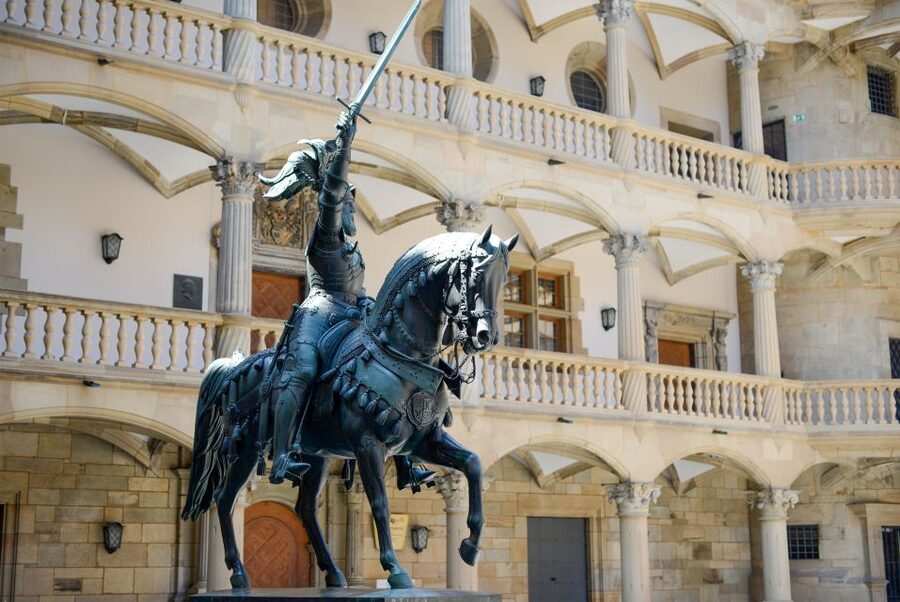
Where does the Stuttgart walking tour begin?
Meet the guide with an orange bag at the music pavilion in front of the New Palace, also called the New Castle in the meeting-point information.
Where does the tour end?
The tour ends back at the same meeting point by the New Palace.
How long does the tour last?
The walking tour lasts 1.5 hours. Starting times depend on availability.
What language is the tour conducted in?
The live guide conducts the tour in German.
What sights are included on the route?
The route includes Stuttgart’s old town, Schillerplatz, Schlossplatz, the New Palace, the palace gardens, the culture mile, and the listed Hauptbahnhof.
Is museum admission included?
No. The activity includes the walking tour and guide, but museum entry is not listed as included.
Can young children join the tour?
Yes. Children aged 0 to 5 years can join for free.
Just added around Stuttgart
- Stuttgart: Exklusive Floßboote Finne & Fischle★ 4.5 · 23 reviews
- Stuttgart: Landesmuseum Württemberg Old Castle Entry Ticket★ 4.5 · 15 reviews
- SUP Yoga with Guide★ 4.1 · 4 reviews
- Stuttgart: Wine Tour with wines of the best winemakers★ 4.0 · 7 reviews
- Stuttgart: Wilhelma Zoological-Botanical Garden Ticket★ 4.7 · 121 reviews
- Stuttgart: Stand Up Paddling Rental★ 4.6 · 55 reviews
- Stuttgart: Walking Custom Tour with a Local Guide★ 3.8 · 4 reviews
- Stuttgart: Stuttgart Wine Museum Wine Tasting★ 4.7 · 55 reviews
Old Town Walking Tours, compared.

Old Town & Viktualienmarkt City Walk in German
Read our review →

The Night Watchman Old Town Walking Tour in German
Read our review →
Browse the lists this tour appears in