
Reviewed · MUNSTER TOURS
Münster: Private Guided Sculptures Tour on a Rickshaw
Münster’s most unusual sightseeing ride is also one of its most thoughtful. Instead of rushing past public art on foot, you glide from street to park to courtyard while your guide explains why these works are still part of the city. I like the private rickshaw format, which keeps the outing easy and personal, and I like the way the tour connects art with Münster’s past rather than treating each sculpture as an isolated object.
The main drawback is time. Ninety minutes gives you a smart introduction, but not a full survey of every work left behind by the Münster Sculpture Projects. If you enjoy lingering over art, you may wish the ride lasted longer. Still, the chance to see many pieces without tiring your feet makes this a strong choice, especially for families and first-time visitors.
In This Review
- Key points to know before you book
- Why Münster’s public art deserves a closer look
- Meeting at the Old City Hall
- How the 90-minute rickshaw ride works
- The artists you will encounter
- Why the Sculpture Projects matter
- What makes the rickshaw better than a walking tour
- The city connection makes the art easier to understand
- Price, timing, and overall value
- Who should book this experience
- My verdict on the Münster sculpture ride
- FAQ
- Where does the Münster rickshaw sculpture tour begin?
- How long does the tour last?
- Is the tour private?
- Which languages are available?
- Which artists can I see on the tour?
- What should I bring?
Key points to know before you book
- The sculpture collection returns every 10 years: Münster’s Sculpture Projects began in 1977, and selected works have remained in the city after each event.
- You ride in a private rickshaw: The small-group setup lets you ask questions and keeps the pace more personal than a large city tour.
- The route begins at the Old City Hall: Meet your guide beside the historic building, where the tour starts with Münster’s civic story.
- The artists are internationally known: Expect works connected with Donald Judd, Claes Oldenburg, Bruce Nauman, Rosemarie Trockel, Martha Rosler, and others.
- Guiding is offered in English or German: Guides such as Barbara and Beate have been praised for their friendly manner and clear explanations.
- The ride lasts 90 minutes: It is long enough for a useful overview, but short enough to fit into a busy day in Münster.
Why Münster’s public art deserves a closer look
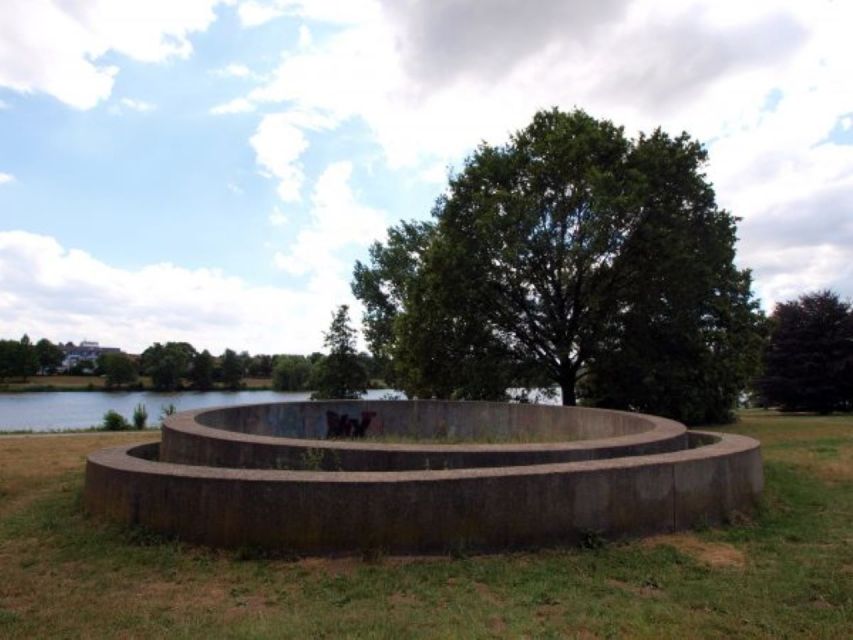
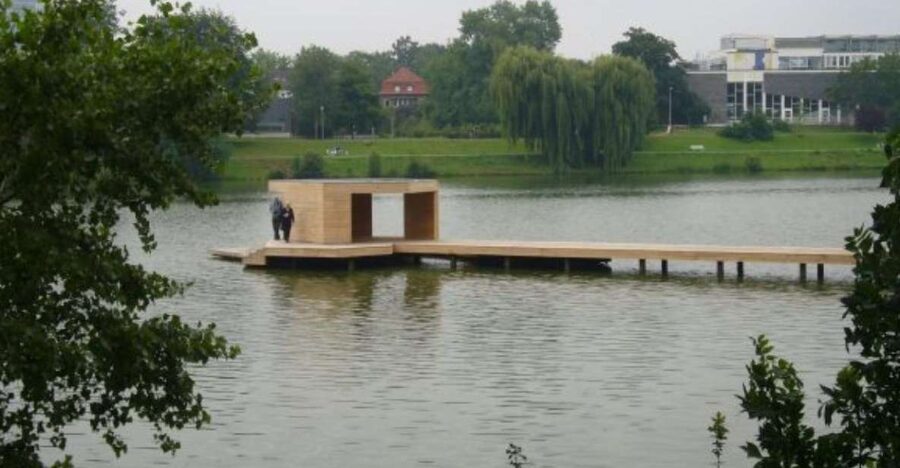
Münster is not simply using sculpture as decoration. Its famous Sculpture Projects have taken place every 10 years since 1977, turning the whole city into an ongoing art setting. Many of the works created for those events stayed behind, so you can still encounter pieces from different periods as you move through Münster.
That long-running idea is what gives this tour its purpose. You are not just checking off names such as Donald Judd or Claes Oldenburg. You are learning how contemporary art changes the way a city is used, viewed, and remembered.
Some works sit in obvious public places. Others appear in parks, streets, or courtyards, where you might easily miss them without a guide. The rickshaw helps you cover more ground than you would on foot, while the commentary gives you a reason to stop and look.
I especially like this format for people who feel unsure about modern sculpture. You do not need to know art theory before you arrive. Your guide can explain the basic idea, point out the details that matter, and place each work in the setting where it was made.
A few more Munster trips to weigh up
- Münster: Private Guided Rickshaw City Tour
★ 4.8 · 143 reviews - Private Christmas Tour in Münster including Glühwein
★ 4.9 · 54 reviews - Private crime city tour by rickshaw including guide
★ 5.0 · 21 reviews
Meeting at the Old City Hall
The tour begins in front of Münster’s City Hall, with the guide standing next to the rickshaw. This is a practical starting point because the building itself gives you an immediate introduction to Münster’s civic past.
Your first minutes are not only about finding the vehicle. The guide introduces the setting and begins explaining the city before taking you toward the art. That opening matters because the sculptures make more sense when you understand that they were placed in a working city, not inside a museum arranged for easy viewing.
The exact route can vary with the guide and the day, but the plan is clear: ride through different parts of central Münster and stop to discuss important works. Because this is a private group, you can ask for clarification instead of waiting for a large crowd to catch up.
The rickshaw itself also changes the rhythm of sightseeing. You are seated while the city passes around you, but you remain close enough to notice streets, buildings, and public spaces. It is less tiring than a long walking tour and more connected to the city than a vehicle that keeps you behind glass.
How the 90-minute rickshaw ride works
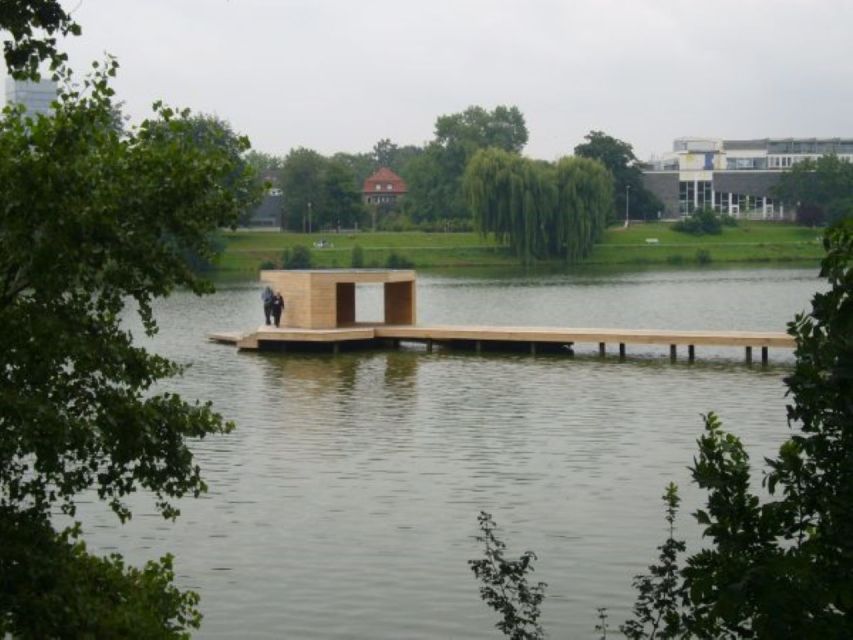
The ride is designed as an introduction rather than an exhaustive art course. Over an hour and a half, your guide takes you between selected sculptures and explains the ideas behind them.
You can expect a mix of movement and stops. At some locations, the guide may discuss how a work interacts with a street or courtyard. At others, the focus may be the artist, the material, or the reason the piece became part of Münster’s permanent collection.
The private format is important here. Modern art often brings up quick questions: What are you meant to notice? Why is this shape in this place? Did the artist intend people to walk around it? A one-to-one or family conversation makes those questions easier to ask.
Past guests have singled out the friendly, clear work of guides named Barbara and Beate. Barbara has been noted for connecting each sculpture to Münster’s city view and historical setting. Beate has been praised for her warm manner and strong command of the subjects. The guide you receive may be different, but the experience is built around live explanation rather than a recorded script.
One practical point: the tour is short enough to combine with other plans, but you should not expect unlimited time at every stop. If one artwork catches your attention, make a note of it so you can return on foot later.
The artists you will encounter
The artist list is one of the strongest reasons to book this ride. You may see works associated with:
- Bruce Nauman
- Rosemarie Trockel
- Claes Oldenburg
- Donald Judd
- Jorge Pado
- Per Kirkeby
- Ilya Kabakov
- Thomas Schütte
- Martha Rosler
- Daniel Buren
These names represent different approaches to public sculpture. Some artists are interested in shape and space. Others challenge the way you use a public place or ask you to reconsider an ordinary object.
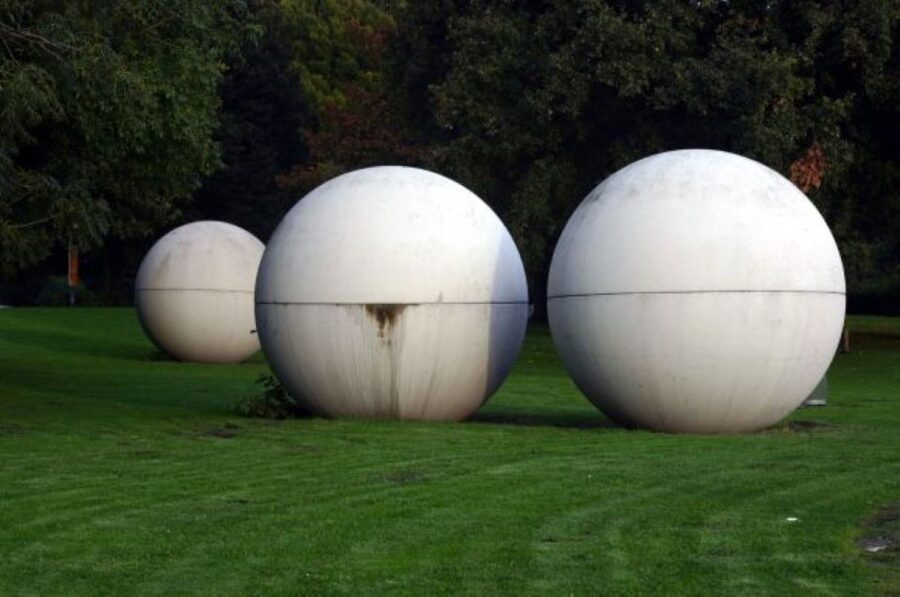
Claes Oldenburg is known for making familiar objects feel strange through scale and form. Donald Judd is associated with clean, reduced structures that ask you to pay attention to proportion and placement. Rosemarie Trockel and Martha Rosler bring different perspectives on everyday life, society, and the role of art.
The value of having a guide is that you do not have to sort through those differences alone. You get a short, useful explanation at each chosen stop, then see how the work relates to its surroundings.
The tour also includes artists such as Daniel Buren, Thomas Schütte, and Ilya Kabakov, whose pieces can encourage very different readings of public space. You may agree with the interpretation, or you may not. That is part of the pleasure. The guide gives you a starting point, not a final answer.
Same city, a completely different kind of day:
- Münster: Old Town Highlights Guided Tour
★ 4.7 · 286 reviews - Münster: Nachtwächter-Führung (Erlebnistour)
★ 4.4 · 213 reviews - Münster: Night watchman tour through the picturesque old town by lantern light
★ 4.8 · 65 reviews - Münster: Beer Tasting Rickshaw Tour
★ 4.7 · 56 reviews
Why the Sculpture Projects matter
Münster’s Sculpture Projects are unusual because they return on a fixed 10-year cycle. The first event took place in 1977, and works from the projects have remained in the city after each edition.
That means the collection is layered. You can encounter art from different decades in the same urban setting, with each piece carrying part of the story of how Münster has approached contemporary art over time.
This also explains why a standard city walk may not be enough. A sculpture can look like a simple object until you know why it was commissioned, where it first appeared, or how people use the surrounding space. Your guide supplies that missing link.
I like the fact that the art is not kept behind a museum entrance. You see it among ordinary city life, where people pass by, pause, or perhaps ignore it. That is a more honest way to experience public art. The work must share attention with streets and buildings, and the guide helps you notice what that setting adds.
What makes the rickshaw better than a walking tour
A walking tour gives you a close connection to the pavement, but a rickshaw offers a different advantage: efficient coverage without making the art feel distant.
Münster’s works are spread through public parks, streets, and courtyards. On foot, you may spend much of your time simply getting from one point to the next. In the rickshaw, you can move between areas while listening to the guide and saving energy for the stops.
This is especially useful for families. One review notes that children enjoyed the outing, and that makes sense. The ride adds motion and variety to a subject that could otherwise feel serious or abstract. Parents can also ask the guide to explain a work in simpler terms.
The experience may suit older visitors for the same reason. You get to see more of the city without committing to a long walk. It can also work well on a day when you have already spent hours sightseeing.
The tradeoff is that you are not walking at your own pace. You cannot spontaneously stop at every detail along the way, and a rickshaw is not a substitute for exploring the city on foot. Think of this as a well-chosen introduction, followed by independent visits to the pieces that interest you most.
The city connection makes the art easier to understand
The tour is not only about sculpture. It also gives you a moving introduction to Münster itself.
Your guide explains parts of the city’s past as you ride, including the setting around the Old City Hall. That historical context can make the art feel less abstract. You begin to see why a piece belongs in a particular street, park, or courtyard rather than imagining it in a blank gallery.
This approach was one of the most praised parts of the guiding. Clear information, friendly delivery, and connections to Münster’s city view all help the ride feel like a city tour with a strong art focus, not an art lecture on wheels.
I also like the chance to see less familiar parts of Münster. The ride takes you to locations you might not choose on a basic central walking route. You can come away with a better sense of how the city is arranged, as well as a list of sculptures worth revisiting.
Because the tour is private, the guide can adjust the conversation to your interests. If you already know modern art, you can ask more detailed questions. If this is your first serious look at public sculpture, you can keep the discussion practical and visual.
Price, timing, and overall value
The listed price is $58 per person for 90 minutes. That is not the cheapest way to see Münster, but the comparison should be with a private guided ride, not with a free walk around town.
You are paying for the rickshaw, a live guide, and a route chosen around works that can be scattered across the city. The private-group setup also adds value for couples, families, and small parties that would rather not join strangers.
For one person, the cost may feel harder to justify than for a small private group. For a family or group of friends, the price can make more sense because everyone shares the same guide and vehicle.
The tour is most valuable if you care about context. If you only want a quick ride around Münster, a standard sightseeing option may be enough. If you want to understand why these sculptures are here and how the Sculpture Projects shaped the city, the price buys something more useful than transport.
You also get flexible booking terms. You can reserve now and pay later, and cancellation is available up to 24 hours before the start for a full refund. Check the available starting times when booking, since the ride lasts 90 minutes and your preferred time may not be offered every day.
Who should book this experience

I would recommend this tour to several types of visitors:
- First-time visitors to Münster: You get a city orientation and an introduction to its best-known public art.
- Families with children: The rickshaw keeps the outing active, and the shorter format is easier than a long museum visit.
- Modern art beginners: The guide gives you a way into works that may seem puzzling at first.
- Couples and small groups: A private vehicle lets you keep the conversation relaxed and personal.
- Visitors with limited walking time: You can cover several areas without spending the whole outing on foot.
- Repeat visitors: The route can show you corners of Münster and artworks you missed before.
I would be less likely to choose it if your main goal is to spend a long time studying each sculpture. Ninety minutes moves at a steady pace. It gives you a broad sample, not a slow art seminar.
Bring weather-appropriate clothing. The tour takes place outdoors, and your comfort depends on the conditions. The ride is offered in German or English, so choose the language that lets you get the most from the explanations.
My verdict on the Münster sculpture ride
Book this tour if you want a comfortable, personal way to connect Münster’s public art with its streets and past. The strongest features are the private rickshaw, the unusual collection of permanent works, and guides such as Barbara and Beate who make the subject approachable.
The main limitation is simple: you may want more than 90 minutes. Treat the ride as your introduction, not your final visit to the Sculpture Projects. Keep track of the pieces that interest you, then return to them on foot if your schedule allows.
At $58 per person, it is a sensible choice for a small group that values context and convenience. It is particularly good for families, first-time visitors, and anyone who wants more from Münster than a quick look at its main buildings.
FAQ
Where does the Münster rickshaw sculpture tour begin?
Meet your guide in front of Münster’s City Hall. The guide will be standing next to the rickshaw.
How long does the tour last?
The guided rickshaw tour lasts 90 minutes.
Is the tour private?
Yes. The experience is arranged for a private group.
Which languages are available?
The live tour guide can provide the experience in German or English.
Which artists can I see on the tour?
The tour can include works by artists such as Donald Judd, Jorge Pado, Claes Oldenburg, Bruce Nauman, Rosemarie Trockel, Martha Rosler, Per Kirkeby, Ilya Kabakov, Thomas Schütte, and Daniel Buren.
What should I bring?
Bring clothing suited to the weather, since the tour takes place outdoors.
Just added around Munster
- Private crime city tour by rickshaw including guide★ 5.0 · 21 reviews
- Münster: Private pub crawl with insider guide & free shots★ 4.6 · 11 reviews
- Münster Private Guided Walking Tour★ 4.5 · 18 reviews
- Münster: Old Town Crime Mystery Tour★ 4.0 · 35 reviews
- Münster: Old Town Historical Walking Tour by “Geo Epoche”★ 4.7 · 51 reviews
- Münster Old Town: Outdoor Escape Game★ 4.1 · 14 reviews
- Münster: Beer Tasting Rickshaw Tour★ 4.7 · 56 reviews
- Münster Escape Tour Kreuzviertel★ 4.2 · 8 reviews
Munster Tours, compared.
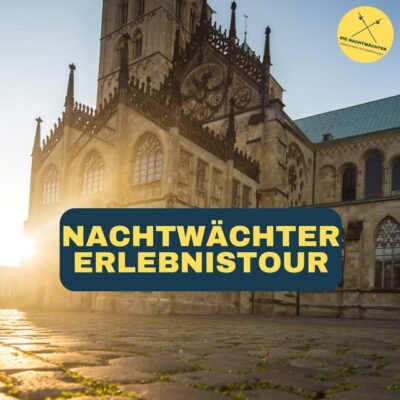
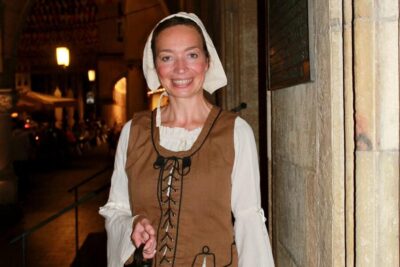
Night watchman tour through the picturesque old town by lantern light
Read our review →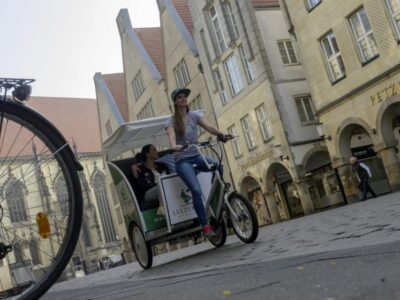
Private Christmas Tour in Münster including Glühwein
Read our review →
Old Town Historical Walking Tour by “Geo Epoche”
Read our review →
Browse the lists this tour appears in