

Reviewed · OLD TOWN WALKING TOURS
Münster: Old Town Highlights Guided Tour
Münster’s old town packs a surprising amount of drama into a compact walk. You’ll move from the cathedral’s medieval power struggles to the Anabaptist rebellion, then on to the Peace Hall, where the Peace of Westphalia helped end the Thirty Years’ War. The cages still hanging from St. Lambertus are the tour’s most unsettling detail.
I like the 90-minute length, which gives you useful historical context without taking over your day. I also like the guide’s focus on clues you can still see in the streets and towers, rather than treating Münster as a list of old buildings. The main drawback is simple: the tour is held in German, so it is not a good choice if you need English commentary.
In This Review
- Key points at a glance
- Münster’s old town in one focused walk
- St. Paul’s Cathedral and the birth of Münster
- Merchants, clergy, and the shape of the streets
- The Anabaptists and the headless saints of Überwasserkirche
- St. Lambertus and the famous iron cages
- Prinzipalmarkt and Münster’s civic center
- The Historic City Hall and the Peace of Westphalia
- Erbdrostenhof and Clemenskirche in the Baroque city
- What $16 buys you in Münster
- Who will get the most from this walk
- Practical details before you reserve
- Should you book the Münster old town tour?
- FAQ
- How long does the Münster Old Town Highlights Guided Tour last?
- How much does the tour cost?
- Can children under six join the tour?
- What language is the tour conducted in?
- Where is the meeting point?
- How will I recognize the guide?
- Which Münster sights are included?
- Can I cancel for a full refund?
- Do I have to pay when I reserve?
Key points at a glance
- See the Anabaptist cages on St. Lambertus: These iron cages recall the violent end of Münster’s 16th-century Anabaptist rule.
- Learn why Münster became a city: The story begins at St. Paul’s Cathedral and the small Saxon settlement of Mimigernaford.
- Enter the Peace Hall story: The Historic City Hall recalls the 1648 Peace of Westphalia and the negotiations between the Dutch and Spanish.
- Read the city’s power map: Old tensions between merchants and clergy still help explain Münster’s layout.
- Compare Schlaun’s Baroque buildings: Erbdrostenhof and Clemenskirche show the work of Johann Conrad Schlaun.
- Keep the day flexible: The tour lasts 1.5 hours, costs $16 per person, and children under six join free.
Münster’s old town in one focused walk
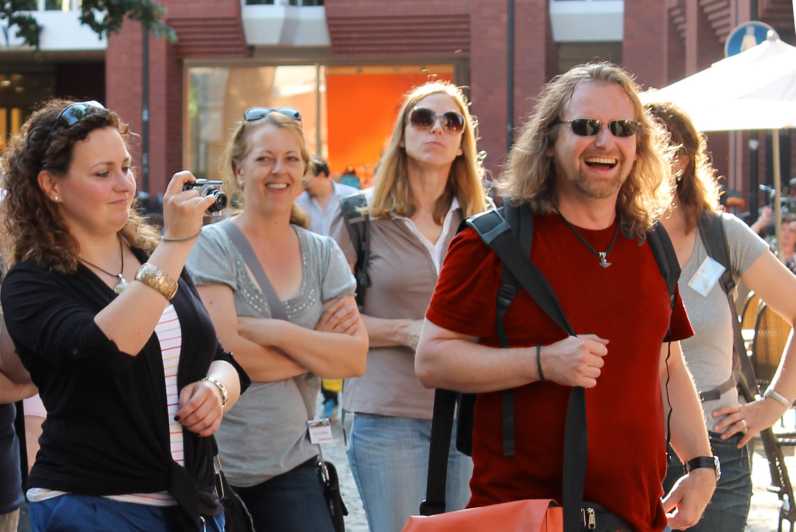
This tour is built for you to get your bearings while learning why Münster looks the way it does. It is not just a procession past attractive façades. Each stop adds a piece to the city’s story: church power, trade, rebellion, diplomacy, and Baroque design.
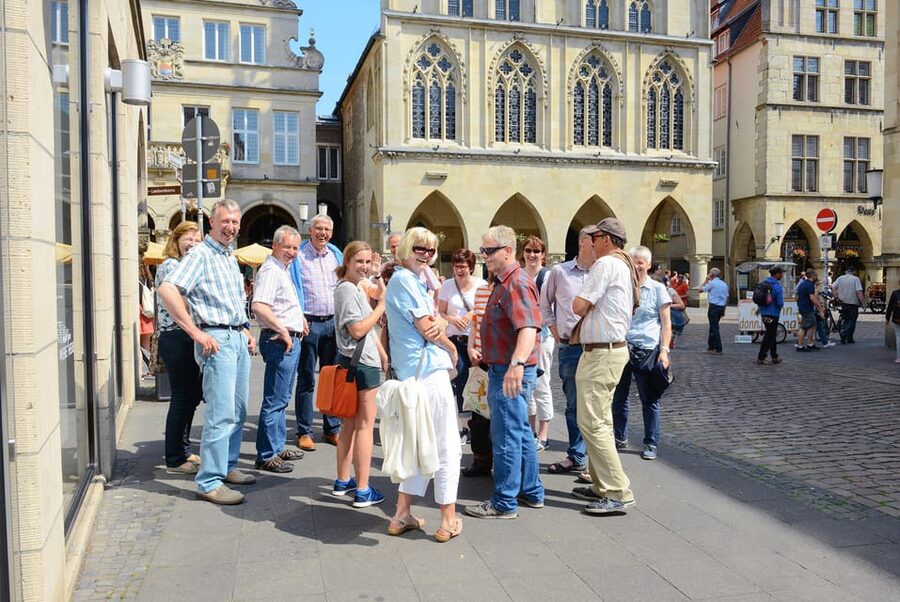
You begin opposite the Historic City Hall beneath the sign marked Michaelisplatz, close to the Rathausrelief. Look for the guide carrying an orange bag with the k3 sign. That meeting point puts you right in the center of the old town, so you can continue sightseeing on foot when the tour ends.
The guide speaks German, and the presentation is described as competent and entertaining. The 4.7 rating from 286 reviews suggests the format is working well, especially for people who want a clear, well-paced introduction rather than a long academic lecture.
More old town walking tours in Munster:
- Münster: Night watchman tour through the picturesque old town by lantern light
★ 4.8 · 65 reviews - Münster: Old Town Historical Walking Tour by “Geo Epoche”
★ 4.7 · 51 reviews - Münster: Old Town Crime Mystery Tour
★ 4.0 · 35 reviews
St. Paul’s Cathedral and the birth of Münster

The first major stop is St. Paul’s Cathedral, or the Dom. Here, the guide explains how the small Saxon settlement of Mimigernaford became Münster. That change was not just a matter of a village growing larger. It involved religious authority, urban development, and the gradual shaping of a city.
You’ll also hear about cathedral immunity. In simple terms, this refers to the special area around the cathedral that came under ecclesiastical authority. The cathedral was not merely a place for worship. It helped define who held power, where that power applied, and how the city functioned.
This is a useful beginning because Münster’s old town makes more sense once you understand the tug of war between the clergy and the merchants. The streets and buildings were shaped by that contest, and the tour connects those earlier disputes to details you can still see.
The Dom is also a good place to begin because it gives the story a firm anchor. Instead of starting with a broad timeline, you start with the institution that helped turn Mimigernaford into Münster. If you enjoy seeing how religion and civic life once overlapped, this part will likely be one of the most rewarding.
Merchants, clergy, and the shape of the streets
Münster was not controlled by one group alone. Merchants wanted room to trade and influence civic affairs, while the clergy held major religious and political power. Those competing interests affected the arrangement of the city, including the relationship between the cathedral area, the market, and the main civic spaces.
Your guide uses the old town as a kind of historical map. You are not only told that merchants and clergy disagreed. You are shown how the dispute still affects the cityscape today. That approach makes the history easier to remember because you can connect the explanation to actual streets and buildings.
I especially like this kind of storytelling on a first visit. A city can look orderly now, but its layout often reflects old arguments. Münster gives you a chance to see those arguments in stone, towers, and public spaces.
The tour is short enough that the information should stay manageable. You will not receive every detail of Münster’s past, but you will get a useful framework for understanding the main sights afterward.
The Anabaptists and the headless saints of Überwasserkirche
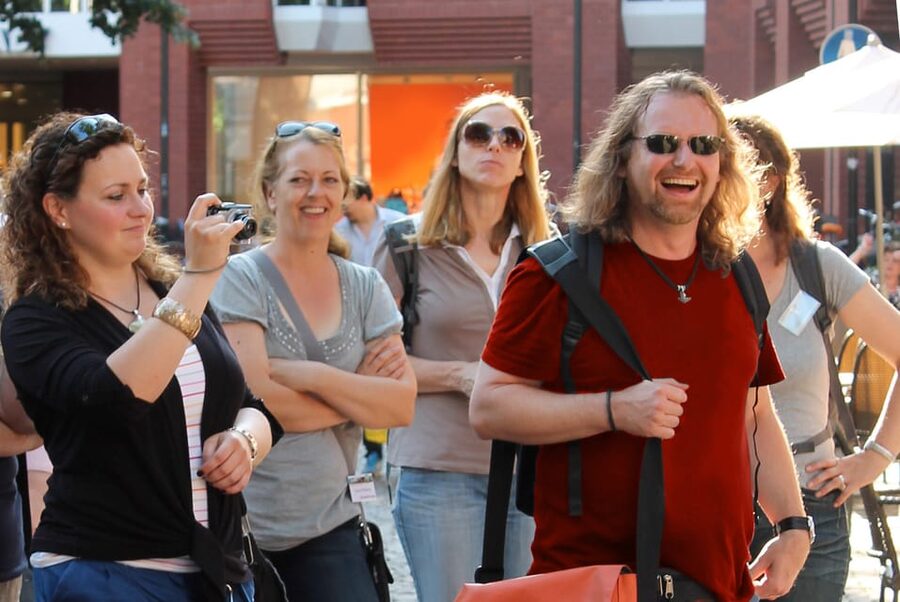
Münster’s most dramatic chapter came in the 16th century, when the Anabaptists took control of the city. The tour explains how their rule led to changes that remain visible today.
At the Überwasserkirche, you’ll hear why the tower still lacks a pointed top. Some of the saints on the church also remain headless. These are not random bits of damage. They connect directly to the religious conflict and upheaval of the period.
This stop gives the tour an edge that a standard architecture walk might miss. You are looking at a church tower and statues, but the guide turns them into evidence of a struggle over faith, power, and control of the city.
The details are memorable without needing much decoration. A tower without its point and saints without their heads are easy visual reminders of how violent the Anabaptist episode became. If you have only a short time in Münster, this is the sort of local story that helps the city stick in your mind.
The guide’s job here is important. The subject can become confusing if it is presented as a list of names and dates. A clear explanation of what happened, and why the physical damage remains visible, gives the stop real value.
A few more Munster trips to weigh up
- Münster: Private Guided Rickshaw City Tour
★ 4.8 · 143 reviews - Private crime city tour by rickshaw including guide
★ 5.0 · 21 reviews - Münster Private Guided Walking Tour
★ 4.5 · 18 reviews - Münster: Private Guided Sculptures Tour on a Rickshaw
★ 5.0 · 12 reviews
St. Lambertus and the famous iron cages

At the market church of St. Lambertus, the tour takes you to one of Münster’s most striking symbols: the cages hanging from the church tower. They represent the end of the Anabaptist movement.
The tower also recalls the tower keeper, who worked high above the market. That practical detail helps connect the tower to everyday city life. It was not simply a religious structure. It was part of the city’s working system, watching over the market and the streets below.
The cages are a powerful stop, though you should not expect a cheerful story. They are a reminder that Münster’s past included public punishment and harsh political violence. The tour does not smooth over that part of the city’s history, and that honesty is a strength.
St. Lambertus also helps you understand how the market functioned as a public stage. Religious authority, civic order, trade, and punishment all came together in this central setting. You’ll see one building, but the explanation gives it several layers.
Prinzipalmarkt and Münster’s civic center
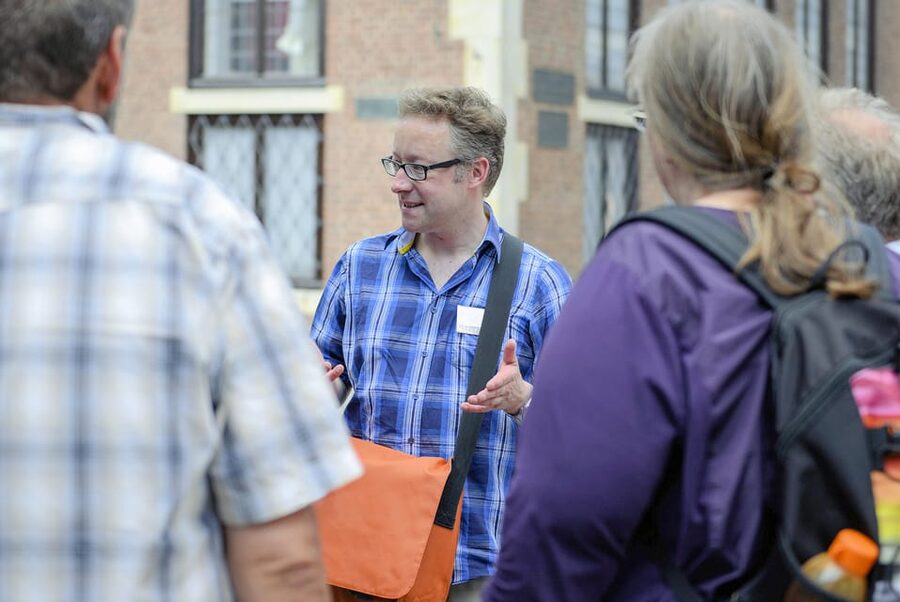
The Prinzipalmarkt is one of Münster’s essential sights, and it is included among the tour’s main highlights. Its arcaded façades and central position make it an obvious place to discuss commerce and civic life.
The tour’s earlier explanation of merchants and clergy pays off here. The market is not just a handsome street for photographs. It represents the commercial side of Münster’s development and helps show how trade shaped the city alongside church authority.
You will also have the chance to understand how the market connects to the Historic City Hall. That relationship matters because Münster’s civic story is not separate from its religious story. The city’s public spaces brought these forces into contact.
I would pay attention to the guide’s small connections at this point. The value is less in memorizing every building and more in understanding why this particular street became so important. Once you have that context, it is easier to explore the Prinzipalmarkt on your own after the walk.
The Historic City Hall and the Peace of Westphalia
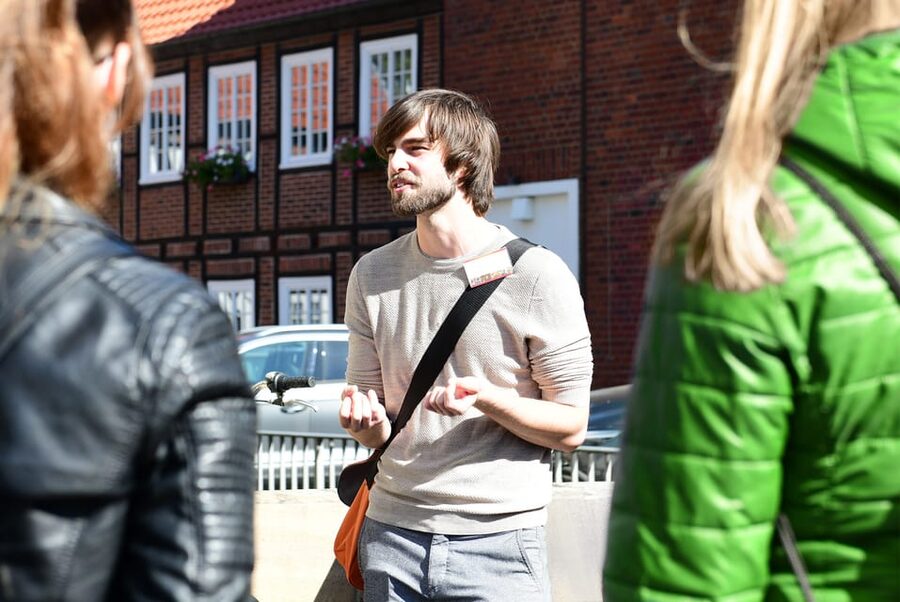
The Historic City Hall is one of the tour’s key stops. Inside the Peace Hall, you’ll learn about the negotiations that led to the Peace of Westphalia in 1648.
The agreement helped end the horrors of the Thirty Years’ War. Münster’s Peace Hall is also linked to the peace signed between the Dutch and the Spanish, giving the building a direct connection to European diplomacy.
This is a strong part of the walk for anyone who likes history with a clear place attached to it. Large political events can feel distant when you read about them in a book. Here, the setting is specific: a historic town hall, a named room, and negotiations that changed the direction of European affairs.
The tour does not treat the building as a photo stop only. It explains why the Peace Hall has become a symbol of peace in Münster. That gives the visit more weight, especially if you are interested in how cities remember major events.
Keep your expectations realistic about timing. The full walk lasts 1.5 hours, so the guide needs to cover several major subjects. You’ll receive an introduction to the peace negotiations, not an exhaustive account of every treaty and political detail.
Erbdrostenhof and Clemenskirche in the Baroque city
The final architectural theme comes from Johann Conrad Schlaun, the Baroque master builder whose work helped shape Münster’s appearance. You’ll see two notable examples: Erbdrostenhof and Clemenskirche.
Erbdrostenhof introduces you to Schlaun’s grand civic style. Clemenskirche gives you a second point of comparison, allowing you to see how the same architect’s ideas work in a different setting.
Including both buildings improves the tour because Münster is not only a medieval or religious city. Its appearance also reflects later periods, including the Baroque age. The contrast helps you notice changes in taste, scale, and design as you move through the old town.
You may not get a long architectural analysis of each façade, given the short duration. Still, the pair gives you a useful visual guide to Schlaun’s influence. If you like architecture, note the names during the tour so you can return for a closer look afterward.
What $16 buys you in Münster
At $16 per person, this is a reasonably priced introduction to Münster. You get 90 minutes with a live guide and a route that includes the cathedral, St. Lambertus, Prinzipalmarkt, Historic City Hall, Erbdrostenhof, and Clemenskirche.
The value comes from the connections between the stops. If you simply walked past these buildings alone, you could appreciate their appearance but miss the stories linking them. The tour helps you understand why the cathedral mattered, why the market became central, and why the cages still hang from St. Lambertus.
Children aged zero through five join free, which makes the price easier for families with young children. The activity is also short enough to fit before another plan, after arrival in Münster, or near the start of a day exploring the old town.
You can reserve now and pay later, and cancellation is free up to 24 hours in advance for a full refund. Those terms are useful if your schedule is still changing, though the main decision is language, not booking flexibility.
Who will get the most from this walk
I would choose this tour if you want a quick historical framework for Münster and can follow German comfortably. It suits first-time visitors who prefer a local guide to explain the city’s major sights in a logical order.
It also fits people who enjoy the darker, stranger side of history. The Anabaptist cages, damaged tower, and headless saints give the tour more bite than a simple architecture circuit.
Families may find the length manageable, and the free entry for children under six is a real plus. Still, young children may not follow the political and religious history closely. The walk works best if you are happy for them to see the buildings while you take in the story.
Architecture fans will appreciate the Schlaun buildings, while history fans will get the most from the cathedral immunity, Anabaptist rule, and Peace of Westphalia sections. If your main interest is shopping, food, or nightlife, this tour will be less useful, since its focus is firmly on history and old-town sights.
The guide is expected to answer questions and keep the walk moving. One recent German-language assessment specifically praised the punctual start, the guide’s friendly manner, and the careful answers to questions. That is useful to know if you value a tour that begins on time and allows some conversation rather than delivering a fixed speech.
Practical details before you reserve
The meeting point is opposite the Historic City Hall, beneath the Michaelisplatz sign and close to the Rathausrelief. Look for the orange bag marked with the k3 sign. Arriving at the correct side of the town hall matters, since the center has several nearby points that can look similar on a map.
The tour is conducted in German. There is no English option listed, so you should book only if German is comfortable for you. The guide is live, which gives you the chance to ask questions during the walk.
The duration is 1.5 hours. Starting times vary, so you need to check availability for the date you want. The route is centered on Münster’s old town and its main sights, with the meeting point already in the historic core.
The experience has a 4.7 rating from 286 reviews. I would read that as a sign of steady satisfaction, especially when combined with specific praise for the good duration, punctual start, friendly guide, useful answers, and lively explanations.
Should you book the Münster old town tour?
Book it if you want Münster’s main sights explained in German, with special attention to the city’s power struggles, Anabaptist past, peace negotiations, and Baroque architecture. At $16, the tour offers a solid amount of context for a modest cost.
Skip it if you need English commentary or want to explore at your own pace without a set route. For everyone else, this is a smart first activity in Münster: short, central, historically serious, and packed with details you can use during the rest of your visit.
FAQ
How long does the Münster Old Town Highlights Guided Tour last?
The tour lasts 1.5 hours.
How much does the tour cost?
The listed price is $16 per person.
Can children under six join the tour?
Yes. Children aged zero to five can join for free.
What language is the tour conducted in?
The tour is held in German with a live German-speaking guide.
Where is the meeting point?
Meet opposite the Historic City Hall beneath the sign marked Michaelisplatz, close to the Rathausrelief.
How will I recognize the guide?
The guide will be carrying an orange bag with the k3 sign on it.
Which Münster sights are included?
The tour includes the Dom, St. Lambertus Church, Prinzipalmarkt, Historic City Hall, Erbdrostenhof, and Clemenskirche.
Can I cancel for a full refund?
Yes. You can cancel up to 24 hours in advance for a full refund.
Do I have to pay when I reserve?
No. The reserve now and pay later option lets you book your place without paying immediately.
Just added around Munster
- Private crime city tour by rickshaw including guide★ 5.0 · 21 reviews
- Münster: Private pub crawl with insider guide & free shots★ 4.6 · 11 reviews
- Münster Private Guided Walking Tour★ 4.5 · 18 reviews
- Münster: Private Guided Sculptures Tour on a Rickshaw★ 5.0 · 12 reviews
- Münster: Old Town Crime Mystery Tour★ 4.0 · 35 reviews
- Münster: Old Town Historical Walking Tour by “Geo Epoche”★ 4.7 · 51 reviews
- Münster Old Town: Outdoor Escape Game★ 4.1 · 14 reviews
- Münster: Beer Tasting Rickshaw Tour★ 4.7 · 56 reviews
Old Town Walking Tours, compared.
Old Town & Viktualienmarkt City Walk in German
Read our review →

The Night Watchman Old Town Walking Tour in German
Read our review →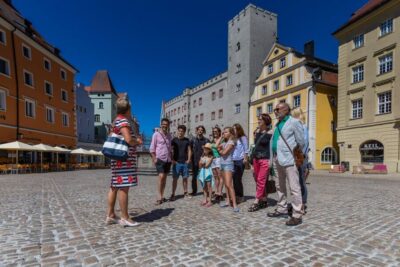
Browse the lists this tour appears in