
Reviewed · CITY TOURS
Luxembourg to Trier: Tour of Germany’s Oldest City.
Trier gives you a lot of Europe in a small package: Roman gates, imperial halls, medieval churches, and Karl Marx’s birthplace all fit into one walk. The train from Luxembourg takes about an hour, so you can cross a national border without giving up a full day to transport.
I like the clear mix of guided sightseeing and two hours of free time. I also like the small group, capped at 15 people, and the chance to hear the tour in English or Spanish. The main drawback is the tight schedule. You see many major places, but some visits are brief, and Roman sites such as the amphitheater and baths may be viewed as part of the route rather than explored at length.
In This Review
- Key points to know
- Why Trier makes such a good day trip from Luxembourg
- Starting at the Porta Nigra
- Constantine’s Basilica and the Roman imperial story
- Roman ruins near the amphitheater and baths
- Karl Marx House and the city’s modern chapter
- St. Peter’s Cathedral, from old walls to a hidden guardian
- Market Square and your two hours alone
- What the guides add to the day
- Timing, walking, and practical value
- Who should book this Trier trip
- Should you book the Luxembourg to Trier tour?
- FAQ
- How long does the Luxembourg to Trier tour last?
- How do I get from Luxembourg to Trier?
- Where is the meeting point?
- Which languages are available?
- How much free time do I get in Trier?
- What should I bring?
- Are pets allowed on the tour?
Key points to know
- Roman Trier in one compact route: Begin at the Porta Nigra, then see Constantine’s Basilica, the amphitheater, and the Barbara Baths.
- A useful cross-border day trip: The train ride from Luxembourg takes about one hour each way, with a round-trip ticket included.
- Two hours on your own: After roughly two hours of guided touring, you can choose lunch, museums, shopping, or a slower look at the old town.
- Excellent church stops: St. Peter’s Cathedral includes original 10th-century walls, tombs, altars, and a mysterious guardian below.
- Personal guides matter: Anna received warm praise for her explanations, while Paulina was described as a clear and eager historian.
- Bring identification: You need a passport or ID card for the international train journey.
Why Trier makes such a good day trip from Luxembourg
Trier is close enough to Luxembourg for a practical change of country, yet it feels different in scale and mood. The route takes you from Luxembourg’s Gare Centrale to Trier by train, with the meeting point at the station entrance beside the Oberweis café.
The appeal is simple: you do not spend the day on a long coach ride. The one-hour train journey gives you a comfortable transfer and leaves time for the city itself. The full experience lasts 330 minutes, or five and a half hours, including the train ride, walking tour, free time, and return trip.
At $129 per person, this is not the cheapest way to visit Trier. The price makes more sense if you want the train ticket, a planned route, and a guide who can connect the Roman, medieval, and modern parts of the city. If you already know Trier well and prefer to wander alone, you may find the organized format less useful.
The group limit of 15 is a real advantage. It should make it easier to hear the guide in busy streets and ask questions without the feel of a large bus excursion. Still, this is a walking-focused outing, so comfortable shoes matter.
A few more Germany trips to weigh up
- Berlin: 1-Hour City Tour by Boat with Guaranteed Seating
★ 4.3 · 16,993 reviews - Leipzig: City History Canal Sightseeing Tour on a Motorboat
★ 4.7 · 6,232 reviews - Cologne: Panoramic City Cruise
★ 4.3 · 5,698 reviews
Starting at the Porta Nigra
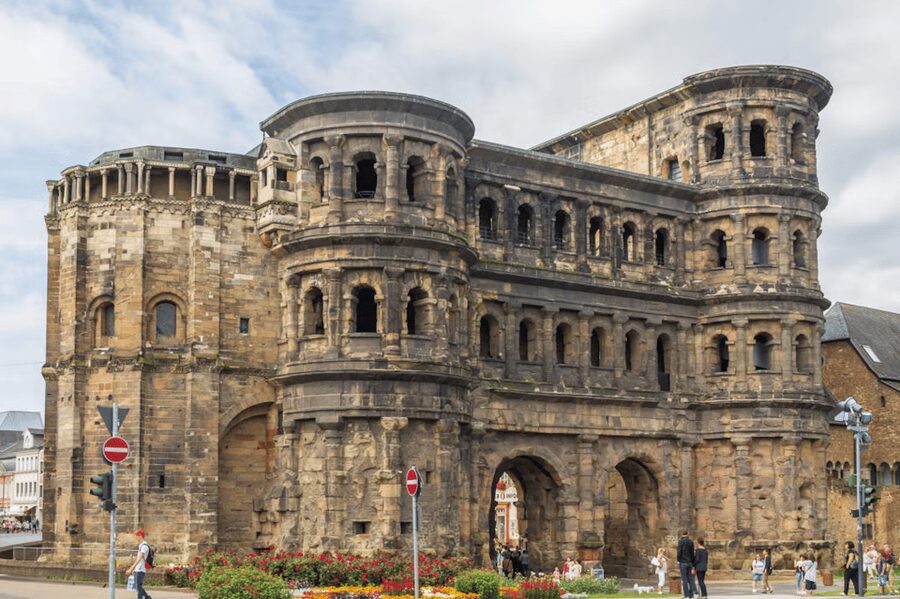
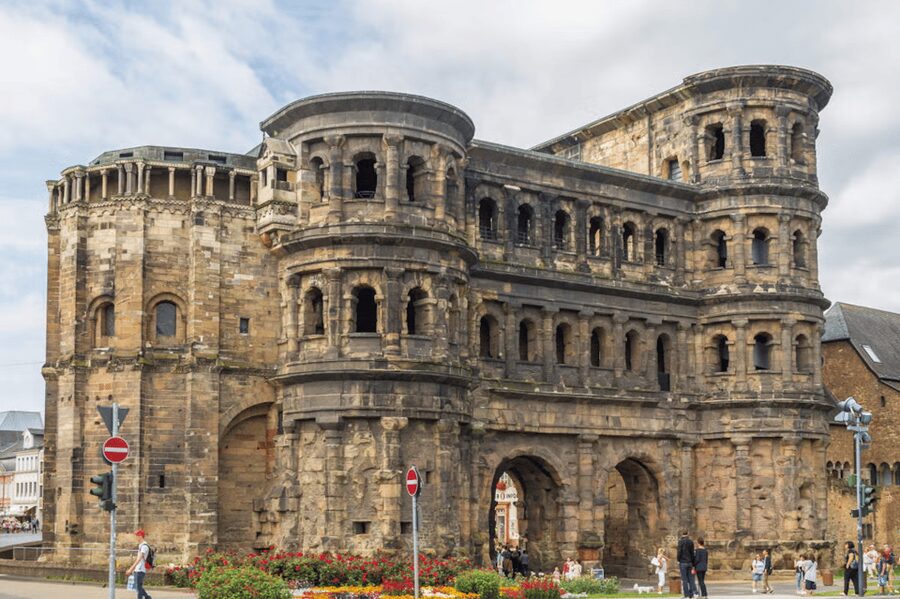
The walk begins at Trier’s Porta Nigra, the enormous Roman gate that has become the city’s signature sight. The name means Black Gate, and the guide explains why its stones took on that dark appearance.
This is an effective first stop because it gives you an instant sense of Trier’s age and importance. The gate is described as the largest Roman-style entrance in the world, and its scale helps you picture the city as a major Roman center rather than a quiet provincial town.
The guided visit lasts about 30 minutes. That is enough time for an explanation of the monument and its place in the old town, but it is not an extended archaeological study. I would pay close attention here, because the guide’s introduction gives useful context for the other Roman sites later in the walk.
The Porta Nigra also puts you right near the historic center. From there, the route shifts between ancient ruins, churches, public squares, and city streets. You are not simply ticking off isolated monuments. You are seeing how different eras share the same compact center.
Constantine’s Basilica and the Roman imperial story
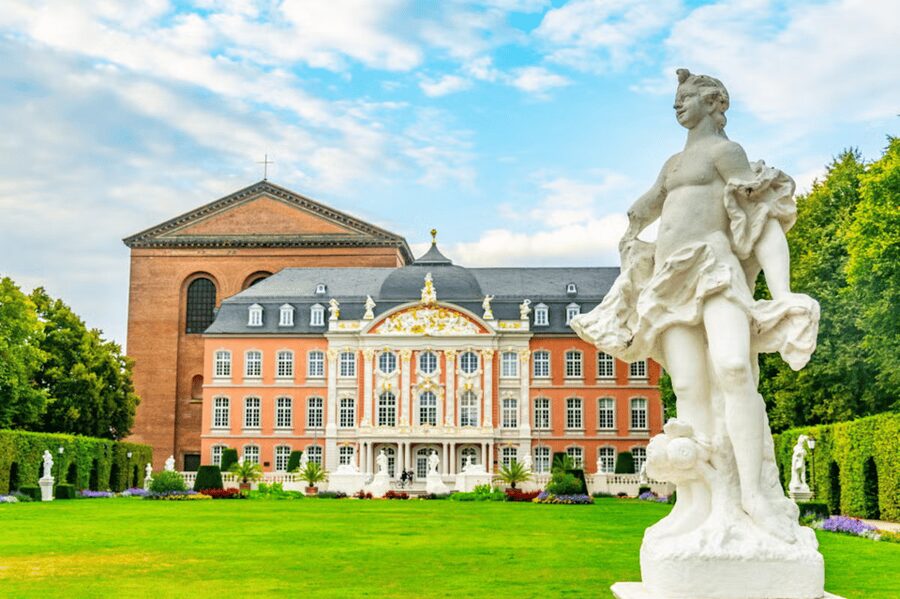
The next major stop is the Aula Palatina, also called the Basilica of Constantine. The building dates to around the year 310, when Trier was connected to the Roman imperial world.
Inside, the apse once held the throne of the Roman emperor. That detail changes how you read the plain, vast interior. This was not built as an ordinary church. It was an imperial audience hall, designed to make power feel large and formal.
The guided portion here lasts about 25 minutes. You should have time to understand the building’s purpose and admire its scale, but the schedule does not suggest a long, unhurried interior visit. If architecture is your main interest, this may be one of the stops where you wish for more time.
The basilica is also a good reminder that Trier’s story is not limited to ruins in the ground. Roman influence survives in major structures that still define the city’s appearance. That variety is one of the best reasons to take a guided route instead of visiting only one famous monument.
Roman ruins near the amphitheater and baths
The route continues toward the 2nd-century amphitheater and the St. Barbara Roman Baths, a UNESCO World Heritage Site. These stops bring the Roman period down to street level, with the remains of public entertainment and bathing facilities.
The amphitheater is especially useful for understanding everyday Roman life. The guide connects the stone remains with the events that once took place there, helping you read the site as more than a partial ruin.
The Barbara Baths add another side of Roman urban life. Public baths were social spaces as well as practical ones, and the remains show the scale of the city’s public works. You may not have a long independent visit at either location, since the route includes several other major stops. Think of this part as a focused introduction rather than a specialist archaeology tour.
That balance will suit you if you want a broad picture of Trier. It may feel too quick if you have come mainly to study Roman engineering, explore every ruin, or take extensive photographs.
Same city, a completely different kind of day:
- Berlin: Reichstag, Dome and Government District Guided Tour
★ 4.7 · 18,288 reviews - Hamburg: Sex and Crime in St. Pauli Tour for Ages 18+
★ 4.7 · 15,447 reviews - Hamburg: 1.5-Hour Harbor and Speicherstadt Day Cruise
★ 4.6 · 14,200 reviews - From Munich: Neuschwanstein & Linderhof Castle Full-Day Trip
★ 4.5 · 12,494 reviews
Karl Marx House and the city’s modern chapter
The walk then shifts from emperors to political thought at Karl Marx House. Marx was born in the building, which dates to 1727 and now serves as a museum about his life and the development of socialism and communism.
This is a useful change of subject. Trier is not presented as a city frozen in Roman times. The stop shows how one place can connect ancient government, medieval religion, and modern political ideas.
The guided portion is listed at about 20 minutes. That gives you an introduction to the building and its importance, but not enough time for a full museum visit. If you want to study the exhibits in detail, use part of your two-hour free period for a return visit, provided the timing and opening arrangements allow it.
The house also gives the walk a more personal angle. You are visiting the birthplace of a person whose ideas shaped political debate around the world. Even if you have no special interest in Marx, the stop adds variety and keeps the tour from becoming a parade of stones and church interiors.
St. Peter’s Cathedral, from old walls to a hidden guardian
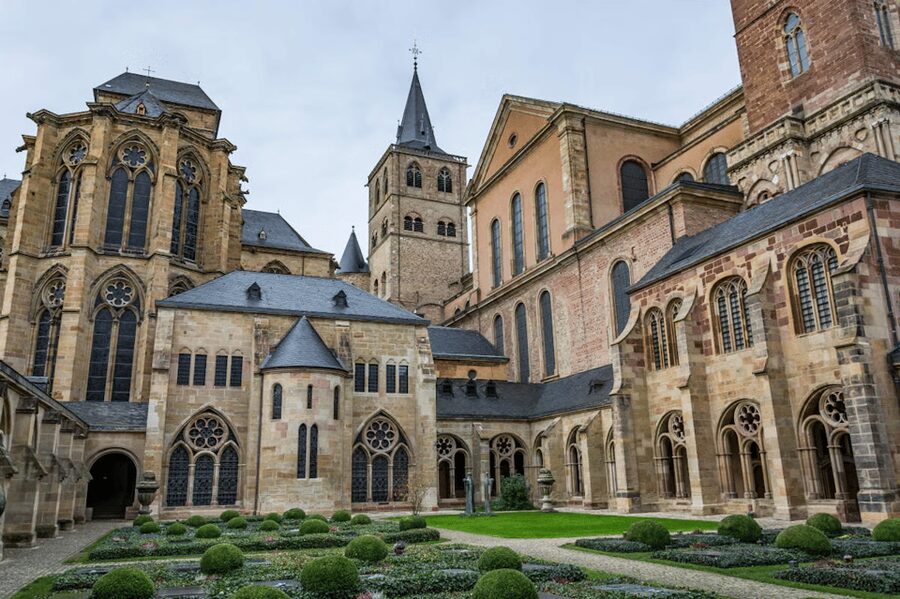
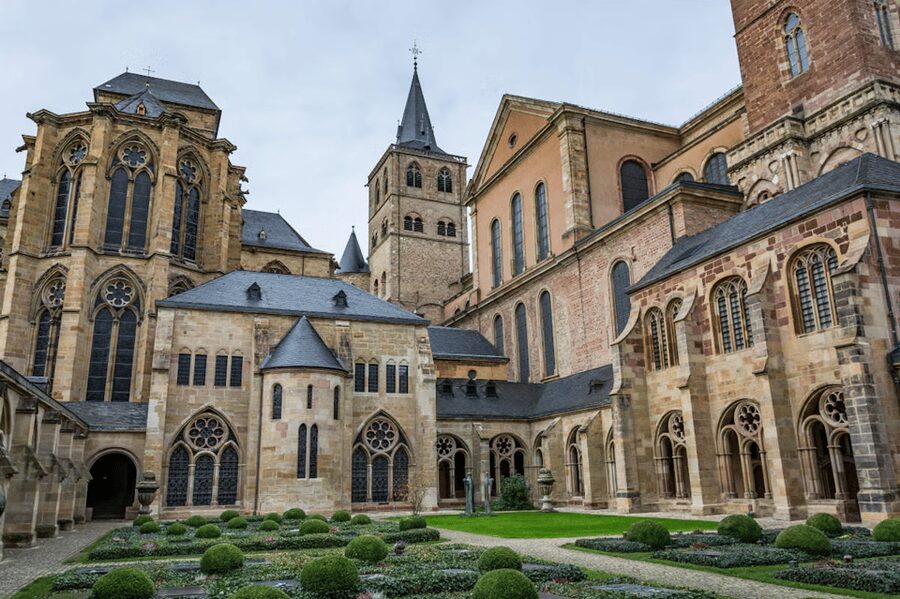
St. Peter’s Cathedral is one of the strongest stops on the route. The cathedral includes original 10th-century walls, along with altars, tombs, and other features that help show how the building changed over time.
The guided visit lasts about 20 minutes. That is short for a major cathedral, so you should listen closely as the guide points out the most important details. The cathedral’s appeal comes from its layers. You are not seeing a single clean period of design, but a building shaped by centuries of worship and rebuilding.
The tour also mentions a mysterious guardian below the cathedral. That small detail gives the stop a bit of character and encourages you to look carefully if the route takes you downstairs. It is the sort of memorable detail that can make a short visit stick in your mind.
The supplied highlights also refer to St. Michael and St. Gudula Cathedral and the Royal Quarter in Luxembourg. Those sights belong to Luxembourg, not to the listed Trier walking route, so I would not plan on them as included stops on this day trip. The named Trier route focuses on the Porta Nigra, Constantine’s Basilica, Roman remains, Karl Marx House, St. Peter’s Cathedral, and the market square.
Market Square and your two hours alone
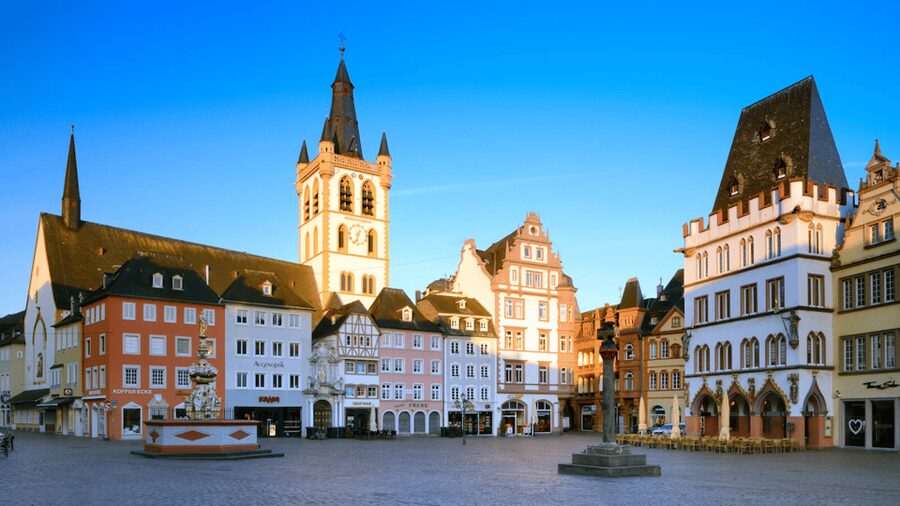
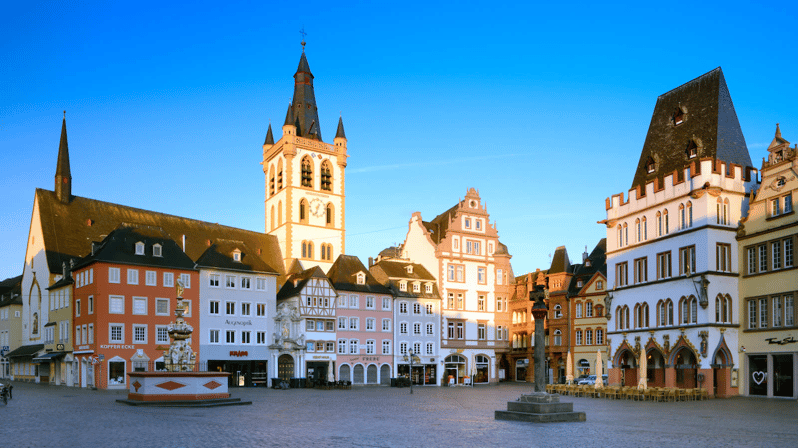
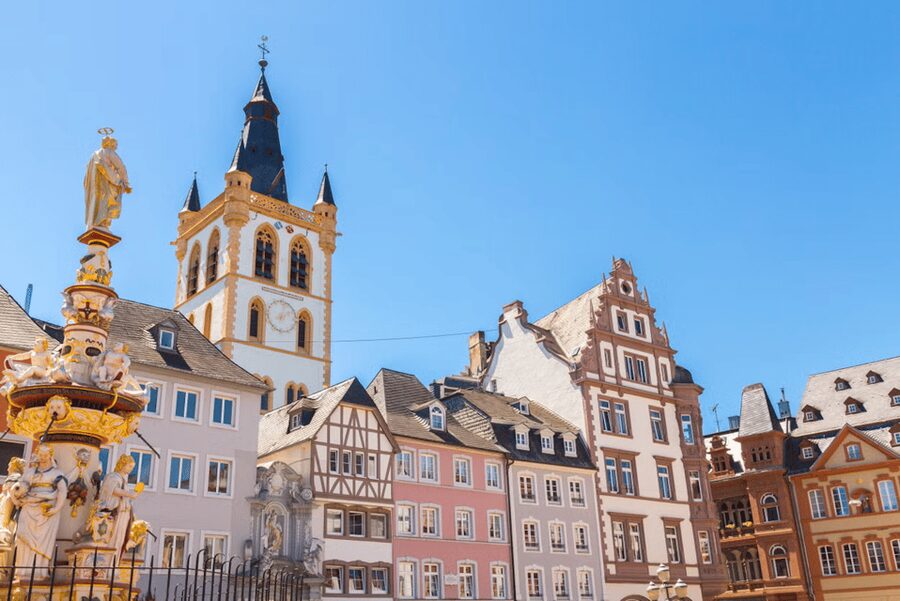
After the guided portion, you get about two hours of free time. The route places this period around Market Square, with colorful façades, flower and fruit stalls, and the St. Peter Fountain.
This is the part of the day I value most for flexibility. You can stop for coffee, find lunch, take photographs, return to a favorite sight, or simply walk without trying to keep pace with a group.
The square is also a natural place to get your bearings. The surrounding buildings and stalls give you a lively public setting after the more formal Roman and cathedral stops. You can use the guided tour as an introduction, then spend your free time following your own interests.
Two hours is generous enough for a meal and a short wander, but not enough for every museum in Trier. Decide in advance what matters most. If Karl Marx House interests you, make it your first choice. If you prefer atmosphere, stay near the market and old town. If the Roman sites caught your attention, check how much time you need before choosing another stop.
One itinerary reference names Market Square in Mainz, but the rest of the route and description clearly place the market stop in Trier. When booking, it is sensible to confirm the exact free-time location with the operator.
What the guides add to the day
A city with Roman ruins and old churches can be hard to understand without context. A good guide turns separate buildings into a story, and that is where this experience earns much of its value.
Anna is specifically praised for being lovely and informative, and another Spanish-language account describes Ana as charming while explaining the city’s history and famous places. Paulina is described as a clear historian who eagerly shared what she knew. The available feedback is limited, but the repeated point is clear: the guide is a major part of the experience.
You can choose an English- or Spanish-speaking tour. That matters at sites such as the basilica and cathedral, where a few well-timed explanations can help you notice details you might otherwise pass by.
The group size is limited to 15. That does not guarantee a private-tour feel, but it is small enough for a more direct exchange than you would get on a large coach outing. If you have a question, ask it during the walking portions rather than waiting until the short monument visits are over.
Timing, walking, and practical value
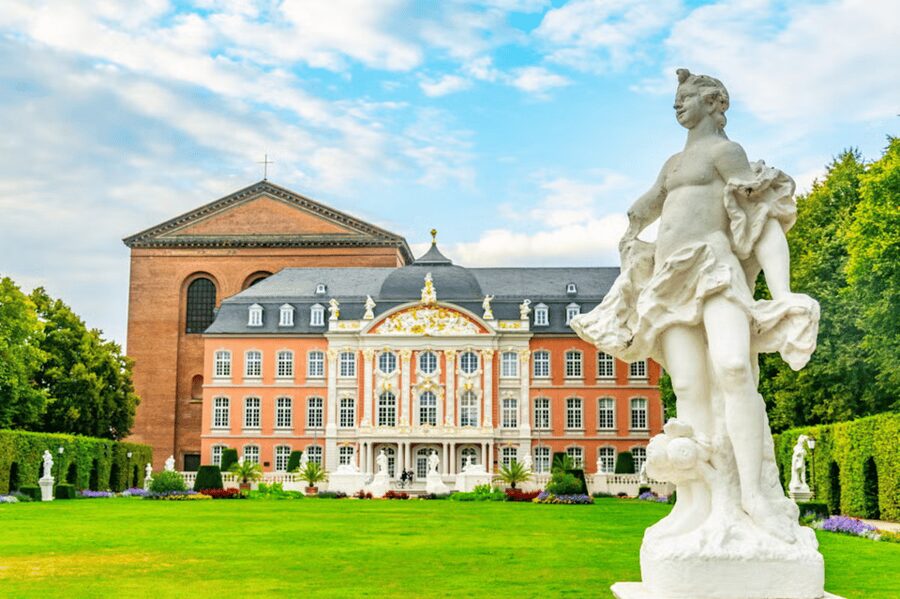
The published duration is 330 minutes. Since the train takes about an hour each way, the time in Trier is limited. You should expect a brisk day built around landmarks, not a slow city break.
The guided section takes about two hours, divided among several stops. The free period adds another two hours, but some of that may include getting between points or preparing for the return train. Keep an eye on the meeting time, especially if you leave the market area.
You meet at Luxembourg’s Gare Centrale, at the station entrance next to Oberweis café. The round-trip train ticket is included, which removes one important task from your morning. You need to bring a passport or ID card. Pets are not allowed.
The tour offers free cancellation up to 24 hours before departure and a reserve-now, pay-later option. Those terms are useful if your Luxembourg plans are still shifting, but the more important practical question is pace. You should be comfortable walking through city streets and standing during explanations.
The $129 cost is fair for a guided international day trip if you place a value on structure and interpretation. You are paying for transport, the guide, and a carefully chosen introduction to Trier. The value is weaker if you would rather buy your own train ticket and spend the whole day inside museums or at one archaeological site.
Who should book this Trier trip
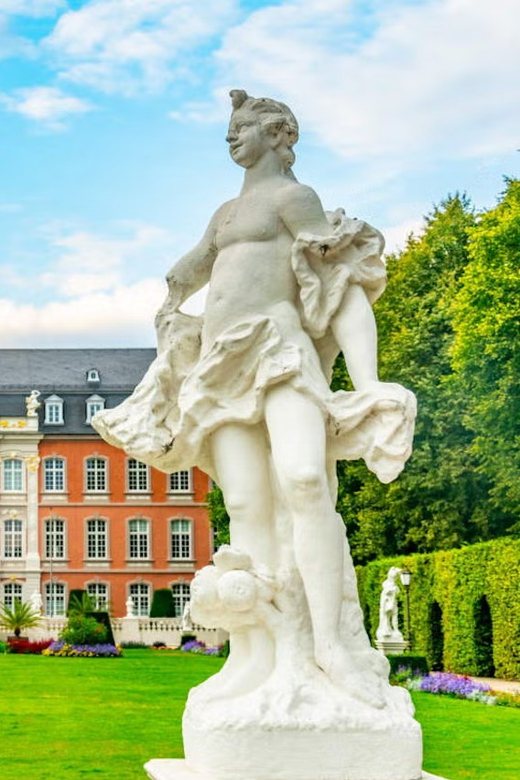
I would recommend it to first-time visitors based in Luxembourg who want to see Trier without arranging the train, route, and major sights themselves. It also suits people who enjoy history but want several periods in one day, from Roman emperors to Karl Marx.
The tour works well for English- and Spanish-speaking couples, solo visitors, and small groups who prefer a guide but still want personal time. The two-hour break is important because it keeps the day from feeling fully scripted.
I would be more cautious if you need a slow pace, want long interior visits, or already have a detailed Trier plan. The route covers a lot, but the short stops mean you will not study every monument at length. A dedicated Roman archaeology visit would give you more time at the amphitheater and baths.
Should you book the Luxembourg to Trier tour?
Book it if you want a well-organized first look at Trier, with round-trip rail travel and a live guide who can explain the city’s many layers. The small group, bilingual choice, and two hours of free time make it more flexible than a fully escorted day.
Skip it if your priority is complete independence or long museum visits. For most visitors staying in Luxembourg, though, this is a practical way to cross the border, see Germany’s oldest city, and return with a clear sense of why Trier matters.
FAQ
How long does the Luxembourg to Trier tour last?
The experience lasts 330 minutes, or five and a half hours, including the train journey, guided sightseeing, free time, and return to Luxembourg.
How do I get from Luxembourg to Trier?
You travel by train from Luxembourg’s Gare Centrale. The train journey takes about one hour, and a round-trip train ticket is included.
Where is the meeting point?
Meet the guide at the entrance of Luxembourg’s train station, next to the Oberweis café.
Which languages are available?
The live tour guide is available in English or Spanish.
How much free time do I get in Trier?
You get about two hours of free time after the guided portion, allowing you to explore on your own, stop for food, or visit a place of personal interest.
What should I bring?
Bring a passport or ID card for the international journey.
Are pets allowed on the tour?
No. Pets are not allowed.
Just added around Germany
- Aachen old town tour – GERMAN (public)★ 5.0 · 24 reviews
- Aachen Private Walking Tour With A Professional Guide★ 5.0 · 11 reviews
- Cologne Highlights: Exclusive Private Tour★ 5.0 · 5 reviews
- Bremen Private Walking Tour With A Professional Guide★ 5.0 · 7 reviews
- Private Walking Tour through the Fascinating Bremen’s City Center★ 5.0 · 5 reviews
- Explore Cologne’s best Street Art Quarter★ 4.5 · 4 reviews
- Bremen Exploration Private Game and City Tour on your Phone★ 4.5 · 7 reviews
- e-Scavenger hunt Bremen: Explore the city at your own pace★ 4.0 · 24 reviews
City Tours, compared.

1-Hour City Tour by Boat with Guaranteed Seating
Read our review →
City History Canal Sightseeing Tour on a Motorboat
Read our review →

Browse the lists this tour appears in