
Reviewed · CITY TOURS
Leipzig: Private Tour of the Old City
Leipzig’s old town packs music, trade, literature, and modern German history into a compact walking route. In 1.5 hours, you’ll see St. Thomas Church and Bach’s monument, follow Goethe through Mädler Passage, and learn why St. Nicholas Church mattered in 1989.
I like the private format for up to eight people, which keeps the walk personal and makes questions easy. I also like the local focus: this is not just a parade of façades, but a look at Leipzig as a trade-fair city and a center of the Peaceful Revolution. The main consideration is that the tour is conducted in German, and the short duration means most stops are viewed from outside.
In This Review
- Key points to know
- A compact introduction to Leipzig’s old town
- St. Thomas Church and Leipzig’s Bach connection
- Zum Arabischen Coffe Baum and the old coffee trade
- Barthels Hof and the trade-fair city
- The Market Square and Old Town Hall
- Mädler Passage and Goethe’s Faust
- Specks Hof and the architecture of commerce
- St. Nicholas Church and the events of 1989
- What the private format changes
- Timing, access, and what to plan afterward
- Who will get the most from this Leipzig walk?
- Final verdict: a smart first walk for small groups
- FAQ
- How long does the Leipzig old town tour last?
- What language is the tour conducted in?
- How many people can join the private group?
- What is included in the price?
- Are entry fees included?
- Is hotel pickup available?
- Is the tour wheelchair accessible?
- Can I cancel for a full refund?
- Can I reserve now and pay later?
Key points to know
- Bach at St. Thomas Church: Connect Leipzig’s most famous church with Johann Sebastian Bach’s life and work.
- A private group of up to eight: You get a more direct exchange with the guide than on a large group walk.
- Goethe’s Leipzig: Walk through Mädler Passage and see the figures linked to his Faust.
- Trade-fair courtyards: Barthels Hof and Specks Hof show how commerce shaped the old town.
- The 1989 Peaceful Revolution: St. Nicholas Church adds recent political history to the route.
- German-speaking local guides: Guides such as Birgit Körner are ready to adjust the conversation and answer personal questions.
A compact introduction to Leipzig’s old town
This tour is designed to give you a first reading of Leipzig rather than a full museum visit. The route connects major sights in the center, so you can get your bearings quickly and decide what deserves a longer visit later.
The private arrangement matters here. With a maximum of eight people, you can ask about Bach, Goethe, the trade fairs, or Leipzig’s role in 1989 without waiting for a large crowd to move along. The guide can also respond to spontaneous subjects, a useful feature if you already have a particular interest in music, literature, architecture, or German reunification.
The experience lasts 90 minutes. That is enough time for a lively orientation, but not enough for lengthy interior visits. Entry fees are not included, and the tour itself is focused on walking and explanation.
A few more Leipzig trips to weigh up
- Leipzig: Private Walking Tour with a Professional Guide
★ 4.6 · 12 reviews - Leipzig : Private Walking tour with A Guide (Private Tour)
★ 4.1 · 7 reviews - Leipzig: Private pub crawl with insider-guide & free shots
★ 4.5 · 4 reviews
St. Thomas Church and Leipzig’s Bach connection
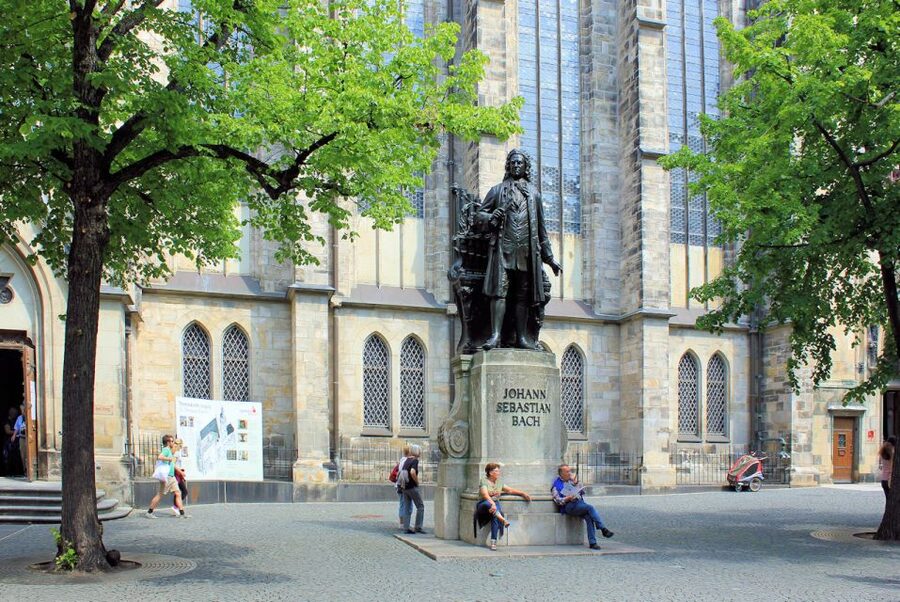
The tour begins with one of Leipzig’s essential sights, St. Thomas Church, known in German as Thomaskirche. Its importance comes from Johann Sebastian Bach, who worked in Leipzig and is closely linked with the church.
Your guide explains more about Bach’s life and work here, giving the building a human focus. Instead of treating the church as another old façade, the stop helps you understand why Leipzig is so strongly associated with classical music.
The Bach monument outside gives you a clear visual marker for that connection. It also makes this stop easy to appreciate even if you do not enter the church. If you are a serious Bach follower, you may want to return later for a longer look, since this walking tour does not include admission or promise an extended interior visit.
For anyone with only a short stay in Leipzig, this is a strong opening stop. It places the city’s musical identity at the center of the old town, before the route turns toward markets, courtyards, and modern history.
Zum Arabischen Coffe Baum and the old coffee trade
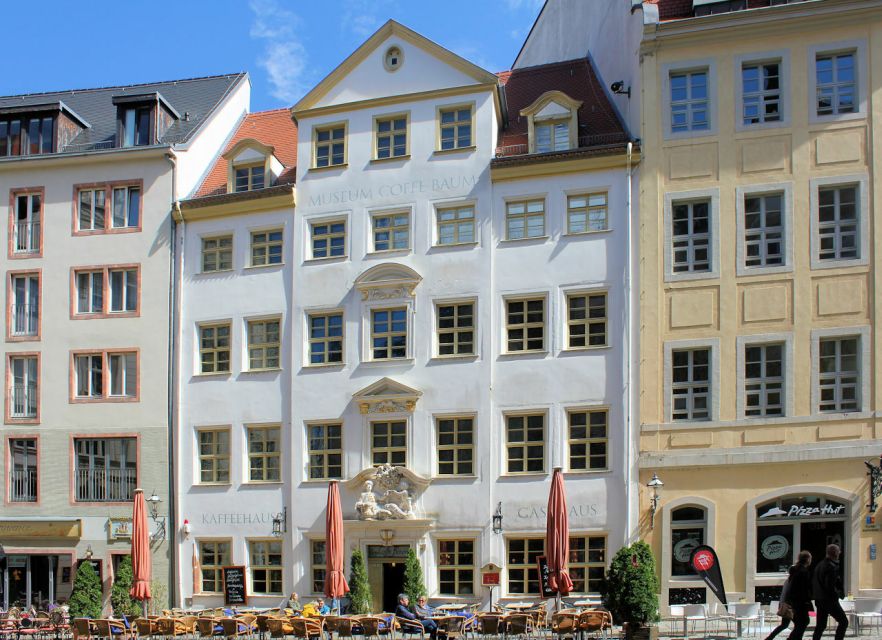
The route then leads toward Zum Arabischen Coffe Baum, presented as Europe’s oldest coffee house. Its baroque entrance portal is the feature to watch for.
The appeal here is not only the coffee connection. Leipzig grew as a commercial city, and coffee houses formed part of the social and business life that came with trade. The stop gives you a small but memorable detail to look for while walking between the larger landmarks.
You should not expect a scheduled coffee break as part of the tour. The attraction is seen as part of the walking route, and any admission or personal purchase is separate. Still, the portal makes a good architectural pause, especially if you enjoy places where daily life and city history meet.
Barthels Hof and the trade-fair city
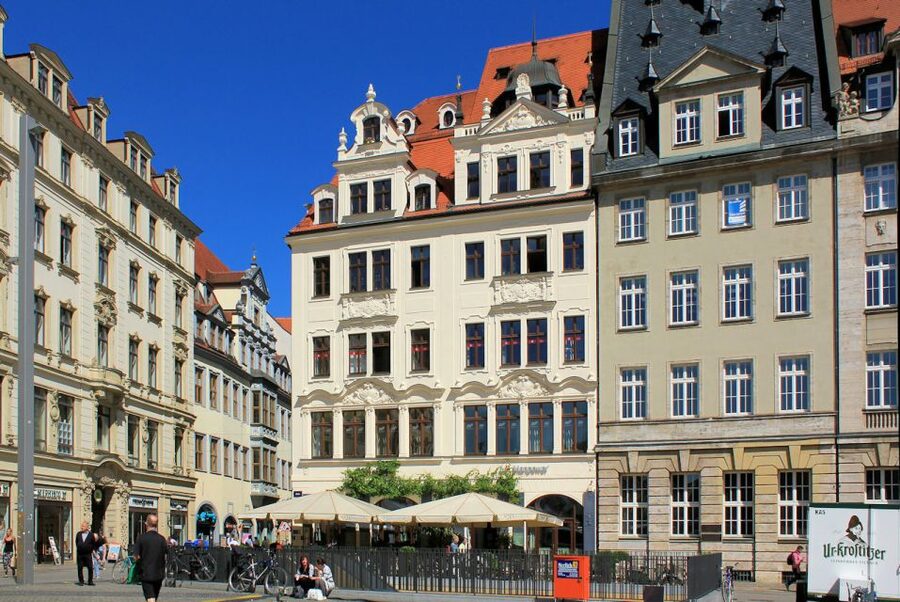
Leipzig’s old town was shaped by commerce, and Barthels Hof helps explain that past. This former trade-fair courtyard reflects the way merchants, goods, and business once moved through the center.
A courtyard such as this can be easy to miss if you walk alone. From the street, Leipzig may look like a collection of grand buildings and passages. Your guide points out how these spaces functioned as traditional trade-fair yards, giving the architecture a practical purpose.
This is one of the tour’s most useful themes. Leipzig was not simply a historic town with attractive buildings. It was a working market city, and its central courtyards were built around trade. That context makes the old town easier to read.
The tour does not offer a long architectural study, so expect a concise explanation rather than a detailed account of every building phase. The benefit is range: you see several important sites in one short walk.
Same city, a completely different kind of day:
- Leipzig: City History Canal Sightseeing Tour on a Motorboat
★ 4.7 · 6,232 reviews - Leipzig: 1.5-Hour Public Tour with Night Watchman Bremme
★ 4.6 · 3,116 reviews - Combo Tour in Leipzig: Guided City Tour & City Sightseeing
★ 4.7 · 2,317 reviews - Leipzig: 1.5-Hour Historical Walking Tour in German
★ 4.7 · 2,217 reviews
The Market Square and Old Town Hall
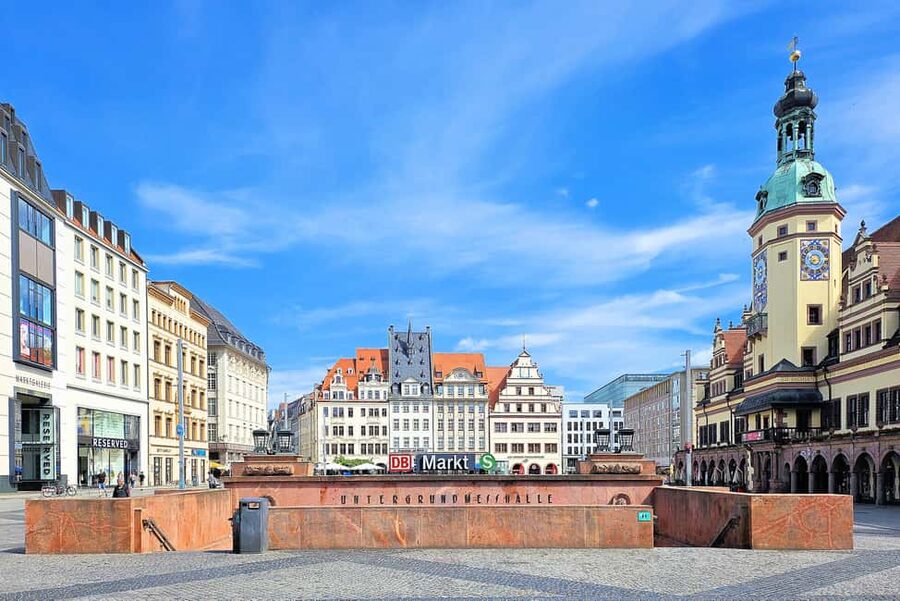
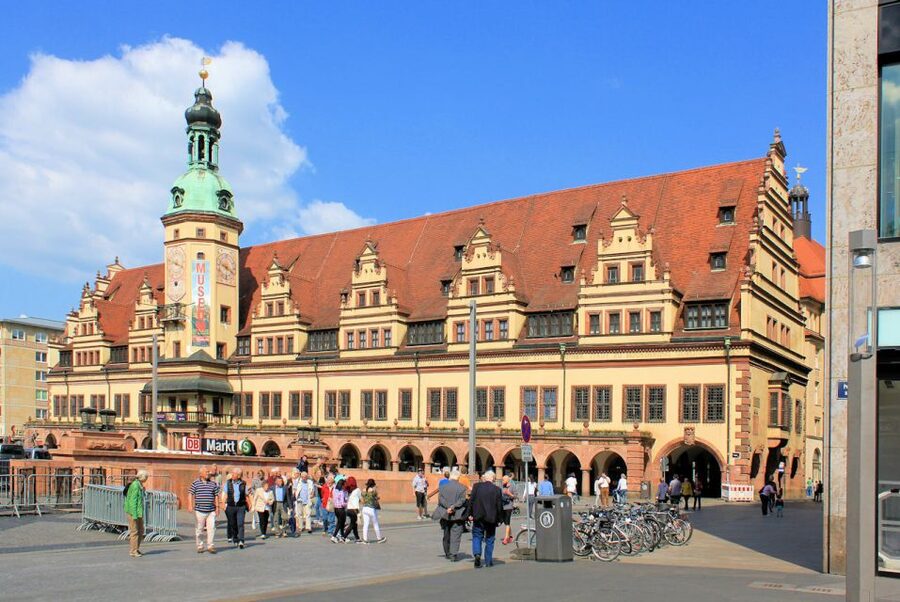
The Market Square is the civic heart of the route. Here you see the Old Town Hall, one of Leipzig’s key historic buildings and a clear reminder of the city’s municipal and commercial importance.
The square gives you a useful sense of how the old town is arranged. It links the city’s public life with the shopping passages and trade courtyards nearby. The guide can also help you place Leipzig’s major sights in relation to one another, which is valuable if you plan to explore on your own afterward.
This is a good point to ask questions about Leipzig’s identity as a trade-fair city. The experience is strongest when you use the private format actively. Ask about the buildings, the market, or the parts of the center you want to see next.
Because the walk moves through several historic areas, the Market Square is more of an orientation stop than a long formal presentation. You will not have time to linger at every corner, but you will leave with a clearer map of the center.
Mädler Passage and Goethe’s Faust
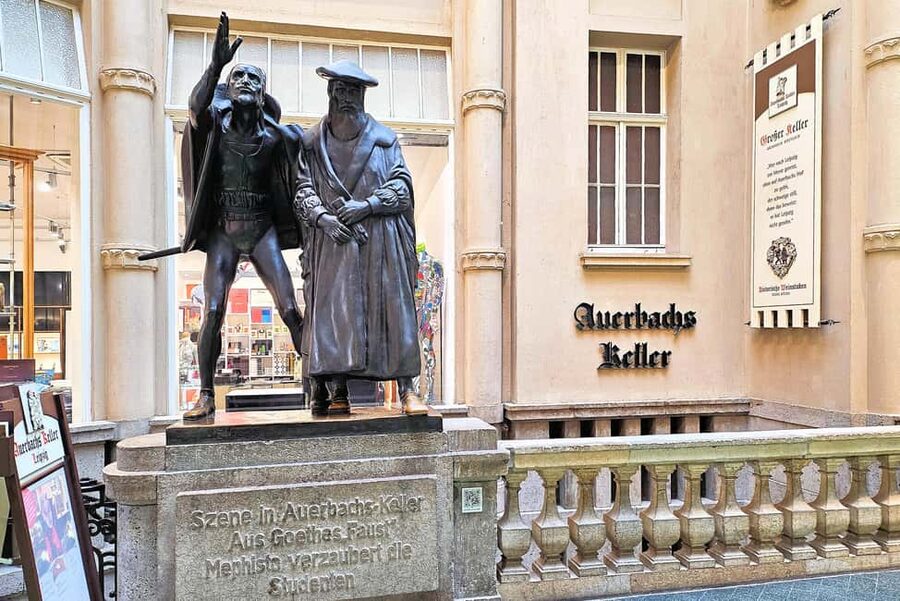
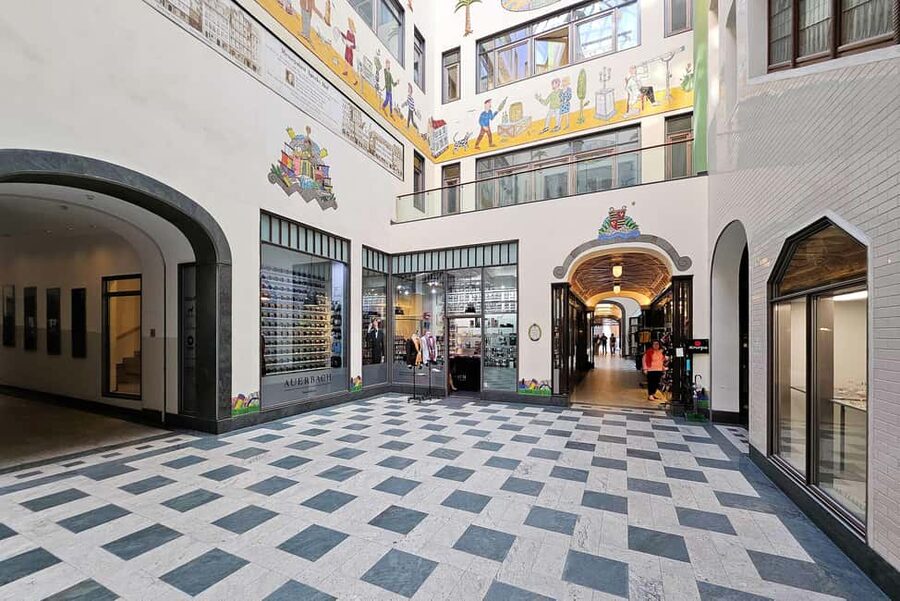
Mädler Passage adds a literary layer to the walk. The passage is connected with Johann Wolfgang Goethe and his Faust, and figures from the work appear along the route.
This stop works well because it changes the mood. After Bach and the trade-fair courtyards, you get a reminder that Leipzig also attracted writers and intellectual life. Goethe’s presence is not treated as an isolated statue or name in a textbook. It is tied to a real passage through the city.
The passage also shows how Leipzig’s commercial spaces were designed to bring people through the center. You can appreciate the polished architecture while learning about the literary associations.
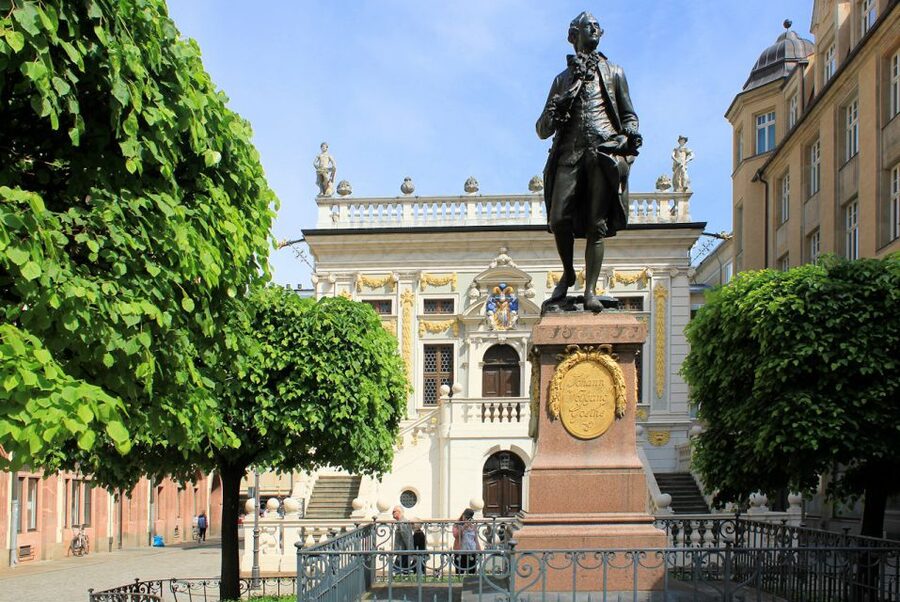
At nearby Naschmarkt, the monument to Goethe sits beside the Old Town Hall. The setting is described as idyllic, giving you a quieter contrast with the larger Market Square. If Goethe is important to your interests, this part of the route may be one of the most enjoyable. If you have not read Faust, the guide’s short anecdotes can still make the location approachable.
Specks Hof and the architecture of commerce
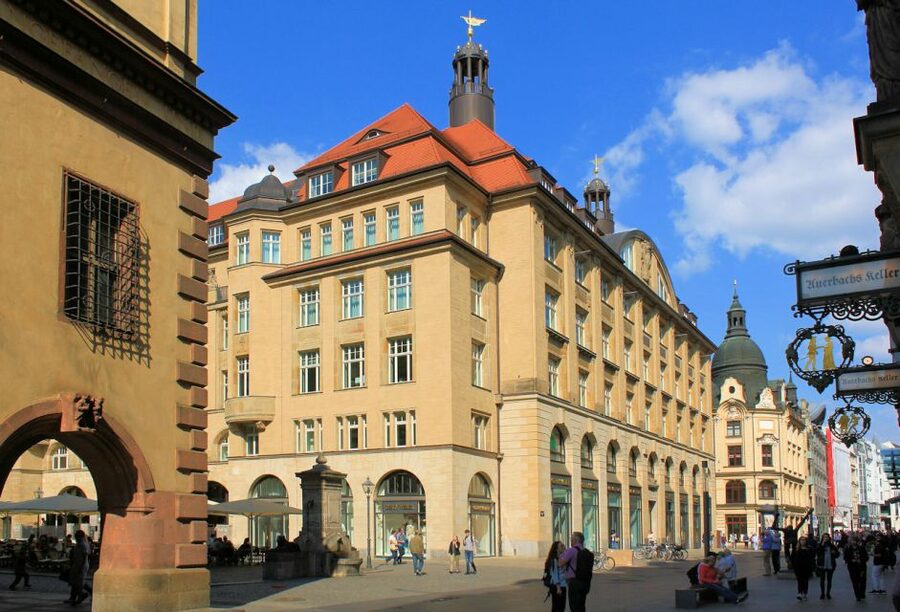
Specks Hof is another former trade-fair palace on the itinerary. Together with Barthels Hof, it shows how much of Leipzig’s central architecture was shaped by buying, selling, and the movement of merchants.
The word palace is useful here because these were not plain warehouses. Leipzig’s trade buildings could be grand and decorative, reflecting the wealth and importance of commercial activity. Your guide helps connect the visual detail with the city’s economic role.
I like the way this part of the tour balances famous names with less obvious subjects. Bach and Goethe may draw you to Leipzig, but the trade-fair story explains why the city developed the old town you see today.
You will view the site as part of the walk, not as a separate paid attraction. If you want to study the passage architecture at length, plan extra time after the tour.
St. Nicholas Church and the events of 1989
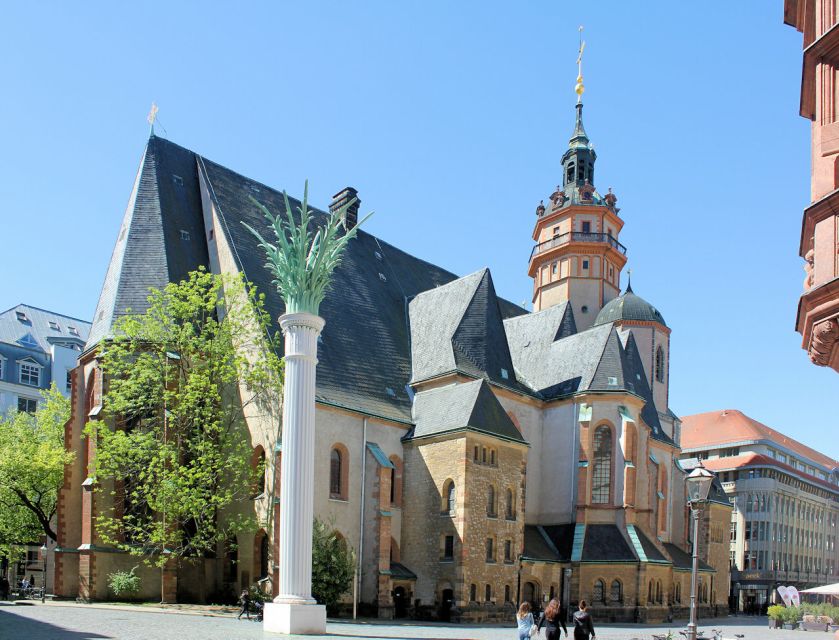
The final major historical stop is St. Nicholas Church, or Nikolaikirche. Here the guide explains the events of the Peaceful Revolution in 1989.
This is a vital part of understanding modern Leipzig. The tour does not stop with medieval buildings, baroque details, and famous artists. It also shows how the city became linked with the peaceful protests that helped bring political change in East Germany.
St. Nicholas Church gives the story a strong physical setting. You are not just hearing about 1989 in an abstract way. You are standing at one of the places connected with those events.
The subject deserves more time than a short city walk can provide, so treat this as an introduction. If the topic interests you, ask your guide for recommendations or return to the church and nearby sites on your own. The private format is especially helpful here, since you can ask for more context instead of moving on after a fixed group explanation.
What the private format changes
At $136 per group of up to eight, the price works differently from a per-person walking tour. A full group pays about $17 per person, while a couple pays the full group rate between them. That makes the experience a stronger value for families, friends, or small private parties than for two people watching their budget.
The price includes the city tour with a guide. It does not include entry fees, and arrival and departure are not included. Hotel pickup in Leipzig can be arranged on request, but you need to provide the hotel name to the operator.
The private setup gives you three practical advantages:
- You can ask personal questions without holding up a large group.
- The guide can respond to spontaneous subjects, as happened on a tour led by Birgit Körner.
- You can keep the pace and conversation more personal, within the limits of the 90-minute schedule.
The guide language is German. That is the most important booking point. If you are comfortable in German, the tour offers direct contact with local Leipzig guides. If you need an English-language tour, you should confirm language availability before booking, since the stated language is German.
Timing, access, and what to plan afterward
The tour lasts 1.5 hours, with starting times depending on availability. That makes it easy to fit into a morning or afternoon, especially if you are using it as your first introduction to Leipzig.
Hotel pickup is available on request in Leipzig. This is useful if you are staying centrally and want a simple start, but do not assume it is automatic. Submit your hotel name when arranging the tour.
The activity is wheelchair accessible. Since it is a walking tour through the old town, you may still want to confirm the exact pickup and route details for your group when booking.
Plan for walking and outdoor viewing. The route includes churches, squares, courtyards, and passages, but admission fees are not included. If you want to enter a sight, visit an exhibit, or spend time inside a church, set aside additional time and budget.
A sensible plan is to use the tour early in your Leipzig stay. Afterward, you can return to St. Thomas Church, the Old Town Hall area, Mädler Passage, or St. Nicholas Church at your own pace. The guide’s recommendations can help you choose where to spend that extra time.
Who will get the most from this Leipzig walk?
This tour suits you if you want a fast but meaningful introduction to the old town. It is especially useful for first-time visitors who want the main sights placed in context rather than simply photographed.
It also fits families and small groups. The private format means you can ask questions suited to your own interests, and the 90-minute length is easier to manage than a long walking tour.
Music fans will value the Bach focus at St. Thomas Church. Literature lovers will enjoy the Goethe and Faust connection around Mädler Passage and Naschmarkt. Anyone interested in German history should pay close attention at St. Nicholas Church, where the 1989 Peaceful Revolution becomes part of the city walk.
You may want a different experience if you prefer museum interiors, a long architectural lecture, or an English-language guide. The route covers a lot in a short time, so it favors breadth and local orientation over detailed examination.
Final verdict: a smart first walk for small groups
I would choose this tour if I wanted to understand Leipzig’s old town quickly and had a group of several people. The combination of Bach, Goethe, trade-fair courtyards, and the Peaceful Revolution gives you a useful picture of the city’s character.
The best value comes with a full group of up to eight, since the $136 price is shared. For a couple, the private setting may still be worth it if you value personal questions and hotel pickup, but it is less economical than a shared walk.
Book it if you are comfortable with German and want local conversation. Treat it as an orientation, not a substitute for entering Leipzig’s major sights. With guides such as Birgit Körner bringing an easy, flexible style to the route, this is a practical way to begin your time in the city.
FAQ
How long does the Leipzig old town tour last?
The tour lasts 1.5 hours.
What language is the tour conducted in?
The live tour guide language is German.
How many people can join the private group?
The private group can include up to eight people.
What is included in the price?
The price includes the guided city tour.
Are entry fees included?
No. Entry fees are not included in the ticket.
Is hotel pickup available?
Yes. Pickup from your hotel in Leipzig can be arranged on request. You need to provide the name of your hotel to the tour operator.
Is the tour wheelchair accessible?
Yes, the activity is listed as wheelchair accessible.
Can I cancel for a full refund?
Yes. You can cancel up to 24 hours in advance for a full refund.
Can I reserve now and pay later?
Yes. The reserve now and pay later option lets you book without paying anything today.
Just added around Leipzig
- City tour on foot, by S-Bahn and tram★ 4.5 · 12 reviews
- Leipzig City Centre: Scavenger Hunt Self-Guided Tour★ 4.4 · 114 reviews
- Tour on Lake Cospuden★ 4.7 · 58 reviews
- Leipzig: True or false? Walking Tour and Interactive Game★ 4.8 · 28 reviews
- Leipzig Spirits Manufacture: Guided Tour and Tasting★ 4.8 · 79 reviews
- Leipzig: Segway tour to the Battle of the Nations Monument★ 5.0 · 4 reviews
- Leipzig: Segway City Tour – Discover Sights, Parks & History★ 5.0 · 7 reviews
- Leipzig’s Mystery Morning: Breakfast & Escape Game★ 4.2 · 108 reviews
City Tours, compared.

1-Hour City Tour by Boat with Guaranteed Seating
Read our review →
City History Canal Sightseeing Tour on a Motorboat
Read our review →


Browse the lists this tour appears in