
Reviewed · CITY TOURS
Hamburg: Private Tour Down Town around City Hall
Hamburg’s past is written into its streets, but this tour also points below them. In two hours, you’ll connect the city’s grand City Hall and Kontorhaus buildings with darker, less obvious stories: the Great Fire of 1842, wartime bunkers, and the underground systems that helped modern Hamburg grow.
I like the route for two reasons. First, it links major sights such as Chilehaus, St. Nicholas’ Church, and Trostbrücke instead of treating each as an isolated photo stop. Second, the private format gives your group a guide’s full attention, with English, German, French, and Spanish available. The main consideration is pace: two hours covers a lot, so you’ll see many places from the outside rather than spend long periods inside them.
In This Review
- Key points to know before booking
- From Mönckebergstraße into Hamburg’s old town
- St. James’ Church and the city’s changing streets
- Kontorhausviertel and the sharp edge of Chilehaus
- Sprinkenhof, Reichenstraßen, and the Africa House
- St. Nicholas’ Church and the difficult memory of war
- Trostbrücke and Hamburg’s first harbor basin
- City Hall, the Chamber of Commerce, and civic Hamburg
- What the private format adds
- Is two hours enough for this route?
- Languages, timing, and cancellation
- Who should book this Hamburg walk?
- Should you book the City Hall tour?
- FAQ
- How long does the Hamburg City Hall tour last?
- How much does the private tour cost?
- Which languages are available?
- Is this a private group experience?
- Where does the tour start?
- Which places are included on the route?
- Can I cancel the tour?
Key points to know before booking
- Hamburg’s Great Fire of 1842 explains why the old town changed so quickly from narrow lanes and half-timbered houses to a more commercial city.
- Chilehaus and the Kontorhausviertel offer some of Hamburg’s best architecture, with sharp lines and a striking brick exterior.
- The bunker story is unusually strong, with information about Germany’s largest underground bunker system and its more than 700 bunkers.
- Mönckebergstraße, known locally as Mö, gives the tour a present-day shopping street alongside its older historical stops.
- Named guides include Birgit, Jörn Löding, and Frau Stange, and the tour can be taken in four languages.
- The $294 group price works best for a larger party, since up to 15 people can share the fee.
From Mönckebergstraße into Hamburg’s old town
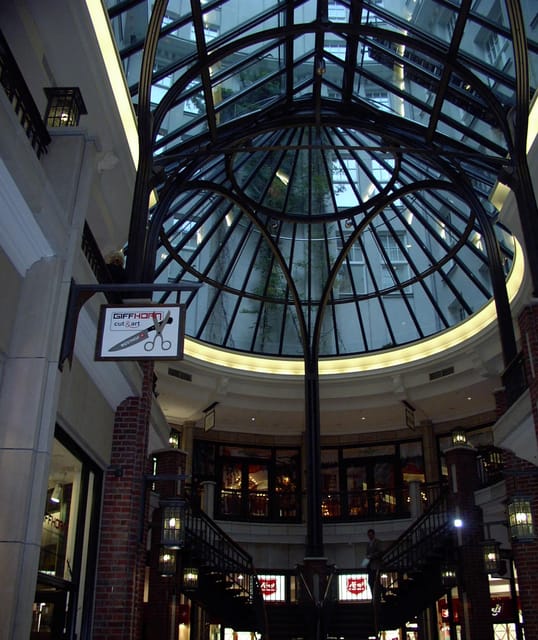
The tour begins at one of two listed StadtRAD starting locations, with the exact meeting point depending on the option you choose. Confirm that detail before setting out, especially if you are coming from Hamburg Central Station or have a tight schedule.
Mönckebergstraße is a practical place to begin. Locals often call it Mö, and its shops and broad urban setting show Hamburg as a working commercial city, not just a collection of old monuments. You get about 10 minutes here, enough for your guide to set the scene and explain how this part of town fits into Hamburg’s growth.
I like this opening because it avoids beginning with a single grand building and instead places you in the city’s daily rhythm. If shopping is not your reason for visiting Hamburg, do not worry. The value here is the contrast between the modern street and the older lanes you reach later.
A few more Hamburg trips to weigh up
- Your private 3-hour Hamburg driving tour with a former policeman
★ 5.0 · 304 reviews - Hamburg: Private Tour Red Light District Walking Tour
★ 4.7 · 227 reviews - Hamburg: Private Couples’ Photoshoot and Walking Tour
★ 4.9 · 212 reviews
St. James’ Church and the city’s changing streets
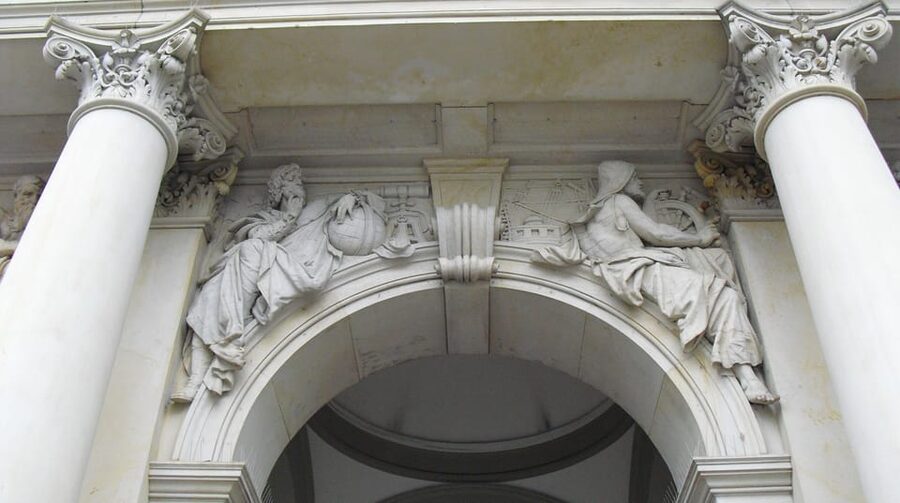
The next stop is St. James’ Church, also known as St. Jacobi, with around 10 minutes of guided attention. The tour’s emphasis is on Hamburg’s past, so you should expect historical explanation rather than a long church visit.
This is where the story of the old town’s changing shape starts to make sense. Hamburg once had narrow passages and half-timbered houses. The Great Fire of 1842 lasted four days and destroyed large parts of the old town, forcing the city to rebuild and rethink its streets.
That event matters because it explains why Hamburg can feel less medieval than you might expect from a Hanseatic city. Your guide connects the fire to the later move toward wider streets, commercial buildings, and a more modern city center. I find this kind of explanation more useful than simply hearing dates, since it helps you read the city as you walk.
Kontorhausviertel and the sharp edge of Chilehaus
The route then reaches the Kontorhausviertel, with roughly 15 minutes of guided commentary, followed by about 10 minutes at Chilehaus. These are among the strongest parts of the tour for anyone who likes architecture.
The Kontorhausviertel grew from Hamburg’s commercial power. The office buildings were made for trade and business, and their brick construction gives this district a firm, practical look. Chilehaus is the visual star. Its pointed form and imposing brick exterior create one of the city’s most memorable photographs.
You will likely spend more time looking at facades and street details than entering buildings. That is not a flaw, but it is worth knowing. The tour is designed to explain how these buildings reflect Hamburg’s commercial identity, not to provide an extended architectural interior visit.
I especially like the way Chilehaus fits the larger story. The city rebuilt after disaster, developed new commercial districts, and used architecture to project confidence. A guide can point out details that are easy to miss when you are simply walking past on your way to another sight.
Sprinkenhof, Reichenstraßen, and the Africa House
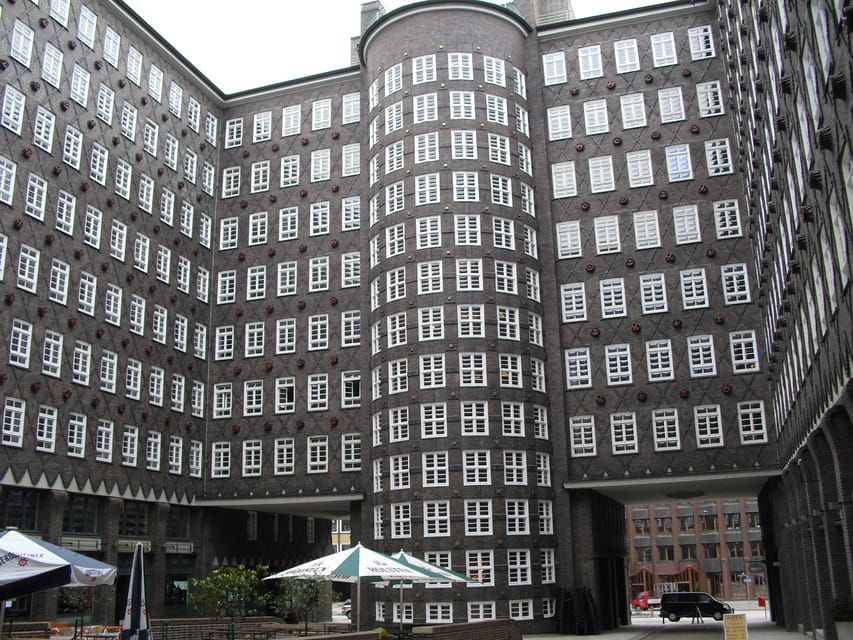
The route continues through Sprinkenhof and Reichenstraßen, then toward the Africa House. The published timing includes a 15-minute guided stop in this central section, although the exact stop sequence may vary slightly with the guide and conditions on the day.
These streets help connect the famous buildings. You are not only moving between isolated attractions. You are following the pattern of Hamburg’s old commercial quarter, where trade, offices, churches, and civic buildings sit close together.
The Africa House adds a different note. Its name and history bring Hamburg’s international trading links into the conversation. The tour description treats it as a place that can spark a little wanderlust, but the key benefit is context: Hamburg’s story has never been limited to northern Germany. Its wealth and identity were tied to wider commercial connections.
Same city, a completely different kind of day:
- Hamburg: Sex and Crime in St. Pauli Tour for Ages 18+
★ 4.7 · 15,447 reviews - Hamburg: 1.5-Hour Harbor and Speicherstadt Day Cruise
★ 4.6 · 14,200 reviews - Hamburg: 90-Minute Evening Lights Harbor Cruise
★ 4.5 · 7,728 reviews - Hamburg: 2-Hour XXL Port of Hamburg Cruise Tour
★ 4.7 · 6,979 reviews
St. Nicholas’ Church and the difficult memory of war
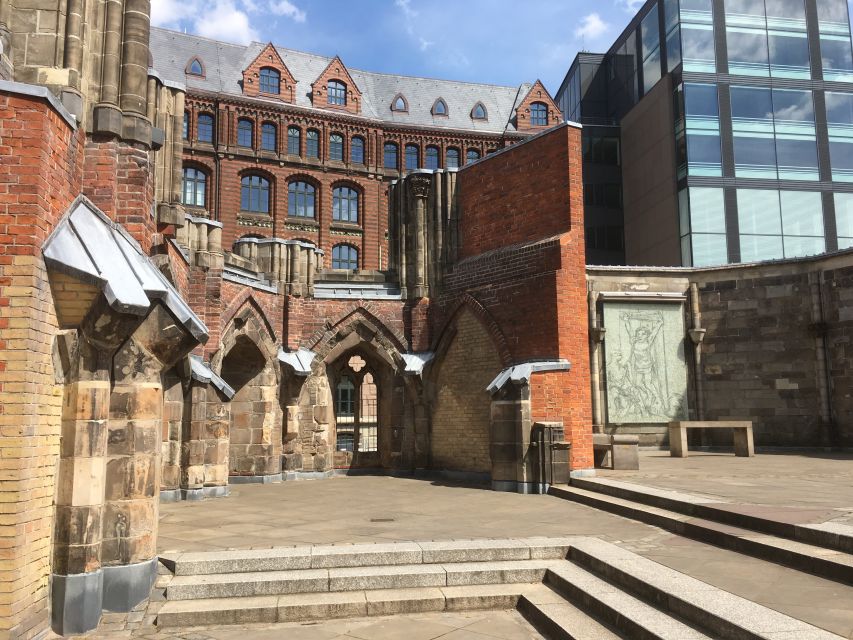
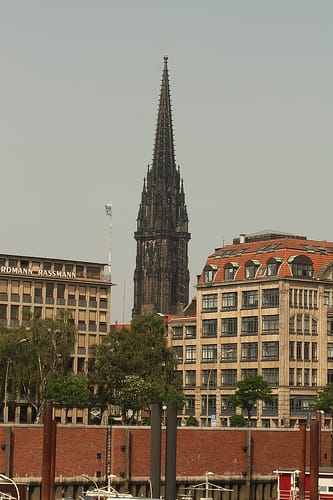
St. Nicholas’ Church receives about 10 minutes of guided attention. Its remains are among the most important historical sights on this walk, and your guide places them within Hamburg’s wartime story.
This stop also leads into the unusual account of Hamburg’s underground bunker system. You’ll hear that the city has more than 700 bunkers, forming the largest German underground bunker system described in the tour material. That detail changes how you see the streets above. Hamburg’s history is not only in towers, churches, and merchant houses. It is also in the structures built below ground for protection.
I value this part because it keeps the tour from becoming a cheerful parade of handsome buildings. Hamburg’s history includes destruction, fear, and rebuilding. St. Nicholas’ Church gives those subjects a physical anchor, while the bunker discussion adds a layer most short city walks would skip.
The stop is brief, so do not expect a full museum visit or a long examination of every wartime detail. If this subject is central to your interests, you may want to plan separate time afterward for further exploration.
Trostbrücke and Hamburg’s first harbor basin
At Trostbrücke, the tour turns back toward Hamburg’s older civic and trading center. The bridge is a good place for the guide to bring together the city’s medieval beginnings and later commercial strength.
One of the most useful facts on the route concerns Hamburg’s first harbor basin, inaugurated in 1189. That date gives the port story a clear starting point. It also helps explain why a city away from the open sea became such an important trading center.
Trostbrücke works well as a memory stop because it is a real piece of the old city fabric rather than a modern reconstruction built only for display. You can pause for photographs while hearing how Hamburg’s water access shaped its fortunes.
The tour does not promise a harbor cruise, so keep your expectations focused on the historic center. If you want container terminals, waterfront views, or a longer port experience, you will need a separate activity.
City Hall, the Chamber of Commerce, and civic Hamburg
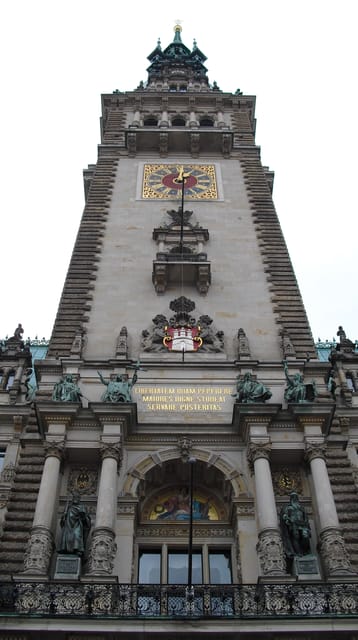
The walk continues to the Chamber of Commerce and then Hamburg Rathaus, or City Hall. The City Hall receives about 15 minutes, making it one of the more substantial stops on the route.
Hamburg’s City Hall is a natural finish for a tour around the old town. It represents the city’s civic power, while the Kontorhaus buildings represent its commercial power. Placing the two in one walk helps you understand the relationship between Hamburg’s government and its trading culture.
The tour also includes the old town halls of the Hanseatic city. Since the exact interior access is not specified, you should assume the focus is on the buildings and their setting unless your booking details say otherwise. The guide’s job here is to explain what you are seeing and connect it to the earlier stops.
A final short stop of about five minutes completes the route, with drop-off at Hamburg City Hall. That makes the end convenient if you want to continue exploring the center on foot.
What the private format adds
This is a private group tour for up to 15 people. That matters most if you are traveling with family, friends, or a small organization. The $294 price is charged per group, not per person, so the value improves sharply as your party gets larger.
For 15 people, the cost works out to about $19.60 per person. For two people, it is about $147 each. That is a major difference, and it is the clearest factor in deciding if this tour fits your budget.
The private format also lets you ask questions about subjects that interest you, such as the Great Fire, Hamburg’s port, architecture, or the bunker system. It does not guarantee that every stop will receive extra time, since the entire route still lasts only two hours.
The guides named in the available information include Birgit, Jörn Löding, and Frau Stange. Birgit is described as using humor while keeping the group connected. Jörn Löding is associated with a well-informed old-town walk, and Frau Stange is noted for linking Hamburg’s past with its present. Guide assignment can vary, so you should not book on the assumption that one particular person will lead your tour unless that is confirmed.
Is two hours enough for this route?
Two hours is enough for an introduction, not a full study of Hamburg. The listed route includes Mönckebergstraße, St. James’ Church, Sprinkenhof, Chilehaus, Reichenstraßen, Africa House, St. Nicholas’ Church, Trostbrücke, the Chamber of Commerce, and City Hall.
That is a lot of ground. The short stop lengths, mostly 5 to 15 minutes, mean you will keep moving. This suits you if you want a clear overview early in your stay, especially before exploring the city on your own.
It may feel rushed if you want to enter every church, study architectural details, or spend time taking photographs. I would bring comfortable shoes and keep your camera ready, but I would not schedule a major meal or another fixed appointment immediately afterward.
The walk also appears well suited to a first morning or afternoon in Hamburg. You get names, dates, and basic orientation, then can return to the places that caught your eye.
Languages, timing, and cancellation
Live guiding is available in English, German, French, and Spanish. Alternative tour times can be requested through GetYourGuide, so check availability rather than assuming the listed times are the only choices.
Free cancellation is available up to 24 hours before the tour for a full refund. You can also reserve now and pay later, which helps if your Hamburg schedule is still shifting.
The meeting point may vary by booking option. Two StadtRAD starting locations are listed, and the route information also refers to Hamburg Central Station. Check the confirmed meeting instructions carefully before you leave your hotel.
Who should book this Hamburg walk?
I would choose this tour if you want a compact, private introduction to central Hamburg with a strong history thread. It suits first-time visitors, families who prefer their own guide, and groups that want to share one fixed price.
It is also a good match if architecture interests you. Chilehaus, the Kontorhausviertel, Sprinkenhof, City Hall, and the older streets provide plenty to look at, while the guide explains why the center has its particular shape.
History-minded visitors will appreciate the less obvious subjects: the four-day fire of 1842, the pneumatic post introduced on October 24, 1864, the first harbor basin from 1189, and the city’s extensive bunker system.
I would hesitate if you want a long indoor sightseeing experience, a port excursion, or a slow photography walk. The tour gives you orientation and interpretation, but it does not replace a museum visit or a full day spent in Hamburg’s historic center.
Should you book the City Hall tour?
Book it if you want Hamburg’s old town explained in a clear sequence, from port beginnings and churches to fire, war, commerce, and civic power. The route covers more than postcard sights, and the private setup lets you ask questions without joining a large public group.
The price is strongest for groups of four or more, and the two-hour length makes it easy to fit into a short visit. For a couple, the per-person cost is high, so compare it with your interest in having a private guide.
My practical advice is to book this as an orientation walk, not as your only Hamburg activity. You’ll leave with a better sense of the city’s streets and stories, then you can return to Chilehaus, St. Nicholas’ Church, City Hall, or the surrounding old town at your own pace.
FAQ
How long does the Hamburg City Hall tour last?
The tour lasts two hours.
How much does the private tour cost?
The price is $294 per group of up to 15 people.
Which languages are available?
Live guiding is available in English, Spanish, French, and German.
Is this a private group experience?
Yes. The tour is offered for a private group, with up to 15 people included in the group price.
Where does the tour start?
The meeting point may vary depending on the option booked. Two StadtRAD starting locations are listed, and the route information also refers to Hamburg Central Station. Check your confirmed booking details for the exact point.
Which places are included on the route?
The route includes Mönckebergstraße, St. James’ Church, Sprinkenhof, Chilehaus, Reichenstraßen, Africa House, St. Nicholas’ Church, Trostbrücke, the Chamber of Commerce, and Hamburg City Hall.
Can I cancel the tour?
You can cancel up to 24 hours in advance for a full refund. Reserve now and pay later is also available.
Just added around Hamburg
- Hamburg: Historical Tour of the St. Pauli Sex Work District★ 4.4 · 215 reviews
- Hamburg: St. Pauli Food and Bier Tour★ 4.7 · 5 reviews
- Hamburg: Private Tour Red Light District Walking Tour★ 4.7 · 227 reviews
- St. Pauli Tour: Drag-Attack with Barbie Stupid & Lee Jackson★ 4.8 · 280 reviews
- St. Michael’s, Elbe Tunnel & Harbor 2-Hour Hamburg Tour★ 4.9 · 21 reviews
- Satt Pauli – der kulinarische Rundgang durch St. Pauli★ 4.8 · 12 reviews
- Hamburg: Safari tour in St. Pauli★ 4.9 · 11 reviews
- Hamburg: Reeperbahn Comedy Club★ 4.3 · 53 reviews
City Tours, compared.

1-Hour City Tour by Boat with Guaranteed Seating
Read our review →
City History Canal Sightseeing Tour on a Motorboat
Read our review →

Browse the lists this tour appears in