
Reviewed · LEIPZIG TOURS
Federal Administrative Court Leipzig: A journey into the heart of German justice
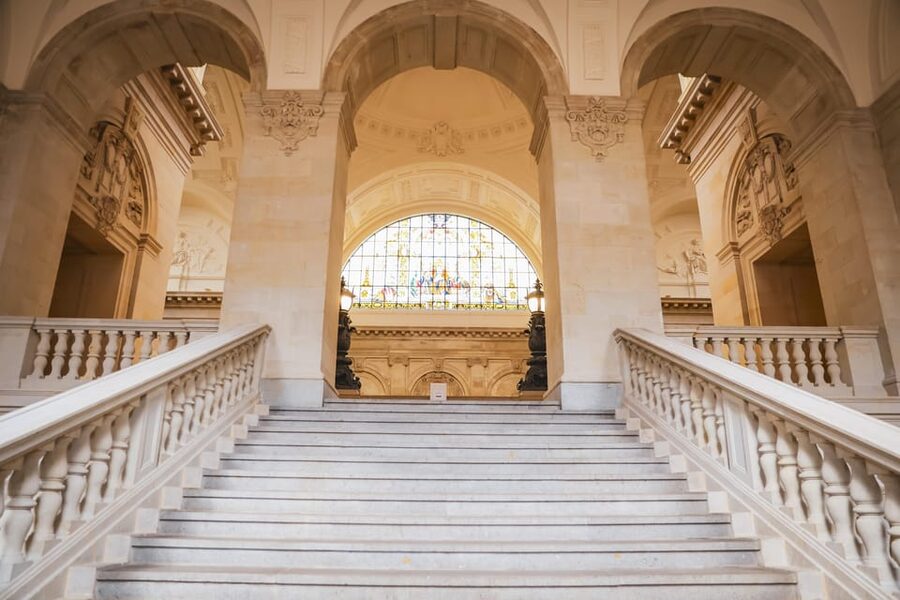
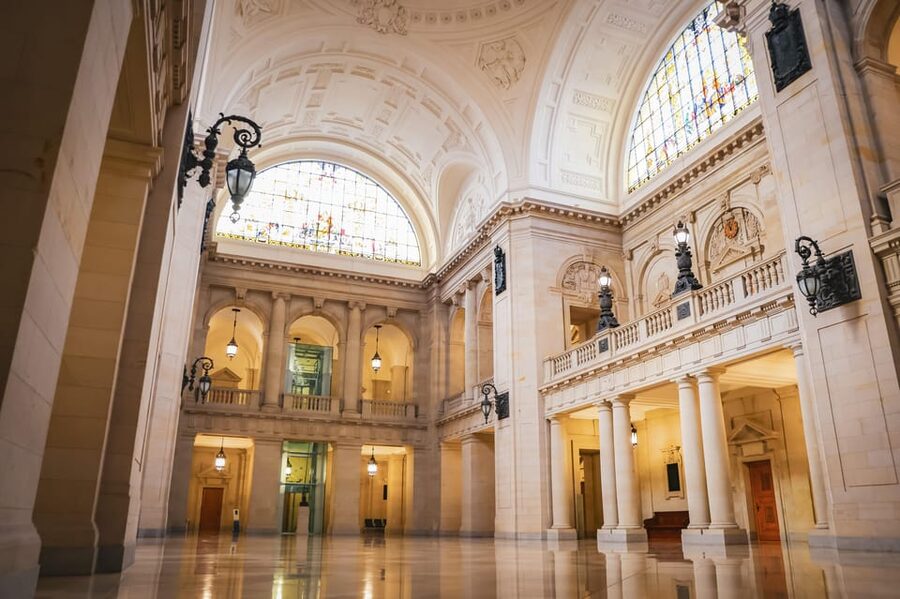
The most striking part of this Leipzig tour is the building itself: a huge Wilhelmine-era courthouse where national symbols, imperial paintings, and serious legal work still share the same rooms. You move from the historic courtrooms to the former president’s apartment, then connect the architecture to major moments in German justice.
I like the clear mix of subjects. You get building history and courtroom drama, not just a dry explanation of German law. I also like the price, about $14 for 1.5 hours, which makes this a strong value for adults interested in history, politics, or grand old buildings. The main drawback is that the tour is normally in German, and the subject matter is best suited to visitors aged 14 and up.
In This Review
- Key points to know before you book
- Why this courthouse is worth your time
- Meeting at Simsonplatz 1
- Inside the 1879 Imperial Court of Justice
- The Reichstag fire trial and Karl Liebknecht’s 1907 case
- The former president’s apartment
- From courthouse to GDR art museum
- What the German-language guide adds
- Is $14 a fair price?
- Who should take this tour?
- Practical tips for making the most of it
- Should you book the Federal Administrative Court tour?
- FAQ
- Where does the Federal Administrative Court tour meet?
- How long does the tour last?
- What language is the tour in?
- What does the tour include?
- Is the tour wheelchair accessible?
- Are children allowed to join?
- Can I cancel or pay later?
Key points to know before you book
- See an 1879 courthouse from the inside: The building began as the Imperial Court of Justice during the Wilhelmine era.
- Visit the former presidential apartment: This unusual stop adds a personal and domestic side to an otherwise formal institution.
- Connect rooms with real legal cases: The tour discusses the 1933 Reichstag fire trial and Karl Liebknecht’s 1907 trial.
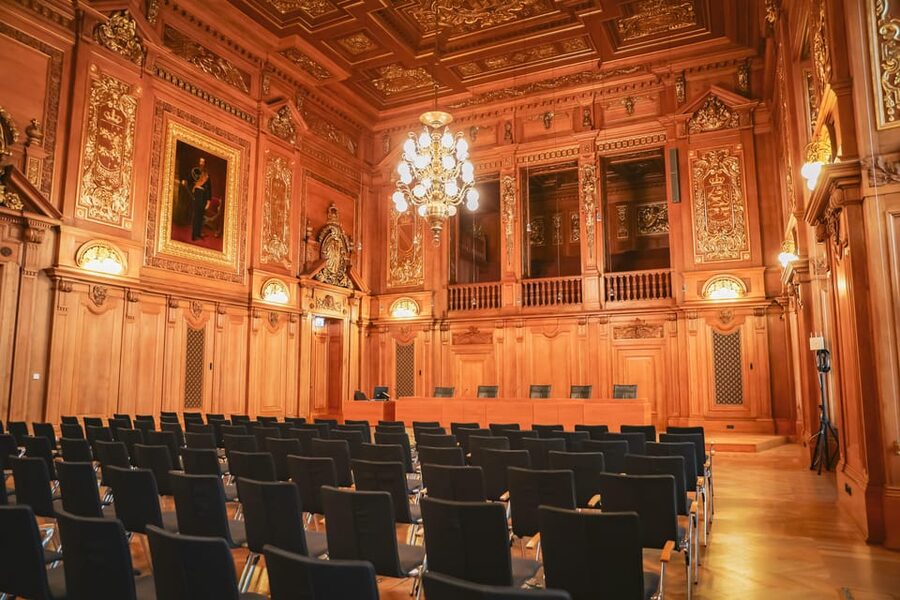
- Look for imperial details: National coats of arms and painted decorations give the large courtroom its grand, political feel.
- Learn how the building changed after 1945: It served as an art museum during the GDR era before returning to court use in 2002.
- Plan for German narration: English is available on request, but you should arrange that before arrival.
Why this courthouse is worth your time
Leipzig offers plenty of museums and historic streets, but this tour takes you into a working center of German justice. The Federal Administrative Court is the country’s highest administrative court. Its judges sit in 14 senates, handling disputes in administrative law and helping shape how that law develops.
That may sound technical. The tour makes it more approachable by tying legal ideas to people, rooms, political pressure, and changes in German history. Instead of hearing only about court procedure, you see where formal decisions were made and learn why certain trials still matter.
I find that setting important. A courthouse is not simply an old building with fine decoration. It was designed to project authority. Its size, paintings, coats of arms, and formal rooms tell you how the German Empire wanted justice to look in 1879.
The building also carries several layers of later history. It began as the Imperial Court of Justice, changed use during the GDR period, and returned to court service in 2002. That gives the tour a useful structure: imperial institution, changing political system, museum, and modern federal court.
Other Leipzig days worth putting on the list:
- Leipzig: City History Canal Sightseeing Tour on a Motorboat
★ 4.7 · 6,232 reviews - Leipzig: 1.5-Hour Public Tour with Night Watchman Bremme
★ 4.6 · 3,116 reviews - Combo Tour in Leipzig: Guided City Tour & City Sightseeing
★ 4.7 · 2,317 reviews
Meeting at Simsonplatz 1
You meet in front of the Federal Administrative Court at Simsonplatz 1. Arrive 10 to 15 minutes early. That buffer matters because this is a court building, not a casual open-air stop, and you do not want to arrive while the group is already going through the entry process.
The meeting point is easy to understand because it is directly in front of the court. You do not need to hunt for a restaurant, a hotel lobby, or a separate tour office. Once you arrive, take a moment to look at the facade before going in. The exterior sets up what follows: this was built to look important.
The activity lasts about 90 minutes. That is long enough to cover the major rooms and stories without taking up an entire afternoon. It is also short enough to fit before or after another Leipzig sight.
The tour is wheelchair accessible. Pets are not allowed, except for assistance dogs. Alcohol, drugs, party groups, and bachelor or bachelorette groups are not permitted, which tells you something about the tone: this is a serious cultural visit, not a loose party outing.
Inside the 1879 Imperial Court of Justice
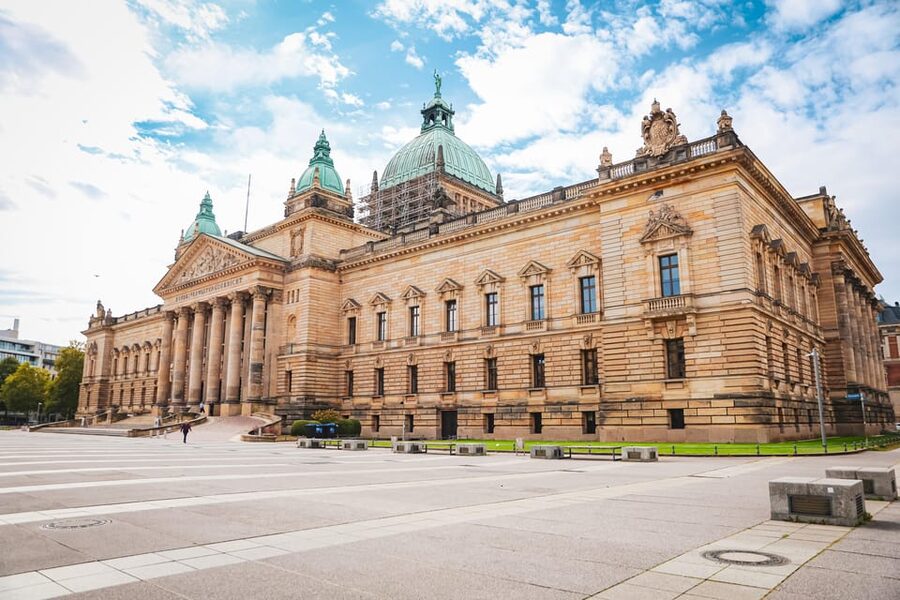
The building was completed in 1879 during the Wilhelmine era, when official architecture often aimed to impress before anyone spoke a word. The tour uses the courthouse to explain that visual language.
You can expect attention to the building’s architecture, its judicial purpose, and the historical changes it has survived. The architectural details are not treated as decoration alone. They help explain how power, law, and national identity were presented in the late nineteenth century.
The large courtroom is a key stop. National coats of arms and imperial paintings make it one of the most memorable spaces on the route. I would pay attention to how different the room feels from a modern office or ordinary municipal courtroom. Its scale and ornament were meant to give court proceedings a ceremonial weight.
The guide also explains the official dress worn by federal judges. The crimson robe and beret remain recognizable symbols of the profession. This is a small detail, but it helps turn an abstract institution into something you can picture. Legal authority here has a visual uniform, just as the building has a visual language.
One useful feature of the tour is the way it joins small details to large questions. A robe, a coat of arms, or a painted wall can lead to a discussion of who held authority and how the court wanted to be seen.
The Reichstag fire trial and Karl Liebknecht’s 1907 case
The tour is at its best when it connects the building to specific court cases. Two examples receive special attention: the Reichstag fire trial of 1933 and the October 1907 trial in which Karl Liebknecht defended himself over the publication of his writings.
These cases give the tour human scale. Rather than hearing a long list of dates, you encounter moments when political conflict and legal process came together. The guide places the cases in their historical setting and explains why they are important to the story of German justice.
The Reichstag fire trial is especially weighty because it belongs to the tense early period of Nazi rule. The tour does not treat the court as an isolated place. It shows how law operates inside a wider political world, and why the history of a judicial institution cannot be separated from the events around it.
Karl Liebknecht’s 1907 case offers another angle. His defense over the publication of his writings brings questions of politics, speech, and legal pressure into the building. Even if you do not already know the case, the subject gives you a concrete way to think about how public argument can become a legal matter.
Do not expect a full law-school lesson on either trial in 90 minutes. The value is in the connection between place and event. You are standing in the institution while hearing about cases that help define its historical reputation.
Same city, a completely different kind of day:
- Leipzig: 1.5-Hour Historical Walking Tour in German
★ 4.7 · 2,217 reviews - Leipzig: 2-Hour Guided Walking Tour in German
★ 4.8 · 1,612 reviews - Leipzig: 13-Stop Hop-on/Hop-off Bus Ticket
★ 4.6 · 1,468 reviews - Gruseltour Leipzig: A Haunted Guided Tour
★ 4.5 · 1,385 reviews
The former president’s apartment
The former presidential apartment is one of the tour’s most unusual elements. A courthouse can feel formal and distant. This stop gives you a more personal view of the people who once occupied the building.
The apartment also changes your understanding of the institution’s original design. Senior officials were not simply arriving at an office for a working day. The building included space tied to the life and status of its president. That arrangement says a great deal about the hierarchy and ceremony of the period.
I like this part because it breaks up the courtroom focus. You move from public legal authority to a private domestic setting. The contrast helps you picture the building as a place where official duties, status, and daily life once overlapped.
The supplied details do not specify every room or furnishing in the apartment, so you should not expect a fixed checklist of household objects. The important point is access to this former residential area and the explanation of its role in the building’s past.
From courthouse to GDR art museum
The building’s story did not stop with the Imperial Court of Justice. During the GDR era, it was used as an art museum. That change is one of the strongest reasons to take the tour, especially if you care about twentieth-century German history.
A building can survive while its meaning changes. A courtroom becomes a museum. A symbol of imperial law takes on a new public function. Later, the building returns to federal court use in 2002. Those changes reflect the political breaks and reinventions that shaped Germany in the twentieth century.
The guide explains this sequence alongside the architecture, so you can see how the same rooms served different purposes. This is more useful than hearing only that the building was repurposed. You get a sense of how institutions are reused, renamed, and placed within new political systems.
The return to federal court use also connects the past to the present. The courthouse is not preserved as a frozen monument. It remains linked to the current administration of justice, with judges working in 14 senates and deciding disputes in administrative law.
That current role gives the tour a practical edge. You are not visiting an abandoned relic. You are seeing a historic building that still relates to how Germany’s legal system functions today.
What the German-language guide adds
The official tour language is German. The guide’s job is not just to point out rooms, but to explain history, architecture, major cases, and the court’s present role in a connected way.
Recent feedback highlights a friendly, entertaining style and strong organization. One especially useful pattern is the balance between factual detail and lively delivery. Several comments describe the tour as informative without becoming long-winded, while one person wished there had been more time to see and hear more.
That is a fair description of the format. At 90 minutes, the tour has room for detail, but not for every case or architectural feature. You will get the main story and several memorable examples. If you want an exhaustive legal history, you may find the time too short.
English tours are available on request. Do not assume that an English session will be running automatically at every starting time. Ask in advance when booking, and be clear that you need English. If you understand German well enough to follow a guided historical talk, the regular tour should suit you. If not, language is the biggest factor in your decision.
Some content is shown in its original language. That may matter if the guide refers to historical documents, inscriptions, or legal material where the original wording is part of the point.
Is $14 a fair price?
At about $14 per person, this is inexpensive for a guided visit inside a major historic court building. The price covers the guided tour, historic courtrooms, and the former presidential apartment. You are paying for access plus interpretation, not just entry to a public room.
The value is strongest if you already plan to spend time in Leipzig and want something beyond standard museum fare. The tour combines architecture, political history, legal history, and a working federal institution in one short visit. That mix would be hard to recreate on your own.
The price is also helpful for a short itinerary. You do not need to commit half a day or pay for a large package. A 1.5-hour tour can fit neatly into a morning or afternoon.
The limitation is that the experience depends on the guide and language. If you cannot follow German and cannot secure an English tour, the building’s visual details will still be interesting, but you will miss much of the historical explanation. I would treat English confirmation as essential, not optional, if German is not comfortable for you.
Free cancellation up to 24 hours before the start and reserve-now, pay-later booking add useful flexibility. These are practical advantages if your Leipzig schedule is still shifting.
Who should take this tour?
I would recommend it most strongly to adults and older teenagers interested in German history, courts, government, architecture, or twentieth-century politics. The minimum age is 14, and the serious subject matter makes that limit sensible.
It is also a good fit if you have already seen Leipzig’s better-known sights and want an experience tied closely to the city’s civic identity. The tour does not depend on flashy entertainment. Its appeal comes from the building, the cases, and the guide’s explanation.
You may want to skip it if your main interest is art, shopping, food, or outdoor sightseeing. The museum period is discussed, but this is not an art museum tour. It is also not the right choice for a young family looking for an easy activity.
Accessibility is a plus. The building and tour are wheelchair accessible, although you should still arrive early and follow the court’s visitor rules. Assistance dogs are allowed, but other pets are not.
Practical tips for making the most of it
Read a little about the Reichstag fire trial and Karl Liebknecht before you arrive if those names are new to you. You do not need a long history lesson. Knowing the basic outline will help you follow the guide’s explanation and understand why the cases matter.
Arrive 10 to 15 minutes early at Simsonplatz 1. Use the time to examine the outside of the building and get settled before the tour begins.
If you need English, request it ahead of time. The normal language is German, and the most important content is delivered through the guide rather than through independent signs.
Wear something suitable for a formal public building. The supplied information does not list a dress code, but this is a functioning court rather than a casual attraction, so a respectful approach is wise.
Finally, keep your expectations focused. This is not a theatrical courtroom reenactment, and it is not a chance to attend a current case. It is a guided look at the building, its history, its former residents, and the legal events tied to it.
Should you book the Federal Administrative Court tour?
I would book this tour if you want a compact, well-priced look at Leipzig’s legal and political past. The combination of grand courtrooms, imperial decoration, a former presidential apartment, famous cases, and the building’s GDR museum period gives you far more than a standard architecture walk.
The strongest reasons to go are the setting and the guide-led storytelling. The most important reason to pause is language. Confirm an English tour if needed, and remember that the content is aimed at people aged 14 and older.
At $14, the risk is low, the time commitment is modest, and the subject is genuinely unusual. If German justice, history, or official architecture interests you, this is an easy addition to a Leipzig day.
FAQ
Where does the Federal Administrative Court tour meet?
The meeting point is in front of the Federal Administrative Court at Simsonplatz 1 in Leipzig.
How long does the tour last?
The guided tour lasts 1.5 hours.
What language is the tour in?
Tours are held in German. English tours are available on request, so ask when booking.
What does the tour include?
It includes a guided tour of the Federal Administrative Court, visits to historic courtrooms, and a visit to the former presidential apartment.
Is the tour wheelchair accessible?
Yes, the activity is wheelchair accessible.
Are children allowed to join?
Children under 14 are not permitted. The experience is intended for visitors aged 14 and older.
Can I cancel or pay later?
You can cancel up to 24 hours in advance for a full refund. Reserve-now, pay-later booking is also available.
Just added around Leipzig
- City tour on foot, by S-Bahn and tram★ 4.5 · 12 reviews
- Leipzig City Centre: Scavenger Hunt Self-Guided Tour★ 4.4 · 114 reviews
- Tour on Lake Cospuden★ 4.7 · 58 reviews
- Leipzig: True or false? Walking Tour and Interactive Game★ 4.8 · 28 reviews
- Leipzig Spirits Manufacture: Guided Tour and Tasting★ 4.8 · 79 reviews
- Leipzig: Segway tour to the Battle of the Nations Monument★ 5.0 · 4 reviews
- Leipzig: Segway City Tour – Discover Sights, Parks & History★ 5.0 · 7 reviews
- Leipzig’s Mystery Morning: Breakfast & Escape Game★ 4.2 · 108 reviews
Leipzig Tours, compared.

City History Canal Sightseeing Tour on a Motorboat
Read our review →
1.5-Hour Public Tour with Night Watchman Bremme
Read our review →
Combo Tour in Leipzig: Guided City Tour & City Sightseeing
Read our review →

Browse the lists this tour appears in