
Reviewed · CITY TOURS
Düsseldorf: Guided City Architecture Walking Tour
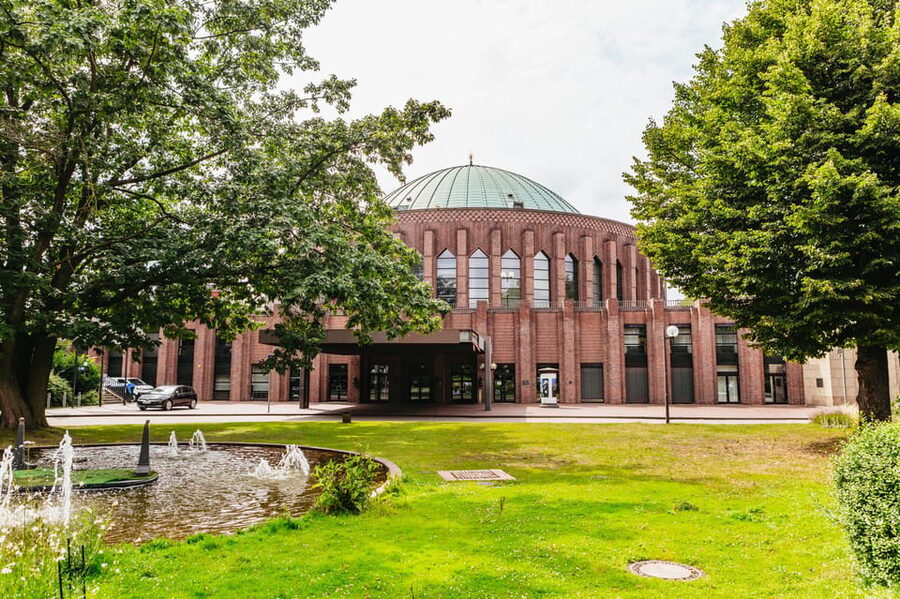
Düsseldorf packs 1920s Expressionism, postwar Brutalism, grand boulevards, and bold modern design into a surprisingly small area. This two-hour walk connects those buildings from Königsallee through the Old Town to Ehrenhof, while explaining the people, politics, and ideas behind their facades. I like the route because it links famous sights such as Kö-Bogen, Dreischeibenhaus, and the Schauspielhaus instead of treating them as isolated photo stops. I also like the included City Museum entry, which gives you a useful way to continue after the walk.
The main catch is pace. One recent participant described it as a fast march packed with facts, so you should bring curiosity, comfortable shoes, and a willingness to keep moving. The tour is conducted in German, and the quality depends heavily on the individual guide. Dietmar Schönhoff has been singled out for mixing architectural detail, history, humor, and anecdotes.
- A compact architecture route: Follow Königsallee, the Old Town, and Ehrenhof in two hours.
- Modern icons up close: See Kö-Bogen, the 96-meter Dreischeibenhaus, and the Schauspielhaus.
- Historical range: Compare Expressionism from the 1920s with postwar Brutalism and newer international design.
- Named architects: Hear about Daniel Libeskind, Wilhelm Kreis, Karl Friedrich Schinkel, Bernhard Pfau, and Helmut Hentrich.
- A German-language walk: Expect live explanation rather than an audio guide or multilingual presentation.
- Useful added value: Entry to the City Museum at Bergerallee 2 is included.
In This Review
- Why Düsseldorf’s facades tell a bigger story
- Starting at Mannesmannufer and moving toward Königsallee
- Königsallee and the sharp lines of Kö-Bogen
- Dreischeibenhaus and Düsseldorf’s postwar confidence
- The Schauspielhaus and architecture as public life
- Walking through the Old Town beyond the postcards
- Finishing in Ehrenhof with Wilhelm Kreis and modern design
- What the guide adds to the buildings
- Is $23 a fair price for two hours?
- Who will enjoy this walk most?
- Should you book the Düsseldorf architecture tour?
- FAQ
- How long does the Düsseldorf architecture tour last?
- What language is the tour conducted in?
- Where does the tour meet?
- Where does the tour finish?
- Which parts of Düsseldorf does the route cover?
- Does the tour enter Kö-Bogen or Dreischeibenhaus?
- Is the tour available as a private experience?
- Is City Museum entry included?
- How much does the tour cost?
- Can I cancel for a refund?
Why Düsseldorf’s facades tell a bigger story
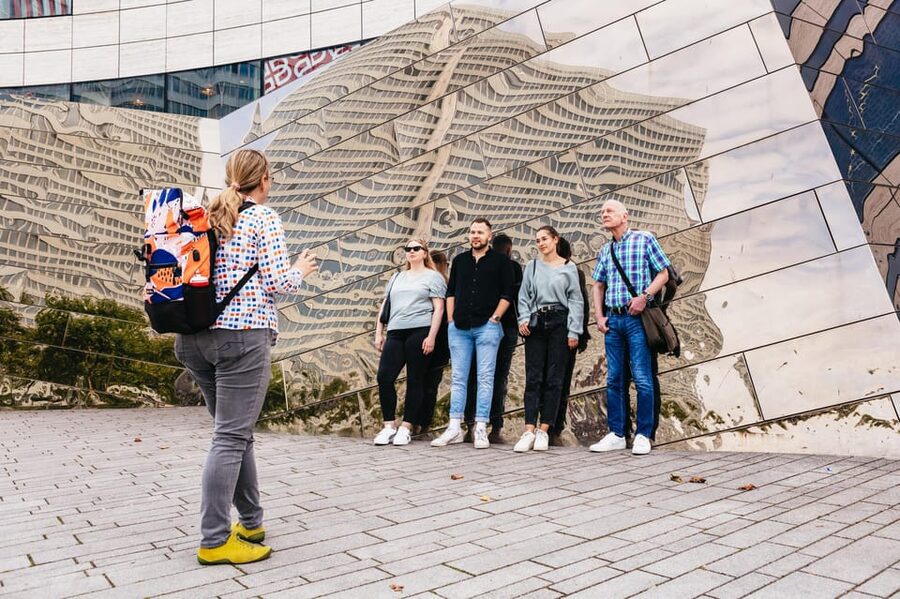
This is not simply a walk to photograph impressive buildings. The point is to read Düsseldorf through its architecture. You look at who designed a building, which period produced it, what the city wanted to express, and how older streets sit beside newer forms.
That makes the route appealing even if you already know Düsseldorf’s main shopping street. The buildings become less like scenery and more like evidence of changing taste, power, technology, and city planning.
The tour gives special attention to architects who shaped the city in very different ways. Daniel Libeskind brings an international, sharply contemporary voice. Wilhelm Kreis and Helmut Hentrich represent important chapters in Düsseldorf’s own architectural story. Karl Friedrich Schinkel connects the city to wider German architectural traditions, while Bernhard Pfau is tied to the postwar period.
You should not expect a technical lecture aimed only at architects. The strongest departures appear to mix facts with stories and humor. Dietmar Schönhoff, in particular, has been praised for explaining difficult architectural ideas in an approachable way and for answering questions with ease.
Starting at Mannesmannufer and moving toward Königsallee
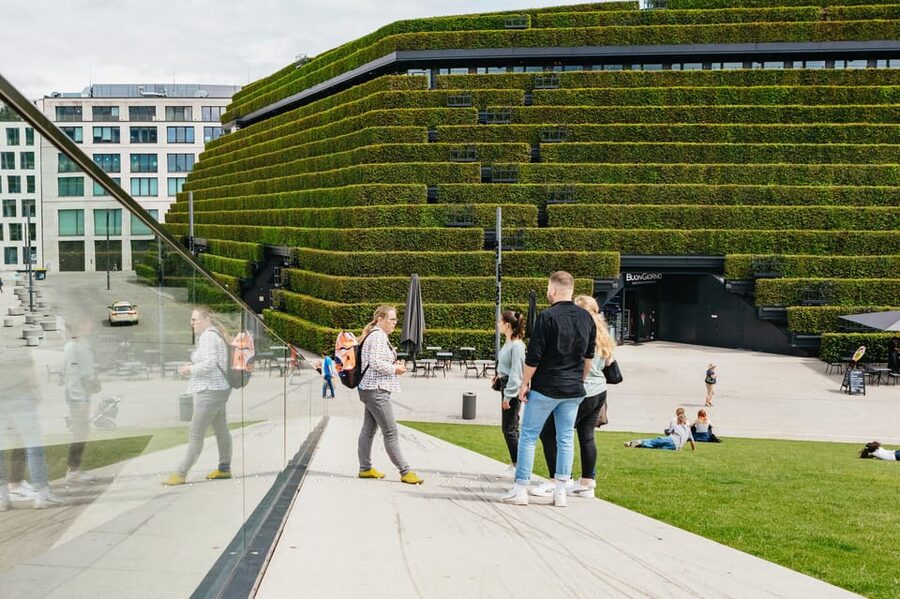
The stated meeting point is Mannesmannufer 2, with other starting location information also associated with Alter Stahlhof and Breite Str. 69. Check your booking details carefully before setting out, since the precise meeting instructions matter in a city walk.
From the beginning, the guide frames Düsseldorf as a city shaped by both regional builders and architects from abroad. That is a useful approach. You are not just given a list of dates and names. You are shown how different design choices helped create the city you see today.
The first major section leads toward Königsallee, Düsseldorf’s famous grand avenue. Here, the experience shifts from general background to close reading of prominent modern buildings. Allow yourself enough attention for the explanations. The walk includes regular photo stops, but this is not designed as a slow photography tour.
If you prefer to take many carefully composed pictures, you may find the pace brisk. If you want a strong overview in a short period, the movement works in your favor.
A few more Dusseldorf trips to weigh up
- Düsseldorf: Altbier-Safari Beer Walking Tour
★ 4.4 · 1,150 reviews - Düsseldorf: Sweet Treats Guided Walking Tour of Old Town
★ 4.7 · 66 reviews - Düsseldorf: Tipping based – Old Town Walking Tour
★ 4.8 · 38 reviews
Königsallee and the sharp lines of Kö-Bogen
Königsallee gives the tour its most dramatic contrast. Elegant older buildings and the broad commercial avenue meet newer architecture that uses strong angles, unusual cuts, and bold silhouettes.
The key modern stop is Kö-Bogen, designed by New York architect Daniel Libeskind. The building is treated as more than a fashionable shopping address. Its form provides a chance to discuss how international architects have influenced Düsseldorf and how a new structure can alter the feel of a central district.
You will pass by rather than enter Kö-Bogen. That is worth knowing if you want interior architecture or access to upper floors. The value here is the guide’s explanation and the view of the building in its urban setting.
I like this part because it shows how architecture can become a public conversation. Some people respond to Libeskind’s angular design immediately. Others find it severe or disruptive. A good guide can help you see both the visual appeal and the questions raised by inserting a striking modern structure into a historic city center.
Dreischeibenhaus and Düsseldorf’s postwar confidence
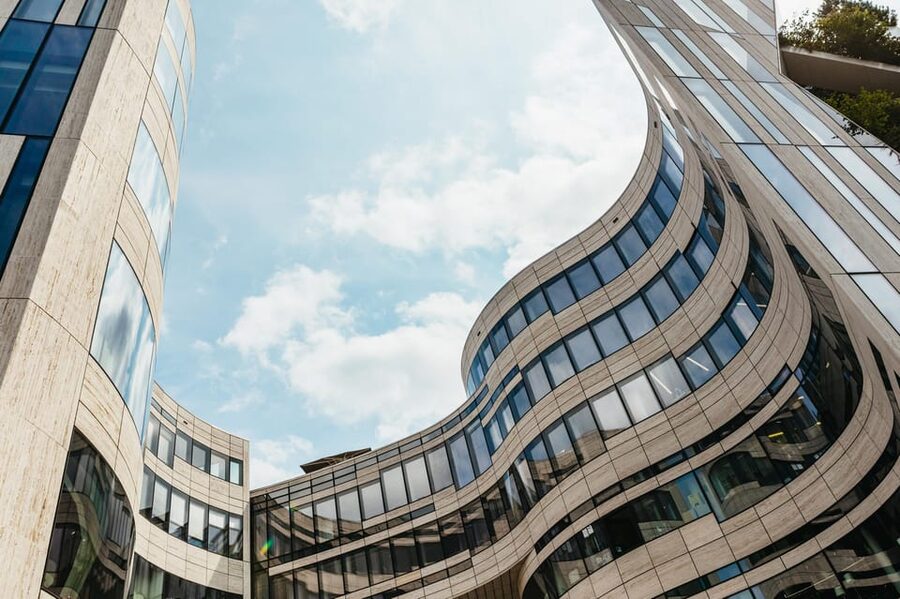
The 96-meter Dreischeibenhaus is another major highlight. Its name refers to its three slim vertical sections, and its clean profile makes it one of the clearest examples of postwar modern office design on the route.
The building gives the guide a way to explain Düsseldorf’s commercial ambitions and the architectural language of the postwar decades. Glass, steel, height, and disciplined geometry replaced the decorative approach associated with older city buildings.
Again, you view the building from outside. That limitation is minor for anyone interested in urban form, since the exterior is the main point. You can study its proportions, compare it with the nearby Schauspielhaus, and hear how the building fits into Düsseldorf’s larger architectural development.
This is one of the moments when the tour’s short length becomes both strength and weakness. You get a clear introduction to a landmark without spending a long time on one structure. But if you want floor plans, construction methods, or a full account of the building’s later use, two hours will not cover everything.
The Schauspielhaus and architecture as public life
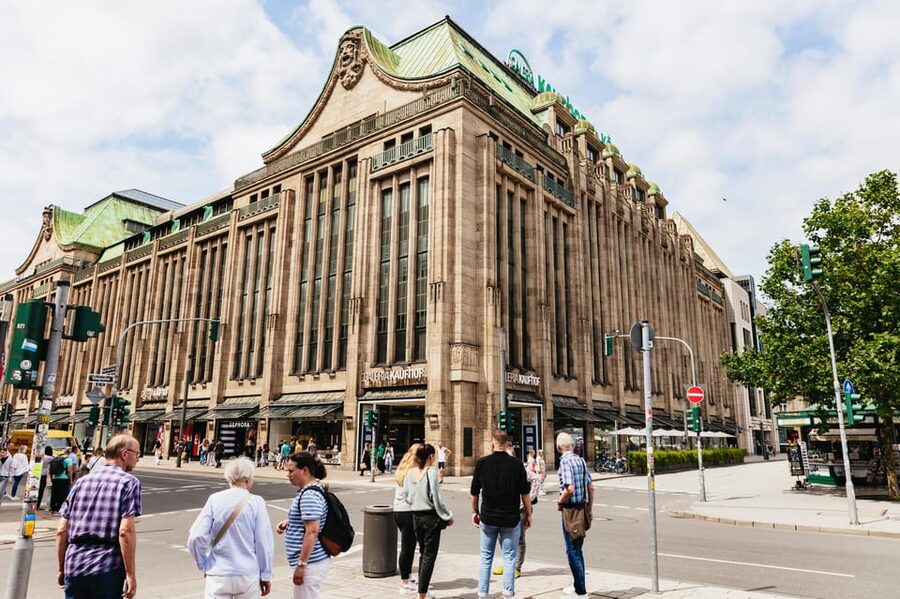
The Schauspielhaus adds a different note to the Königsallee section. Its role as a theater allows the guide to move beyond office towers and shopping streets and talk about buildings designed for public culture.
This is useful because architecture is not only about shape. A theater must welcome crowds, frame performance, and create a public presence. The building can be read through its facade, but also through the way it meets the street and serves the city.
You will pass by the Schauspielhaus, so the guide’s commentary carries much of the stop’s value. Listen for connections between the building, its period, and the city’s changing ideas about culture and civic space.
The route’s best quality is this variety. In a short stretch, you move from commercial architecture to corporate modernism and then to a major cultural building. That range helps you understand why Düsseldorf appeals to people who enjoy cities as much as museums.
Same city, a completely different kind of day:
- Düsseldorf: City Sightseeing Cruise on the Rhine
★ 4.1 · 2,954 reviews - Düsseldorf: 24-Hour Hop-On Hop-Off Ticket
★ 4.2 · 1,685 reviews - Düsseldorf: Brewery Tour with Alt Beer Tastings
★ 4.7 · 1,523 reviews - Düsseldorf: Guided Tour with a Night Watchman
★ 4.7 · 986 reviews
Walking through the Old Town beyond the postcards
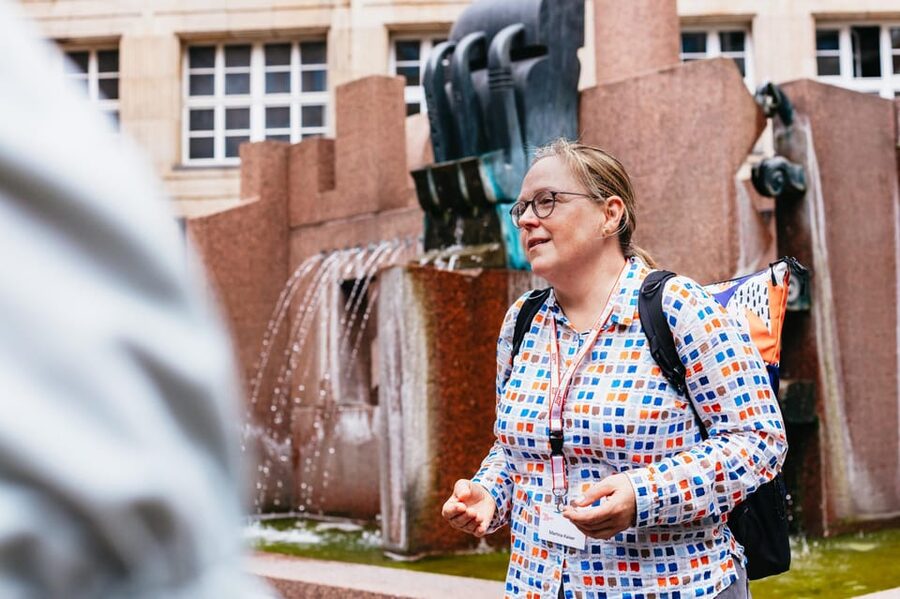
The route then continues into Düsseldorf’s Old Town. This is where the tour can correct a common travel habit: looking only at the most picturesque streets and ignoring how the whole center was rebuilt, adapted, and contested over time.
The guide’s job here is to connect familiar streets and facades with less obvious stories. You may already know the Old Town as a place for restaurants, bars, and historic-looking buildings. The architecture walk asks you to look again at scale, materials, street lines, and the relationship between old and new.
The Old Town section also gives the tour a change of mood. After the tall modern forms around Königsallee, the closer streets make you pay attention to smaller details. Facades matter, but so do gaps between buildings, views down side streets, and the way people use public space.
One recent participant who already knew Düsseldorf well still found plenty of new material. That is a good sign for repeat visitors and local residents. You do not need to be a first-time visitor to get value from this walk, though you should be comfortable hearing interpretation of places you may have seen before.
The drawback is that the route cannot explain every Old Town building in depth. A participant also wished for more discussion of the connections between historical periods, decision-makers, architecture, power, and daily city life. That is a fair criticism. The walk gives you many examples, but it may leave you wanting a slower, more thematic follow-up.
Finishing in Ehrenhof with Wilhelm Kreis and modern design
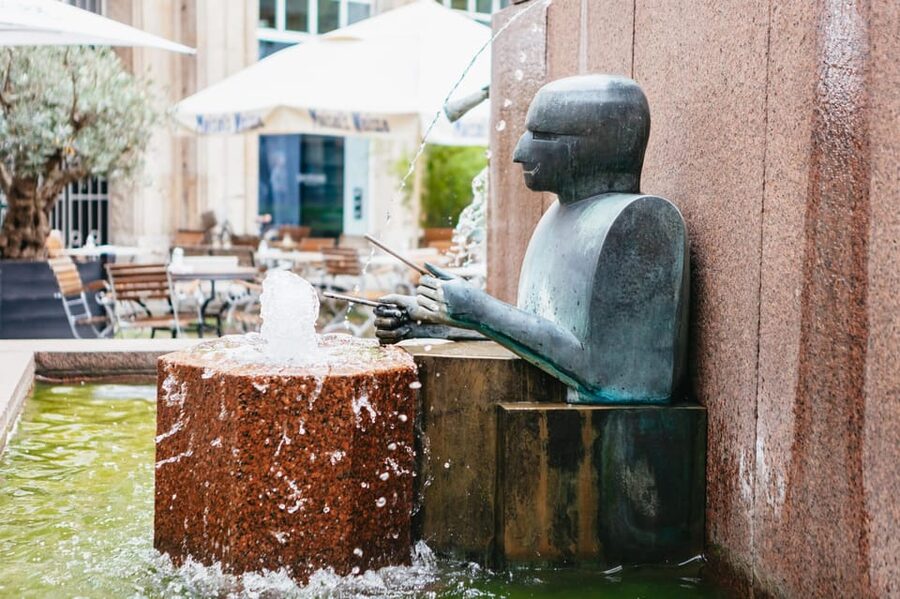
The final section leads to Ehrenhof, a major architectural ensemble and the end of the walk. This gives the route a satisfying destination rather than simply returning you to the starting point.
Ehrenhof is especially useful as a closing chapter because it brings together cultural buildings and broad public space. The setting allows you to consider how architecture works as a group, not just as individual facades.
The tour highlights Wilhelm Kreis here, along with other figures connected to Düsseldorf’s built environment. You may also hear about Bernhard Pfau and Helmut Hentrich, whose work helps explain the city’s 20th-century development.
As you arrive, think back to the contrasts covered earlier: Expressionism from the 1920s, postwar Brutalism, formal modern office design, historic streets, and Libeskind’s contemporary intervention. The tour does not present one correct style. Instead, it shows how several competing ideas share the same city.
The walk ends at Ehrenhof, with two listed drop-off points in that area. That is practical if you plan to continue sightseeing there. The included City Museum entry at Bergerallee 2 also gives you a separate way to build on the tour, although the supplied details do not specify a guided museum visit or a dedicated museum time during the walk.
What the guide adds to the buildings
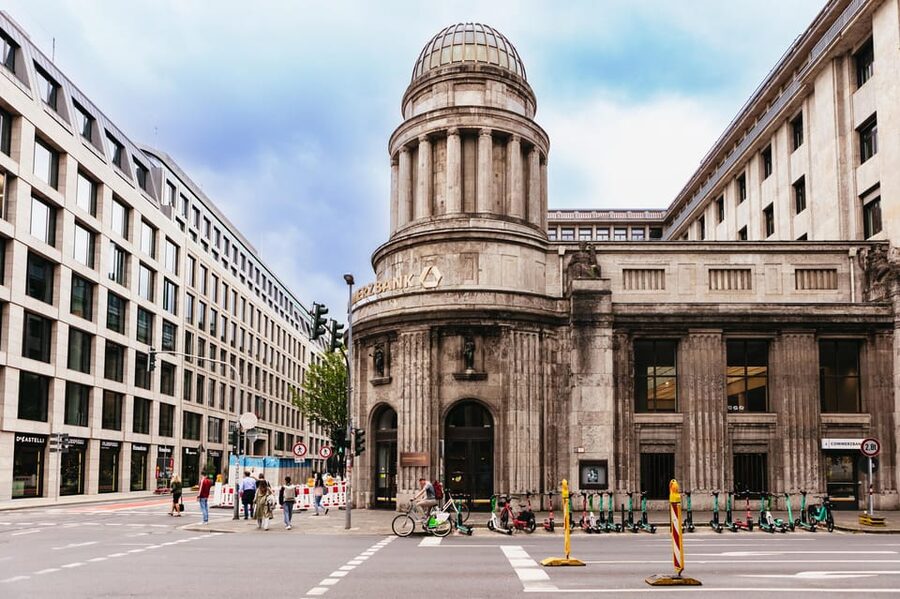
Architecture tours live or die by their guide. Here, the strongest feedback centers on clear explanations, broad background knowledge, humor, and a willingness to answer questions.
Dietmar Schönhoff has been specifically praised for combining architectural stories with history and anecdotes. Another positive assessment describes the guide as friendly and highly informed about the city’s past. That kind of presentation matters because many buildings can seem cold or abstract when viewed without context.
You should also expect a guide-led interpretation rather than a fixed script that treats every group the same. One participant found the tour packed with information and suggested that it can feel subjective, depending on the guide. That is normal for a specialist walk, but it is worth keeping in mind.
If you want a relaxed stroll with plenty of unstructured time, this may not be your best fit. If you enjoy asking questions and following a guide’s line of thought, the format should suit you well.
The language is German only. That is a firm practical point. You will get the most from the experience if you can follow spoken German comfortably, especially when the guide moves quickly between architectural terms, historical context, and anecdotes.
Is $23 a fair price for two hours?
At $23 per person, the walk is reasonably priced for a specialist city tour, particularly because City Museum entry is included. You are paying for a live guide, a focused route through several central districts, and interpretation that would be difficult to reproduce from a quick self-guided walk.
The value is strongest for three kinds of people. First, you get a useful introduction if you are curious about Düsseldorf but do not want a full-day sightseeing tour. Second, repeat visitors can see familiar places through a new lens. Third, architecture students, design fans, and local residents may appreciate the concentration of buildings and named architects.
The price is less attractive if you speak little or no German, since the central service is the guide’s spoken explanation. It may also feel high if you mainly want photographs and already know the buildings well.
A shared group walk should be the budget-minded choice, while a private option may suit you if you want more control over questions and pace. The provided details confirm both formats are available, but they do not state the group size or private-tour surcharge, so check those points before booking.
You can reserve now and pay later, which helps if your schedule is still taking shape. Cancellation is free up to 24 hours in advance for a full refund. Those terms add flexibility, but they do not change the main decision: book this for the guide’s interpretation, not simply for access to the streets.
Who will enjoy this walk most?
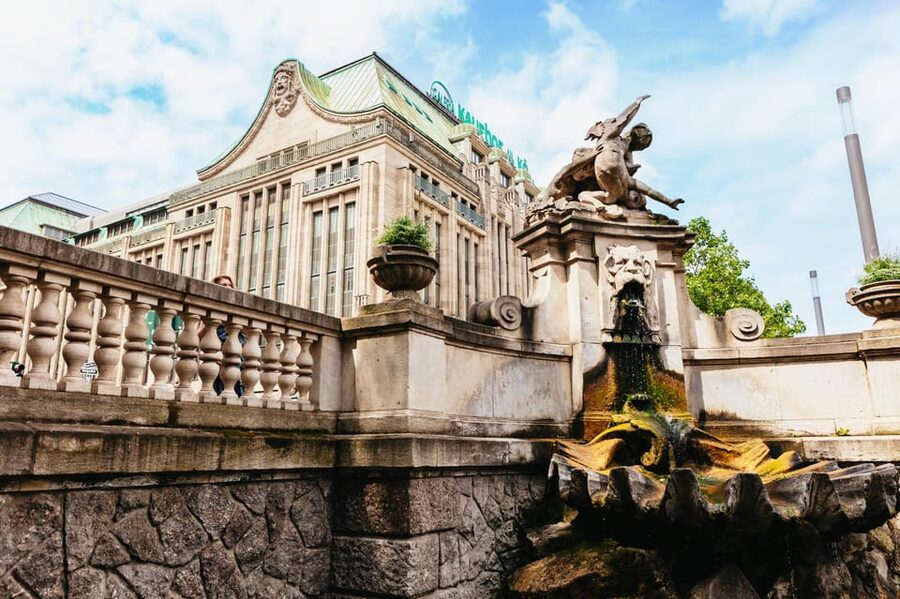
I would recommend it to you if you like cities that reward close looking. You do not need professional architectural training, but you should enjoy learning why a building looks the way it does.
It is also a good fit for anyone who has visited Düsseldorf before. The route covers famous areas, yet the focus on lesser-known stories can make familiar streets feel new.
You may want to skip it if you need an English-language tour, dislike a brisk walking pace, or want to go inside each building. The tour passes by Kö-Bogen, Dreischeibenhaus, and the Schauspielhaus rather than promising interior visits.
Comfortable shoes are sensible. The route covers several districts on foot and includes multiple stops, but there is no indication of extended sitting or transport between the main areas.
The experience received an overall rating of 4.6 from 61 reviews, which fits the pattern in the feedback: strong marks for content and guides, with one serious cancellation failure and some concern about pace. The cancellation incident was especially troubling because the group waited at the meeting point and was not informed until later. That appears to be an exception rather than the general pattern, but it is still a fair reason to confirm the tour status close to departure.
Should you book the Düsseldorf architecture tour?
Book it if you want to understand the city through its buildings rather than simply collect postcard views. The route covers a lot in two hours, from Königsallee and Libeskind’s Kö-Bogen to the Old Town and Ehrenhof, and the included City Museum entry improves the value.
I would choose the private format if you have specific architectural interests or want more time for questions. Choose the shared walk if you prefer a lower-cost overview and can keep up with a fact-filled German-language presentation.
This is not a slow, leisurely stroll. It is a compact architectural survey with plenty of information, strong guides such as Dietmar Schönhoff, and a clear focus on how Düsseldorf developed. For the right reader, $23 buys a sharper understanding of a city that is far more architecturally varied than its shopping streets first suggest.
FAQ
How long does the Düsseldorf architecture tour last?
The walking tour lasts two hours.
What language is the tour conducted in?
The live tour guide speaks German. German is the only language listed for the experience.
Where does the tour meet?
The stated meeting point is Mannesmannufer 2. Other starting location information includes Alter Stahlhof and Breite Str. 69, so check your booking details for the exact departure point.
Where does the tour finish?
The walk ends in Ehrenhof. Two drop-off locations are listed in the Ehrenhof area.
Which parts of Düsseldorf does the route cover?
The route goes along Königsallee, passes Kö-Bogen, Dreischeibenhaus, and the Schauspielhaus, continues through the Old Town, and finishes at Ehrenhof.
Does the tour enter Kö-Bogen or Dreischeibenhaus?
The provided details describe Kö-Bogen and Dreischeibenhaus as pass-by stops. They do not promise entry into either building.
Is the tour available as a private experience?
Yes. You can choose between a shared group walking tour and a private guided walking tour.
Is City Museum entry included?
Yes. Entry to the City Museum at Bergerallee 2 is included.
How much does the tour cost?
The listed price is $23 per person.
Can I cancel for a refund?
Yes. You can cancel up to 24 hours in advance for a full refund. You can also reserve now and pay later.
Just added around Dusseldorf
- (H)Alt! 4 Bier! Brauhaus! Führung!★ 4.3 · 27 reviews
- Filmtour Düsseldorf: From Hollywood to Netflix★ 4.9 · 4 reviews
- Explore Düsseldorf with Passionate tour guides!★ 4.0 · 69 reviews
- DüsseldorfCard Plus★ 4.1 · 14 reviews
- Düsseldorf: The Wehrhahn Line Metro Guided Tour★ 4.5 · 29 reviews
- Düsseldorf: The Ultimate Team event (3 rooms – 9 games)★ 3.4 · 5 reviews
- Düsseldorf: Scavenger Hunt Self-Guided Tour★ 4.6 · 127 reviews
- Düsseldorf: Old town and banks of Rhine – heart and lifeline★ 5.0 · 7 reviews
City Tours, compared.

1-Hour City Tour by Boat with Guaranteed Seating
Read our review →
City History Canal Sightseeing Tour on a Motorboat
Read our review →

Browse the lists this tour appears in