
Reviewed · OLD TOWN WALKING TOURS
Dresden Old Town – Guided Walking Tour in English
Dresden’s Old Town is a lesson in how a city can be destroyed and then carefully brought back to life. This 2.5-hour walking tour connects the grand baroque center with the difficult story behind it, from Slavic beginnings and Saxon princes to the bombing of World War II and the rebuilding you see today. I like the way it treats Dresden as more than a pretty collection of palaces.
Two things appeal to me here: the route covers nearly all of the major Old Town sights, and the guides put Dresden into a wider Central European setting. Guides such as Nicolo, Nikolai, Nicolas, James, and Dominica have been praised for clear storytelling, humor, and strong command of the city’s past. The main consideration is the length: you may walk for more than the advertised two and a half hours, and there is no scheduled toilet stop.
In This Review
- Key points to know before booking
- Why Dresden makes such a good walking tour
- Starting at Neumarkt and Frauenkirche
- Fürstenzug and Dresden Castle
- Altmarkt, Kreuzkirche, and the Palace of Culture
- Brühl’s Terrace beside the Elbe
- Hofkirche, Semperoper, and the royal center
- Zwinger Palace and the end of the route
- The difficult 20th-century story
- Guide style and the English experience
- Is $35 a fair price?
- Who should book this Dresden walk?
- Should you book it?
- FAQ
- How long does the Dresden Old Town walking tour last?
- What language is the tour conducted in?
- Where is the meeting point?
- Which sights are included on the walking route?
- Is transportation included?
- Is the tour wheelchair accessible?
- How much does the tour cost?
- Can I cancel or pay later?
Key points to know before booking
- Dresden’s rebuilt center is the main story: See how Frauenkirche, the castle, Zwinger Palace, and other landmarks were reconstructed after wartime destruction.
- The route covers the essential Old Town sights: You visit Neumarkt, Fürstenzug, Altmarkt, Brühl’s Terrace, Hofkirche, Semperoper, and more.
- The guides add personality: Nicolo and Nicolas are praised for humor and context, while Dominica is noted for lively storytelling.
- You get history beyond the postcard view: The tour links Dresden’s Slavic origins, silver trade, Saxon rulers, Polish and Lithuanian connections, Nazi rule, and World War II.
- The price needs a little attention: The advertised cost is $35 per person, with the booking information describing a pay-as-you-wish format in which the amount covers the reservation fee and guide payment.
- Come prepared to walk: Wear sensible shoes, arrive 10 minutes early, and plan ahead for a bathroom break.
Why Dresden makes such a good walking tour
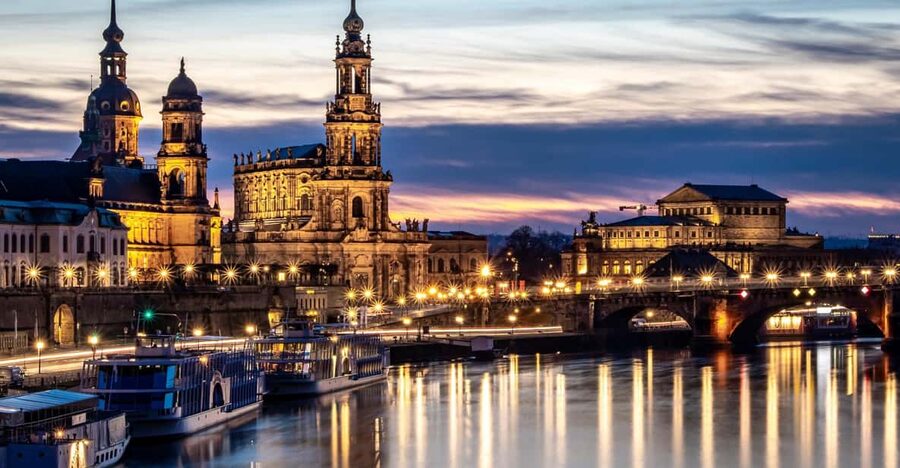
Dresden is one of those cities that can look almost too polished at first glance. The broad squares, ornate churches, royal buildings, and carefully restored facades suggest an uninterrupted past. They are not. Much of the Old Town was destroyed in the final months of World War II, and the work of putting it back together continued for decades.
That contrast gives the tour its purpose. You are not simply ticking off baroque buildings. You are learning how the city changed from a small Slavic settlement into a major trading center, then into the court city of Saxon rulers, and later into one of Europe’s most closely watched reconstruction projects.
The Elbe River is presented not just as a border between Germanic and Slavic worlds, but as a link between them. Dresden’s name has connections that feel familiar in Czech, Slovak, Polish, and Sorbian languages. That detail helps you see the city as part of Central Europe rather than as an isolated German stop.
I also like that the tour brings the story into the present. The guide explains what you are seeing now, not only what stood here centuries ago. That matters in Dresden, where a new-looking facade can still reflect an old plan, an old sculpture, or a building rebuilt from fragments.
More Old Town Walking Tours in Dresden
- Dresden: Semperoper and Old Town Tour
★ 4.8 · 5,735 reviews - Dresden: Segway Tour Along the Elbe and Old Town
★ 4.9 · 392 reviews - Dresden: Old Town Self-Guided Scavenger Hunt Tour
★ 4.5 · 151 reviews
Starting at Neumarkt and Frauenkirche
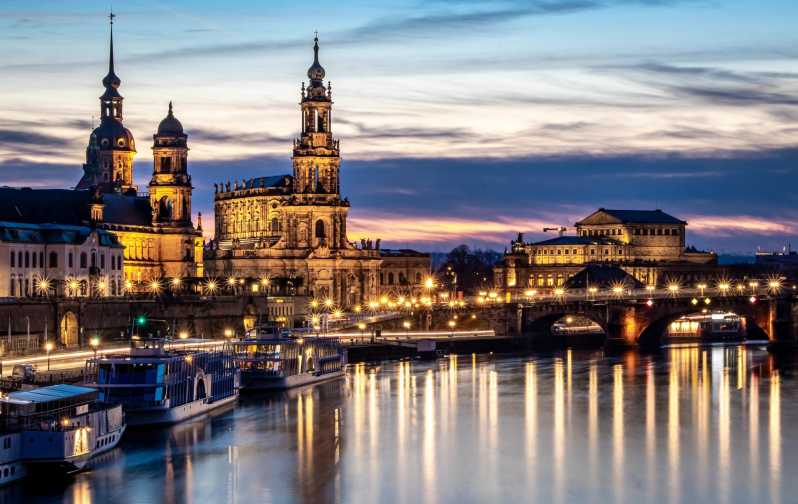
The meeting point is beside the Martin Luther statue at Neumarkt, next to Frauenkirche. Look for the guide holding a yellow umbrella, and arrive about 10 minutes before the start.
Neumarkt is the right place to begin. It gives you an immediate view of Dresden’s historic character, but it also introduces the city’s complicated modern story. Frauenkirche was reduced to a pile of stones after the wartime bombing. Its reconstruction used surviving material where possible, and the result is one of Dresden’s clearest examples of a city rebuilding its identity through architecture.
The church is a Lutheran landmark, and the Martin Luther statue adds another layer of religious and civic history to the square. The tour explains the setting from outside. If you want a full interior visit or a closer look at the church’s reconstruction, plan that separately, since the walking tour does not include a dedicated Frauenkirche visit.
This first stop is also useful for orientation. Neumarkt puts you close to several major sights, so you can return later for photographs, an interior visit, or a quieter look at the square. The guide’s job here is to show you how the buildings relate to one another rather than treat each one as a separate monument.
Fürstenzug and Dresden Castle
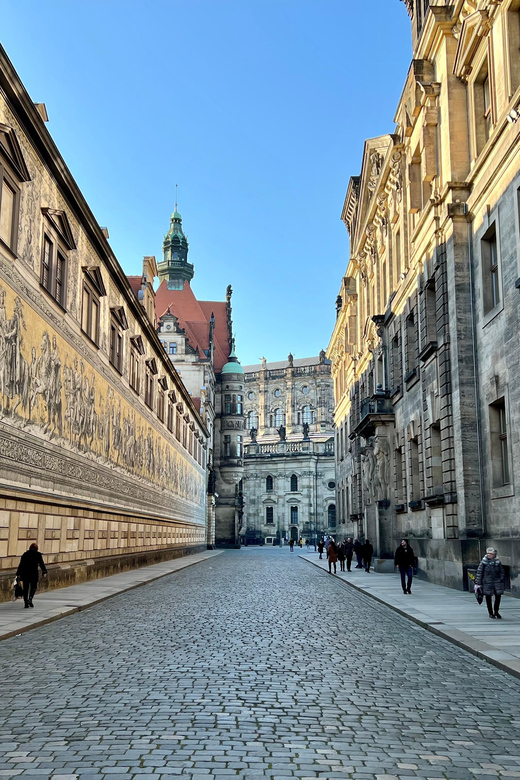
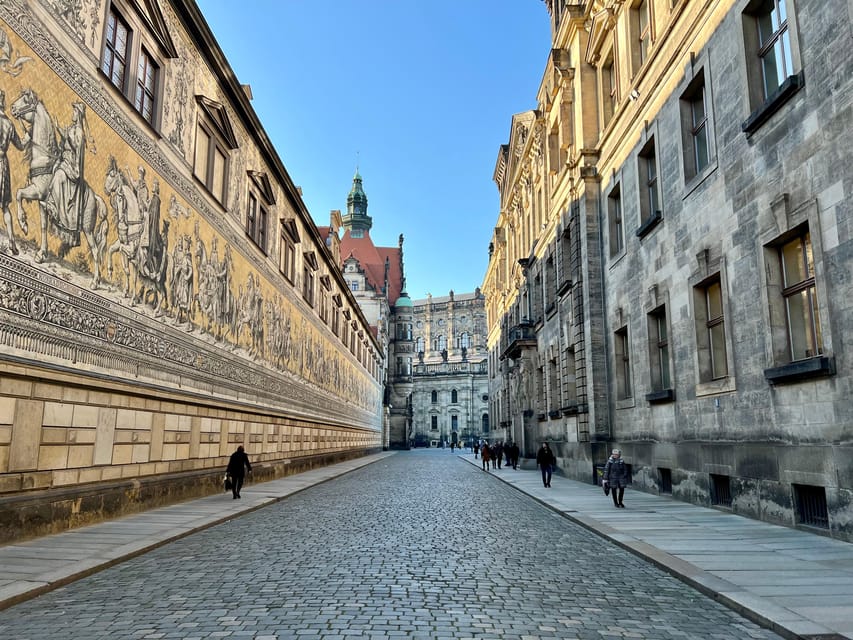
From Neumarkt, the route continues to Fürstenzug, the long outdoor gallery showing the rulers of Saxony. It is one of Dresden’s most distinctive sights because the artwork stretches along an entire wall rather than sitting inside a museum.
This is where a guide adds real value. Without context, Fürstenzug can look like a line of armored figures on tiles. With an explanation of Saxon dynasties and royal ambition, it becomes a visual timeline of power. You begin to understand why Dresden acquired such grand buildings and why its rulers wanted their achievements displayed so publicly.
Dresden Castle brings the story closer to the court. The building changed over many centuries, and its appearance reflects the city’s shift from a medieval settlement to a princely capital. The tour links the castle to the Wettin dynasty and to the period when Saxon princes became kings of Poland and Grand Dukes of Lithuania.
That connection explains much of Dresden’s early 18th-century splendor. The city needed buildings and ceremonies suited to rulers with ambitions beyond Saxony. Zwinger Palace, the redesigned castle, churches, and public spaces all belong to that larger effort to give Dresden an almost imperial character.
You should not expect long interior visits at these stops. This is an orientation walk, not a museum tour. The benefit is that you see how the castle, royal route, churches, and squares fit together before deciding which interiors deserve your remaining time.
Altmarkt, Kreuzkirche, and the Palace of Culture
The walk then reaches Altmarkt, one of the central squares in Dresden. The name means Old Market, and the space helps explain the city’s commercial roots. Dresden grew around a castle and developed into a trading center, with silver and lead from the nearby Ore Mountains helping fuel its prosperity.
The square also offers a useful view of Dresden’s changing public life. Kreuzkirche, or Church of the Holy Cross, is tied to the city’s religious tradition, while the Palace of Culture represents a later period. Together, these buildings show that Dresden is not only a baroque court city. It is also a place shaped by medieval trade, religious change, socialist-era planning, and modern cultural life.
This part of the walk may appeal to you if you prefer history that includes ordinary city functions, not just royal names. Markets, churches, civic buildings, and public squares tell you how people used Dresden day to day.
The open spaces can make the group feel exposed to weather, especially in winter or on a hot afternoon. Bring suitable clothing. Since the tour lasts at least two and a half hours, small practical choices matter more than they might on a short photo walk.
Same city, a completely different kind of day:
- Dresden: Semperoper Tickets and Guided Tour
★ 4.7 · 12,102 reviews - Dresden: The Original Night Watchman Tour in Lantern Light
★ 4.6 · 6,653 reviews - Dresden: River Sightseeing Boat Cruise
★ 4.3 · 5,323 reviews - Dresden: Tour of VW’s Transparent Factory
★ 4.5 · 4,058 reviews
Brühl’s Terrace beside the Elbe
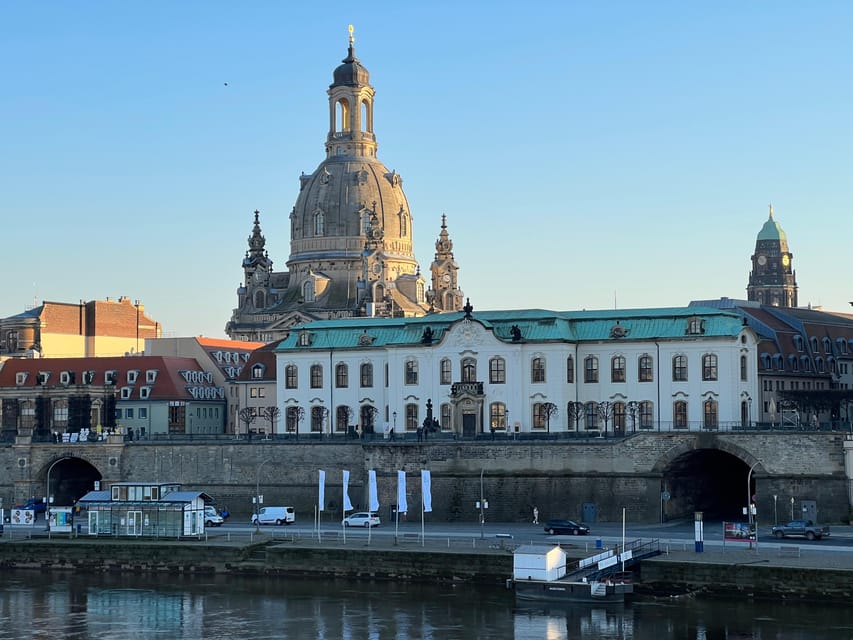
Brühl’s Terrace offers one of the tour’s best changes of pace. Often described as the Balcony of Europe, it runs along the Elbe and gives you a different sense of Dresden. Instead of looking inward at squares and facades, you see the city in relation to the river.
The terrace is linked to Heinrich von Brühl, an influential figure in Saxony’s 18th-century court. Its history reflects the same world of royal spending and political display that shaped the nearby palace buildings.
The river setting also brings the Germanic and Slavic theme back into focus. The Elbe connected regions, people, trade routes, and ideas. Dresden’s position along it helps explain why the city became important and why its culture cannot be reduced to one national tradition.
This is a good point to pause and look around, though the tour is still a walking route rather than a long scenic stop. You may want to return here at another time of day. The terrace can feel quite different depending on the light and weather, and it is one of the easier places to appreciate Dresden’s setting without entering a museum.
Hofkirche, Semperoper, and the royal center
Hofkirche, the Catholic Court Church, is an especially useful stop because it shows the religious complexity of Saxony’s rulers. The surrounding city was shaped by Protestant traditions, yet the royal court supported a major Catholic church. That contrast reflects the political world of the Wettin dynasty and its links with Poland.
The church’s position also helps you understand the royal center as a connected group of buildings. Dresden Castle, Hofkirche, the riverfront, and the opera house are not scattered attractions. They form the ceremonial heart of the city.
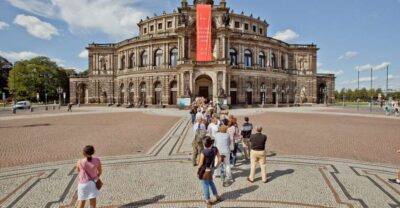
Semperoper brings music and performance into the story. Its name comes from architect Gottfried Semper, and its grand exterior fits the courtly character of the area. The tour presents the opera house as part of Dresden’s cultural life, not simply as an ornate photo stop.
You will mainly see these buildings from outside, so consider the tour a strong first introduction. If classical music, opera, church interiors, or royal collections are central to your trip, use the route to decide where to spend a separate visit.
Zwinger Palace and the end of the route
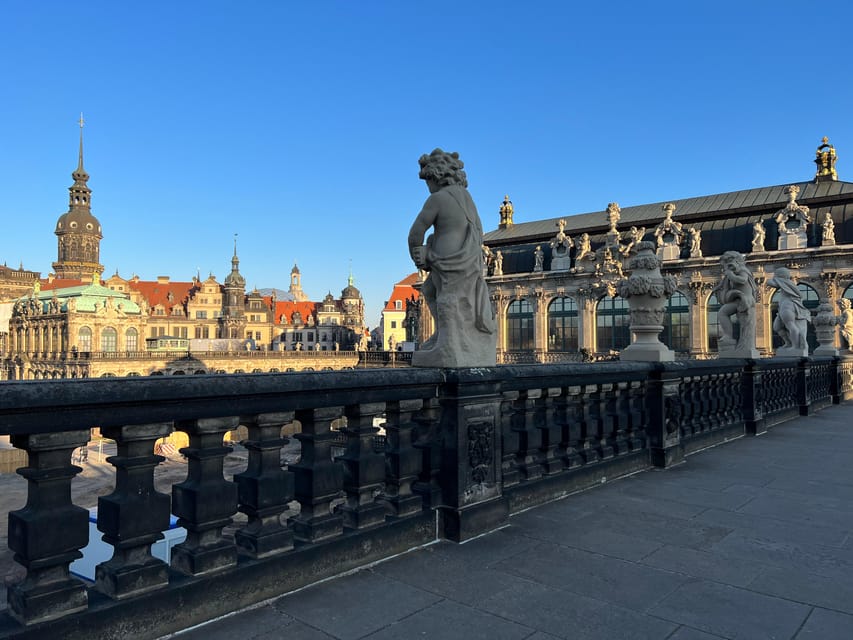
Zwinger Palace is one of the visual high points of the walk. Its courtyards, pavilions, sculpture, and formal design capture the confidence of early 18th-century Dresden better than almost any other building.
The palace was created during the period when Saxony’s rulers had wider European ambitions. Its design was meant for court life, ceremony, and display. The setting near the Elbe bridge also makes it a fitting final landmark, bringing together royal power, architecture, and the river that helped Dresden grow.
The route gives you a chance to understand Zwinger before you visit its museums or return for photographs. That context is useful because the palace can otherwise seem like a beautiful but slightly puzzling arrangement of courtyards. The guide explains why it was built and how it belongs to the larger story of Dresden’s court culture.
The tour ends near Zwinger Palace and the Elbe bridge area. Depending on the group and guide, the walk may last longer than the stated 2.5 hours. One account describes a tour of roughly three hours, so do not schedule a tight train departure, restaurant booking, or museum entry immediately afterward.
The difficult 20th-century story
A strong Dresden tour must address World War II. The city center was bombed so heavily that its historic core was left almost unrecognizable. That fact is not a brief footnote here. It is central to understanding why the Old Town looks the way it does today.
The guide also places the destruction within the wider story of Nazi rule and the war. That broader context matters. Dresden’s baroque beauty can make the wartime past easy to overlook, but the buildings around you carry the marks of decisions made before, during, and after the conflict.
The rebuilding is equally important. Dresden’s center was reconstructed with old techniques and design elements, and some surviving pieces were used again. From street level, you may not realize how much of what you see is new. The tour helps you read the difference between original fabric, repaired structures, and recreated historic design.
This is also where the comparison with Warsaw becomes useful. Both cities became major examples of rebuilding historic centers after wartime destruction, though each followed its own path. Dresden’s restoration is not presented as a simple return to the past. It raises questions about memory, authenticity, and which version of a city people choose to bring back.
Guide style and the English experience
The strongest feature of this walk is the guide’s delivery. The names vary by departure, but guides including Nicolo, Nikolai, Nicolas, James, and Dominica have led tours praised for clear English, humor, and lively explanations.
Nicolo is noted for making European history easy to follow and adding a joke or small fact at the right moment. Nicolas is described as detailed, funny, and especially strong at explaining Dresden’s past. Dominica is known for storytelling and enthusiasm, while James has been praised for giving the city a broad historical perspective.
You should still allow for differences in speaking speed and accent. One guide was reported to speak quickly, and it took a few minutes for one participant to adjust. That is a normal issue on any international walking tour, but it is worth knowing if you find fast English difficult.
The format is generally conversational rather than academic. You hear dates, rulers, architecture, war, religion, and rebuilding, but the material is delivered through stories and connections. That makes the tour a good fit if you want a clear framework for exploring Dresden without sitting through a lecture.
Is $35 a fair price?
The listed price is $35 per person. For a 2.5-hour English tour covering the main Old Town sights, that is a reasonable price if you want an organized introduction and a guide who can connect the buildings to the city’s past.
The payment wording deserves attention. This is described as a general pay-as-you-wish tour, and the amount paid covers the reservation fee and the guide’s payment. Read the booking terms carefully so you understand how the fixed price and pay-as-you-wish format work together.
The value is highest on a first visit. In one walk, you get the basic map of the Old Town, a timeline from Slavic settlement to modern reconstruction, and suggestions about which buildings deserve more of your time.
It is less useful if you want long interior visits, a small private group, or a specialized focus on art, music, or architecture. Transportation is not included, but the route is on foot through the central sights, so you do not need a vehicle during the activity.
Who should book this Dresden walk?
I would choose this tour if you are visiting Dresden for the first time, especially if you want the major sights explained before exploring them on your own. It also suits anyone interested in wartime rebuilding, royal history, Central European connections, or architecture.
Families can benefit from the jokes and stories, though younger children may find the full length tiring. Older visitors and wheelchair users should note that the activity is listed as wheelchair accessible, but the group remains outdoors and on foot for an extended period.
The tour can also work well for repeat visitors. One participant who had visited Dresden before still found the historical context useful, particularly the explanation of how the city changed over time. A first visit is not required, but curiosity helps.
Wear comfortable shoes, arrive early, and avoid placing a hard appointment directly after the walk. Plan a bathroom stop before meeting the guide, since a dedicated toilet break is not guaranteed.
Should you book it?
Book this tour if you want Dresden’s Old Town to make sense, not merely look attractive. The route covers the major sights, but its real value is the thread joining them: Slavic beginnings, Saxon power, royal ambition, war, destruction, and careful reconstruction.
Skip it only if you already know Dresden well and prefer to explore without a set route. For most first-time visitors, $35 buys a useful orientation, strong historical context, and a more human view of a city whose polished center hides a very difficult past.
FAQ
How long does the Dresden Old Town walking tour last?
The advertised duration is 2.5 hours. Some tours may run longer, so allow extra time after the scheduled finish.
What language is the tour conducted in?
The tour is conducted in English with a live English-speaking guide.
Where is the meeting point?
Meet beside the Martin Luther statue at Neumarkt, next to Frauenkirche. Look for the guide with the yellow umbrella.
Which sights are included on the walking route?
The route includes Neumarkt and Frauenkirche, Fürstenzug, Dresden Castle, Altmarkt, Kreuzkirche, the Palace of Culture, Brühl’s Terrace, Hofkirche, Semperoper, and Zwinger Palace near the Elbe bridge.
Is transportation included?
No. Transportation is not included. This is a walking tour through Dresden’s Old Town.
Is the tour wheelchair accessible?
Yes. The activity is listed as wheelchair accessible.
How much does the tour cost?
The listed price is $35 per person. The booking information describes it as a general pay-as-you-wish tour in which the amount paid covers the reservation fee and the guide’s payment.
Can I cancel or pay later?
You can cancel up to 24 hours before the activity for a full refund. A reserve-now, pay-later option is also available.
More Walking Tours in Dresden
- Dresden: City & Semperoper Guided Walking Tour
★ 4.8 · 2,293 reviews - Dresden: Guided City Walk with a Cup of Coffee
★ 4.7 · 1,568 reviews - Dresden: Complete Walking Tour with Frauenkirche Visit
★ 4.8 · 700 reviews - Dresden: Walking Tour with a Night Watchman and Meal
★ 4.4 · 487 reviews
Just added around Dresden
- Test Drive Electric Vehicles from the VW brand (ID. model)★ 4.8 · 190 reviews
- SRF CoBi | City Tour by ConferenceBike★ 4.7 · 38 reviews
- Dresden: Scavenger Hunt to Elbe River & Castles★ 4.7 · 15 reviews
- Dresden: Bike Rental – City Bike with Option Children Seat★ 4.5 · 13 reviews
- Moritzburg: Scavenger Hunt Self-Guided Walking Tour★ 4.8 · 12 reviews
- Historical tour of the old town including a Saxon dinner★ 4.7 · 23 reviews
- Climb the mountains together with goats★ 4.8 · 8 reviews
- From Prague: Day trip to Dresden★ 4.3 · 4 reviews
Old Town Walking Tours, compared.

Old Town & Viktualienmarkt City Walk in German
Read our review →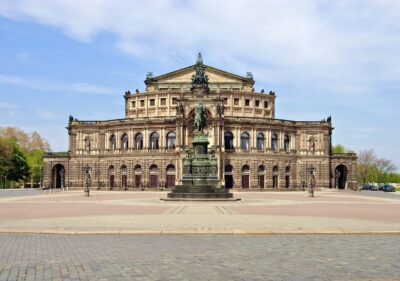
The Night Watchman Old Town Walking Tour in German
Read our review →
Browse the lists this tour appears in