
Reviewed · CITY TOURS
City tour Chemnitz
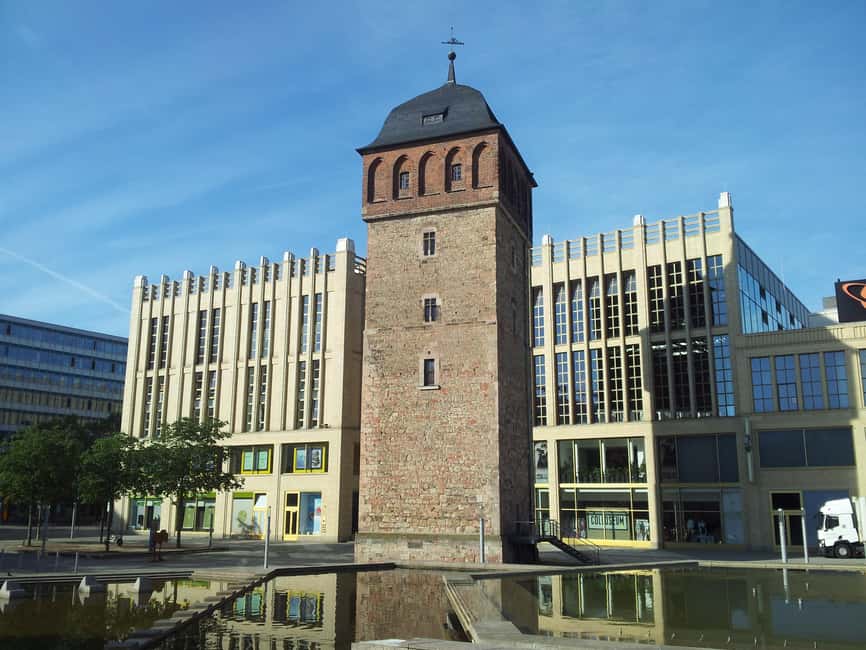
Chemnitz is a city of sharp contrasts: a huge Karl Marx head in the center, old factory districts, elegant Wilhelminian villas, broad GDR housing estates, and a castle quarter that reaches back to the city’s earliest days. This 90-minute minibus tour gives you a quick way to connect those pieces.
I like the small group size of up to eight people, which should make it easier to hear the guide and ask questions. I also like the route’s range, from the industrial belt between Zwickauer and Annaberger Straße to Kaßberg and Heckert. The main drawback is simple: one and a half hours is enough for a strong introduction, not enough for long stops or detailed visits inside buildings.
In This Review
- Key points at a glance
- Why Chemnitz makes a good city tour
- Starting near the Chemnitzer Hof
- The Karl Marx head and the modern center
- Industrial culture between Zwickauer and Annaberger Straße
- Kaßberg and the Wilhelminian city
- Heckert and the GDR housing story
- The castle quarter and Chemnitz’s earliest chapter
- What the small minibus changes
- Price, timing, and who gets the best value
- Who should book this Chemnitz tour
- Should you book it?
- FAQ
- How long does the Chemnitz city tour last?
- How much does the tour cost?
- Where does the tour start?
- Where does the tour end?
- What languages are available?
- How many people can join the minibus tour?
- Can I cancel the tour?
Key points at a glance
- See the giant Karl Marx head: The city’s most famous modern landmark gives you an immediate sense of Chemnitz’s complicated past.
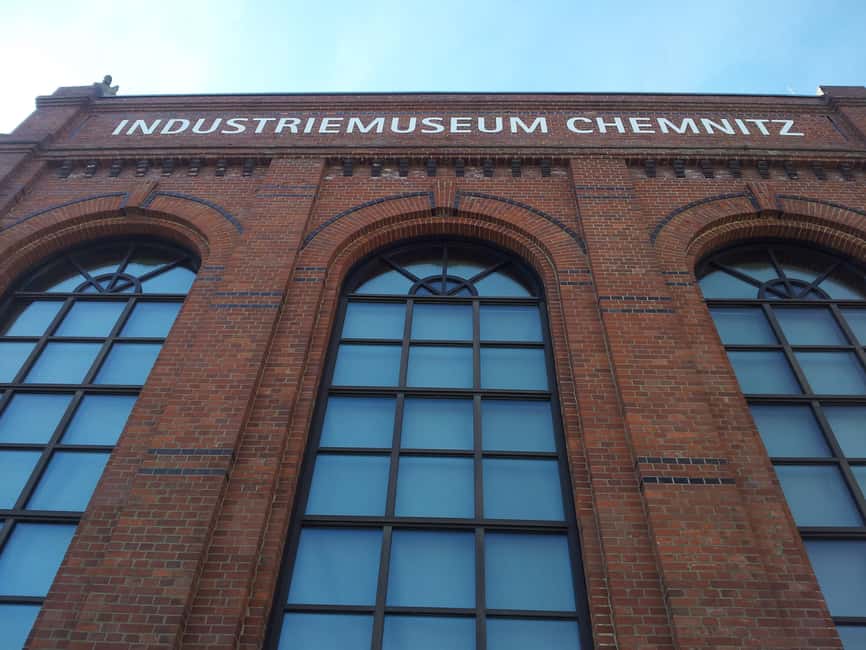
- Trace industrial Chemnitz: Follow the story of textile machinery, locomotives, bicycles, cars, and wartime production.
- Compare four very different districts: The route links the castle quarter, Kaßberg villas, industrial streets, and the GDR-era Heckert housing area.
- Ride in a minibus for up to eight people: This is more personal than a large coach and useful when you want to cover a spread-out city.
- Hear the city’s name changes explained: Chemnitz became Karl-Marx-Stadt during the GDR period, then returned to Chemnitz.
- Plan around a short, flexible outing: English and German tours are offered, with free cancellation up to 24 hours before departure.
Why Chemnitz makes a good city tour
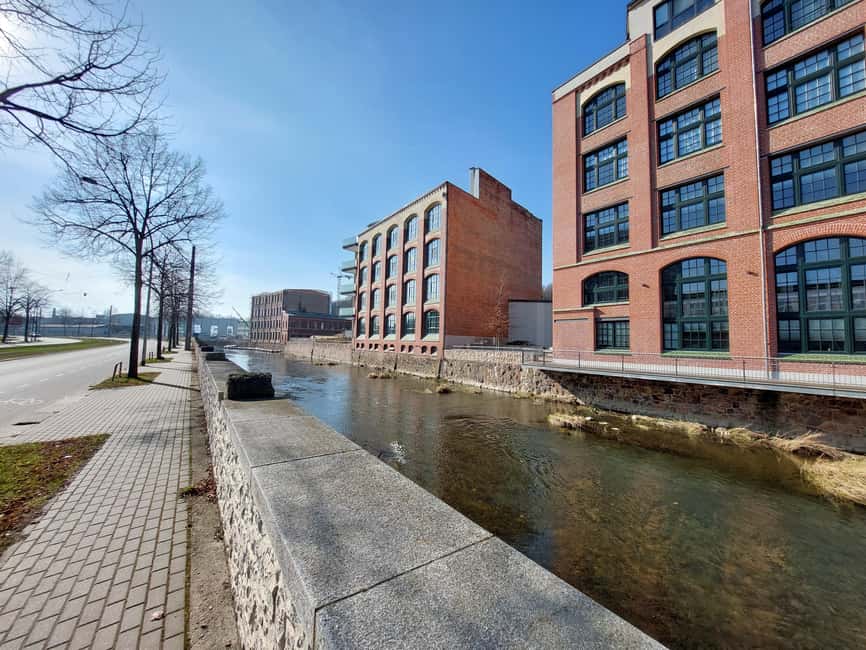
Chemnitz is not a city that reveals itself in one postcard view. Its character comes from layers. You see medieval beginnings, industrial ambition, socialist planning, and a new push toward culture. A guided ride helps you spot the connections instead of treating each district as a separate sight.
The city grew from a Slavic settlement into one of Germany’s biggest and wealthiest industrial centers. Its early success rested partly on linen bleaching in Saxony and its location near the mining country of the Ore Mountains. Then inventions from England, especially the spinning jenny and steam engine, changed the pace of everything.
Chemnitz began making nearly anything a growing industrial city could sell: textile machines, locomotives, bicycles, and cars. It also became an important center for German arms production before and during the Second World War. That industrial past is not just background information. It explains the factories, worker districts, broad streets, and sense of practical purpose you see today.
The tour also helps explain the city’s identity problem. Chemnitz was renamed Karl-Marx-Stadt during the GDR era, then became Chemnitz again after reunification. In 2025, the city takes on another public identity as European Capital of Culture. The tour presents this as an ongoing chapter, not a finished story.
That makes this a good choice if you want more than a list of monuments. You get a compact explanation of why Chemnitz looks the way it does and why its future matters to local residents.
A few more Germany trips to weigh up
- Berlin: 1-Hour City Tour by Boat with Guaranteed Seating
★ 4.3 · 16,993 reviews - Leipzig: City History Canal Sightseeing Tour on a Motorboat
★ 4.7 · 6,232 reviews - Cologne: Panoramic City Cruise
★ 4.3 · 5,698 reviews
Starting near the Chemnitzer Hof
You can begin at one of two listed meeting points on Straße der Nationen, including the Hotel Chemnitzer Hof. Your exact start point depends on the option you book, so check the confirmation carefully before setting out.
The central location is practical for a short city visit. You do not need to spend extra time reaching a distant suburb before the tour begins. The route ends back at the meeting point area, with the listed drop-off options again including Hotel Chemnitzer Hof and Straße der Nationen.
Since the tour lasts only 90 minutes, arrive ready to start. This is not a hop-on, hop-off service. It is a guided circuit, and the value comes from hearing the story as the minibus connects the districts.
The Karl Marx head and the modern center
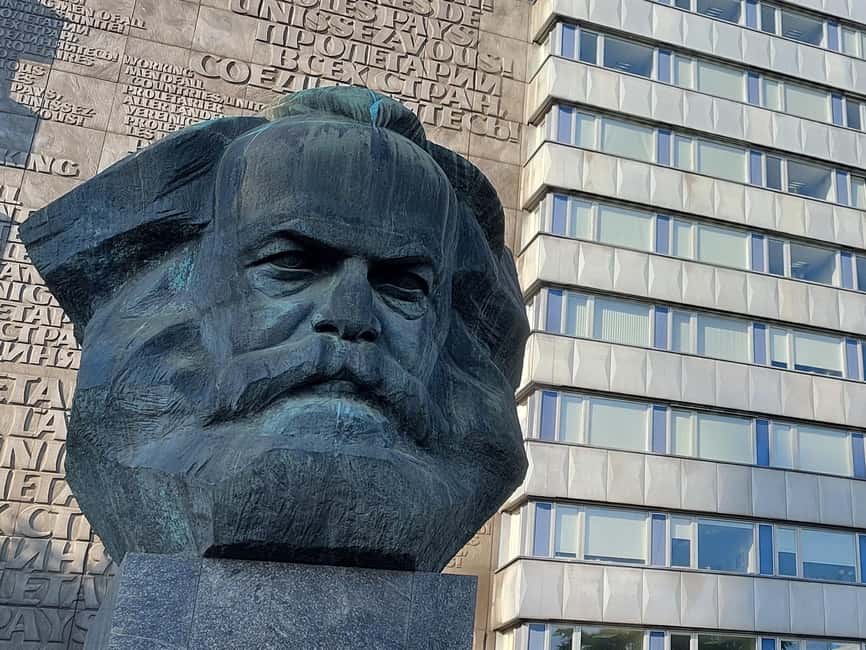
The Karl Marx head is the tour’s clearest visual symbol. Set in the center, it recalls the years when Chemnitz was called Karl-Marx-Stadt. For some visitors, it is an unusual photo stop. For others, it opens a more serious question: how does a city handle a public monument tied to a former political system?
You should expect the guide to use the monument as part of the wider story rather than as an isolated curiosity. The name change from Chemnitz to Karl-Marx-Stadt and back again reflects the city’s political history, but the city did not stop changing when its name changed.
The modern center also shows how Chemnitz has tried to rebuild and redefine itself. The tour description points to modern buildings alongside older urban areas. That mix is useful because it keeps the city from looking like a museum of one period.
I would not book this ride only to see the Karl Marx head. You can see the monument without a tour. The reason to include it here is the context around it, especially when it is set against the city’s industrial and GDR-era districts.
Industrial culture between Zwickauer and Annaberger Straße
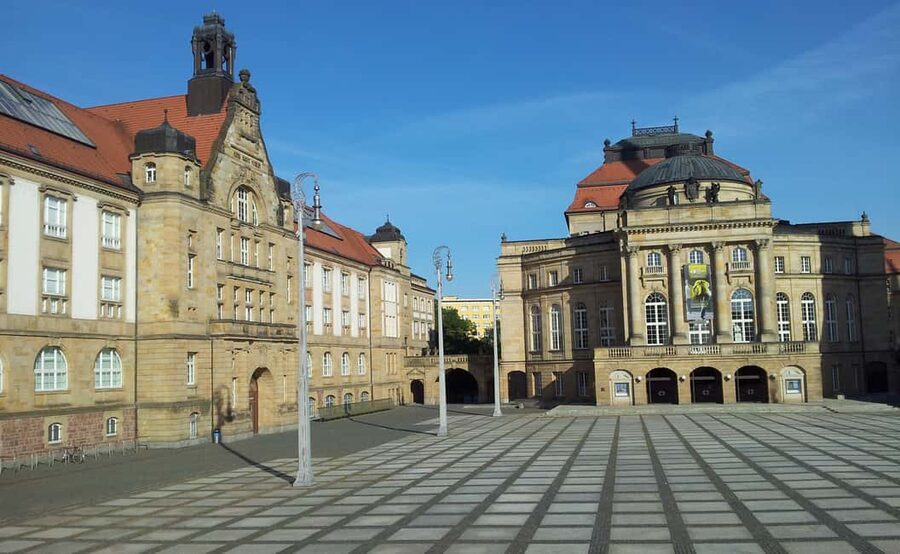
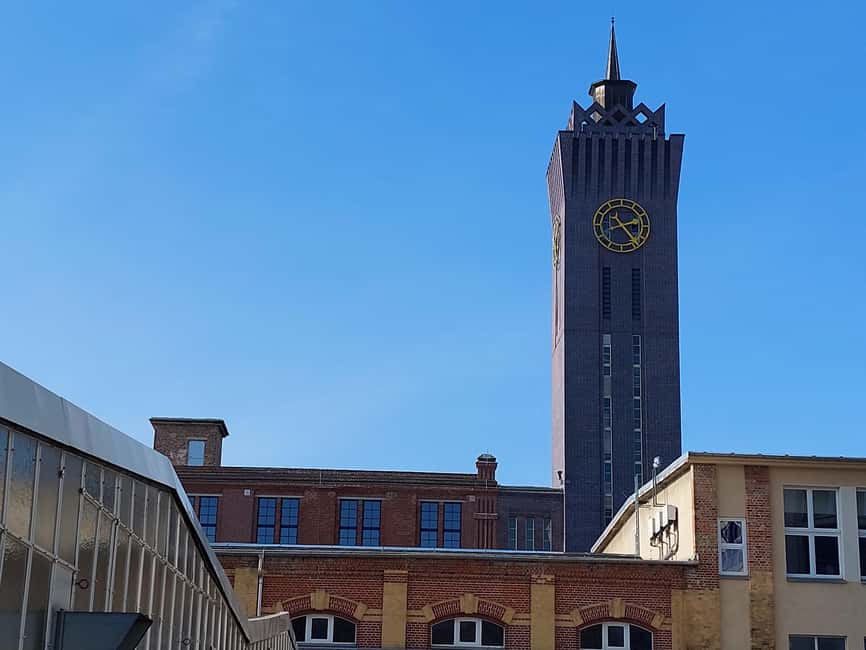
The section between Zwickauer and Annaberger Straße is where the city’s working identity comes into focus. Chemnitz was once known as the Manchester of Saxony, and even carried the nickname Rußchamtz because of its smoke-filled industrial character.
Those names tell you how powerful the factories were in daily life. This was not a city where industry sat neatly outside town. Textile production, engineering, transport, and arms manufacturing shaped jobs, housing, wealth, and the city’s appearance.
The route’s industrial focus is one of its strongest features because it explains the city beyond its central monuments. You can connect Chemnitz with the development of spinning machinery, steam power, locomotives, bicycles, and automobiles. The former Auto-Union connection, now associated with Audi, adds another important piece to the story of German vehicle production.
A minibus is useful here. Industrial areas are often spread out, and walking between them would take much longer than the 90-minute tour allows. You get the broad view without giving up the rest of the route.
The trade-off is that this is a moving overview. If you want to study factory architecture, take close photographs, or enter industrial museums, you will need separate time. Think of this portion as a map in your head, showing you where to return later.
Same city, a completely different kind of day:
- Berlin: Reichstag, Dome and Government District Guided Tour
★ 4.7 · 18,288 reviews - Hamburg: Sex and Crime in St. Pauli Tour for Ages 18+
★ 4.7 · 15,447 reviews - Hamburg: 1.5-Hour Harbor and Speicherstadt Day Cruise
★ 4.6 · 14,200 reviews - From Munich: Neuschwanstein & Linderhof Castle Full-Day Trip
★ 4.5 · 12,494 reviews
Kaßberg and the Wilhelminian city
Kaßberg offers a different Chemnitz. The district is known for Wilhelminian-style architecture, a term used for the grand urban building style associated with the German Empire from 1871 to 1918.
Here, the emphasis shifts from factories and political symbols to the city’s prosperous residential past. You can expect streets shaped by the wealth created during industrial growth, with more decorative architecture than the practical factory areas.
This stop matters because it prevents an overly narrow view of Chemnitz. The city was not only smoke, machines, and workers’ housing. Industrial success also created money for substantial residential neighborhoods.
The minibus allows you to compare Kaßberg with other districts without making you choose between them. That contrast is one of the route’s best teaching tools. A city’s history becomes easier to grasp when you see the polished residential quarter beside the districts shaped by production and mass housing.
Do keep your expectations in check. The tour is not a walking architecture tour of Kaßberg, and the 90-minute schedule limits the time available for individual buildings. If decorative façades are your main interest, you may want to return on foot after the ride.
Heckert and the GDR housing story
The Heckert area shows another major change in Chemnitz. This GDR residential district represents the era of planned housing and large-scale urban development rather than the older, more decorative city.
For many visitors, this may be the least familiar part of the route. Historic centers receive most of the attention, while postwar housing areas are often left out. Including Heckert gives you a more honest picture of how ordinary life and housing needs shaped the city after the war.
The district also helps explain the city’s twentieth-century disruption. Chemnitz’s industrial rise ended with the Second World War, and the later GDR period brought a new political name and a new style of city planning. The result is a place with very different building types and public spaces from those found in Kaßberg.
I value this part of the route because it treats the GDR period as part of Chemnitz’s story rather than an awkward section to skip. Still, it may appeal less if you want only traditional sights. This is a tour for understanding the city, not just photographing its prettiest streets.
The castle quarter and Chemnitz’s earliest chapter
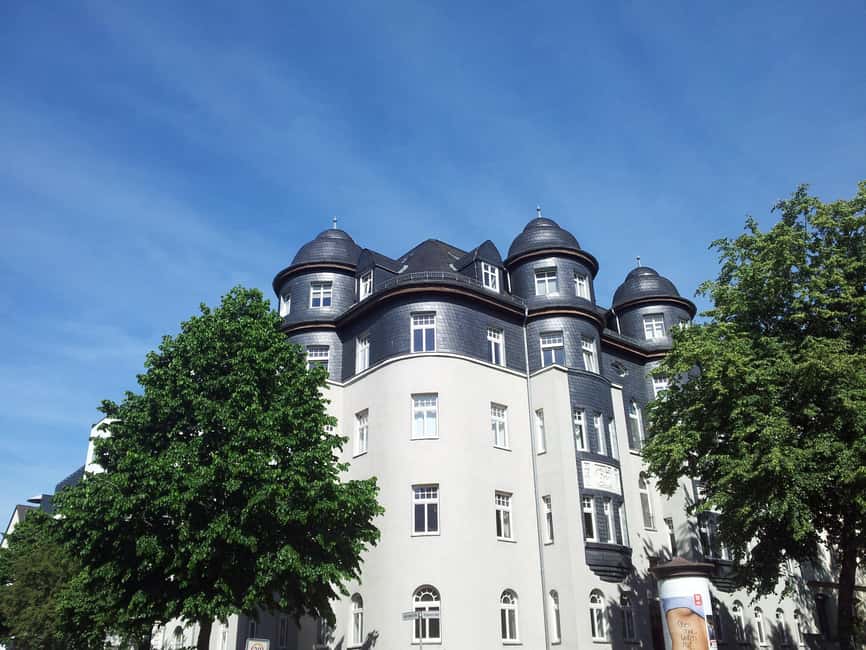
The castle quarter, or Schloßviertel, takes the route back toward the city’s beginnings. After seeing industrial growth and twentieth-century housing, you get a reminder that Chemnitz predates both the factories and the GDR.
The area provides a useful counterpoint to the modern center. It helps place Chemnitz within a longer timeline, beginning with its early settlement and continuing through industrialization, war, socialism, reunification, and the 2025 cultural program.
Because the tour moves through several districts, the castle quarter is best understood as one part of a larger sequence. You are not spending the whole outing at one historic complex. Instead, the guide uses it to show where the city’s older roots meet later development.
That broad sequence is the main reason to choose this experience. In a short time, you see Chemnitz as a city that has repeatedly rebuilt its public image.
What the small minibus changes
The tour is designed for up to eight people, with private or small-group options available. That size gives you a better chance of hearing the live guide clearly than you would on a large coach. It also makes the experience more suitable for questions and quick explanations during the ride.
The vehicle is the key practical feature. Chemnitz’s important districts are spread across the city, and a walking tour would have to leave several of them out. By minibus, you can cover the center, industrial streets, Kaßberg, Heckert, and the castle quarter in a single outing.
There is a limit to the format. You will spend much of the tour seated, and stops may be brief. If you prefer to examine every façade or pause at each monument, a self-guided walking day will give you more control.
For me, the best use of this tour is at the start of a stay. It gives you a citywide outline, then lets you decide where to spend more time later. The concise style has also been described as a good overview that stays lively, which is exactly what a short orientation tour should provide.
Price, timing, and who gets the best value
At $23 per person, the tour offers reasonable value if you want a guided introduction without committing half a day. The price includes the 90-minute minibus ride and a certified local guide. You are paying for access to a spread-out route and an organized explanation of the city’s changes.
The value is strongest for first-time visitors, people with limited time, and anyone interested in urban history. It is also a good fit if you want to see beyond the central Karl Marx monument and understand the relationship between industry, housing, and politics.
The value is weaker if you already know Chemnitz well or mainly want entry to museums and historic interiors. No museum admissions or extended walking visits are listed. This is a city overview, not a full sightseeing pass.
Tours are offered in English and German. Check availability for the actual starting time, since the schedule can vary. Free cancellation is available up to 24 hours before departure, and you can reserve now and pay later, which helps if your plans in Saxony are still moving around.
Who should book this Chemnitz tour
I would recommend it to you if:
- You have only a short time in Chemnitz.
- You want to understand the city’s industrial importance.
- You are curious about the Karl-Marx-Stadt period.
- You prefer a small group to a large sightseeing coach.
- You want to compare old neighborhoods, factories, modern buildings, and GDR housing.
- You need an English-language introduction with a live guide.
Families and older visitors may also appreciate the minibus format because it reduces the amount of walking needed to cover several districts. The available private option can be useful if you want a more personal setting, though the exact terms depend on the option selected.
I would be more cautious if you want long stops, extensive photography time, or detailed architectural analysis. The tour covers a lot of ground quickly. Its purpose is to give you the city’s framework, not to replace a full day of independent exploring.
Should you book it?
Book this tour if you want Chemnitz to make sense quickly. The Karl Marx head is the obvious image, but the real value is the route around it: factories and industrial culture, the polished streets of Kaßberg, the GDR housing of Heckert, and the older castle quarter.
At $23, it is a sensible first look at a city whose story is spread across many districts. You will not get a long stop at every sight, but you will leave with a clearer idea of why Chemnitz became wealthy, why its industrial rise ended, how Karl-Marx-Stadt fits into its past, and why 2025 matters.
If you have a full day and prefer to explore slowly, use the tour as your orientation, then return to the districts that catch your interest. If your time is short, this compact ride is an efficient way to see the city’s many faces without reducing Chemnitz to one monument.
FAQ
How long does the Chemnitz city tour last?
The tour lasts 90 minutes, or one and a half hours.
How much does the tour cost?
The listed price is $23 per person.
Where does the tour start?
The listed starting options are on Straße der Nationen, including the Hotel Chemnitzer Hof. The exact meeting point may depend on the option you book.
Where does the tour end?
The activity ends back at the meeting point area. Listed drop-off options include Hotel Chemnitzer Hof and Straße der Nationen.
What languages are available?
The live tour guide is available in English and German.
How many people can join the minibus tour?
The minibus tour is for up to eight people. Private and small-group options are available.
Can I cancel the tour?
Yes. You can cancel up to 24 hours in advance for a full refund. You can also reserve now and pay later.
Just added around Germany
- Aachen old town tour – GERMAN (public)★ 5.0 · 24 reviews
- Aachen Private Walking Tour With A Professional Guide★ 5.0 · 11 reviews
- Cologne Highlights: Exclusive Private Tour★ 5.0 · 5 reviews
- Bremen Private Walking Tour With A Professional Guide★ 5.0 · 7 reviews
- Private Walking Tour through the Fascinating Bremen’s City Center★ 5.0 · 5 reviews
- Explore Cologne’s best Street Art Quarter★ 4.5 · 4 reviews
- Bremen Exploration Private Game and City Tour on your Phone★ 4.5 · 7 reviews
- e-Scavenger hunt Bremen: Explore the city at your own pace★ 4.0 · 24 reviews
City Tours, compared.

1-Hour City Tour by Boat with Guaranteed Seating
Read our review →
City History Canal Sightseeing Tour on a Motorboat
Read our review →

Browse the lists this tour appears in