
Reviewed · STREET ART & ALTERNATIVE TOURS
Alternative Hamburg / Street Art Private Tour
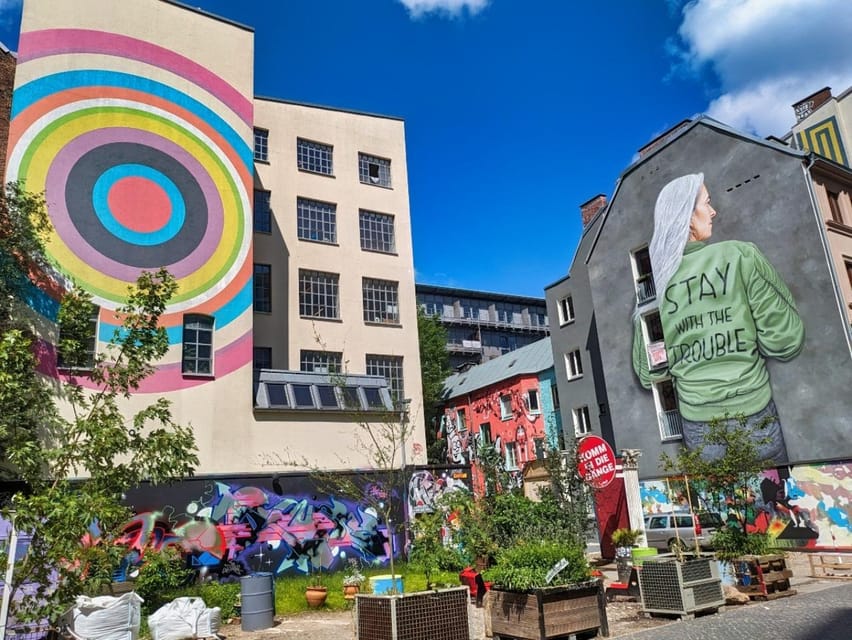
Hamburg’s alternative culture is best understood on foot, where graffiti walls, old bunkers, urban gardens, and protest sites sit beside cafés and football territory. This private tour connects the art to the people and politics behind it, rather than treating street art as a collection of pretty backdrops.
I like the focus on Rote Flora and gentrification, because it gives the walk some useful grit. I also like the way St. Pauli Football Club, community projects, music, and creative work are tied together. The main consideration is time: two hours can introduce these districts well, but it cannot tell every story or cover every corner.
In This Review
- Key points
- Why Hamburg’s street art needs a local story
- From Sternschanze into Hamburg’s creative districts
- Reading Hamburg’s graffiti, murals, and 3D art
- Rote Flora, protest, and the cost of change
- Repurposed bunkers and urban gardens
- St. Pauli, Millerntor Stadium, and football as community
- What the private format changes
- Languages, access, and timing
- Who will get the most from this walk
- Should you book the Alternative Hamburg Street Art Private Tour?
- FAQ
- How long does the Alternative Hamburg Street Art Private Tour last?
- Where does the tour meet?
- Which languages are available?
- Is this a private tour?
- Is the tour wheelchair accessible?
- Can I cancel or pay later?
Key points
- Street art with context: See graffiti, stencils, murals, and 3D installations while learning about local and international artists.
- Alternative Hamburg: Visit places connected with Rote Flora, community protests, gentrification concerns, and the G20 demonstrations.
- Creative urban projects: Look for repurposed World War II bunkers, urban gardens, and independent creative hubs.
- St. Pauli connections: Pass Millerntor Stadium and learn how the football club supports local projects, music, and arts.
- Private format: Your group has its own guide, with space for questions and a route that works for families, school groups, companies, and friends.
- Practical setup: The tour lasts two hours, runs in English or German, and begins by Sternschanze S-Bahn station.
Why Hamburg’s street art needs a local story
A quick look at Hamburg’s walls will show you that this is not simply a city with colorful paint on old buildings. Street art here can be a political statement, a neighborhood marker, a joke, a memorial, or a direct protest against plans that threaten local life.
That is what makes this tour useful. You are not only shown a mural and told who painted it. You hear about the community spirit around the work, the artists who shape the local scene, and the arguments over who gets to control public space.
I find that approach far more valuable than a standard sightseeing walk. A photograph of a stencil lasts a second. The story behind it helps you understand why it is on that particular wall and why people care about it.
The tour also places street art inside Hamburg’s wider alternative culture. Music, football, community gardens, political action, cafés, and creative work all overlap in these districts. You get a better sense of how the city’s counter-culture developed and why it remains important to local residents.
More street art & alternative tours in Hamburg:
- Berlin: City Street Art Guided Walking Tour
★ 4.8 · 886 reviews - Berlin: 3-Hour Street Art Tour
★ 4.7 · 778 reviews - Berlin Street Art Walking Tour – Off The Grid
★ 5.0 · 270 reviews
From Sternschanze into Hamburg’s creative districts
The meeting point is easy to miss if you are not careful. Exit at the S-Bahn entrance of Sternschanze station, not the U-Bahn exit. After leaving the station, look for a juice stand on your left, then cross the road to the paved square with benches and a small round hut or rotunda.
That clear landmark matters in a city where stations can have several exits. Arrive with enough time to check which transport line you are using, since heading out of the wrong entrance can put you on the opposite side of the area.
From there, the walk heads through districts known for cafés, side streets, independent projects, and alternative scenes. The route includes parts of Sternschanze, Karoviertel, and St. Pauli. These neighborhoods are close together, but each has its own feel.
You should expect a normal city walk rather than a museum visit. The art is outdoors, spread across walls, corners, streets, and public spaces. The route may include busy streets, back lanes, parks, and paved areas, so comfortable shoes will make the two hours easier.
Reading Hamburg’s graffiti, murals, and 3D art
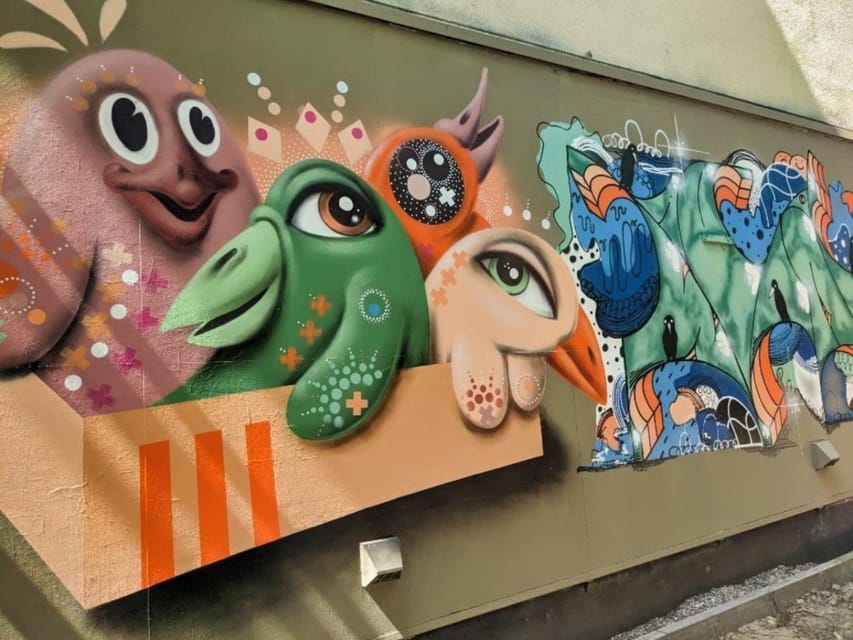
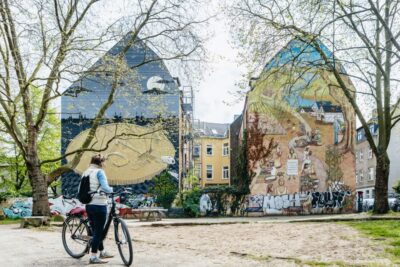
The artwork is one of the obvious draws. You can expect examples of graffiti, stencil art, large murals, and 3D installations, with attention given to both local and international artists.
The variety matters. Graffiti can be quick and tightly linked to a particular wall or moment. A mural may reshape an entire building frontage. A stencil can carry a political message in a compact form, while a 3D installation changes how you read the street around it.
A good guide helps you notice details you might otherwise walk past. You may see how artists use a doorway, a bunker wall, a narrow passage, or an old industrial surface. You may also learn how different styles fit into Hamburg’s street culture, rather than placing every painted wall under one broad label.
Adrian is named as one of the guides associated with this experience. The strongest feedback about him points to his enthusiasm, personal stories, and close knowledge of the artists and works. One useful detail is that he has sometimes continued the conversation after the planned walk, including over a drink. That is not something to count on as part of the formal two-hour schedule, but it suggests that this is the sort of tour where questions are welcome.
Do not expect a fixed gallery of permanent art. Street pieces can change, disappear, or be painted over. That is part of the nature of the subject, but it also means the exact works you see may vary.
Rote Flora, protest, and the cost of change
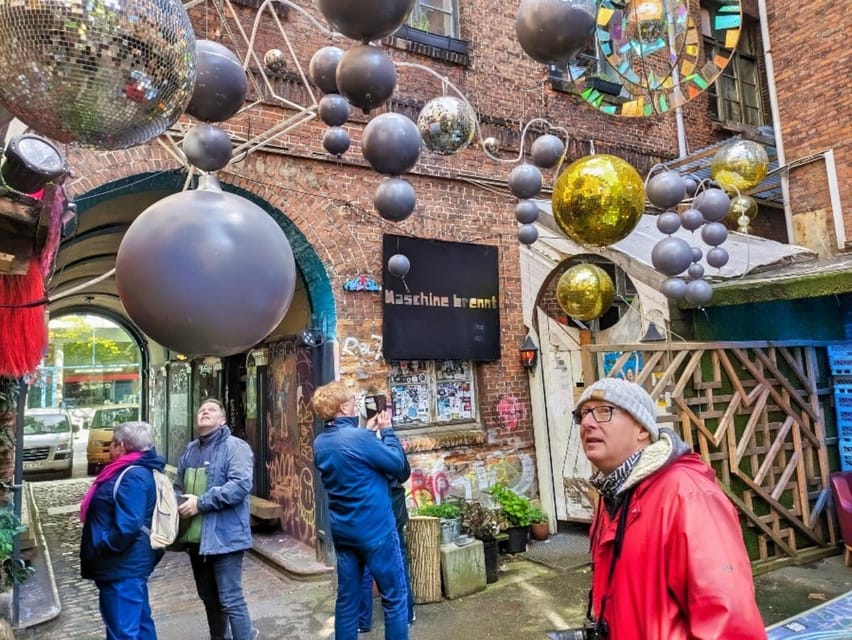
Rote Flora gives the tour a more political center. This former theater is closely linked with Hamburg’s alternative scene and with debates about protest, autonomy, property, and redevelopment.
You discuss the building’s role, the G20 demonstrations, community protests, and threats from gentrification. These topics can sound heavy beside a wall of playful graffiti, but they explain why public art and public space matter so much in Hamburg.
Gentrification is a key theme throughout the walk. As districts become more attractive, rents and commercial pressure can rise. The cafés and creative projects that give an area its character can also help make it appealing to investors. That contradiction is worth keeping in mind as you move through the streets.
I appreciate that the tour does not present alternative Hamburg as a simple tourist product. It points to the tension involved in visiting neighborhoods that are actively trying to protect their local lifestyle. You get to look, listen, and ask questions, while remembering that these are lived-in districts, not an outdoor theme park.
The discussion of the G20 demonstrations adds another layer. You are not just hearing about isolated acts of protest. You are considering how major events, policing, politics, and local communities can collide in the streets.
This part may appeal most to adults, older students, and company groups looking for more than a quick city walk. Families can still join, but younger children may care more about the colors and shapes than the political background.
A few more Hamburg trips to weigh up
- Dresden: Neustadt District Street Art Guided Walking Tour
★ 4.4 · 267 reviews - Cologne: Ehrenfeld District Street Art Walking Tour
★ 4.9 · 202 reviews - East Meets West: Berlin Food Culture & Street Art
★ 5.0 · 157 reviews - Berlin Street Art & Graffiti Walking Tour
★ 5.0 · 109 reviews
Repurposed bunkers and urban gardens
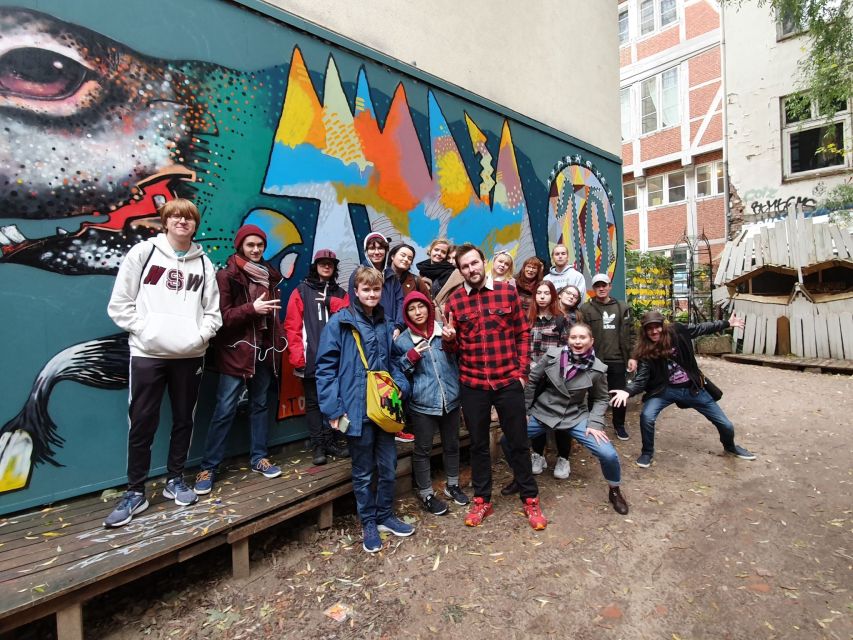
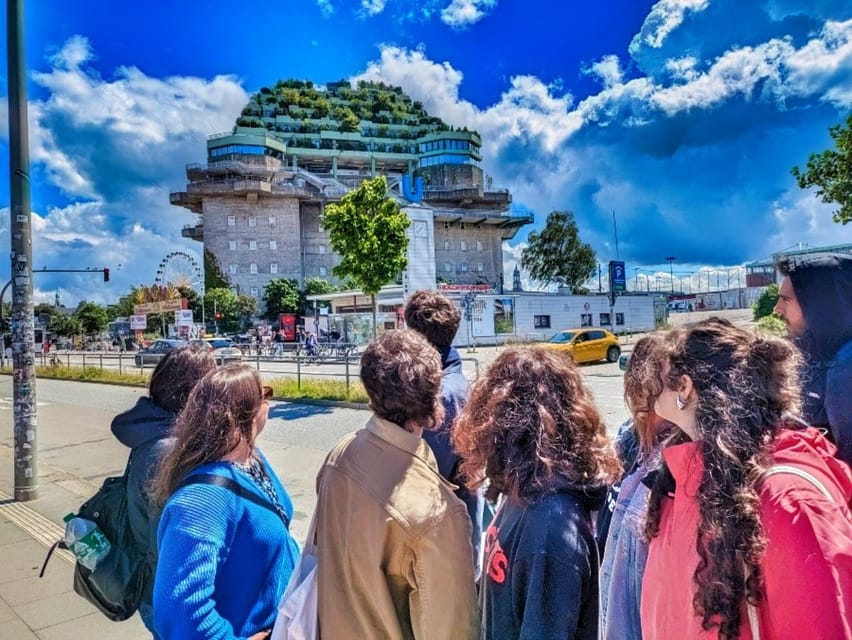
Hamburg’s wartime bunkers are an important part of its cityscape. The tour includes repurposed World War II bunkers, showing how difficult old structures can gain new uses.
You may find these locations especially interesting because they connect the city’s past with its current creative life. A bunker is not a light subject, but a repurposed one can become part of a new neighborhood story. The point is not only the building itself. It is the way Hamburg deals with large, awkward structures and gives them a place in present-day urban life.
The urban garden project near Millerntor Stadium offers a different kind of example. Here, community activity and green space appear beside the city’s alternative districts and café culture. It shows how local projects can turn underused or overlooked areas into places for shared use.
The tour also visits creative hubs and back streets. These stops are valuable because they move you away from Hamburg’s main postcard sights and into places shaped by local initiatives. You might see work that is rough, temporary, funny, or openly political. That mix is part of the appeal.
There is a practical limit, of course. A two-hour walk can introduce these projects, but it cannot explain every social, architectural, and political detail. If you are especially interested in urban planning or the history of Hamburg’s bunkers, use the tour as a starting point rather than a complete study.
St. Pauli, Millerntor Stadium, and football as community
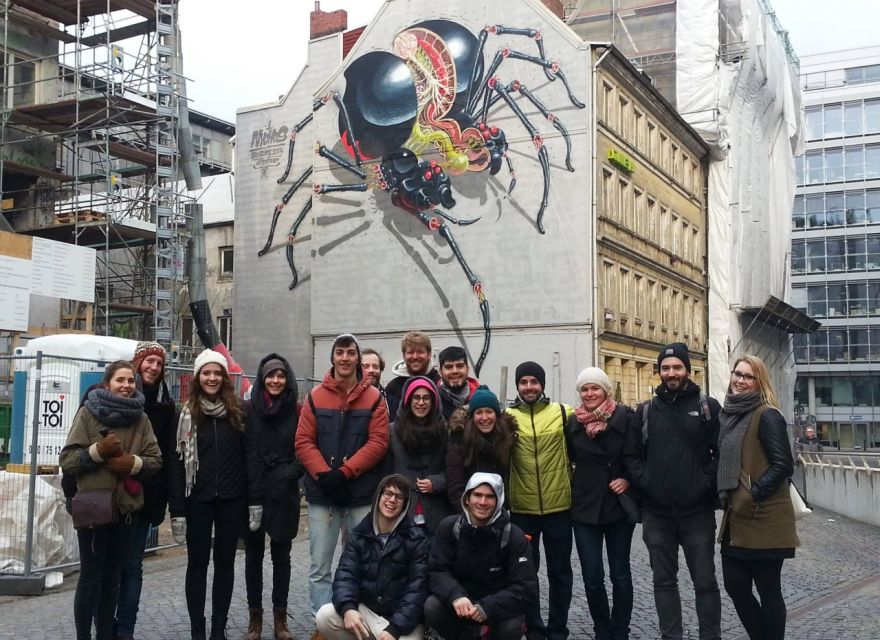
The section around St. Pauli brings football into the story. You pass the Millerntor Stadium and learn about the influence of FC St. Pauli on community identity, creative work, and the music scene.
This is more than a stop for football fans. The club is presented as part of the neighborhood’s wider social character, with support for community initiatives and creative arts. That helps explain why the stadium carries meaning beyond match days.
If you already follow football, you may enjoy this part for obvious reasons. If you do not, you can still see how a sports club can help shape local identity and public life. The connection between football, music, political values, and neighborhood projects is one of the tour’s more distinctive themes.
The nearby Karoviertel adds cafés and street life to the route. It is a good counterpoint to the more political material around Rote Flora. You move between art, daily life, and organized community activity instead of staying in one narrow version of alternative culture.
Do not expect entry to Millerntor Stadium. The information provided describes passing by it, not a stadium tour or match-day experience. That is useful to know if you are booking mainly for football access.
What the private format changes
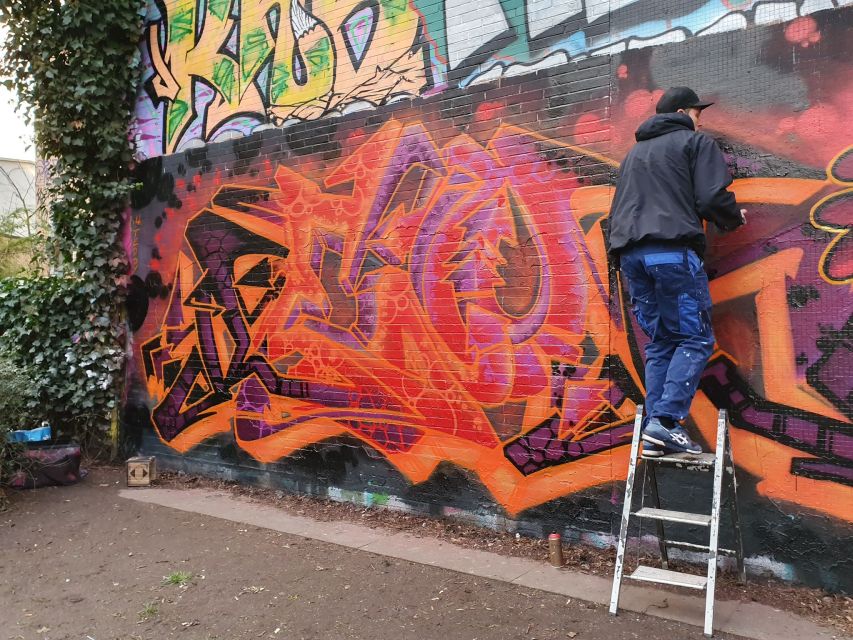
The price is $235 per group of up to 15 people. That is expensive for one or two people, but the calculation changes quickly if you fill the group.
For a full group of 15, the cost works out to about $16 per person. For 10 people, it is about $24 each. For six people, it is roughly $39 each. A couple would pay the full group price, so this format makes the most sense for friends, families, school groups, work outings, or any larger party already traveling together.
The private setup gives you your own guide rather than joining a large mixed crowd. That can make a real difference on a subject built around stories and questions. You can pause to ask about a particular artist, protest, football connection, or neighborhood change without worrying about holding up a large public group.
It also suits groups with a shared interest. A company outing can use the tour as a relaxed way to explore Hamburg outside the office. A school group can connect art with politics and urban development. Friends can spend two hours seeing parts of the city that are easy to miss on a standard central walking route.
The drawback is simple: if your group is small, the price per person is high. You also need to be comfortable with an outdoor walk and with discussions that include protest, political conflict, and gentrification. This is not a gentle introduction to Hamburg’s old town or a polished architecture tour.
Languages, access, and timing
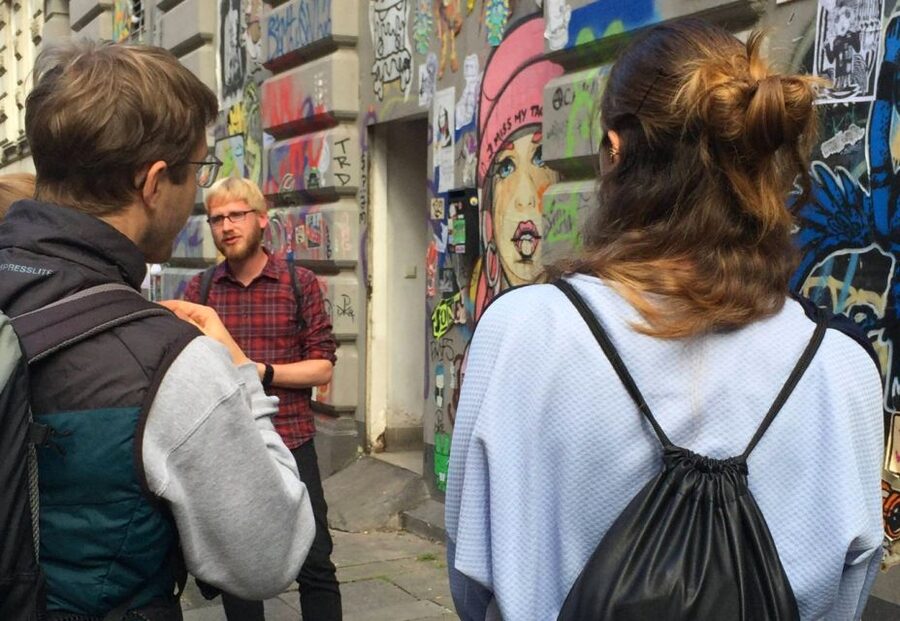
The experience lasts two hours and is offered in English or German. Check the available starting times when you book, since the schedule is not specified in the tour information.
The tour is listed as wheelchair accessible. That is helpful, though street-based routes can include different surfaces, narrow streets, and changing conditions. If someone in your group has particular mobility needs, it is sensible to confirm the route details with the provider before setting out.
Cancellation is flexible up to 24 hours before the tour for a full refund. You can also reserve and pay later, which helps if your Hamburg plans are still shifting.
The meeting point at Sternschanze is served by both S-Bahn and U-Bahn, but remember the precise instruction: use the S-Bahn exit. Once outside, use the juice stand and small rotunda as your visual checks.
Who will get the most from this walk

I would choose this tour if you want to understand Hamburg through its neighborhoods rather than only through major sights. It is a particularly good match for:
- Friends who want a private activity with a strong local angle.
- Families with older children interested in art, football, or social issues.
- Company groups looking for a shared experience outside the usual tourist circuit.
- School groups studying public art, protest, urban change, or community projects.
- Visitors who have already seen Hamburg’s central sights and want something different.
Art fans should enjoy the range of styles and the chance to hear about individual artists. Football supporters will appreciate the St. Pauli connection. People interested in city politics will find the sections on Rote Flora, protests, and gentrification especially worthwhile.
I would think twice if you want a quiet, purely visual stroll. The tour has an agenda in the best sense, but it asks you to think about contested public space. It is also short, so anyone hoping for a complete survey of Hamburg’s street art will need more time on their own.
Should you book the Alternative Hamburg Street Art Private Tour?
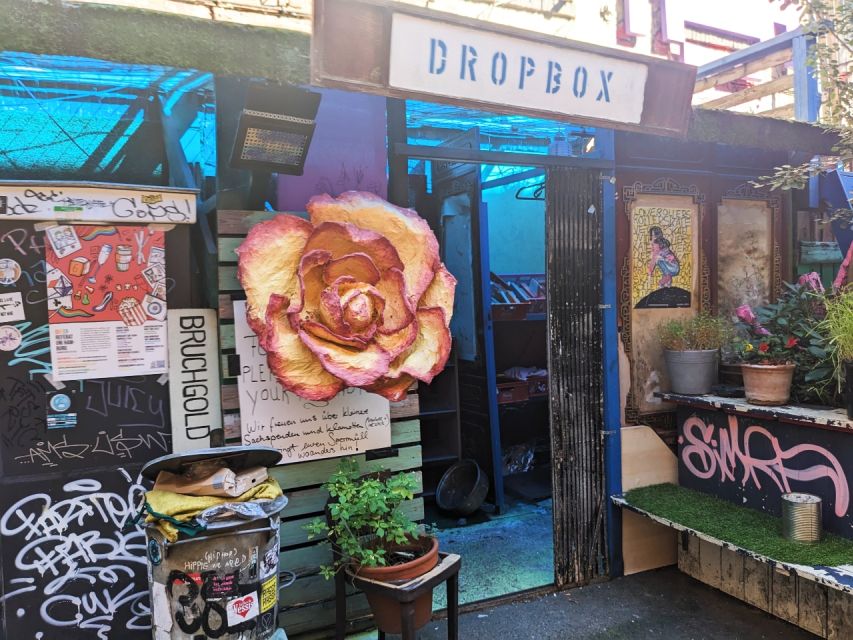
Book it if you have a group large enough to share the $235 cost and you want art tied to real neighborhood issues. The combination of graffiti, Rote Flora, urban gardens, repurposed bunkers, Millerntor Stadium, and Karoviertel gives the walk a clear sense of place.
The guide is central to the experience. Adrian receives especially strong praise for his energy, stories, and ability to explain artists and local culture. Still, the route is outdoors and only two hours long, so think of it as a focused introduction, not the final word on Hamburg’s alternative scene.
I would choose it for a private group that values conversation, local context, and slightly rough edges. If that sounds like your kind of Hamburg, this is a good use of an afternoon.
FAQ
How long does the Alternative Hamburg Street Art Private Tour last?
The tour lasts two hours.
Where does the tour meet?
You meet at the small square directly opposite the S-Bahn exit of Sternschanze station. Use the S-Bahn exit, not the U-Bahn exit. After leaving the station, look for a juice stand on your left, then cross to the paved area with benches and a small rotunda or hut.
Which languages are available?
The tour is offered in English and German.
Is this a private tour?
Yes. It is a private group experience for up to 15 people.
Is the tour wheelchair accessible?
Yes, the activity is listed as wheelchair accessible.
Can I cancel or pay later?
You can cancel up to 24 hours in advance for a full refund. The reserve-now, pay-later option lets you book without paying immediately.
Just added around Hamburg
- Hamburg: Historical Tour of the St. Pauli Sex Work District★ 4.4 · 215 reviews
- Hamburg: St. Pauli Food and Bier Tour★ 4.7 · 5 reviews
- Hamburg: Private Tour Red Light District Walking Tour★ 4.7 · 227 reviews
- St. Pauli Tour: Drag-Attack with Barbie Stupid & Lee Jackson★ 4.8 · 280 reviews
- St. Michael’s, Elbe Tunnel & Harbor 2-Hour Hamburg Tour★ 4.9 · 21 reviews
- Satt Pauli – der kulinarische Rundgang durch St. Pauli★ 4.8 · 12 reviews
- Hamburg: Safari tour in St. Pauli★ 4.9 · 11 reviews
- Hamburg: Reeperbahn Comedy Club★ 4.3 · 53 reviews
Street Art & Alternative Tours, compared.

Neustadt District Street Art Guided Walking Tour
Read our review →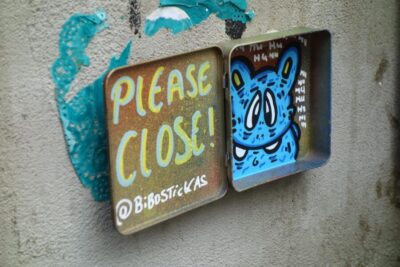

East Meets West: Berlin Food Culture & Street Art
Read our review →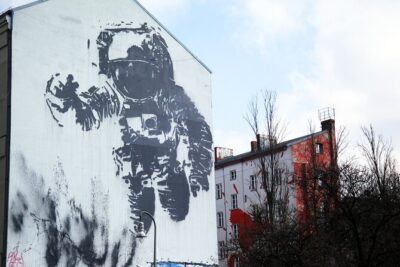
Browse the lists this tour appears in