
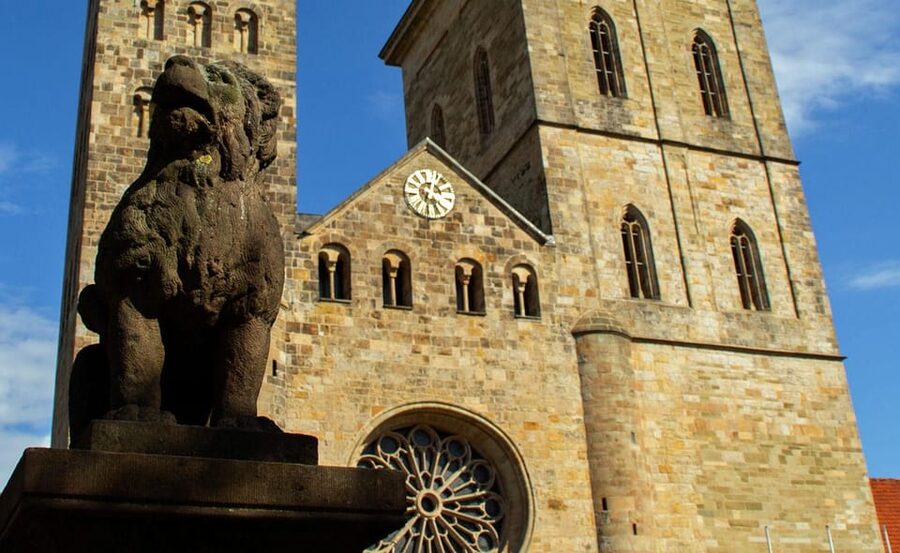
Reviewed · OLD TOWN WALKING TOURS
Osnabrück: Altstadt-Highlights (Stadtführung)
Osnabrück’s best short tour is built around a simple idea: cross the old town from one edge to the other and pick up the key stories as you go. In about an hour, you see the town hall, the medieval city scales, St. Mary’s Church, the cathedral, cloister, and the curious Hexengang. The Peace of Westphalia gives the walk its biggest historical moment.
I like the compact route and the way it ties everyday places to bigger events. I also like the medieval city scales, a small but memorable stop that explains how merchants’ goods were checked before sale. The main consideration is language: this is a German-speaking tour, and the pace is brisk by design.
The female guides highlighted in the booking information have been praised for clear structure, warmth, and the ability to keep children involved. One guide even allowed the walk to run to roughly an hour and a half rather than rushing people away, so the exact pace can depend on the group and the guide.
In This Review
- Key points at a glance
- A fast route through Osnabrück’s old town
- The town hall and the Peace of Westphalia
- The medieval scales between two churches
- Osnabrück Cathedral and the cloister
- The Hexengang and Osnabrück’s unusual details
- From the Hanseatic League to VfL Osnabrück
- What the guide adds to the walk
- Is $15 a fair price?
- Who should book this city tour?
- Practical details before you go
- Should you book it?
- FAQ
- How long does the Osnabrück old-town tour last?
- What language is the tour conducted in?
- Where is the meeting point?
- Does the tour include Osnabrück Cathedral?
- What sights are covered?
- Is the tour wheelchair accessible?
- What happens if the weather is bad?
- Can I cancel and receive a refund?
Key points at a glance

- The Peace of Westphalia: Visit Osnabrück’s town hall and learn why this building is tied to the end of the Thirty Years’ War.
- Medieval city scales: See the former checking point between the town hall and St. Mary’s Church, where merchants had their goods weighed.
- Cathedral and cloister: Enter Osnabrück Cathedral and its cloister when opening hours permit.
- The Hexengang: Hear about one of the old town’s more unusual historical features.
- From Hanseatic trade to VfL: The tour connects medieval commerce with Osnabrück’s later civic and sporting identity.
- A practical one-hour format: The walk suits a short stay, a stopover, or your first afternoon in town.
A fast route through Osnabrück’s old town
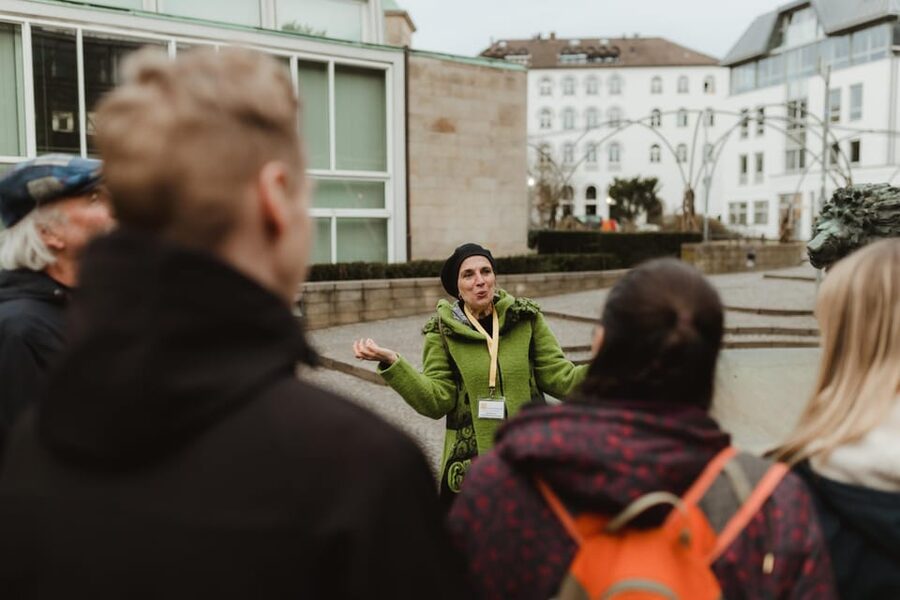
This is not a museum tour with one long stop. You move through the historic centre, from one side of the old town to the other, while the guide fills in the story around you. That format matters in Osnabrück, where the most useful first impression comes from seeing how the main buildings sit together.
You meet at Bierstraße 28, behind the town hall and opposite the Tourist Information. That is a handy starting point because you are already near the town’s central historic sights. You do not need to arrange transport between stops, and the hour is spent on foot in the old centre.
The guide’s job here is to give you a map of Osnabrück in both the literal and historical sense. You learn which buildings mattered to merchants, church officials, city leaders, and peace negotiators. The stories are kept short enough for a tight schedule, but the tour still aims to cover the city’s past from the Hanseatic League to VfL Osnabrück.
I would take this walk early in your visit. It can help you decide where to return later, especially if you want more time inside the cathedral or town hall. If you already know Osnabrück well, the short format may feel too broad, since it gives many subjects only a few minutes.
More old town walking tours in Germany:
- Dresden: Semperoper and Old Town Tour
★ 4.8 · 5,735 reviews - Nuremberg: Old Town Guided Walking Tour
★ 4.6 · 2,416 reviews - Munich: Old Town & Viktualienmarkt City Walk in German
★ 4.7 · 2,304 reviews
The town hall and the Peace of Westphalia
The town hall is the historical anchor of this walk. Here, the guide explains Osnabrück’s part in the Peace of Westphalia, the series of agreements that ended the Thirty Years’ War in 1648. That subject can sound grand and distant in a short city tour, but the setting makes it easier to grasp: you are standing at the place connected with negotiations that reshaped European politics.
The value is not just the building itself. You get context for why Osnabrück became an important meeting place and why its identity is still tied to peace. The tour does not ask you to spend an hour on a lecture about treaties. Instead, the town hall becomes one clear chapter in the city’s story.
The exact amount of time inside or around the town hall is not specified, so you should think of this as a guided visit to the historic centre and its major sights, not a long interior tour of every room. The key point is the connection between place and event.
The medieval scales between two churches
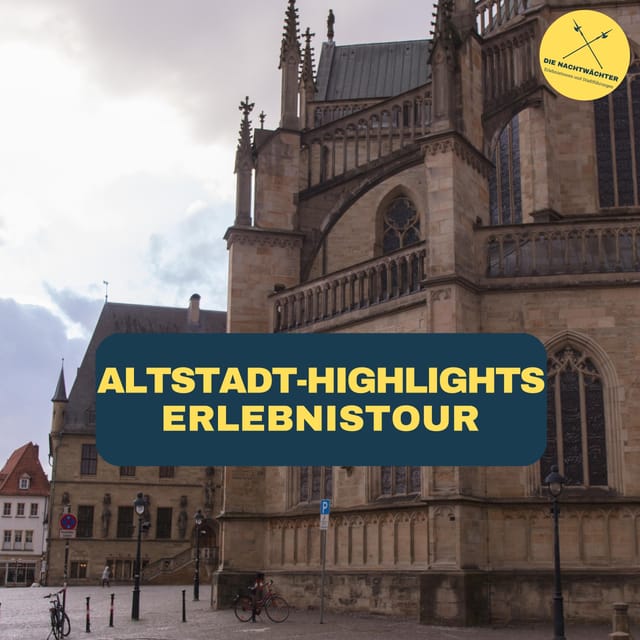
The medieval city scales are one of the most useful stops because they explain a practical part of old-town life. They sit between the town hall and St. Mary’s Church, right in the zone where trade and civic business once met.
Merchants arriving to sell goods at the Osnabrück market had to deal with official weighing. That raises a good question for the guide to answer: why could traders not simply weigh their own goods? The explanation shows how a medieval town tried to control measurements, protect market standards, and manage commercial trust.
This is the kind of detail I value on a city walk. You are not just told that Osnabrück belonged to the Hanseatic League. You see how that trading world affected an ordinary transaction. A small structure becomes a window into the rules behind medieval commerce.
The stop should also help you notice the relationship between the town hall and St. Mary’s Church. In an old European city, power was often shared between civic and religious institutions. Here, the scales occupy the space between them, making the arrangement easy to read.
Osnabrück Cathedral and the cloister
The cathedral adds a quieter part to the route. You can see Osnabrück Cathedral and, at certain times, enter the cathedral and cloister. Access depends on cathedral opening hours, so do not treat the interior visit as guaranteed at every departure.
Inside, the guide can place the cathedral within the city’s longer story, alongside the civic buildings and market spaces you have already seen. The cloister gives the tour a change of mood and pace. After the public world of merchants, town officials, and peace negotiations, you get a closer look at a religious setting.
You should dress for a walking tour rather than a formal church visit, but remember that cathedral access can involve a more respectful atmosphere. The full route is wheelchair accessible according to the activity information. As with any historic centre, you may still want to ask the guide about the exact path if you have particular mobility needs.
The cathedral stop also shows why the opening hours matter. If you book mainly to see the interior, check the tour time carefully. If the cathedral is closed, the outdoor explanation and the rest of the old town still form the main part of the walk.
Same city, a completely different kind of day:
- Berlin: Reichstag, Dome and Government District Guided Tour
★ 4.7 · 18,288 reviews - Berlin: 1-Hour City Tour by Boat with Guaranteed Seating
★ 4.3 · 16,993 reviews - Hamburg: Sex and Crime in St. Pauli Tour for Ages 18+
★ 4.7 · 15,447 reviews - Hamburg: 1.5-Hour Harbor and Speicherstadt Day Cruise
★ 4.6 · 14,200 reviews
The Hexengang and Osnabrück’s unusual details
The Hexengang is included among the stories about Osnabrück’s past. Its name alone gives the tour a more intriguing turn, and the guide explains its place in the city’s history rather than leaving it as a strange label on a map.
This is one reason a local guide helps. A self-guided walk can show you streets and façades, but it may not tell you why an obscure passage or feature matters. The Hexengang adds a thread of local character to a route otherwise centered on famous buildings.
The supplied information does not give a full description of the passage or its exact appearance, so I would not book this tour expecting a major underground attraction. Think of it as one of several compact historical details that make the walk more memorable.
From the Hanseatic League to VfL Osnabrück
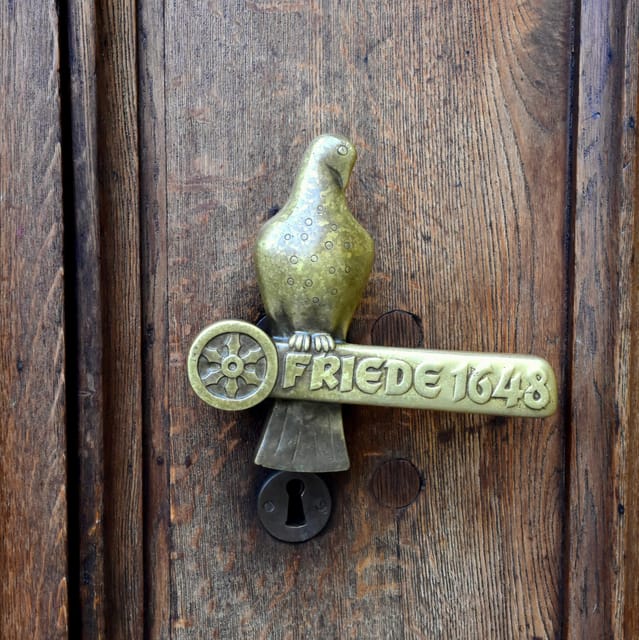
The tour reaches beyond medieval stones. It connects Osnabrück’s place in the Hanseatic League with the modern city and VfL Osnabrück. That broad time span is useful if you are new to the city because it prevents the old town from becoming a collection of disconnected monuments.
The Hanseatic League helps explain Osnabrück’s commercial past. The mention of VfL brings the story closer to present-day local identity and shows that civic pride is not limited to churches and town halls. You get a quick outline rather than a full history of the football club, but the reference gives the tour a more current finish.
I like this range, though it has a trade-off. A one-hour walk cannot give equal attention to every period. If your main interest is the Peace of Westphalia, the cathedral, or medieval trade, those subjects will receive more useful attention than modern sports.
What the guide adds to the walk
The strongest feature of the experience is the guide’s delivery. The German-language guides are described as motivated, friendly, and able to organize the route clearly. One guide was particularly good at involving children, which matters if you are booking for a family rather than a group of history specialists.
The tone appears to be light and engaging rather than stiff. That suits a city walk with many short stops. You need a guide who can explain a treaty at the town hall, a weighing system at the scales, and a local passage without turning each subject into a long speech.
The tour is also designed to work in poor weather. The walk operates in all wind and weather, so bring a coat, waterproof shoes, or an umbrella when the forecast looks unsettled. A guide has made the best of bad weather before, but you should still plan for outdoor time.
The published duration is one hour. In practice, a group may spend longer if questions come up or if the guide chooses not to watch the clock too closely. I would leave a little breathing room afterward rather than scheduling a train or meal immediately after the stated finish.
Is $15 a fair price?
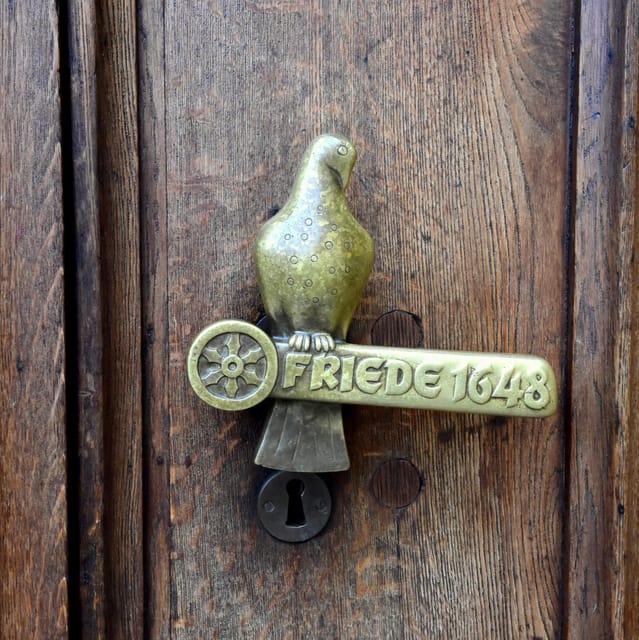
At $15 per person, this is a reasonable buy for a first look at Osnabrück. You are paying for a live guide, a structured route, local stories, and access to the cathedral and cloister when opening hours allow. The price is especially fair if you have only a short visit and want the major sights explained without committing to a half-day activity.
The value depends on what you want. If you are happy to read plaques and walk around alone, you can see the exterior sights without paying. The tour earns its price through connections: the town hall becomes part of the Peace of Westphalia, the scales become evidence of trade rules, and the cathedral fits into the city’s wider story.
A one-hour tour also keeps your schedule open. You can follow it with lunch, a museum, shopping, or a second look at the places that caught your attention. That flexibility is a real benefit in a smaller city where you may not want to devote an entire day to sightseeing.
Who should book this city tour?
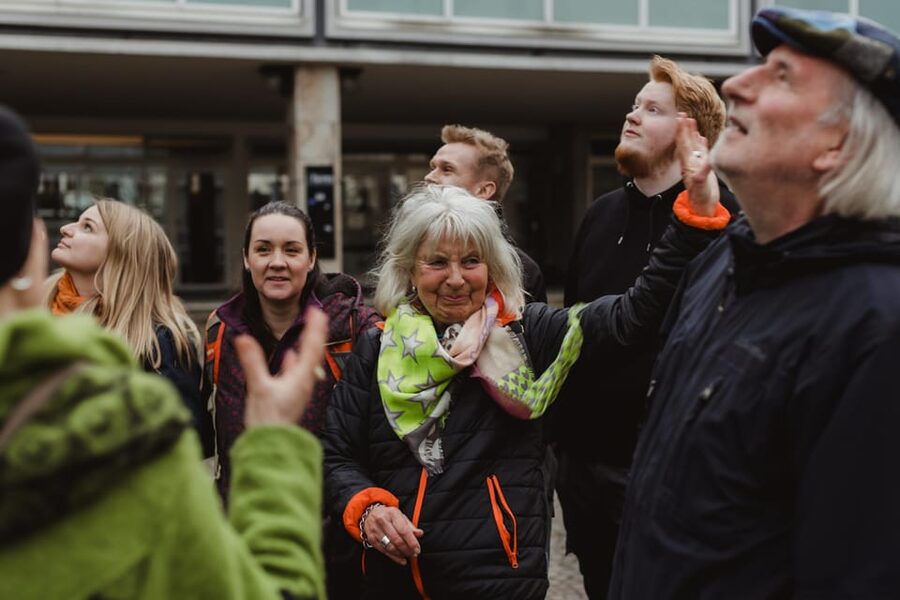
I would choose this tour if you are visiting Osnabrück for the first time, have one free hour, or want a quick orientation before exploring alone. It suits couples, families, and visitors who prefer a guide to explain the city as they walk.
It is also a good fit for anyone interested in the Peace of Westphalia, medieval trade, or the connection between religious and civic life. The route gives you several starting points for further exploration without asking you to master a long list of dates.
Families may appreciate the clear structure and the guide’s ability to include children. The walk is not described as a special children’s tour, so younger children who need frequent breaks may find the pace demanding. Still, the variety of sights should help keep the hour moving.
German is the key limitation. The live tour guide language is German, and no other language is listed. If you do not understand German, this is not a good choice unless someone in your group can translate.
Practical details before you go
The meeting point is Bierstraße 28, 49074 Osnabrück, behind the town hall and opposite the Tourist Information. Arrive with enough time to find the address, since the meeting point is described by its position behind the Rathaus rather than by a large landmark of its own.
The tour runs in all weather. Wear clothes suited to the forecast, and choose comfortable shoes for an hour on foot. If you hope to enter the cathedral and cloister, check the departure time against cathedral opening hours.
The activity is wheelchair accessible. You can cancel up to 24 hours before the start for a full refund, and a reserve-now, pay-later option is available. Gratuities are not included, so a tip is optional and separate from the $15 price.
The experience has a 4.7 rating from 42 reviews, with repeated praise for the guides’ enthusiasm, clear structure, friendly manner, and ability to keep the walk enjoyable in bad weather. That lines up with what this format needs most: good pacing and a guide who can make short explanations stick.
Should you book it?
Book this Osnabrück old-town tour if you want the city’s main stories in a tidy hour and you are comfortable touring in German. The Peace of Westphalia, medieval scales, cathedral cloister, and Hexengang give you more than a basic walk past pretty buildings.
Skip it if you want a long, specialized history lecture, a tour in English, or guaranteed cathedral access at any time of day. For everyone else, $15 buys a useful first orientation, a few memorable local details, and a clearer sense of why Osnabrück’s old town matters.
FAQ
How long does the Osnabrück old-town tour last?
The scheduled duration is one hour. A guide may allow extra time for questions or discussion, so the walk can sometimes run longer.
What language is the tour conducted in?
The live guided tour is in German. No other tour language is listed.
Where is the meeting point?
Meet at Bierstraße 28, 49074 Osnabrück, behind the town hall and opposite the Tourist Information.
Does the tour include Osnabrück Cathedral?
The tour includes access to Osnabrück Cathedral and the cloister when cathedral opening hours permit. Interior access is not guaranteed at every departure time.
What sights are covered?
The route covers major old-town sights including the town hall, the Peace of Westphalia setting, the medieval city scales, St. Mary’s Church, Osnabrück Cathedral, the cloister, and the Hexengang.
Is the tour wheelchair accessible?
Yes, the activity is listed as wheelchair accessible.
What happens if the weather is bad?
The tour operates in all wind and weather conditions. Wear clothing suitable for the forecast.
Can I cancel and receive a refund?
You can cancel up to 24 hours before the tour for a full refund. A reserve-now, pay-later option is also available.
Just added around Germany
- Aachen old town tour – GERMAN (public)★ 5.0 · 24 reviews
- Aachen Private Walking Tour With A Professional Guide★ 5.0 · 11 reviews
- Cologne Highlights: Exclusive Private Tour★ 5.0 · 5 reviews
- Bremen Private Walking Tour With A Professional Guide★ 5.0 · 7 reviews
- Private Walking Tour through the Fascinating Bremen’s City Center★ 5.0 · 5 reviews
- Explore Cologne’s best Street Art Quarter★ 4.5 · 4 reviews
- Bremen Exploration Private Game and City Tour on your Phone★ 4.5 · 7 reviews
- e-Scavenger hunt Bremen: Explore the city at your own pace★ 4.0 · 24 reviews
Old Town Walking Tours, compared.
Old Town & Viktualienmarkt City Walk in German
Read our review →
The Night Watchman Old Town Walking Tour in German
Read our review →
Browse the lists this tour appears in