
Reviewed · CONCERTS & CLASSICAL MUSIC
Music in Leipzig – Bach, Wagner and the Thomanerchor
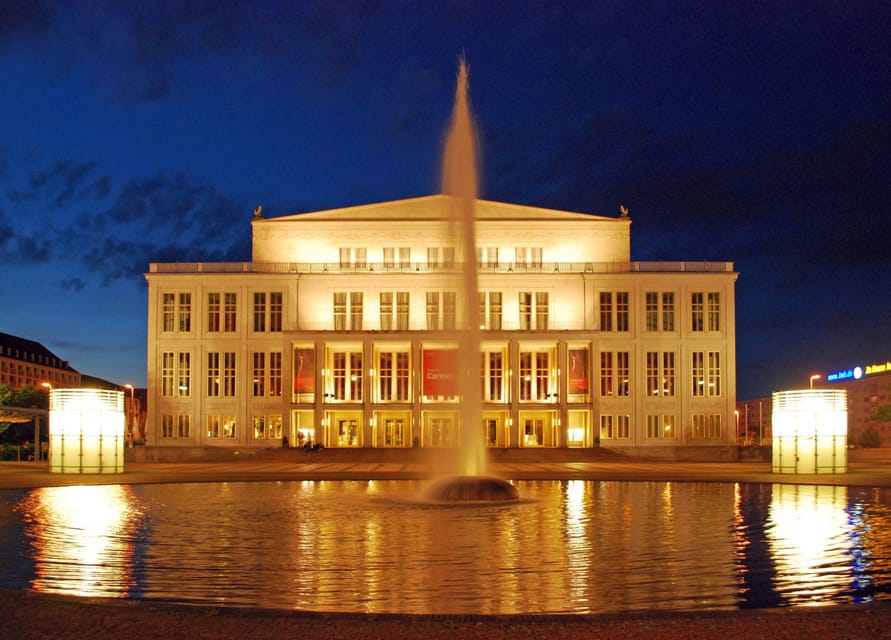
Leipzig’s musical story comes alive on foot, not from a concert seat. In 90 minutes, this private walk links the Old Town Hall, the Music Trail, St. Nicholas Church, St. Thomas Church, the opera, and the Gewandhaus with Bach’s Leipzig years and Wagner’s birthplace.
I like the mix of street sounds and musical examples, which gives the past some texture instead of turning the tour into a list of dates. I also like the private format: for $188 per group of up to 25, the price can be a fair deal for a family or small party, especially with a guide such as Tom, who is described as engaging and entertaining.
The main caution is that this is a music-history walk, not a concert. One booking expected more live music, and the churches were closed at the scheduled time, so check your expectations and timing before you book.
In This Review
- Key points for your Leipzig music walk
- Why Leipzig is worth hearing, not just seeing
- Starting at the Old Town Hall on Markt 1
- Following Leipzig’s Music Trail
- St. Nicholas Church and Bach’s 1723 connection
- The Thomanerchor and St. Thomas Church
- Wagner, Mendelssohn, Schumann, and Leipzig’s wider sound
- What the sound examples add
- The guide makes or breaks the 90 minutes
- Is $188 good value for your group?
- Who should book this walk?
- Practical planning for the day
- Should you book Music in Leipzig?
- FAQ
- Where does the tour meet?
- How long does the activity last?
- What is the price?
- Is this a private tour?
- Which languages are available?
- Is the tour wheelchair accessible?
- Does the tour include music?
- Which Leipzig sites are connected to the tour?
- Can I cancel for a full refund?
Key points for your Leipzig music walk
- The Music Trail connects major musical sites: Follow the route through Leipzig’s old center and hear how Bach, Wagner, Mendelssohn, and Schumann fit into the city’s story.
- St. Nicholas Church adds a strong historical moment: You’ll see Bach’s bust connected with his first performance there as cantor in 1723.
- The Thomanerchor gets more than a passing mention: Learn about the choir’s 800-year history and its role in Leipzig’s musical life.
- Audio examples bring the 18th century closer: The tour includes street sounds from an earlier Leipzig and pieces Bach composed in the city.
- A private group keeps the walk personal: One guide leads your party, with a maximum group size of 25.
- The price works best for a group: At $188 total, the per-person cost drops sharply as your party grows.
Why Leipzig is worth hearing, not just seeing
Leipzig first appears to many visitors as a city of trade fairs, commerce, and grand civic buildings. That is only half the picture. Its musical identity is still woven through the center, where churches, concert halls, museums, and old streets connect to some of Europe’s most important composers.
This tour gives you a useful way to read the city. Instead of passing a church and moving on, you learn why it mattered to Bach. Instead of seeing the opera or Gewandhaus as attractive buildings, you place them within Leipzig’s continuing musical life.
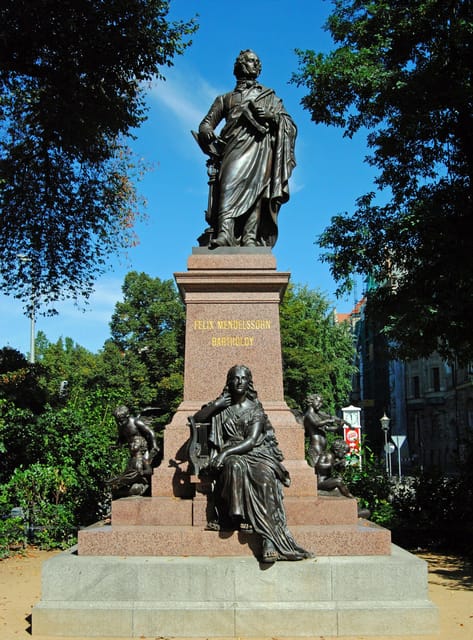
Bach is the main figure, but he is not the only one. Richard Wagner was born in Leipzig, while Felix Mendelssohn and Robert Schumann also lived and worked here. The tour uses these names to show that Leipzig’s musical story did not begin and end with one composer.
I like that this approach suits both serious music fans and people who know only a few famous pieces. You do not need to identify every Bach cantata to enjoy the walk. A good guide can use the places themselves to explain why the music developed here.
The activity has a listed score of 4.8 from 26 ratings, and the strongest praise focuses on the guides’ clear explanations, useful facts, and enthusiasm. That matters on a subject that could easily become dry. You want a guide who can explain connections without burying you in dates.
More concerts & classical music in Leipzig:
- Dresden: Gala Concert in the Dresden Zwinger
★ 4.7 · 1,510 reviews - Berlin: Classical Concert at Kaiser Wilhelm Memorial Church
★ 4.6 · 387 reviews - Munich: Classical Concert at the Residenz Palace
★ 4.5 · 148 reviews
Starting at the Old Town Hall on Markt 1
The meeting point is the Museum Shop at the Altes Rathaus, or Old Town Hall, at Markt 1. This is a sensible starting place because it puts you in Leipzig’s central historic area and near several of the musical sites discussed during the walk.
Arrive with a little time to find the shop and gather your group. The tour lasts 90 minutes, so a late start can take a noticeable bite out of the experience. Since this is a private group, you are not joining a large public crowd, but the maximum size is still 25 people.
The guide leads the walk rather than transporting you between stops. That is important when planning your day. You will want comfortable shoes and a schedule that allows you to stay with the group as the route moves between churches, musical institutions, and city streets.
The languages offered are English, Spanish, French, German, Italian, and Russian. If language matters to your enjoyment of music history, choose carefully when booking. The right language can make the difference between following a complicated connection and simply collecting names.
Following Leipzig’s Music Trail
The Music Trail is the backbone of the experience. It turns Leipzig into a sequence of musical addresses, allowing you to see how the city’s institutions worked together.
The route covers musical museums, cultural centers, the opera, and the Gewandhaus. The supplied details do not promise entry to every building, so think of this as a guided city walk with historical and musical interpretation, not a museum admission tour.
That distinction is useful. You can cover more ground in 90 minutes when the focus is on explanation and setting. You also avoid spending the whole tour inside one institution. On the other hand, a short walk cannot offer a full visit to each museum or concert hall.
The best part of a route like this is the connection between places. Bach’s work makes more sense when you understand the church position he held. The Thomanerchor becomes more than a name when you learn about its long institutional life. The Gewandhaus and opera fit into the picture as continuing centers of Leipzig’s musical culture.
The guide also adds 18th-century street noise and musical examples. This is a clever touch. A piece of music heard while standing in the same city where Bach worked can help you picture the setting better than a string of biographical facts.
Keep your expectations measured. This is not advertised as a full concert, and one booking found there was less music than expected. You should see the excerpts as seasoning for a walking tour, not the main course.
St. Nicholas Church and Bach’s 1723 connection

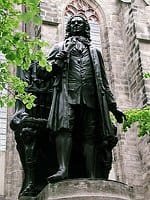
St. Nicholas Church is one of the key stops. Here, you can note the bust of Bach connected with his first performance there as cantor in 1723.
This detail gives the tour a strong human focus. Bach was not simply a name attached to Leipzig after the fact. His work was performed in the city, and his role as cantor tied him directly to its churches and musical duties.
The church also helps explain how music functioned in Leipzig. In Bach’s time, church music was not an occasional decoration for worship. It required skilled composers, singers, instrumentalists, and regular preparation. A guide can use this stop to show why the position mattered and why Leipzig became so important to Bach’s career.
There is one practical concern. A booking in early June found the churches closed at the planned time. The tour may still explain the buildings and their musical connections from outside, but you should not assume that every church interior will be open during your walk.
If entering St. Nicholas Church matters greatly to you, ask about current access before booking. Opening conditions can change, and the experience is stronger when you know in advance whether you are seeing the interior, the exterior, or both.
Same city, a completely different kind of day:
- Leipzig: City History Canal Sightseeing Tour on a Motorboat
★ 4.7 · 6,232 reviews - Leipzig: 1.5-Hour Public Tour with Night Watchman Bremme
★ 4.6 · 3,116 reviews - Combo Tour in Leipzig: Guided City Tour & City Sightseeing
★ 4.7 · 2,317 reviews - Leipzig: 1.5-Hour Historical Walking Tour in German
★ 4.7 · 2,217 reviews
The Thomanerchor and St. Thomas Church
The St. Thomas Church Choir, known as the Thomanerchor, receives special attention on this route. You learn about its 800-year history and its place in Leipzig’s cultural life.
This is one of the most valuable parts for anyone interested in how music survives across generations. The choir is not presented only as a group that sings Bach. Its long history helps you understand the institution behind the performances and the way Leipzig has protected its musical traditions.
St. Thomas Church also connects closely with Bach. The supplied details identify the church among the cultural centers covered on the walk, along with the choir’s history. The tour’s focus is on context, so you should expect an explanation of the church and choir as part of the larger Music Trail.
Again, do not book this expecting a scheduled choral performance. The experience is a guided tour with musical examples, not a choir concert. If you want to attend a service or performance separately, treat that as an additional plan rather than part of the 90-minute walk.
I would especially recommend this section to listeners who want to understand the institutions around Bach’s music. It explains why Leipzig remains connected to him today, rather than treating him as a distant historical figure.
Wagner, Mendelssohn, Schumann, and Leipzig’s wider sound
Bach anchors the story, but the walk also brings in Wagner, Mendelssohn, and Schumann. That broader view keeps Leipzig from becoming a one-composer destination.
Richard Wagner was born in Leipzig, a fact noted in the city’s birth registry. This gives the tour a local detail that is easy to miss if you only follow the most famous Bach sites. Wagner’s connection also shows that Leipzig’s musical importance continued into later periods.
Mendelssohn and Schumann lived and worked in Leipzig. Their presence adds another layer to the city’s identity, linking church music, composition, teaching, performance, and public concert life.
The great musicians of the Gewandhaus, the singers of the St. Thomas Church Choir, and the professors of the conservatory continue to shape Leipzig’s music scene. The tour uses these institutions to show that the city’s musical character is not only a matter of memorial plaques and old stories.
I find this useful because it prevents a narrow itinerary. You are not simply tracing one man’s career. You are seeing a city where composers, performers, teachers, choirs, churches, and concert institutions affected one another.
What the sound examples add
The audio element is one of the tour’s more unusual features. You hear street sounds meant to evoke an 18th-century city, along with pieces Bach composed in Leipzig.
This approach helps you picture the past. Historic streets can look quiet and polished today, while an earlier city would have had a very different sound. The contrast makes the setting easier to imagine.
The Bach excerpts give the walk a listening component, but they do not turn it into a performance. You may hear enough to connect a place with a work, then continue walking while the guide explains its meaning.
That balance will suit some people better than others. If you want a lecture with musical evidence, this format should work well. If you hoped for several long musical passages or live singing, it may feel light on music.
I would set aside time for your own listening after the tour. The walk gives you names, places, and selected examples. You can then hear more of Bach, Wagner, Mendelssohn, or Schumann later with a clearer idea of where Leipzig fits into their lives.
The guide makes or breaks the 90 minutes
A music tour depends heavily on presentation. Dates and institutions are easy to list, but the connections need to feel clear.
Tom is specifically praised as an engaged, competent, and entertaining city guide. His enthusiasm for the links between Leipzig’s places and composers comes across as genuine. If Tom leads your walk, expect an energetic presentation rather than a flat recital of facts.
The information is designed to be substantial without drowning you in numbers. One German-speaking booking found the tour informative, with many facts and good answers to questions, but not overloaded with statistics.
That is a good sign for most visitors. You want enough detail to understand the city, but not so much that every stop becomes a memorization exercise. Use the private format to ask about the composers or institutions that interest you most.
The six language choices also make the activity practical for mixed international parties. The private setup can be especially helpful if your group includes children, older relatives, or people with different levels of musical interest, since a guide can respond to your questions rather than follow a fixed public-group rhythm.
Is $188 good value for your group?
The price is $188 per group of up to 25 people. It is not a cheap individual walking tour, but that is not the right comparison.
For one or two people, the total can feel high for 90 minutes. For a family, school group, music society, or party of friends, the arithmetic improves quickly. Ten people pay about $18.80 each, while 25 people pay about $7.52 each.
The private format adds value because the price does not rise with each participant up to the 25-person limit. You also get a live guide and a tour in one of six listed languages.
The value depends on what you want from Leipzig. If you want a concert, this is not a substitute. If you want a focused introduction before visiting museums or attending music elsewhere in the city, it can be a useful first step.
The 90-minute length is another advantage. It is long enough to build a story, yet short enough to fit before lunch, after arrival, or ahead of another cultural activity. The tradeoff is that the route cannot offer extensive time inside each church or institution.
Who should book this walk?
I would choose this tour if you enjoy music, architecture, and city history together. You do not need specialist training, but curiosity helps. The walk is also a good match for someone who wants to see Leipzig through a theme instead of taking a general old-town tour.
Families may like the sound examples because they break up the historical explanation. A private group also gives you more control over questions and pace than a large public tour.
It suits first-time visitors who want an introduction to Leipzig’s musical identity. It also works for repeat visitors who have seen the main center but want a reason to look again at the churches and concert institutions.
I would hesitate if your main goal is live performance. The musical material is made up of examples and historical sound, and one booking expected more music. I would also check church access before committing if going inside St. Nicholas or St. Thomas is essential to your plan.
The tour is wheelchair accessible, which makes the private format more useful for groups with different mobility needs. Still, the exact route and interior access are worth confirming before the day, since the experience takes place across city streets and church sites.
Practical planning for the day
Meet at the Museum Shop inside the Old Town Hall at Markt 1 in Leipzig. The duration is 90 minutes, and starting times depend on availability.
Book the language that gives you the best chance of following musical terms and historical links. English, Spanish, French, German, Italian, and Russian are listed.
You can cancel up to 24 hours before the start for a full refund, and you can reserve now while paying later. Those terms help if your Leipzig schedule is still shifting.
Leave room in your plans for the possibility that a church is closed. The tour still has material beyond the interiors, but the experience can feel different when you are viewing a church from outside rather than standing in the space tied to Bach’s work.
Should you book Music in Leipzig?
Book it if you want a focused, private introduction to Leipzig’s musical identity, especially if your group includes several people who can share the $188 cost. Bach, Wagner, Mendelssohn, Schumann, the Gewandhaus, the opera, and the Thomanerchor all fit into a compact route.
Skip it if you are looking for a concert or a long visit inside several buildings. The musical examples support the walking tour, but they do not replace a performance.
For the best experience, confirm the guide language, ask about church access, and arrive ready for stories rather than a recital. With those expectations, this is a practical way to hear Leipzig’s past while walking through the places that shaped it.
FAQ
Where does the tour meet?
The meeting point is the Museum Shop at the Altes Rathaus, or Old Town Hall, at Markt 1 in Leipzig.
How long does the activity last?
The walking tour lasts 90 minutes.
What is the price?
The price is $188 per private group of up to 25 people.
Is this a private tour?
Yes. The activity is offered as a private group tour, with up to 25 people in one group.
Which languages are available?
The listed guide languages are Spanish, English, French, German, Italian, and Russian.
Is the tour wheelchair accessible?
Yes. The activity is listed as wheelchair accessible.
Does the tour include music?
The tour includes musical examples, Bach pieces composed in Leipzig, and sounds intended to evoke 18th-century street life. It is a guided walking tour rather than a concert.
Which Leipzig sites are connected to the tour?
The walk follows the Leipzig Music Trail and covers musical museums, St. Thomas Church, the Thomanerchor, the opera, the Gewandhaus, and St. Nicholas Church.
Can I cancel for a full refund?
Yes. You can cancel up to 24 hours in advance for a full refund.
Just added around Leipzig
- City tour on foot, by S-Bahn and tram★ 4.5 · 12 reviews
- Leipzig City Centre: Scavenger Hunt Self-Guided Tour★ 4.4 · 114 reviews
- Tour on Lake Cospuden★ 4.7 · 58 reviews
- Leipzig: True or false? Walking Tour and Interactive Game★ 4.8 · 28 reviews
- Leipzig Spirits Manufacture: Guided Tour and Tasting★ 4.8 · 79 reviews
- Leipzig: Segway tour to the Battle of the Nations Monument★ 5.0 · 4 reviews
- Leipzig: Segway City Tour – Discover Sights, Parks & History★ 5.0 · 7 reviews
- Leipzig’s Mystery Morning: Breakfast & Escape Game★ 4.2 · 108 reviews
Concerts & Classical Music, compared.

Classical Concert at Kaiser Wilhelm Memorial Church
Read our review →
Festive Concert at Schleißheim with Residence-Soloists
Read our review →Browse the lists this tour appears in