
Reviewed · OLD TOWN WALKING TOURS
Mainz: guided evening tour of the Rhine embankment/old town in German and English
Mainz is at its most atmospheric after sunset, when the Rhine, old squares, and half-timbered lanes take on a softer look. This 1.5-hour walking tour traces a useful route from the riverfront to the old town, mixing Roman, medieval, Gutenberg, and Napoleon-era stories along the way.
I like the illuminated city views and the way the walk links major sights instead of keeping you in one square. I also like the open, friendly guide style, with small local anecdotes rather than a nonstop list of dates. The main drawback is clear: the churches are closed at night, so you see their exteriors only.
In This Review
- Key points at a glance
- Why Mainz works so well after dark
- Meeting by the Rhine and the Theodor Heuss Bridge
- From Fischtor to the old city gates
- Liebfrauenplatz and Mainz Cathedral
- Domplatz, market space, and the city’s public life
- Old St. Johannis Cathedral and Mainz before the present cathedral
- Kirschgarten and the prettiest finish
- What the guide style adds
- Is $23 a fair price?
- Who should book this Mainz evening walk?
- FAQ
- How long does the Mainz evening tour last?
- What languages are available?
- Where does the tour start?
- Where does the tour finish?
- What sights are included?
- Can I go inside the churches?
- Is the tour wheelchair accessible?
- Does the tour include food?
- What historical periods does the tour cover?
- What is the cancellation policy?
- Should you book it?
Key points at a glance
- Rhine-to-old-town route: Begin near the Hilton Hotel and the Theodor Heuss Bridge, then walk inland through Mainz’s historic center.
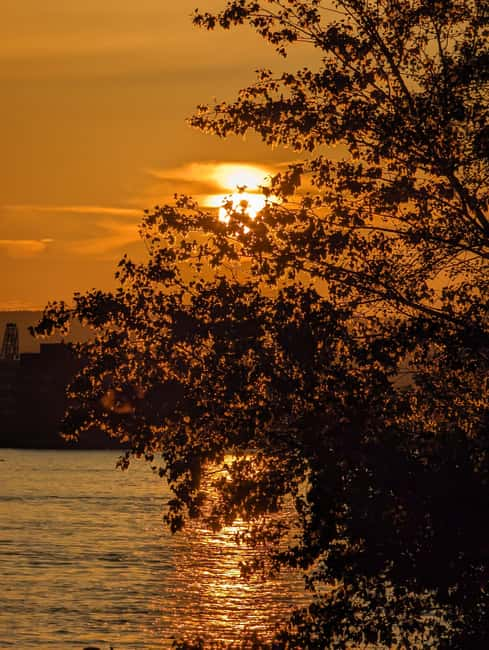
- A strong evening setting: The riverfront, cathedral squares, alleyways, and old buildings look especially good under nighttime lighting.
- Several major landmarks: See the Eisenturm, Rheingoldhalle, Liebfrauenplatz, Mainz Cathedral, Old St. Johannis Cathedral, and Kirschgarten.
- Personal guide style: The guide speaks German or English and adds local anecdotes about Mainz and its citizens.
- Good after-work timing: The tour gives you a short historical introduction without taking up an entire evening.
- Practical finish: At the end, the guide can recommend a place to eat in Mainz.
Why Mainz works so well after dark
Mainz can feel like several cities in one. The Rhine waterfront points to trade, travel, and modern river life. A few streets inland, the mood changes to old lanes, cathedral towers, timber-framed houses, and small squares.
This tour uses that change of mood as its main idea. You start by the water and gradually work into the old town, following a route that moves from broad river views to tighter medieval streets. I like that progression because it gives you a sense of how Mainz is arranged, not just a collection of isolated sights.
The guide also connects the city’s long timeline. You hear about the Romans, Mainz’s citizens, Johannes Gutenberg, and Napoleon Bonaparte. That range should help you place the buildings and squares in context, especially if you are seeing Mainz for the first time.
The timing matters. In daylight, Mainz’s cathedral and old lanes can feel formal and monumental. At night, the illuminated façades and quieter streets create a more relaxed setting for stories and small details. You will not get the same close look at every building that you would on a daytime architecture tour, but the evening atmosphere is the point.
More old town walking tours in Germany:
- Dresden: Semperoper and Old Town Tour
★ 4.8 · 5,735 reviews - Nuremberg: Old Town Guided Walking Tour
★ 4.6 · 2,416 reviews - Munich: Old Town & Viktualienmarkt City Walk in German
★ 4.7 · 2,304 reviews
Meeting by the Rhine and the Theodor Heuss Bridge
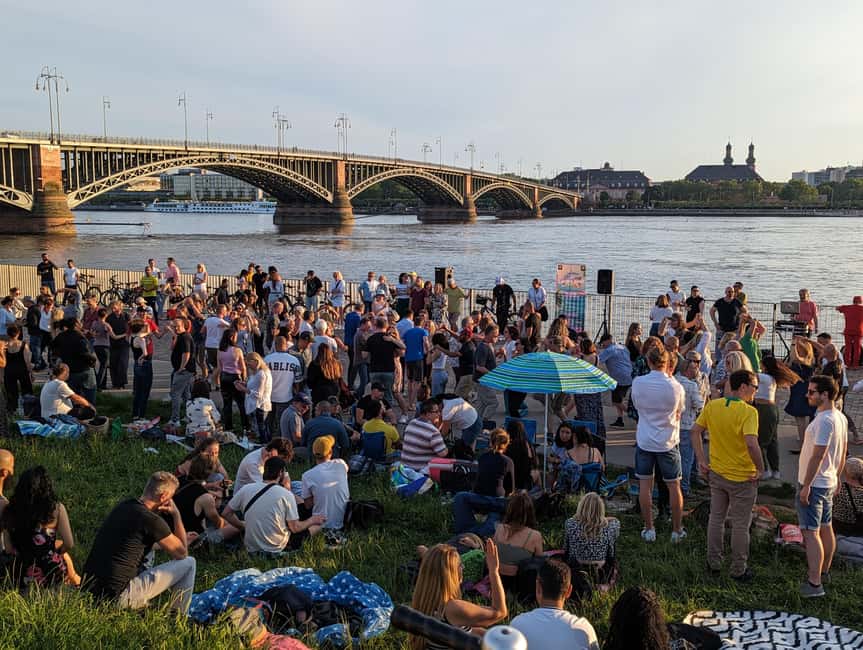
The walk begins on the terrace in front of the Hilton Hotel, facing the Rhine and the Theodor Heuss Bridge. The exact starting point is important, so give yourself enough time to find the terrace rather than simply heading to the hotel entrance.
The Theodor Heuss Bridge is the first major sight, with about 10 minutes for guided information. Starting here gives the tour a wide opening view. You are looking across the river and seeing Mainz in relation to its waterfront rather than beginning in a narrow old-town lane.
From this point, the walk follows the Rhine for a while. That opening section should suit you if you like to get your bearings before hearing about individual buildings. It also gives the guide room to discuss Mainz as a Rhine city, its history, and the people who shaped it.
The route then reaches the area around the Rheingoldhalle. This stop is brief, about five minutes, and gives you another modern riverfront reference point. Next comes Jockel-Fuchs-Platz, also with about five minutes of guided explanation.
These first stops are not the most intimate part of the walk. They are useful for orientation and city context, but you should not expect a long visit inside a museum or a detailed architectural survey. The appeal is the movement from the river into the historic center.
From Fischtor to the old city gates
Near the Fischtor, the tour turns away from the river toward the old town. This is where the route begins to feel more distinctly medieval and urban.
The Eisenturm is one of the early old-town stops, with around five minutes of commentary. Its name refers to an old city gate and tower, and it helps show how Mainz once marked and protected its historic center. The stop is short, so you will mainly get an introduction and a look at the exterior.
The next stop is Heiliggeist, with about 15 minutes. That longer pause gives the guide room to explain more of the setting and add the kind of smaller stories that make a walking tour feel personal. The guide is described as open and sympathetic, with many short anecdotes, so this is one of the places where that conversational style should work well.
I would expect the streets around here to be more atmospheric than spacious. Keep your attention on the upper floors, doorways, and details around the route. At night, lighting can draw your eye toward the main façades, while smaller features may be easier to miss.
The walking pace is likely manageable for most people because the tour lasts only 90 minutes and includes several short explanations. Still, you are on foot the whole time. Comfortable shoes are sensible, and you should be prepared for old-town streets rather than a smooth indoor route.
Liebfrauenplatz and Mainz Cathedral
The route continues to Liebfrauenplatz, where the guide spends about 15 minutes. This is one of the tour’s main stops and a good place to understand how Mainz’s cathedral area fits into the city.
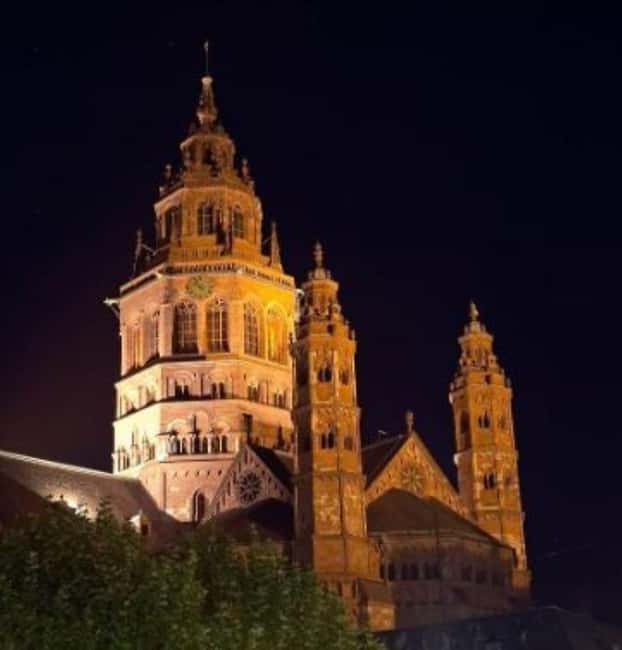
From Liebfrauenplatz, you reach the high Cathedral of St. Martin, the great red-toned church that dominates Mainz’s old town. The cathedral is closely linked to the city’s identity, and the surrounding square gives you a broad view of its scale.
This is also where the title reference to the Cathedral Mountains makes sense. The cathedral’s mass and towers create a powerful silhouette, especially with evening lighting. You can appreciate the building from outside without needing a long interior visit.
The limitation is that the cathedral is closed at night. You will not tour the nave, chapels, or interior decoration on this walk. If the inside of St. Martin is high on your list, plan a separate daytime visit.
That said, the exterior viewing is not a poor substitute for this particular tour. The guide can focus on the cathedral’s place in Mainz, its surrounding square, and the way the building relates to the old town. I like this as an evening stop because the cathedral provides a strong center point for the route.
More river cruises in Germany:
- Berlin: Boat Tour Along the River Spree
★ 4.4 · 11,252 reviews - Berlin: 3.25-Hour Spree & Landwehrkanal Boat Tour
★ 4.6 · 4,311 reviews - Cologne: Top Sights Rhine River Cruise – Skyline Tour
★ 4.4 · 3,030 reviews - Düsseldorf: City Sightseeing Cruise on the Rhine
★ 4.1 · 2,954 reviews
Domplatz, market space, and the city’s public life
The tour spends about 10 minutes around Wochenmarkt Mainz Domplatz, the market area by the cathedral square. The market itself may not be operating during an evening walk, but the square remains useful for understanding how this part of Mainz functions.
A market square tells you something different from a church façade. It points to ordinary city life, trade, meeting places, and the daily movement of residents. The guide’s stories about Mainz and its citizens should help connect the grand cathedral with the people who used the surrounding streets.
This is also a good point to take stock of the route. You have moved from the Rhine and modern riverfront buildings into one of Mainz’s main historic spaces. The tour does not ask you to spend hours inside one monument. Instead, it uses a series of locations to build a broad picture.
If you want detailed religious art or a long discussion of church construction, this tour will feel light. If you want a practical introduction to the city before dinner, the balance is more appealing.
Old St. Johannis Cathedral and Mainz before the present cathedral
From Domplatz, the walk goes past the Old Cathedral of St. Johannis. The guide allows about 10 minutes here.
St. Johannis is valuable because it adds another layer to the cathedral story. You are not simply seeing one famous church. You are also learning that Mainz has an older religious landmark nearby, with a different appearance and a different place in the city’s timeline.
Again, this is an exterior evening visit. The churches are closed, so you should set your expectations accordingly. The value lies in seeing the buildings in their urban setting and hearing how they relate to Mainz’s past.
This part of the walk should be especially useful if you like historical contrasts. The route places old and newer parts of Mainz beside each other, while the guide moves from major events to local anecdotes. The result is less formal than a lecture and more focused than simply wandering without a plan.
The tour also follows the footsteps of Johannes Gutenberg. Mainz is strongly associated with the inventor and printer, so his presence gives the old town a clear thread. The supplied information does not promise a visit to a Gutenberg museum or a specific Gutenberg monument, so I would treat his story as part of the walking commentary rather than a separate attraction.
Kirschgarten and the prettiest finish
The tour finishes at Kirschgarten, also called the cherry orchard. About 15 minutes are set aside here, making it the longest stop after Heiliggeist, Liebfrauenplatz, and the cathedral area.
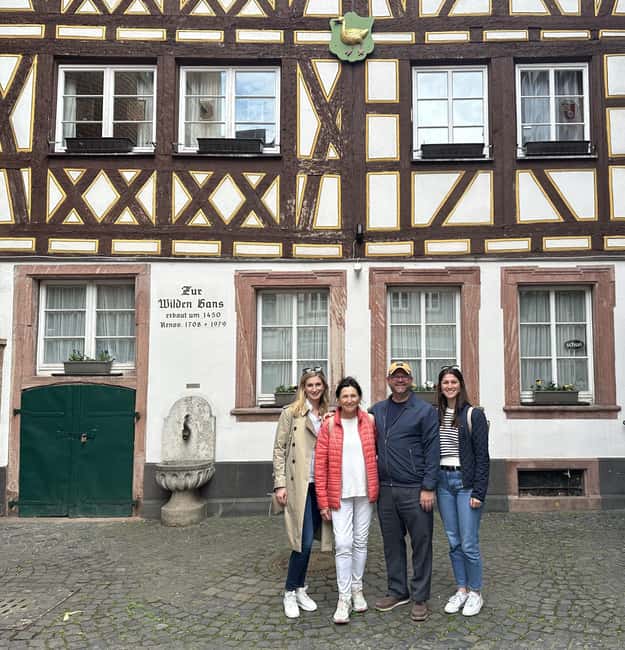
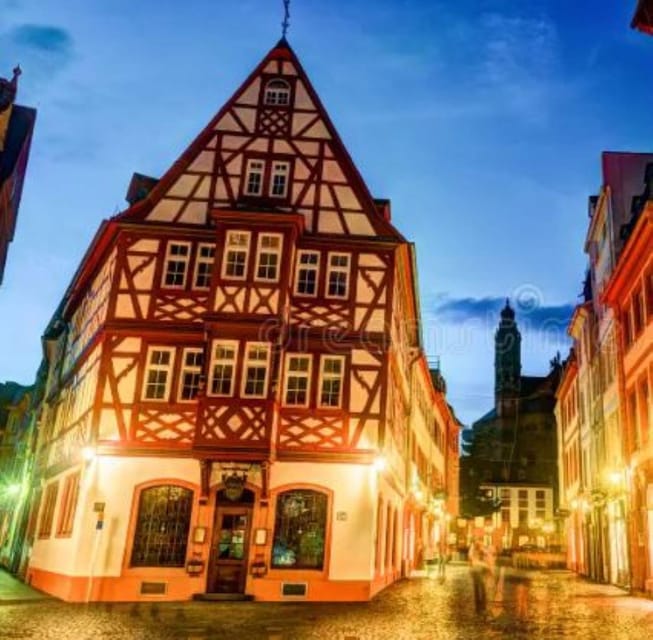
Kirschgarten is known for its late-medieval half-timbered houses and intimate old-town character. After the wider Rhine and cathedral spaces, this smaller square provides a pleasing change of scale. Illuminated timber façades and narrow lanes are exactly the kind of sights that make an evening walk worthwhile.
For many people, this will be the visual high point. The cathedral is grand, but Kirschgarten feels more personal and close to street level. You can look at the shapes of the houses, the timber framing, and the way the square holds together as a small historic scene.
The published route says the walking tour ends here. The meeting-point details also describe the activity as ending back at the meeting point, so I would confirm the exact end arrangement when you book. Either way, Kirschgarten is a useful place to finish because you are already in the old town, close to places where you may want to continue for food or a drink.
The guide offers to recommend somewhere to stop for a bite to eat. That is a small but useful touch. After 90 minutes of walking, a local dinner suggestion can save you from choosing at random, especially if Mainz is only one stop on a larger Rhine trip.
What the guide style adds
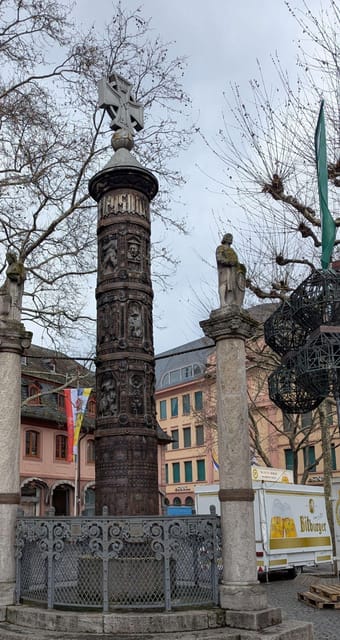
The strongest personal detail provided about the guiding is the emphasis on a friendly, open manner and many small anecdotes. That matters on a short evening walk.
A 90-minute tour cannot explain every era of Mainz or provide a full lecture at each site. The guide has to choose. Short stories about local citizens, unusual events, and the city’s characters can make the route easier to remember than a long string of dates.
The tour is offered in German and English with a live guide. If you are comfortable in either language, choose the one that lets you follow humor and side comments most easily. The anecdotal style is likely to work best when you can understand the quick asides, not just the main historical points.
There is no guide name provided, so I cannot tell you who will lead your particular departure. The experience is tied more to the guide’s personality than to a fixed audio script, which is useful if you like questions and conversation. It also means the exact emphasis may vary from one departure to another.
Is $23 a fair price?
At $23 per person, I consider this a reasonable price for a live 90-minute introduction to Mainz, especially if you value a guide who adds personal anecdotes and a practical food recommendation.
The price makes the most sense for first-time visitors. You get a planned route, historical context, and evening views without spending half a day on a large city tour. You also avoid the risk of wandering past the cathedral, St. Johannis, or Kirschgarten without understanding how they connect.
The value is lower if your main goal is interior access. No churches are open during the evening walk, and the tour does not include a museum entry or another indoor attraction. You are paying for the guide, route, stories, and atmosphere.
I would also compare it with your schedule. If you have only one evening in Mainz, this walk can help you use it well. If you already know the old town and have visited the cathedral during the day, you may prefer to explore independently and spend the $23 on dinner.
Free cancellation up to 24 hours before the start and the reserve-now, pay-later option add useful flexibility. They do not change the sightseeing itself, but they help if your Rhine itinerary depends on trains, river boats, or changing weather.
Who should book this Mainz evening walk?
I would recommend it to you if you want:
- A short first look at Mainz after the day’s main sightseeing
- A route that combines the Rhine and old town
- Local stories rather than only major historical facts
- A live guide in German or English
- Evening photographs of the cathedral, squares, and half-timbered houses
- A food suggestion at the end of the walk
It suits couples, solo visitors, and anyone staying near the river who wants a gentle introduction before dinner. It can also work well for people who have a free evening but do not want a long, demanding tour.
I would hesitate if you need extensive indoor sightseeing, a museum visit, or detailed specialist information about church interiors. The tour is also not a substitute for a full daytime exploration of Mainz. Think of it as a well-shaped orientation walk with atmosphere and stories.
The activity is listed as wheelchair accessible. Since the tour takes place outdoors through the riverfront and old town, confirm the exact route details if you have specific mobility needs. The provided information does not describe the street surfaces or any steep sections.
FAQ
How long does the Mainz evening tour last?
The tour lasts about 1.5 hours, or 90 minutes.
What languages are available?
A live guide leads the tour in German or English.
Where does the tour start?
The meeting point is on the terrace in front of the Hilton Hotel in Mainz, toward the Rhine and the Theodor Heuss Bridge.
Where does the tour finish?
The walking route is described as ending at Kirschgarten. The meeting information also refers to returning to the meeting point, so confirm the precise end arrangement when booking.
What sights are included?
The route includes the Theodor Heuss Bridge, Rheingoldhalle, Jockel-Fuchs-Platz, Eisenturm, Heiliggeist, Liebfrauenplatz, Mainz Cathedral, Domplatz, Old St. Johannis Cathedral, and Kirschgarten.
Can I go inside the churches?
No. The churches are closed at night, so the tour views them from the outside.
Is the tour wheelchair accessible?
Yes, the activity is listed as wheelchair accessible.
Does the tour include food?
No food is included, but the guide can recommend a place to eat in Mainz at the end.
What historical periods does the tour cover?
The guide discusses Mainz from Roman times to the present day, including Johannes Gutenberg and Napoleon Bonaparte.
What is the cancellation policy?
You can cancel up to 24 hours in advance for a full refund.
Should you book it?
Book this walk if you want Mainz to make sense quickly and look especially good after dark. The Rhine-to-old-town route is well chosen, the $23 price is fair for a live guide, and the friendly anecdotal approach should keep the history light but useful.
Skip it if you mainly want church interiors or a long specialist tour. For everyone else, this is a practical way to finish a day in Mainz: begin beside the Rhine, follow the city’s story inland, end among the half-timbered houses of Kirschgarten, and get a dinner suggestion before you go.
More Evening Experiences in Germany
- Hamburg: 90-Minute Evening Lights Harbor Cruise
★ 4.5 · 7,728 reviews - Dresden: The Original Night Watchman Tour in Lantern Light
★ 4.6 · 6,653 reviews - Hamburg: 1-Hour Harbor Evening Lights Cruise
★ 4.4 · 4,861 reviews - Hamburg: Night Watchman’s Tour of St. Pauli in German
★ 4.7 · 4,818 reviews
Just added around Germany
- Aachen old town tour – GERMAN (public)★ 5.0 · 24 reviews
- Aachen Private Walking Tour With A Professional Guide★ 5.0 · 11 reviews
- Cologne Highlights: Exclusive Private Tour★ 5.0 · 5 reviews
- Bremen Private Walking Tour With A Professional Guide★ 5.0 · 7 reviews
- Private Walking Tour through the Fascinating Bremen’s City Center★ 5.0 · 5 reviews
- Explore Cologne’s best Street Art Quarter★ 4.5 · 4 reviews
- Bremen Exploration Private Game and City Tour on your Phone★ 4.5 · 7 reviews
- e-Scavenger hunt Bremen: Explore the city at your own pace★ 4.0 · 24 reviews
Old Town Walking Tours, compared.
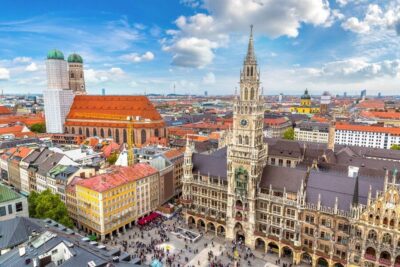
Old Town & Viktualienmarkt City Walk in German
Read our review →
The Night Watchman Old Town Walking Tour in German
Read our review →
Browse the lists this tour appears in