

Reviewed · GERMANY
Heilbronn: Kleine Citytour am Samstag
Heilbronn’s best sights fit neatly into a one-hour walk, and the star is Kilianskirche, whose west tower is a major Renaissance work by Hans Schweiner. I like the Saturday timing, when the marketplace is active, and I like the small maximum of six people, which leaves room for questions. The catch is simple: the tour is German only, so it is not a good pick if you need English commentary.
This is a smart introduction for a short visit. Guide Ulrich Sauter has a strong command of local history and gives useful ideas for what to see next. At $11, the tour is inexpensive, but the one-hour limit means you get a focused introduction rather than a full study of Heilbronn.
In This Review
- Key points at a glance
- Starting among Heilbronn’s Saturday market stalls
- Kilianskirche and Hans Schweiner’s Renaissance tower
- Hans Seyfer’s 1498 altar and late Gothic carving
- The town hall’s astronomical artificial clock
- Heilbronn’s towers and the city center walk
- What the guide adds to a short visit
- Why the six-person limit matters
- Is one hour enough for Heilbronn?
- What you get for $11
- Who should book this Saturday walk?
- Should you book the Kleine Citytour am Samstag?
- FAQ
- Where does the tour start?
- How long does the tour last?
- What language is the tour offered in?
- How much does the tour cost?
- How many people can join the group?
- Is the tour wheelchair accessible?
- What is included in the price?
- Can I cancel for a full refund?
- Can I reserve now and pay later?
Key points at a glance

- Kilianskirche’s Renaissance west tower: See one of the most important Renaissance buildings north of the Alps.
- Hans Seyfer’s 1498 altar: Learn why this late Gothic carving is considered a masterpiece.
- Historic town hall clock: Examine the astronomical clock associated with Isaac.
- Saturday marketplace setting: Begin among the city’s market activity in central Heilbronn.
- Small group of six: Ask questions without trying to catch a guide’s voice across a crowd.
- One hour for $11: A low-cost way to get your bearings before exploring alone.
Starting among Heilbronn’s Saturday market stalls

The tour starts at the Heilbronn marketplace during market time. That matters more than it may sound. You do not begin in an empty meeting area or on the edge of town. You begin in the center, with the city already in motion around you.
I like this setup because it gives the walk an everyday feel. Heilbronn is presented not just as a collection of old buildings, but as a living wine and university city on the Neckar. The market provides a useful sense of place before the guide turns your attention to stonework, clocks, and towers.
The exact starting time depends on availability, so check the schedule before booking. The advertised duration is one hour, which makes this easy to fit before lunch, after arriving in town, or between other plans. You should arrive ready to walk through the downtown area rather than expecting a long-distance excursion.
The group is limited to six people. That is one of the clearest advantages here. In a small group, you can ask why a building matters, stop for a quick explanation, or request clarification without holding up a large crowd. The tour is wheelchair accessible, another practical plus for visitors who need an accessible route.
Other Germany days worth putting on the list:
- Berlin: Reichstag, Dome and Government District Guided Tour
★ 4.7 · 18,288 reviews - Berlin: 1-Hour City Tour by Boat with Guaranteed Seating
★ 4.3 · 16,993 reviews - Hamburg: Sex and Crime in St. Pauli Tour for Ages 18+
★ 4.7 · 15,447 reviews
Kilianskirche and Hans Schweiner’s Renaissance tower
Kilianskirche is the main architectural reason to book this walk. Its west tower, designed by Hans Schweiner, is described as one of the most important Renaissance buildings north of the Alps. That gives the church weight beyond its role as a central Heilbronn landmark.
I find the tower especially useful as a lesson in how architectural styles change. The church also connects you with late Gothic art, while the west tower points toward the Renaissance. A guide can help you see those periods as part of a larger story rather than treating the building as one old façade.
The tour’s short format means you will not receive every possible detail about Kilianskirche. That is a fair trade at this price. You get the key points and the chance to ask about the features that catch your eye, then you can decide if you want to return for a longer look.
The church is not presented as a quick photo stop alone. The emphasis is on why its design matters. If you enjoy architecture, this is likely to be the strongest part of the hour.
Hans Seyfer’s 1498 altar and late Gothic carving

Inside Kilianskirche, the high altar by Hans Seyfer from 1498 brings the art story into sharper focus. It is considered a masterpiece of German late Gothic carving. That date also helps you place the work in its period, before the Renaissance west tower became the church’s defining architectural feature.
I like stops such as this because they reward close attention. A high altar can look impressive at first glance, but a good explanation helps you understand the craftsmanship and the religious setting that shaped it. The guide can point out why Seyfer’s work matters instead of leaving you with a name and a date.
Do not expect an art museum visit with extended viewing time. You have only an hour for the whole town center, and the tour also covers the town hall and towers. Still, the altar gives the walk a valuable layer of detail. You are not only looking at Heilbronn’s buildings from the outside. You are also seeing an important work of German art.
If historic sculpture is your main interest, listen closely here and use your question time well. The small group makes that easier.
The town hall’s astronomical artificial clock

The historic town hall is another central stop. Its astronomical artificial clock, associated with Isaac, adds a mechanical and scientific angle to the tour. After the church’s art and architecture, this gives the walk a welcome change of pace.
The clock is the sort of detail you could easily pass without understanding. You might see a decorated face or an unusual mechanism, take a photograph, and continue walking. A guide explains why it belongs in the city’s story and directs your attention to the parts that make it more than a standard timepiece.
The description also mentions a pulsating armile, a distinctive feature included among the city center sights. The supplied information does not give a full technical explanation, so you should treat this as a feature to see and ask about rather than assume you will receive a specialist demonstration.
This portion of the walk will suit you if you like old technology, public buildings, and the way civic pride gets expressed through clocks and mechanical displays. It also keeps the tour from becoming too narrowly focused on church history.
Same city, a completely different kind of day:
- Hamburg: 1.5-Hour Harbor and Speicherstadt Day Cruise
★ 4.6 · 14,200 reviews - From Munich: Neuschwanstein & Linderhof Castle Full-Day Trip
★ 4.5 · 12,494 reviews - Dresden: Semperoper Tickets and Guided Tour
★ 4.7 · 12,102 reviews - Berlin: Boat Tour Along the River Spree
★ 4.4 · 11,252 reviews
Heilbronn’s towers and the city center walk

The route also includes Heilbronn’s towers. The information provided does not name each tower or promise interior access, so you should expect an exterior-focused look at these landmarks as part of the downtown route.
That is still useful. Towers help you read a city’s past through its surviving vertical markers. They can point to defense, civic power, or the older shape of the town. In a one-hour introduction, the guide’s role is to connect these structures to the streets around them.
I like the way the tour combines major highlights with smaller visual clues. You see Kilianskirche, the town hall, the clock, and towers, but the real benefit is learning what to notice when you continue exploring on your own.
The walk is built around central Heilbronn, not a broad trip across the wider region. That keeps the timing reliable and makes it a sensible choice for a short stop. If you want vineyards, Neckar scenery, or attractions outside downtown, you will need separate plans.
What the guide adds to a short visit
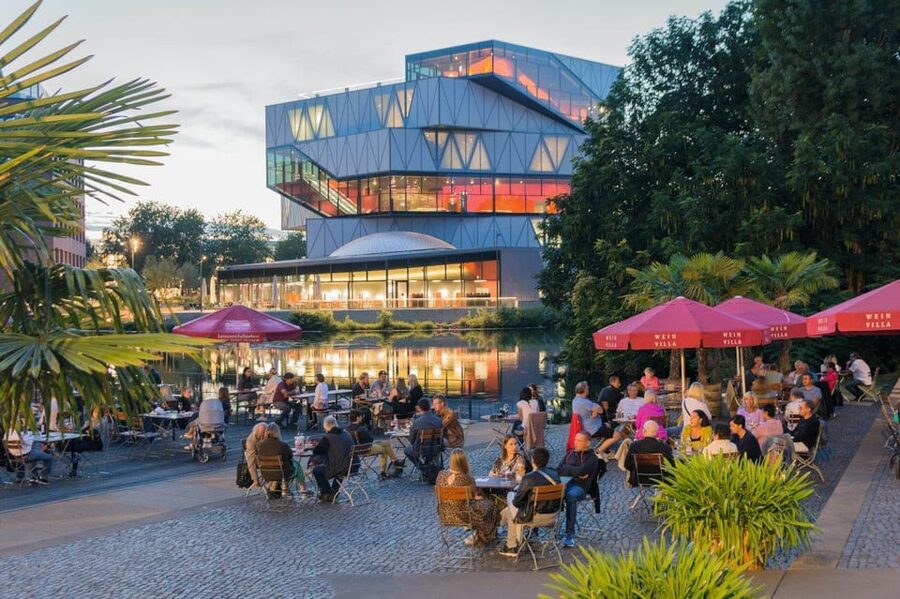
The guide can make or break a one-hour tour. Here, Ulrich Sauter is specifically noted as a guide who handles historical questions well and offers ideas for other things to do in Heilbronn. That is important because a short tour should leave you with a next step, not just a list of facts.
I would use the final part of the walk to ask practical follow-up questions. You might ask which downtown sight deserves more time, what else fits into your schedule, or how to make better use of your day in the city. The tour is intended to introduce Heilbronn, so those questions fit the purpose.
The German-language format is the main limitation. The guide speaks German, and the activity does not list English or other language options. One Dutch participant specifically found the guide clear and unhurried, but that does not change the language issue. If you understand German, the calm delivery and question-friendly format should work well. If you do not, you may miss the value of the explanations.
Why the six-person limit matters
A maximum of six participants is unusually intimate for a low-priced city walk. I value this because historic sites often need explanation from a particular angle. With a small group, you are more likely to hear the answer when you ask about the altar, clock, or tower.
It also keeps the walk from feeling like a procession. You can stay close to the guide and follow the story from one stop to the next. The format suits solo visitors, couples, and small families who prefer direct contact over a large-group routine.
There is a practical side too. A one-hour tour has no spare time for repeated introductions or long pauses. A group of six can move through the center efficiently. The limitation is that places are limited, so you should check availability for your chosen Saturday.
Is one hour enough for Heilbronn?
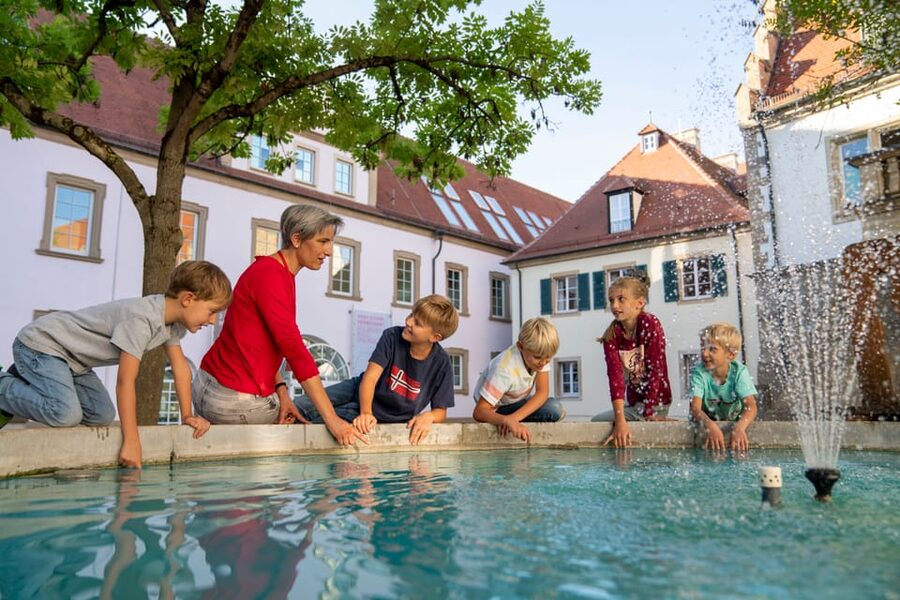
One hour is enough for an introduction, not enough for the entire city. That distinction is worth keeping clear. You will see several central highlights and learn why they matter, but you will not explore every room, tower, or historical period in detail.
I see the short length as an advantage for several types of visits. If you are stopping in Heilbronn for only part of a day, this gives you a useful framework without consuming your schedule. If you are staying longer, take the walk early and use the guide’s suggestions to plan what comes next.
The tour also works for visitors who prefer a measured pace. The guide is described as speaking clearly and taking time for questions. That helps balance the compact schedule.
The drawback is that anyone seeking a detailed architectural or art-history tour may find the hour too brief. You will need to choose how closely to follow each explanation. Focus on the sites that matter most to you.
What you get for $11

At $11 per person, this is a strong value if you want context rather than a self-guided stroll. You are paying for a live guide, a central route, and access to a small-group format. The cost is low enough that it makes sense even if you are building a flexible day around several activities.
The value comes from interpretation. You can walk past the town hall for free, but you may not understand the importance of its astronomical clock. You can enter or view Kilianskirche on your own, but you may not connect Hans Schweiner’s tower with the Renaissance or Hans Seyfer’s altar with late Gothic carving.
There is no promise of admission to a separate attraction, meal, transport, or extended interior visit. The included service is a guided one-hour tour through downtown Heilbronn. That keeps the offer simple and makes the price easy to judge.
Flexible booking also helps. You can reserve now and pay later, and cancellation is available up to 24 hours before the start for a full refund. Those terms are useful if your Saturday plans depend on weather or a changing itinerary.
Who should book this Saturday walk?
I would choose this tour if you want a compact introduction to central Heilbronn, especially if you speak German. It is a good match for:
- First-time visitors with only a short stay
- People interested in church art and Renaissance architecture
- Visitors who enjoy clocks, civic buildings, and old towers
- Solo travelers or couples who prefer small groups
- Anyone who wants local suggestions for what to do after the tour
- Wheelchair users looking for an accessible guided option
I would look elsewhere if you need English commentary, a longer route, or a deep study of one building. The tour covers several highlights, so it favors range over extended time at a single site.
Should you book the Kleine Citytour am Samstag?
Book it if you want to get oriented quickly and you can follow German. The combination of Kilianskirche, Hans Seyfer’s 1498 altar, the town hall clock, and Heilbronn’s towers gives you more substance than a simple walk around the center.
The best reason to choose it is the balance of price, small group size, and focused content. At $11 for an hour, it is an easy addition to a Saturday in Heilbronn. Just keep your expectations in proportion: this is a concise city introduction, not a full-day historical study.
FAQ
Where does the tour start?
The tour starts at the Heilbronn marketplace during market time.
How long does the tour last?
The guided tour lasts one hour.
What language is the tour offered in?
The live tour guide speaks German.
How much does the tour cost?
The price is $11 per person.
How many people can join the group?
The group is limited to six participants.
Is the tour wheelchair accessible?
Yes, the activity is wheelchair accessible.
What is included in the price?
The price includes a guided one-hour tour through downtown Heilbronn.
Can I cancel for a full refund?
Yes. You can cancel up to 24 hours in advance for a full refund.
Can I reserve now and pay later?
Yes. You can reserve your spot and pay nothing at the time of booking.
Just added around Germany
- e-Scavenger hunt Aachen: Explore the city at your own pace★ 4.0 · 13 reviews
- Private photo tour in Cologne★ 5.0 · 9 reviews
- Private walking tour of Cologne’s old town★ 5.0 · 28 reviews
- Roman Cologne: A Self-Guided Audio Tour★ 4.0 · 15 reviews
- Public brewhouse tour in English★ 5.0 · 94 reviews
- Köln Night PubCrawl: 4 Venues, Welcome Shots + Club Entry★ 3.5 · 4 reviews
- Kölsch and Brewhouse Tour (18 and up)★ 5.0 · 5 reviews
- Private-Group Bike Tour of Cologne with Guide★ 5.0 · 20 reviews