
Reviewed · HAMBURG TOURS
Hamburg: Speicherstadt and Hafencity Guided Tour
Hamburg’s story is written in brick, water, and trade. This two-hour walk links the striking Elbphilharmonie with the old Speicherstadt warehouses and the daring architecture of HafenCity, so you see both the city’s mercantile past and its modern ambitions in one compact outing. I like the clear historical route and the low $16 price. The main drawback is simple: it is an outdoor tour, and cold or wet weather can make the two hours feel long.
I especially like that the guide brings you close to places such as the old coffee roasting plant, spice museum, and Magellan Terraces rather than giving you only a distant harbor view. Guides have been praised for detailed explanations and friendly answers, though some tours may leave you wanting more detail unless you ask questions.
In This Review
- Key points at a glance
- From glass waves to red-brick warehouses
- Following the route toward Speicherstadt
- Reading the warehouse walls in Speicherstadt
- Magellan Terraces and the view across the water
- HafenCity’s modern answer to the old port
- What the guide adds to the walk
- Is $16 a fair price for two hours?
- Weather, footwear, and the two-hour pace
- Who should book this Hamburg walking tour?
- My verdict on Speicherstadt and HafenCity
- FAQ
- Where does the tour meet?
- How long does the tour last?
- What language is the tour conducted in?
- Does the tour go inside the Elbphilharmonie?
- Are entrance fees included?
- Is the tour wheelchair accessible?
Key points at a glance
- Elbphilharmonie exterior: Begin beside Hamburg’s new landmark and see how its glass form rises above the harbor.
- Speicherstadt trade story: Learn how the warehouse district served Hanseatic merchants and why its courtyards feel almost cathedral-like.
- Coffee, spices, and model railways: Pass Miniatur Wunderland, an old coffee roasting plant, and the spice museum along the route.
- Magellan Terraces viewpoint: Reach the terraces across from Speicherstadt for a useful look at the old warehouse district.
- HafenCity contrast: Finish among newer buildings designed to show how Hamburg is reshaping its harbor.
- German-language walking tour: Expect a professional guide, about two hours on foot, and no included admission tickets.
From glass waves to red-brick warehouses
The tour begins at Sandtorkai 74, at the corner of Sandtorkai and Kaiserkai. Look for the square in front of the stairs and the white wall with a hole in the middle. That precise meeting point matters in HafenCity, where broad open spaces and large new buildings can make a casual meeting spot hard to spot.
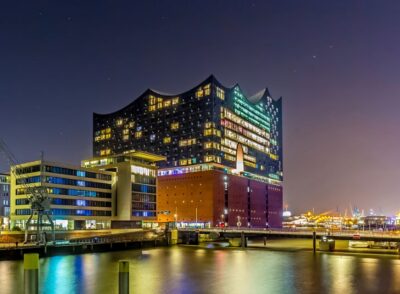
You start near the Elbphilharmonie, Hamburg’s most recognizable recent building. From outside, the building has a bold, almost abstract profile, with a glass upper section set above the older brick warehouse base. The guide explains the building as part of Hamburg’s harbor identity, rather than treating it as just a photo stop.
You should keep your expectations clear here. This is not an interior concert hall visit, and entrance fees are not included. The value comes from the setting, the exterior explanation, and the way the building provides a starting point for understanding Hamburg’s changing waterfront.
I like this opening because it gives you an immediate visual contrast. The Elbphilharmonie feels polished and futuristic, while the route ahead leads into a district built for cargo, storage, and commerce. In a city tour, that kind of before-and-after structure helps the rest of Hamburg make sense.
A few more Hamburg trips to weigh up
- Hamburg: Elbphilharmonie Plaza Guided Tour
★ 4.7 · 5,882 reviews - Hamburg: Chocoversum Guided Tour with Tastings
★ 4.7 · 2,443 reviews - Hamburg: St. Pauli Highlights Guided Tour with Beer for 18+
★ 4.7 · 2,353 reviews
Following the route toward Speicherstadt
From the Elbphilharmonie, the walk travels toward the Kaiser area and past several attractions connected to Hamburg’s port and commercial life. You pass Miniatur Wunderland, home to the world’s largest model railway, though this tour does not include admission.
That distinction is worth noting. Seeing the entrance and location can help you plan a separate visit, but you should not expect time inside. If Miniatur Wunderland is high on your list, save it for another slot in your schedule instead of trying to combine both experiences.
The route also passes an old coffee roasting plant and the spice museum. These stops add everyday flavor to the story. Hamburg’s harbor was not only about ships and warehouses in the abstract. Coffee, spices, and other imported goods moved through the port and helped shape the city’s working identity.
There can be a short shopping pause at the coffee roasting plant. One recent experience included about 15 minutes there, which may suit you if you want to browse or buy something, but it can feel too long if you hoped for more explanation. If coffee interests you, ask direct questions about the beans, roasting temperature, and roasting time. The guide may give you more useful detail when prompted.
This is one place where the pace can vary. The route contains plenty to discuss, but some points may be covered briefly unless someone in the group asks for more. I would arrive with two or three questions ready. That small effort can turn a standard walk into a more personal history lesson.
Reading the warehouse walls in Speicherstadt
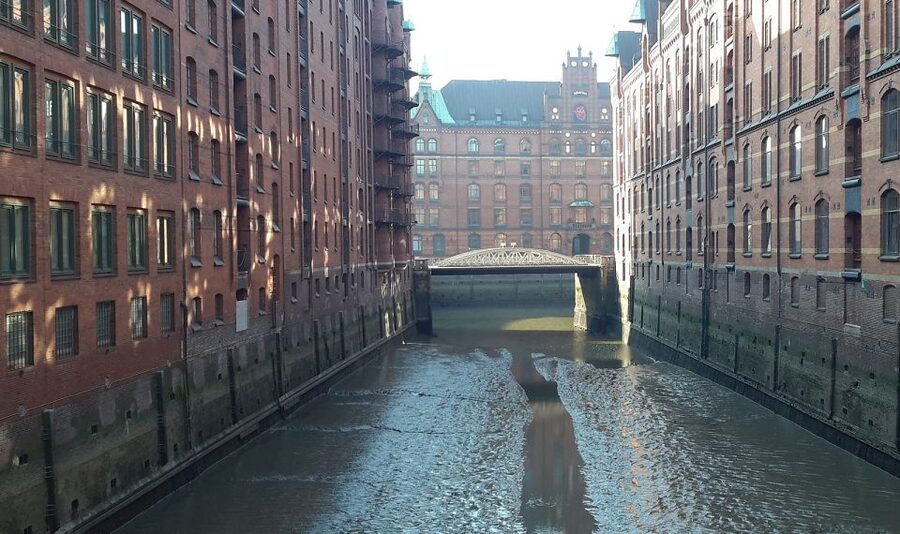
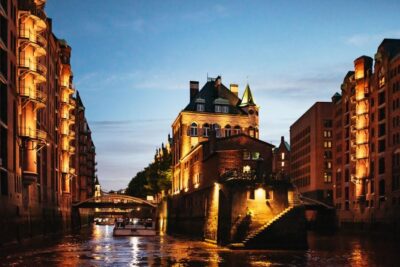
Speicherstadt is the heart of the historical section. Its long brick warehouses, canals, and enclosed courtyards reflect a city built around goods rather than grand royal monuments. The district is closely tied to Hamburg’s role in the Hanseatic League, the trading network that connected northern European ports.
The guide explains how the warehouses were used and how merchants stored valuable cargo there. Coffee and spices fit naturally into this story, but the larger point is the system of trade: goods arrived by water, were stored in secure buildings, and moved onward through the port.
The so-called Pfeffersäcken, or pepper sacks, were the wealthy Hanseatic merchants whose fortunes came from this trade. That nickname gives the story a human edge. It reminds you that spices were not merely kitchen ingredients. They were valuable commodities that helped pay for the city’s grand commercial district.
Look closely at the inner courtyards along Dutch Brook. Their tall walls and pointed architectural details can feel almost church-like. Yet the guide makes the important point that Hamburg’s daily life was driven less by religious institutions than by trade and money.
That contrast is one of the strongest parts of the tour. The buildings may suggest a quiet sacred setting, but their purpose was practical and commercial. You are looking at storage and shipping infrastructure dressed in impressive brickwork.
The tour is especially useful here if you want more than attractive photographs. Speicherstadt can be easy to admire without understanding. The guide gives the canals, warehouses, and courtyards a reason to exist, helping you read the district as a working port rather than a decorative old quarter.
Still, do not expect a museum visit. The tour remains outdoors, and the value depends on the guide’s storytelling. The strongest explanations focus on how the warehouses worked, how merchants profited, and how the district connected to Hamburg’s wider port economy.
Magellan Terraces and the view across the water
The walk continues to the Magellan Terraces, located across from Speicherstadt. This is a good place to pause and take in the relationship between the old warehouse district and the new harbor development.
From here, you can look back toward the brick buildings and waterways of Speicherstadt while also seeing the newer parts of HafenCity. The view makes the city’s redevelopment easy to grasp. Instead of discussing old and new Hamburg as separate subjects, the guide can place them in the same frame.
The terraces also provide a natural break in the walk. You have already moved from the Elbphilharmonie through the harbor’s commercial story, and now the route shifts toward present-day urban planning.
Because the tour lasts only two hours, each stop needs to do more than provide a photograph. Magellan Terraces works well because it lets you connect several parts of the tour: the harbor, the warehouses, the waterways, and the new buildings rising nearby.
Same city, a completely different kind of day:
- Hamburg: Sex and Crime in St. Pauli Tour for Ages 18+
★ 4.7 · 15,447 reviews - Hamburg: 1.5-Hour Harbor and Speicherstadt Day Cruise
★ 4.6 · 14,200 reviews - Hamburg: 90-Minute Evening Lights Harbor Cruise
★ 4.5 · 7,728 reviews - Hamburg: 2-Hour XXL Port of Hamburg Cruise Tour
★ 4.7 · 6,979 reviews
HafenCity’s modern answer to the old port
The final section visits HafenCity, the newest and most modern part of Hamburg. Its architecture offers a sharp contrast to Speicherstadt’s traditional brick warehouses.
Here, the guide points out sophisticated and environmentally friendly buildings and explains what modern design can do in a former port setting. The point is not simply that the buildings look new. HafenCity shows how Hamburg is trying to reuse its waterfront and create a different kind of city district.
You may find this section more open and less atmospheric than Speicherstadt. The old warehouse district has a strong visual character, while HafenCity is defined by new construction and changing urban space. That contrast is intentional, and it gives the tour a useful final question: how should a port city grow without losing its identity?
I like ending here rather than returning to the past. You finish with a sense that Hamburg is still being built and argued over. The city’s history is not locked inside the old warehouses. It continues in the choices made around them.
The tour also gives you a practical orientation to HafenCity. Starting at Sandtorkai and moving through the district helps you understand how the Elbphilharmonie, Speicherstadt, and modern waterfront fit together. If you plan to spend more time in this part of Hamburg, the walk can help you decide which buildings and museums deserve a later visit.
What the guide adds to the walk
The professional city guide is the main reason to book this experience instead of walking the same route alone. A map can show you the Elbphilharmonie, Speicherstadt, and HafenCity, but it will not automatically explain why the warehouses were built, how Hanseatic trade shaped Hamburg, or why the courtyards look so imposing.
The strongest guide experience is detailed, friendly, and open to questions. One guide was praised for answering questions in a well-informed and approachable way. That is useful here because the route covers several subjects in a short time: architecture, port commerce, urban change, coffee, spices, and local history.
The tour language is German. You should be comfortable following a German-speaking guide before booking. The supplied details do not list English or other language options, so do not assume you can join in another language.
The walk may also depend on the group. Some information is given in response to questions, so an active group can get more depth than a quiet one. Ask when a point catches your interest. Questions about the warehouse system, Hanseatic merchants, coffee roasting, or the environmental aims of HafenCity fit naturally into the route.
Is $16 a fair price for two hours?
At $16 per person, this is a good-value orientation walk if you want context rather than admission to attractions. The price covers a professional city guide and two hours of structured sightseeing. It does not cover entrance fees, so you are paying for the route and explanation, not access to Miniatur Wunderland, the spice museum, or the inside of the Elbphilharmonie.
That low price also makes the tour easy to pair with independent visits. You can take the walk first, learn where the main sights are, then decide which places deserve your own time and admission money later.
The value is strongest for first-time visitors and anyone who finds port history hard to follow without a local explanation. If you already know Speicherstadt and HafenCity well, the walk may feel less essential, particularly if you prefer exploring at your own pace.
Free cancellation up to 24 hours before the start and the option to reserve now and pay later make the booking flexible. The exact start times depend on availability. Wheelchair access is listed, which is useful for visitors who need an accessible route, though the experience still takes place outdoors.
Weather, footwear, and the two-hour pace
This is an outdoor walking tour, so weather should guide your decision. A winter outing in icy temperatures can be uncomfortable even when the explanations are strong. Wear warm layers and shoes suited to a full two hours outside, and check the forecast before you commit.
The route includes several districts and stops, but the duration is short enough to fit neatly into a morning or afternoon. You should not expect long visits inside attractions. The tour is built around movement, viewpoints, streets, courtyards, and exterior explanations.
The coffee stop deserves a little planning. If a 15-minute shopping pause does not interest you, use that time to ask about roasting or the history of imported coffee. If you prefer a nonstop historical walk, you may find the pause slows the rhythm.
For photography, the tour offers plenty of variety: the glass upper section of the Elbphilharmonie, brick warehouse walls, canals, enclosed courtyards, terraces, and new HafenCity buildings. The guide’s explanations give those pictures more meaning than a quick self-guided circuit would.
Who should book this Hamburg walking tour?
I would choose this tour for a first visit to Hamburg, especially if you want a clear introduction to the harbor districts without paying for several separate attractions. It suits people who enjoy architecture, port history, urban planning, and short guided walks.
It is also a good fit if you want to see the Elbphilharmonie from outside, understand Speicherstadt’s commercial purpose, and get an overview of HafenCity in one outing. The route gives you a sensible framework for returning later to Miniatur Wunderland, the spice museum, or other sights that require admission.
You may want to skip it if you need an English-language tour, dislike outdoor sightseeing in poor weather, or want extensive time inside the attractions along the route. It is also not the best choice for anyone seeking a slow coffee-focused visit, since the coffee stop is brief and may function partly as a shopping pause.
My verdict on Speicherstadt and HafenCity
I recommend booking this walk if you want Hamburg’s most famous harbor districts explained in plain terms. The best parts are the link between Hanseatic trade and Speicherstadt’s architecture, the view from Magellan Terraces, and the strong contrast between the old warehouses and modern HafenCity.
Go in knowing what you are buying: a German-language outdoor tour, not an attraction pass. Ask questions, dress for the weather, and treat the coffee, spice museum, and Miniatur Wunderland stops as points of orientation rather than included visits. At $16, it offers a useful foundation for exploring this part of Hamburg on your own.
FAQ
Where does the tour meet?
Meet directly at Sandtorkai 74, at the corner of Sandtorkai and Kaiserkai. The meeting point is on the square in front of the stairs, by the white wall with a hole in the middle.
How long does the tour last?
The guided walk lasts two hours.
What language is the tour conducted in?
The live tour guide speaks German. The supplied tour details list German as the available language.
Does the tour go inside the Elbphilharmonie?
The experience focuses on the Elbphilharmonie from the outside. Entrance fees are not included.
Are entrance fees included?
No. Admission to attractions along the route is not included.
Is the tour wheelchair accessible?
Yes. The tour is listed as wheelchair accessible.
Just added around Hamburg
- Hamburg: Historical Tour of the St. Pauli Sex Work District★ 4.4 · 215 reviews
- Hamburg: St. Pauli Food and Bier Tour★ 4.7 · 5 reviews
- Hamburg: Private Tour Red Light District Walking Tour★ 4.7 · 227 reviews
- St. Pauli Tour: Drag-Attack with Barbie Stupid & Lee Jackson★ 4.8 · 280 reviews
- St. Michael’s, Elbe Tunnel & Harbor 2-Hour Hamburg Tour★ 4.9 · 21 reviews
- Satt Pauli – der kulinarische Rundgang durch St. Pauli★ 4.8 · 12 reviews
- Hamburg: Safari tour in St. Pauli★ 4.9 · 11 reviews
- Hamburg: Reeperbahn Comedy Club★ 4.3 · 53 reviews
Hamburg Tours, compared.

1.5-Hour Harbor and Speicherstadt Day Cruise
Read our review →

Browse the lists this tour appears in