
Reviewed · HAMBURG TOURS
Hamburg: Private – Town Hall, Speicherstadt, Elbphilharmonie
Hamburg’s best city introduction may be this two-hour walk from the Rathaus to the Elbphilharmonie, because it links the old merchant city with the bold new harbor district. You move from ornate government rooms and medieval waterways to red-brick warehouses and one of Europe’s most talked-about concert halls.
I like the private format, which gives your group room to ask questions and set the pace. I also like the sharp range of subjects: trade, war, architecture, shipping, and city planning all appear in a short walk. The main catch is time. Two hours is enough for a strong overview, but not for long interior visits or a leisurely meal along the way.
In This Review
- Key points to know before you book
- A smart route through Hamburg’s past and present
- Starting beneath the Rathaus façade
- The former stock market and the Trostbrücke
- St. Nikolai, a church left in wartime ruin
- Deichstrasse and the merchant houses that survived
- Red brick, canals, and Speicherstadt
- HafenCity and the city’s new direction
- Ending at the Elbphilharmonie
- What two hours really gives you
- Is $294 good value for your group?
- Who will get the most from this walk?
- Should you book the Rathaus to Elbphilharmonie walk?
- FAQ
- How long does the Hamburg private city tour last?
- What is the price for the private group?
- Where does the tour start?
- Where does the tour finish?
- Which languages are available?
- Is transportation included?
- Can I cancel or pay later?
Key points to know before you book
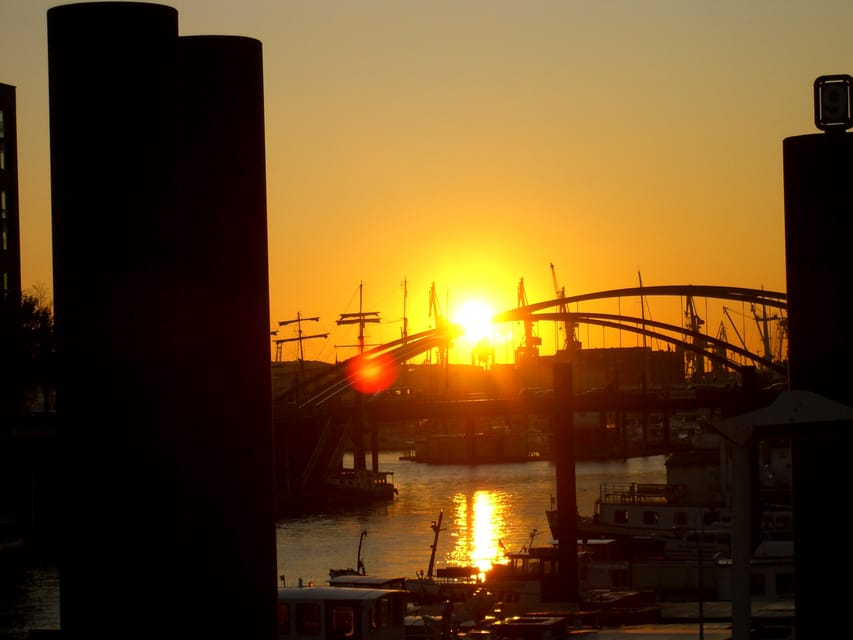
- Rathaus to Elbphilharmonie: The route crosses several centuries of Hamburg in one direction, ending beside the Elbe.
- A private group of up to 15: You get a guide focused on your party rather than a large shared group.
- Jutta is a noted guide: She uses humor, personal storytelling, and historical photographs to explain Hamburg’s changes.
- Speicherstadt is UNESCO-listed: The warehouse district gives you some of Hamburg’s most recognizable brick architecture.
- The tour is mainly a walking overview: Photo stops and short guided visits are central, so wear comfortable shoes.
- A useful two-hour orientation: This works well early in a Hamburg stay, especially if you want help deciding where to return later.
A smart route through Hamburg’s past and present
This is a compact city walk with a clear purpose. You begin at Hamburg’s political center and finish at its modern cultural landmark. Along the way, the guide connects buildings that can otherwise seem unrelated: a city hall, a former stock market, a ruined church, old merchants’ houses, port warehouses, and a new concert hall.
That route matters. Hamburg can feel spread across several districts, and its story is tied to water, trade, and rebuilding. Instead of treating each sight as an isolated photo stop, the tour gives you a basic map of how the city grew around its waterways and later turned former port land into HafenCity.
The tour is offered in English, German, Spanish, or French. Jutta receives especially warm praise for her English explanations, humor, flexibility, and use of photographs showing how Hamburg changed over time. A guide who can show earlier views of the city adds useful context, particularly around the war damage and modern rebuilding.
Because the tour is private, you can ask about the details that interest you most. A family may want the clearest version of Hamburg’s wartime story. Architecture fans may prefer to linger over the Rathaus and Elbphilharmonie. A first-time visitor may simply need a practical sense of where the old town, Speicherstadt, HafenCity, and harbor sit in relation to one another.
A few more Hamburg trips to weigh up
- Your private 3-hour Hamburg driving tour with a former policeman
★ 5.0 · 304 reviews - Hamburg: Private Tour Red Light District Walking Tour
★ 4.7 · 227 reviews - Hamburg: Private Couples’ Photoshoot and Walking Tour
★ 4.9 · 212 reviews
Starting beneath the Rathaus façade
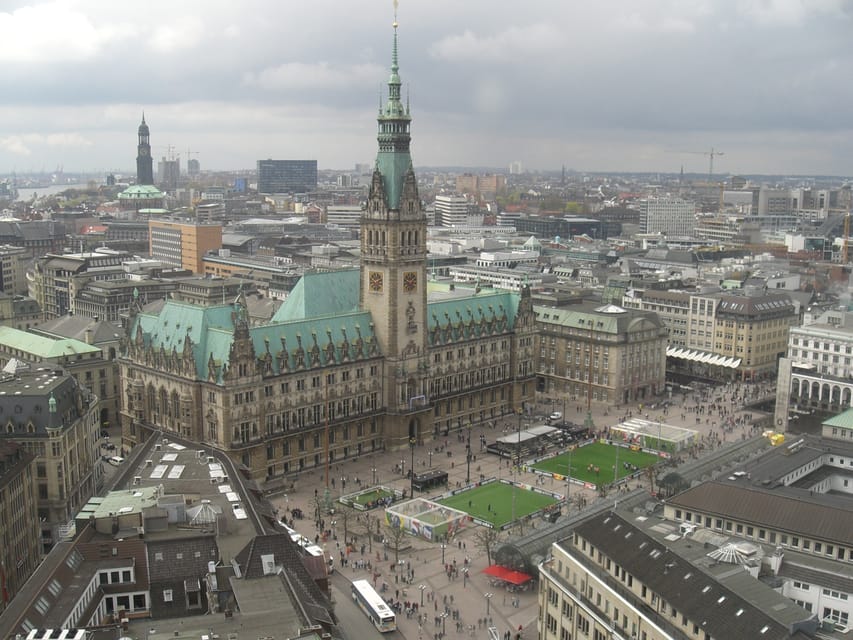
The tour begins at Hamburg’s Rathaus, the city hall. This neo-Renaissance building is not a modest municipal office. Its scale and decoration reflect Hamburg’s long commercial success and civic pride.
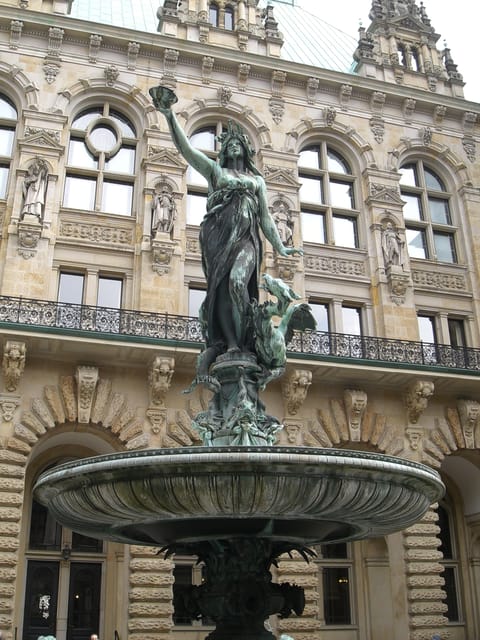
You get a guided visit and photo stop of about 15 minutes. The grand entrance hall is an important part of the experience, since the guide explains how Hamburg’s government works and points out details in the building. One memorable feature is a fountain decorated with mystical figures, each with its own story.
I would pay attention here rather than rushing straight to exterior photos. The Rathaus sets up a useful contrast for the rest of the walk. It represents public power and wealth, while the later stops show the working port and the people who made their money through trade.
The short visit also means you should keep your expectations in check. This is not a full architectural tour of every room, and the exact interior access may depend on conditions at the time. Still, as an opening stop, it gives you a strong first look at Hamburg’s civic character.
The former stock market and the Trostbrücke
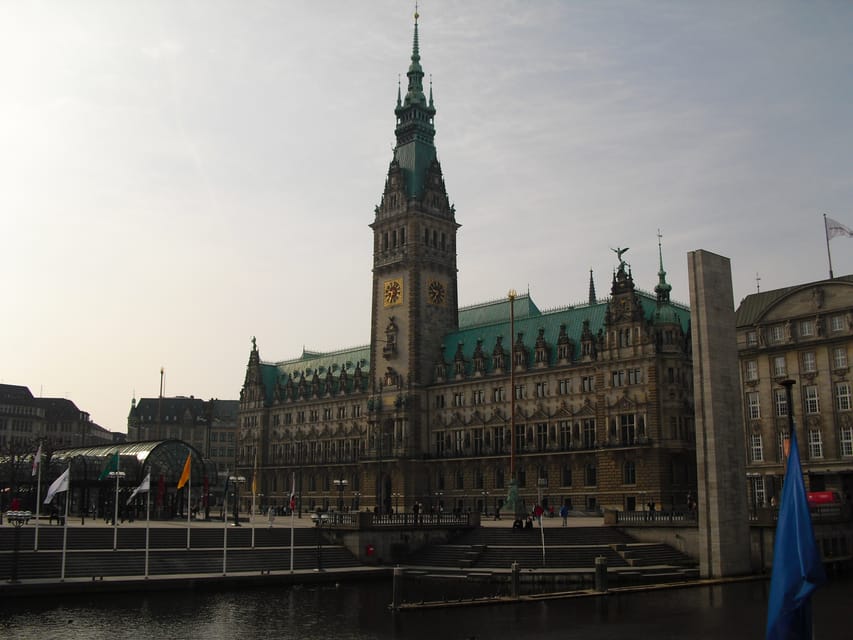
Opposite the Rathaus is the former stock market, now home to the Hamburg Chamber of Commerce. The guide spends roughly 10 minutes here, explaining the connection between city government and commerce.
That pairing is one of the route’s most useful details. Hamburg was shaped by business as much as by politics, and the two buildings facing one another make that relationship easy to see. You do not need an economics lecture to understand the point: the city’s public life and trading power developed side by side.
The walk continues to Trostbrücke, a historic bridge and photo stop. From here, the guide helps you read the older waterways and the city’s former port area. The stop is brief, about five minutes, but it acts as a transition from grand civic buildings to the places where Hamburg’s port activity once took place.
If you enjoy long stops at individual monuments, this quick rhythm may feel hurried. If you want a broad first look, the pace works well. You keep moving, but each location has a clear role in the story.
St. Nikolai, a church left in wartime ruin
Near the old Nicolaifleet, the remains of St. Nikolai Memorial provide the tour’s most serious pause. The church was destroyed during World War II, and its ruin now recalls the impact of the war on Hamburg and on Western Europe.
The guided stop lasts around 10 minutes. That is enough time to understand why the site has been preserved and to look closely at what remains. The mood changes here. After the Rathaus’s polished grandeur and the commercial setting around the Chamber of Commerce, St. Nikolai brings the cost of war into view.
I appreciate the fact that the route does not treat Hamburg only as a handsome port city. The memorial adds needed balance. You see how much of the older city survived, but also how much was lost.
This is a photo stop and guided visit rather than a long museum session. If you want a detailed account of the bombing of Hamburg or a full examination of the memorial’s exhibits, you will need extra time elsewhere. On this walk, the guide gives you the essential frame and lets the ruined church speak for itself.
Same city, a completely different kind of day:
- Hamburg: Sex and Crime in St. Pauli Tour for Ages 18+
★ 4.7 · 15,447 reviews - Hamburg: 1.5-Hour Harbor and Speicherstadt Day Cruise
★ 4.6 · 14,200 reviews - Hamburg: 90-Minute Evening Lights Harbor Cruise
★ 4.5 · 7,728 reviews - Hamburg: 2-Hour XXL Port of Hamburg Cruise Tour
★ 4.7 · 6,979 reviews
Deichstrasse and the merchant houses that survived
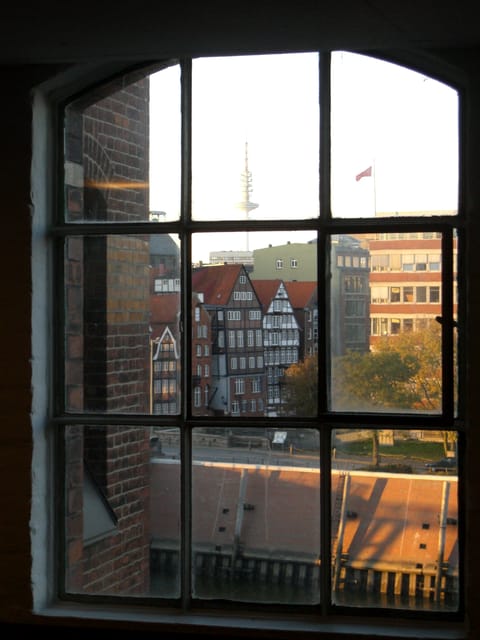
A short walk brings you to Deichstrasse, one of the most atmospheric sections of the route. Its protected merchant houses date from the 17th century and preserve the look of Hamburg before modern port construction and wartime destruction changed much of the city.
The tour allows about 15 minutes here, longer than at several other stops. That makes sense. Deichstrasse is not one single monument. It is a stretch of historic buildings, narrow views, and water-side character that you understand best by walking through it.
The guide can point out how the houses relate to the old canal and merchant life. You may also find places along the street for a meal, ice cream, or a whiskey tasting. Those options are not part of the tour price, but they make Deichstrasse a good place to note for a later return.
A floating bridge offers a view toward Nicolaifleet, although the water view depends on the tide. That small detail matters. At low tide, the water may not look as you expect, so do not judge the stop by the canal view alone. The houses and the street itself are the main draw.
Red brick, canals, and Speicherstadt
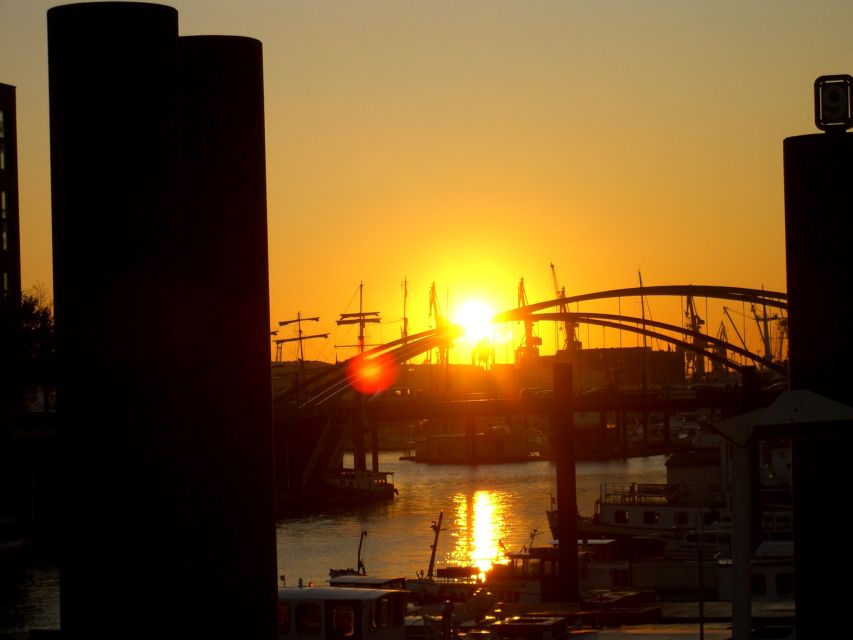
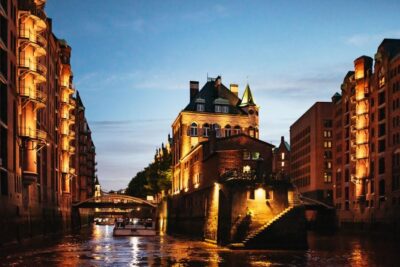
The route then shifts into the 19th century with Speicherstadt, Hamburg’s famous warehouse district and a UNESCO World Heritage site. The red-brick buildings, narrow waterways, and old loading areas show how goods once moved through the port.
The guided section lasts about 10 minutes, so think of it as an introduction rather than a complete tour of the district. The warehouses once held imported goods delivered by flat-bottomed boats. Their scale gives you a sense of the port’s commercial reach without requiring a separate harbor excursion.
You might visit a coffee roastery during this part of the walk. Since the details can vary, treat that as a possible added stop rather than the central promise of the tour. The district itself is the reason to come, and it offers some of Hamburg’s strongest architecture for photographs.
Speicherstadt is also where the tour’s historical thread becomes easy to follow. Deichstrasse shows the merchant city at street level. Speicherstadt shows the storage system that supported international trade. The buildings are attractive, but their real value comes from understanding what they were built to do.
HafenCity and the city’s new direction
From the old warehouses, you move into HafenCity, a major modern city-planning project. The contrast is deliberate. Red brick and historic canals give way to new construction, open spaces, and contemporary architecture.
The guide spends about 10 minutes here. You get an overview of how Hamburg has reused former harbor land and added a new urban district beside the older city. This is a useful stop for anyone interested in architecture or planning, but it also helps explain why Hamburg can feel like several cities joined together.
You will not get a full planning seminar in ten minutes. Instead, the guide points out the main ideas and shows how the newer district connects with Speicherstadt. I like this part because it prevents the tour from becoming a nostalgia walk. Hamburg is not simply preserving its past. It is also deciding what to do with the spaces left by a changing port.
The transition can be visually striking, though some visitors may prefer the older areas. If historic streets are your only priority, HafenCity may feel less intimate. If you want to see how Hamburg is changing now, it is an essential part of the route.
Ending at the Elbphilharmonie
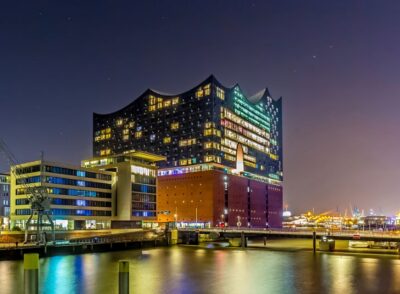
The final stop is the Elbphilharmonie, Hamburg’s dramatic concert hall, completed in 2017. The tour ends here after a 15-minute guided visit and photo stop.
Its architecture gives the walk a strong finish. After seeing the city hall, old port channels, war memorial, merchant houses, warehouses, and new district, you arrive at a building that represents Hamburg’s modern cultural ambitions.
The tour information emphasizes the hall’s striking design and its role as a venue for concerts by leading musicians. This experience does not include a concert ticket, and the listed activity is a guided visit and photo stop. You should therefore see it as an introduction to the building, not a performance outing.
Ending here is practical, too. The official drop-off point is the Elbphilharmonie at Platz der Deutschen Einheit. You can continue exploring HafenCity from there, make a separate plan around the hall, or use the stop as a natural end to your old-town walk.
What two hours really gives you
The listed stops add up to a brisk series of visits, and that tells you how to approach the tour. You are getting coverage and context, not long, unhurried time at every sight.
That is a good trade for a first visit. In two hours, you can identify the places most worth returning to. You can also ask a private guide to fill in gaps that a self-guided walk might leave unanswered, especially around Hamburg’s wartime destruction and port development.
The walk has no transport included, so you must make your own way to the meeting point. The starting point is generally at the Hamburger Rathaus, though the exact meeting location can vary by booking option. Confirm it before you set out, and allow time to arrive without rushing.
Transportation is not needed between the listed sights as part of the tour. The route is designed around walking from the Rathaus to the Elbphilharmonie. Comfortable shoes are sensible, since even a short city walk can feel long when you are stopping, turning, and listening.
Is $294 good value for your group?
The price is $294 per private group of up to 15, not per person. For one or two people, that is a significant cost for a two-hour walk. For a larger family, friend group, or small organization, the arithmetic looks much better.
At the full group limit, the price works out to less than $20 per person. You get a professional guide, a private format, and a route that joins several major Hamburg sights without arranging separate visits. The value is strongest when your group wants conversation and flexibility rather than the lowest possible price.
A shared walking tour may cost less per person, but it may not offer the same control over questions or pace. On the other hand, this tour does not include transportation, meals, admission to a concert, or a long museum visit. You are paying for the guide’s time and the connected city walk.
I would consider it a good buy for a group of six or more, particularly on a first day in Hamburg. For a couple watching every euro, a cheaper self-guided route may be enough, with paid admission added only where needed.
Who will get the most from this walk?
This tour suits you best if you want a clear first orientation to Hamburg in a short block of time. It is especially useful for families, mixed-interest groups, and visitors who want history explained in plain language rather than read from plaques.
It also works well for groups with different interests. One person gets architecture, another gets port history, another gets wartime memory, and another gets modern city planning. The private setting lets you ask the guide to spend more time on the subjects that matter to your group.
Jutta is worth requesting if the booking system allows it, based on the strong praise for her humor, flexibility, English explanations, and historic photographs. The tour provider is Schoenes Hamburg, and guides may also lead in German, Spanish, or French.
You may want something else if your priority is a deep interior tour of the Rathaus, a full museum visit at St. Nikolai, or a concert at the Elbphilharmonie. This walk points you toward those experiences, but it does not replace them.
Should you book the Rathaus to Elbphilharmonie walk?
Book it if you want Hamburg’s main story in one efficient route, especially with a private group. The combination of the Rathaus, St. Nikolai, Deichstrasse, Speicherstadt, HafenCity, and Elbphilharmonie gives you both old Hamburg and the city it is becoming.
I would book early in your stay so you can use the guide’s suggestions to shape the rest of your visit. Choose it with realistic expectations: this is a brisk, guide-led overview with excellent variety, not a slow tour of every interior.
The flexible cancellation policy allows a full refund when you cancel at least 24 hours ahead, and you can reserve now and pay later. Those terms help if your Hamburg plans are still shifting, but the real decision is simpler: large groups and first-time visitors should find the private format worthwhile, while solo visitors and couples may prefer a lower-cost shared walk.
FAQ
How long does the Hamburg private city tour last?
The tour lasts two hours.
What is the price for the private group?
The price is $294 for a group of up to 15 people.
Where does the tour start?
There are two listed starting options at the Hamburger Rathaus. The exact meeting point may vary depending on the option booked.
Where does the tour finish?
The tour finishes at the Elbphilharmonie Hamburg, at Platz der Deutschen Einheit 1, 20457 Hamburg.
Which languages are available?
The live guide is available in German, English, Spanish, and French.
Is transportation included?
No. Transportation costs to the meeting point are not included.
Can I cancel or pay later?
You can cancel up to 24 hours in advance for a full refund. You can also reserve the tour and pay later.
Just added around Hamburg
- Hamburg: Historical Tour of the St. Pauli Sex Work District★ 4.4 · 215 reviews
- Hamburg: St. Pauli Food and Bier Tour★ 4.7 · 5 reviews
- Hamburg: Private Tour Red Light District Walking Tour★ 4.7 · 227 reviews
- St. Pauli Tour: Drag-Attack with Barbie Stupid & Lee Jackson★ 4.8 · 280 reviews
- St. Michael’s, Elbe Tunnel & Harbor 2-Hour Hamburg Tour★ 4.9 · 21 reviews
- Satt Pauli – der kulinarische Rundgang durch St. Pauli★ 4.8 · 12 reviews
- Hamburg: Safari tour in St. Pauli★ 4.9 · 11 reviews
- Hamburg: Reeperbahn Comedy Club★ 4.3 · 53 reviews
Hamburg Tours, compared.

1.5-Hour Harbor and Speicherstadt Day Cruise
Read our review →

Browse the lists this tour appears in