
Reviewed · HAMBURG TOURS
Hamburg: Private Tour UNESCO Speicherstadt and HafenCity
Hamburg’s old warehouse district and new waterfront sit side by side, making this private walking tour a useful way to read the city in a short time. You move from brick warehouses and former customs canals to the sharp modern lines of HafenCity, ending with a close outside view of the Elbphilharmonie.
I like the private format, which gives your group room to ask questions, and I like the mix of architecture and working history. You hear about the goods once stored here, the jobs that filled the warehouses, and the unusual round towers on the eastern buildings. The main consideration is that this is an outdoor tour in all weather, and it does not include entry to the Elbphilharmonie.
In This Review
- Key details at a glance
- Starting at Meßberg, with Hamburg’s past in view
- Chile House and the Kontorhaus District
- Speicherstadt: brick, canals, and warehouse work
- Why the UNESCO setting matters
- HafenCity and a new waterfront idea
- The Elbphilharmonie finale
- Is $294 good value for a private group?
- Timing, weather, and mobility
- What the guide adds
- Who should book this Hamburg walk?
- Should you book it?
- FAQ
- How long does the private Hamburg tour last?
- Where does the tour begin?
- Where does the tour finish?
- Is entry to the Elbphilharmonie included?
- What languages are available?
- How many people can join the private group?
- Does the tour run in rainy weather?
- Is the tour suitable for wheelchair users?
Key details at a glance
- A private group for up to 15: You receive a professional, certified guide for your own party rather than joining a large public group.
- A walk through two very different Hamburgs: Speicherstadt supplies the brick warehouses and canal views, while HafenCity brings newer waterfront architecture.
- Chile House and Kontorhaus District context: The route begins near the famous Chile House and explains the district’s place in Hamburg’s commercial past.
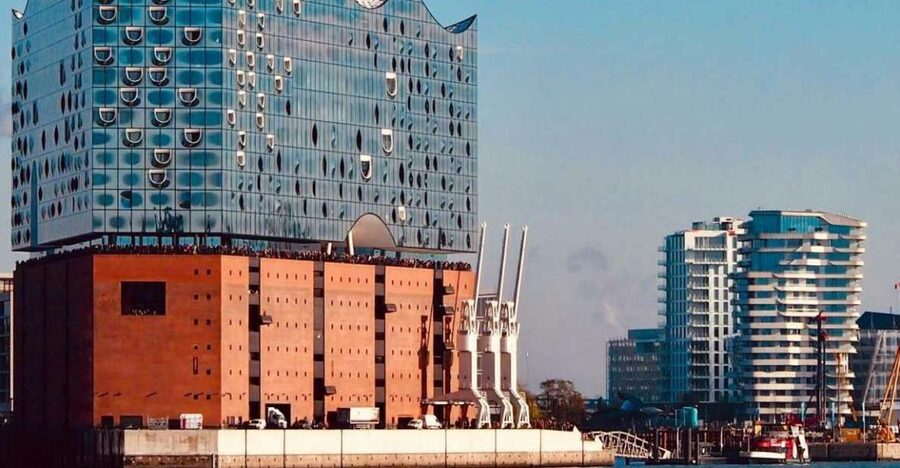
- The Elbphilharmonie from outside: The tour finishes at the concert hall, but its viewing platform is left for you to visit independently.
- Four guide languages: Tours are offered in German, English, Spanish, and French.
- A weatherproof plan is essential: Bring an umbrella and rain gear because the walk runs in all weather and is not suitable for wheelchair users.
Starting at Meßberg, with Hamburg’s past in view
Your meeting point is on Wandrahmsteg bridge, close to U Meßberg station. Use the Deichtorhallen exit at the corner of Willy-Brandt-Strasse and Wandrahmsteg, then head toward the bridge.
This is a sensible starting place because you are already near the Kontorhaus District, the former customs canal, and the eastern edge of Speicherstadt. The first views help explain Hamburg as a trading city before you enter the warehouse quarter itself.
The guide begins with the broader setting rather than rushing straight to a single building. You get an early look toward the Elbphilharmonie, which gives the walk a useful visual thread. By the end, you will have followed Hamburg’s growth from merchant warehouses to a new waterfront district.
Allow a little extra time to find the bridge, especially if you are unfamiliar with Hamburg’s U-Bahn exits. The tour is on foot, so comfortable shoes and clothing suited to rain are practical choices.
A few more Hamburg trips to weigh up
- Your private 3-hour Hamburg driving tour with a former policeman
★ 5.0 · 304 reviews - Hamburg: Private Tour Red Light District Walking Tour
★ 4.7 · 227 reviews - Hamburg: Private Couples’ Photoshoot and Walking Tour
★ 4.9 · 212 reviews
Chile House and the Kontorhaus District
The Chile House is one of the first major stops, with about ten minutes set aside for a photo stop. This is more than a quick building snapshot. The area introduces Hamburg’s Kontorhaus District, a business quarter shaped by offices, trade, and the city’s commercial power.
The building’s name is part of the city’s overseas trading story, and its distinctive form makes it an easy landmark to recognize. Your guide connects the Chile House with the nearby warehouse district, helping you see that these places were not built as isolated showpieces. Offices, canals, customs work, and storage all formed one business system.
The stop is brief, so you should treat it as an introduction rather than a full architectural study. If you like taking photographs, the sharp lines and unusual shape give you a clear early subject. If you want a long pause inside the building, this experience will not provide it.
This part of the walk also gives you a useful way to understand the difference between the Kontorhaus District and Speicherstadt. One was linked more closely to offices and merchants, while the other handled storage and goods. The guide’s job here is to connect those functions rather than simply name the buildings.
Speicherstadt: brick, canals, and warehouse work
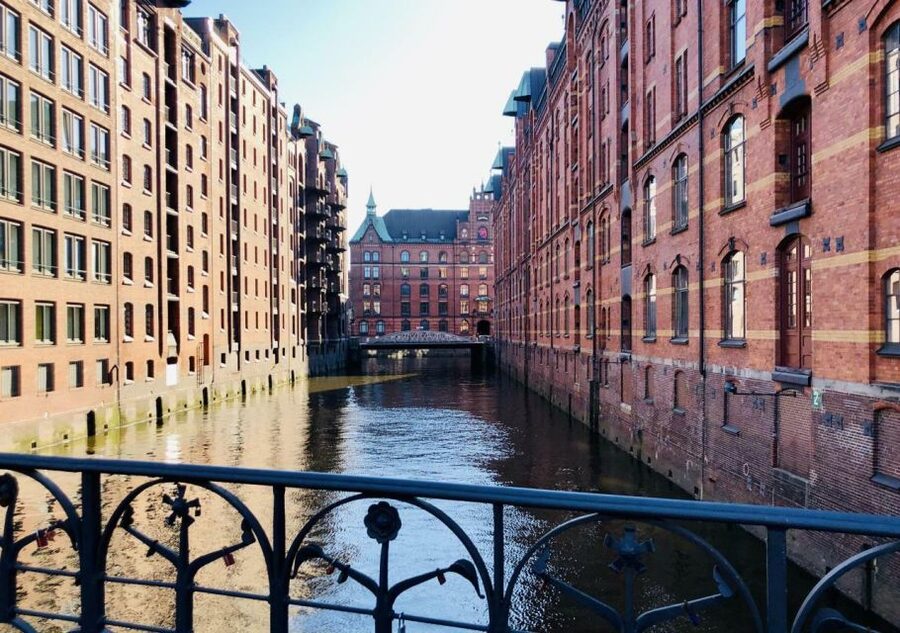
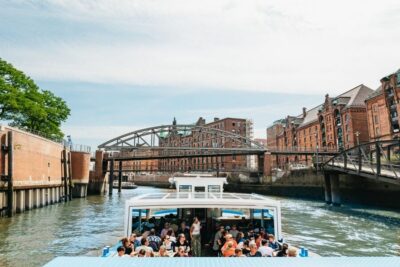
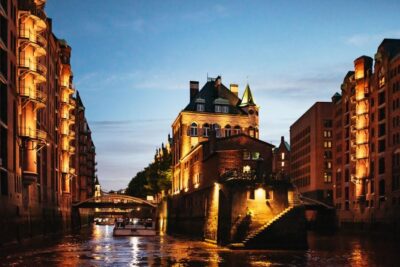
Speicherstadt is the heart of the tour. The district is recognized by UNESCO, and its character comes from the combination of tall brick buildings, narrow waterways, bridges, and passages between the warehouses.
Your guide explains how this warehouse complex began and what kind of work once took place inside. You hear about the professions tied to the stored goods and how merchandise still reaches the buildings. That last point matters because it keeps Speicherstadt from feeling like a preserved film set. The district has changed, but the connection between the buildings and trade remains part of its identity.
I especially like the attention given to details that are easy to miss when walking alone. The eastern buildings have round towers, and the tour explains why they were built that way. Small architectural features like these give you something concrete to look for as you continue through the quarter.
The tour also includes the chance to discover a small castle with your guide. The supplied details do not name it or promise an interior visit, so think of this as a stop or feature encountered along the walk rather than a separate castle attraction. It adds a bit of surprise to a district most people know for warehouses alone.
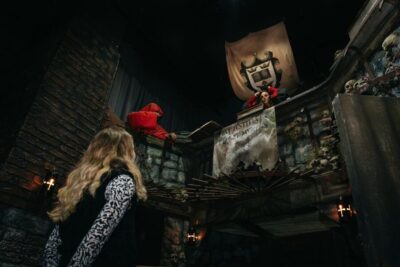
Speicherstadt is also home to several well-known attractions. You will hear about the Speicherstadt Museum, the Spice Museum, Miniatur Wunderland, and Hamburg Dungeon. None of these admissions is included in the two-hour walk, but the information can help you plan a second visit or choose what to do nearby after the tour.
Miniatur Wunderland is especially useful to note if you are building a day around the district, while the Speicherstadt Museum and Spice Museum offer more direct links to the area’s working past. The tour does not replace time inside those attractions. It gives you the setting and background first.
Why the UNESCO setting matters
A UNESCO designation can sound like a label that belongs in a guidebook and nowhere else. Here, it helps explain why the district feels so coherent. The warehouses, waterways, bridges, and commercial buildings work together as one historic urban area.
You are not only looking at old brick facades. You are seeing how Hamburg used water, customs controls, and storage buildings to handle international trade. The guide’s stories about former professions bring a human scale to that system.
The historic quarter is also a good place for questions. The high review scores for this tour center on guides who are friendly, competent, and able to answer many kinds of questions. Several German-language comments praise the amount of background information and the warm, personal way it was presented.
No guide names are provided, so I would not book expecting a particular individual. You can choose German, English, Spanish, or French, and the private setup should make it easier to ask about the subjects that interest you most.
Same city, a completely different kind of day:
- Hamburg: Sex and Crime in St. Pauli Tour for Ages 18+
★ 4.7 · 15,447 reviews - Hamburg: 1.5-Hour Harbor and Speicherstadt Day Cruise
★ 4.6 · 14,200 reviews - Hamburg: 90-Minute Evening Lights Harbor Cruise
★ 4.5 · 7,728 reviews - Hamburg: 2-Hour XXL Port of Hamburg Cruise Tour
★ 4.7 · 6,979 reviews
HafenCity and a new waterfront idea
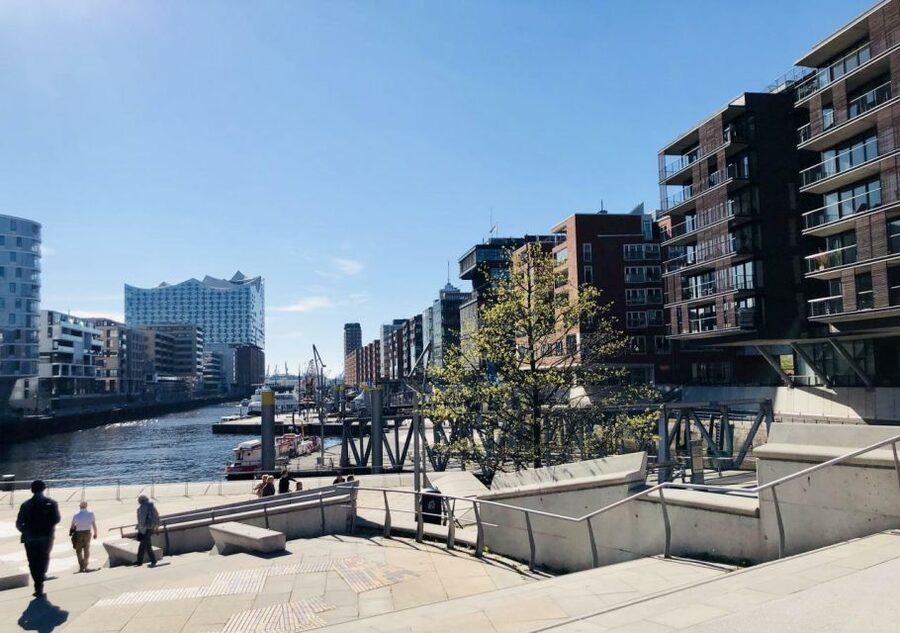
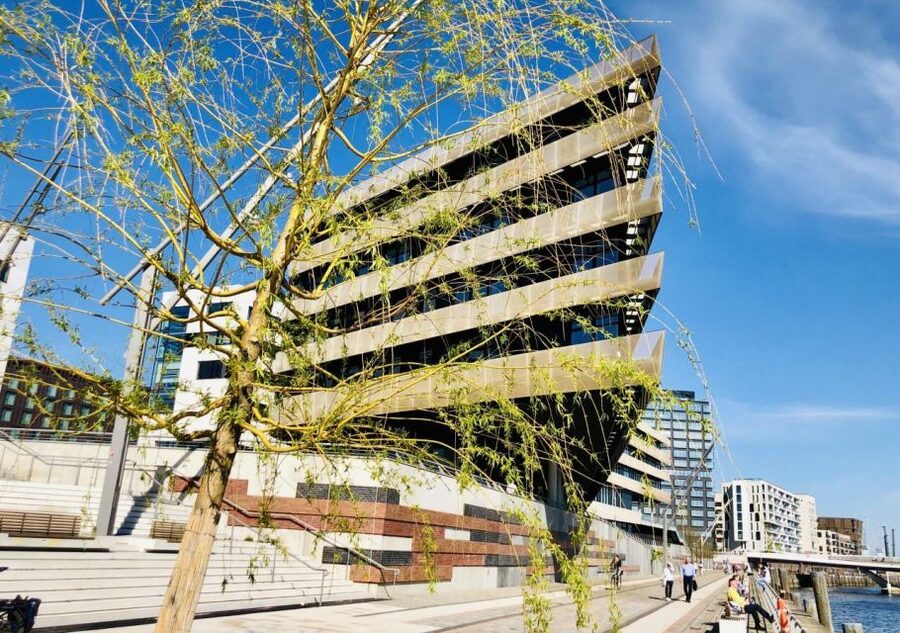
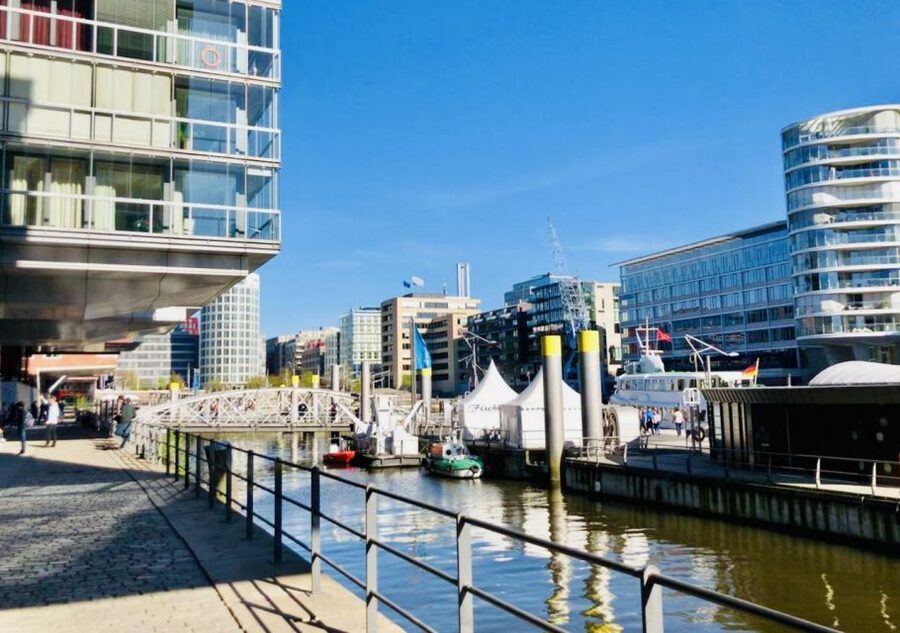
After Speicherstadt, the walk moves into HafenCity, a 157-hectare waterfront district described as Europe’s largest inner-city development project. The change is immediate in spirit. Instead of historic storage blocks and canals, you encounter newer building projects and modern architecture.
This contrast is one of the strongest reasons to choose the tour. Hamburg is not presented as a city that stopped in its trading past. You see how former port and warehouse areas have been given new roles, and you can compare older brick construction with the more recent waterfront designs.
The HafenCity portion has about 15 minutes of guided time listed, though the full experience lasts two hours and includes walking between sites and explanations along the route. Do not read the short stop times as a sign that each area receives only a rushed glance. Still, the tour is an overview, not a detailed architectural seminar.
I would use this section to ask your guide how HafenCity fits into Hamburg today. The supplied information promises discussion of impressive building projects, but it does not name individual developments beyond the Elbphilharmonie. That keeps the focus broad and makes the tour useful for first-time orientation.
The modern district may appeal less if you only want old Hamburg. If your interest is limited to historic streets, you might prefer a Speicherstadt-only walk. For most visitors, though, seeing both districts in sequence makes the city’s changes easier to understand.
The Elbphilharmonie finale
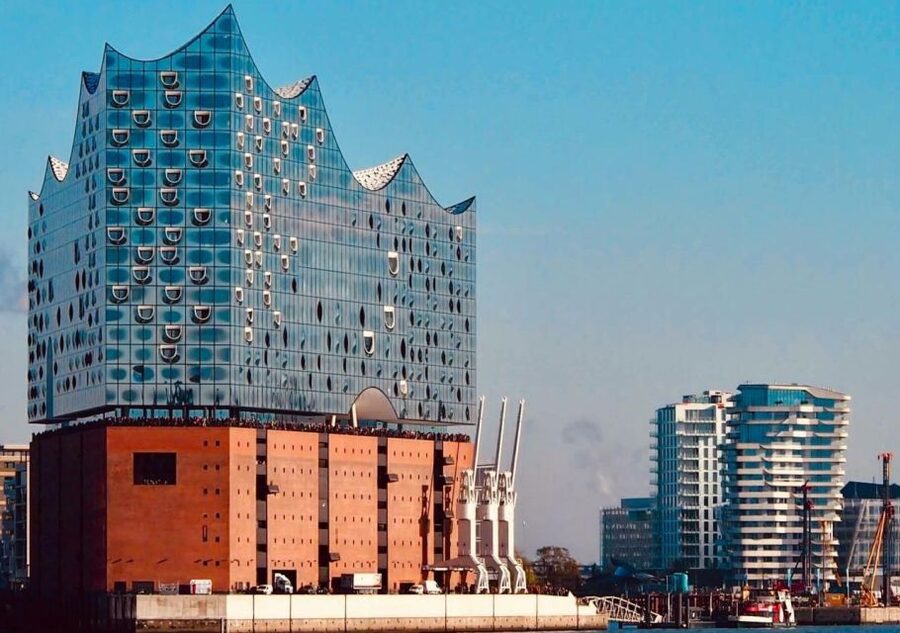
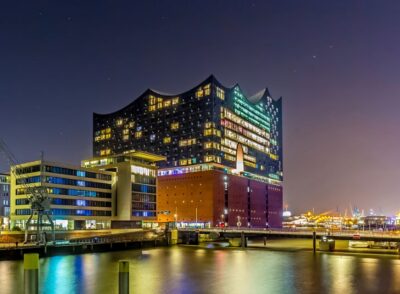
The tour ends at Platz der Deutschen Einheit, in front of the Elbphilharmonie. The guided portion here lasts about 15 minutes, giving you time to take in the building from outside and hear about its place in Hamburg’s waterfront development.
The exterior is the visual payoff of the route. After brick warehouses and canal-side buildings, the concert hall feels bold and distinctly modern. The tour lets you see it as part of HafenCity rather than as a disconnected concert venue.
Entry is not included. You will not tour the concert hall as part of this experience, and the guide does not take you to its viewing platform during the booked walk. You can visit the platform afterward in your own time, which is useful if you want to continue without keeping the whole group on a fixed schedule.
That arrangement gives you some freedom, but you should plan separately if the platform matters to you. The tour guarantees an outside finish, not admission or a reserved time inside the building.
Is $294 good value for a private group?
The price is $294 per group of up to 15 people. That is a substantial amount for two hours if you are alone or traveling as a couple. It becomes much more reasonable when divided among a family or a full group.
At the maximum size, the cost works out to less than $20 per person. Even with six people, the private format can make sense if you value your own pace and the ability to ask questions. For one or two people, a shared walking tour would likely be the better financial choice if one is available on your dates.
The price includes a professional, certified guide. It does not include museum admissions, entry to the Elbphilharmonie, food, or transport to and from the meeting point. The value comes from the guide’s interpretation, the private setting, and the efficient connection between three important parts of Hamburg.
I would book it for a family, group of friends, or small organization that wants one clear introduction to the city center and waterfront. You are paying less for tickets and more for structure, context, and personal attention.
Timing, weather, and mobility
The experience lasts two hours, with starting times shown based on availability. Because it is a walking tour through outdoor districts, rain can change the mood but not the schedule. Bring an umbrella and rain gear, and do not assume that a forecast calling for showers will lead to a cancellation.
The walk is not suitable for wheelchair users. The supplied information does not give a route length, surface details, or specific assistance arrangements, so anyone with mobility concerns should ask the provider before booking.
The private format is useful for groups with mixed interests. You can ask about architecture, trade, city planning, museums, or the Elbphilharmonie without waiting for a large group to move on. The guide languages are German, English, Spanish, and French.
The tour’s short duration also makes it easy to fit into a Hamburg visit. You can use it near the start of your stay to get your bearings, or schedule it before an afternoon at one of the nearby museums and attractions. Just remember that the walk ends at the Elbphilharmonie, not back at Meßberg.
What the guide adds
The most praised part of this experience is the guide service. The strongest descriptions focus on friendly guides who explain the subject clearly, answer many types of questions, and bring both past and present Hamburg into the walk.
That matters in Speicherstadt because the buildings can look impressive without explaining themselves. A guide can point out why the warehouses were designed as they were, what happened behind the doors, and how goods still relate to the district.
The comments also praise the personal feeling of the storytelling. That suggests you can expect more than a list of dates and building names, though no specific guide is assigned in the information provided. A private group gives you the best chance to shape the conversation around your own interests.
The rating is 4.8 from nine reviews, with praise repeatedly directed at competence, friendliness, and background information. The sample is small, so I would treat it as a strong signal rather than a guarantee that every guide or departure will feel identical.
Who should book this Hamburg walk?
This tour suits first-time visitors who want a compact introduction to Hamburg’s architecture and commercial past. It also works well for families and private groups that prefer a guide who can adjust explanations and answer questions.
Choose it if you want:
- A private guide for up to 15 people
- A clear link between Kontorhaus District, Speicherstadt, HafenCity, and the Elbphilharmonie
- Background on warehouse work, goods, and customs canals
- A short outdoor activity that fits around other plans
- A guided look at modern waterfront construction
Think twice if you need indoor attractions, wheelchair access, or a full visit inside the Elbphilharmonie. The route is also less suitable if you want long museum visits or extensive time at each photo stop.
Should you book it?
Book this tour if you are traveling with a group and want a well-organized, guide-led introduction to Hamburg’s old warehouse quarter and new waterfront. The strongest value comes when you split the $294 cost among several people, then use the ending at the Elbphilharmonie as a starting point for your own afternoon.
For a solo visitor or couple watching the budget, the price is harder to justify for two hours. For a private group that values questions, clear local context, and a route that covers several major sights without museum admissions, it is a practical choice. Bring rain gear, wear good walking shoes, and plan the Elbphilharmonie viewing platform separately.
FAQ
How long does the private Hamburg tour last?
The tour lasts two hours.
Where does the tour begin?
You meet the guide on Wandrahmsteg bridge near U Meßberg station. Use the Deichtorhallen exit at Willy-Brandt-Strasse and the corner of Wandrahmsteg.
Where does the tour finish?
The tour finishes at Platz der Deutschen Einheit 1, in front of the Elbphilharmonie.
Is entry to the Elbphilharmonie included?
No. The tour only visits the Elbphilharmonie from outside. You can visit the concert hall’s viewing platform afterward in your own time.
What languages are available?
The live tour guide is available in German, English, Spanish, and French.
How many people can join the private group?
The price covers a private group of up to 15 people.
Does the tour run in rainy weather?
Yes. The tour takes place in all weather conditions. You should bring an umbrella and rain gear.
Is the tour suitable for wheelchair users?
No. The experience is listed as not suitable for wheelchair users.
Just added around Hamburg
- Hamburg: Historical Tour of the St. Pauli Sex Work District★ 4.4 · 215 reviews
- Hamburg: St. Pauli Food and Bier Tour★ 4.7 · 5 reviews
- Hamburg: Private Tour Red Light District Walking Tour★ 4.7 · 227 reviews
- St. Pauli Tour: Drag-Attack with Barbie Stupid & Lee Jackson★ 4.8 · 280 reviews
- St. Michael’s, Elbe Tunnel & Harbor 2-Hour Hamburg Tour★ 4.9 · 21 reviews
- Satt Pauli – der kulinarische Rundgang durch St. Pauli★ 4.8 · 12 reviews
- Hamburg: Safari tour in St. Pauli★ 4.9 · 11 reviews
- Hamburg: Reeperbahn Comedy Club★ 4.3 · 53 reviews
Hamburg Tours, compared.

1.5-Hour Harbor and Speicherstadt Day Cruise
Read our review →

Browse the lists this tour appears in