
Reviewed · CYCLING TOURS
Hamburg: City Tour by Bike with Elbphilharmonie
Hamburg makes sense from a bicycle seat. You move from the calm waters of the Alster to brick-built Speicherstadt, then into sharp-edged HafenCity and the 110-meter Elbphilharmonie. The route gives you old harbor Hamburg and new harbor Hamburg in one steady ride.
I like the way this tour links famous sights with less obvious corners, including the old Gängeviertel and the birthplace memorial for Johannes Brahms. I also like the value: for $39, you get a bicycle, a live guide, a city map, and three hours of guided sightseeing. The main consideration is access to the Elbphilharmonie plaza, which can be restricted on major event days.
In This Review
- Key points to know before you book
- Starting in Rotherbaum beside Hamburg’s university quarter
- Following the Alster from Außenalster to Binnenalster
- Old Hamburg through the Gängeviertel and the Brahms memorial
- City Hall, Neuer Wall, and Hamburg’s polished center
- Deichstraße and the story of the great fire
- Speicherstadt, brick warehouses above the Fleete
- HafenCity and the changing waterfront
- The Elbphilharmonie from plaza level and below
- Neustadt, St. Michael’s, and Peterstraße
- Baumwall and the St. Pauli piers
- What the $39 price really gives you
- Who will like this ride most
- Practical details that affect the day
- Should you book the Hamburg city bike tour?
- FAQ
- How long does the Hamburg bike tour last?
- What is the starting point?
- Where does the tour finish?
- Is a bicycle included?
- Is a guide included?
- Does the route visit the Elbphilharmonie?
- Does the tour include entry to the Elbphilharmonie?
- Which Hamburg sights are included on the route?
- What extras are included?
- Can I cancel the booking?
Key points to know before you book
- A full city cross-section: Ride from Rotherbaum and the Alster to Speicherstadt, HafenCity, St. Michael’s, and the St. Pauli piers.
- A strong harbor focus: The route follows Hamburg’s waterways, old port streets, flood defenses, and former harbor districts.
- A guide-led tour: English and German tours are available, with Bernhard among the guides who may lead the ride.
- A useful first-day activity: The route helps you understand how Hamburg’s old center, port, business district, and modern waterfront fit together.
- Elbphilharmonie access can change: You get views and time to reach the plaza when conditions allow, but entry is not guaranteed on event days.
- A moderate time commitment: Allow 3.5 hours overall, even though the riding portion is described as three hours.
Starting in Rotherbaum beside Hamburg’s university quarter
The tour begins outside the Fahrradstation of the University of Hamburg at Schlüterstraße 11, in the Rotherbaum district. This is a useful starting point because you are not thrown straight into the traffic and crowds of the central harbor.
After receiving your bicycle and meeting the guide, you head toward the Alster. The opening stretch gives you time to settle into the bike, listen to the first city stories, and get a feel for Hamburg’s scale. You are not simply ticking off monuments. The route uses the city’s water, streets, parks, and commercial districts to explain how Hamburg grew.
The tour lasts about 3.5 hours from start to finish, with about three hours described as the actual bike tour. That difference matters. You should not plan a tight museum visit or train connection immediately afterward. The activity returns to Schlüterstraße 11, so you finish where you began.
A few more Hamburg trips to weigh up
- Hamburg 3-Hour Bike Tour
★ 4.8 · 1,353 reviews - Guided Hamburg City Bike Tour
★ 5.0 · 642 reviews - Hamburg: Downtown, Alster & Creative Neighborhoods by Bike
★ 4.5 · 217 reviews
Following the Alster from Außenalster to Binnenalster
The first major stretch follows the Außenalster toward the Binnenalster. These two connected bodies of water give Hamburg one of its most recognizable views, with the city opening around the shoreline.
This is one of the gentler parts of the route. The water and open views provide a break from the dense streets ahead. At the Binnenalster, the panorama brings together Hamburg’s old and new town areas, giving you a useful orientation before the tour turns into the center.
I like this beginning because it shows Hamburg as a water city before the port takes over the story. The Alster is not just a pretty photo stop. It helps explain why Hamburg feels more open than many large northern European cities, even when you are close to busy roads and office districts.
You should still expect a guided city ride rather than a long stop beside the lake. The guide leads you through a broad route, so your time at each point is measured. Bring a phone or camera that is easy to use from a short stop, since the tour includes many photo opportunities.
Old Hamburg through the Gängeviertel and the Brahms memorial
From the water, the route moves into the city. One especially interesting section is the Gängeviertel, an old working-class area of the Neustadt that has survived in part and now has an art connection.
The name refers to the narrow passages and lanes that once cut through densely built housing. This is a different kind of Hamburg from the grand city hall, polished shopping streets, and monumental harbor buildings. You get a glimpse of the cramped urban fabric that shaped everyday life in the old city.
The route also passes a memorial stone marking the birthplace of Johannes Brahms. That small detail is exactly the sort of stop that is easy to miss on a standard sightseeing loop. It connects Hamburg to music without asking you to spend an hour inside a museum.
The guide’s storytelling matters here. Bernhard, one of the named guides for this activity, is described as having plenty to say about his city, with the information making the ride especially engaging. You should expect the guide to provide context as you cycle, not simply point at buildings and move on.
City Hall, Neuer Wall, and Hamburg’s polished center
The route continues through Hamburg’s old town and past the Rathaus, or city hall. This is one of the city’s major architectural stops, and the tour uses it as a chance to show the formal side of Hamburg.
You then move toward Neuer Wall, known for its passages and designer shops. The contrast is sharp. Within a relatively short ride, you go from old working-class lanes to a high-end shopping district shaped by business, fashion, and metropolitan style.
This section is valuable because it prevents Hamburg from being reduced to one theme. The city is not only ships and warehouses. It is also commerce, finance, elegant streets, and carefully maintained public buildings.
The drawback is that a bicycle tour cannot give you long shopping time. If you want to browse the designer stores or study the Rathaus interior, plan to return later. Here, you are seeing how these areas fit into the city rather than using the tour as a shopping outing.
Same city, a completely different kind of day:
- Hamburg: Sex and Crime in St. Pauli Tour for Ages 18+
★ 4.7 · 15,447 reviews - Hamburg: 1.5-Hour Harbor and Speicherstadt Day Cruise
★ 4.6 · 14,200 reviews - Hamburg: 90-Minute Evening Lights Harbor Cruise
★ 4.5 · 7,728 reviews - Hamburg: 2-Hour XXL Port of Hamburg Cruise Tour
★ 4.7 · 6,979 reviews
Deichstraße and the story of the great fire
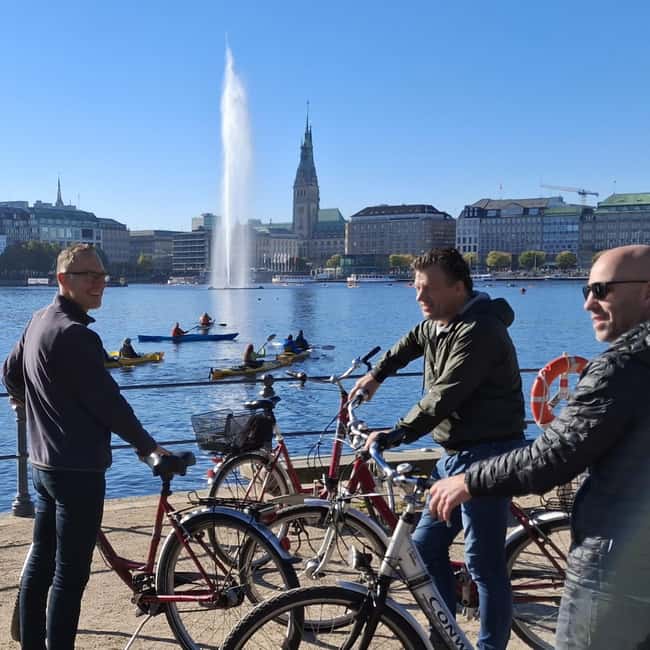
At Deichstraße, the tour reaches one of the key links between modern Hamburg and its older port life. This street marks the origin of port operations in Alt-Hamburg and leads toward the waterways of Speicherstadt.
The route also follows the tracks of the great fire of 1842 through the new city. That disaster changed large parts of Hamburg and helps explain why the center contains such a mix of older surviving streets and later rebuilding.
You do not need a long lecture to appreciate the point. As you ride, the city’s layout becomes a kind of map of change. Old trade routes, rebuilt districts, and modern commercial streets sit close together.
Deichstraße is also a strong photo stop. The street’s connection to the old harbor gives the tour a more human scale before the vast brick blocks of Speicherstadt appear. Keep an eye on the group and listen for instructions, since this is still an active urban route rather than a pedestrian-only walk.
Speicherstadt, brick warehouses above the Fleete
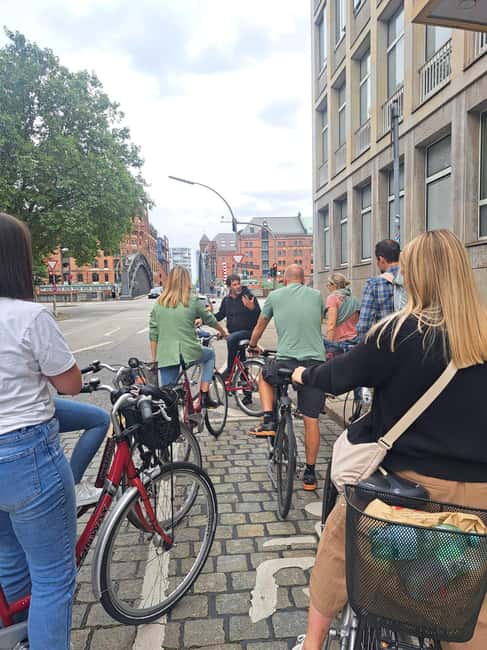
Speicherstadt is the architectural center of the tour. This UNESCO World Heritage site is formed by massive 19th-century brick warehouses built on millions of oak poles among narrow waterways called Fleete.
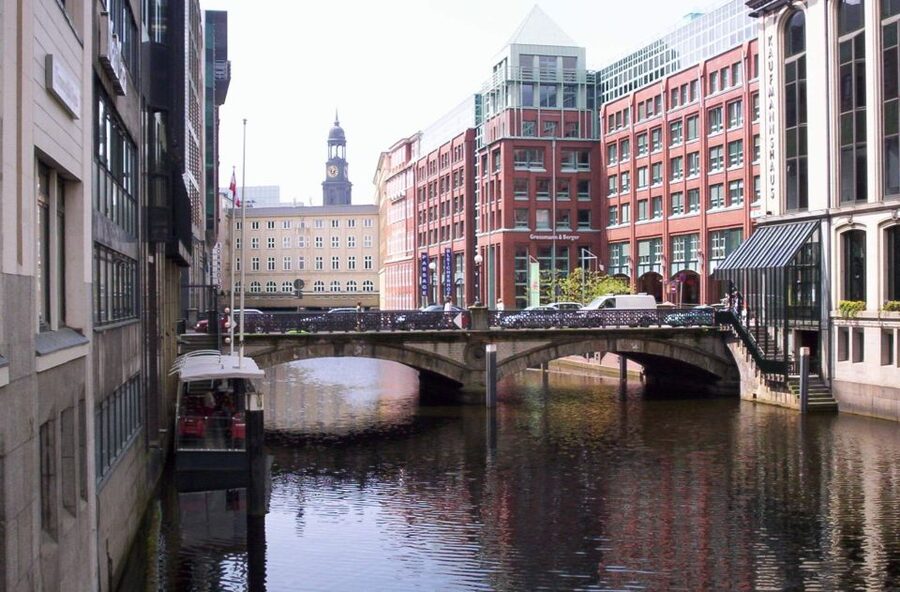
The scale is impressive from a bicycle. Long brick walls, arched details, bridges, and water channels create a setting that feels very different from the open Alster. The warehouses were built for storage, and their design reflects Hamburg’s role as a major trading port.
A guide adds real value here because the buildings can look like a dramatic backdrop without explanation. The tour connects the warehouses to port work, trade, and the physical challenge of building in a wet environment.
You should expect a photo stop and guided riding, not a warehouse interior visit. The attraction is the district itself, its brick construction, water routes, and position between the old city and the newer harbor redevelopment.
This is one of the places where cycling works better than a coach. You can move between the canals and bridges without losing the sense of the district’s size. At the same time, the group must keep moving, so save extra photographs or museum visits for another time.
HafenCity and the changing waterfront
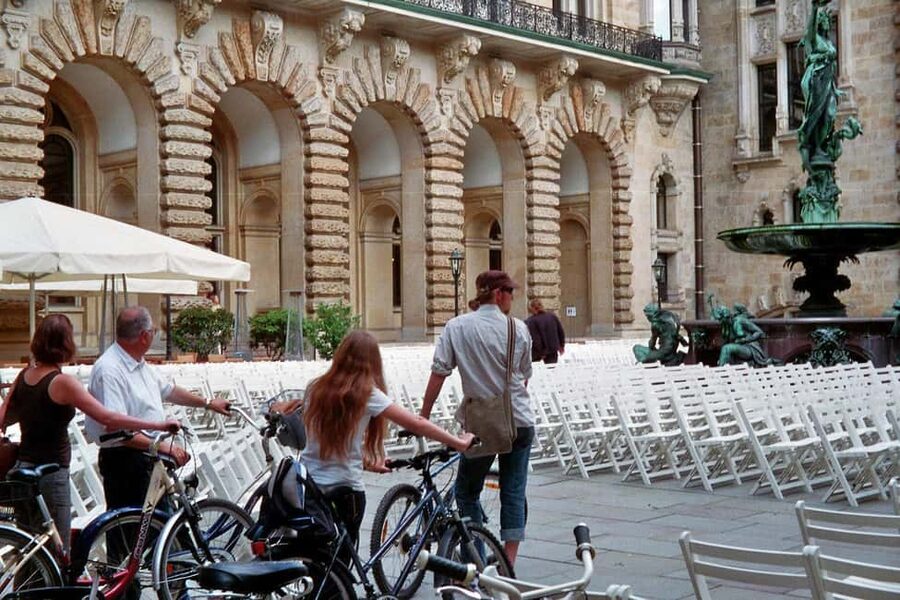
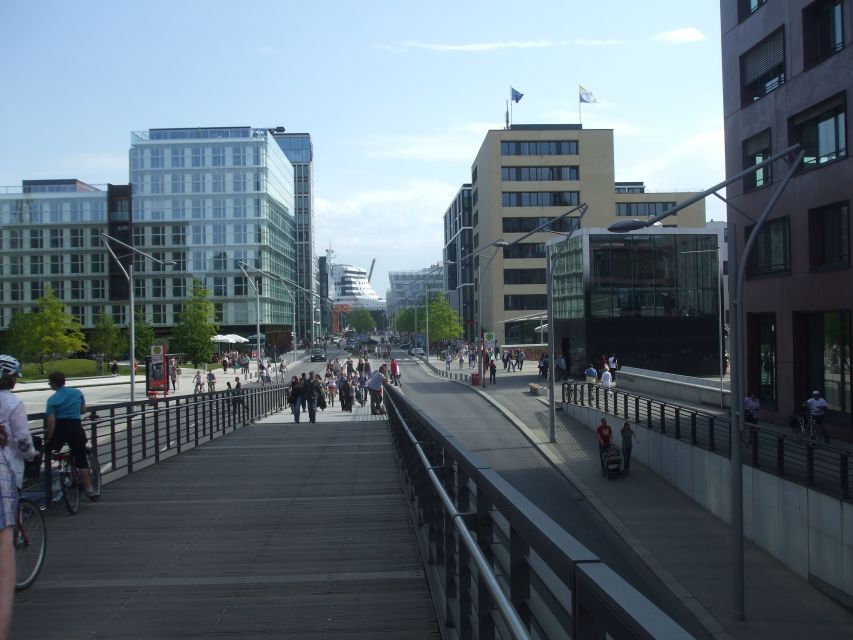
After Speicherstadt, the ride enters HafenCity, the former harbor area now reshaped as a modern city district. Here Hamburg’s old port gives way to postmodern architecture, new public spaces, and large waterfront projects.
The change happens quickly. Brick warehouses and traditional harbor channels are replaced by steel, glass, and newer buildings. This is useful for understanding Hamburg’s present direction: the city is reusing its harbor edge while protecting it from flooding and making room for offices, homes, culture, and public access.
I like this portion because it shows development in progress rather than presenting Hamburg as a preserved museum. The old and new districts sit beside each other, allowing you to compare materials, building styles, and the way each area meets the water.
Some visitors may prefer the older streets of Speicherstadt to the newer architecture of HafenCity. If your taste runs strongly toward historic buildings, this stretch may feel less intimate. Its value is in the contrast, and the bike makes that contrast easy to see in a single afternoon.
The Elbphilharmonie from plaza level and below
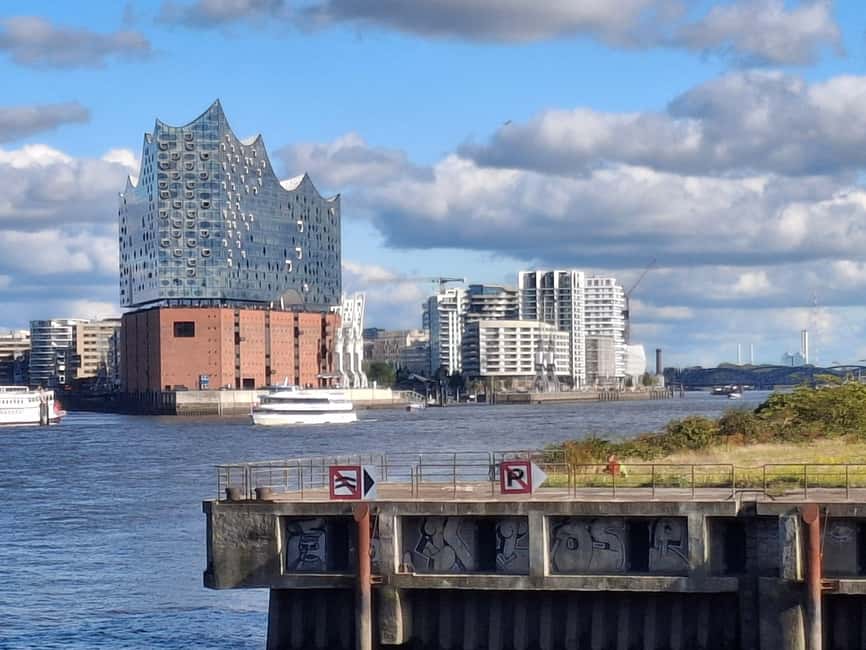
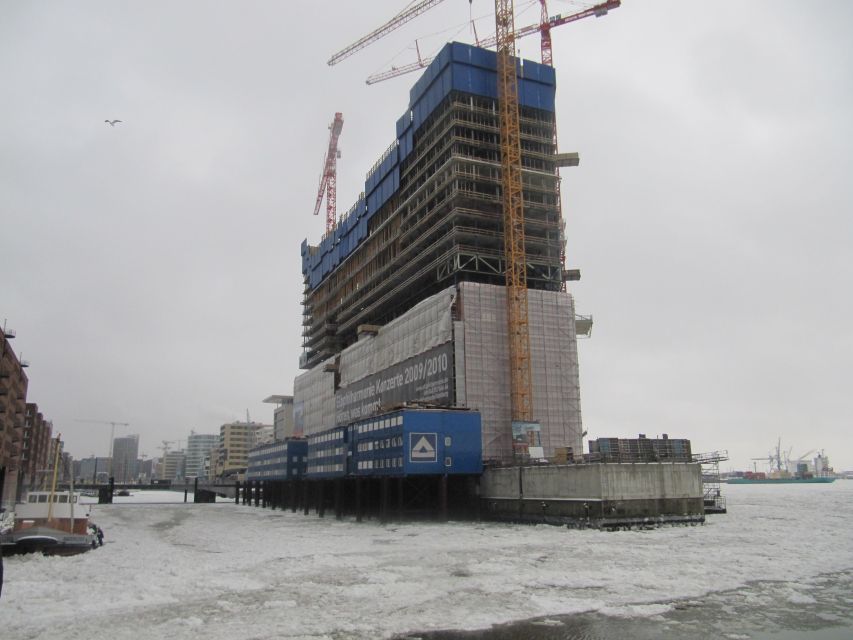
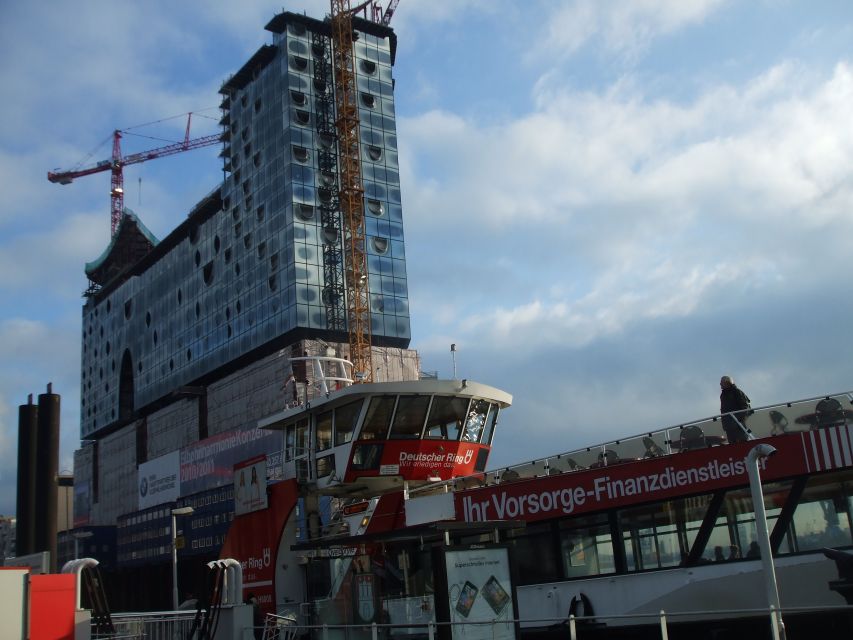
The Elbphilharmonie is the headline building of the modern harbor. At 110 meters, it rises above HafenCity and has become one of Hamburg’s defining landmarks, though its design and cost made it controversial.
The tour includes time to ride to the Elbphilharmonie plaza when access is possible. That qualification is important. Major events can restrict or close access, so you should treat plaza time as planned but not guaranteed.
Even if the plaza is unavailable, the route offers strong views from below. A new flood protection system provides a path with impressive sightlines toward the building, and the ride passes through a steel publishing building at Baumwall. This gives you more than the familiar front-facing photograph. You see how the concert hall relates to the waterfront, flood defenses, and surrounding city.
The Elbphilharmonie stop is best understood as a viewing and orientation stop. The activity does not promise a concert, an interior tour, or guaranteed access to every part of the building. If you want a full visit, arrange that separately and leave enough time beyond this bike tour.
Neustadt, St. Michael’s, and Peterstraße
The route turns back through Neustadt, bringing the tour into another part of Hamburg’s central story. It passes St. Michael’s Church, one of the city’s best-known landmarks, and follows historic Peterstraße.
Peterstraße adds a cultural note through the Brahms and Telemann museums. These small institutions connect the city streets to Hamburg’s musical life and echo the earlier Brahms memorial in the Gängeviertel.
This part of the ride is good for people who want more than a harbor circuit. You see Hamburg’s religious, musical, commercial, and residential sides in the same outing. The route keeps returning to the idea that the city is made of overlapping districts, not one single center.
The tour lists St. Michael’s as a photo stop and guided bike stop. It does not include a museum admission or a detailed interior visit, so plan a separate visit if you want to go inside the church or museums.
Baumwall and the St. Pauli piers
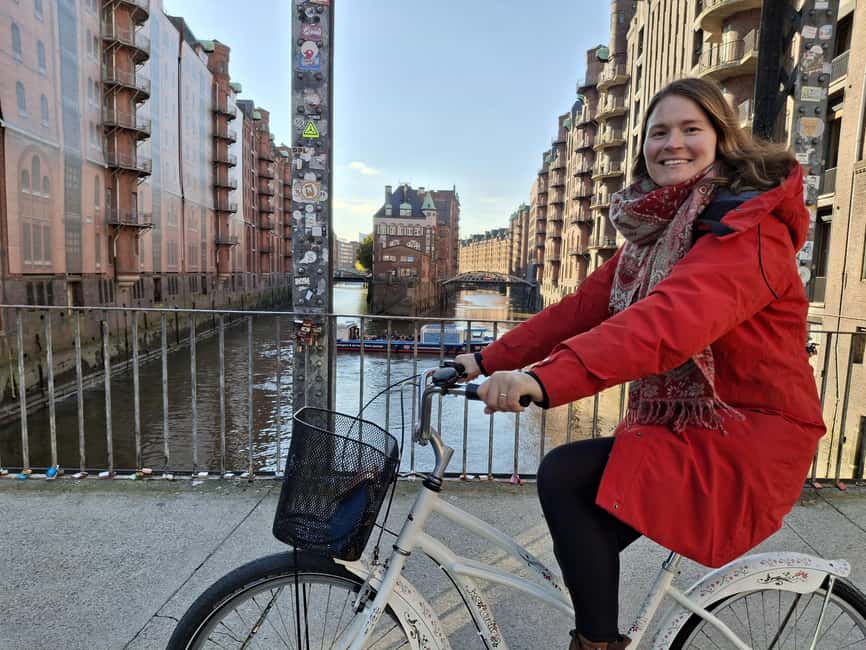
Near Baumwall, the tour follows the new flood protection system and continues toward the St. Pauli piers. This brings you close to the working harbor atmosphere that many people associate with Hamburg.
The piers provide another change of mood. You have moved from the Alster’s calm waters, through the old warehouses and new waterfront, and now toward the port edge. The route’s appeal is the variety: water, parks, business streets, old lanes, brick warehouses, steel structures, and maritime views.
The tour description emphasizes the smell of water, parks, food, and business. That is a small but telling detail. You experience the city through more than buildings. Hamburg’s character is tied to its waterways and port air, and a bicycle keeps you close to street-level sensations.
Again, this is a passing and guided stop rather than a long free period at the piers. If you want to explore the harbor independently, use the tour as an introduction and return afterward.
What the $39 price really gives you
At $39 per person, this is fairly priced for a 3.5-hour guided city tour that includes the bicycle, guide, city map, and a photo series sent by email. The route covers a large section of Hamburg, including places that would take effort to connect on foot.
The value is strongest if you are new to Hamburg or have only one full day in the city. You get a broad orientation, then you can return to the Alster, Speicherstadt, Elbphilharmonie, or St. Pauli for more time.
The bicycle is also the practical part of the deal. Hamburg’s sights are spread across several districts. Walking the entire route would take much longer, while a car or coach would lose the close-up feel of the lanes, canals, and waterfront paths.
The price does not include museum admissions, a concert, or a guaranteed Elbphilharmonie plaza visit. Keep those limits in mind. You are paying for guided access to the city by bike, not for an all-inclusive attraction package.
Who will like this ride most
I would choose this tour for a first visit to Hamburg, especially if you want a city overview before deciding where to spend the rest of your time. It suits adults and older children who are comfortable riding through an urban setting and staying with a guide.
It is also a good match for people who enjoy context. You will hear about old port operations, the great fire, working-class housing, Brahms, flood protection, shopping streets, and modern redevelopment in one route.
You may want a different plan if your priority is a slow museum visit, a long stop inside the Elbphilharmonie, or detailed shopping time. The route covers a lot, and its strength is range rather than extended time at one attraction.
English and German live guiding are available. Since the guide is central to the experience, listen closely at the beginning for the language arrangement and any cycling instructions. The included map and emailed photo series are useful extras, but the guide’s city knowledge is what gives the route its shape.
Practical details that affect the day
Meet outside the Fahrradstation of the University of Hamburg at Schlüterstraße 11. The activity returns to the same address, which makes it easy to leave luggage plans and onward transport until afterward.
Allow 3.5 hours, even though the riding program is described as three hours. Starting times vary, so check availability before booking. The tour includes free cancellation up to 24 hours in advance, and you can reserve now and pay later if you want to keep your schedule flexible.
The Elbphilharmonie is the one part most affected by circumstances. On days with major events, access may be restricted or closed. You still ride through HafenCity and see the building from below, but do not book this tour solely for guaranteed plaza access.
A bicycle tour is weather-dependent in a practical sense, even though no special weather policy is given here. Wear clothing you can ride in and bring anything you normally need for several hours outdoors. The route includes water, parks, streets, and harbor areas, so comfort matters more than dressing for a formal attraction.
Should you book the Hamburg city bike tour?
Book it if you want a broad, well-connected introduction to Hamburg rather than a single attraction. The route covers the Alster, old town, Deichstraße, Speicherstadt, HafenCity, the Elbphilharmonie, Neustadt, St. Michael’s, and the St. Pauli piers in one outing.
The strongest reason to choose it is the guide-led context. A guide such as Bernhard can turn scattered sights into a clear story about Hamburg’s port, music, commerce, rebuilding, and modern waterfront. The main caution is that the pace and plaza access are not fully in your control.
For $39, I consider it a sensible first-day purchase for active sightseers. Choose it early in your stay, use the map and guide’s suggestions to mark places for later, and keep a little time afterward in case you want to revisit the Elbphilharmonie or harbor on foot.
FAQ
How long does the Hamburg bike tour last?
The activity lasts 3.5 hours overall. The included bike tour is described as three hours, so allow the full 3.5 hours when planning your day.
What is the starting point?
Meet outside the Fahrradstation of the University of Hamburg at Schlüterstraße 11.
Where does the tour finish?
The tour returns to Schlüterstraße 11, the same place where it starts.
Is a bicycle included?
Yes. The tour includes a bicycle for the guided ride.
Is a guide included?
Yes. A live guide leads the tour, with English and German available.
Does the route visit the Elbphilharmonie?
The route includes the Elbphilharmonie and time to ride to its plaza when access is possible. Access may be restricted or closed on days with major events.
Does the tour include entry to the Elbphilharmonie?
The provided details do not include concert tickets or a guaranteed interior visit. The tour includes views of the building and time for the plaza when conditions allow.
Which Hamburg sights are included on the route?
The route includes the Alster, Hamburg Old Town, the Rathaus, Deichstraße, Speicherstadt, HafenCity, the Elbphilharmonie, Neustadt, St. Michael’s Church, and the St. Pauli piers.
What extras are included?
You receive a city map and a photo series about Hamburg by email, in addition to the bicycle and guide.
Can I cancel the booking?
You can cancel up to 24 hours in advance for a full refund. Reserve now and pay later is also available.
Just added around Hamburg
- Hamburg: Historical Tour of the St. Pauli Sex Work District★ 4.4 · 215 reviews
- Hamburg: St. Pauli Food and Bier Tour★ 4.7 · 5 reviews
- Hamburg: Private Tour Red Light District Walking Tour★ 4.7 · 227 reviews
- St. Pauli Tour: Drag-Attack with Barbie Stupid & Lee Jackson★ 4.8 · 280 reviews
- St. Michael’s, Elbe Tunnel & Harbor 2-Hour Hamburg Tour★ 4.9 · 21 reviews
- Satt Pauli – der kulinarische Rundgang durch St. Pauli★ 4.8 · 12 reviews
- Hamburg: Safari tour in St. Pauli★ 4.9 · 11 reviews
- Hamburg: Reeperbahn Comedy Club★ 4.3 · 53 reviews
Cycling Tours, compared.
Sights and Highlights Bike Tour with a Local Guide
Read our review →
Classic Mike’s Bike Tour daily @ 11.30 incl Beer Garden & Surfers
Read our review →

Browse the lists this tour appears in