
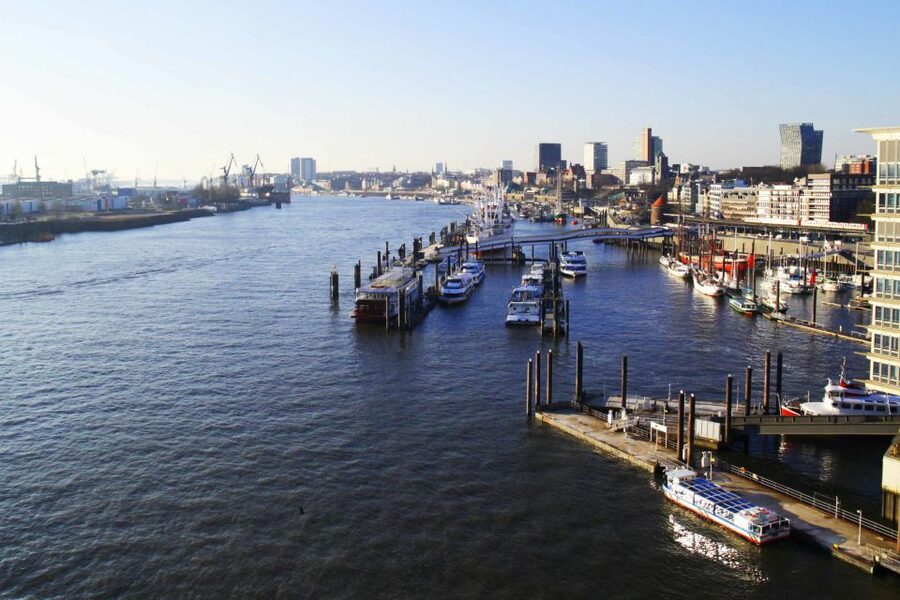
Reviewed · HAMBURG TOURS
Hamburg: 2.5-Hour Discovery Tour
Hamburg’s story is best understood on foot, where grand civic buildings, old merchant streets, wartime ruins, and working-port memories sit close together. This 2.5-hour Old Town walk links those pieces into one clear story, from Barbarossa and Störtebeker to the modern Elbphilharmonie.
I like the route for two reasons: it covers the city’s main historic sights without requiring transport, and the live English guide can add the human details that a self-guided walk often misses. Guides named Bob, Anna, and Jason have been especially praised for clear storytelling and for adjusting the pace or information to suit the group. The main consideration is that the tour may run longer than planned, so do not book it immediately before a hard appointment.
In This Review
- Key points to know before you book
- Why this Hamburg walk works as a first introduction
- Meeting at Mönckebergstraße and entering the Old Town
- The Rathaus and Hamburg’s civic pride
- Deich Street and the city shaped by trade
- St. Nikolai Memorial and Hamburg’s wartime past
- Speicherstadt and the mechanics of a port city
- Kontor House and the business behind the skyline
- The Elbphilharmonie and modern Hamburg
- Boatmen’s Church and the people behind the port
- How the storytelling affects the experience
- Is $23 a fair price for 2.5 hours?
- Who should book this Hamburg walking tour?
- Should you book it?
- FAQ
- How long is the Hamburg Discovery Tour?
- What language is the tour in?
- Where do I meet the guide?
- Which Hamburg sights are included?
- Does the tour cover Hamburg’s wartime history?
- How much does the tour cost?
- Can I cancel or delay payment?
Key points to know before you book
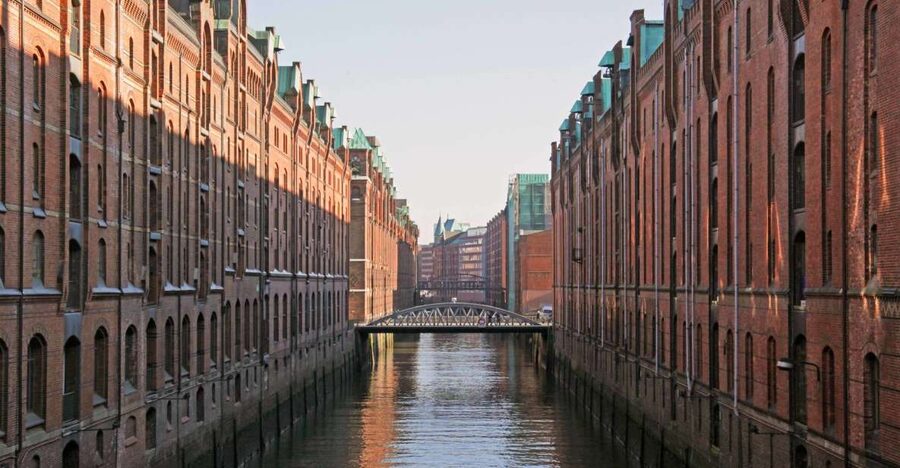
- A strong first look at Hamburg: The route covers the Rathaus, Old Town, Deich Street, St. Nikolai Memorial, Speicherstadt, Kontor House, Elbphilharmonie, and Boatmen’s Church.
- History with a local character: Expect stories about Hamburg’s port, Barbarossa, the pirate Störtebeker, wartime destruction, and the city’s proud Free City identity.
- English-only guiding: The experience is offered with a live English-speaking guide.
- A route built for context: The sights make more sense because the guide connects Hamburg’s trade, politics, religion, architecture, and wartime past.
- Good value at $23: You receive 2.5 hours with a guide, which is a fair price for a first orientation to a major European city.
- Leave room in your schedule: One reported outing lasted about an hour longer, after the guide checked whether the group had a firm stopping time.
Why this Hamburg walk works as a first introduction

Hamburg can feel like several cities joined together. The Rathaus presents the proud civic center. Speicherstadt recalls the age of warehouses and global trade. St. Nikolai Memorial brings you face to face with the destruction of World War II. The Elbphilharmonie points toward the city’s modern cultural life.
A good walking tour gives you the links between those places. That is the real value here. You are not simply ticking off landmarks. You are hearing how a port city gained wealth, why Hamburg values its independence, and how trade shaped its buildings and people.
I especially like that the route includes old and new Hamburg in the same outing. You get the 19th-century neo-Renaissance Rathaus, historic Deich Street, the warehouse district, and the modern concert hall. That mix helps you understand the city as a place that keeps changing while holding on to its past.
The tour is also a useful answer to the problem of limited time. If you have only a day or two in Hamburg, you can use the walk to learn the basic layout, then return later to the places that interest you most.
Other Hamburg days worth putting on the list:
- Hamburg: Sex and Crime in St. Pauli Tour for Ages 18+
★ 4.7 · 15,447 reviews - Hamburg: 1.5-Hour Harbor and Speicherstadt Day Cruise
★ 4.6 · 14,200 reviews - Hamburg: 90-Minute Evening Lights Harbor Cruise
★ 4.5 · 7,728 reviews
Meeting at Mönckebergstraße and entering the Old Town
The meeting point is in front of the Starbucks on Mönckebergstraße. This is a practical central location, but you should still allow enough time to find the exact spot and identify your guide.
From there, the route leads into Hamburg’s Old Town. The walk is designed to show the city through its central streets rather than from a coach window. That matters in Hamburg, where the relationship between buildings, canals, warehouses, churches, and public squares tells much of the story.
Your guide sets the tone early. Past outings have been led by Bob, Anna, Jason, John, and others. Bob has received particular praise for his voice, timing, friendliness, and ability to explain both older events and recent developments. Anna has been noted for making Hamburg’s story engaging, while Jason has been praised for shaping the information around the group.
You should not assume you will receive a particular guide. Still, the repeated praise for several guides suggests that the experience is not built around one single personality.
The Rathaus and Hamburg’s civic pride
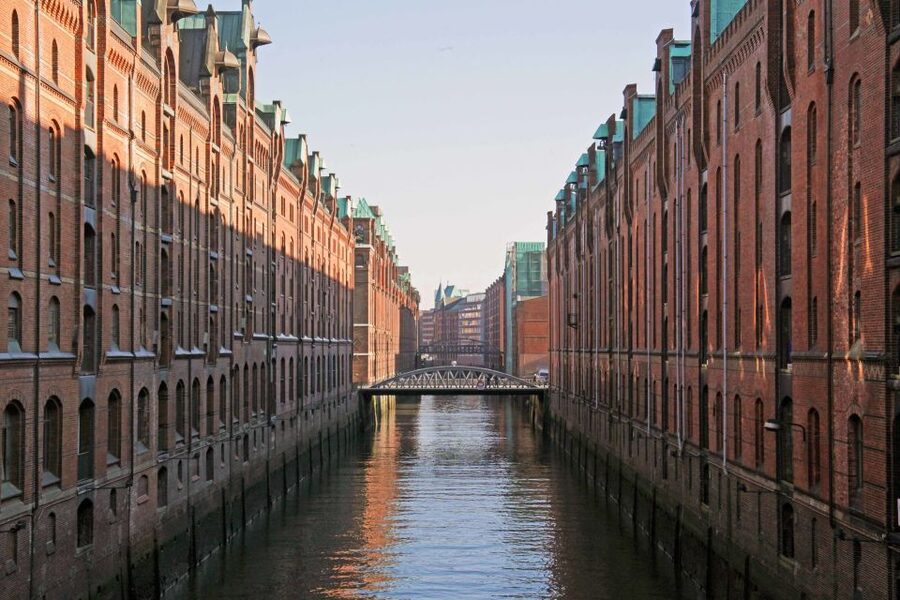
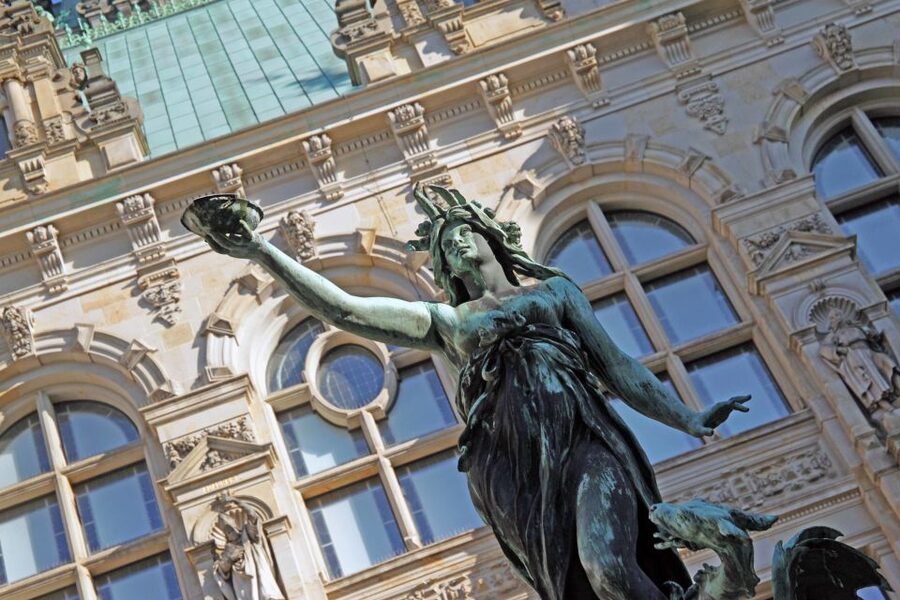
The Rathaus is one of the first major sights and one of the most impressive. Its 19th-century neo-Renaissance design reflects Hamburg’s wealth and confidence during an age when commerce filled the city’s coffers.
The building is more than a grand photo stop. Your guide can use it to explain how Hamburg saw itself as a Free City and how local government developed alongside the port. Look closely at the scale and decoration. This is architecture meant to announce civic power.
I like having the Rathaus early in the route because it gives you a visual anchor. After seeing it, later references to merchants, civic leaders, and Hamburg’s political identity are easier to place.
The limitation is simple: this is an outdoor walking tour, and the supplied information does not promise an interior visit. Plan on hearing the building explained from the route rather than expecting a tour inside.
Deich Street and the city shaped by trade
Historic Deich Street adds a more intimate side of Hamburg. The Rathaus represents public power, while older streets such as this one help you picture the city as a place of merchants, homes, business, and daily work.
This part of the route is valuable because port history is not only about ships. It is also about the people and streets that handled goods, money, paperwork, and news. A guide can turn a row of old buildings into evidence of how Hamburg operated.
The city’s rise as one of the world’s most important ports is a central theme of the walk. As you move through the Old Town, you hear how maritime trade helped create the cosmopolitan city you see today.
The stories also include colorful characters. Barbarossa and the pirate Klaus Störtebeker appear in the historical tale, including the haunting image of a headless pirate connected with Hamburg. That story adds a little drama without losing the larger point: port cities collect legends, outsiders, fortunes, and conflicts from far beyond their own walls.
Same city, a completely different kind of day:
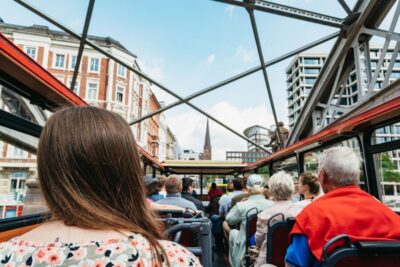
- Hamburg: 2-Hour XXL Port of Hamburg Cruise Tour
★ 4.7 · 6,979 reviews - Hamburg: Line A Sightseeing Hop-On Hop-Off Bus Tour
★ 4.6 · 6,958 reviews - Hamburg: Elbphilharmonie Plaza Guided Tour
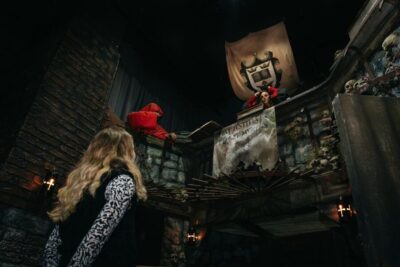
★ 4.7 · 5,882 reviews - Hamburg: Hamburg Dungeon Admission Ticket
★ 4.7 · 5,745 reviews
St. Nikolai Memorial and Hamburg’s wartime past
St. Nikolai Memorial is one of the most serious stops. The church remains as a reminder of the destruction Hamburg suffered during World War II.
This is where the tour moves beyond attractive architecture and old legends. Your guide discusses what happened to Hamburg during the war and helps place the damaged church within the city’s wider story. The memorial gives the subject a physical focus that makes the discussion more direct.
I value this part because it keeps the tour honest. Hamburg is a handsome and confident city, but its past also includes destruction, loss, and difficult questions. A worthwhile city walk should explain both the achievements and the wounds.
Do not expect this stop to be light entertainment. The guide’s approach matters here, and the listed experience specifically includes wartime history as part of the story. If you prefer a tour focused only on buildings and cheerful anecdotes, this section may feel heavier than expected. For most visitors, that seriousness is part of the reason the route feels useful.
Speicherstadt and the mechanics of a port city
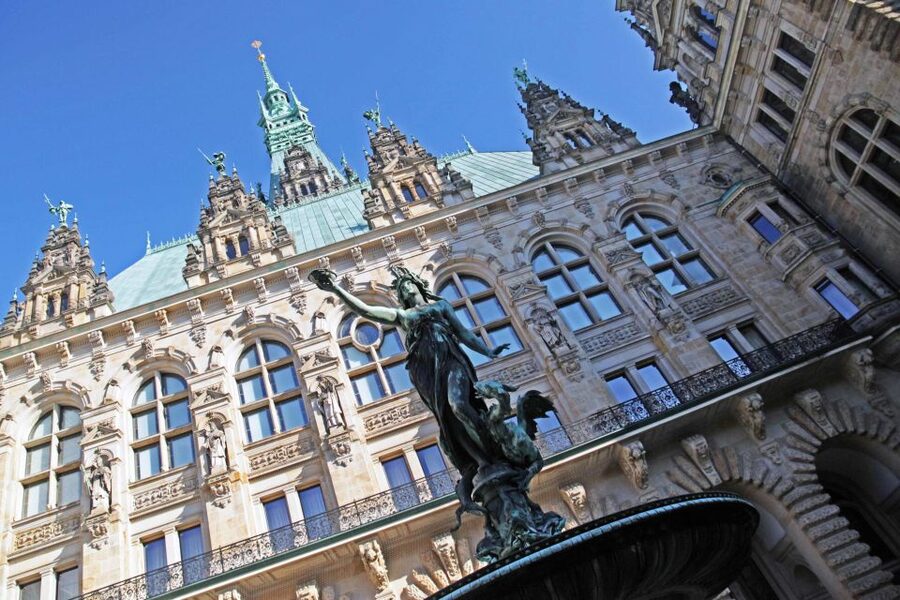
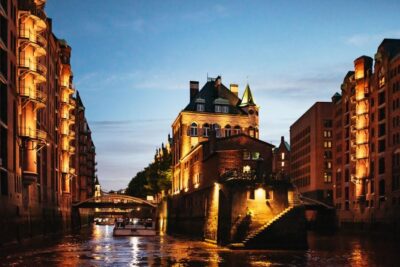
Speicherstadt is among the route’s most recognizable districts. Its warehouse buildings show how Hamburg stored and moved goods as international commerce expanded.
This stop gives the port story a clear physical setting. Instead of hearing only that Hamburg was important to world trade, you see the kind of infrastructure that made that trade possible. Warehouses tell a different story from palaces and churches. They show the practical side of wealth.
I find Speicherstadt especially helpful for first-time visitors because it connects history with urban form. The district is not just old architecture. It reflects Hamburg’s role as a place where goods arrived, were stored, and moved onward.
The tour also includes Kontor House, another key part of the city’s commercial identity. Together, Speicherstadt and Kontor House show two related sides of Hamburg: the storage and movement of goods, and the offices and business systems that supported them.
You may want to return to this area later for photographs or a slower look. A guided walk gives you context, but the schedule means you will keep moving.
Kontor House and the business behind the skyline
Kontor House adds another layer to Hamburg’s economic story. The name points to the city’s office and trading world, where commercial decisions were made behind the port’s warehouses.
This is a good example of why a guide helps. Without context, an office building can seem like another attractive stop. With an explanation of Hamburg’s merchants, trade networks, and civic culture, the architecture becomes part of a larger account of how the city made its living.
The route does not treat Hamburg as a museum frozen in time. It shows a city built by commerce and then reshaped by the demands of modern culture. That broad view is useful if you want to understand the city rather than collect isolated facts.
The Elbphilharmonie and modern Hamburg
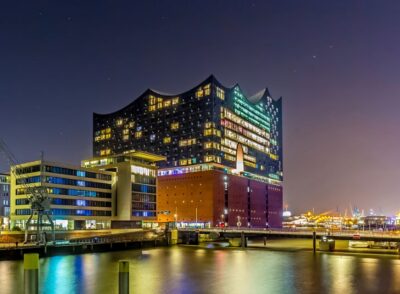
The Elbphilharmonie represents Hamburg’s present-day cultural ambitions. Its inclusion beside the Rathaus, Deich Street, Speicherstadt, and St. Nikolai Memorial gives the walk a clear beginning, middle, and current chapter.
You hear how the city developed from a port into a cosmopolitan cultural center. The concert hall helps show that Hamburg’s identity is not only about shipping and trade. Music, architecture, and public culture now play a major role in how the city presents itself.
The information provided does not promise entry to the concert hall, so treat it as a sight and discussion point rather than an interior visit. If the building interests you, make a separate plan to explore it after the walk.
This is also a useful reminder that a walking tour cannot explain every part of Hamburg equally. The route gives you a strong central framework, but it is not a full tour of the harbor, nightlife districts, or every major museum.
Boatmen’s Church and the people behind the port
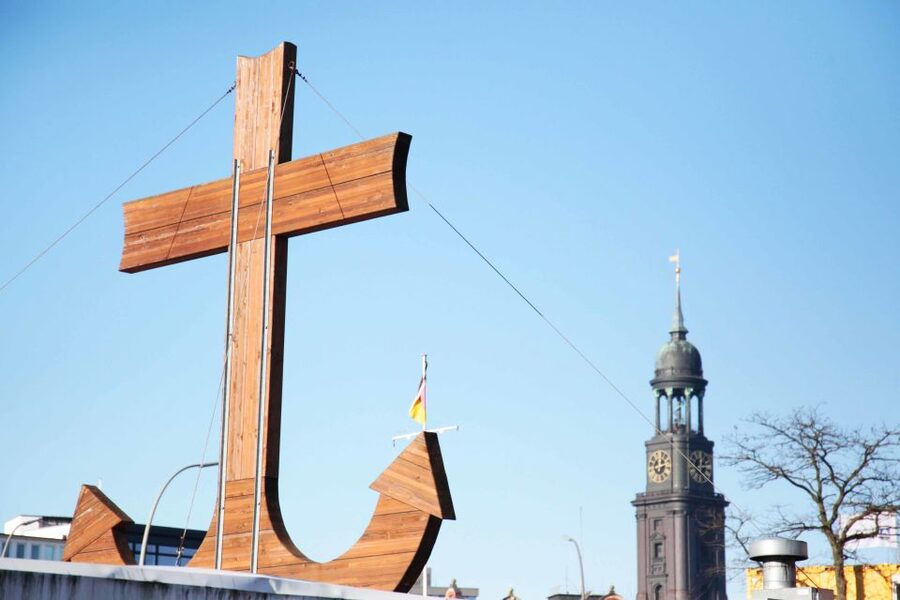
The Boatmen’s Church brings the maritime theme back to ordinary working people. Its connection with sailors and boatmen helps widen the story beyond wealthy merchants and grand civic buildings.
I like this kind of stop because it asks who actually made a port function. Hamburg’s history belongs not only to politicians and business owners, but also to the people who worked on and around the water.
It also fits the tour’s interest in colorful local characters and Hamburg’s self-image. The city’s maritime culture shaped its language, traditions, religion, and outlook. A church linked to boatmen gives that culture a tangible place in the Old Town.
How the storytelling affects the experience
The strongest element of this tour is the guide’s role. The route itself is valuable, but the quality of the experience depends on how clearly the guide explains the connections between each stop.
The available feedback points to several qualities worth looking for: clear speech, strong timing, friendly conversation, and the ability to adjust the information to the group. Bob was praised for profound insight and an engaging voice. One outing with him included a coffee break on a cold day and continued well beyond the scheduled time after he checked the group’s plans.
That last point is both a strength and a caution. A guide who wants to give more context can make the walk feel generous, but a longer outing may not suit everyone. If you have a train, museum booking, meal reservation, or flight, state your hard stop at the beginning.
The tour is in English. One past guide, Bob, even provided an English-only experience for a small English-speaking group rather than having them join a much larger mixed-language outing. You should not count on that exact arrangement, but it shows the value of telling the guide your language needs clearly.
Is $23 a fair price for 2.5 hours?
At $23 per person, I consider this a sensible price for a first orientation to Hamburg. You receive a live guide for two and a half hours and see a wide group of central sights without paying for separate transport or several individual admissions.
The value is highest if you are new to Hamburg. A clear explanation of the port, the Rathaus, wartime history, Speicherstadt, and the modern city can save you time later. You will know which districts deserve a second visit and which stories you want to pursue.
The price is less compelling if you already know the Old Town well or prefer to move at your own pace. You will follow a set route, listen to the guide, and keep to the group’s rhythm. That is the trade-off for receiving a connected account rather than wandering without a plan.
Free cancellation up to 24 hours before the start and the option to reserve now and pay later also make the booking less rigid. Starting times vary, so check availability before planning the rest of your day.
Who should book this Hamburg walking tour?
I would choose this walk for:
- First-time visitors who want a quick understanding of central Hamburg
- History-minded visitors who want port growth, wartime events, and local legends in one outing
- People with limited time who want to see several major sights without arranging transport
- English-speaking visitors who prefer a live guide
- Solo visitors who want structure and local explanation
- Anyone deciding which parts of Hamburg deserve a longer return visit
I would hesitate if you need a strictly timed 2.5-hour experience with no chance of extension. I would also look elsewhere if your main goal is an interior tour of the Rathaus or Elbphilharmonie, since those inclusions are not stated.
Should you book it?
Book this Hamburg Discovery Tour if you want the city’s main historic sights to make sense as one story. At $23, it offers good value, especially on a first visit, and the route covers an unusually useful spread: civic Hamburg at the Rathaus, commercial Hamburg at Speicherstadt and Kontor House, wartime Hamburg at St. Nikolai Memorial, maritime Hamburg at the Boatmen’s Church, and modern cultural Hamburg at the Elbphilharmonie.
Go in ready to walk, listen, and allow some flexibility. Tell the guide if you have a firm stopping time, and do not assume the tour will finish early. If Bob, Anna, Jason, or another guide with a strong storytelling style leads your group, you may find that the history is the part you remember long after the buildings.
FAQ
How long is the Hamburg Discovery Tour?
The tour lasts 2.5 hours. One past outing ran about an hour longer, so you should mention any firm time limit to the guide.
What language is the tour in?
The tour is offered in English with a live English-speaking guide.
Where do I meet the guide?
Meet in front of the Starbucks on Mönckebergstraße.
Which Hamburg sights are included?
The route includes the Rathaus, historic Deich Street, St. Nikolai Memorial, Speicherstadt, Kontor House, the Elbphilharmonie, and the Boatmen’s Church.
Does the tour cover Hamburg’s wartime history?
Yes. The guide discusses what happened in Hamburg during World War II, with St. Nikolai Memorial included as a key stop.
How much does the tour cost?
The price is $23 per person.
Can I cancel or delay payment?
You can cancel up to 24 hours in advance for a full refund. You can also reserve your place and pay later, subject to the booking terms.
Just added around Hamburg
- Hamburg: Historical Tour of the St. Pauli Sex Work District★ 4.4 · 215 reviews
- Hamburg: St. Pauli Food and Bier Tour★ 4.7 · 5 reviews
- Hamburg: Private Tour Red Light District Walking Tour★ 4.7 · 227 reviews
- St. Pauli Tour: Drag-Attack with Barbie Stupid & Lee Jackson★ 4.8 · 280 reviews
- St. Michael’s, Elbe Tunnel & Harbor 2-Hour Hamburg Tour★ 4.9 · 21 reviews
- Satt Pauli – der kulinarische Rundgang durch St. Pauli★ 4.8 · 12 reviews
- Hamburg: Safari tour in St. Pauli★ 4.9 · 11 reviews
- Hamburg: Reeperbahn Comedy Club★ 4.3 · 53 reviews
Hamburg Tours, compared.

1.5-Hour Harbor and Speicherstadt Day Cruise
Read our review →

Browse the lists this tour appears in