
Reviewed · GERMANY
Goslar: Rathausführung – historisch & multimedial
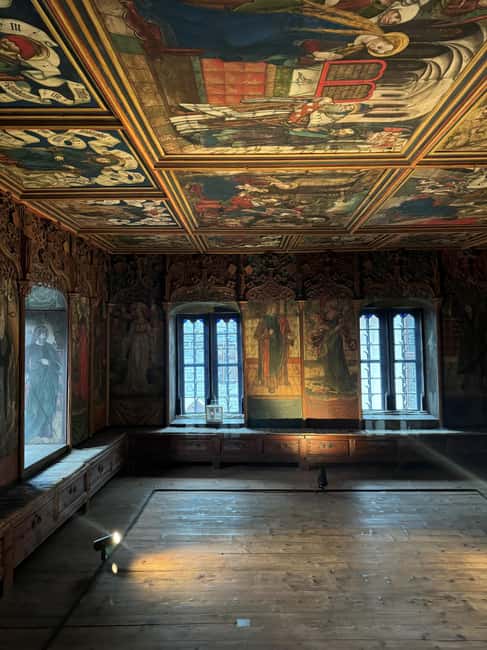
Goslar’s town hall is more than a pretty building on the market square. It is a record of more than 400 years of additions, with arcades, council rooms, painted interiors, and later changes all packed into one civic building. The finest stop is the Huldigungssaal, a late-Gothic room covered from walls to ceiling with painted panels.
I like the starry Rathausdiele, which gives the tour a memorable first impression, and I like the careful multimedia presentation in the Huldigungssaal, where modern technology helps explain a fragile work of art. The main drawback is practical: the tour is in German, and the many stairs make it unsuitable for wheelchair users or people using rollators.
In This Review
- Key points to know
- Why Goslar’s Rathaus deserves 90 minutes
- The Rathausdiele and its starry ceiling
- The Huldigungssaal, Goslar’s painted late-Gothic showpiece
- Reading the Rathaus as a 400-year building project
- The Harz World Heritage information center
- What the multimedia presentation adds
- Price, timing, and overall value
- Stairs and access
- Who will get the most from this visit
- Should you book the Goslar Rathaus tour?
- FAQ
- How long does the Goslar Rathaus tour last?
- What language is the tour conducted in?
- What is included in the admission?
- Can wheelchair users or people with rollators take the tour?
- How much does the experience cost?
- Can I cancel the booking?
Key points to know
- The Huldigungssaal is the main prize: This former council chamber has paintings across its walls, ceiling, and window recesses.
- The Rathaus grew in stages: Construction began in the mid-15th century and continued through more than four centuries.
- The Rathausdiele has a starry ceiling: This grand entry area provides one of the building’s most distinctive visual details.
- The multimedia element serves a real purpose: Security, climate, and lighting systems now protect the Huldigungssaal while helping you see it.
- The lower level adds wider context: A free World Heritage information center covers the Harz UNESCO site, while the Beinkeller explains the town hall’s building history.
- Plan for a German-language visit: The live guide speaks German, and the 90-minute format leaves enough time for a focused look without taking up half your day.
Why Goslar’s Rathaus deserves 90 minutes
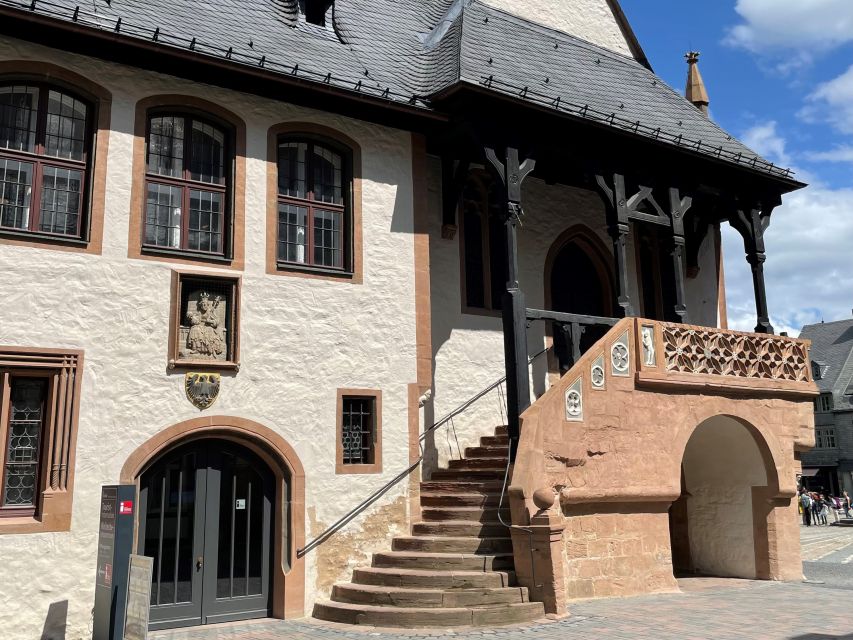
Goslar’s town hall tells a very different story from a single-period palace or church. You can read its history in the building itself. The east wing began in the middle of the 15th century, with arcades opening toward the market square. New sections were then added over more than 400 years.
That long building history matters because you are not seeing one clean architectural style. You are seeing a working civic center that changed as Goslar changed. Each addition answered a need from its own period, so the Rathaus becomes a lesson in how a town governed itself, expanded its public spaces, and presented its authority.
I find this kind of visit more useful than a quick exterior photograph. The outside gives you a fine sense of Goslar’s public heart, but the interior shows how the town’s officials used the building. The tour also connects the Rathaus to the wider UNESCO World Heritage story of the Harz, so you get more than a narrow look at municipal architecture.
The pace is manageable. At 1.5 hours, this is long enough for explanation and close looking, but short enough to fit beside a walk through Goslar’s old town. Since starting times vary, check the available departure before arranging the rest of your day.
Other Germany days worth putting on the list:
- Berlin: Reichstag, Dome and Government District Guided Tour
★ 4.7 · 18,288 reviews - Berlin: 1-Hour City Tour by Boat with Guaranteed Seating
★ 4.3 · 16,993 reviews - Hamburg: Sex and Crime in St. Pauli Tour for Ages 18+
★ 4.7 · 15,447 reviews
The Rathausdiele and its starry ceiling
The Rathausdiele is one of the first spaces that gives this tour its character. The name refers to the hall, and the Sternenhimmel, or starry sky, is its defining detail. It is an interior made to impress, but it also prepares you for the building’s larger story.
Look up before rushing onward. A decorative ceiling can be easy to treat as background, especially when you are eager to reach the famous Huldigungssaal. Here, the starry effect helps explain the Rathaus as a ceremonial public building. This was not simply an office block. It was a place where civic life was displayed.
The hall also works as a transition between the Rathaus exterior and its more protected interiors. From the open arcades facing the market square, you move into a space with a stronger sense of ceremony. I like this change in mood because it gives the tour a clear beginning rather than dropping you straight into a collection of rooms.
Do not expect the Rathausdiele alone to fill 90 minutes. Its value comes from the guide’s explanation and from how it fits with the other rooms. If you want to appreciate the building’s design, take a moment to notice how this hall frames the town hall as a public place.
The Huldigungssaal, Goslar’s painted late-Gothic showpiece
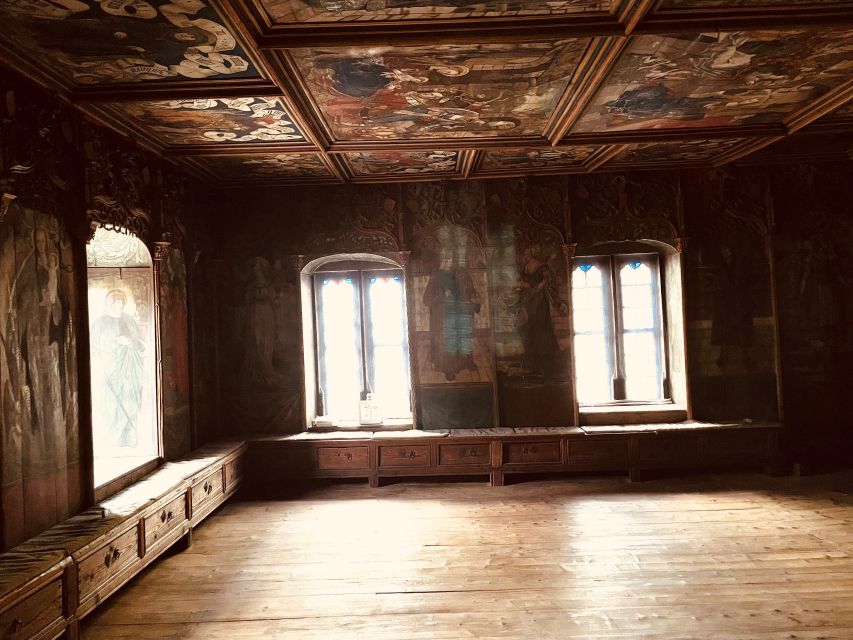
The Huldigungssaal is the reason most people should book this tour. It was fitted out as a council meeting room between 1505 and 1520, and its decoration is unusually complete. Paintings cover the walls, the ceiling, and even the recesses around the windows.
That detail changes how you look at the room. You are not seeing a few pictures placed on otherwise plain walls. The entire chamber is treated as a painted work of art. Each panel can be considered on its own, yet the full effect only becomes clear when you look around the room as a whole.
The room’s original function also matters. This was a council chamber, not a private salon. Goslar’s officials met here surrounded by an interior designed to communicate status and order. The artwork was part of the room’s civic message, and the setting gives the paintings a meaning that a detached museum display could not provide.
The Huldigungssaal has required extensive restoration over the years. Today, sophisticated security, climate, and lighting technology help protect it from further decay. That equipment is not a distraction from the art. It is the reason the room can remain accessible while being shielded from the risks caused by light, unstable conditions, and ordinary wear.
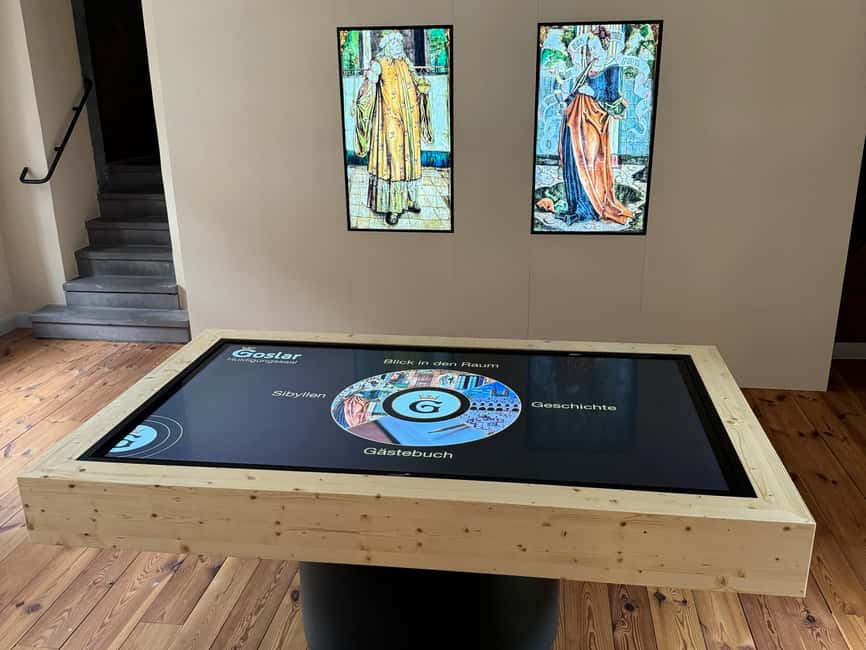
A multimedia presentation makes the chamber easier to understand. You can expect the technology to add visual or explanatory material rather than simply leaving you to stare at a dark room without context. This is especially helpful if you do not already know how late-Gothic council chambers were used.
The one limitation is language. The live guide is in German, and the multimedia interpretation does not turn the tour into an English-language visit. If you understand German, you can follow the explanations directly. If you do not, you will still see the room and its paintings, but much of the historical detail will be harder to catch.
Reading the Rathaus as a 400-year building project
One of the most useful parts of the tour is the building history. Goslar’s Rathaus did not appear all at once. Work began with the east wing in the 15th century, then continued through successive additions for more than four centuries.
That sequence gives you a practical way to look at the building. Instead of asking only which style is prettiest, you can ask why the building has several parts and periods. The tour places the Rathaus within the changing needs of a town that required more rooms, new functions, and a grander public presence.
The presentation in the Beinkeller focuses on this construction story. It is a good counterweight to the Huldigungssaal. The painted hall is about visual impact and civic ceremony, while the Beinkeller helps you understand the physical growth of the building.
I would pay attention to the contrast. The Huldigungssaal shows what Goslar wanted its council room to feel like. The Beinkeller shows how the Rathaus developed over time. Together, the two spaces make the building easier to remember.
The term Beinkeller may sound mysterious if you do not know the German word, but the important point here is its purpose as a presentation area for the Rathaus’s architectural history. You do not need a specialist interest in architecture to benefit from it. Anyone who has looked at a mixed-period building and wondered why it seems to have several personalities will find the explanation useful.
Same city, a completely different kind of day:
- Hamburg: 1.5-Hour Harbor and Speicherstadt Day Cruise
★ 4.6 · 14,200 reviews - From Munich: Neuschwanstein & Linderhof Castle Full-Day Trip
★ 4.5 · 12,494 reviews - Dresden: Semperoper Tickets and Guided Tour
★ 4.7 · 12,102 reviews - Berlin: Boat Tour Along the River Spree
★ 4.4 · 11,252 reviews
The Harz World Heritage information center
The lower level of the Rathaus also contains a World Heritage information center with a free exhibition about the Harz UNESCO World Heritage site. This is included with the town hall visit, so allow a little extra time if you want more than the guided route.
The exhibition broadens the focus. The Rathaus is one part of Goslar’s cultural setting, while the Harz World Heritage designation covers a much wider story. The information center can help you place the town hall within that larger regional context.
I would treat this as an optional extension rather than the core reason to buy a ticket. If your main goal is the Huldigungssaal, the guided tour is the essential part. If you are already planning to explore the Harz or want a clearer idea of what the UNESCO designation includes, the free exhibition makes the admission price work harder for you.
Because the center is in the Rathaus complex, you do not need another trip across town to reach it. That is a small but useful advantage when your sightseeing day is full.
What the multimedia presentation adds
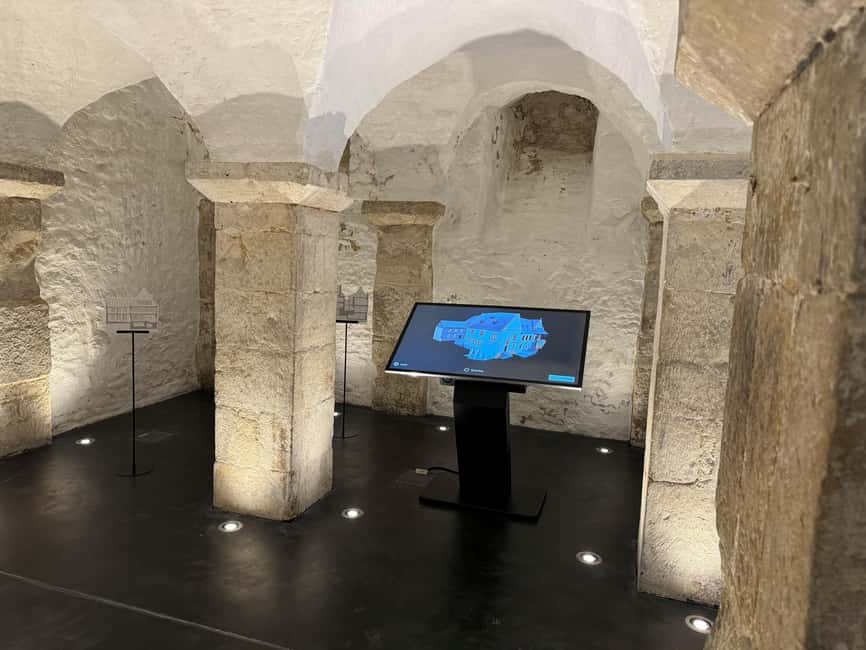
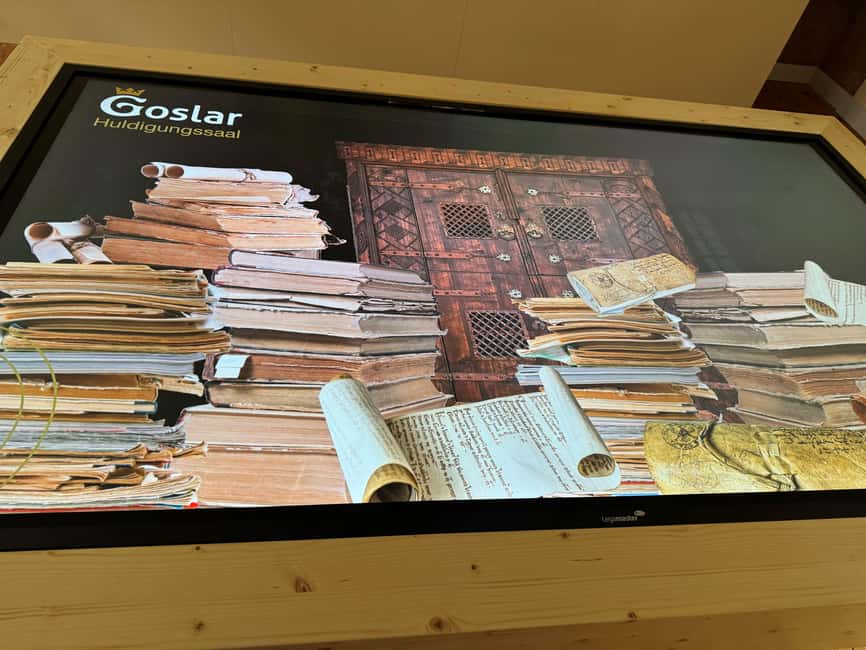
Historic rooms can be difficult to interpret without help. You may notice color, decoration, and scale, but miss why a room was built or how it functioned. The multimedia presentation in the Huldigungssaal is designed to make this protected room understandable again.
I like the idea here because the technology is supporting the original space rather than replacing it. The room remains the main subject. Multimedia material can point out details, explain the painted program, and give you a sense of the chamber’s role without requiring alterations to the artwork.
The preservation systems also affect your visit. Security, climate control, and special lighting protect the paintings, so access to the hall is shaped by conservation needs. You should see this as part of the experience, not an inconvenience. A room covered in old paintings cannot be treated like an ordinary public hallway.
The technology will appeal most to you if you enjoy context with your sightseeing. If you prefer to look quietly at historic interiors and skip interpretation, the presentation may feel more structured than you want. For most visitors, though, it gives the Huldigungssaal a clearer narrative and makes the 90-minute tour feel purposeful.
Price, timing, and overall value
At about $11 per person, this is a modestly priced cultural visit. I consider it good value because the admission combines a guided town hall tour, a view into the Huldigungssaal, the multimedia presentation, and access to the World Heritage information center.
The price is especially reasonable if you already plan to spend time in Goslar. The Rathaus is not a separate day trip or a long excursion. You can fit the 90-minute tour into a morning or afternoon of old-town sightseeing, then continue on foot around the market area.
The tour is also a better buy for you if you care about interiors. From the outside, you can appreciate the arcades and the Rathaus’s place on the market square, but the ticket gives you access to the painted council chamber and the building-history displays. Those are the details that cannot be understood from a quick exterior stop.
The reservation terms offer some useful flexibility. You can cancel up to 24 hours before the start for a full refund, and you can reserve now and pay later. Check the current start times before booking, since the available schedule determines how easily the visit fits your plans.
The tour is led in German. That is the single biggest value question for anyone who does not speak the language. The visual material remains worthwhile, but the explanations about the paintings, building phases, and civic use will be far more useful if you can follow German.
Stairs and access
You need to plan for stairs. The town hall has a variety of stairways, and the experience is not suitable for wheelchair users or people using rollators.
This is not a minor note to skim over at booking time. The Huldigungssaal and other parts of the route are inside a historic building, and the path is not designed around step-free access. If mobility is a concern, check with the provider before committing, since the stated conditions rule out wheelchairs and rollators.
For visitors who can manage stairs, the practical advice is simple: wear comfortable shoes and avoid treating this as a quick level walk-through. The route lasts 90 minutes, so you will want to move at an easy pace and keep your attention on the rooms rather than on navigating in a hurry.
Who will get the most from this visit
I would recommend this tour to anyone who wants to understand Goslar beyond its streets and façades. It suits you especially well if you enjoy town halls, historic interiors, late-Gothic art, or the way architecture records political and civic life.
It is also a strong choice for visitors interested in the Harz UNESCO World Heritage site. The World Heritage information center gives the visit a wider frame, while the Rathaus itself provides a specific, human-scale example of how Goslar developed.
Families and mixed-interest groups may find the multimedia element useful because it gives the Huldigungssaal a more active explanation than a silent viewing. The tour is still centered on a historic building, so very young children may not care equally about every stop, but the starry hall and painted chamber provide clear visual highlights.
I would be more cautious if you speak no German and have limited interest in historic interiors. You can still appreciate the decoration, but the live explanations are not offered in English. I would also avoid booking if stairs are a serious problem.
Should you book the Goslar Rathaus tour?
Book it if you want the inside story of Goslar’s most important civic building, especially the painted Huldigungssaal. For roughly $11 and 90 minutes, you get a focused look at a rare late-Gothic interior, a starry ceremonial hall, the Rathaus building history, and a free World Heritage exhibition.
Skip it if you only want a quick exterior view, need step-free access, or cannot follow German and prefer a fully translated tour. For everyone else, this is a sensible, fairly priced addition to a Goslar visit. The Huldigungssaal gives the experience its special pull, while the building-history presentation ensures you understand more than just its decoration.
FAQ
How long does the Goslar Rathaus tour last?
The guided visit lasts 1.5 hours. Starting times vary, so check availability for the schedule on your chosen date.
What language is the tour conducted in?
The live tour guide speaks German. The provided activity information does not list another guide language.
What is included in the admission?
Admission includes entry to the town hall, a view into the Huldigungssaal, and access to the World Heritage information center exhibition in the Rathaus complex.
Can wheelchair users or people with rollators take the tour?
No. The town hall has several stairways and is stated to be unsuitable for wheelchair users and guests using rollators.
How much does the experience cost?
The listed price is $11 per person.
Can I cancel the booking?
You can cancel up to 24 hours before the tour for a full refund. A reserve-now, pay-later option is also available.
Just added around Germany
- e-Scavenger hunt Aachen: Explore the city at your own pace★ 4.0 · 13 reviews
- Private photo tour in Cologne★ 5.0 · 9 reviews
- Private walking tour of Cologne’s old town★ 5.0 · 28 reviews
- Public brewhouse tour in English★ 5.0 · 94 reviews
- Roman Cologne: A Self-Guided Audio Tour★ 4.0 · 15 reviews
- Köln Night PubCrawl: 4 Venues, Welcome Shots + Club Entry★ 3.5 · 4 reviews
- Kölsch and Brewhouse Tour (18 and up)★ 5.0 · 5 reviews
- Private-Group Bike Tour of Cologne with Guide★ 5.0 · 20 reviews